×

Guinea🇬🇳 | citiesLabé
Fouta Djallon plateau, Peulh heritage, cool climate | things to do and best time to go

Explore KissidougouExplore Nzérékoré

Backpacking in Labé
🏆 Top pickcity ranked #2
By Johan Kruseman 🇳🇱 | Updated May 12, 2026

Most travelers only realize after leaving: Labé is the rare West African city where you can reset your pace without losing your grip on real adventure. Tucked into the Fouta Djallon highlands of central Guinea, Labé is a crossroads—literally and culturally—where the chaos of Conakry fades and the air gets cooler, both in temperature and temperament. For backpackers, Labé is a paradox: the city is big enough for a proper market day (the Grand Marché is a sensory workout), but small enough that you’ll spot the same faces twice. There’s not much in the way of museums or nightlife, but the colonial-era mosque and the surrounding Fulani villages offer a living history lesson if you’re willing to wander. Costs are low, transport is rough but doable, and you’ll meet more NGO workers than gap-year backpackers—so expect genuine curiosity, not tourist fatigue. Compared to Kindia or Mamou, Labé feels more open, less frantic, and just unpredictable enough to keep you on your toes.

Discover everything you want to know in the 📖 Guinea Travel Guide.
Loading the map 🌍
CLICK TO FILTER
city
town
unique site
national park
hike
beach
attraction
festival
region
SHOW COUNTRY‘S BESTSHOW ALL

✨ Why go?
Ranked #2 city in Guinea
Reasons people choose to visit here

Labé is a strategic stop for backpackers weaving through Guinea. It offers a basecamp value that’s hard to beat, making it an ideal launchpad for day trips into the surrounding countryside. The walkability of the city means you can easily explore local markets and vibrant street life without needing a taxi.

When it comes to accommodation, hostels here are budget-friendly and often buzzing with fellow travelers, creating a sense of community that enhances your experience. The food scene is a delightful mix of local flavors, with street vendors serving up hearty dishes that won’t break the bank.

As for nightlife, it’s low-key but charming, with local bars where you can unwind and share stories with other adventurers. Plus, Labé’s location makes onward travel straightforward, whether you’re … read more 👉
Labé is a strategic stop for backpackers weaving through Guinea. It offers a basecamp value that’s hard to beat, making it an ideal launchpad for day trips into the surrounding countryside. The walkability of the city means you can easily explore local markets and vibrant street life without needing a taxi.

When it comes to accommodation, hostels here are budget-friendly and often buzzing with fellow travelers, creating a sense of community that enhances your experience. The food scene is a delightful mix of local flavors, with street vendors serving up hearty dishes that won’t break the bank.

As for nightlife, it’s low-key but charming, with local bars where you can unwind and share stories with other adventurers. Plus, Labé’s location makes onward travel straightforward, whether you’re heading deeper into Guinea or moving on to neighboring countries.

In essence, Labé balances time, money, and comfort well, making it a worthwhile stop for those seeking authentic experiences without sacrificing too much of their itinerary.
Get the complete Travel Guide for Guinea
Everything organized for offline planning — routes, highlights, costs & tips

See what’s inside 👉

Get the Travel Guide -

💡 HighlightsTop highlights of Labé

  1. Grande Mosquée de Labé — The city’s main mosque and spiritual center for the Fulani (Fula) community; impressive in scale, sits in the heart of town and gives a clear sense of Labé’s religious life—visiting around Friday prayers or just watching the courtyard activity is the real experience.
  2. Marché Central (Grand Market) — A noisy, colorful market where local traders sell fabrics, spices, household goods and produce; prime place to see everyday commerce, pick up Fulani wrappers, and watch the bargaining that keeps the town ticking.
  3. Livestock Market (marché aux bestiaux) — The weekly cattle and goat trading area on the edge of town that showcases pastoral Fulani culture; best early in the morning when herders and traders are most active and the energy is raw and vivid.
  4. Old Fula quarters
read more 👉
  1. Grande Mosquée de Labé — The city’s main mosque and spiritual center for the Fulani (Fula) community; impressive in scale, sits in the heart of town and gives a clear sense of Labé’s religious life—visiting around Friday prayers or just watching the courtyard activity is the real experience.
  2. Marché Central (Grand Market) — A noisy, colorful market where local traders sell fabrics, spices, household goods and produce; prime place to see everyday commerce, pick up Fulani wrappers, and watch the bargaining that keeps the town ticking.
  3. Livestock Market (marché aux bestiaux) — The weekly cattle and goat trading area on the edge of town that showcases pastoral Fulani culture; best early in the morning when herders and traders are most active and the energy is raw and vivid.
  4. Old Fula quarters — The traditional neighborhoods around the city center where narrow lanes, local tailors and small craft workshops give a true feel of daily Fulani life; wandering these streets reveals authentic architecture and street-level culture not seen from the main roads.
  5. City viewpoints and surrounding hills — Short hikes up the hills that ring Labé deliver wide panoramas of terracotta roofs and the Fouta Djallon ridgelines; excellent at sunrise or sunset and an easy outdoor break inside the city limits.
Nearby day-trip highlights include the cool hill town of Dalaba, the waterfalls and hiking country of the Fouta Djallon highlands (around Pita/Dalaba), and other scenic villages that show the region’s landscapes and traditional life.
Spotted a mistake or missing something? Contact us.

🏘️ NeighborhoodsKey areas and districts to know

Labé, a vibrant hub in Guinea, offers a mix of culture and adventure that’s perfect for backpackers. Here’s how the neighborhoods stack up:

Centre Ville: This is the heartbeat of Labé. It’s bustling with markets and street vendors. You’ll find affordable accommodations and easy access to transport. The vibe is lively, making it ideal for short stays. Nightlife is minimal, but the local eateries serve up authentic flavors.

Banankoro: A quieter area, perfect for those seeking a more laid-back experience. It’s a bit further from the main attractions, but the trade-off is peace and tranquility. Walkability is decent, and you can find cozy guesthouses. Ideal for longer stays if you want to immerse yourself in local life.

Gogui: This neighborhood is a hidden treasure for nature lovers. It’s … read more 👉
Labé, a vibrant hub in Guinea, offers a mix of culture and adventure that’s perfect for backpackers. Here’s how the neighborhoods stack up:

Centre Ville: This is the heartbeat of Labé. It’s bustling with markets and street vendors. You’ll find affordable accommodations and easy access to transport. The vibe is lively, making it ideal for short stays. Nightlife is minimal, but the local eateries serve up authentic flavors.

Banankoro: A quieter area, perfect for those seeking a more laid-back experience. It’s a bit further from the main attractions, but the trade-off is peace and tranquility. Walkability is decent, and you can find cozy guesthouses. Ideal for longer stays if you want to immerse yourself in local life.

Gogui: This neighborhood is a hidden treasure for nature lovers. It’s a short trek from the city center, offering stunning views and hiking opportunities. Accommodations are limited but affordable. The vibe is serene, making it suitable for both short and longer visits, especially if you enjoy outdoor activities.

Fouta Djallon: A bit off the beaten path, this area is known for its breathtaking landscapes. It’s less walkable, so be prepared for some transport logistics. The accommodations are rustic but charming. Perfect for those who want to escape the city hustle and dive into nature. Ideal for longer stays to fully appreciate the surroundings.

⌛️ 1 day1-day itinerary for Labé

Labé, the vibrant heart of Guinea’s Fouta Djallon region, offers a rich tapestry of culture, history, and stunning landscapes. Nestled among rolling hills, this city is a hub for the Fulani people, known for their hospitality and traditional crafts. Spending a day here means immersing yourself in local life while discovering hidden treasures.

Start your morning at the bustling central market, located in the heart of Labé. The air is filled with the aroma of spices and fresh produce. Engage with local vendors selling everything from colorful textiles to handmade jewelry. Grab a breakfast of *foutou* (a starchy dish made from cassava) paired with a cup of sweet, milky tea. This is not just a meal; it’s a cultural experience.

After fueling up, head to the nearby **Mount Tely**. A short hike … read more 👉
Labé, the vibrant heart of Guinea’s Fouta Djallon region, offers a rich tapestry of culture, history, and stunning landscapes. Nestled among rolling hills, this city is a hub for the Fulani people, known for their hospitality and traditional crafts. Spending a day here means immersing yourself in local life while discovering hidden treasures.

Start your morning at the bustling central market, located in the heart of Labé. The air is filled with the aroma of spices and fresh produce. Engage with local vendors selling everything from colorful textiles to handmade jewelry. Grab a breakfast of *foutou* (a starchy dish made from cassava) paired with a cup of sweet, milky tea. This is not just a meal; it’s a cultural experience.

After fueling up, head to the nearby **Mount Tely**. A short hike will reward you with panoramic views of the city and surrounding hills. It’s a perfect spot for some quiet reflection or a few stunning photos. The trail is well-trodden, making it accessible even for those who aren’t seasoned hikers.

In the afternoon, wander through the **Kouroussa neighborhood**, where you can visit the **Grand Mosque**. Its unique architecture reflects the region’s Islamic heritage. Spend some time chatting with locals; they’re eager to share stories about their traditions and daily life.

As evening approaches, make your way to **Place de l’Indépendance**. This lively square is a gathering spot for families and friends. Grab a seat at a local eatery and savor a plate of grilled fish or chicken, accompanied by spicy sauce and rice. For a unique twist, seek out a small, tucked-away café where locals sip on *bissap*, a refreshing hibiscus drink.

By the end of the day, you’ll have woven through the fabric of Labé, experiencing its pulse and charm, all while making conscious choices that enhance your journey.
Build the Right Itinerary
Use the Guinea Travel Guide’s 5, 10 & 15-day routes as a starting point to plan a trip that actually works on the ground.

Get the Travel Guide -

🌤️ When to go?Weather, crowds, and seasonal trade-offs


  • Weather: Labé’s climate is tropical, with a clear split between the rainy season (May to October) and the dry season (November to April). The rains can be intense, turning dirt roads into mud traps and limiting outdoor activities.

  • Temperature: Expect highs around 30-33°C (86-91°F) during the day year-round. Nights cool down to about 18-22°C (64-72°F), especially in the dry season, which makes sleeping more comfortable.

  • Daylight Hours: Daylight is fairly consistent, roughly 12 hours year-round, so no need to juggle your schedule around shifting sunrise or sunset times.

  • Crowds: Labé isn’t a tourist hotspot, so crowds are minimal anytime. However, local festivals like the Fouta Djallon cultural events in December can bring a lively buzz without overwhelming the town.

  • Seasonal Activities:
read more 👉

  • Weather: Labé’s climate is tropical, with a clear split between the rainy season (May to October) and the dry season (November to April). The rains can be intense, turning dirt roads into mud traps and limiting outdoor activities.

  • Temperature: Expect highs around 30-33°C (86-91°F) during the day year-round. Nights cool down to about 18-22°C (64-72°F), especially in the dry season, which makes sleeping more comfortable.

  • Daylight Hours: Daylight is fairly consistent, roughly 12 hours year-round, so no need to juggle your schedule around shifting sunrise or sunset times.

  • Crowds: Labé isn’t a tourist hotspot, so crowds are minimal anytime. However, local festivals like the Fouta Djallon cultural events in December can bring a lively buzz without overwhelming the town.

  • Seasonal Activities: The dry season is prime for hiking and exploring the Fouta Djallon highlands around Labé. The rainy season, while lush, limits trekking and can disrupt transport.

  • Price Fluctuations: Accommodation and transport costs dip during the rainy season due to lower demand but expect some trade-offs in comfort and accessibility.


Pro-tip: Aim for the shoulder months—November and April—when the rains ease off but prices haven’t peaked, giving you the best balance of comfort, cost, and adventure.


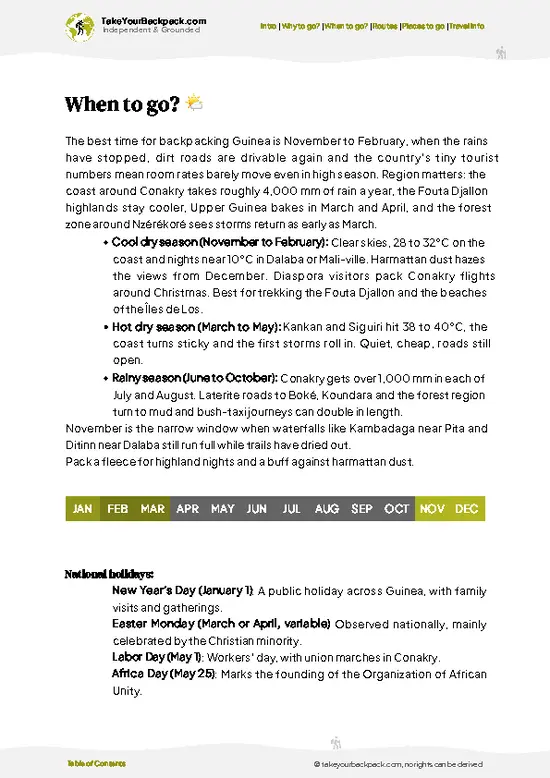
source: climatestotravel.comJANJanuary: excellent for travelingFEBFebruary: excellent for travelingMARMarch: excellent for travelingAPRApril: highly recommended for travelingMAYMay: fair for travelingJUNJune: fair for travelingJULJuly: fair for travelingAUGAugust: fair for travelingSEPSeptember: fair for travelingOCTOctober: fair for travelingNOVNovember: highly recommended for travelingDECDecember: excellent for traveling
when-to-go

✈️ The backpacker research shortcutGuinea Travel Guide

An offline-friendly backpacking guide with optimized travel routes, ranked highlights, transport advice, and the best areas to stay.
example page 0 from our offline Travel Guide for Guineaexample page 1 from our offline Travel Guide for Guineaexample page 2 from our offline Travel Guide for Guineaexample page 3 from our offline Travel Guide for Guineaexample page 4 from our offline Travel Guide for Guineaexample page 5 from our offline Travel Guide for Guinea
The digital guide (243 pages) contains:
67 highlights, ranked by travel appeal
Optimized 5, 10 & 15-day travel routes
Best neighborhoods to stay
How to get around
Offline-friendly for travel without Wi-Fi
👉 See all 30+ guide features

📅 Plan smarter in minutes, not weeks
Month by month travel advice
Festivals & national holidays
Budget expectations

🗺️ Go to the right places, skip the overrated ones
Honest pros & cons of destinations
Top hikes, parks & viewpoints
Lesser-known places most travelers miss
Clear “worth it vs skip it” guidance

🛏️ Travel smoothly without rookie mistakes
Best areas to stay
Transport systems explained simply
Common scams & safety advice
SIM cards, money & practical tips

🌍 Understand the country, not just visit it
Culture & traditions
52 Essential phrases & customs
Festivals worth planning around
Traveler-friendly historical context
Insights that make places more meaningful

📱 Built for real travel conditions
Fully downloadable PDF
Works completely offline
Optimized for phone use
Useful in remote areas & buses
Everything in one place
Save weeks of stressful planning
Get instant access to the full guide directly. 30-day money-back guarantee.


Sent to your inbox immediately after payment • 100% Secure Checkout
Best Backpacking Travel Advisor 2025 tourism awardBest Backpacking
Travel Advisor
2025
What others say about Take Your Backpack Guides:
⭐⭐⭐⭐⭐
Fantastic, amazing amount of information!
⭐⭐⭐⭐⭐
My goodness this is amazing, it's what I've been looking for hats off too you!
⭐⭐⭐⭐⭐
I think this is absolutely BRILLIANT
⭐⭐⭐⭐
Very complete and informative. It's still missing places, but I gotta to commend you
⭐⭐⭐⭐⭐
This is truly amazing, thank you, can't wait to explore it with my kids!
⭐⭐⭐⭐⭐
Awesome resource, thank you!
⭐⭐⭐⭐⭐
This is amazing! Can't wait to explore the ones I haven't seen
⭐⭐⭐⭐
I love this! Well done, great idea.
⭐⭐⭐⭐⭐
Thanks for taking the time to make this gem!
⭐⭐⭐⭐⭐
This might be the best website I've ever seen.
⭐⭐⭐⭐⭐
Congratulations, and thank you so much for your work; it's incredibly valuable.
⭐⭐⭐⭐
In all seriousness I think you did a great job pointing out the important spots
⭐⭐⭐⭐⭐
10/10 very good
⭐⭐⭐⭐⭐
As someone who's only just starting to visit regularly this is awesome, thank you.
⭐⭐⭐⭐
Thank you very much! I'm going to visit my dad, it's going to be very useful!
⭐⭐⭐⭐⭐
This is really cool! We'll be travelling for the first time and this definitely come in handy.
⭐⭐⭐⭐⭐
You are now our minister of culture, congratulations 👨‍💼
⭐⭐⭐⭐⭐
Just wanted to tell you that this is a pearl! Going to follow your recommendations.
⭐⭐⭐⭐⭐
This is so cool. I'll definitely be using the resource for my travels soon.
⭐⭐⭐⭐⭐
This is very impressive! Good work.
⭐⭐⭐⭐⭐
This is an amazing and informative site. Very well done!

🛏️ Where to stay?Best areas and accommodation options

In Labé, Guinea, the best spot for backpackers is the city center, especially around the Grand Market area. This neighborhood strikes a solid balance between safety and social buzz, making it a natural magnet for budget travelers and solo adventurers. It’s where you’ll find a cluster of affordable guesthouses and small hostels, which means you’re not just paying less—you’re stepping into a space where meeting fellow travelers is almost guaranteed. The vibe here is lively but manageable, with street vendors, local cafés, and a steady flow of people that keeps the energy up without overwhelming … read more 👉
In Labé, Guinea, the best spot for backpackers is the city center, especially around the Grand Market area. This neighborhood strikes a solid balance between safety and social buzz, making it a natural magnet for budget travelers and solo adventurers. It’s where you’ll find a cluster of affordable guesthouses and small hostels, which means you’re not just paying less—you’re stepping into a space where meeting fellow travelers is almost guaranteed. The vibe here is lively but manageable, with street vendors, local cafés, and a steady flow of people that keeps the energy up without overwhelming you.

Compared to the outskirts or more residential zones, the city center offers a clear advantage: proximity. You’re within walking distance of key transport hubs, markets, and eateries, which saves time and money on taxis or long walks. Plus, the social scene is naturally built-in; you’re not isolated in a quiet suburb where you might struggle to connect or find essentials after dark.

Areas farther from the center tend to be quieter but less convenient and sometimes sketchier after sunset. They lack the hostel density and traveler-friendly infrastructure that make the city center a no-brainer for backpackers who want to maximize comfort and social opportunities without blowing their budget. In Labé, smart location choice means you’re not just booking a bed—you’re buying into the city’s pulse.

🚌 Getting aroundMoving around without the hassle

Labé moves at its own rhythm—neither a frantic rush nor a lazy drift. It’s a city where time bends to the flow of daily life, not the other way around. You won’t find strict timetables etched in stone, but rather a pulse of informal agreements and local intuition. This means your travel choices here are less about rigid schedules and more about reading the room, the street, and the mood of the moment. Mastering Labé’s transit is about understanding the trade-offs between speed, cost, and comfort—and knowing when to lean into each.


  • Walking: The ultimate budget option and the best way to soak in Labé’s street life. Most neighborhoods are compact enough to cover on foot within 20-40 minutes. Zero cost, full control over pace, and the chance to catch spontaneous moments. Just be ready for
read more 👉
Labé moves at its own rhythm—neither a frantic rush nor a lazy drift. It’s a city where time bends to the flow of daily life, not the other way around. You won’t find strict timetables etched in stone, but rather a pulse of informal agreements and local intuition. This means your travel choices here are less about rigid schedules and more about reading the room, the street, and the mood of the moment. Mastering Labé’s transit is about understanding the trade-offs between speed, cost, and comfort—and knowing when to lean into each.


  • Walking: The ultimate budget option and the best way to soak in Labé’s street life. Most neighborhoods are compact enough to cover on foot within 20-40 minutes. Zero cost, full control over pace, and the chance to catch spontaneous moments. Just be ready for uneven sidewalks and occasional street vendors blocking your path.


  • Shared Taxis (Taxi Collectif): These minibuses or cars run fixed routes but leave only when full, so timing is flexible but unpredictable. Fares hover around 200-500 GNF depending on distance—cheap but expect cramped seating and no air conditioning. They’re the fastest way to cover longer distances within the city or to nearby towns, but comfort is minimal.


  • Motorcycle Taxis (Moto-Taxis): The go-to for quick, nimble trips through traffic or to places shared taxis don’t reach. Prices start at about 500 GNF for short rides, negotiable if you’re savvy. They’re fast and can weave through congestion, but safety and comfort take a backseat. Perfect when time is tight and you’re traveling light.


  • Private Taxis: More expensive, usually 5,000-10,000 GNF for intra-city rides, but they offer door-to-door service and a bit more comfort. Ideal if you’re carrying heavy gear or traveling in a group. They operate on demand, so no waiting for a full load, but you pay a premium for that convenience.


Labé’s transit system is a classic trade-off puzzle: walking costs nothing but takes time and energy; shared taxis save time but sacrifice comfort and predictability; motorcycle taxis offer speed at the expense of safety and ease; private taxis buy you comfort and flexibility but at a price. Your winning move is to mix and match based on your priorities that day—sometimes a slow stroll to savor the city, other times a quick moto dash to make a tight connection. Understanding these trade-offs turns Labé’s transit from a logistical headache into a strategic game you’re set to win.

👛 Costs (as of 28 April 2026)Travel costs and budget guide for Labé

Backpacking in Labé, Guinea, demands a clear-eyed view of what your money buys in this less-touristed West African city. Understanding the trade-offs between time, money, and comfort here means knowing exactly where your budget goes and what you’re getting for it.
  • Dorm Accommodation (High Season): Expect to pay around €8 to €12 per night. High season drives prices up slightly due to demand, but options remain basic—think simple beds, shared bathrooms, and limited amenities.
  • Dorm Accommodation (Off-Season): Prices drop to about €5 to €8 per night. Fewer travelers mean better bargaining power, but facilities don’t improve; comfort stays modest.
  • Meals: Local street food and small eateries cost between €1.50 and €3 per meal. Traditional dishes like rice with sauce or grilled fish are filling
read more 👉
Backpacking in Labé, Guinea, demands a clear-eyed view of what your money buys in this less-touristed West African city. Understanding the trade-offs between time, money, and comfort here means knowing exactly where your budget goes and what you’re getting for it.
  • Dorm Accommodation (High Season): Expect to pay around €8 to €12 per night. High season drives prices up slightly due to demand, but options remain basic—think simple beds, shared bathrooms, and limited amenities.
  • Dorm Accommodation (Off-Season): Prices drop to about €5 to €8 per night. Fewer travelers mean better bargaining power, but facilities don’t improve; comfort stays modest.
  • Meals: Local street food and small eateries cost between €1.50 and €3 per meal. Traditional dishes like rice with sauce or grilled fish are filling and affordable, but Western-style meals or restaurants catering to foreigners push prices higher, around €5 to €7.
  • Local Transport: Shared taxis and minibuses run about €0.30 to €0.50 per trip within the city. They’re slow and crowded but cheap and authentic—perfect if you’re not in a rush.
  • City Transport Pass: There is no formal city transport pass system in Labé. Budget travelers rely on individual rides or walking, which saves money but costs time and energy.
  • Basic Activities/Entry Fees: Cultural sites and local markets usually have no entry fee or a nominal charge under €1. Organized tours or special events can cost €5 to €10, but these are rare and often arranged locally.
  • Miscellaneous Expenses: Budget around €1 to €3 daily for essentials like bottled water, snacks, or phone credit. Internet access is patchy and often requires buying data bundles from local providers.

Labé’s daily backpacking budget typically falls between €10 and €20, depending on your season and comfort choices. You’re trading off modern conveniences and speed for raw, authentic experiences and a wallet-friendly pace. This is a place where every euro stretches, but comfort and time costs rise if you push for more convenience.
⚠️ Prices can change and everyone travels differently, so take this as a rough guide. Hope it helps you plan your adventure!

🚌 Day tripsWhere to go beyond the main area

Labé, Guinea, is a fantastic base for day trips that offer a taste of the region’s rich culture and stunning landscapes. Here are some worthwhile excursions that will make your backpacking experience truly rewarding.

Fouta Djallon Highlands
Just a short ride from Labé, the Fouta Djallon Highlands are a hiker’s paradise. The rolling hills and lush greenery create a breathtaking backdrop for a day of exploration. Expect to spend about two hours getting there, and you can easily find local guides for around $10. The best time to visit is during the dry season, from November to April, when the trails are more accessible. A common mistake is underestimating the terrain; wear sturdy shoes and bring plenty of water.
👉 Explore Fouta Djallon Highlands

Kankou Moussa Waterfall
This stunning waterfall … read more 👉
Labé, Guinea, is a fantastic base for day trips that offer a taste of the region’s rich culture and stunning landscapes. Here are some worthwhile excursions that will make your backpacking experience truly rewarding.

Fouta Djallon Highlands
Just a short ride from Labé, the Fouta Djallon Highlands are a hiker’s paradise. The rolling hills and lush greenery create a breathtaking backdrop for a day of exploration. Expect to spend about two hours getting there, and you can easily find local guides for around $10. The best time to visit is during the dry season, from November to April, when the trails are more accessible. A common mistake is underestimating the terrain; wear sturdy shoes and bring plenty of water.
👉 Explore Fouta Djallon Highlands

Kankou Moussa Waterfall
This stunning waterfall is about an hour’s drive from Labé and offers a refreshing escape. The sound of cascading water and the surrounding natural beauty make it a perfect picnic spot. Total costs can be around $15, including transport and a small entry fee. The rainy season can make the falls more impressive, but be cautious of slippery paths. Many first-timers miss the best viewpoint; climb a bit higher for an unforgettable view.


Tomb of the Almamy
A cultural gem, the Tomb of the Almamy is a significant historical site just 30 minutes from Labé. This is where the region’s influential leaders are buried, and it provides insight into local traditions. Entry is free, but consider hiring a local guide for about $5 to enrich your experience. The dry season is ideal for visiting, as the site can become muddy during the rains. Don’t rush through; take time to absorb the stories behind the tombs.


Sankaran Village
Immerse yourself in local life with a visit to Sankaran Village, about an hour from Labé. Here, you can engage with artisans and learn about traditional crafts. Costs are minimal, usually around $10 for transport and a small donation to the community. The best time to visit is during market days, when the village buzzes with activity. A common mistake is not bringing small gifts or items to share; locals appreciate this gesture.


These day trips from Labé offer a blend of adventure, culture, and connection, making them well worth your time and effort.
Want to know what more Guinea offers?
The Guinea Travel Guide describes 67 highlights, from cities to national parks, from beaches to hikes

Get the Travel Guide -

🍲 FoodEating & Drinking in Labé

In Labé, food is a vibrant tapestry of flavors that tells the story of its people. Dive into fufu, a starchy staple made from cassava or yams, often served with rich, spicy sauces. Pair it with domoda, a peanut-based stew that’s both comforting and filling. Don’t miss out on grilled fish from the local markets, seasoned to perfection and served with a side of plantains.

Street food is where the magic happens. Vendors line the bustling streets, offering meat skewers and fried dough balls that are perfect for a quick bite. The aroma of spices wafts through the air, inviting you to sample everything.

When it comes to drinks, try the local palm wine; it’s sweet and slightly effervescent, a favorite among locals. You’ll find it at informal gatherings or small bars, where laughter and stories … read more 👉
In Labé, food is a vibrant tapestry of flavors that tells the story of its people. Dive into fufu, a starchy staple made from cassava or yams, often served with rich, spicy sauces. Pair it with domoda, a peanut-based stew that’s both comforting and filling. Don’t miss out on grilled fish from the local markets, seasoned to perfection and served with a side of plantains.

Street food is where the magic happens. Vendors line the bustling streets, offering meat skewers and fried dough balls that are perfect for a quick bite. The aroma of spices wafts through the air, inviting you to sample everything.

When it comes to drinks, try the local palm wine; it’s sweet and slightly effervescent, a favorite among locals. You’ll find it at informal gatherings or small bars, where laughter and stories flow as freely as the drinks.

Etiquette is simple: share your food and drink, and don’t hesitate to join in on conversations. It’s all about connection here. Embrace the communal spirit, and you’ll find that every meal is a celebration.

🛡️ SafetyStaying Safe: What Travelers Should Know

Labé is generally safe for backpackers, but staying aware can enhance your experience. The bustling market areas, especially around the central square, can get crowded. Keep your belongings close and be mindful of your surroundings.

If you’re traveling solo, avoid wandering too far after dark. The streets can be quiet, and it’s best to stick to well-lit areas.

Scams are rare, but some locals might try to overcharge for goods or services. Always negotiate prices upfront, especially in markets. A friendly smile and a firm but polite demeanor go a long way in establishing rapport.

Annoyances like persistent vendors can test your patience. A simple “no, thank you” usually suffices. Overall, Labé offers a welcoming atmosphere; just stay alert and engage with the locals. They often appreciate … read more 👉
Labé is generally safe for backpackers, but staying aware can enhance your experience. The bustling market areas, especially around the central square, can get crowded. Keep your belongings close and be mindful of your surroundings.

If you’re traveling solo, avoid wandering too far after dark. The streets can be quiet, and it’s best to stick to well-lit areas.

Scams are rare, but some locals might try to overcharge for goods or services. Always negotiate prices upfront, especially in markets. A friendly smile and a firm but polite demeanor go a long way in establishing rapport.

Annoyances like persistent vendors can test your patience. A simple “no, thank you” usually suffices. Overall, Labé offers a welcoming atmosphere; just stay alert and engage with the locals. They often appreciate genuine interest and can provide valuable insights into the city.

Other Guinean cities near Labé

Explore more nearby:

  • Tougué—remote plateau, Fulani settlements, seasonal rivers| 69 km away
  • Mali—highest elevation, mountain air, Fouta Djallon views| 84 km away
  • Télimélé—Fouta Djallon foothills, Fulani villages, local livestock markets| 93 km away

👉 Discover all cities

Or checkout all Guinea has to offer (think cities, towns, villages, national parks, hikes, beaches, festivals)
Country photo of Guinea

We 💚 feedbackFinal thoughts on visiting Labé

Labé has this raw, unfiltered vibe that grabs you. The bustling market is a sensory overload—colors, smells, and laughter collide in the best way. Don’t miss the local music scene; it’s a delightful surprise that pulls you in. Just a heads-up: the roads can be rough, so don’t rush your travels. Embrace the delays; they often lead to the best stories. Trust me, the heart of Guinea beats strongest here.

✍️ Help improve this page!
The information on this page is based on in-depth research, insights shared by experienced travelers, and feedback from the local travel community in Guinea. While every effort is made to keep the information accurate and current, conditions can change — so if you spot anything incorrect or outdated, please get in touch.


🙋‍♂️ Give feedback

👋 Meet the founderWho’s Behind Take Your Backpack?

Johan, backpacker and founder of TakeYourBackpackHi, I’m Johan (Netherlands 🇳🇱), the creator of TakeYourBackpack. Over the past decade, I’ve backpacked through 80+ countries across six continents, gaining extensive experience with independent travel, long-term trips, and overland routes.

This site is built on a combination of firsthand travel experience and carefully curated insights from other backpackers. Many guides are based on places I’ve personally visited, while others bring together tips, observations, and practical advice shared by trusted travelers I’ve met along the way.

The goal is to provide realistic, experience-driven guidance — not generic itineraries — so you can explore destinations with better context, clearer expectations, and more confidence.

Get Full Country Guide |
Instant download • 67 highlights • Full Offline guide