×

Guinea🇬🇳 | citiesMalihighest elevation, mountain air, Fouta Djallon views | things to do and best time to go

Explore KérouanéExplore Tougué

Backpacking in Mali
👌 Worth visitingcity ranked #14
By Johan Kruseman 🇳🇱 | Updated June 10, 2026

Most travelers only realize after arriving: Mali’s altitude means cool, pine-scented evenings—a rare relief in Guinea’s humid north. Tucked into the Fouta Djallon highlands, Mali is a small, workaday town, not a tourist magnet. For backpackers, it’s a launchpad for hiking to Chutes de Kambadaga or wandering through villages where the rhythm of pounding millet is the loudest sound. The town itself is compact, with dusty streets and a market that’s more practical than picturesque. You’ll need bush taxis to get here, and onward connections can be slow, but that’s part of the charm. Nights are quiet, hostels are basic, and you’ll likely swap stories with fellow hikers over instant coffee, not cocktails. Compared to Labé or Dalaba, Mali is less lively but more intimate—perfect if you want scenery over scene, and don’t mind earning your sunrise.

Discover everything you want to know in the 📖 Guinea Travel Guide.


Get your Guinea guide
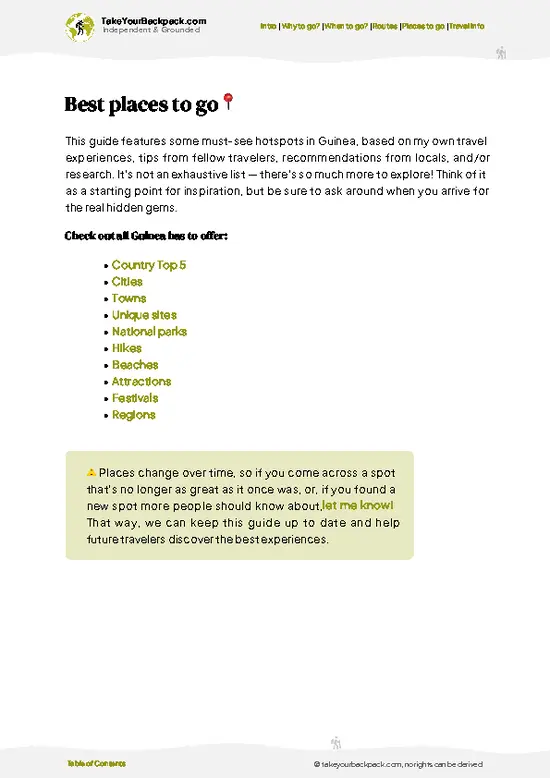
67 ranked highlights, routes & tips, works offline (282 pages)
Loading the map 🌍
CLICK TO FILTER
cities
towns
landmarks
national parks
hikes
beaches
attractions
festivals
regions
SHOW COUNTRY’S BESTSHOW ALL

✨ Why go?
Ranked #14 city in Guinea
What makes it a must-see city

Mali, Guinea, serves as a gateway for backpackers seeking authentic experiences. Its walkable streets invite exploration, while small-scale hostels and guesthouses create a cozy atmosphere for solo travelers and small groups. The town is a convenient base for nearby hikes and cultural sites, making it easy to dive into the local scene. You’ll find delicious street food that reflects the region’s flavors, enhancing your stay. Most travelers linger a few days, soaking in the friendly social vibe before heading out. It’s not a party hub, but the warmth of the community makes it a perfect stop for those wanting to connect.
Want to include Mali in your Guinea route?
Create a personalized Guinea itinerary that includes Mali and the places that fit your trip — based on your travel style, budget, and available time. Get your route in seconds.

Generate my trip

💡 HighlightsMust-see experiences and standout moments

    For nearby day trips, explore the Fouta Djallon highlands for hikes and waterfalls, the Îles de Los off Conakry for beaches and fishing villages, and Conakry’s Marché Madina and Corniche for vibrant markets and coastal views.
    Spotted a mistake or missing something? Contact us.
    🏘️ NeighborhoodsUnderstanding the local layout

    Mali, Guinea, offers a rich tapestry of experiences for backpackers, each neighborhood with its own character and charm.

    Centre Ville: The heart of Mali, buzzing with energy. Street vendors fill the air with the scent of grilled fish and spices. Affordable guesthouses line the streets, making it perfect for budget travelers. Walkable and lively, it’s ideal for short stays, with nightlife options like local bars that hum with music.

    Kaloum: This area has a more laid-back vibe, with tree-lined streets and cafes where you can sip coffee and watch the world go by. It’s quieter, making it suitable for longer stays. Transport links are solid, but you might need to rely on taxis for late-night adventures.

    Matoto: A bit off the beaten path, this neighborhood offers a glimpse into local life. It’s … read more 👉
    Mali, Guinea, offers a rich tapestry of experiences for backpackers, each neighborhood with its own character and charm.

    Centre Ville: The heart of Mali, buzzing with energy. Street vendors fill the air with the scent of grilled fish and spices. Affordable guesthouses line the streets, making it perfect for budget travelers. Walkable and lively, it’s ideal for short stays, with nightlife options like local bars that hum with music.

    Kaloum: This area has a more laid-back vibe, with tree-lined streets and cafes where you can sip coffee and watch the world go by. It’s quieter, making it suitable for longer stays. Transport links are solid, but you might need to rely on taxis for late-night adventures.

    Matoto: A bit off the beaten path, this neighborhood offers a glimpse into local life. It’s less touristy, so expect lower prices and a more authentic experience. Walkability is decent, but be prepared for some uneven paths. Perfect for those seeking a deeper connection with the culture.

    ⌛️ 1 dayA smart one-day plan

    Mali, Guinea, is a vibrant tapestry of culture and community, where the pulse of daily life beats in the rhythm of bustling markets and warm smiles. Start your morning at the lively Grand Marché, where the air is thick with the scent of spices and fresh produce. Grab a local breakfast of fufu and spicy sauce from a vendor; the flavors will kickstart your day.

    In the afternoon, wander through the historic neighborhood of Kankan. Here, the architecture tells stories of the past, and you can visit the lesser-known Musée de Kankan, showcasing local art and history. The quiet charm of this place offers a refreshing contrast to the market’s chaos.

    As the sun begins to set, head to the banks of the Milo River. The golden light reflecting off the water creates a serene atmosphere. Enjoy a simple … read more 👉
    Mali, Guinea, is a vibrant tapestry of culture and community, where the pulse of daily life beats in the rhythm of bustling markets and warm smiles. Start your morning at the lively Grand Marché, where the air is thick with the scent of spices and fresh produce. Grab a local breakfast of fufu and spicy sauce from a vendor; the flavors will kickstart your day.

    In the afternoon, wander through the historic neighborhood of Kankan. Here, the architecture tells stories of the past, and you can visit the lesser-known Musée de Kankan, showcasing local art and history. The quiet charm of this place offers a refreshing contrast to the market’s chaos.

    As the sun begins to set, head to the banks of the Milo River. The golden light reflecting off the water creates a serene atmosphere. Enjoy a simple dinner at a riverside eatery, where the grilled fish is a must-try. This day in Mali isn’t just about sights; it’s about immersing yourself in the heart of a community that welcomes you like family.
    Turn your Mali visit into an Guinea adventure
    Build a complete Guinea route with Mali, hidden gems, must-see destinations, and realistic travel times included.

    Generate my trip

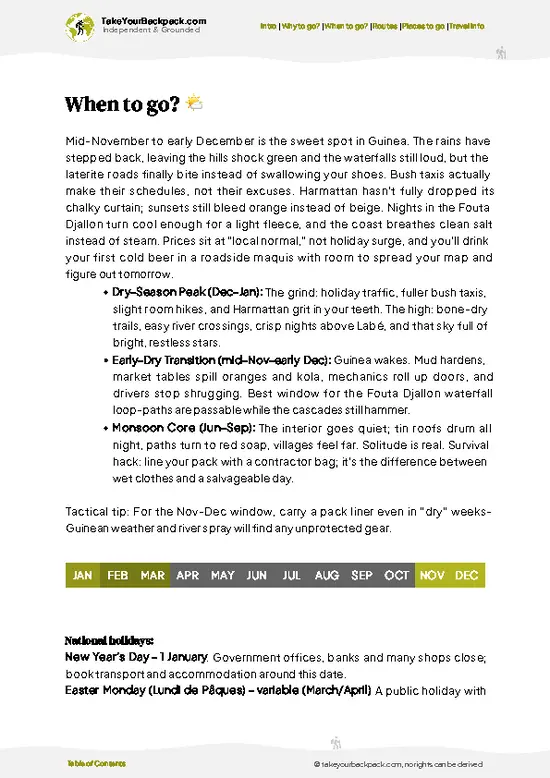
    🌤️ When to go?Choosing the right time of year


    • Topic: Weather — Mali’s dry season, from November to February, offers clear skies and minimal rain, making trails less slippery and the air crisp. The wet season (June to September) drenches the landscape, turning paths to mud and rivers to swollen challenges.

    • Topic: Temperature — Daytime highs in the dry season hover around 28-32°C (82-90°F), comfortable for hiking without overheating. The wet season spikes humidity, pushing temps to 35°C (95°F) and making exertion sticky and draining.

    • Topic: Daylight Hours — Mali enjoys roughly 11-12 hours of daylight year-round, but the dry season’s clearer skies mean more reliable light for early starts and late finishes.

    • Topic: Crowds — The dry season draws more visitors, especially December and January, so expect busier trails and higher prices.
    read more 👉

    • Topic: Weather — Mali’s dry season, from November to February, offers clear skies and minimal rain, making trails less slippery and the air crisp. The wet season (June to September) drenches the landscape, turning paths to mud and rivers to swollen challenges.

    • Topic: Temperature — Daytime highs in the dry season hover around 28-32°C (82-90°F), comfortable for hiking without overheating. The wet season spikes humidity, pushing temps to 35°C (95°F) and making exertion sticky and draining.

    • Topic: Daylight Hours — Mali enjoys roughly 11-12 hours of daylight year-round, but the dry season’s clearer skies mean more reliable light for early starts and late finishes.

    • Topic: Crowds — The dry season draws more visitors, especially December and January, so expect busier trails and higher prices. The wet season sees fewer tourists, offering solitude but with tougher conditions.

    • Topic: Seasonal Activities — Dry months are prime for trekking and cultural festivals, where dust and firelight mingle. Wet months bring lush greenery and bird migrations but limit outdoor plans.

    • Topic: Price Fluctuations — Accommodation and transport costs peak in the dry season’s tourist months. Booking early can lock in better rates, while the wet season offers bargains if you’re ready for the elements.


    Pro-tip: Aim for late November or early February—when the air is fresh, crowds thin, and the landscape still holds the dry season’s golden glow without the peak-season rush.


    source: climatestotravel.comJANJanuary: highly recommended for travelingFEBFebruary: excellent for travelingMARMarch: good for travelingAPRApril: fair for travelingMAYMay: fair for travelingJUNJune: below average for travelingJULJuly: below average for travelingAUGAugust: below average for travelingSEPSeptember: fair for travelingOCTOctober: good for travelingNOVNovember: highly recommended for travelingDECDecember: highly recommended for traveling
    when-to-go

    ✈️ The backpacker research shortcutGuinea Travel Guide

    An offline-friendly backpacking guide with optimized travel routes, ranked highlights, transport advice, and the best areas to stay.
    example page 0 from our offline Travel Guide for Guinea
    example page 1 from our offline Travel Guide for Guinea
    example page 2 from our offline Travel Guide for Guinea
    example page 3 from our offline Travel Guide for Guinea
    example page 4 from our offline Travel Guide for Guinea
    example page 5 from our offline Travel Guide for Guinea
    example page 6 from our offline Travel Guide for Guinea
    example page 7 from our offline Travel Guide for Guinea
    The digital guide (282 pages) contains:
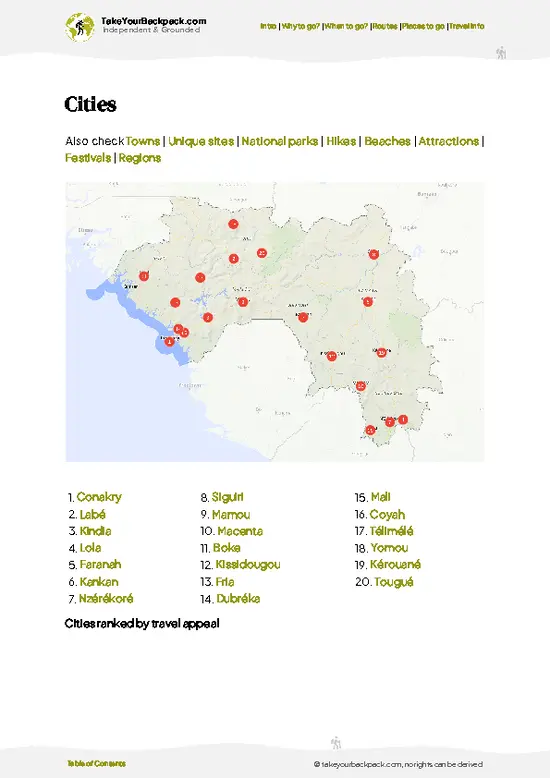
    67 highlights, ranked by travel appeal
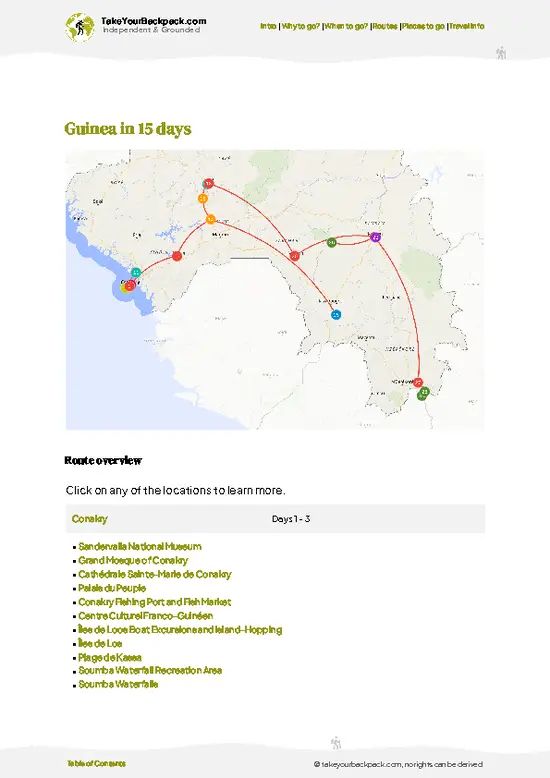
    Optimized 5, 10 & 15-day travel routes
    Cities, national parks, landmarks, beaches
    How to get around
    Offline-friendly for travel without Wi-Fi
    👉 Click to see all 30+ guide features

    📅 Plan smarter in minutes, not weeks
    Month by month travel advice
    Festivals & national holidays
    Budget expectations

    🗺️ Go to the right places, skip the overrated ones
    Honest pros & cons of destinations
    Top hikes, parks & viewpoints
    Lesser-known places most travelers miss
    Clear “worth it vs skip it” guidance

    🛏️ Travel smoothly without rookie mistakes
    Best areas to stay
    Transport systems explained simply
    Common scams & safety advice
    SIM cards, money & practical tips

    🌍 Understand the country, not just visit it
    Culture & traditions
    52 Essential phrases & customs
    Festivals worth planning around
    Traveler-friendly historical context
    Insights that make places more meaningful

    📱 Built for real travel conditions
    Fully downloadable PDF
    Works completely offline
    Optimized for phone use
    Useful in remote areas & buses
    Everything in one place
    Save weeks of stressful planning
    Get instant access to your full guide. 30‑day money-back guarantee.


    By proceeding you agree to our terms.
    Sent to your inbox immediately after payment • 100% Secure Checkout
    Best Backpacking Travel Advisor 2025 tourism awardBest Backpacking
    Travel Advisor
    2025
    What others say about Take Your Backpack Guides:
    ⭐⭐⭐⭐⭐
    Fantastic, amazing amount of information!
    ⭐⭐⭐⭐⭐
    My goodness this is amazing, it's what I've been looking for hats off too you!
    ⭐⭐⭐⭐⭐
    I think this is absolutely BRILLIANT
    ⭐⭐⭐⭐
    Very complete and informative. It's still missing places, but I gotta to commend you
    ⭐⭐⭐⭐⭐
    This is truly amazing, thank you, can't wait to explore it with my kids!
    ⭐⭐⭐⭐⭐
    Awesome resource, thank you!
    ⭐⭐⭐⭐⭐
    This is amazing! Can't wait to explore the ones I haven't seen
    ⭐⭐⭐⭐
    I love this! Well done, great idea.
    ⭐⭐⭐⭐⭐
    Thanks for taking the time to make this gem!
    ⭐⭐⭐⭐⭐
    This might be the best website I've ever seen.
    ⭐⭐⭐⭐⭐
    Congratulations, and thank you so much for your work; it's incredibly valuable.
    ⭐⭐⭐⭐
    In all seriousness I think you did a great job pointing out the important spots
    ⭐⭐⭐⭐⭐
    10/10 very good
    ⭐⭐⭐⭐⭐
    As someone who's only just starting to visit regularly this is awesome, thank you.
    ⭐⭐⭐⭐
    Thank you very much! I'm going to visit my dad, it's going to be very useful!
    ⭐⭐⭐⭐⭐
    This is really cool! We'll be travelling for the first time and this definitely come in handy.
    ⭐⭐⭐⭐⭐
    You are now our minister of culture, congratulations 👨‍💼
    ⭐⭐⭐⭐⭐
    Just wanted to tell you that this is a pearl! Going to follow your recommendations.
    ⭐⭐⭐⭐⭐
    This is so cool. I'll definitely be using the resource for my travels soon.
    ⭐⭐⭐⭐⭐
    This is very impressive! Good work.
    ⭐⭐⭐⭐⭐
    This is an amazing and informative site. Very well done!

    🛏️ Where to stay?How to pick the right area

    In Mali, Guinea, the heart of backpacker life pulses strongest around the central district near the market and riverfront. This area hums with activity from dawn, the air thick with the scent of spices and fresh produce, making it easy to dive into local rhythms. It’s where you’ll find the most budget-friendly guesthouses and hostels, often run by locals who double as informal guides. Staying here means you’re steps from lively street food stalls and impromptu music sessions, perfect for solo travelers craving connection without the touristy gloss.

    Venture a bit farther into the quieter residential … read more 👉
    In Mali, Guinea, the heart of backpacker life pulses strongest around the central district near the market and riverfront. This area hums with activity from dawn, the air thick with the scent of spices and fresh produce, making it easy to dive into local rhythms. It’s where you’ll find the most budget-friendly guesthouses and hostels, often run by locals who double as informal guides. Staying here means you’re steps from lively street food stalls and impromptu music sessions, perfect for solo travelers craving connection without the touristy gloss.

    Venture a bit farther into the quieter residential neighborhoods bordering the center, and you’ll find a calmer vibe with safe streets and small cafés where you can recharge. These spots lack the bustle but offer a genuine slice of daily life, ideal for those who want to balance social energy with downtime. Compared to the more isolated or upscale parts of town, these areas give you the best mix of safety, affordability, and authentic local flavor.

    🚌 Getting aroundGetting around like a local

    Mali moves at its own rhythm—less a strict timetable and more a pulse you feel in the dust and chatter. The sun scorches midday markets, where bargaining is a dance, not a transaction. Streets hum with the buzz of motorbikes and the clatter of carts, but don’t expect clocks to dictate your day. Instead, Mali’s flow is about reading the moment: the light shifting on the Niger River, the scent of spices in the air, the sudden burst of laughter from a corner café. This is a place where patience isn’t just a virtue; it’s your best travel tool. Mastering Mali’s transit means embracing its unpredictability while knowing the reliable veins that keep the country moving.


    • Walking: The most authentic way to absorb Mali’s towns, especially Bamako and Mopti. Streets are lively but uneven; wear sturdy
    read more 👉
    Mali moves at its own rhythm—less a strict timetable and more a pulse you feel in the dust and chatter. The sun scorches midday markets, where bargaining is a dance, not a transaction. Streets hum with the buzz of motorbikes and the clatter of carts, but don’t expect clocks to dictate your day. Instead, Mali’s flow is about reading the moment: the light shifting on the Niger River, the scent of spices in the air, the sudden burst of laughter from a corner café. This is a place where patience isn’t just a virtue; it’s your best travel tool. Mastering Mali’s transit means embracing its unpredictability while knowing the reliable veins that keep the country moving.


    • Walking: The most authentic way to absorb Mali’s towns, especially Bamako and Mopti. Streets are lively but uneven; wear sturdy shoes. Walking lets you catch the scent of grilled fish or fresh millet bread and spot local life up close. It’s free, flexible, and perfect for short hops where vehicles can’t squeeze through.


    • Minibuses (Taxi-brousse): The backbone of intercity travel. These shared vans leave when full, so timing is loose but departures often start early morning around 6-7 AM. Tickets cost a few dollars, making them budget-friendly but expect cramped seats and a bumpy ride on Mali’s rough roads. They’re slow but the best way to meet locals and see the countryside.


    • Motorcycle Taxis (Jakarta): Zipping through traffic and narrow alleys, these are your go-to for quick, short-distance trips within cities. Prices are negotiable but usually under a dollar. Helmets aren’t always standard, so hold tight and prepare for a rush of wind and city noise.


    • Regular Taxis: Metered taxis exist mainly in Bamako but meters are often ignored. Agree on a price upfront to avoid surprises. They’re more comfortable than minibuses but pricier. Ideal for airport runs or late-night travel when other options dwindle.


    • River Boats: In river towns like Mopti, boats are essential for crossing the Niger or reaching remote villages. Schedules depend on demand and weather, with departures often at dawn. Prices vary but are generally affordable. The slow, rocking ride offers a sensory feast—water smells, bird calls, and the shimmering light on the river’s surface.

    👛 Costs (as of 28 April 2026)Travel costs and budget guide for Mali

    Backpacking in Mali, Guinea, demands a grounded approach to budgeting, where every dollar stretches across the essentials of daily life and travel. The town’s pace is slow, the air often thick with the scent of earth and smoke from local cooking fires, setting the stage for a raw, unfiltered experience that rewards those who come prepared.
    • Dorm Accommodation: Expect to pay around €5 to €10 per night for basic dorm beds. These are usually simple, sometimes shared rooms with minimal amenities, often with mosquito nets and basic sanitation. The lighting is dim, and the walls may be thin, but it’s a practical base for exploring.
    • Meals: Local meals cost between €2 and €5. Street food and small eateries serve hearty, staple dishes like rice, beans, and grilled fish or chicken, often flavored with
    read more 👉
    Backpacking in Mali, Guinea, demands a grounded approach to budgeting, where every dollar stretches across the essentials of daily life and travel. The town’s pace is slow, the air often thick with the scent of earth and smoke from local cooking fires, setting the stage for a raw, unfiltered experience that rewards those who come prepared.
    • Dorm Accommodation: Expect to pay around €5 to €10 per night for basic dorm beds. These are usually simple, sometimes shared rooms with minimal amenities, often with mosquito nets and basic sanitation. The lighting is dim, and the walls may be thin, but it’s a practical base for exploring.
    • Meals: Local meals cost between €2 and €5. Street food and small eateries serve hearty, staple dishes like rice, beans, and grilled fish or chicken, often flavored with local spices. The food is filling and authentic, but don’t expect Western-style dining or elaborate presentation.
    • Local Transport: Getting around town typically costs about €0.50 to €1 per trip. Shared taxis or minibuses are the norm, packed with locals and buzzing with life. Walking is also common, but the heat and dust can make it taxing over longer distances.
    • Basic Activities/Entry Fees: Entry to local markets or cultural sites usually runs from €1 to €3. These fees support community upkeep and offer a window into the town’s traditions and crafts. Organized tours are rare and often pricier, so independent exploration is the way to go.
    • Miscellaneous Expenses: Budget around €1 to €3 for extras like bottled water, snacks, or small tips. Water safety is a concern, so bottled water is a must, adding a small but necessary cost to your daily budget.

    All told, a realistic daily budget for backpacking in Mali, Guinea, falls between €10 and €22. This range covers the essentials without glossing over the rough edges—the dust, the heat, the simplicity—that shape the experience. Embracing these details means you’re not just passing through; you’re stepping into the rhythm of the place with eyes wide open.
    ⚠️ Prices can change and everyone travels differently, so take this as a rough guide. Hope it helps you plan your adventure!

    🚌 Day tripsExploring the surroundings

    Mali, Guinea, is a fantastic launchpad for day trips that reveal the country’s rich culture and stunning landscapes. Here are some standout options.

    Mount Nimba
    Just a couple of hours from Mali, Mount Nimba offers breathtaking views and a chance to explore unique biodiversity. The hike is moderately challenging, rewarding you with panoramic vistas and the thrill of spotting rare wildlife. Aim for the dry season, from November to April, when trails are more manageable. Budget around $10 for transport and a small fee for park entry. A common mistake? Underestimating the hike’s intensity; pack plenty of water and snacks.


    Kankan
    About an hour away, Kankan is a vibrant town steeped in history. Visit the local market for a sensory overload of colors and scents, and don’t miss the chance … read more 👉
    Mali, Guinea, is a fantastic launchpad for day trips that reveal the country’s rich culture and stunning landscapes. Here are some standout options.

    Mount Nimba
    Just a couple of hours from Mali, Mount Nimba offers breathtaking views and a chance to explore unique biodiversity. The hike is moderately challenging, rewarding you with panoramic vistas and the thrill of spotting rare wildlife. Aim for the dry season, from November to April, when trails are more manageable. Budget around $10 for transport and a small fee for park entry. A common mistake? Underestimating the hike’s intensity; pack plenty of water and snacks.


    Kankan
    About an hour away, Kankan is a vibrant town steeped in history. Visit the local market for a sensory overload of colors and scents, and don’t miss the chance to try traditional dishes like fufu. The best time to visit is during the weekly market days, typically Wednesdays and Saturdays. Expect to spend around $5 on transport and a few dollars for food. Many first-timers overlook the market’s cultural significance; engage with locals for a richer experience.
    👉 Explore Kankan

    Siguiri
    Siguiri is a bit further, roughly two hours by bus, but it’s worth it for the river views and the chance to learn about gold mining. The area is known for its artisanal mining, and you can witness the process firsthand. Visit during the cooler mornings for a more pleasant experience. Total costs should be around $10 for transport. A common pitfall? Not bringing cash; many vendors don’t accept cards.
    👉 Explore Siguiri
    Want to know what more Guinea offers?
    The Guinea Travel Guide describes 67 highlights, from cities to national parks, from beaches to hikes

    Get the Travel Guide -

    🍲 FoodLocal Cuisine & Drinks

    In Mali, Guinea, food is a lively conversation between bold flavors and simple ingredients. You’ll want to dive into Poulet Yassa, a tangy chicken dish marinated in lemon and onions, or savor Fufu, a dense, doughy staple that’s perfect for scooping up spicy stews. The local drinking scene is refreshingly straightforward—think ginger beer or freshly brewed hibiscus tea, both offering a sweet, sharp contrast to the heat of the day.

    Backpackers find their rhythm in bustling markets and street stalls, where the air is thick with the scent of grilled meats and smoky spices. Casual eateries hum with chatter, a mix of locals and travelers swapping stories over shared plates. Expect to eat with your hands—an unspoken invitation to slow down and connect with the food and company. Here, meals aren’t … read more 👉
    In Mali, Guinea, food is a lively conversation between bold flavors and simple ingredients. You’ll want to dive into Poulet Yassa, a tangy chicken dish marinated in lemon and onions, or savor Fufu, a dense, doughy staple that’s perfect for scooping up spicy stews. The local drinking scene is refreshingly straightforward—think ginger beer or freshly brewed hibiscus tea, both offering a sweet, sharp contrast to the heat of the day.

    Backpackers find their rhythm in bustling markets and street stalls, where the air is thick with the scent of grilled meats and smoky spices. Casual eateries hum with chatter, a mix of locals and travelers swapping stories over shared plates. Expect to eat with your hands—an unspoken invitation to slow down and connect with the food and company. Here, meals aren’t just fuel; they’re a social ritual, rich with warmth and a touch of chaos that feels like home.

    🛡️ SafetyStaying Safe: What Travelers Should Know

    Mali, Guinea, is generally safe, but a few common-sense practices can enhance your experience. Stick to well-lit areas at night; the streets can be quiet, and a little caution goes a long way. When solo, blend in—avoid flashy gear and keep your valuables discreet.

    Watch for friendly locals who might offer unsolicited help; they often expect a tip. Street vendors can be persistent, so a polite but firm “no, thank you” works wonders. Stay aware, and you’ll navigate Mali’s charm with ease.

    Other Guinean cities near Mali

    Explore more nearby:

    • Labé—Fouta Djallon plateau, Peulh heritage, cool climate| 84 km away
    • Tougué—remote plateau, Fulani settlements, seasonal rivers| 98 km away
    • Télimélé—Fouta Djallon foothills, Fulani villages, local livestock markets| 152 km away

    💡 Not sure where to go next?
    Create a personalized itinerary for Guinea including Mali and the places that fit your trip.

    Generate my itinerary

    👉 Discover all cities

    Or checkout all Guinea has to offer (think cities, towns, villages, national parks, hikes, beaches, festivals)
    Country photo of Guinea

    We 💚 feedbackParting advice and final tips

    Mali in Guinea pulses with life. The vibrant markets are a sensory overload—spices wafting through the air, laughter echoing off the walls. But watch your step; the roads can be tricky. Embrace the chaos; it’s where the real stories unfold.

    ✍️ Help improve this page!
    The information on this page is based on in-depth research, insights shared by experienced travelers, and feedback from the local travel community in Guinea. While every effort is made to keep the information accurate and current, conditions can change — so if you spot anything incorrect or outdated, please get in touch.


    🙋‍♂️ Give feedback

    👋 Meet the founderWho’s Behind Take Your Backpack?

    Johan, backpacker and founder of TakeYourBackpackHi, I’m Johan (Netherlands 🇳🇱), the creator of TakeYourBackpack. Over the past decade, I’ve backpacked through 80+ countries across six continents, gaining extensive experience with independent travel, long-term trips, and overland routes.

    This site is built on a combination of firsthand travel experience and carefully curated insights from other backpackers. Many guides are based on places I’ve personally visited, while others bring together tips, observations, and practical advice shared by trusted travelers I’ve met along the way.

    The goal is to provide realistic, experience-driven guidance — not generic itineraries — so you can explore destinations with better context, clearer expectations, and more confidence.

    Get full Guinea guide •
    Instant download • 67 highlights • Full Offline guide