
×

Guinea🇬🇳 | citiesKissidougouNiandan River, forest islands, Kissi villages, savanna crossroads | things to do and best time to go

Explore KindiaExplore Labé

Backpacking in Kissidougou
👌 Worth visitingcity ranked #10
By Johan Kruseman 🇳🇱 | Updated October 22, 2026

Kissidougou suits patient overland travelers who like red-dust crossroads towns, woodsmoke mornings and conversations in French or Malinke. If you need sights on a schedule, you may find it thin. Kissidougou sits in southern Guinea, where savanna grass gives way to dark forest patches. Electricity is patchy because the grid is weak, so carry a headlamp and a power bank. Shared taxis leave when full, not on a clock, so arrive early and let the driver count heads. Cash only, in francs, so change money in a bigger city first. Compared with Guéckédou to the south, Kissidougou feels airier and more open, with more savanna and less dense forest.

Discover everything you want to know in the 📖 Guinea Travel Guide.


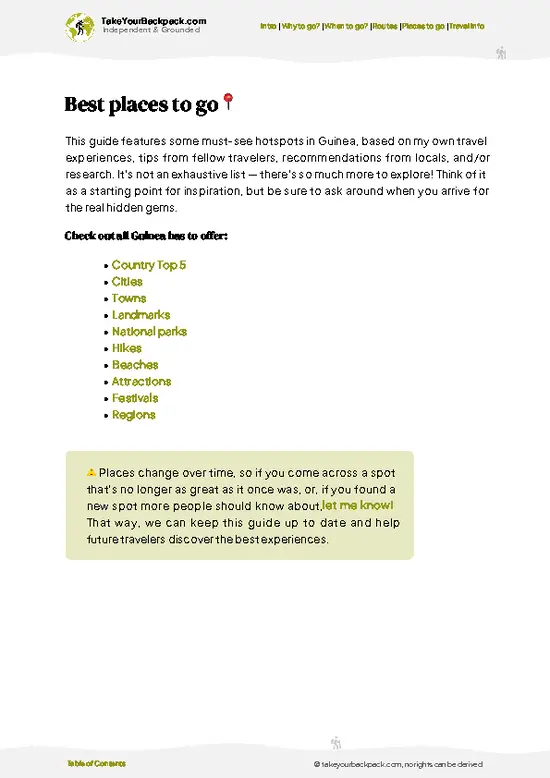
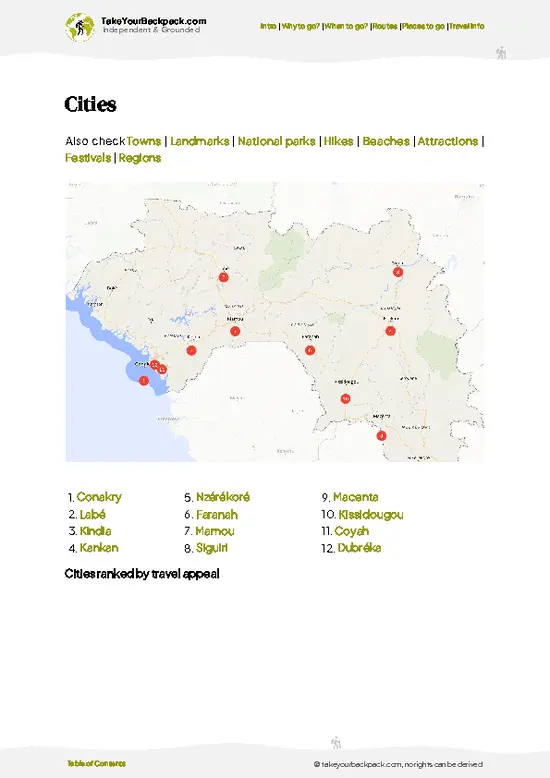
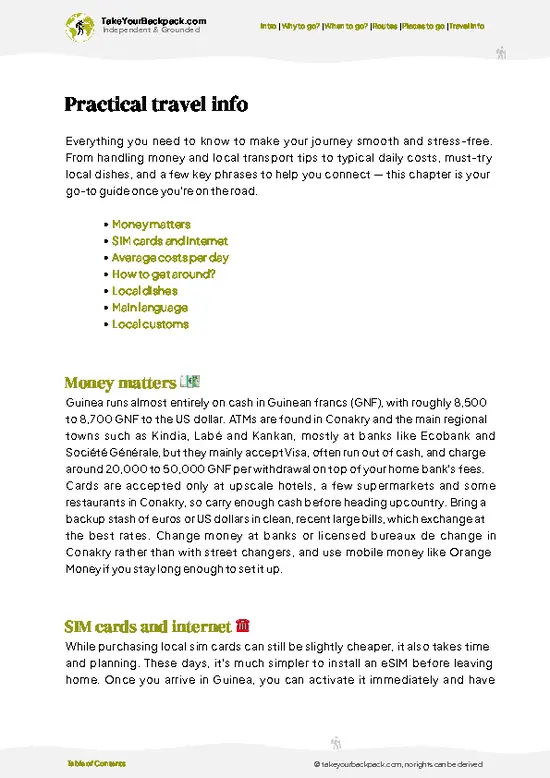
example page 0 from our offline Travel Guide for Guinea
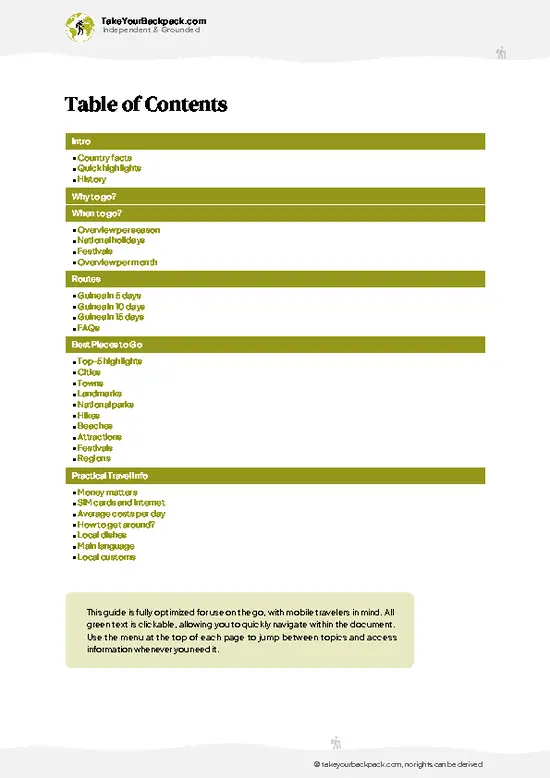
example page 1 from our offline Travel Guide for Guinea
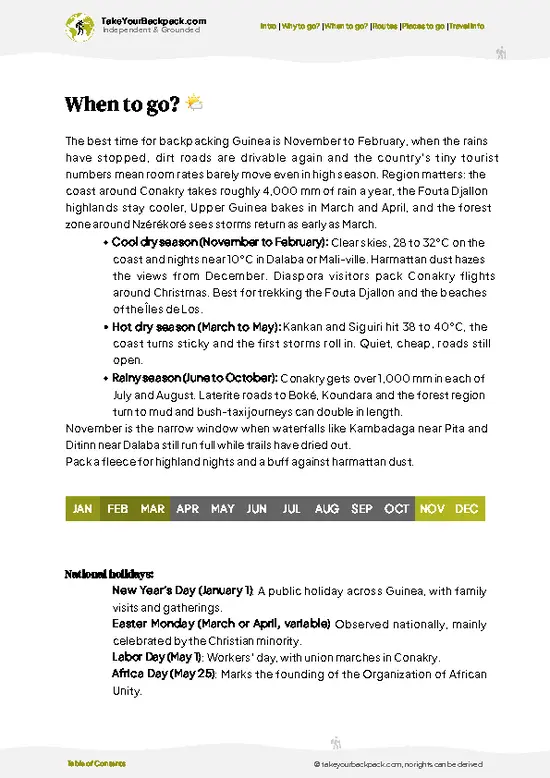
example page 2 from our offline Travel Guide for Guinea
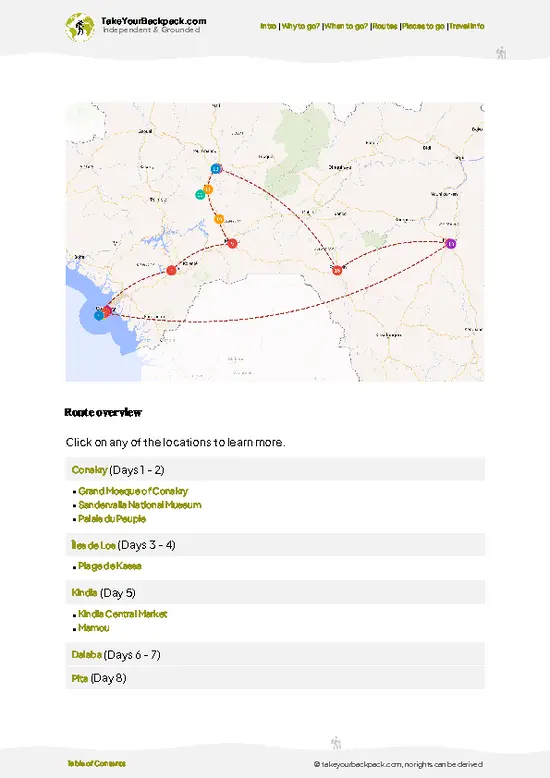
example page 3 from our offline Travel Guide for Guinea
example page 4 from our offline Travel Guide for Guinea
example page 5 from our offline Travel Guide for Guinea
example page 6 from our offline Travel Guide for Guinea
example page 7 from our offline Travel Guide for Guinea
Loading the map 🌍
CLICK TO FILTER
cities
towns
landmarks
national parks
hikes
beaches
attractions
festivals
regions
SHOW COUNTRY’S BESTSHOW ALL

✨ Why go?
Ranked #10 city in Guinea
Why Kissidougou should be on your travel list

Kissidougou earns its place because it is a natural breather on the long road between the Malinke north and the forest south. You get a working market town with simple guesthouses, a few bush-taxi parks and plenty of cheap street food, so resting here is easy. The surrounding landscape is what sets it apart: the town sits among the forest islands that dot the savanna, and a short walk takes you from open grass into cool shade. Culture is the other draw, since this is the heart of Kissi country, and the town is a point where roads fork toward several regions. It works best as a one or two night stop, not a base for weeks.

💡 HighlightsMust-see experiences and standout moments

  1. Central Market: The town’s daily heartbeat, with palm oil, rice, cassava leaf, cloth and mobile phone repairs under tin roofs. Go in the morning when stalls are fullest. Free to wander, 1 hour.
  2. Grand Mosque: A prominent landmark in the town center, useful for understanding the Muslim Malinke influence here. Visit outside prayer times, with covered shoulders and knees, and ask before entering. Free, 20 to 30 minutes.
  3. Niandan River banks: Women wash clothes and boys fish along the water, and the light is gentlest late afternoon. Walk with a local to find a safe path. Free, 1 to 2 hours.
  4. Forest islands on the town edge: Dense patches of tall trees around villages stand in sharp contrast to the grass, shaded and noticeably cooler. Hire a local guide for about US$5 to 10, 2 to 3 hours.
  5. Kissi village
… read more 👉
  1. Central Market: The town’s daily heartbeat, with palm oil, rice, cassava leaf, cloth and mobile phone repairs under tin roofs. Go in the morning when stalls are fullest. Free to wander, 1 hour.
  2. Grand Mosque: A prominent landmark in the town center, useful for understanding the Muslim Malinke influence here. Visit outside prayer times, with covered shoulders and knees, and ask before entering. Free, 20 to 30 minutes.
  3. Niandan River banks: Women wash clothes and boys fish along the water, and the light is gentlest late afternoon. Walk with a local to find a safe path. Free, 1 to 2 hours.
  4. Forest islands on the town edge: Dense patches of tall trees around villages stand in sharp contrast to the grass, shaded and noticeably cooler. Hire a local guide for about US$5 to 10, 2 to 3 hours.
  5. Kissi village visits: Nearby villages preserve Kissi traditions, from farming rhythms to iron-working heritage and the old twisted iron “Kissi pennies” once used as currency. Bring a small gift and ask the chief’s permission, with a guide at about US$5 to 10, half a day.
  6. Colonial-era streets and the town’s old quarter: Faded administrative buildings and mud-brick compounds show the layers of the town’s past. Early morning is coolest and best for photos. Free, 1 hour.
Kissidougou makes a good launch for day trips to Guéckédou, Faranah and the Sierra Leone border region, where forest and river scenery continue. For a first visit, the forest islands give you the landscape that defines the area.
Spotted a mistake or missing something? Contact us.

🏘️ NeighborhoodsHow different areas shape the experience

Kissidougou spreads over low hills in the forest-savanna belt, and you can cover its main areas on foot in a morning, though red dust and midday heat slow you down.
  • Central market and gare routière area: This is the noisy core. Taxi horns, charcoal smoke, sizzling oil and stacks of cassava, peppers and kola nuts crowd the dirt lanes. Go early, before the heat peaks, since shade is scarce and the ground turns to sticky red mud in rain. Brochettes and bread stalls line the edges.
  • Town center and main road: Small shops, phone-credit sellers, money changers and simple eateries sit along the paved stretch. It is flat, easy to walk, and loud with motorbikes. Carry small notes, because change is scarce.
  • Residential quarters on the hills: Mango trees, mud-brick and concrete compounds, goats and children
… read more 👉
Kissidougou spreads over low hills in the forest-savanna belt, and you can cover its main areas on foot in a morning, though red dust and midday heat slow you down.
  • Central market and gare routière area: This is the noisy core. Taxi horns, charcoal smoke, sizzling oil and stacks of cassava, peppers and kola nuts crowd the dirt lanes. Go early, before the heat peaks, since shade is scarce and the ground turns to sticky red mud in rain. Brochettes and bread stalls line the edges.
  • Town center and main road: Small shops, phone-credit sellers, money changers and simple eateries sit along the paved stretch. It is flat, easy to walk, and loud with motorbikes. Carry small notes, because change is scarce.
  • Residential quarters on the hills: Mango trees, mud-brick and concrete compounds, goats and children playing football in the dust. Evenings are quiet apart from radios and roosters. Greet people first, since greetings open every door here.
  • Outskirts and nearby villages: Forest patches, rice fields and streams begin a short walk or moto ride out. Paths are uneven and unmarked, so take a local guide rather than guess.

⌛️ 1 dayHow to make the most of one day

7:30 AM: Central Market. Begin here because the stalls are fullest and the air is coolest before the heat builds. Eat fried dough and sweet coffee at a roadside stand, then browse the cloth and produce rows.
9:30 AM: Grand Mosque. Walk a few minutes to the center of town and look from outside, or ask politely to step in. It explains the Muslim influence in a Kissi area.
11:00 AM: Old quarter. Wander the mud-brick compounds and faded colonial buildings. Few visitors come here, and children will happily say hello. Stay on the main lanes and ask before photographing people.
12:30 PM: Lunch. Find a simple canteen for rice with peanut or leaf sauce, then rest through the hottest hours.
3:00 PM: Forest island walk. Meet a local guide and head to the shaded forest patch at the edge of town. The temperature … read more 👉
7:30 AM: Central Market. Begin here because the stalls are fullest and the air is coolest before the heat builds. Eat fried dough and sweet coffee at a roadside stand, then browse the cloth and produce rows.
9:30 AM: Grand Mosque. Walk a few minutes to the center of town and look from outside, or ask politely to step in. It explains the Muslim influence in a Kissi area.
11:00 AM: Old quarter. Wander the mud-brick compounds and faded colonial buildings. Few visitors come here, and children will happily say hello. Stay on the main lanes and ask before photographing people.
12:30 PM: Lunch. Find a simple canteen for rice with peanut or leaf sauce, then rest through the hottest hours.
3:00 PM: Forest island walk. Meet a local guide and head to the shaded forest patch at the edge of town. The temperature drops, birds are loud and the trees feel ancient against the open grass.
5:00 PM: Niandan River. Finish at the water as washing and fishing wind down. Walk back before dark and keep your headlamp ready.

🌤️ When to go?When to go for the best experience

Kissidougou is most comfortable from November to February, when rain stops and the air is clear.
  • Dry season (November to February): Days reach 30 to 34°C (86 to 93°F), nights cool to 18 to 22°C (64 to 72°F). Harmattan haze can dull the views, roads are firm, and prices for transport stay steady.
  • Hot months (March to May): Temperatures hit 34 to 38°C (93 to 100°F) with building humidity. Walking is best before 10 am.
  • Rainy season (June to October): Highs of 27 to 31°C (81 to 88°F), heavy downpours, muddy roads and slower, sometimes pricier, shared taxis. Everything turns bright green.
Daylight stays close to 12 hours all year, so plan long drives for morning departure.

source: climatestotravel.comJANJanuary: excellent for travelingFEBFebruary: excellent for travelingMARMarch: highly recommended for travelingAPRApril: good for travelingMAYMay: fair for travelingJUNJune: fair for travelingJULJuly: below average for travelingAUGAugust: below average for travelingSEPSeptember: fair for travelingOCTOctober: fair for travelingNOVNovember: highly recommended for travelingDECDecember: excellent for traveling
when-to-go

✈️ The backpacker research shortcutGuinea Travel Guide

An offline-friendly backpacking guide with optimized travel routes, ranked highlights, transport advice, and the best areas to stay.
example page 0 from our offline Travel Guide for Guinea
example page 1 from our offline Travel Guide for Guinea
example page 2 from our offline Travel Guide for Guinea
example page 3 from our offline Travel Guide for Guinea
example page 4 from our offline Travel Guide for Guinea
example page 5 from our offline Travel Guide for Guinea
example page 6 from our offline Travel Guide for Guinea
example page 7 from our offline Travel Guide for Guinea
The digital guide (238 pages) contains:
✅ 53 highlights, ranked by travel appeal
✅ Optimized 5, 10 & 15-day travel routes
✅ Cities, national parks, landmarks, beaches
✅ How to get around
✅ Offline-friendly for travel without Wi-Fi
👉 Click to see all 30+ guide features

📅 Plan smarter in minutes, not weeks
✅ Month by month travel advice
✅ Festivals & national holidays
✅ Budget expectations

🗺️ Go to the right places, skip the overrated ones
✅ Honest pros & cons of destinations
✅ Top hikes, parks & viewpoints
✅ Lesser-known places most travelers miss
✅ Clear “worth it vs skip it” guidance

🛏️ Travel smoothly without rookie mistakes
✅ Best areas to stay
✅ Transport systems explained simply
✅ Common scams & safety advice
✅ SIM cards, money & practical tips

🌍 Understand the country, not just visit it
✅ Culture & traditions
✅ 52 Essential phrases & customs
✅ Festivals worth planning around
✅ Traveler-friendly historical context
✅ Insights that make places more meaningful

📱 Built for real travel conditions
✅ Fully downloadable PDF
✅ Works completely offline
✅ Optimized for phone use
✅ Useful in remote areas & buses
✅ Everything in one place
Stop searching, start planning
Get instant access to your full guide. 30‑day money-back guarantee.
+ Add another guide for just

By proceeding you agree to our terms.
Sent to your inbox immediately after payment • 100% Secure Checkout
Best Backpacking Travel Advisor 2025 tourism awardBest Backpacking
Travel Advisor
2025
What others say about Take Your Backpack Guides:
⭐⭐⭐⭐⭐
Fantastic, amazing amount of information!
⭐⭐⭐⭐⭐
My goodness this is amazing, it's what I've been looking for hats off too you!
⭐⭐⭐⭐⭐
I think this is absolutely BRILLIANT
⭐⭐⭐⭐
Very complete and informative. It's still missing places, but I gotta to commend you
⭐⭐⭐⭐⭐
This is truly amazing, thank you, can't wait to explore it with my kids!
⭐⭐⭐⭐⭐
Awesome resource, thank you!
⭐⭐⭐⭐⭐
This is amazing! Can't wait to explore the ones I haven't seen
⭐⭐⭐⭐
I love this! Well done, great idea.
⭐⭐⭐⭐⭐
Thanks for taking the time to make this gem!
⭐⭐⭐⭐⭐
This might be the best website I've ever seen.
⭐⭐⭐⭐⭐
Congratulations, and thank you so much for your work; it's incredibly valuable.
⭐⭐⭐⭐
In all seriousness I think you did a great job pointing out the important spots
⭐⭐⭐⭐⭐
10/10 very good
⭐⭐⭐⭐⭐
As someone who's only just starting to visit regularly this is awesome, thank you.
⭐⭐⭐⭐
Thank you very much! I'm going to visit my dad, it's going to be very useful!
⭐⭐⭐⭐⭐
This is really cool! We'll be travelling for the first time and this definitely come in handy.
⭐⭐⭐⭐⭐
You are now our minister of culture, congratulations 👨‍💼
⭐⭐⭐⭐⭐
Just wanted to tell you that this is a pearl! Going to follow your recommendations.
⭐⭐⭐⭐⭐
This is so cool. I'll definitely be using the resource for my travels soon.
⭐⭐⭐⭐⭐
This is very impressive! Good work.
⭐⭐⭐⭐⭐
This is an amazing and informative site. Very well done!

🛏️ Where to stay?Best areas and accommodation options

The center near the main road and market is the best place for a budget bed in Kissidougou, with basic guesthouses at roughly US$10 to 25 a night. There are no dorm hostels, so expect simple private rooms, often with a fan and a bucket shower. Being central means you can walk to food, money changers and the gare routière for early departures, which matters when transport leaves at dawn. The trade-off is noise: motorbikes, generators and early prayer calls start before sunrise, so bring earplugs.
The quieter residential hillside quarters are the second option. Rooms are sometimes a little cheaper, … read more 👉
The center near the main road and market is the best place for a budget bed in Kissidougou, with basic guesthouses at roughly US$10 to 25 a night. There are no dorm hostels, so expect simple private rooms, often with a fan and a bucket shower. Being central means you can walk to food, money changers and the gare routière for early departures, which matters when transport leaves at dawn. The trade-off is noise: motorbikes, generators and early prayer calls start before sunrise, so bring earplugs.
The quieter residential hillside quarters are the second option. Rooms are sometimes a little cheaper, nights are calmer and the breeze is better, but you will need a moto-taxi for rides at night and fewer places have reliable power. Confirm that a generator or solar backup exists, and carry a headlamp either way. Book ahead only around holidays; walking in usually works.

🚌 Getting aroundTransportation options and practical tips

Kissidougou's center is compact enough to walk end to end in 20 to 30 minutes, but walking stops making sense in the midday heat or when you head to outlying villages. Paved roads are limited, red dust coats everything in the dry season, and rain turns side tracks to slick mud. There is no formal city bus system, so you pay cash to drivers, and fares are negotiated.
  • Walking: Free and best early morning or after 4 pm. Bring water and a hat, since shade is thin along the main road.
  • Moto-taxis: The default for getting around, roughly US$0.50 to 1.50 per town ride, and they swarm around the market and gare routière. Agree the price before climbing on, because drivers quote foreigners high. Helmets are rare, so ask the driver to go slowly.
  • Shared taxis: Battered cars run set routes within and just
… read more 👉
Kissidougou's center is compact enough to walk end to end in 20 to 30 minutes, but walking stops making sense in the midday heat or when you head to outlying villages. Paved roads are limited, red dust coats everything in the dry season, and rain turns side tracks to slick mud. There is no formal city bus system, so you pay cash to drivers, and fares are negotiated.
  • Walking: Free and best early morning or after 4 pm. Bring water and a hat, since shade is thin along the main road.
  • Moto-taxis: The default for getting around, roughly US$0.50 to 1.50 per town ride, and they swarm around the market and gare routière. Agree the price before climbing on, because drivers quote foreigners high. Helmets are rare, so ask the driver to go slowly.
  • Shared taxis: Battered cars run set routes within and just outside town for about US$0.30 to 1, packed with four passengers in the back. They leave when full, so expect a wait of 10 to 40 minutes.
  • Bush taxis and minibuses: These connect Kissidougou to Kankan, Faranah, Guéckédou and Conakry from the gare routière. Longer routes cost about US$8 to 25 depending on destination and road. Leave at dawn, since departures thin out by afternoon and journeys can stretch with breakdowns and checkpoints.
Keep small bills handy for every ride, as drivers rarely have change.

👛 Costs (as of 22 October 2026)Typical daily expenses

Kissidougou costs about US$22 to 40 a day for a backpacker, and the table below gives the breakdown at a total of US$32.
CategoryBudget RangeLocal Reality
Dorm accommodation (high season)US$10 to 15No dorms exist; a basic private guesthouse room with a fan
Dorm accommodation (off-season)US$8 to 12Rainy months bring slight discounts if you ask
MealsUS$5 to 9Rice and sauce at market eateries, bread and coffee for breakfast
Local transportUS$2 to 4Moto-taxis and shared cars, paid in cash
City transport passNot availableNo pass exists; pay per ride
Basic activities/entry feesUS$3 to 6Guide fees for village and forest walks
MiscellaneousUS$2 to 4Water, phone credit, small tips
Total Daily BudgetUS$32Comfortable for one person
Carry small notes and pay in local currency, since changing money for every purchase … read more 👉
Kissidougou costs about US$22 to 40 a day for a backpacker, and the table below gives the breakdown at a total of US$32.
CategoryBudget RangeLocal Reality
Dorm accommodation (high season)US$10 to 15No dorms exist; a basic private guesthouse room with a fan
Dorm accommodation (off-season)US$8 to 12Rainy months bring slight discounts if you ask
MealsUS$5 to 9Rice and sauce at market eateries, bread and coffee for breakfast
Local transportUS$2 to 4Moto-taxis and shared cars, paid in cash
City transport passNot availableNo pass exists; pay per ride
Basic activities/entry feesUS$3 to 6Guide fees for village and forest walks
MiscellaneousUS$2 to 4Water, phone credit, small tips
Total Daily BudgetUS$32Comfortable for one person
Carry small notes and pay in local currency, since changing money for every purchase wastes time. Agree moto fares before riding to avoid foreigner pricing.
⚠️ Prices can change and everyone travels differently, so take this as a rough guide. Hope it helps you plan your adventure!

🚌 Day tripsExploring the surroundings

Kissidougou works well as a base for short forest and village outings, and you can reach all of these with a moto-taxi or shared car and be back by dark.
Villages and Forest Patches Near Town: Short rides take you into sacred forest groves, rice fields and farming hamlets where Kissi and Koranko life continues at village pace. A local guide is worth about US$10 to 20 for the day and stops you wandering into private land. Go in the dry season for firmer tracks.

Faranah: This Niger-river town lies about 100 km northeast, roughly 2 to 3 hours by shared car for US$6 to 10 each way. It is a long day, so leave early, and the return seat is the real challenge since cars thin after midday.
👉 Explore Faranah
Guéckédou: Southwest in the forest region, about 3 to 4 hours by road, and best done as a day … read more 👉
Kissidougou works well as a base for short forest and village outings, and you can reach all of these with a moto-taxi or shared car and be back by dark.
Villages and Forest Patches Near Town: Short rides take you into sacred forest groves, rice fields and farming hamlets where Kissi and Koranko life continues at village pace. A local guide is worth about US$10 to 20 for the day and stops you wandering into private land. Go in the dry season for firmer tracks.

Faranah: This Niger-river town lies about 100 km northeast, roughly 2 to 3 hours by shared car for US$6 to 10 each way. It is a long day, so leave early, and the return seat is the real challenge since cars thin after midday.
👉 Explore Faranah
Guéckédou: Southwest in the forest region, about 3 to 4 hours by road, and best done as a day only in the dry season. Fares run about US$8 to 12. First-timers often leave too late and get stuck.

🍲 FoodWhat to Eat & Drink

Kissidougou sits in rice and cassava country, so the local plate leans on rice with leaf sauces, such as cassava leaf or potato leaf sauce, simmered in palm oil until dark and rich. In the forest-savanna zone you will also see palm oil stews with fish or chicken and bush ingredients like fresh kola nuts for chewing.
Backpackers eat mostly at the central market and the cluster of small maquis eateries by the main road, where a plate costs about US$1.50 to 4. Early-morning bread and egg sandwiches with sweet coffee or Nescafé fuel departures, and evening brochettes grilled over charcoal appear near the gare routière. Fresh mangoes, oranges and bananas are sold by the pile in season. Drinks are mostly sweet tea, bissap, ginger juice and bottled soda. Alcohol is available at a few spots but low-key. … read more 👉
Kissidougou sits in rice and cassava country, so the local plate leans on rice with leaf sauces, such as cassava leaf or potato leaf sauce, simmered in palm oil until dark and rich. In the forest-savanna zone you will also see palm oil stews with fish or chicken and bush ingredients like fresh kola nuts for chewing.
Backpackers eat mostly at the central market and the cluster of small maquis eateries by the main road, where a plate costs about US$1.50 to 4. Early-morning bread and egg sandwiches with sweet coffee or Nescafé fuel departures, and evening brochettes grilled over charcoal appear near the gare routière. Fresh mangoes, oranges and bananas are sold by the pile in season. Drinks are mostly sweet tea, bissap, ginger juice and bottled soda. Alcohol is available at a few spots but low-key. Eat where food is cooked hot in front of you.

🛡️ SafetySafety Tips and Common Scams in Kissidougou

Kissidougou is broadly calm, and most problems are petty. Keep your phone and cash out of sight in the crowded market, where pickpockets work the press of people. Solo travelers, including women, usually find people friendly and curious, but dress modestly and greet everyone. After dark, streets are poorly lit, so take a moto-taxi rather than walking, and carry a headlamp. Police and military checkpoints on roads are routine: stay polite, keep your passport copy handy, and hand over nothing without a clear reason. Drivers sometimes quote foreigners inflated fares, so settle the price first. Roads are the main real hazard, since vehicles are old and overloaded.

FAQCommon questions from travelers

Two days is enough for Kissidougou itself, with a third if you add a guided village or forest walk. Spend one morning at the central market and another outside town on foot or by moto-taxi, and plan early departures for onward travel, since bush taxis to Kankan or Conakry take most of a day.
Kissidougou is generally safe for solo backpackers, with petty theft in the market as the main concern. Avoid walking unlit streets after dark, use a moto-taxi at night, and expect routine checkpoints on roads. Budget guesthouses cost about US$10 to 25 a night, and people are usually welcoming if you greet them first.
Kissidougou is known as a crossroads town in the forest-savanna belt of Guinea, with a large market and Kissi and Koranko farming communities nearby. It links Kankan, Faranah and Guéckédou by road, and travelers use it as a stop of one to two days. Rice, cassava leaf sauce and sacred forest groves are local highlights.
⚠️ Things can change over time, so always validate details locally before you go.

Other Guinean cities near Kissidougou

Explore more nearby:

  • Macenta—rainforest hills, Kpelle culture, weekly market| 101 km away
  • Faranah—Niger River bend, administrative center, rice fields| 118 km away
  • Kankan—savanna landscape, university town, Manding culture| 159 km away

💡 Not sure where to go next?
Create a personalized itinerary for Guinea including Kissidougou and the places that fit your trip.

Generate my itinerary

👉 Discover all cities

Or checkout all Guinea has to offer (think cities, towns, villages, national parks, hikes, beaches, festivals)
Country photo of Guinea

We 💚 feedbackIs it worth it?

Kissidougou fits best between Faranah and the forest towns of the south, so pair it with Guéckédou or N’Zérékoré for a proper overland loop. I would stay two nights, skip rushing, and bring small bills for guides and shared taxis.

✍️ Help improve this page!
The information on this page is based on in-depth research, insights shared by experienced travelers, and feedback from the local travel community in Guinea. While every effort is made to keep the information accurate and current, conditions can change — so if you spot anything incorrect or outdated, please get in touch.


🙋‍♂️ Give feedback

👋 Meet the founderWho’s Behind Take Your Backpack?

Johan, backpacker and founder of TakeYourBackpackHi, I’m Johan (Netherlands 🇳🇱), the creator of TakeYourBackpack. Over the past 3 decades, I’ve backpacked through 90+ countries across six continents, gaining extensive experience with independent travel, long-term trips, and overland routes.

This site is built on a combination of firsthand travel experience and carefully curated insights from other backpackers. Many guides are based on places I’ve personally visited, while others bring together tips, observations, and practical advice shared by trusted travelers I’ve met along the way.

The goal is to provide realistic, experience-driven guidance — not generic itineraries — so you can explore destinations with better context, clearer expectations, and more confidence.