×

Guinea🇬🇳 | national parksNimba Mountains Biosphere Reservemountain ridges, endemic species, grassy plateaus, rocky outcrops | things to do and best time to go

Explore Diécké Forest ReserveExplore Fouta Djallon Highlands

Backpacking in Nimba Mountains Biosphere Reserve
🏆 Top picknational park ranked #1
By Johan Kruseman 🇳🇱 | Updated October 15, 2026

The first real fork in the road at Nimba Mountains Biosphere Reserve is whether to invest in the logistics—permits, guides, and transport—or to skip it for an easier, cheaper park. This isn’t a casual detour. Nimba sits in southeastern Guinea, right on the borders with Côte d’Ivoire and Liberia, and reaching it means braving rough roads and bureaucracy. For backpackers, Nimba is a test of patience and priorities: the hiking is wild and steep, the scenery is raw—think cloud forests, knife-edged ridges, and a mist that swallows sound. Wildlife is elusive but real: chimpanzees, rare frogs, and birds you won’t see elsewhere. The price of entry (and the mandatory guide) stings, and there’s no budget lodge scene—camping is possible but basic. Crowds are rare, but so are amenities. Compared to Guinea’s more accessible parks like Badiar, Nimba is less forgiving but far more rewarding if you want solitude and a sense of scale.

Discover everything you want to know in the 📖 Guinea Travel Guide.


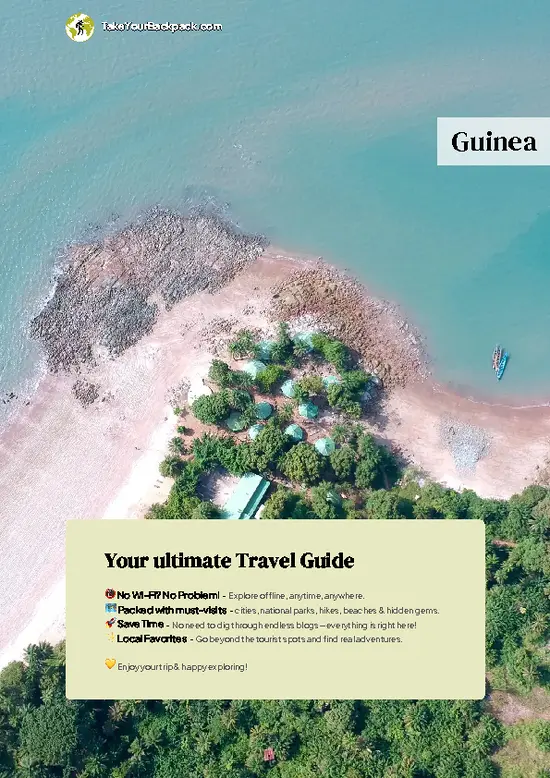
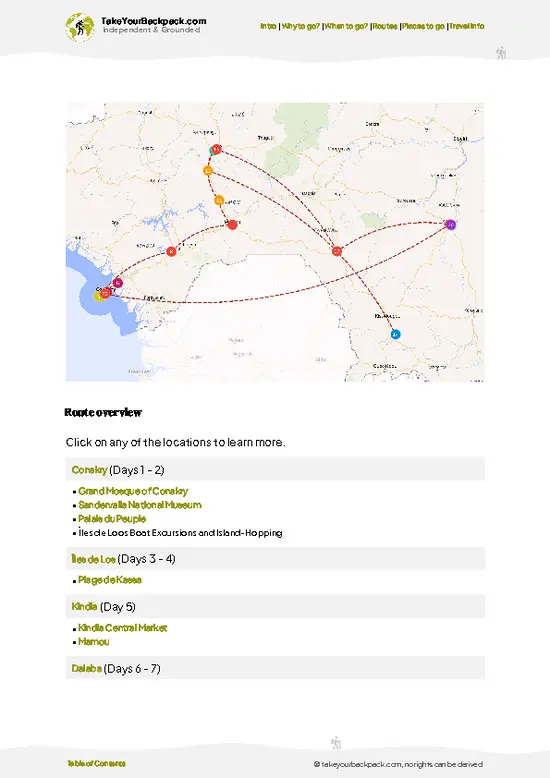
example page 0 from our offline Travel Guide for Guinea
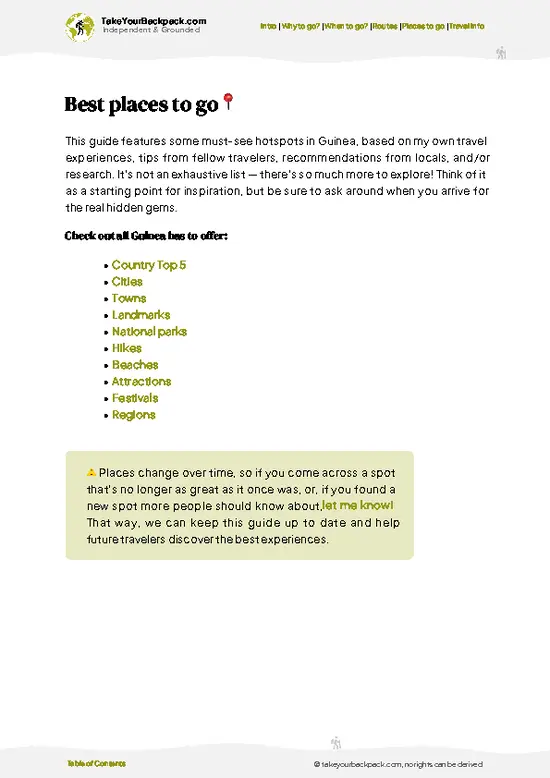
example page 1 from our offline Travel Guide for Guinea
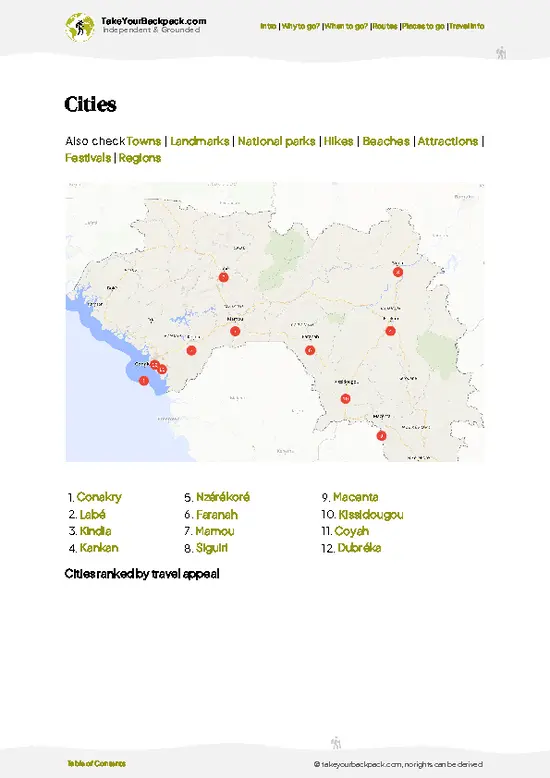
example page 2 from our offline Travel Guide for Guinea
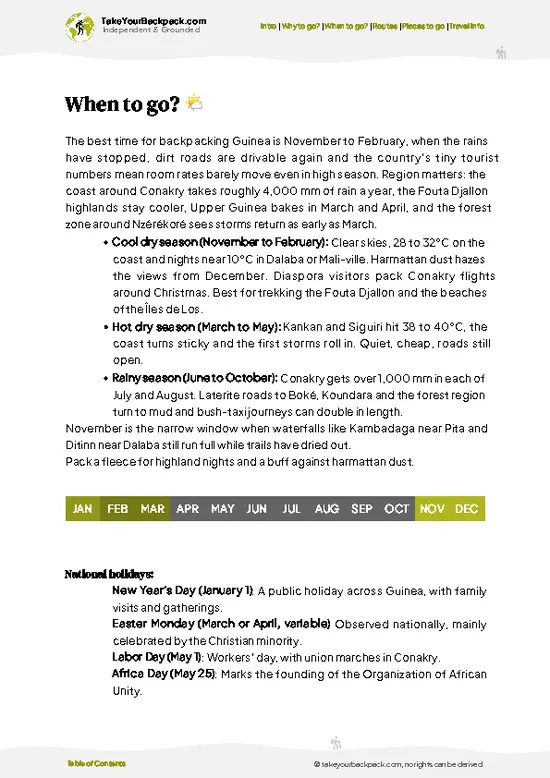
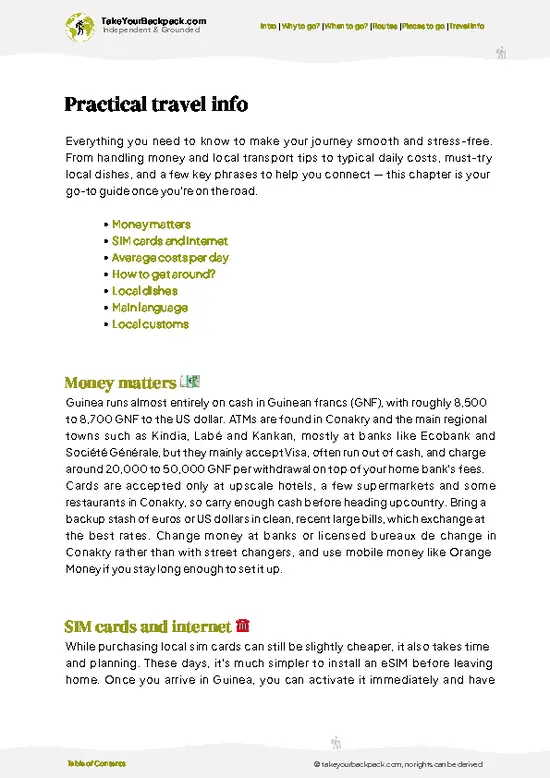
example page 3 from our offline Travel Guide for Guinea
example page 4 from our offline Travel Guide for Guinea
example page 5 from our offline Travel Guide for Guinea
example page 6 from our offline Travel Guide for Guinea
example page 7 from our offline Travel Guide for Guinea
Loading the map 🌍
CLICK TO FILTER
cities
towns
landmarks
national parks
hikes
beaches
attractions
festivals
regions
SHOW COUNTRY’S BESTSHOW ALL

✨ Why go?
Ranked #1 national park in Guinea
What makes this national park worth exploring

The Nimba Mountains Biosphere Reserve in Guinea attracts backpackers for several compelling reasons. First, it offers a chance for independent exploration. You can wander through lush landscapes, discovering unique flora and fauna without the constraints of a guided tour. This freedom is a major draw for those who prefer to set their own pace.

Budget-conscious travelers will appreciate the camping options and nearby hostels. These accommodations allow you to save money while immersing yourself in nature. Just be prepared for basic amenities; this isn’t a luxury retreat.

The trail variety is another highlight. Whether you’re looking for a challenging hike or a leisurely stroll, the reserve has something to suit your mood. Trails range from rugged paths to gentler routes, making it accessible … read more 👉
The Nimba Mountains Biosphere Reserve in Guinea attracts backpackers for several compelling reasons. First, it offers a chance for independent exploration. You can wander through lush landscapes, discovering unique flora and fauna without the constraints of a guided tour. This freedom is a major draw for those who prefer to set their own pace.

Budget-conscious travelers will appreciate the camping options and nearby hostels. These accommodations allow you to save money while immersing yourself in nature. Just be prepared for basic amenities; this isn’t a luxury retreat.

The trail variety is another highlight. Whether you’re looking for a challenging hike or a leisurely stroll, the reserve has something to suit your mood. Trails range from rugged paths to gentler routes, making it accessible for different skill levels.

For those who thrive on self-guided adventures, this park is a perfect fit. While some may opt for tours, the well-marked trails and local maps empower you to explore at your own pace. Just remember to carry enough water and snacks; the remote areas can be more isolated than they appear.

💡 HighlightsPlaces and moments you shouldn't skip

  • Mount Nimba (Mount Richard-Molard) summit and ridgeline — The high, iron-rich ridge is the park’s spine: dramatic cliffs, misty cloud at dawn, and panoramic views over Guinea, Liberia and Côte d’Ivoire. It’s the go-to for serious hikers who want raw mountain scenery rather than manicured trails.
  • Montane cloud forest and highland grasslands — Those strange islands of cool, mossy forest and grassy plateaus on the ironstone peaks host plant communities you won’t see down in the lowlands: stunted trees, orchids, and ferns shaped by wind and altitude.
  • Nimba viviparous toad (Nimbaphrynoides) — A tiny superstar of the reserve: this endemic amphibian gives birth to live young instead of tadpoles. Spotting signs of its habitat (muddy seepages and shallow pools) tells you you’re in truly unique
… read more 👉
  • Mount Nimba (Mount Richard-Molard) summit and ridgeline — The high, iron-rich ridge is the park’s spine: dramatic cliffs, misty cloud at dawn, and panoramic views over Guinea, Liberia and Côte d’Ivoire. It’s the go-to for serious hikers who want raw mountain scenery rather than manicured trails.
  • Montane cloud forest and highland grasslands — Those strange islands of cool, mossy forest and grassy plateaus on the ironstone peaks host plant communities you won’t see down in the lowlands: stunted trees, orchids, and ferns shaped by wind and altitude.
  • Nimba viviparous toad (Nimbaphrynoides) — A tiny superstar of the reserve: this endemic amphibian gives birth to live young instead of tadpoles. Spotting signs of its habitat (muddy seepages and shallow pools) tells you you’re in truly unique biodiversity territory.
  • Endemic mammals and rare small fauna — The massif shelters species found nowhere else, like the Nimba otter-shrew (Micropotamogale lamottei) and other specialized rodents and shrews. They’re skittish, so quiet, observant hikes pay off.
  • Waterfalls, streams and highland pools — Rivulets cut glassy channels through the ironstone and drop into cool pools. They’re scenic picnic spots and crucial microhabitats for frogs and insects — and a welcome place to cool off after a hot approach.
  • Ridge hiking routes and panoramic viewpoints — Trails along the ridge offer variable terrain: rocky scrambling, grassy saddles, and sheer overlooks. Routes aren’t heavily marked, so local guides are worth hiring; the sunrise views are hard to forget.
  • Geology and ironstone formations — The rust-colored rocks and tabular iron ore outcrops give the landscape an otherworldly look and are why the area attracted mining interest — which also explains the reserve’s conservation importance and fragile status.
Spotted a mistake or missing something? Contact us.

🌤️ When to go?Best time to explore Nimba Mountains Biosphere Reserve

  • Weather: The dry season from November to April is your best bet. Rainfall drops significantly, making trails less slippery and river crossings safer. The wet season, May to October, brings heavy rains that can turn paths into mud traps and obscure views.
  • Temperature: Daytime temps hover around 25-30°C (77-86°F) during the dry months, comfortable for hiking without overheating. Nights can dip to 15°C (59°F), so pack layers. The wet season is warmer and more humid, which can sap your energy faster.
  • Daylight Hours: Daylight stays fairly consistent year-round, roughly 11-12 hours daily. Early starts are wise to maximize cooler morning hours and avoid afternoon heat or sudden showers.
  • Crowds: The park sees few visitors overall, but the dry season attracts more local and regional tourists.
… read more 👉
  • Weather: The dry season from November to April is your best bet. Rainfall drops significantly, making trails less slippery and river crossings safer. The wet season, May to October, brings heavy rains that can turn paths into mud traps and obscure views.
  • Temperature: Daytime temps hover around 25-30°C (77-86°F) during the dry months, comfortable for hiking without overheating. Nights can dip to 15°C (59°F), so pack layers. The wet season is warmer and more humid, which can sap your energy faster.
  • Daylight Hours: Daylight stays fairly consistent year-round, roughly 11-12 hours daily. Early starts are wise to maximize cooler morning hours and avoid afternoon heat or sudden showers.
  • Crowds: The park sees few visitors overall, but the dry season attracts more local and regional tourists. If you want solitude, aim for shoulder months like November or April.
  • Seasonal Activities: Dry season is prime for trekking, wildlife spotting, and photography. The wet season offers lush greenery and active waterfalls but expect limited trail access and more insects.
  • Price Fluctuations: Accommodation and guide fees rise slightly during the dry season due to demand. Booking in advance can lock in better rates and ensure availability.
Pro-tip: Plan your visit for the early dry season—November to December—when the weather is stable, crowds are manageable, and prices haven’t peaked yet.


source: climatestotravel.comJANJanuary: excellent for travelingFEBFebruary: excellent for travelingMARMarch: excellent for travelingAPRApril: highly recommended for travelingMAYMay: fair for travelingJUNJune: below average for travelingJULJuly: below average for travelingAUGAugust: below average for travelingSEPSeptember: fair for travelingOCTOctober: fair for travelingNOVNovember: highly recommended for travelingDECDecember: excellent for traveling
when-to-go

✈️ The backpacker research shortcutGuinea Travel Guide

An offline-friendly backpacking guide with optimized travel routes, ranked highlights, transport advice, and the best areas to stay.
example page 0 from our offline Travel Guide for Guinea
example page 1 from our offline Travel Guide for Guinea
example page 2 from our offline Travel Guide for Guinea
example page 3 from our offline Travel Guide for Guinea
example page 4 from our offline Travel Guide for Guinea
example page 5 from our offline Travel Guide for Guinea
example page 6 from our offline Travel Guide for Guinea
example page 7 from our offline Travel Guide for Guinea
The digital guide (238 pages) contains:
✅ 53 highlights, ranked by travel appeal
✅ Optimized 5, 10 & 15-day travel routes
✅ Cities, national parks, landmarks, beaches
✅ How to get around
✅ Offline-friendly for travel without Wi-Fi
👉 Click to see all 30+ guide features

📅 Plan smarter in minutes, not weeks
✅ Month by month travel advice
✅ Festivals & national holidays
✅ Budget expectations

🗺️ Go to the right places, skip the overrated ones
✅ Honest pros & cons of destinations
✅ Top hikes, parks & viewpoints
✅ Lesser-known places most travelers miss
✅ Clear “worth it vs skip it” guidance

🛏️ Travel smoothly without rookie mistakes
✅ Best areas to stay
✅ Transport systems explained simply
✅ Common scams & safety advice
✅ SIM cards, money & practical tips

🌍 Understand the country, not just visit it
✅ Culture & traditions
✅ 52 Essential phrases & customs
✅ Festivals worth planning around
✅ Traveler-friendly historical context
✅ Insights that make places more meaningful

📱 Built for real travel conditions
✅ Fully downloadable PDF
✅ Works completely offline
✅ Optimized for phone use
✅ Useful in remote areas & buses
✅ Everything in one place
Stop searching, start planning
Get instant access to your full guide. 30‑day money-back guarantee.
+ Add another guide for just

By proceeding you agree to our terms.
Sent to your inbox immediately after payment • 100% Secure Checkout
Best Backpacking Travel Advisor 2025 tourism awardBest Backpacking
Travel Advisor
2025
What others say about Take Your Backpack Guides:
⭐⭐⭐⭐⭐
Fantastic, amazing amount of information!
⭐⭐⭐⭐⭐
My goodness this is amazing, it's what I've been looking for hats off too you!
⭐⭐⭐⭐⭐
I think this is absolutely BRILLIANT
⭐⭐⭐⭐
Very complete and informative. It's still missing places, but I gotta to commend you
⭐⭐⭐⭐⭐
This is truly amazing, thank you, can't wait to explore it with my kids!
⭐⭐⭐⭐⭐
Awesome resource, thank you!
⭐⭐⭐⭐⭐
This is amazing! Can't wait to explore the ones I haven't seen
⭐⭐⭐⭐
I love this! Well done, great idea.
⭐⭐⭐⭐⭐
Thanks for taking the time to make this gem!
⭐⭐⭐⭐⭐
This might be the best website I've ever seen.
⭐⭐⭐⭐⭐
Congratulations, and thank you so much for your work; it's incredibly valuable.
⭐⭐⭐⭐
In all seriousness I think you did a great job pointing out the important spots
⭐⭐⭐⭐⭐
10/10 very good
⭐⭐⭐⭐⭐
As someone who's only just starting to visit regularly this is awesome, thank you.
⭐⭐⭐⭐
Thank you very much! I'm going to visit my dad, it's going to be very useful!
⭐⭐⭐⭐⭐
This is really cool! We'll be travelling for the first time and this definitely come in handy.
⭐⭐⭐⭐⭐
You are now our minister of culture, congratulations 👨‍💼
⭐⭐⭐⭐⭐
Just wanted to tell you that this is a pearl! Going to follow your recommendations.
⭐⭐⭐⭐⭐
This is so cool. I'll definitely be using the resource for my travels soon.
⭐⭐⭐⭐⭐
This is very impressive! Good work.
⭐⭐⭐⭐⭐
This is an amazing and informative site. Very well done!

🛏️ Where to stay?Where staying makes the most sense

For backpackers heading to the Nimba Mountains Biosphere Reserve in Guinea, accommodation options are limited but can be rewarding. Inside the park, there are no formal lodges or hotels. Instead, you’ll find basic campsites and local guesthouses that offer a more authentic experience. Staying in these spots allows you to connect with the local culture and enjoy the stunning surroundings without the distractions of modern amenities.

The nearest town is Nzérékoré, about an hour’s drive from the park entrance. Here, you can find a few budget-friendly hotels and guesthouses. Options like the Hotel … read more 👉
For backpackers heading to the Nimba Mountains Biosphere Reserve in Guinea, accommodation options are limited but can be rewarding. Inside the park, there are no formal lodges or hotels. Instead, you’ll find basic campsites and local guesthouses that offer a more authentic experience. Staying in these spots allows you to connect with the local culture and enjoy the stunning surroundings without the distractions of modern amenities.

The nearest town is Nzérékoré, about an hour’s drive from the park entrance. Here, you can find a few budget-friendly hotels and guesthouses. Options like the Hotel de l’Amitié or the Hotel Le Palmier offer decent accommodations, though don’t expect luxury. They provide a good base for exploring the area and are often frequented by fellow travelers.

Be prepared for some hidden costs. Transportation can be tricky; hiring a local guide is often necessary for navigating the park, and this can add to your budget. Also, food options within the park are limited, so stock up on snacks before you head in.

By planning ahead and choosing your accommodations wisely, you’ll preserve both your energy and budget for the breathtaking hikes and experiences that await you in the Nimba Mountains.

👛 Costs (as of 15 October 2026)Travel costs and budget guide for Nimba Mountains Biosphere Reserve

Visiting the Nimba Mountains Biosphere Reserve in Guinea requires some financial planning. Entry fees typically range from €5 to €10 (about $5 to $11). This fee grants you access to the park, but it’s just the beginning.

Guided tours are essential for a deeper experience. Expect to pay between €20 and €50 ($22 to $55) for a local guide. This is not just a luxury; it’s a necessity. The terrain can be challenging, and a knowledgeable guide will enhance your safety and understanding of the area.

Accommodation options vary. Basic lodges start around €15 to €30 ($16 to $33) per night. If you prefer something more comfortable, mid-range options can go up to €60 ($66) or more. Always check what’s included—some places may charge extra for meals or amenities.

Transportation to the reserve can be … read more 👉
Visiting the Nimba Mountains Biosphere Reserve in Guinea requires some financial planning. Entry fees typically range from €5 to €10 (about $5 to $11). This fee grants you access to the park, but it’s just the beginning.

Guided tours are essential for a deeper experience. Expect to pay between €20 and €50 ($22 to $55) for a local guide. This is not just a luxury; it’s a necessity. The terrain can be challenging, and a knowledgeable guide will enhance your safety and understanding of the area.

Accommodation options vary. Basic lodges start around €15 to €30 ($16 to $33) per night. If you prefer something more comfortable, mid-range options can go up to €60 ($66) or more. Always check what’s included—some places may charge extra for meals or amenities.

Transportation to the reserve can be tricky. If you’re coming from Conakry, budget around €50 to €100 ($55 to $110) for a shared taxi or private transfer. The roads can be rough, so factor in time and potential delays.

Lastly, bring cash. Many places don’t accept cards, and ATMs can be scarce. Having enough local currency will save you from unnecessary stress.

Plan wisely, and you’ll preserve your energy and budget for the moments that truly matter in this stunning biosphere reserve.


source: guineaembassyusa.org
⚠️ Prices can change and everyone travels differently, so take this as a rough guide. Hope it helps you plan your adventure!

🥾 TrailsHiking Nimba Mountains Biosphere Reserve national park: highlights and difficulty

The Nimba Mountains Biosphere Reserve in Guinea is a hidden gem for hikers, with its lush landscapes and diverse wildlife. The terrain varies from rolling hills to steep, rocky paths, making it a bit of a workout, but the views are totally worth it. You might catch sight of unique species like the elusive pygmy hippo or various monkeys swinging through the trees.

One of the standout routes is the Mount Nimba Trail. Here’s what you need to know:
  • Length: 10 km
  • Estimated Duration: 4-6 hours
  • Difficulty Level: Moderate to Challenging
  • Key Features: Stunning panoramic views, unique rock formations, and
… read more 👉
The Nimba Mountains Biosphere Reserve in Guinea is a hidden gem for hikers, with its lush landscapes and diverse wildlife. The terrain varies from rolling hills to steep, rocky paths, making it a bit of a workout, but the views are totally worth it. You might catch sight of unique species like the elusive pygmy hippo or various monkeys swinging through the trees.

One of the standout routes is the Mount Nimba Trail. Here’s what you need to know:
  • Length: 10 km
  • Estimated Duration: 4-6 hours
  • Difficulty Level: Moderate to Challenging
  • Key Features: Stunning panoramic views, unique rock formations, and diverse flora and fauna
  • Terrain: Mixed paths, rocky sections, and some steep climbs

Getting to the park isn’t too tricky; you can hop on a bus or shared taxi from nearby towns like Nzérékoré. Just be prepared for a bit of a bumpy ride. Crowds can vary, but it’s generally less busy than other parks, so you might just find some solitude amidst nature. As for entrance fees, they’re quite reasonable, but do check for updates before you go. It’s always good to have a little cash on hand, just in case.
⚠️ Hiking info can sometimes be outdated or inaccurate. Before you hit the trail, check the latest conditions with locals. If you do spot anything that's off, I'd love to hear from you, so I can update it for fellow travelers.

🛡️ SafetySafety Tips and Common Scams in Nimba Mountains Biosphere Reserve

The Nimba Mountains Biosphere Reserve offers a rewarding experience, but it’s essential to approach it with a grounded mindset. Weather can shift quickly; afternoon rains are common, so pack a reliable rain jacket and plan your hikes for early in the day. The terrain varies from steep ascents to rocky paths, so sturdy footwear is non-negotiable. Navigation can be tricky; trail markers aren’t always clear, so a good map and compass—or a GPS device—are your best friends.

Wildlife encounters are a highlight, but maintain a respectful distance. Monkeys and various birds are common, and while they’re generally not aggressive, feeding them is a no-go.

First-timers often underestimate the altitude. Take it slow to acclimatize, especially on steeper sections. Hydration is key; carry enough water, … read more 👉
The Nimba Mountains Biosphere Reserve offers a rewarding experience, but it’s essential to approach it with a grounded mindset. Weather can shift quickly; afternoon rains are common, so pack a reliable rain jacket and plan your hikes for early in the day. The terrain varies from steep ascents to rocky paths, so sturdy footwear is non-negotiable. Navigation can be tricky; trail markers aren’t always clear, so a good map and compass—or a GPS device—are your best friends.

Wildlife encounters are a highlight, but maintain a respectful distance. Monkeys and various birds are common, and while they’re generally not aggressive, feeding them is a no-go.

First-timers often underestimate the altitude. Take it slow to acclimatize, especially on steeper sections. Hydration is key; carry enough water, as streams can be unreliable. By preparing thoughtfully, you’ll conserve your energy for the breathtaking views and the moments that truly matter.

FAQFrequently asked questions about Nimba Mountains Biosphere Reserve

3 to 4 days are recommended to explore the Nimba Mountains Biosphere Reserve thoroughly, allowing time for hiking and wildlife observation. The terrain is rugged, so plan for slower progress and possible altitude adjustments. This duration also accommodates travel time to and from the reserve.
No, visiting the Nimba Mountains Biosphere Reserve without a car is difficult. Public transport options are limited and unreliable, and the reserve is remote with rough access roads. Hiring a 4x4 vehicle or joining an organized tour is the most practical way to reach and explore the area.
Yes, an entrance permit is required to visit the Nimba Mountains Biosphere Reserve. The permit fee is approximately 10,000 Guinean francs (about 1 USD), but this can vary. Permits are typically obtained at the park entrance or through local authorities before arrival.
⚠️ Things can change over time, so always validate details locally before you go.

Other Guinean national parks near Nimba Mountains Biosphere Reserve

Explore more nearby:

  • Bossou—forest clearings, chimpanzee sanctuary, community projects, rural setting| 11 km away
  • Diécké Forest Reserve—swamp forest, rare primates, tall trees, humid lowlands| 56 km away
  • Ziama Massif Biosphere Reserve—mountain forest, rare flora, misty slopes, biodiversity hotspot| 127 km away

💡 Not sure where to go next?
Create a personalized itinerary for Guinea including Nimba Mountains Biosphere Reserve and the places that fit your trip.

Generate my itinerary

👉 Discover all national parks

Or checkout all Guinea has to offer (think cities, towns, villages, national parks, hikes, beaches, festivals)
Country photo of Guinea

We 💚 feedbackWhat to keep in mind

The Nimba Mountains Biosphere Reserve is a treasure, but don’t underestimate the logistics. The trails can be challenging, and rain can turn paths into mudslides. Bring sturdy boots and a sense of humor. The best surprise? The locals. Their warmth and stories will enrich your experience far beyond the scenery. Just remember, this isn’t a place for luxury; it’s about raw beauty and connection. Keep your expectations grounded, and you’ll leave with memories that truly resonate.

✍️ Help improve this page!
The information on this page is based on in-depth research, insights shared by experienced travelers, and feedback from the local travel community in Guinea. While every effort is made to keep the information accurate and current, conditions can change — so if you spot anything incorrect or outdated, please get in touch.


🙋‍♂️ Give feedback

👋 Meet the founderWho’s Behind Take Your Backpack?

Johan, backpacker and founder of TakeYourBackpackHi, I’m Johan (Netherlands 🇳🇱), the creator of TakeYourBackpack. Over the past 3 decades, I’ve backpacked through 90+ countries across six continents, gaining extensive experience with independent travel, long-term trips, and overland routes.

This site is built on a combination of firsthand travel experience and carefully curated insights from other backpackers. Many guides are based on places I’ve personally visited, while others bring together tips, observations, and practical advice shared by trusted travelers I’ve met along the way.

The goal is to provide realistic, experience-driven guidance — not generic itineraries — so you can explore destinations with better context, clearer expectations, and more confidence.