×

Guinea🇬🇳 | national parksZiama Massif Biosphere Reservemountain forest, rare flora, misty slopes, biodiversity hotspot | things to do and best time to go

Explore BossouExplore Réserve de faune de Kankan

Backpacking in Ziama Massif Biosphere Reserve
🌟 Highlightnational park ranked #3
By Johan Kruseman 🇳🇱 | Updated October 15, 2026

The first real fork in the road at Ziama Massif Biosphere Reserve is whether you’ll invest the time and effort to reach it at all. This isn’t a park you stumble into; it’s tucked in southeastern Guinea, near the Liberian border, and the journey alone will test your patience and your suspension. Ziama is a UNESCO-listed rainforest, dense and humid, with hiking trails that feel more like expeditions than strolls. The scenery is raw—misty ridges, ancient trees, and the constant possibility of seeing chimpanzees or rare birds. But don’t expect easy access, clear signage, or a parade of fellow travelers. Entrance fees are minimal, but logistics eat up savings: guides are essential, camping is basic, and budget beds are rare. Compared to Guinea’s more accessible Haut Niger or Mount Nimba, Ziama is wilder, less polished, and far less crowded. The payoff? Solitude and a sense of real discovery—if you’re willing to work for it.

Discover everything you want to know in the 📖 Guinea Travel Guide.


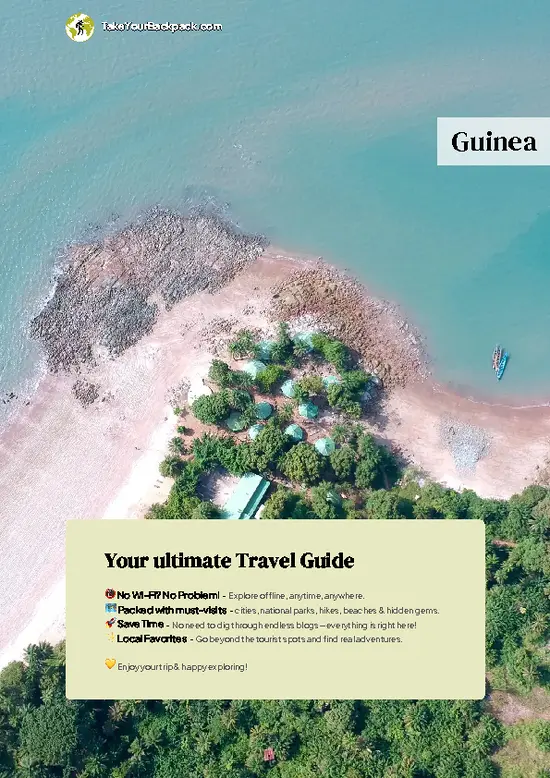
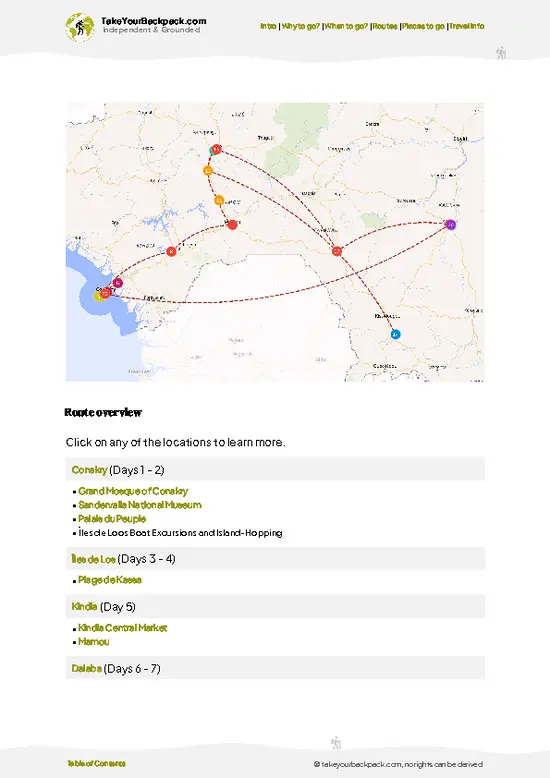
example page 0 from our offline Travel Guide for Guinea
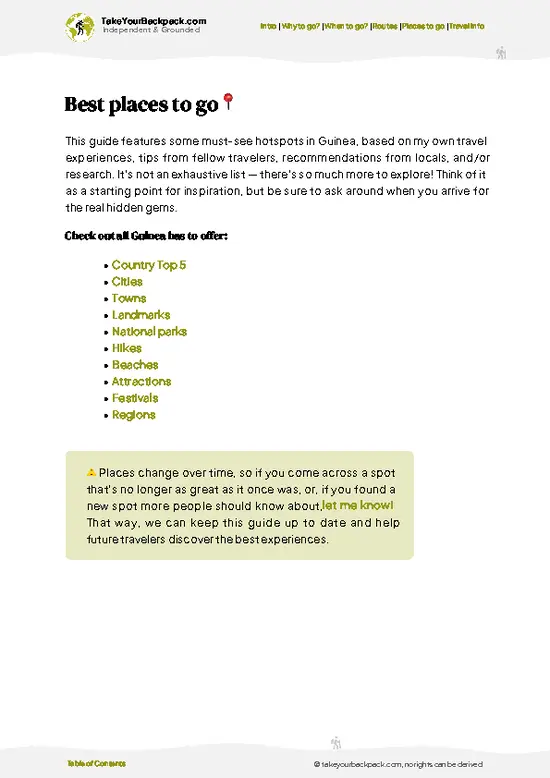
example page 1 from our offline Travel Guide for Guinea
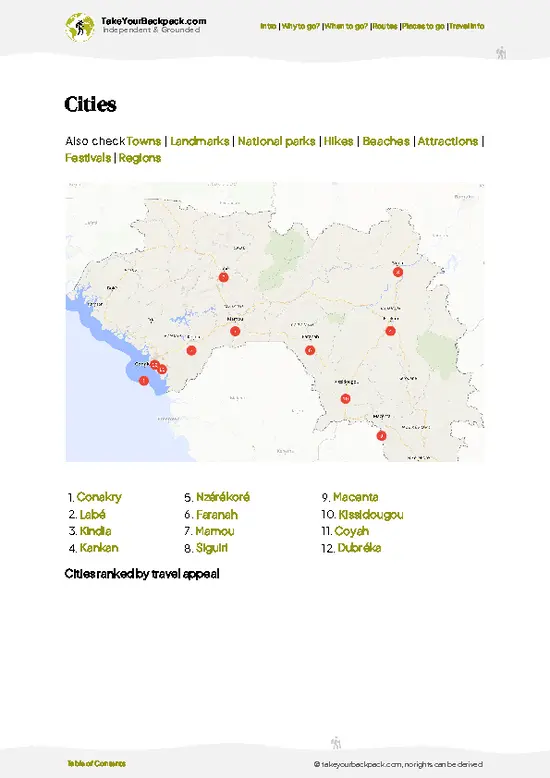
example page 2 from our offline Travel Guide for Guinea
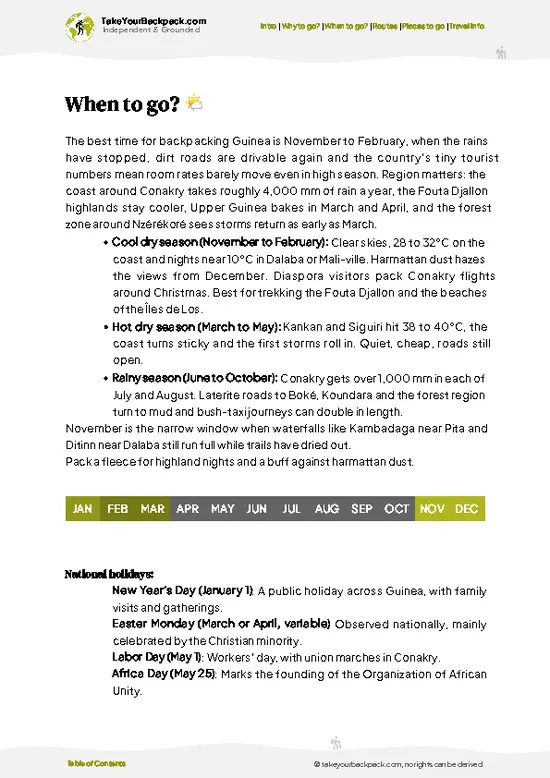
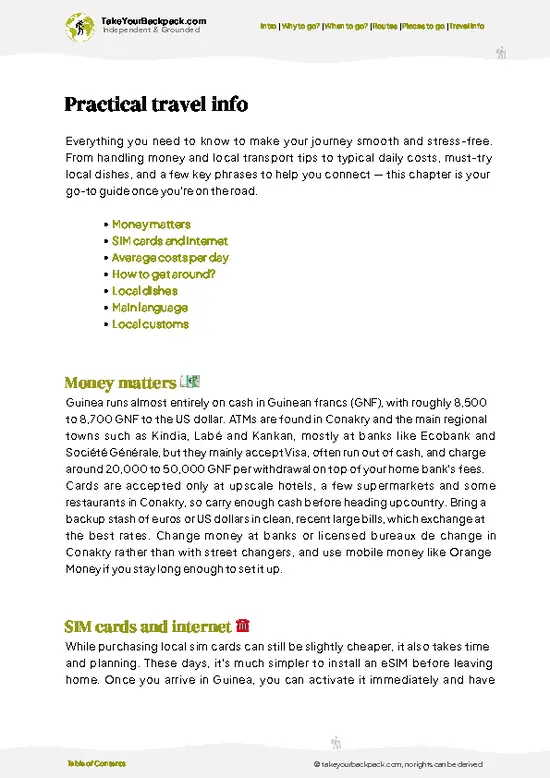
example page 3 from our offline Travel Guide for Guinea
example page 4 from our offline Travel Guide for Guinea
example page 5 from our offline Travel Guide for Guinea
example page 6 from our offline Travel Guide for Guinea
example page 7 from our offline Travel Guide for Guinea
Loading the map 🌍
CLICK TO FILTER
cities
towns
landmarks
national parks
hikes
beaches
attractions
festivals
regions
SHOW COUNTRY’S BESTSHOW ALL

✨ Why go?
Ranked #3 national park in Guinea
What makes this national park worth exploring

Backpackers flock to the Ziama Massif Biosphere Reserve for its blend of independent exploration and affordable accommodations. The park offers a range of budget camping options and nearby hostels, making it easy to stretch your funds while soaking in the natural beauty.

With trail variety that caters to different skill levels, you can choose from leisurely walks to challenging hikes. This flexibility allows you to tailor your experience based on your energy and interests.

What sets Ziama apart is its suitability for self-guided travelers. While guided tours are available, many find that navigating the trails independently enhances the adventure. You can set your own pace, linger at scenic spots, and truly connect with the environment.

However, be mindful of the weather and trail conditions; … read more 👉
Backpackers flock to the Ziama Massif Biosphere Reserve for its blend of independent exploration and affordable accommodations. The park offers a range of budget camping options and nearby hostels, making it easy to stretch your funds while soaking in the natural beauty.

With trail variety that caters to different skill levels, you can choose from leisurely walks to challenging hikes. This flexibility allows you to tailor your experience based on your energy and interests.

What sets Ziama apart is its suitability for self-guided travelers. While guided tours are available, many find that navigating the trails independently enhances the adventure. You can set your own pace, linger at scenic spots, and truly connect with the environment.

However, be mindful of the weather and trail conditions; they can change rapidly. Carry enough water and snacks, and consider downloading offline maps to avoid getting lost. This preparation will help you focus on the moments that matter, rather than dealing with unexpected hurdles.

💡 HighlightsThe experiences that define the visit

  • Ancient primary rainforest — Vast tracts of old-growth, closed-canopy forest that feel like they’re been left alone for centuries. The density and variety of trees, vines and epiphytes make every trail stretch feel like a nature cathedral.
  • Primate encounters — Ziama is one of the last strongholds of Upper Guinean primates; you can expect to hear and sometimes see groups of chimpanzees and several monkey species. The forest soundscape—whoops, chattering and branch-cracking—is a highlight in itself.
  • Upper Guinean birdlife — A hotspot for forest specialists and regional endemics. Birding here rewards patience: canopy flocks, skulking understorey species and colorful passerines turn a slow hike into a treasure hunt.
  • Ridge walks and viewpoints — Trails that climb the Ziama ridges open up sweeping
… read more 👉
  • Ancient primary rainforest — Vast tracts of old-growth, closed-canopy forest that feel like they’re been left alone for centuries. The density and variety of trees, vines and epiphytes make every trail stretch feel like a nature cathedral.
  • Primate encounters — Ziama is one of the last strongholds of Upper Guinean primates; you can expect to hear and sometimes see groups of chimpanzees and several monkey species. The forest soundscape—whoops, chattering and branch-cracking—is a highlight in itself.
  • Upper Guinean birdlife — A hotspot for forest specialists and regional endemics. Birding here rewards patience: canopy flocks, skulking understorey species and colorful passerines turn a slow hike into a treasure hunt.
  • Ridge walks and viewpoints — Trails that climb the Ziama ridges open up sweeping views over contiguous rainforest and distant hills. Great for sunrise or late-afternoon light and for breaking the monotony of dense understory hiking.
  • Streams, cascades and rainforest pools — Cold, clean waterways thread the reserve; small waterfalls and deep pools are both scenic and alive with frogs, dragonflies and forest life. Perfect spots for a breather and a photo.
  • Plant diversity and orchids — Look closely and you’ll find a rich understorey of ferns, rare trees and epiphytic orchids. Botanists and casual plant nerds alike will appreciate the variety and some locally uncommon species.
  • Nocturnal wildlife and night walks — After dark the forest changes: nocturnal mammals, tree frogs and insects come out. Guided night walks reveal wildlife you won’t see in daytime and a whole different chorus of sounds.
Spotted a mistake or missing something? Contact us.

🌤️ When to go?Weather, crowds, and seasonal trade-offs

  • Topic: Weather - Ziama Massif sees heavy rains from May to October. Trails get slippery, and some areas may be inaccessible. The dry season, November to April, offers more reliable hiking conditions with less mud and fewer leeches.
  • Topic: Temperature - Expect daytime highs around 28-32°C (82-90°F) year-round. Nights cool down to 18-22°C (64-72°F), which is comfortable for camping but can feel chilly if you’re not prepared.
  • Topic: Daylight Hours - Near the equator, daylight is steady year-round, roughly 12 hours daily. This consistency helps with planning daily treks without worrying about early sunsets.
  • Topic: Crowds - Ziama Massif is remote and rarely crowded. However, the dry season attracts more researchers and eco-tourists, so expect slightly more activity from December to March.
… read more 👉
  • Topic: Weather - Ziama Massif sees heavy rains from May to October. Trails get slippery, and some areas may be inaccessible. The dry season, November to April, offers more reliable hiking conditions with less mud and fewer leeches.
  • Topic: Temperature - Expect daytime highs around 28-32°C (82-90°F) year-round. Nights cool down to 18-22°C (64-72°F), which is comfortable for camping but can feel chilly if you’re not prepared.
  • Topic: Daylight Hours - Near the equator, daylight is steady year-round, roughly 12 hours daily. This consistency helps with planning daily treks without worrying about early sunsets.
  • Topic: Crowds - Ziama Massif is remote and rarely crowded. However, the dry season attracts more researchers and eco-tourists, so expect slightly more activity from December to March.
  • Topic: Seasonal Activities - Birdwatching peaks during the dry season when visibility improves and migratory species arrive. The wet season is better for botanists, but less practical for casual backpackers.
  • Topic: Price Fluctuations - Costs for guides and accommodations rise modestly in the dry season due to demand. Budget travelers can save by visiting shoulder months (November or April) when conditions are still decent.
Pro-tip: Aim for late November to early April to dodge the worst mud and maximize your time on the trails without paying a premium or battling crowds.


source: climatestotravel.comJANJanuary: excellent for travelingFEBFebruary: excellent for travelingMARMarch: excellent for travelingAPRApril: highly recommended for travelingMAYMay: fair for travelingJUNJune: below average for travelingJULJuly: below average for travelingAUGAugust: below average for travelingSEPSeptember: fair for travelingOCTOctober: fair for travelingNOVNovember: highly recommended for travelingDECDecember: excellent for traveling
when-to-go

✈️ The backpacker research shortcutGuinea Travel Guide

An offline-friendly backpacking guide with optimized travel routes, ranked highlights, transport advice, and the best areas to stay.
example page 0 from our offline Travel Guide for Guinea
example page 1 from our offline Travel Guide for Guinea
example page 2 from our offline Travel Guide for Guinea
example page 3 from our offline Travel Guide for Guinea
example page 4 from our offline Travel Guide for Guinea
example page 5 from our offline Travel Guide for Guinea
example page 6 from our offline Travel Guide for Guinea
example page 7 from our offline Travel Guide for Guinea
The digital guide (238 pages) contains:
✅ 53 highlights, ranked by travel appeal
✅ Optimized 5, 10 & 15-day travel routes
✅ Cities, national parks, landmarks, beaches
✅ How to get around
✅ Offline-friendly for travel without Wi-Fi
👉 Click to see all 30+ guide features

📅 Plan smarter in minutes, not weeks
✅ Month by month travel advice
✅ Festivals & national holidays
✅ Budget expectations

🗺️ Go to the right places, skip the overrated ones
✅ Honest pros & cons of destinations
✅ Top hikes, parks & viewpoints
✅ Lesser-known places most travelers miss
✅ Clear “worth it vs skip it” guidance

🛏️ Travel smoothly without rookie mistakes
✅ Best areas to stay
✅ Transport systems explained simply
✅ Common scams & safety advice
✅ SIM cards, money & practical tips

🌍 Understand the country, not just visit it
✅ Culture & traditions
✅ 52 Essential phrases & customs
✅ Festivals worth planning around
✅ Traveler-friendly historical context
✅ Insights that make places more meaningful

📱 Built for real travel conditions
✅ Fully downloadable PDF
✅ Works completely offline
✅ Optimized for phone use
✅ Useful in remote areas & buses
✅ Everything in one place
Stop searching, start planning
Get instant access to your full guide. 30‑day money-back guarantee.
+ Add another guide for just

By proceeding you agree to our terms.
Sent to your inbox immediately after payment • 100% Secure Checkout
Best Backpacking Travel Advisor 2025 tourism awardBest Backpacking
Travel Advisor
2025
What others say about Take Your Backpack Guides:
⭐⭐⭐⭐⭐
Fantastic, amazing amount of information!
⭐⭐⭐⭐⭐
My goodness this is amazing, it's what I've been looking for hats off too you!
⭐⭐⭐⭐⭐
I think this is absolutely BRILLIANT
⭐⭐⭐⭐
Very complete and informative. It's still missing places, but I gotta to commend you
⭐⭐⭐⭐⭐
This is truly amazing, thank you, can't wait to explore it with my kids!
⭐⭐⭐⭐⭐
Awesome resource, thank you!
⭐⭐⭐⭐⭐
This is amazing! Can't wait to explore the ones I haven't seen
⭐⭐⭐⭐
I love this! Well done, great idea.
⭐⭐⭐⭐⭐
Thanks for taking the time to make this gem!
⭐⭐⭐⭐⭐
This might be the best website I've ever seen.
⭐⭐⭐⭐⭐
Congratulations, and thank you so much for your work; it's incredibly valuable.
⭐⭐⭐⭐
In all seriousness I think you did a great job pointing out the important spots
⭐⭐⭐⭐⭐
10/10 very good
⭐⭐⭐⭐⭐
As someone who's only just starting to visit regularly this is awesome, thank you.
⭐⭐⭐⭐
Thank you very much! I'm going to visit my dad, it's going to be very useful!
⭐⭐⭐⭐⭐
This is really cool! We'll be travelling for the first time and this definitely come in handy.
⭐⭐⭐⭐⭐
You are now our minister of culture, congratulations 👨‍💼
⭐⭐⭐⭐⭐
Just wanted to tell you that this is a pearl! Going to follow your recommendations.
⭐⭐⭐⭐⭐
This is so cool. I'll definitely be using the resource for my travels soon.
⭐⭐⭐⭐⭐
This is very impressive! Good work.
⭐⭐⭐⭐⭐
This is an amazing and informative site. Very well done!

🛏️ Where to stay?Best areas and accommodation options

When it comes to staying near the Ziama Massif Biosphere Reserve, options are limited but solid. Inside the park, there aren’t established lodges or hotels. Instead, you’ll find basic camping facilities. Bring your own gear, as this is the best way to immerse yourself in the stunning natural surroundings.

For a bit more comfort, head to the nearby town of Nzérékoré. It’s about an hour away and offers a few guesthouses that cater to budget travelers. Look for places like Hotel Le Relais or Hotel La Paix. They provide decent accommodations and a chance to interact with locals.

Another option … read more 👉
When it comes to staying near the Ziama Massif Biosphere Reserve, options are limited but solid. Inside the park, there aren’t established lodges or hotels. Instead, you’ll find basic camping facilities. Bring your own gear, as this is the best way to immerse yourself in the stunning natural surroundings.

For a bit more comfort, head to the nearby town of Nzérékoré. It’s about an hour away and offers a few guesthouses that cater to budget travelers. Look for places like Hotel Le Relais or Hotel La Paix. They provide decent accommodations and a chance to interact with locals.

Another option is to stay in smaller villages around the reserve. These spots often have homestays where you can experience local culture firsthand. Just be prepared for basic amenities and a more rustic experience.

Keep in mind that transportation can be tricky. Roads may not be well-maintained, and public transport options are limited. Plan ahead to avoid wasting time and energy. Prioritize your stay to maximize your experience in this remarkable biosphere.

👛 Costs (as of 15 October 2026)What things cost and how to budget

Visiting the Ziama Massif Biosphere Reserve in Guinea requires some financial planning. Entrance fees typically range from €5 to €10. This fee grants you access to the park’s stunning landscapes and biodiversity.

Guided tours are highly recommended. Expect to pay between €30 and €60 for a full day. This cost often includes a local guide who knows the terrain and can enhance your experience with insights about the flora and fauna.

Accommodation options vary. Basic lodges or guesthouses near the park can cost around €15 to €30 per night. If you prefer more comfort, mid-range hotels might charge between €50 and €100.

Food is generally affordable. Local meals can be found for €3 to €10, depending on where you eat. However, if you’re in a more tourist-oriented spot, prices can creep up.

Transportation … read more 👉
Visiting the Ziama Massif Biosphere Reserve in Guinea requires some financial planning. Entrance fees typically range from €5 to €10. This fee grants you access to the park’s stunning landscapes and biodiversity.

Guided tours are highly recommended. Expect to pay between €30 and €60 for a full day. This cost often includes a local guide who knows the terrain and can enhance your experience with insights about the flora and fauna.

Accommodation options vary. Basic lodges or guesthouses near the park can cost around €15 to €30 per night. If you prefer more comfort, mid-range hotels might charge between €50 and €100.

Food is generally affordable. Local meals can be found for €3 to €10, depending on where you eat. However, if you’re in a more tourist-oriented spot, prices can creep up.

Transportation costs should also be factored in. Hiring a taxi or local transport to and from the park can range from €10 to €30, depending on the distance and negotiation skills.

Keep in mind that cash is king here. Credit cards are not widely accepted, so plan to carry enough euros for your trip. This preparation will help you avoid any unexpected costs and ensure you have the energy and budget for the experiences that truly matter.
⚠️ Prices can change and everyone travels differently, so take this as a rough guide. Hope it helps you plan your adventure!

🥾 TrailsPlan your hike in Ziama Massif Biosphere Reserve: routes, terrain, and sights

The Ziama Massif Biosphere Reserve in Guinea is a hidden gem for hikers looking for stunning scenery and a taste of adventure. Picture lush, green hills, cascading waterfalls, and dense forests teeming with wildlife. The terrain varies from gentle slopes to steep ascents, so you’ll get a good workout while soaking in the breathtaking views. You might spot some unique wildlife, like the elusive chimpanzees or various bird species, if you’re lucky.

There are a few designated trails worth exploring, including the Chutes de Kambadaga trail. Here are the details:
  • Length: 8 km
  • Estimated Duration: 3-4
… read more 👉
The Ziama Massif Biosphere Reserve in Guinea is a hidden gem for hikers looking for stunning scenery and a taste of adventure. Picture lush, green hills, cascading waterfalls, and dense forests teeming with wildlife. The terrain varies from gentle slopes to steep ascents, so you’ll get a good workout while soaking in the breathtaking views. You might spot some unique wildlife, like the elusive chimpanzees or various bird species, if you’re lucky.

There are a few designated trails worth exploring, including the Chutes de Kambadaga trail. Here are the details:
  • Length: 8 km
  • Estimated Duration: 3-4 hours
  • Difficulty Level: Moderate
  • Key Features: Stunning waterfalls, diverse flora, and potential wildlife sightings
  • Terrain: Mixed, with some rocky and steep sections

Getting to the park isn’t too tricky. You can catch a shared taxi from Conakry to the nearest town, then take a local taxi or even hike the remaining distance. Just be prepared for some bumpy roads! It’s not overly crowded, which is a plus if you’re seeking some solitude in nature. As for the entrance fee, it’s pretty reasonable, but always good to check the latest info before you go, as it can change.
⚠️ Hiking info can sometimes be outdated or inaccurate. Before you hit the trail, check the latest conditions with locals. If you do spot anything that's off, I'd love to hear from you, so I can update it for fellow travelers.

🛡️ SafetyScams, Hazards, and Annoyances

The Ziama Massif Biosphere Reserve offers a rewarding experience, but it’s essential to stay grounded about what to expect. Weather can shift quickly; afternoon rains are common, so pack a reliable waterproof jacket. The terrain varies from gentle slopes to steep sections, and some trails can be muddy or rocky, so sturdy footwear is a must.

Navigation can be tricky; trail markers are not always clear, so a good map and compass—or a GPS device—are invaluable. River crossings may occur, especially during the rainy season, so be prepared to get your feet wet.

Wildlife encounters are rare but can happen. If you spot animals, keep your distance and avoid feeding them. Respecting their space is crucial for both your safety and theirs.

Overall, with the right preparation and a respectful attitude, … read more 👉
The Ziama Massif Biosphere Reserve offers a rewarding experience, but it’s essential to stay grounded about what to expect. Weather can shift quickly; afternoon rains are common, so pack a reliable waterproof jacket. The terrain varies from gentle slopes to steep sections, and some trails can be muddy or rocky, so sturdy footwear is a must.

Navigation can be tricky; trail markers are not always clear, so a good map and compass—or a GPS device—are invaluable. River crossings may occur, especially during the rainy season, so be prepared to get your feet wet.

Wildlife encounters are rare but can happen. If you spot animals, keep your distance and avoid feeding them. Respecting their space is crucial for both your safety and theirs.

Overall, with the right preparation and a respectful attitude, you’ll preserve your energy and budget for the moments that truly matter.

FAQTraveler FAQ

3 to 4 days are recommended to explore Ziama Massif Biosphere Reserve thoroughly, allowing time for hiking and wildlife observation. The terrain is rugged and trails can be challenging, so plan accordingly. Longer stays may be needed for deeper exploration or research purposes.
No, visiting Ziama Massif Biosphere Reserve without a car is difficult due to limited public transport options and the remote location. Most visitors arrange private transport from nearby towns like N'Zérékoré. Walking or biking inside the reserve is possible once you arrive, but reaching it requires a vehicle.
Yes, an entrance permit is required to visit Ziama Massif Biosphere Reserve. The fee is typically around 10,000 to 20,000 Guinean francs (approximately 1 to 2 USD). Permits are obtained at the reserve entrance or through local authorities before arrival.
⚠️ Things can change over time, so always validate details locally before you go.

Other Guinean national parks near Ziama Massif Biosphere Reserve

Explore more nearby:

  • Diécké Forest Reserve—swamp forest, rare primates, tall trees, humid lowlands| 91 km away
  • Bossou—forest clearings, chimpanzee sanctuary, community projects, rural setting| 117 km away
  • Kourandou Forest Reserve—dense rainforest, medicinal plants, canopy shade, forest elephants| 124 km away

💡 Not sure where to go next?
Create a personalized itinerary for Guinea including Ziama Massif Biosphere Reserve and the places that fit your trip.

Generate my itinerary

👉 Discover all national parks

Or checkout all Guinea has to offer (think cities, towns, villages, national parks, hikes, beaches, festivals)
Country photo of Guinea

We 💚 feedbackSumming up the experience

The Ziama Massif Biosphere Reserve is a breath of fresh air, literally and figuratively. The lush forests and vibrant wildlife are a joy, but don’t underestimate the humidity; it can sap your energy faster than you think. Bring plenty of water and a good pair of hiking boots. The best surprise? Stumbling upon a local market where you can taste fresh, homemade dishes. It’s these moments that make the journey worthwhile, so keep your eyes open and your expectations grounded.

✍️ Help improve this page!
The information on this page is based on in-depth research, insights shared by experienced travelers, and feedback from the local travel community in Guinea. While every effort is made to keep the information accurate and current, conditions can change — so if you spot anything incorrect or outdated, please get in touch.


🙋‍♂️ Give feedback

👋 Meet the founderWho’s Behind Take Your Backpack?

Johan, backpacker and founder of TakeYourBackpackHi, I’m Johan (Netherlands 🇳🇱), the creator of TakeYourBackpack. Over the past 3 decades, I’ve backpacked through 90+ countries across six continents, gaining extensive experience with independent travel, long-term trips, and overland routes.

This site is built on a combination of firsthand travel experience and carefully curated insights from other backpackers. Many guides are based on places I’ve personally visited, while others bring together tips, observations, and practical advice shared by trusted travelers I’ve met along the way.

The goal is to provide realistic, experience-driven guidance — not generic itineraries — so you can explore destinations with better context, clearer expectations, and more confidence.