×

Guinea🇬🇳 | best national parksExplore the 10 Best national parks in Guinea

In Guinea, national parks are sanctuaries of biodiversity, offering a mix of lush landscapes and vibrant wildlife. Each park presents a unique character shaped by its geography and climate, influencing your backpacking experience. For instance, Mali National Park is known for its dense forests and rich birdlife, while Bafing National Park features open savannahs, ideal for spotting larger mammals.

Choosing the right park affects your travel pace and budget; some parks are more accessible and well-maintained, while others require a rugged approach. Seasonal variations also play a role, with the dry season offering easier navigation and wildlife visibility. Understanding these nuances ensures a deeper cultural immersion and a rewarding adventure.

By Johan Kruseman 🇳🇱 | Updated June 5, 2026
Explore the best hikes in Guinea

Why go?Key Factors That Shape the Experience

National parks in Guinea stand out for their biodiversity and unique landscapes, offering a rich tapestry of ecosystems that few other countries can match. The rugged mountains, dense forests, and winding rivers create a backdrop that is both dramatic and inviting. Guinea’s parks are home to rare species, including the elusive bongo and various primates, making them a haven for wildlife enthusiasts.

However, the infrastructure can be a double-edged sword. While some parks are remote, providing an immersive experience in nature, this often means longer travel times and less accessibility. Roads can be rough, and public transport options are limited, which may deter some travelers. Yet, those who venture off the beaten path are rewarded with a deeper connection to the land and its inhabitants. … read more 👉
National parks in Guinea stand out for their biodiversity and unique landscapes, offering a rich tapestry of ecosystems that few other countries can match. The rugged mountains, dense forests, and winding rivers create a backdrop that is both dramatic and inviting. Guinea’s parks are home to rare species, including the elusive bongo and various primates, making them a haven for wildlife enthusiasts.

However, the infrastructure can be a double-edged sword. While some parks are remote, providing an immersive experience in nature, this often means longer travel times and less accessibility. Roads can be rough, and public transport options are limited, which may deter some travelers. Yet, those who venture off the beaten path are rewarded with a deeper connection to the land and its inhabitants.

The climate also plays a role. The wet season can make trails muddy and challenging, but it also brings life to the flora and fauna, enhancing the experience for those willing to brave the elements. Understanding these trade-offs is crucial; the effort to reach these parks often leads to moments of profound beauty, whether it’s the sight of a cascading waterfall or the sound of wildlife at dusk. In Guinea, the journey is as significant as the destination, making every step worthwhile.
Evaluating the Top Choices
The list of best national parks in Guinea is created based on landscapes, wildlife, adventure opportunities, facilities, and overall experience. If you feel a national park is missing in this list, please let us know.

When to go?When to Plan Your Trip

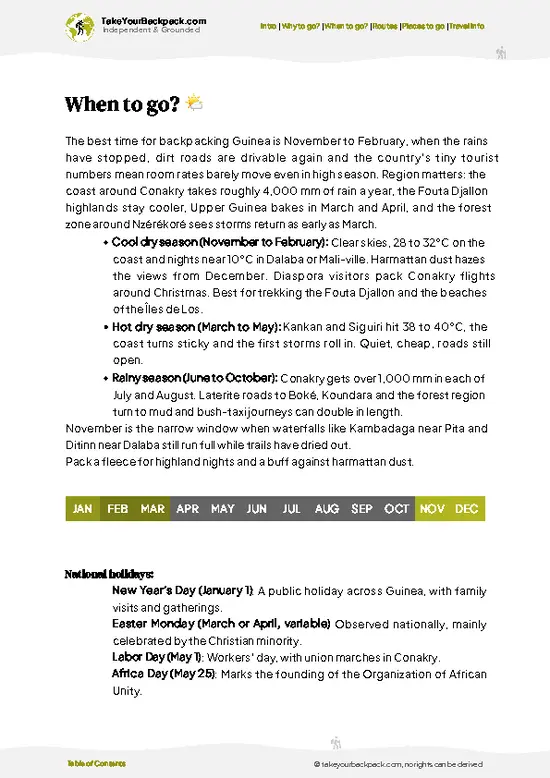
Seasonality plays a crucial role in exploring Guinea’s national parks. The country experiences a tropical climate, characterized by distinct wet and dry seasons. The dry season, typically from November to April, offers the best conditions for wildlife visibility. Trails are more accessible, and the humidity is lower, making hikes more enjoyable. During this period, animals are more active, and the chances of spotting them increase significantly.

Rainfall peaks from May to October, transforming the landscape into a lush paradise. However, heavy rains can lead to muddy trails and limited visibility. This is the time when the scenery is at its most vibrant, but the trade-off is the potential for challenging conditions. The trails can become slippery, and some areas may be less accessible.

Shoulder read more 👉
Seasonality plays a crucial role in exploring Guinea’s national parks. The country experiences a tropical climate, characterized by distinct wet and dry seasons. The dry season, typically from November to April, offers the best conditions for wildlife visibility. Trails are more accessible, and the humidity is lower, making hikes more enjoyable. During this period, animals are more active, and the chances of spotting them increase significantly.

Rainfall peaks from May to October, transforming the landscape into a lush paradise. However, heavy rains can lead to muddy trails and limited visibility. This is the time when the scenery is at its most vibrant, but the trade-off is the potential for challenging conditions. The trails can become slippery, and some areas may be less accessible.

Shoulder seasons—the transitions between wet and dry—can be a mixed bag. Visiting during these times may mean fewer crowds and lower costs, but also unpredictable weather. Expect a blend of sunny days and sudden downpours.

Peak periods often coincide with holidays or festivals, drawing larger crowds. While the atmosphere can be lively, it may detract from the solitude many seek in nature. Understanding these seasonal patterns is essential for planning an effective trip to Guinea’s national parks.

national park hoppingTips for Visiting Multiple Destinations

Combining national parks in Guinea requires a strategic approach. Start by clustering parks based on their geographical proximity. For instance, the Fouta Djallon region is home to several parks, making it a logical first stop. From there, head south toward the coastal parks, creating a natural flow in your journey.

Time management is crucial. Allocate at least two to three days per park to fully absorb the unique landscapes and wildlife. This pacing allows for hiking trails, wildlife spotting, and cultural interactions without feeling rushed. However, if time is tight, prioritize parks based on personal interests—whether it’s the lush forests of Niokolo-Koba or the dramatic cliffs of Tinkisso.

Common pitfalls include over-scheduling. Trying to cram too many parks into a short timeframe … read more 👉
Combining national parks in Guinea requires a strategic approach. Start by clustering parks based on their geographical proximity. For instance, the Fouta Djallon region is home to several parks, making it a logical first stop. From there, head south toward the coastal parks, creating a natural flow in your journey.

Time management is crucial. Allocate at least two to three days per park to fully absorb the unique landscapes and wildlife. This pacing allows for hiking trails, wildlife spotting, and cultural interactions without feeling rushed. However, if time is tight, prioritize parks based on personal interests—whether it’s the lush forests of Niokolo-Koba or the dramatic cliffs of Tinkisso.

Common pitfalls include over-scheduling. Trying to cram too many parks into a short timeframe can lead to fatigue and missed experiences. Balance speed with depth; a slower pace often yields richer rewards.

Consider trade-offs carefully. Budget constraints might push for quicker travel, but investing in comfortable accommodations can enhance the experience. Flexibility is key; weather can change plans, so be prepared to adapt.

Ultimately, the journey through Guinea’s national parks is about savoring the moments. Each park offers its own essence, and the effort spent getting there makes the rewards all the more satisfying.

The ListTop national parks of Guinea

1 Haut Niger National Park

savanna mosaics, gallery forests, chimpanzee habitat, river corridors

Follow winding rivers through a patchwork of savanna and forest, where primates and rare antelope move between dense thickets and open grassland.

guinea-national-park-haut-niger-national-park v1
© Google |

2 Nimba Mountains Biosphere Reserve

mountain ridges, endemic species, grassy plateaus, rocky outcrops

Climb high ridges and grassy plateaus where unique wildlife thrives among rocky slopes, offering sweeping views and cool mountain air.

3 Ziama Massif Biosphere Reserve

mountain forest, rare flora, misty slopes, biodiversity hotspot

Trek through misty mountain forests rich in rare plants and animal life, where steep slopes and dense growth create a sense of discovery.

4 Badiar National Park

open savanna, acacia groves, antelope herds, borderland terrain

Cross open savannas and scattered acacia groves, watching for herds of antelope in a park that borders Senegal’s wild landscapes.

5 Diécké Forest Reserve

swamp forest, rare primates, tall trees, humid lowlands

Experience humid lowland forests with towering trees and elusive primates, where the ground stays damp and the air is thick with life.

6 Fouta Djallon Highlands

rolling hills, waterfalls, traditional villages, cool climate

Hike through rolling highlands dotted with waterfalls and villages, where cooler temperatures and open vistas define the region’s character.

7 Lola Wildlife Reserve

forest clearings, chimpanzee sanctuary, community projects, rural setting

Visit a rural reserve where forest clearings support a chimpanzee sanctuary and local conservation efforts shape the visitor experience.

8 Kankan Forest Reserve

dry woodland, seasonal streams, birdwatching, remote trails

Walk through open woodlands where dry-season streams attract birds and wildlife, offering a quiet escape for those seeking solitude and nature.

9 Kourandou Forest Reserve

dense rainforest, medicinal plants, canopy shade, forest elephants

Venture beneath thick rainforest canopy, where the air is cool and the undergrowth hides elephants and a wealth of plant species.

guinea-national-park-kourandou-forest-reserve
© Google |

10 Konkouré River Basin

broad river, mangrove edges, wetland birds, fishing villages

Travel along a wide river system lined with mangroves and wetlands, where local communities and diverse birdlife shape the landscape.

Loading the map 🌍

Expert viewPro Tips for Exploring the Best

Terrain
Guinea’s national parks are a patchwork of ecosystems, each with its own character. The rugged mountains of the Fouta Djallon region contrast sharply with the lowland rainforests of the southeast. Expect steep ascents and rocky trails in places like Haut Niger National Park, where the air is thick with the scent of damp earth and wildflowers. The trails can be demanding, often requiring sturdy boots and a willingness to sweat. Yet, the payoff is immense: panoramic views of cascading waterfalls and lush valleys that feel like a world apart.

In contrast, the wetlands of the Badiar National Park offer a different kind of challenge. Here, the terrain is flat but can be muddy, especially during the rainy season. Navigating through the thick vegetation requires patience and a keen eye … read more 👉
Terrain
Guinea’s national parks are a patchwork of ecosystems, each with its own character. The rugged mountains of the Fouta Djallon region contrast sharply with the lowland rainforests of the southeast. Expect steep ascents and rocky trails in places like Haut Niger National Park, where the air is thick with the scent of damp earth and wildflowers. The trails can be demanding, often requiring sturdy boots and a willingness to sweat. Yet, the payoff is immense: panoramic views of cascading waterfalls and lush valleys that feel like a world apart.

In contrast, the wetlands of the Badiar National Park offer a different kind of challenge. Here, the terrain is flat but can be muddy, especially during the rainy season. Navigating through the thick vegetation requires patience and a keen eye for wildlife. The reward? A chance to spot rare birds and perhaps even a shy antelope peeking through the reeds. Each park has its own rhythm, and understanding these nuances can make or break your experience.

Park Infrastructure
Infrastructure varies widely across Guinea’s parks. Some, like the Niokolo-Koba National Park, have established trails and basic accommodations, making it easier for visitors to explore without feeling overwhelmed. However, don’t expect luxury; facilities are often basic, and you may need to bring your own supplies. This can be a trade-off: the more remote parks offer raw beauty but require more planning and self-sufficiency.

If you’re short on time, consider focusing on two or three parks rather than trying to cover them all. Each park demands a different level of commitment, and spreading yourself too thin can lead to a rushed experience. Allocate at least a few days per park to truly absorb the atmosphere and engage with the local culture.

Wildlife Activity
Wildlife encounters can be hit or miss, depending on the time of year and the park you choose. In the dry season, animals are more likely to congregate around water sources, making sightings more frequent. However, this is also when the trails can be crowded with other visitors. If you prefer solitude, consider visiting during the shoulder seasons, when the parks are quieter, but be prepared for the possibility of rain and less predictable wildlife activity.

The thrill of spotting a rare bird or catching a glimpse of a monkey swinging through the trees is worth the wait. In some parks, local guides can enhance your experience, sharing insights about the flora and fauna that you might overlook. This adds a layer of connection to the land and its people, enriching your journey.

Trade-offs and Planning
When planning your visit, think about what you want to prioritize. If you’re keen on hiking, focus on parks with well-marked trails and varied terrain. If wildlife is your main interest, research the best times to visit each park.

Budget is another consideration. While entrance fees are generally low, costs can add up with transportation and guide services. Expect to spend more if you want to explore multiple parks, as travel times can be lengthy and unpredictable.

Safety is paramount. Be aware of local customs and dress modestly, especially in rural areas. Engaging with local communities can enhance your experience, but always approach with respect and an open mind.

Guinea’s national parks offer a rich tapestry of experiences, but the key is to engage deeply with each one. The effort you put in will be rewarded with unforgettable moments and a deeper understanding of this vibrant land.

✈️ The backpacker research shortcutGuinea Travel Guide

An offline-friendly backpacking guide with optimized travel routes, ranked highlights, transport advice, and the best areas to stay.
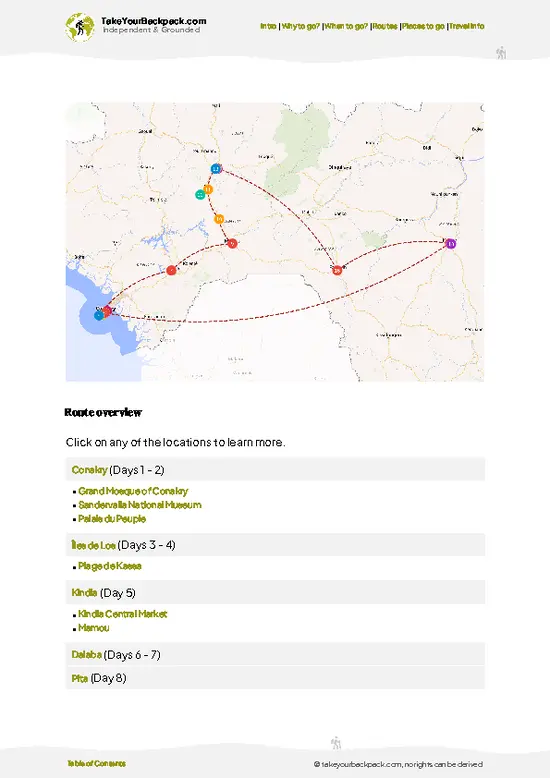
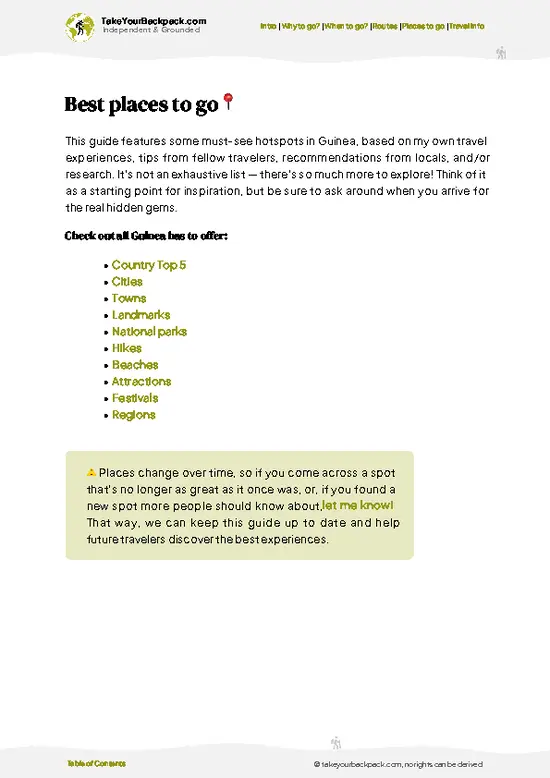
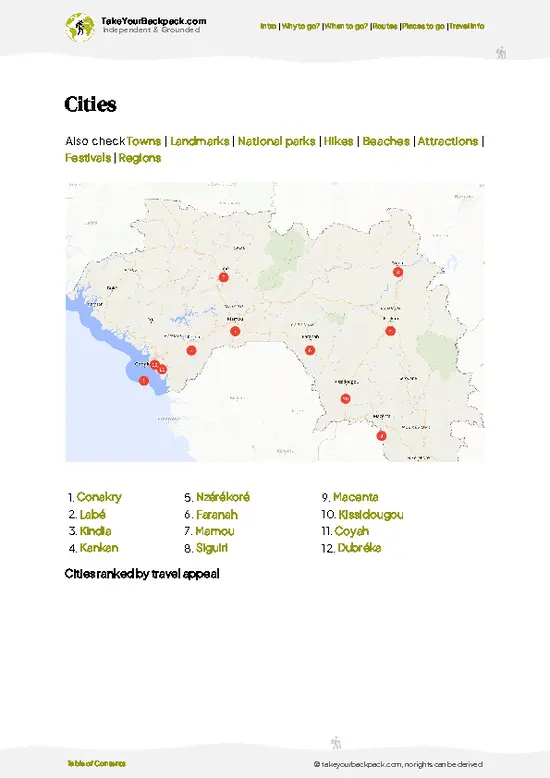
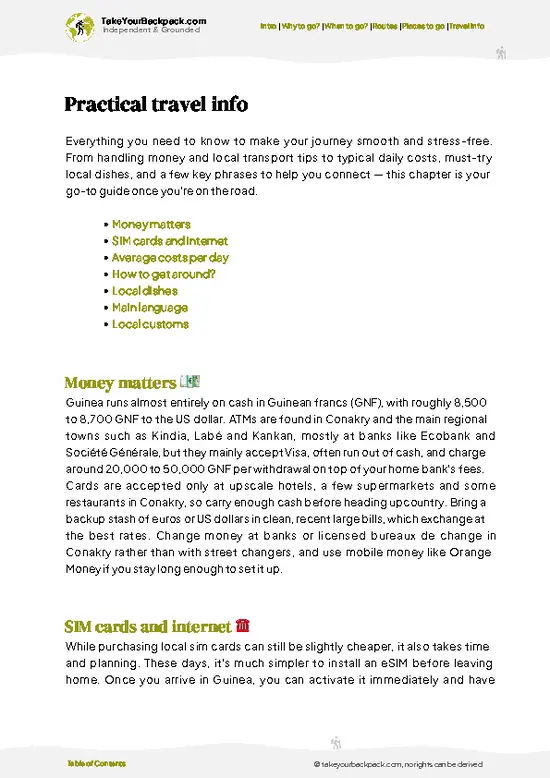
example page 0 from our offline Travel Guide for Guinea
example page 1 from our offline Travel Guide for Guinea
example page 2 from our offline Travel Guide for Guinea
example page 3 from our offline Travel Guide for Guinea
example page 4 from our offline Travel Guide for Guinea
example page 5 from our offline Travel Guide for Guinea
example page 6 from our offline Travel Guide for Guinea
example page 7 from our offline Travel Guide for Guinea
The digital guide (282 pages) contains:
67 highlights, ranked by travel appeal
Optimized 5, 10 & 15-day travel routes
Cities, national parks, landmarks, beaches
How to get around
Offline-friendly for travel without Wi-Fi
👉 Click to see all 30+ guide features

📅 Plan smarter in minutes, not weeks
Month by month travel advice
Festivals & national holidays
Budget expectations

🗺️ Go to the right places, skip the overrated ones
Honest pros & cons of destinations
Top hikes, parks & viewpoints
Lesser-known places most travelers miss
Clear “worth it vs skip it” guidance

🛏️ Travel smoothly without rookie mistakes
Best areas to stay
Transport systems explained simply
Common scams & safety advice
SIM cards, money & practical tips

🌍 Understand the country, not just visit it
Culture & traditions
52 Essential phrases & customs
Festivals worth planning around
Traveler-friendly historical context
Insights that make places more meaningful

📱 Built for real travel conditions
Fully downloadable PDF
Works completely offline
Optimized for phone use
Useful in remote areas & buses
Everything in one place
Save weeks of stressful planning
Get instant access to your full guide. 30‑day money-back guarantee.


By proceeding you agree to our terms.
Sent to your inbox immediately after payment • 100% Secure Checkout
Best Backpacking Travel Advisor 2025 tourism awardBest Backpacking
Travel Advisor
2025
What others say about Take Your Backpack Guides:
⭐⭐⭐⭐⭐
Fantastic, amazing amount of information!
⭐⭐⭐⭐⭐
My goodness this is amazing, it's what I've been looking for hats off too you!
⭐⭐⭐⭐⭐
I think this is absolutely BRILLIANT
⭐⭐⭐⭐
Very complete and informative. It's still missing places, but I gotta to commend you
⭐⭐⭐⭐⭐
This is truly amazing, thank you, can't wait to explore it with my kids!
⭐⭐⭐⭐⭐
Awesome resource, thank you!
⭐⭐⭐⭐⭐
This is amazing! Can't wait to explore the ones I haven't seen
⭐⭐⭐⭐
I love this! Well done, great idea.
⭐⭐⭐⭐⭐
Thanks for taking the time to make this gem!
⭐⭐⭐⭐⭐
This might be the best website I've ever seen.
⭐⭐⭐⭐⭐
Congratulations, and thank you so much for your work; it's incredibly valuable.
⭐⭐⭐⭐
In all seriousness I think you did a great job pointing out the important spots
⭐⭐⭐⭐⭐
10/10 very good
⭐⭐⭐⭐⭐
As someone who's only just starting to visit regularly this is awesome, thank you.
⭐⭐⭐⭐
Thank you very much! I'm going to visit my dad, it's going to be very useful!
⭐⭐⭐⭐⭐
This is really cool! We'll be travelling for the first time and this definitely come in handy.
⭐⭐⭐⭐⭐
You are now our minister of culture, congratulations 👨‍💼
⭐⭐⭐⭐⭐
Just wanted to tell you that this is a pearl! Going to follow your recommendations.
⭐⭐⭐⭐⭐
This is so cool. I'll definitely be using the resource for my travels soon.
⭐⭐⭐⭐⭐
This is very impressive! Good work.
⭐⭐⭐⭐⭐
This is an amazing and informative site. Very well done!

🛏️ Where to stay?Top Places to Consider Staying

Yes — hostels and budget guesthouses exist in Guinea, concentrated in Conakry; options outside the capital are sparse and travel and infrastructure constraints make inland budget stays harder and less reliable.
Kaloum is the central district nearest ferries, markets and government services but is busiest and often pricier; Dixinn (university/embassy zone) and parts of Ratoma host the most and cheapest guesthouses with quieter streets and better local nightlife; Matam offers mid-range budget options near beaches and conference facilities but can feel more isolated.
Expect basic standards (intermittent electricity, limited hot water, cash-only payments), book ahead for Conakry, carry a mosquito … read more 👉
Yes — hostels and budget guesthouses exist in Guinea, concentrated in Conakry; options outside the capital are sparse and travel and infrastructure constraints make inland budget stays harder and less reliable.
Kaloum is the central district nearest ferries, markets and government services but is busiest and often pricier; Dixinn (university/embassy zone) and parts of Ratoma host the most and cheapest guesthouses with quieter streets and better local nightlife; Matam offers mid-range budget options near beaches and conference facilities but can feel more isolated.
Expect basic standards (intermittent electricity, limited hot water, cash-only payments), book ahead for Conakry, carry a mosquito net and personal lock, and favor Dixinn or Ratoma for safer, quieter budget stays while using Kaloum for short central access.

If you enjoy meeting fellow travelers, consider choosing hostels with high ratings for atmosphere. On the other hand, if you prefer having your own space, a hotel might be a better option.

GuineaMore Places Across Guinea

👋 Meet the founderWho’s Behind Take Your Backpack?

Johan, backpacker and founder of TakeYourBackpackHi, I’m Johan (Netherlands 🇳🇱), the creator of TakeYourBackpack. Over the past decade, I’ve backpacked through 80+ countries across six continents, gaining extensive experience with independent travel, long-term trips, and overland routes.

This site is built on a combination of firsthand travel experience and carefully curated insights from other backpackers. Many guides are based on places I’ve personally visited, while others bring together tips, observations, and practical advice shared by trusted travelers I’ve met along the way.

The goal is to provide realistic, experience-driven guidance — not generic itineraries — so you can explore destinations with better context, clearer expectations, and more confidence.

Get full Guinea guide •
Instant download • 67 highlights • Full Offline guide