
×

Guyana🇬🇾 | villagesAishaltonMakatau petroglyphs, Wapishana lanes, savanna creeks, remote south Rupununi | things to do and best time to go

Explore Kumaka BeachExplore Annai

Backpacking in Aishalton
🌟 Highlightvillage ranked #3
By Johan Kruseman 🇳🇱 | Updated October 19, 2026

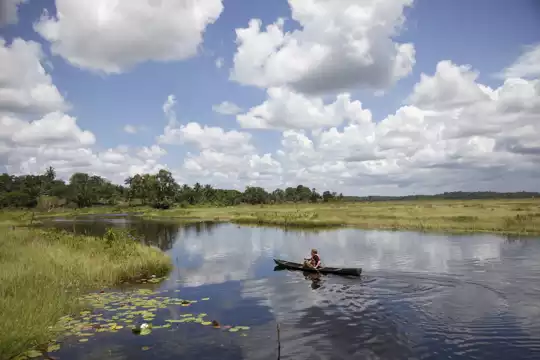
Years ago Aishalton was a place you reached by a long, rough haul across the savannah, or by a small plane to its airstrip, and few outsiders bothered. Today it is still remote, but the trail has become a dirt road and the village has a hospital, a secondary school and a steady trickle of researchers, teachers and the odd backpacker. It sits in the south of Guyana, in the Rupununi region, in dry grassland rolling toward the Brazilian border, with forested hills on the horizon. Days are bright and hot, the ground is red and dusty, and wood smoke and toasting cassava drift across the houses. Nights are dark and quiet, with crickets and dogs, and most people turn in early. There is little in the way of tourist infrastructure, so you arrange stays through the village council or a local host, and meeting other travelers is unlikely. Slow travelers, birders and anyone curious about Wapishana life will love it. Anyone who needs menus, nightlife or fixed schedules will not.

Discover everything you want to know in the 📖 Guyana Travel Guide.


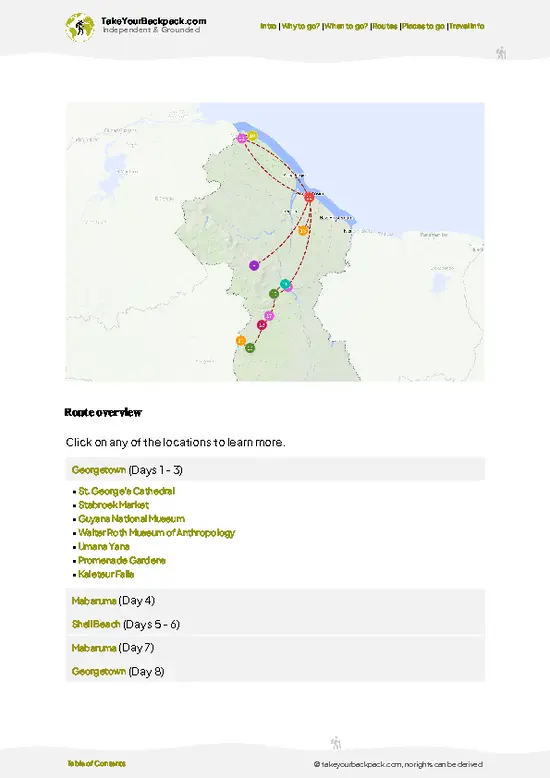
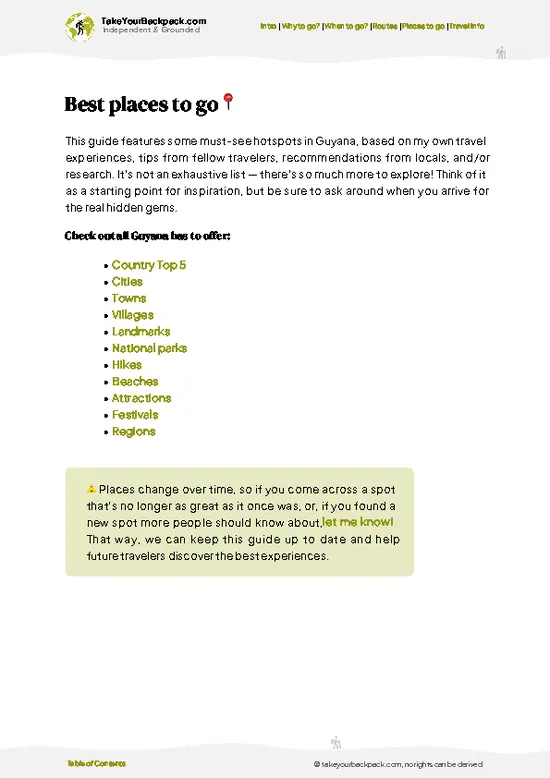
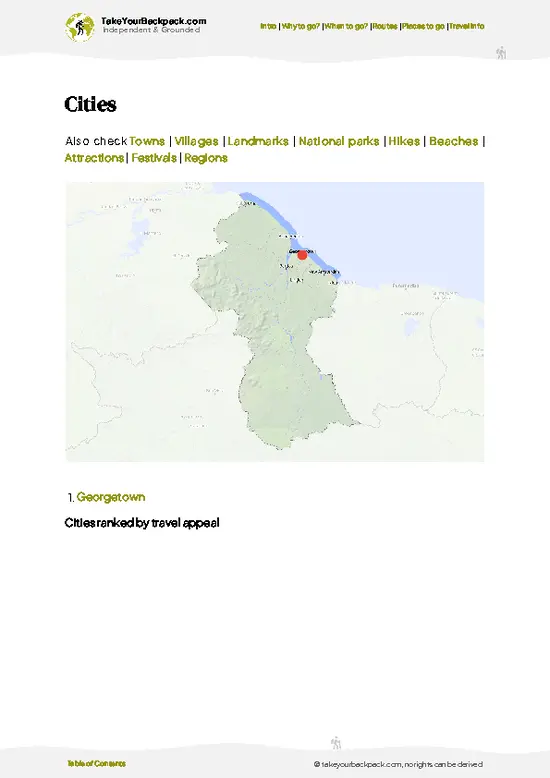
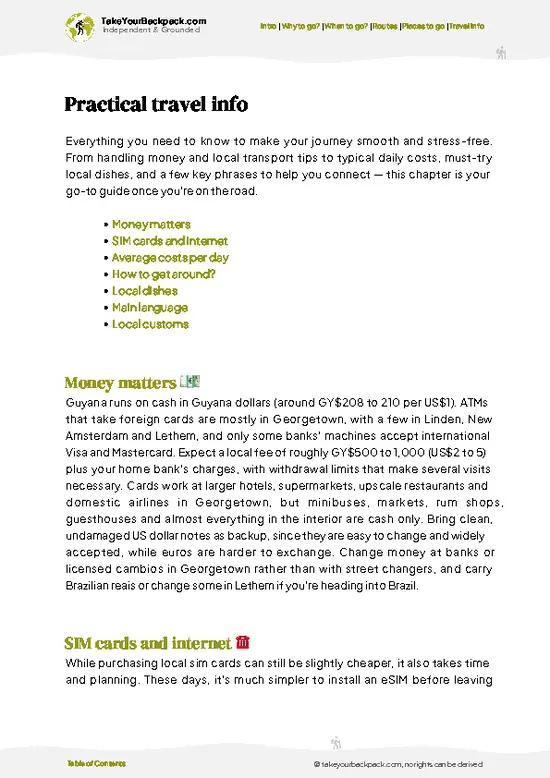
example page 0 from our offline Travel Guide for Guyana
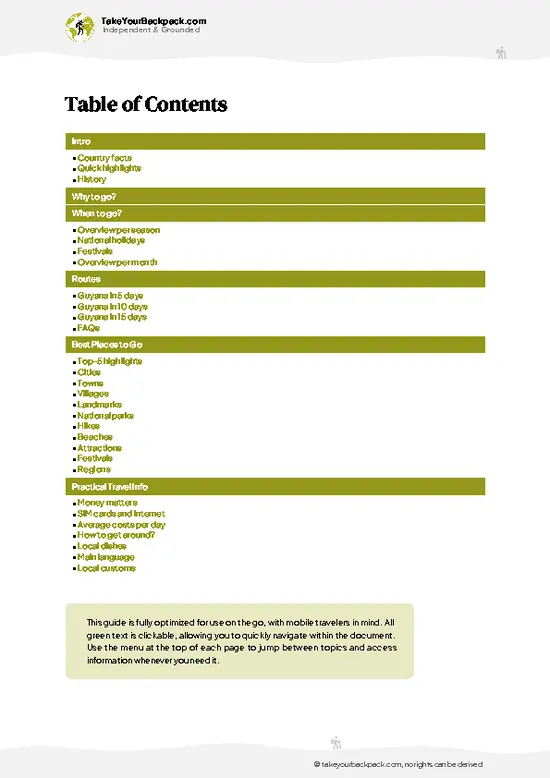
example page 1 from our offline Travel Guide for Guyana
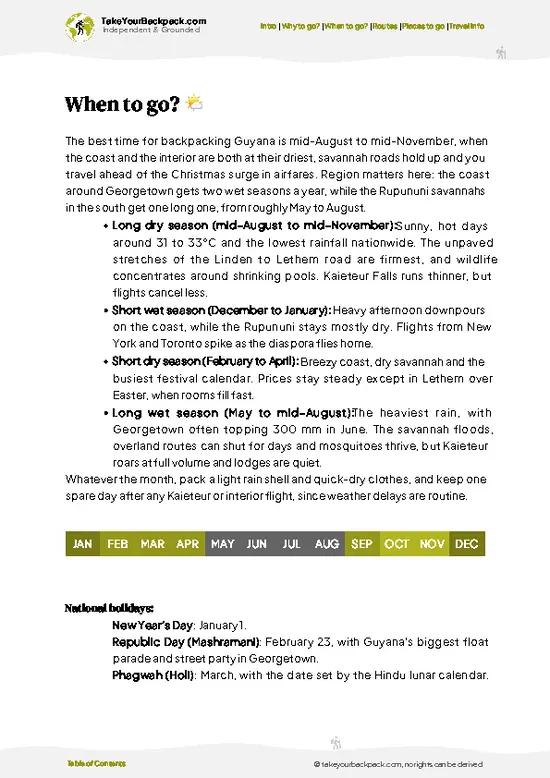
example page 2 from our offline Travel Guide for Guyana
example page 3 from our offline Travel Guide for Guyana
example page 4 from our offline Travel Guide for Guyana
example page 5 from our offline Travel Guide for Guyana
example page 6 from our offline Travel Guide for Guyana
example page 7 from our offline Travel Guide for Guyana
Loading the map 🌍
CLICK TO FILTER
cities
towns
villages
landmarks
national parks
hikes
beaches
attractions
festivals
regions
SHOW COUNTRY’S BESTSHOW ALL

✨ Why go?
Ranked #3 village in Guyana
Why Aishalton should be on your travel list

Aishalton is for backpackers who have done Lethem and want the southern Rupununi without a tour bus in sight. The reason to come is the Wapishana community itself. Families still grow cassava in farms outside the village, grate it, squeeze it in a long woven tube called a matapi and bake the flatbread on hot griddles. Ask politely and someone will often show you. The second pull is the land. Open savannah meeting forested hills makes for long walks at first light, when birds are loud and the heat has not yet arrived. Because the village is so far south, it works as a deliberate detour rather than a pause between busier places. Most people stay two or three nights; those who linger tend to be volunteers, researchers and travelers who like a plain routine of walking, talking and resting. It … read more 👉
Aishalton is for backpackers who have done Lethem and want the southern Rupununi without a tour bus in sight. The reason to come is the Wapishana community itself. Families still grow cassava in farms outside the village, grate it, squeeze it in a long woven tube called a matapi and bake the flatbread on hot griddles. Ask politely and someone will often show you. The second pull is the land. Open savannah meeting forested hills makes for long walks at first light, when birds are loud and the heat has not yet arrived. Because the village is so far south, it works as a deliberate detour rather than a pause between busier places. Most people stay two or three nights; those who linger tend to be volunteers, researchers and travelers who like a plain routine of walking, talking and resting. It is quiet, not social. There is no party scene, and Wapishana is spoken at home, though English is widely understood. Bring patience, small gifts of fuel money or supplies for hosts, and a flexible plan, because transport here follows the village, not you.

💡 HighlightsThe experiences that define the visit

  1. Makatau Mountain petroglyphs (timehri). This is what draws people to Aishalton: hundreds of carved figures and abstract patterns on rock about 3 km from the village, made by the area’s earlier inhabitants. The route is a walk along village tracks and then up through scrubby savanna and boulders, and you should expect to scramble in places. Go early, before the sun gets hard on the open rock, and in the drier months when the paths are firm. Hire a local guide through the village council or your host, usually US$15 to 30 for a group, and allow 3 to 5 hours return with time to look properly. Bring at least 2 liters of water.
  2. The creeks around the village. Aishalton sits among small creeks that run through savanna and patches of forest, and they are the village’s everyday swimming and washing spots.
… read more 👉
  1. Makatau Mountain petroglyphs (timehri). This is what draws people to Aishalton: hundreds of carved figures and abstract patterns on rock about 3 km from the village, made by the area’s earlier inhabitants. The route is a walk along village tracks and then up through scrubby savanna and boulders, and you should expect to scramble in places. Go early, before the sun gets hard on the open rock, and in the drier months when the paths are firm. Hire a local guide through the village council or your host, usually US$15 to 30 for a group, and allow 3 to 5 hours return with time to look properly. Bring at least 2 liters of water.
  2. The creeks around the village. Aishalton sits among small creeks that run through savanna and patches of forest, and they are the village’s everyday swimming and washing spots. A dip after the Makatau walk is the best way to cool down, and the water is clear and warm. Late afternoon is pleasant, when the heat eases and families come down to bathe. Access is free, and an hour or two is plenty. Ask your host which stretch is safe at the current water level, since the creeks change a lot between wet and dry seasons.
  3. Village walk and the Wapishana community routine. Aishalton is a Wapishana community, and simply walking its sandy lanes shows how life here works: cassava processing, farine drying in the sun, farms at the edges and children heading to the school. Early morning and late afternoon are when people are out and the light is soft. If you ask politely, women may show you how cassava is grated and squeezed to make bread and farine, and a small gift or payment of US$3 to 8 is a fair thank you. Plan 1 to 2 hours, and always ask before taking photos of people.
From Aishalton, longer outings reach the wider southern Rupununi, including the Marudi Mountain area to the south, the neighboring Wapishana villages along the savanna tracks and the open grassland where giant anteaters and savanna birds are often spotted, though these need a local driver and an early start. The village creeks cost nothing to visit, while the village walk is also free unless you ask for a demonstration or a guide.
Spotted a mistake or missing something? Contact us.

🌤️ When to go?Choosing the right time of year

  • Dry Season (November to April): Aishalton is easiest to reach now, with firm savanna tracks, little rain and daytime highs of 32 to 36°C (90 to 97°F). Nights drop to about 21 to 23°C (70 to 73°F). Hiking is best early, since midday sun on the open grassland is brutal.
  • Wet Season (May to August): Downpours turn the dirt road from Lethem into mud and swollen creeks, so a 4x4 trip can stretch well beyond the usual time. Highs run 29 to 32°C (84 to 90°F), the hills turn green and the mosquitoes multiply. Flights are less affected by the rain.
  • Shoulder Months (September and October): Rain eases and tracks firm up, with fewer bugs. Vehicle hire is usually easier to arrange before the dry-season rush.
  • Daylight and Crowds: Day length stays near 12 hours all year. Visitors are rare in every month, and
… read more 👉
  • Dry Season (November to April): Aishalton is easiest to reach now, with firm savanna tracks, little rain and daytime highs of 32 to 36°C (90 to 97°F). Nights drop to about 21 to 23°C (70 to 73°F). Hiking is best early, since midday sun on the open grassland is brutal.
  • Wet Season (May to August): Downpours turn the dirt road from Lethem into mud and swollen creeks, so a 4x4 trip can stretch well beyond the usual time. Highs run 29 to 32°C (84 to 90°F), the hills turn green and the mosquitoes multiply. Flights are less affected by the rain.
  • Shoulder Months (September and October): Rain eases and tracks firm up, with fewer bugs. Vehicle hire is usually easier to arrange before the dry-season rush.
  • Daylight and Crowds: Day length stays near 12 hours all year. Visitors are rare in every month, and prices are set by village norms and fuel costs rather than season.
Arrange a guide and transport a few days ahead, whatever the month, because Aishalton has no booking desks.


source: climatestotravel.comJANJanuary: fair for travelingFEBFebruary: fair for travelingMARMarch: fair for travelingAPRApril: fair for travelingMAYMay: fair for travelingJUNJune: good for travelingJULJuly: good for travelingAUGAugust: highly recommended for travelingSEPSeptember: excellent for travelingOCTOctober: excellent for travelingNOVNovember: highly recommended for travelingDECDecember: fair for traveling
guyana-city-aishalton
© Google |

✈️ The backpacker research shortcutGuyana Travel Guide

An offline-friendly backpacking guide with optimized travel routes, ranked highlights, transport advice, and the best areas to stay.
example page 0 from our offline Travel Guide for Guyana
example page 1 from our offline Travel Guide for Guyana
example page 2 from our offline Travel Guide for Guyana
example page 3 from our offline Travel Guide for Guyana
example page 4 from our offline Travel Guide for Guyana
example page 5 from our offline Travel Guide for Guyana
example page 6 from our offline Travel Guide for Guyana
example page 7 from our offline Travel Guide for Guyana
The digital guide (161 pages) contains:
✅ 43 highlights, ranked by travel appeal
✅ Optimized 5, 10 & 15-day travel routes
✅ Cities, national parks, landmarks, beaches
✅ How to get around
✅ Offline-friendly for travel without Wi-Fi
👉 Click to see all 30+ guide features

📅 Plan smarter in minutes, not weeks
✅ Month by month travel advice
✅ Festivals & national holidays
✅ Budget expectations

🗺️ Go to the right places, skip the overrated ones
✅ Honest pros & cons of destinations
✅ Top hikes, parks & viewpoints
✅ Lesser-known places most travelers miss
✅ Clear “worth it vs skip it” guidance

🛏️ Travel smoothly without rookie mistakes
✅ Best areas to stay
✅ Transport systems explained simply
✅ Common scams & safety advice
✅ SIM cards, money & practical tips

🌍 Understand the country, not just visit it
✅ Culture & traditions
✅ Local customs
✅ Festivals worth planning around
✅ Traveler-friendly historical context
✅ Insights that make places more meaningful

📱 Built for real travel conditions
✅ Fully downloadable PDF
✅ Works completely offline
✅ Optimized for phone use
✅ Useful in remote areas & buses
✅ Everything in one place
Stop searching, start planning
Get instant access to your full guide. 30‑day money-back guarantee.
+ Add another guide for just

By proceeding you agree to our terms.
Sent to your inbox immediately after payment • 100% Secure Checkout
Best Backpacking Travel Advisor 2025 tourism awardBest Backpacking
Travel Advisor
2025
What others say about Take Your Backpack Guides:
⭐⭐⭐⭐⭐
Fantastic, amazing amount of information!
⭐⭐⭐⭐⭐
My goodness this is amazing, it's what I've been looking for hats off too you!
⭐⭐⭐⭐⭐
I think this is absolutely BRILLIANT
⭐⭐⭐⭐
Very complete and informative. It's still missing places, but I gotta to commend you
⭐⭐⭐⭐⭐
This is truly amazing, thank you, can't wait to explore it with my kids!
⭐⭐⭐⭐⭐
Awesome resource, thank you!
⭐⭐⭐⭐⭐
This is amazing! Can't wait to explore the ones I haven't seen
⭐⭐⭐⭐
I love this! Well done, great idea.
⭐⭐⭐⭐⭐
Thanks for taking the time to make this gem!
⭐⭐⭐⭐⭐
This might be the best website I've ever seen.
⭐⭐⭐⭐⭐
Congratulations, and thank you so much for your work; it's incredibly valuable.
⭐⭐⭐⭐
In all seriousness I think you did a great job pointing out the important spots
⭐⭐⭐⭐⭐
10/10 very good
⭐⭐⭐⭐⭐
As someone who's only just starting to visit regularly this is awesome, thank you.
⭐⭐⭐⭐
Thank you very much! I'm going to visit my dad, it's going to be very useful!
⭐⭐⭐⭐⭐
This is really cool! We'll be travelling for the first time and this definitely come in handy.
⭐⭐⭐⭐⭐
You are now our minister of culture, congratulations 👨‍💼
⭐⭐⭐⭐⭐
Just wanted to tell you that this is a pearl! Going to follow your recommendations.
⭐⭐⭐⭐⭐
This is so cool. I'll definitely be using the resource for my travels soon.
⭐⭐⭐⭐⭐
This is very impressive! Good work.
⭐⭐⭐⭐⭐
This is an amazing and informative site. Very well done!

🛏️ Where to stay?Best areas and accommodation options

Aishalton has no hostel scene, so you sleep in village accommodation: a simple guesthouse or a homestay arranged through the village council. Expect to pay roughly US$10 to 25 a night for a bed or hammock space, and a bit more if meals are included.
Beds are basic, usually a mattress or hammock under a roof with a shared bathroom. Electricity can be limited in the evenings, so bring a headlamp and a power bank. A mosquito net is worth carrying, and a hammock lets you take up the offer of hammock space wherever it comes.
Homestays with Wapishana families are the better option if you want to understand … read more 👉
Aishalton has no hostel scene, so you sleep in village accommodation: a simple guesthouse or a homestay arranged through the village council. Expect to pay roughly US$10 to 25 a night for a bed or hammock space, and a bit more if meals are included.
Beds are basic, usually a mattress or hammock under a roof with a shared bathroom. Electricity can be limited in the evenings, so bring a headlamp and a power bank. A mosquito net is worth carrying, and a hammock lets you take up the offer of hammock space wherever it comes.
Homestays with Wapishana families are the better option if you want to understand village life. You will likely eat cassava bread, farine and pepperpot-style stews at the family table, and meals typically cost US$4 to 8 each. Bring cash in US dollars, since there are no ATMs and card payments are not an option.
The village council is the best first contact when you arrive, and you can ask there about rooms, guides and vehicles. Messaging ahead through a Lethem tour operator makes the first night far less of a gamble. Bring bottled water or purification tablets, along with snacks from Lethem, because shops in Aishalton stock only basics.

🚌 Day tripsEasy escapes and nearby places

Aishalton works well as a base if you accept that every outing depends on a guide and a hired vehicle or a long walk, and public transport is nearly absent.
Aishalton Hills Hike:
The hills rising beside the village give wide views over the southern Rupununi savanna toward the Brazilian border. Allow 3 to 5 hours round trip from the village, with a local guide costing about US$15 to 30. Start at dawn, because the exposed slopes bake by late morning and first-timers often carry too little water. November to April is best.

Marudi Mountain Foothills:
The Marudi range is the dominant landmark of this corner of Guyana, and its forested slopes contrast sharply with the dry grassland. Getting to the base takes a hired vehicle on rough track, and a day trip costs roughly US$60 to 120 split among passengers. … read more 👉
Aishalton works well as a base if you accept that every outing depends on a guide and a hired vehicle or a long walk, and public transport is nearly absent.
Aishalton Hills Hike:
The hills rising beside the village give wide views over the southern Rupununi savanna toward the Brazilian border. Allow 3 to 5 hours round trip from the village, with a local guide costing about US$15 to 30. Start at dawn, because the exposed slopes bake by late morning and first-timers often carry too little water. November to April is best.

Marudi Mountain Foothills:
The Marudi range is the dominant landmark of this corner of Guyana, and its forested slopes contrast sharply with the dry grassland. Getting to the base takes a hired vehicle on rough track, and a day trip costs roughly US$60 to 120 split among passengers. Go in the dry months, as the track can be impassable after heavy rain.

Shea Village and Shea Rock:
Shea is a Wapishana community northeast of Aishalton, known for its dramatic rock outcrop on the savanna. Count on 1.5 to 2.5 hours each way by 4x4 on dirt tracks, and US$80 to 150 for a vehicle and driver for the day. Many people rush the visit; arrive with time to talk with villagers and climb the rock in the cooler part of the day.

Neighboring South Rupununi Villages:
Village hopping across the South Rupununi shows how communities farm cassava, raise cattle and keep traditions alive. Each hop is short by road but the tracks are rough, so budget half a day per village and US$50 to 100 for transport. Ask permission from the village toshao before wandering or taking photos.

FAQTraveler FAQ

Most travelers reach Aishalton from Lethem, the Rupununi’s border town, by a hired 4x4 or truck over roughly 150 to 180 kilometers of dirt road, a trip of about 4 to 6 hours in the dry season and longer in the rains. Expect to pay about US$100 to 200 for a vehicle, which you can split with others. Small charter flights from Georgetown or Lethem to the Aishalton airstrip are another option but cost far more, and from Georgetown to Lethem scheduled flights take about 1.5 hours.
Yes, if you want a rarely visited Wapishana village with savanna and mountain scenery and no tour groups. Plan for 2 to 3 days to fit a hill hike and a trip to nearby communities such as Shea. Expect basic rooms at about US$10 to 25 a night and no ATMs, so it suits flexible travelers more than those on a tight schedule.
Not realistically from Lethem, since the drive takes 4 to 6 hours each way and leaves almost no time for exploring. A better plan is to stay at least one night in Aishalton, ideally two, so you can hike the hills and visit a nearby village. Once you are in Aishalton, day trips out to the surrounding hills and villages are easy to arrange locally for about US$15 to 150, depending on whether you need a guide or a vehicle.
⚠️ Things can change over time, so always validate details locally before you go.

Other Guyanese villages near Aishalton

Explore more nearby:

  • Annai—Rock View Lodge, anteater savannah, Bina Hill visit, Rupununi road stop| 168 km away
  • Bina Hill—Training institute, Makushi weaving, craft shop, dawn guides| 168 km away
  • Surama—Surama Mountain, Burro Burro canoe, Makushi benabs, cassava demonstration| 187 km away

💡 Not sure where to go next?
Create a personalized itinerary for Guyana including Aishalton and the places that fit your trip.

Generate my itinerary

👉 Discover all villages

Or checkout all Guyana has to offer (think cities, towns, villages, national parks, hikes, beaches, festivals)
Country photo of Guyana

We 💚 feedbackKey takeaways before you go

Aishalton pairs best with Lethem and the northern Rupununi ranch country, then onward to the Wapishana villages of the deep south and Shea. Plan it as a loop with a local driver, not a rush. I would carry cash in small notes, a water filter and a headlamp, and I would skip any attempt to fit it into a single day.

✍️ Help improve this page!
The information on this page is based on in-depth research, insights shared by experienced travelers, and feedback from the local travel community in Guyana. While every effort is made to keep the information accurate and current, conditions can change — so if you spot anything incorrect or outdated, please get in touch.


🙋‍♂️ Give feedback

👋 Meet the founderWho’s Behind Take Your Backpack?

Johan, backpacker and founder of TakeYourBackpackHi, I’m Johan (Netherlands 🇳🇱), the creator of TakeYourBackpack. Over the past 3 decades, I’ve backpacked through 90+ countries across six continents, gaining extensive experience with independent travel, long-term trips, and overland routes.

This site is built on a combination of firsthand travel experience and carefully curated insights from other backpackers. Many guides are based on places I’ve personally visited, while others bring together tips, observations, and practical advice shared by trusted travelers I’ve met along the way.

The goal is to provide realistic, experience-driven guidance — not generic itineraries — so you can explore destinations with better context, clearer expectations, and more confidence.