×

Guyana🇬🇾 | attractionsDadanawa RanchWorking vaqueros, giant anteaters, savannah horseback, night drives | things to do and best time to go

Explore Karanambu RanchExplore Iwokrama Canopy Walkway

Backpacking in Dadanawa Ranch
👌 Worth visitingattraction ranked #7
By Johan Kruseman 🇳🇱 | Updated October 19, 2026

Dadanawa is a working cattle ranch with a guest lodge, and it sits in open savannah rather than in rainforest, which surprises people expecting jungle canopy. It lies in the south of Guyana, in the Rupununi, a long, bumpy drive south of Lethem. Crowds are nonexistent, but costs are real: rooms are simple, meals are fixed, and getting here takes a hired vehicle. In return you get giant anteaters ambling across grassland, vaqueros on horseback, the Rupununi River slipping past, and a sky that fills with stars. Midday heat sits heavy and red dust coats everything. Expect a first day of cowhide-scented stables, a slow saddle ride at dusk, and supper under a loud chorus of frogs and nightjars.

Discover everything you want to know in the 📖 Guyana Travel Guide.


example page 0 from our offline Travel Guide for Guyana
example page 1 from our offline Travel Guide for Guyana
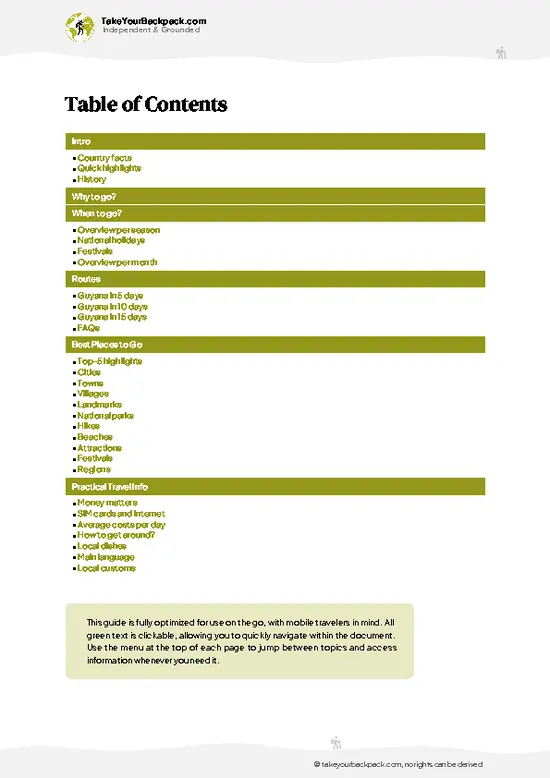
example page 2 from our offline Travel Guide for Guyana
example page 3 from our offline Travel Guide for Guyana
example page 4 from our offline Travel Guide for Guyana
example page 5 from our offline Travel Guide for Guyana
example page 6 from our offline Travel Guide for Guyana
example page 7 from our offline Travel Guide for Guyana
Loading the map 🌍
CLICK TO FILTER
cities
towns
villages
landmarks
national parks
hikes
beaches
attractions
festivals
regions
SHOW COUNTRY’S BESTSHOW ALL

✨ Why go?
Ranked #7 attraction in Guyana
The unique appeal for travelers

Dadanawa Ranch is one of the largest cattle ranches in the world to welcome overnight guests, and it gives you a Guyana that most itineraries skip. The draw is the vaquero culture of the Rupununi: men and women who still work herds on horseback across open savannah, with roots reaching back to Scottish and Brazilian ranching traditions. You can ride along, watch a corral job, or just sit on the veranda and listen.
The second reason is wildlife you can actually see in open country. Giant anteaters are regular visitors to the savannah here, and the nearby Rupununi River and wetlands hold giant river otters, caimans and large flocks of birds. Without thick forest in the way, spotting is easier than in the jungle.
Finally, it is a real milestone on any southern Guyana route, linking Lethem, the … read more 👉
Dadanawa Ranch is one of the largest cattle ranches in the world to welcome overnight guests, and it gives you a Guyana that most itineraries skip. The draw is the vaquero culture of the Rupununi: men and women who still work herds on horseback across open savannah, with roots reaching back to Scottish and Brazilian ranching traditions. You can ride along, watch a corral job, or just sit on the veranda and listen.
The second reason is wildlife you can actually see in open country. Giant anteaters are regular visitors to the savannah here, and the nearby Rupununi River and wetlands hold giant river otters, caimans and large flocks of birds. Without thick forest in the way, spotting is easier than in the jungle.
Finally, it is a real milestone on any southern Guyana route, linking Lethem, the Rewa and Karanambu with an authentic stay that costs effort and rewards it.

💡 HighlightsTop highlights of Dadanawa Ranch

  1. Vaquero cattle work: Ride out with the ranch hands at dawn as they move and sort herds across the savannah, a skill passed down for generations.
  2. Horseback rides: Saddle up on sturdy ranch horses and cross open grassland, past termite mounds and ite palm islands, at a walking pace that suits beginners.
  3. Giant anteater spotting: These shaggy, long-snouted animals forage in the savannah in the cooler hours, and the open terrain makes them easier to see than almost anywhere.
  4. Rupununi River: Take a boat or walk the banks to look for giant river otters, black caiman and kingfishers in slow brown water.
  5. Birdwatching: Savannah specialists such as burrowing owls, savanna hawks, and jabiru storks appear around the ranch grounds and wetlands.
  6. Night drives: After dark, spotlights pick out foxes, nightjars,
… read more 👉
  1. Vaquero cattle work: Ride out with the ranch hands at dawn as they move and sort herds across the savannah, a skill passed down for generations.
  2. Horseback rides: Saddle up on sturdy ranch horses and cross open grassland, past termite mounds and ite palm islands, at a walking pace that suits beginners.
  3. Giant anteater spotting: These shaggy, long-snouted animals forage in the savannah in the cooler hours, and the open terrain makes them easier to see than almost anywhere.
  4. Rupununi River: Take a boat or walk the banks to look for giant river otters, black caiman and kingfishers in slow brown water.
  5. Birdwatching: Savannah specialists such as burrowing owls, savanna hawks, and jabiru storks appear around the ranch grounds and wetlands.
  6. Night drives: After dark, spotlights pick out foxes, nightjars, caimans and the occasional tapir or ocelot on the tracks.
  7. Ranch house veranda: The old ranch buildings and hammock-hung verandas are the best place to watch storm clouds roll across a huge sky and the stars come out.
Most visitors overlook the quiet corral at the ranch center, where branding, saddle repair and daily chores unfold, and an hour of watching it tells you more about Rupununi life than any ride.
Spotted a mistake or missing something? Contact us.

Things to do near Dadanawa Ranch

Ratings based on Tripadvisor reviews. When you book through this link, you support our work at no extra cost to you.

🌤️ When to go?When to go for the best experience

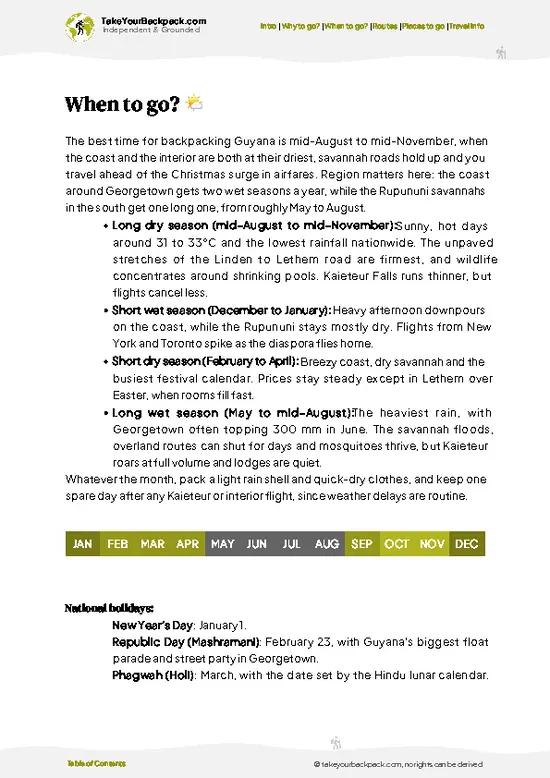
  • Dry Season (late September to March): Roads and savannah tracks firm up, and the Rupununi grasslands are easiest to cross. Days reach 32 to 36°C (90 to 97°F), nights drop to 21 to 24°C (70 to 75°F). Giant anteaters and birds around the ranch are easy to spot. Ranch rates and tour prices stay flat, but flights and vehicles fill up around Christmas.
  • Wet Season (May to August): Heavy rain turns tracks to mud and floods creeks, so the drive from Lethem can stretch by hours. Highs sit at 28 to 32°C (82 to 90°F). Fewer visitors arrive, and green pastures and swollen wetlands suit birders and ranch-life seekers.
  • Shoulder Months (April and early September): Showers are patchy and heat is intense. Daylight stays close to 12 hours all year.
Book your vehicle and bed at least a month ahead for December to February.

source: climatestotravel.comJANJanuary: good for travelingFEBFebruary: excellent for travelingMARMarch: excellent for travelingAPRApril: excellent for travelingMAYMay: fair for travelingJUNJune: fair for travelingJULJuly: fair for travelingAUGAugust: fair for travelingSEPSeptember: good for travelingOCTOctober: good for travelingNOVNovember: good for travelingDECDecember: good for traveling
when-to-go

✈️ The backpacker research shortcutGuyana Travel Guide

An offline-friendly backpacking guide with optimized travel routes, ranked highlights, transport advice, and the best areas to stay.
example page 0 from our offline Travel Guide for Guyana
example page 1 from our offline Travel Guide for Guyana
example page 2 from our offline Travel Guide for Guyana
example page 3 from our offline Travel Guide for Guyana
example page 4 from our offline Travel Guide for Guyana
example page 5 from our offline Travel Guide for Guyana
example page 6 from our offline Travel Guide for Guyana
example page 7 from our offline Travel Guide for Guyana
The digital guide (161 pages) contains:
✅ 43 highlights, ranked by travel appeal
✅ Optimized 5, 10 & 15-day travel routes
✅ Cities, national parks, landmarks, beaches
✅ How to get around
✅ Offline-friendly for travel without Wi-Fi
👉 Click to see all 30+ guide features

📅 Plan smarter in minutes, not weeks
✅ Month by month travel advice
✅ Festivals & national holidays
✅ Budget expectations

🗺️ Go to the right places, skip the overrated ones
✅ Honest pros & cons of destinations
✅ Top hikes, parks & viewpoints
✅ Lesser-known places most travelers miss
✅ Clear “worth it vs skip it” guidance

🛏️ Travel smoothly without rookie mistakes
✅ Best areas to stay
✅ Transport systems explained simply
✅ Common scams & safety advice
✅ SIM cards, money & practical tips

🌍 Understand the country, not just visit it
✅ Culture & traditions
✅ Local customs
✅ Festivals worth planning around
✅ Traveler-friendly historical context
✅ Insights that make places more meaningful

📱 Built for real travel conditions
✅ Fully downloadable PDF
✅ Works completely offline
✅ Optimized for phone use
✅ Useful in remote areas & buses
✅ Everything in one place
Stop searching, start planning
Get instant access to your full guide. 30‑day money-back guarantee.
+ Add another guide for just

By proceeding you agree to our terms.
Sent to your inbox immediately after payment • 100% Secure Checkout
Best Backpacking Travel Advisor 2025 tourism awardBest Backpacking
Travel Advisor
2025
What others say about Take Your Backpack Guides:
⭐⭐⭐⭐⭐
Fantastic, amazing amount of information!
⭐⭐⭐⭐⭐
My goodness this is amazing, it's what I've been looking for hats off too you!
⭐⭐⭐⭐⭐
I think this is absolutely BRILLIANT
⭐⭐⭐⭐
Very complete and informative. It's still missing places, but I gotta to commend you
⭐⭐⭐⭐⭐
This is truly amazing, thank you, can't wait to explore it with my kids!
⭐⭐⭐⭐⭐
Awesome resource, thank you!
⭐⭐⭐⭐⭐
This is amazing! Can't wait to explore the ones I haven't seen
⭐⭐⭐⭐
I love this! Well done, great idea.
⭐⭐⭐⭐⭐
Thanks for taking the time to make this gem!
⭐⭐⭐⭐⭐
This might be the best website I've ever seen.
⭐⭐⭐⭐⭐
Congratulations, and thank you so much for your work; it's incredibly valuable.
⭐⭐⭐⭐
In all seriousness I think you did a great job pointing out the important spots
⭐⭐⭐⭐⭐
10/10 very good
⭐⭐⭐⭐⭐
As someone who's only just starting to visit regularly this is awesome, thank you.
⭐⭐⭐⭐
Thank you very much! I'm going to visit my dad, it's going to be very useful!
⭐⭐⭐⭐⭐
This is really cool! We'll be travelling for the first time and this definitely come in handy.
⭐⭐⭐⭐⭐
You are now our minister of culture, congratulations 👨‍💼
⭐⭐⭐⭐⭐
Just wanted to tell you that this is a pearl! Going to follow your recommendations.
⭐⭐⭐⭐⭐
This is so cool. I'll definitely be using the resource for my travels soon.
⭐⭐⭐⭐⭐
This is very impressive! Good work.
⭐⭐⭐⭐⭐
This is an amazing and informative site. Very well done!

🛏️ Where to stay?How to pick the right area

Dadanawa Ranch itself is the safest and most practical base, since the nearest town is hours away over savannah tracks. The ranch offers simple lodging in the old ranch house area, with shared meals, hammock-style sleeping options and cowboy (vaquero) company. It is social in a small way: you eat with other guests, ranch staff and the odd researcher, and evenings are about stories and stargazing rather than bars.

Lethem is the other area to consider, on the Brazilian border, about 3 to 4 hours away by road in dry weather. It has guesthouses and small lodges at roughly US$20 to 50 a night, plus … read more 👉
Dadanawa Ranch itself is the safest and most practical base, since the nearest town is hours away over savannah tracks. The ranch offers simple lodging in the old ranch house area, with shared meals, hammock-style sleeping options and cowboy (vaquero) company. It is social in a small way: you eat with other guests, ranch staff and the odd researcher, and evenings are about stories and stargazing rather than bars.

Lethem is the other area to consider, on the Brazilian border, about 3 to 4 hours away by road in dry weather. It has guesthouses and small lodges at roughly US$20 to 50 a night, plus shops, ATMs, and the transport contacts you need to organize a ride to the ranch. Most backpackers spend a night there before and after. Annai and nearby villages suit anyone continuing north along the Rupununi, with community-run stays and hammock space. Ranch accommodation is limited, so write ahead and confirm pickup before committing to the drive.

👛 Costs (as of 19 October 2026)Travel costs and budget guide for Dadanawa Ranch

Expect to spend about US$135 a day at Dadanawa Ranch, with transport to reach it making up most of that.
CategoryBudget RangeLocal Reality
Accommodation (high season)US$45 to 70Simple ranch rooms or hammock space, often priced with meals bundled in.
MealsUS$20 to 35Beef, cassava, rice and fresh fruit served at set times.
TransportUS$40 to 90Shared 4x4 from Lethem splits the cost; private hire runs higher.
Activities and guidingUS$10 to 30Horseback rides, wildlife walks and vaquero visits, priced per outing.
ExtrasUS$5 to 10Drinks, snacks and tips. Bring cash, as there are no ATMs.
Total Daily BudgetUS$120 to 235About US$135 for a typical shared-vehicle day.
⚠️ Prices can change and everyone travels differently, so take this as a rough guide. Hope it helps you plan your adventure!

🛡️ SafetyStaying Safe: What Travelers Should Know

Dadanawa Ranch in Guyana offers a generally manageable experience for backpackers, but a few practical considerations can enhance your journey. Weather can shift quickly; be ready for sudden rain or intense sun. Lightweight, breathable clothing and a reliable rain jacket are essential.

The terrain varies. Some trails are well-marked, but others can be steep or muddy, so sturdy footwear is a must. Navigation skills are helpful; a map and compass can save you from unnecessary detours.

Wildlife encounters are part of the charm. Keep a respectful distance from animals, and avoid feeding them. This preserves their natural behavior and keeps you safe.

Lastly, don’t underestimate the power of pacing. Take breaks to enjoy the scenery and recharge. With these insights, you’ll navigate Dadanawa Ranch … read more 👉
Dadanawa Ranch in Guyana offers a generally manageable experience for backpackers, but a few practical considerations can enhance your journey. Weather can shift quickly; be ready for sudden rain or intense sun. Lightweight, breathable clothing and a reliable rain jacket are essential.

The terrain varies. Some trails are well-marked, but others can be steep or muddy, so sturdy footwear is a must. Navigation skills are helpful; a map and compass can save you from unnecessary detours.

Wildlife encounters are part of the charm. Keep a respectful distance from animals, and avoid feeding them. This preserves their natural behavior and keeps you safe.

Lastly, don’t underestimate the power of pacing. Take breaks to enjoy the scenery and recharge. With these insights, you’ll navigate Dadanawa Ranch with confidence, focusing on the moments that truly matter.

FAQCommon questions from travelers

Plan on two to three nights at Dadanawa Ranch to make the long trip worthwhile. The drive from Lethem takes about 3 to 4 hours in dry weather, so a single night is mostly spent traveling. A longer stay of 3 days lets you fit in horseback rides, a wildlife walk and a visit to the vaqueros.
Yes, for anyone who wants working-ranch life and wildlife in the Rupununi savannah. Stays are charged as lodging with meals, around US$45 to 70 a night, rather than as a simple gate fee. Giant anteaters, birds and horseback rides with vaqueros are the main draw, and you will not find crowds.
Most travelers fly to Georgetown, then take a flight or long bus to Lethem, and arrange a 4x4 from there. The ranch lies roughly 3 to 4 hours south of Lethem over savannah tracks that worsen in the wet season. Shared vehicle costs are around US$40 to 90, and booking the ranch ahead helps arrange pickup.
⚠️ Things can change over time, so always validate details locally before you go.

Other Guyanese attractions near Dadanawa Ranch

Explore more nearby:


💡 Not sure where to go next?
Create a personalized itinerary for Guyana including Dadanawa Ranch and the places that fit your trip.

Generate my itinerary

👉 Discover all attractions

Or checkout all Guyana has to offer (think cities, towns, villages, national parks, hikes, beaches, festivals)
Country photo of Guyana

We 💚 feedbackSumming up the experience

Dadanawa Ranch is best at first light and again in the last hour of daylight, when the savannah cools and anteaters and birds come out. I would aim for the drier months, roughly September to March, when tracks are passable. Bring a wide-brimmed hat, long sleeves for sun and insects, and a good flashlight.

✍️ Help improve this page!
The information on this page is based on in-depth research, insights shared by experienced travelers, and feedback from the local travel community in Guyana. While every effort is made to keep the information accurate and current, conditions can change — so if you spot anything incorrect or outdated, please get in touch.


🙋‍♂️ Give feedback

👋 Meet the founderWho’s Behind Take Your Backpack?

Johan, backpacker and founder of TakeYourBackpackHi, I’m Johan (Netherlands 🇳🇱), the creator of TakeYourBackpack. Over the past 3 decades, I’ve backpacked through 90+ countries across six continents, gaining extensive experience with independent travel, long-term trips, and overland routes.

This site is built on a combination of firsthand travel experience and carefully curated insights from other backpackers. Many guides are based on places I’ve personally visited, while others bring together tips, observations, and practical advice shared by trusted travelers I’ve met along the way.

The goal is to provide realistic, experience-driven guidance — not generic itineraries — so you can explore destinations with better context, clearer expectations, and more confidence.