×

Guyana🇬🇾 | attractionsKaranambu RanchGiant otter families, Victoria lilies, spotlight boat, anteater tracking | things to do and best time to go

Explore KamarangExplore Dadanawa Ranch

Backpacking in Karanambu Ranch
👍 Recommendedattraction ranked #6
By Johan Kruseman 🇳🇱 | Updated October 19, 2026

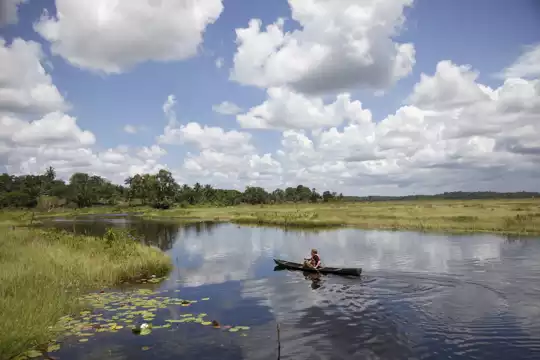
Karanambu Ranch hands you giant otters at close range without a Pantanal-sized budget or a jungle expedition. It sits in the Rupununi savannah in the south of Guyana, on the Rupununi River, a long bumpy day by road or a short charter flight from Georgetown. Expect no crowds at all, just a few lodge guests, but expect to pay lodge prices for a remote place, and the rooms are simple. Mornings smell of woodsmoke and wet grass, nights hum with frogs and insects, and the heat flattens the afternoons. Boat trips put you on black-water creeks where Victoria amazonica lilies spread plates wider than a doorway, and the otters surface with fish crunching between their teeth.

Discover everything you want to know in the 📖 Guyana Travel Guide.


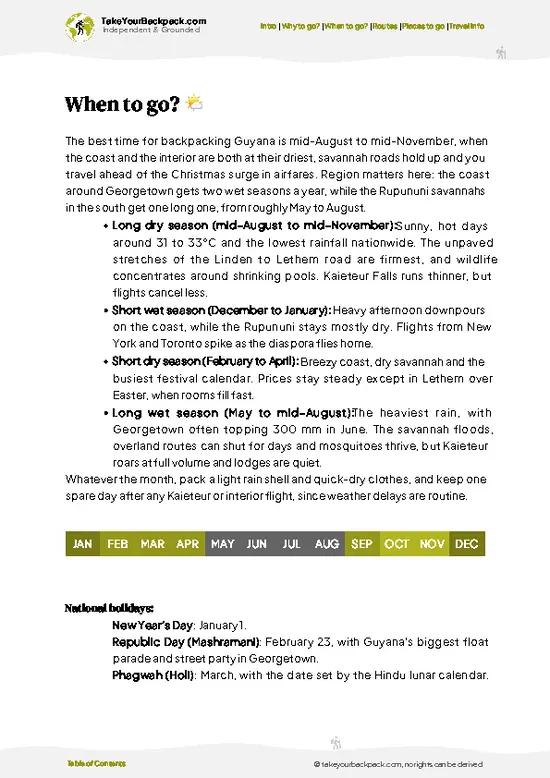
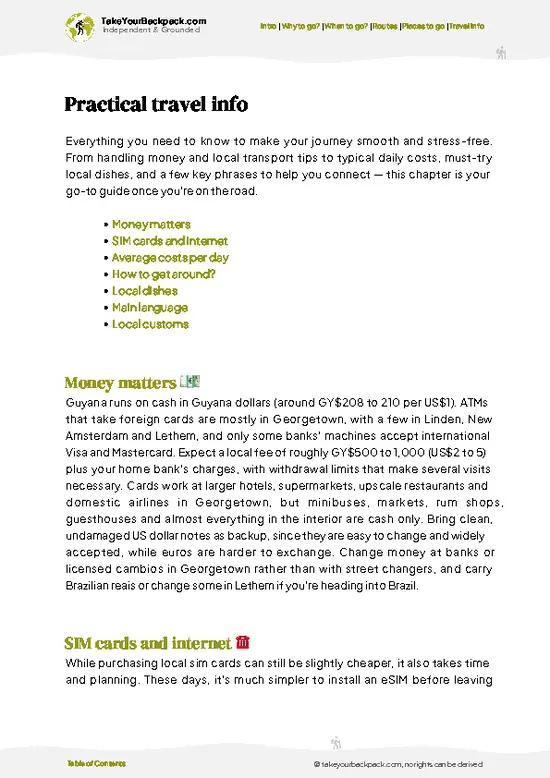
example page 0 from our offline Travel Guide for Guyana
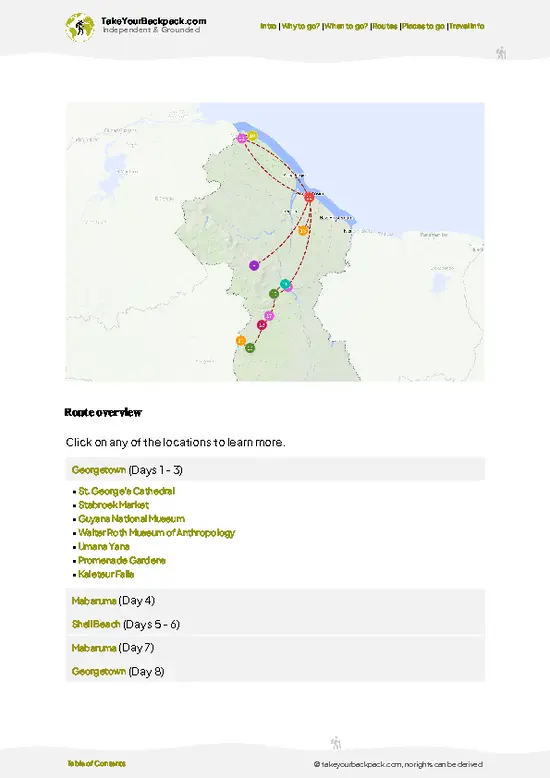
example page 1 from our offline Travel Guide for Guyana
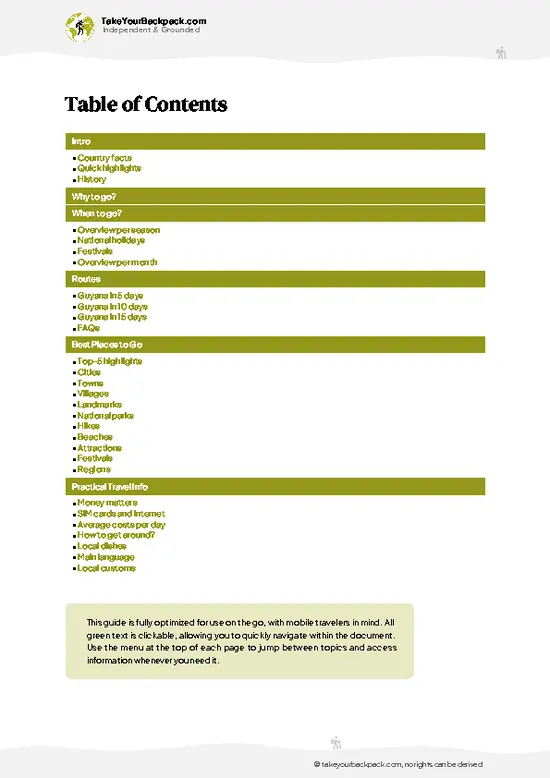
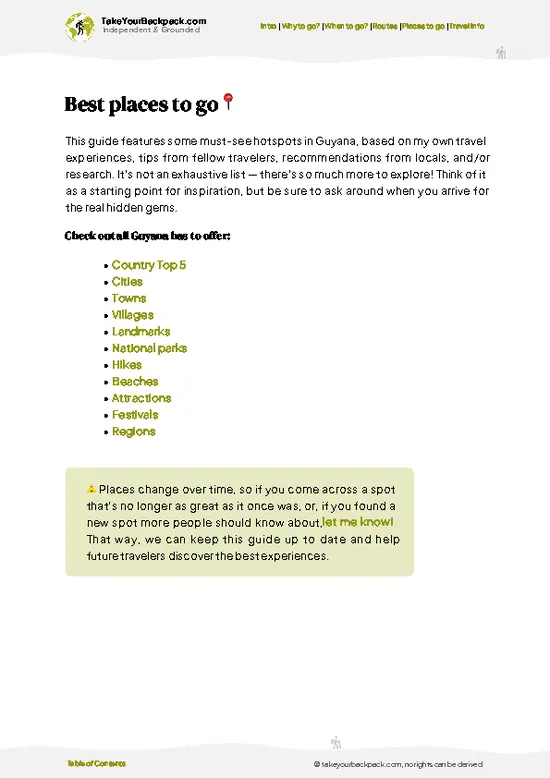
example page 2 from our offline Travel Guide for Guyana
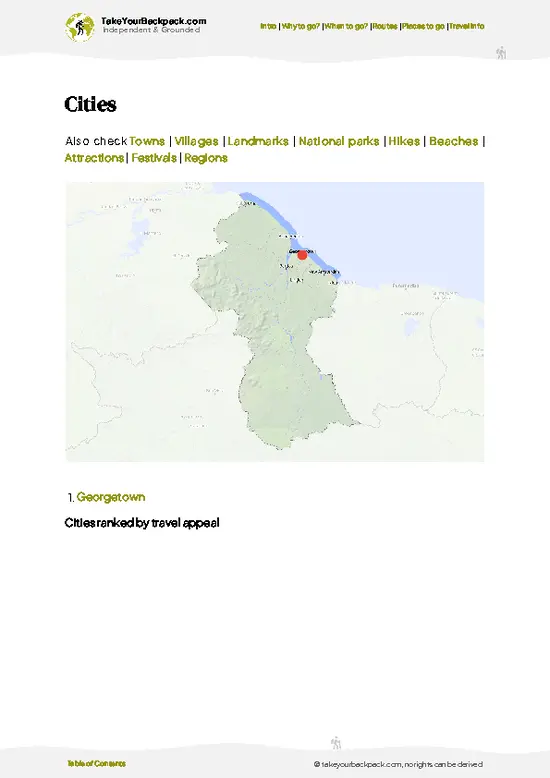
example page 3 from our offline Travel Guide for Guyana
example page 4 from our offline Travel Guide for Guyana
example page 5 from our offline Travel Guide for Guyana
example page 6 from our offline Travel Guide for Guyana
example page 7 from our offline Travel Guide for Guyana
Loading the map 🌍
CLICK TO FILTER
cities
towns
villages
landmarks
national parks
hikes
beaches
attractions
festivals
regions
SHOW COUNTRY’S BESTSHOW ALL

✨ Why go?
Ranked #6 attraction in Guyana
What sets this place apart

Karanambu Ranch is where giant otter conservation in Guyana took shape, and you can see the result in person. The ranch became known for rehabilitating orphaned otter pups, a work carried on from Diane McTurk, and the animals you watch on the river are wild descendants of that effort. That gives a visit real weight beyond a wildlife checklist. The second draw is the setting itself: a working cattle ranch with a river, flooded savannah and palm islands, where giant otters, black caiman and giant anteaters all share the same landscape. You also earn a milestone on the Rupununi circuit. Pair it with Lethem, Surama or Rewa, and you build a route through Guyana’s interior that few backpackers ever complete. Staying here is slow, quiet and a little rough, which is exactly the point.

💡 HighlightsThe experiences that define the visit

  1. Giant otter watching on the Rupununi River: the ranch’s signature experience. Family groups hunt, whistle and haul fish onto the bank, and a quiet paddle or boat approach gets you surprisingly near.
  2. Victoria amazonica lily ponds: giant water lilies with pads up to about 2 meters across, best seen in the evening when the flowers open white and turn pink the next day.
  3. Night spotlight boat trip: the eyeshine of black caiman glows red along the banks, and nightjars and owls call from the shoreline.
  4. Giant anteater tracking: guides lead walks across the savannah where these shaggy animals feed on termite mounds, often in the cooler early hours.
  5. Savannah and bird walks: capped herons, jabiru storks, hoatzins and many raptors work the wetlands and gallery forest.
  6. The ranch house and otter history: the
… read more 👉
  1. Giant otter watching on the Rupununi River: the ranch’s signature experience. Family groups hunt, whistle and haul fish onto the bank, and a quiet paddle or boat approach gets you surprisingly near.
  2. Victoria amazonica lily ponds: giant water lilies with pads up to about 2 meters across, best seen in the evening when the flowers open white and turn pink the next day.
  3. Night spotlight boat trip: the eyeshine of black caiman glows red along the banks, and nightjars and owls call from the shoreline.
  4. Giant anteater tracking: guides lead walks across the savannah where these shaggy animals feed on termite mounds, often in the cooler early hours.
  5. Savannah and bird walks: capped herons, jabiru storks, hoatzins and many raptors work the wetlands and gallery forest.
  6. The ranch house and otter history: the old homestead holds photos and stories of the orphaned pups raised here, and explains how conservation work began.
  7. Working ranch life: cattle, horses and ranch hands still run the property, so you see real savannah traditions rather than a staged show.
Most visitors rush for the otters and skip the quiet dusk wait by the lily ponds, when the blooms open and the river turns still.
Spotted a mistake or missing something? Contact us.

Things to do near Karanambu Ranch

Ratings based on Tripadvisor reviews. When you book through this link, you support our work at no extra cost to you.

🌤️ When to go?Seasonal considerations and timing

  • Dry Season (February to April): The Rupununi savanna is at its driest, with highs of 32 to 36°C (90 to 97°F). Giant otters and anteaters are easiest to find, and trails and tracks are firm. Water levels in the Rewa River and Rupununi wetlands drop, so boat access can narrow.
  • Wet Season (May to August): Rain turns savanna tracks to mud and floods the lowlands. Highs run 29 to 33°C (84 to 91°F). The Victoria amazonica water lilies bloom in the ponds, and rates can dip.
  • Short Dry Spell (September to November): Showers ease, with highs of 31 to 35°C (88 to 95°F). Roads reopen and the camp fills with researchers and birders.
  • Festival Timing: Rupununi Rodeo at Easter in nearby Lethem brings crowds and full beds across the region.
Daylight stays close to 12 hours all year, so book your stay around the … read more 👉
  • Dry Season (February to April): The Rupununi savanna is at its driest, with highs of 32 to 36°C (90 to 97°F). Giant otters and anteaters are easiest to find, and trails and tracks are firm. Water levels in the Rewa River and Rupununi wetlands drop, so boat access can narrow.
  • Wet Season (May to August): Rain turns savanna tracks to mud and floods the lowlands. Highs run 29 to 33°C (84 to 91°F). The Victoria amazonica water lilies bloom in the ponds, and rates can dip.
  • Short Dry Spell (September to November): Showers ease, with highs of 31 to 35°C (88 to 95°F). Roads reopen and the camp fills with researchers and birders.
  • Festival Timing: Rupununi Rodeo at Easter in nearby Lethem brings crowds and full beds across the region.
Daylight stays close to 12 hours all year, so book your stay around the rain, not the sun. Reserve the ranch months ahead for February to April.


source: climatestotravel.comJANJanuary: fair for travelingFEBFebruary: highly recommended for travelingMARMarch: highly recommended for travelingAPRApril: highly recommended for travelingMAYMay: excellent for travelingJUNJune: excellent for travelingJULJuly: excellent for travelingAUGAugust: highly recommended for travelingSEPSeptember: fair for travelingOCTOctober: fair for travelingNOVNovember: fair for travelingDECDecember: fair for traveling
when-to-go

✈️ The backpacker research shortcutGuyana Travel Guide

An offline-friendly backpacking guide with optimized travel routes, ranked highlights, transport advice, and the best areas to stay.
example page 0 from our offline Travel Guide for Guyana
example page 1 from our offline Travel Guide for Guyana
example page 2 from our offline Travel Guide for Guyana
example page 3 from our offline Travel Guide for Guyana
example page 4 from our offline Travel Guide for Guyana
example page 5 from our offline Travel Guide for Guyana
example page 6 from our offline Travel Guide for Guyana
example page 7 from our offline Travel Guide for Guyana
The digital guide (161 pages) contains:
✅ 43 highlights, ranked by travel appeal
✅ Optimized 5, 10 & 15-day travel routes
✅ Cities, national parks, landmarks, beaches
✅ How to get around
✅ Offline-friendly for travel without Wi-Fi
👉 Click to see all 30+ guide features

📅 Plan smarter in minutes, not weeks
✅ Month by month travel advice
✅ Festivals & national holidays
✅ Budget expectations

🗺️ Go to the right places, skip the overrated ones
✅ Honest pros & cons of destinations
✅ Top hikes, parks & viewpoints
✅ Lesser-known places most travelers miss
✅ Clear “worth it vs skip it” guidance

🛏️ Travel smoothly without rookie mistakes
✅ Best areas to stay
✅ Transport systems explained simply
✅ Common scams & safety advice
✅ SIM cards, money & practical tips

🌍 Understand the country, not just visit it
✅ Culture & traditions
✅ Local customs
✅ Festivals worth planning around
✅ Traveler-friendly historical context
✅ Insights that make places more meaningful

📱 Built for real travel conditions
✅ Fully downloadable PDF
✅ Works completely offline
✅ Optimized for phone use
✅ Useful in remote areas & buses
✅ Everything in one place
Stop searching, start planning
Get instant access to your full guide. 30‑day money-back guarantee.
+ Add another guide for just

By proceeding you agree to our terms.
Sent to your inbox immediately after payment • 100% Secure Checkout
Best Backpacking Travel Advisor 2025 tourism awardBest Backpacking
Travel Advisor
2025
What others say about Take Your Backpack Guides:
⭐⭐⭐⭐⭐
Fantastic, amazing amount of information!
⭐⭐⭐⭐⭐
My goodness this is amazing, it's what I've been looking for hats off too you!
⭐⭐⭐⭐⭐
I think this is absolutely BRILLIANT
⭐⭐⭐⭐
Very complete and informative. It's still missing places, but I gotta to commend you
⭐⭐⭐⭐⭐
This is truly amazing, thank you, can't wait to explore it with my kids!
⭐⭐⭐⭐⭐
Awesome resource, thank you!
⭐⭐⭐⭐⭐
This is amazing! Can't wait to explore the ones I haven't seen
⭐⭐⭐⭐
I love this! Well done, great idea.
⭐⭐⭐⭐⭐
Thanks for taking the time to make this gem!
⭐⭐⭐⭐⭐
This might be the best website I've ever seen.
⭐⭐⭐⭐⭐
Congratulations, and thank you so much for your work; it's incredibly valuable.
⭐⭐⭐⭐
In all seriousness I think you did a great job pointing out the important spots
⭐⭐⭐⭐⭐
10/10 very good
⭐⭐⭐⭐⭐
As someone who's only just starting to visit regularly this is awesome, thank you.
⭐⭐⭐⭐
Thank you very much! I'm going to visit my dad, it's going to be very useful!
⭐⭐⭐⭐⭐
This is really cool! We'll be travelling for the first time and this definitely come in handy.
⭐⭐⭐⭐⭐
You are now our minister of culture, congratulations 👨‍💼
⭐⭐⭐⭐⭐
Just wanted to tell you that this is a pearl! Going to follow your recommendations.
⭐⭐⭐⭐⭐
This is so cool. I'll definitely be using the resource for my travels soon.
⭐⭐⭐⭐⭐
This is very impressive! Good work.
⭐⭐⭐⭐⭐
This is an amazing and informative site. Very well done!

🛏️ Where to stay?Best areas to stay in Guyana

Staying at the ranch itself is the answer for most backpackers, since Karanambu Ranch sits far from any town and the only real accommodation within reach is its own lodge. The thatched cabins and hammock-style options run on a communal basis, with shared meals and guided outings, so you meet other guests fast. It is quiet, safe and social in a small way, with researchers, birders and a handful of travelers swapping sightings over dinner.

If you need a base before or after, Lethem is the main hub of the Rupununi, close to the Brazilian border. It has simple guesthouses and small hotels along the … read more 👉
Staying at the ranch itself is the answer for most backpackers, since Karanambu Ranch sits far from any town and the only real accommodation within reach is its own lodge. The thatched cabins and hammock-style options run on a communal basis, with shared meals and guided outings, so you meet other guests fast. It is quiet, safe and social in a small way, with researchers, birders and a handful of travelers swapping sightings over dinner.

If you need a base before or after, Lethem is the main hub of the Rupununi, close to the Brazilian border. It has simple guesthouses and small hotels along the main road, good for restocking, changing money and picking up onward transport. Expect early nights and a frontier feel rather than nightlife.

Annai village is a smaller alternative in the northern savanna, with community-run homestays. These suit travelers who want village life, plus access to the Rupununi River and local guides. Facilities are basic and arrangements are best made ahead through operators in Georgetown or Lethem. Anywhere in the region, bring cash, a headlamp and mosquito protection.

👛 Costs (as of 19 October 2026)Money, prices, and spending tips

Karanambu Ranch costs roughly US$210 to 345 per person per day, because lodging, meals and guided activities are bundled into a stay in the Rupununi savannah. Prices below are for one person sharing a room, and payment is usually settled in US dollars or Guyanese dollars.
CategoryBudget RangeLocal Reality
Accommodation (high season, Jan to Apr)US$100 to 150Simple thatched cabins with shared or private bathrooms, usually sold on a full-board basis. Rates dip slightly in the wet months.
MealsUS$30 to 45Three set meals served at the lodge. No shops or restaurants nearby, so this is effectively fixed.
Guided activitiesUS$40 to 60Boat trips on the Rupununi River for giant otters and black caiman, savannah drives and night spotting. Often bundled into package rates.
Park or conservation feesUS$5 to 15Small
… read more 👉
Karanambu Ranch costs roughly US$210 to 345 per person per day, because lodging, meals and guided activities are bundled into a stay in the Rupununi savannah. Prices below are for one person sharing a room, and payment is usually settled in US dollars or Guyanese dollars.
CategoryBudget RangeLocal Reality
Accommodation (high season, Jan to Apr)US$100 to 150Simple thatched cabins with shared or private bathrooms, usually sold on a full-board basis. Rates dip slightly in the wet months.
MealsUS$30 to 45Three set meals served at the lodge. No shops or restaurants nearby, so this is effectively fixed.
Guided activitiesUS$40 to 60Boat trips on the Rupununi River for giant otters and black caiman, savannah drives and night spotting. Often bundled into package rates.
Park or conservation feesUS$5 to 15Small community and conservation levies sometimes added to the bill.
Transport from Lethem or GeorgetownUS$30 to 60Road transfer from Lethem over rough savannah tracks. A flight from Georgetown to Karanambu’s airstrip costs far more, around US$250 to 350 one way, and is not counted here.
ExtrasUS$5 to 15Drinks, laundry and tips for guides.
Total Daily BudgetUS$210 to 345Roughly US$275 on a mid-range overland stay.
⚠️ Prices can change and everyone travels differently, so take this as a rough guide. Hope it helps you plan your adventure!

🛡️ SafetyTraveler Safety Guide

Karanambu Ranch offers a generally accessible experience for backpackers, but a few realities can catch you off guard. Weather can shift quickly; afternoon rains are common, so pack a reliable waterproof layer. The terrain is mostly flat but can get muddy, especially after rain, so sturdy, water-resistant footwear is a must.

Wildlife encounters are part of the charm here. Keep a respectful distance from animals, and avoid feeding them; this keeps both you and the wildlife safe.

Navigation is straightforward, but it’s wise to have a map or GPS device, as trails can be less defined in some areas. Timing your hikes for early morning or late afternoon not only helps you avoid the heat but also increases your chances of spotting wildlife.

Stay aware, prepare well, and you’ll have the energy and focus for the moments that truly matter.

FAQCommon questions from travelers

Plan on two to three nights at Karanambu Ranch to see the main sights. That gives you at least two boat outings for giant otters, a night drive for caimans or nightjars, and a morning at the Victoria amazonica lily ponds. Day visits from Lethem are not realistic given the long drive.
Karanambu Ranch is worth the cost if wildlife is your priority, since rates usually bundle meals, lodging and guided trips at roughly US$120 to 170 per person a night. You get close access to giant otters, a rehabilitation program with a long history and savanna birdlife. Budget travelers who only want a quick look may find it pricey.
Getting to Karanambu Ranch means reaching the Rupununi first. Fly from Ogle in Georgetown to Lethem, or take a long overland route taking 10 to 14 hours on rough roads. The lodge arranges transfers from Lethem or the nearby airstrip, which take about two to three hours depending on the season.
⚠️ Things can change over time, so always validate details locally before you go.

Other Guyanese attractions near Karanambu Ranch

Explore more nearby:


💡 Not sure where to go next?
Create a personalized itinerary for Guyana including Karanambu Ranch and the places that fit your trip.

Generate my itinerary

👉 Discover all attractions

Or checkout all Guyana has to offer (think cities, towns, villages, national parks, hikes, beaches, festivals)
Country photo of Guyana

We 💚 feedbackSumming up the experience

Karanambu Ranch rewards people who stay at least two nights, yet many travelers book one and spend the whole stay recovering from the journey. Give yourself a second day so the otters, anteaters and night boat can all happen without hurry. Bring insect repellent, a headlamp and a dry bag for the boat rides.

✍️ Help improve this page!
The information on this page is based on in-depth research, insights shared by experienced travelers, and feedback from the local travel community in Guyana. While every effort is made to keep the information accurate and current, conditions can change — so if you spot anything incorrect or outdated, please get in touch.


🙋‍♂️ Give feedback

👋 Meet the founderWho’s Behind Take Your Backpack?

Johan, backpacker and founder of TakeYourBackpackHi, I’m Johan (Netherlands 🇳🇱), the creator of TakeYourBackpack. Over the past 3 decades, I’ve backpacked through 90+ countries across six continents, gaining extensive experience with independent travel, long-term trips, and overland routes.

This site is built on a combination of firsthand travel experience and carefully curated insights from other backpackers. Many guides are based on places I’ve personally visited, while others bring together tips, observations, and practical advice shared by trusted travelers I’ve met along the way.

The goal is to provide realistic, experience-driven guidance — not generic itineraries — so you can explore destinations with better context, clearer expectations, and more confidence.