

×

Guyana🇬🇾 | festivalsDiwaliClay deyas, Diwali motorcade, mandir prayers, parsad sweets | things to do and best time to go

Explore Rupununi RodeoExplore Emancipation Day

Backpacking in Diwali
👌 Worth visitingfestival ranked #6
By Johan Kruseman 🇳🇱 | Updated October 19, 2026

Diwali in Guyana is a public holiday, and it falls on a different date each autumn or early winter because it follows the Hindu lunar calendar, so check the date before you book flights. Celebrations run across the country's coast, in the Georgetown area, along the East Coast Demerara and Berbice, and in the Essequibo region. The festival of lights is a Hindu celebration, but Guyanese of every background join in, so expect Indo-Guyanese families, neighbors and curious visitors. Think clay deyas flickering on verandas, sweet smoke of incense, fried parsad and curry on the air, and firecrackers and chutney music after dark. Costs and delays catch people out. Taxis surge and sell out on the night, so arrange a driver early. Guesthouses near the action fill, so reserve ahead. Roads jam, so leave early. Unlike Diwali in neighboring Suriname, which is quieter and more low-key, Guyana's version is a major national event with motorcades and large public shows.

Discover everything you want to know in the 📖 Guyana Travel Guide.


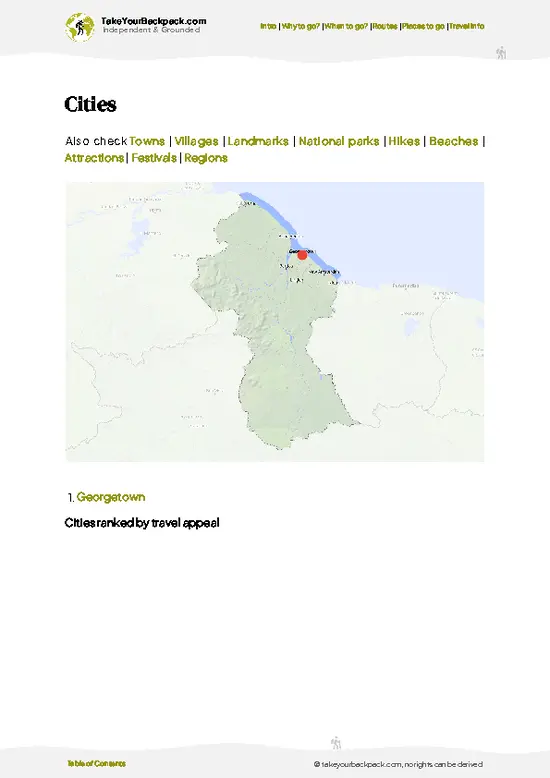
example page 0 from our offline Travel Guide for Guyana
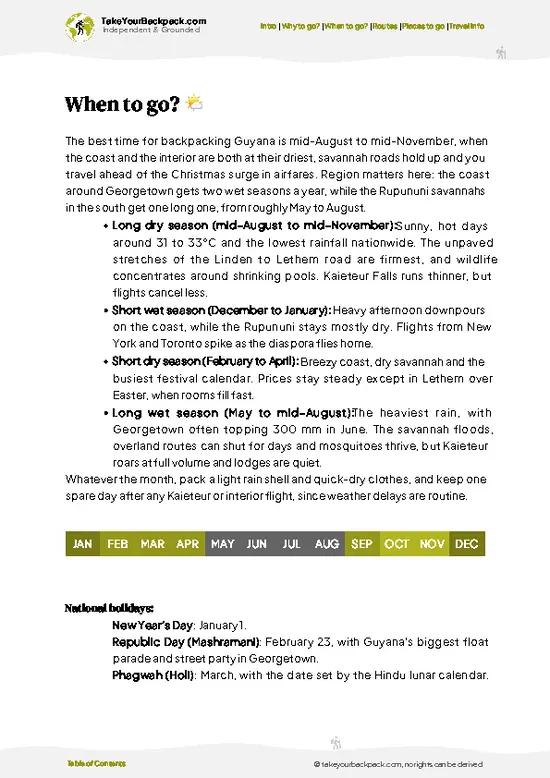
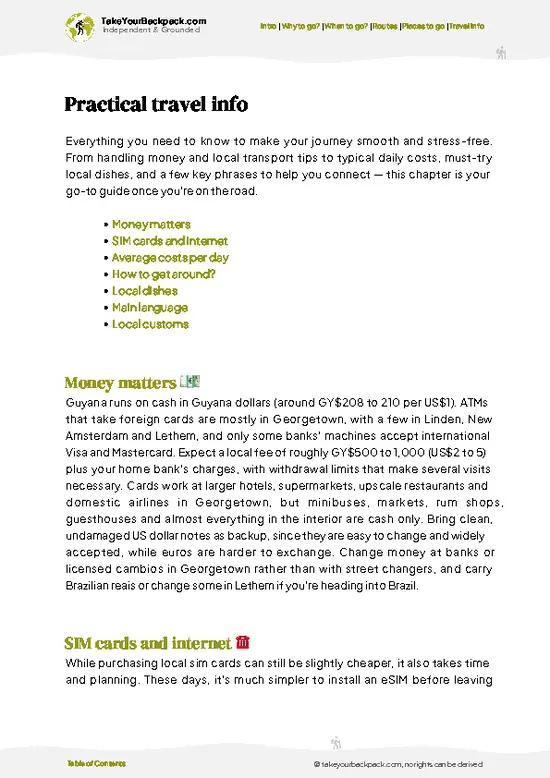
example page 1 from our offline Travel Guide for Guyana
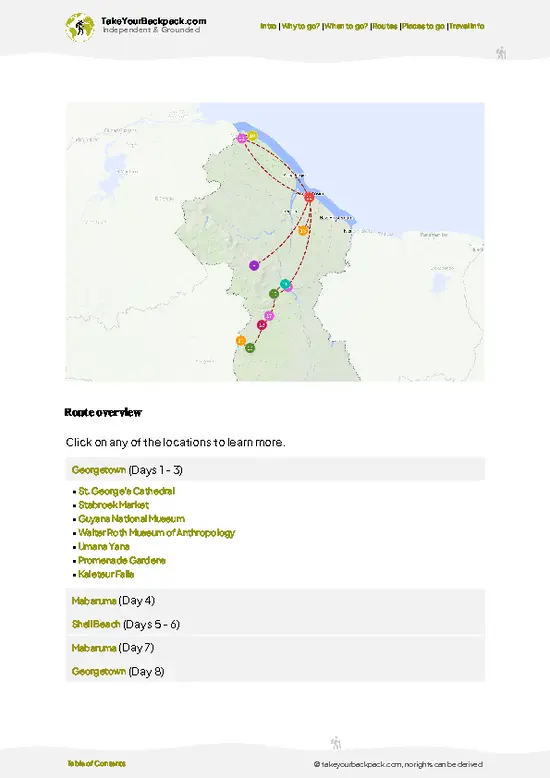
example page 2 from our offline Travel Guide for Guyana
example page 3 from our offline Travel Guide for Guyana
example page 4 from our offline Travel Guide for Guyana
example page 5 from our offline Travel Guide for Guyana
example page 6 from our offline Travel Guide for Guyana
example page 7 from our offline Travel Guide for Guyana
Loading the map 🌍
CLICK TO FILTER
cities
towns
villages
landmarks
national parks
hikes
beaches
attractions
festivals
regions
SHOW COUNTRY’S BESTSHOW ALL

✨ Why go?
Ranked #6 festival in Guyana
Why Diwali should be on your travel list

Diwali in Guyana gives you a rare chance to see a festival that belongs to the people living it, rather than staged for visitors. Indo-Guyanese descend from indentured workers who arrived in the 1800s, and the celebration carries that history. The main draw is the Diwali Motorcade, where decorated floats roll through the streets with dancers and music, and the deya-lit homes along the coast, where families often invite you in for sweets once you say hello. Social energy is easy to tap. Guyana is small, English-speaking and friendly, so you meet people fast, and you may be fed more than you can eat. It also fits neatly into a longer route through the Guianas or the Caribbean, since you can pair it with rainforest lodges and the Rupununi savannah. Prices stay modest compared with big Indian … read more 👉
Diwali in Guyana gives you a rare chance to see a festival that belongs to the people living it, rather than staged for visitors. Indo-Guyanese descend from indentured workers who arrived in the 1800s, and the celebration carries that history. The main draw is the Diwali Motorcade, where decorated floats roll through the streets with dancers and music, and the deya-lit homes along the coast, where families often invite you in for sweets once you say hello. Social energy is easy to tap. Guyana is small, English-speaking and friendly, so you meet people fast, and you may be fed more than you can eat. It also fits neatly into a longer route through the Guianas or the Caribbean, since you can pair it with rainforest lodges and the Rupununi savannah. Prices stay modest compared with big Indian festivals abroad, because most events are free and community run.

💡 HighlightsKey sights and experiences for travelers

  1. Diwali Motorcade: The best known event, a parade of lit and decorated floats with dancers, drummers and costumes that moves through the Georgetown area. Find a spot on the roadside early for a clear view.
  2. Deya-lit homes: Villages along the East Coast Demerara and in Berbice set out rows of small clay lamps on verandas and yards. At dusk the glow against the dark is hard to forget, and families often wave you in.
  3. Mandir ceremonies: Temples hold evening prayers to Lakshmi, with bells, flowers, chanting and incense. Visitors are welcome if they dress modestly and remove shoes at the door.
  4. Sweets and parsad: Look for gulab jamun, barfi, mithai and fried snacks like pholourie from home kitchens and roadside stands. Share what is offered and say thanks.
  5. Cultural shows and chutney music: Stages feature
… read more 👉
  1. Diwali Motorcade: The best known event, a parade of lit and decorated floats with dancers, drummers and costumes that moves through the Georgetown area. Find a spot on the roadside early for a clear view.
  2. Deya-lit homes: Villages along the East Coast Demerara and in Berbice set out rows of small clay lamps on verandas and yards. At dusk the glow against the dark is hard to forget, and families often wave you in.
  3. Mandir ceremonies: Temples hold evening prayers to Lakshmi, with bells, flowers, chanting and incense. Visitors are welcome if they dress modestly and remove shoes at the door.
  4. Sweets and parsad: Look for gulab jamun, barfi, mithai and fried snacks like pholourie from home kitchens and roadside stands. Share what is offered and say thanks.
  5. Cultural shows and chutney music: Stages feature Indian classical dance, Bollywood-style numbers and local chutney and soca artists. They give a loud, joyful look at how Guyana blends cultures.
For a first visit, start with the Diwali Motorcade, since it packs the music, color and crowds into a single evening.
Spotted a mistake or missing something? Contact us.

🌤️ When to go?When is the celebration of Diwali?

Diwali in Guyana falls on the new moon of the Hindu month of Kartik, usually in late October or November, with the main night lasting one evening and motor parades and events spread over the surrounding days, centered on Georgetown and the Hindu communities of Berbice and Essequibo.
  • Best night: The main evening itself, when homes and mandirs glow with diyas and fireworks go up.
  • Weather: Expect 26 to 31°C (79 to 88°F), humid, with showers possible as the second rainy season starts. Dusk falls early evening, so carry a light rain jacket and sandals you can wash.
  • Booking: Reserve a room two to three weeks ahead. Georgetown prices can climb 10 to 20 percent around the main night.
  • Roads: Leave Georgetown by mid afternoon on the main night, since traffic thickens around the mandirs and parade routes
… read more 👉
Diwali in Guyana falls on the new moon of the Hindu month of Kartik, usually in late October or November, with the main night lasting one evening and motor parades and events spread over the surrounding days, centered on Georgetown and the Hindu communities of Berbice and Essequibo.
  • Best night: The main evening itself, when homes and mandirs glow with diyas and fireworks go up.
  • Weather: Expect 26 to 31°C (79 to 88°F), humid, with showers possible as the second rainy season starts. Dusk falls early evening, so carry a light rain jacket and sandals you can wash.
  • Booking: Reserve a room two to three weeks ahead. Georgetown prices can climb 10 to 20 percent around the main night.
  • Roads: Leave Georgetown by mid afternoon on the main night, since traffic thickens around the mandirs and parade routes on the East Coast road.
Stay in one area on the main night and walk, because taxis are scarce after dark.


source: climatestotravel.comJANJanuary: not recommended for travelingFEBFebruary: not recommended for travelingMARMarch: not recommended for travelingAPRApril: not recommended for travelingMAYMay: not recommended for travelingJUNJune: not recommended for travelingJULJuly: not recommended for travelingAUGAugust: not recommended for travelingSEPSeptember: not recommended for travelingOCTOctober: highly recommended for travelingNOVNovember: highly recommended for travelingDECDecember: not recommended for traveling

✈️ The backpacker research shortcutGuyana Travel Guide

An offline-friendly backpacking guide with optimized travel routes, ranked highlights, transport advice, and the best areas to stay.
example page 0 from our offline Travel Guide for Guyana
example page 1 from our offline Travel Guide for Guyana
example page 2 from our offline Travel Guide for Guyana
example page 3 from our offline Travel Guide for Guyana
example page 4 from our offline Travel Guide for Guyana
example page 5 from our offline Travel Guide for Guyana
example page 6 from our offline Travel Guide for Guyana
example page 7 from our offline Travel Guide for Guyana
The digital guide (161 pages) contains:
✅ 43 highlights, ranked by travel appeal
✅ Optimized 5, 10 & 15-day travel routes
✅ Cities, national parks, landmarks, beaches
✅ How to get around
✅ Offline-friendly for travel without Wi-Fi
👉 Click to see all 30+ guide features

📅 Plan smarter in minutes, not weeks
✅ Month by month travel advice
✅ Festivals & national holidays
✅ Budget expectations

🗺️ Go to the right places, skip the overrated ones
✅ Honest pros & cons of destinations
✅ Top hikes, parks & viewpoints
✅ Lesser-known places most travelers miss
✅ Clear “worth it vs skip it” guidance

🛏️ Travel smoothly without rookie mistakes
✅ Best areas to stay
✅ Transport systems explained simply
✅ Common scams & safety advice
✅ SIM cards, money & practical tips

🌍 Understand the country, not just visit it
✅ Culture & traditions
✅ Local customs
✅ Festivals worth planning around
✅ Traveler-friendly historical context
✅ Insights that make places more meaningful

📱 Built for real travel conditions
✅ Fully downloadable PDF
✅ Works completely offline
✅ Optimized for phone use
✅ Useful in remote areas & buses
✅ Everything in one place
Stop searching, start planning
Get instant access to your full guide. 30‑day money-back guarantee.
+ Add another guide for just

By proceeding you agree to our terms.
Sent to your inbox immediately after payment • 100% Secure Checkout
Best Backpacking Travel Advisor 2025 tourism awardBest Backpacking
Travel Advisor
2025
What others say about Take Your Backpack Guides:
⭐⭐⭐⭐⭐
Fantastic, amazing amount of information!
⭐⭐⭐⭐⭐
My goodness this is amazing, it's what I've been looking for hats off too you!
⭐⭐⭐⭐⭐
I think this is absolutely BRILLIANT
⭐⭐⭐⭐
Very complete and informative. It's still missing places, but I gotta to commend you
⭐⭐⭐⭐⭐
This is truly amazing, thank you, can't wait to explore it with my kids!
⭐⭐⭐⭐⭐
Awesome resource, thank you!
⭐⭐⭐⭐⭐
This is amazing! Can't wait to explore the ones I haven't seen
⭐⭐⭐⭐
I love this! Well done, great idea.
⭐⭐⭐⭐⭐
Thanks for taking the time to make this gem!
⭐⭐⭐⭐⭐
This might be the best website I've ever seen.
⭐⭐⭐⭐⭐
Congratulations, and thank you so much for your work; it's incredibly valuable.
⭐⭐⭐⭐
In all seriousness I think you did a great job pointing out the important spots
⭐⭐⭐⭐⭐
10/10 very good
⭐⭐⭐⭐⭐
As someone who's only just starting to visit regularly this is awesome, thank you.
⭐⭐⭐⭐
Thank you very much! I'm going to visit my dad, it's going to be very useful!
⭐⭐⭐⭐⭐
This is really cool! We'll be travelling for the first time and this definitely come in handy.
⭐⭐⭐⭐⭐
You are now our minister of culture, congratulations 👨‍💼
⭐⭐⭐⭐⭐
Just wanted to tell you that this is a pearl! Going to follow your recommendations.
⭐⭐⭐⭐⭐
This is so cool. I'll definitely be using the resource for my travels soon.
⭐⭐⭐⭐⭐
This is very impressive! Good work.
⭐⭐⭐⭐⭐
This is an amazing and informative site. Very well done!

🛏️ Where to stay?Choosing the right base

Georgetown is the best base for Diwali, and the safest pockets are the central neighborhoods of Queenstown, Bel Air Park and Kitty, where guesthouses cluster and you can find other budget travelers at breakfast tables and shared verandas.

Queenstown is the most social choice. It sits a short ride from the Stabroek Market area, and the leafy streets hold small guesthouses used by volunteers, researchers and backpackers heading inland. Solo travelers meet easily here, and hosts often arrange rides to celebrations.

Kitty is livelier at night and puts you close to the seawall, eateries and bars. … read more 👉
Georgetown is the best base for Diwali, and the safest pockets are the central neighborhoods of Queenstown, Bel Air Park and Kitty, where guesthouses cluster and you can find other budget travelers at breakfast tables and shared verandas.

Queenstown is the most social choice. It sits a short ride from the Stabroek Market area, and the leafy streets hold small guesthouses used by volunteers, researchers and backpackers heading inland. Solo travelers meet easily here, and hosts often arrange rides to celebrations.

Kitty is livelier at night and puts you close to the seawall, eateries and bars. It is walkable by day, but take a registered taxi after dark. Bel Air Park is quieter and better if you want sleep before a long night of festivities.

If you want to see village celebrations, look at the East Coast Demerara communities such as Enmore or Better Hope. Rooms are limited, so a Georgetown base with a taxi arranged through your host works better. Book early, because Georgetown fills with returning relatives from abroad. Avoid walking alone through Tiger Bay or around Stabroek Market late at night.

👛 Costs (as of 19 October 2026)Money, prices, and spending tips

Diwali in Guyana costs roughly US$60 to 95 a day for an independent traveler, with most celebrations free to enter and the bill driven by a Georgetown or Berbice bed. Prices climb around the main days in late October or November, when the festival is held and rooms fill.
CategoryBudget RangeLocal Reality
Festival ticketsUS$0 to 10Temple events, lamp lighting and street gatherings are free. Larger motorcades and cultural shows at Berbice or Region Four grounds may charge a small gate fee or ask for a donation.
AccommodationUS$25 to 60Guesthouses and basic rooms run US$25 to 40 in normal weeks and US$40 to 60 in high season. Book weeks ahead, as Georgetown and Berbice rooms go fast.
Local transportUS$5 to 15Minibuses along the coast cost about US$1 to 3 a ride. Taxis between venues at night run
… read more 👉
Diwali in Guyana costs roughly US$60 to 95 a day for an independent traveler, with most celebrations free to enter and the bill driven by a Georgetown or Berbice bed. Prices climb around the main days in late October or November, when the festival is held and rooms fill.
CategoryBudget RangeLocal Reality
Festival ticketsUS$0 to 10Temple events, lamp lighting and street gatherings are free. Larger motorcades and cultural shows at Berbice or Region Four grounds may charge a small gate fee or ask for a donation.
AccommodationUS$25 to 60Guesthouses and basic rooms run US$25 to 40 in normal weeks and US$40 to 60 in high season. Book weeks ahead, as Georgetown and Berbice rooms go fast.
Local transportUS$5 to 15Minibuses along the coast cost about US$1 to 3 a ride. Taxis between venues at night run US$5 to 15 depending on distance, and fares rise on the main evening.
Food & drinksUS$10 to 20Vegetarian plates of curry, dhal and roti, plus sweets such as gulab jamun and barfi, cost US$2 to 6 from stalls and temple kitchens. Cash in Guyanese dollars is expected.
Miscellaneous expensesUS$5 to 10Small clay lamps (diyas), flowers, a few donations at temples and a SIM card top-up. ATMs in smaller towns can run dry on busy nights.
Total Daily BudgetUS$60 to 95Per person, per day, in high season.
⚠️ Prices can change and everyone travels differently, so take this as a rough guide. Hope it helps you plan your adventure!

🍲 FoodLocal Cuisine & Drinks

Diwali food in Guyana is a vegetarian feast at heart, because many Hindu families fast from meat in the days around the festival. Expect sweetmeats like gulab jamoon, barfi, mohanbhog, and the fried, syrupy jalebi, passed around on trays between houses.

At mandirs and community events, look for prasad and plates of dhal puri with curried pumpkin, channa and potato, plus parsad sweets. Street stalls near the larger events sell pholourie dipped in tangy mango or tamarind sauce, along with saheena and fried baigani. Meat-eating stalls do appear nearby, so ask which line is vegetarian.

For drinks, go for sweet lassi, coconut water cut fresh with a cutlass, and mauby or sorrel. Local Banks beer and El Dorado rum show up at parties, but fewer at the temple events.

If you are invited into a home, … read more 👉
Diwali food in Guyana is a vegetarian feast at heart, because many Hindu families fast from meat in the days around the festival. Expect sweetmeats like gulab jamoon, barfi, mohanbhog, and the fried, syrupy jalebi, passed around on trays between houses.

At mandirs and community events, look for prasad and plates of dhal puri with curried pumpkin, channa and potato, plus parsad sweets. Street stalls near the larger events sell pholourie dipped in tangy mango or tamarind sauce, along with saheena and fried baigani. Meat-eating stalls do appear nearby, so ask which line is vegetarian.

For drinks, go for sweet lassi, coconut water cut fresh with a cutlass, and mauby or sorrel. Local Banks beer and El Dorado rum show up at parties, but fewer at the temple events.

If you are invited into a home, accept something even if you are full, and eat with your right hand. Visit with small cash, since stalls rarely take cards. Portions are generous, so share a plate and sample more.

FAQTraveler FAQ

Diwali in Guyana is held on the new moon night of the Hindu month of Kartik, usually in late October or November. The main evening is one night, though parades, concerts and mandir events run for several days around it. Georgetown and the East Coast Demerara villages host the largest celebrations.
Attending Diwali in Guyana costs little, since most mandir ceremonies and street celebrations are free. Concerts or cultural shows may charge US$0 to 10 at the gate. Budget US$62 to 118 a day in Georgetown including a guesthouse room, local meals at US$1 to 12 and taxis at US$3 to 8.
Diwali in Guyana does not require advance tickets for the main celebrations, because mandirs, home displays and street events are open to everyone. Some staged concerts and cultural programs sell tickets at the venue or through local promoters for roughly US$0 to 10. Book your Georgetown room two to three weeks ahead, since relatives returning from abroad fill guesthouses.
⚠️ Things can change over time, so always validate details locally before you go.

Other Guyanese festivals near Diwali

Explore more nearby:

  • Mashramani—Republic Day, judged road parade, calypso contests, steelpan
  • Guyana Carnival—Saturday road parade, Vlissengen Road, soca and chutney, ten days of fetes, mas bands
  • Phagwah—Abir powder, Holika bonfire, chowtal singing, spring full moon

💡 Not sure where to go next?
Create a personalized itinerary for Guyana including Diwali and the places that fit your trip.

Generate my itinerary

👉 Discover all festivals

Or checkout all Guyana has to offer (think cities, towns, villages, national parks, hikes, beaches, festivals)
Country photo of Guyana

We 💚 feedbackSumming up the experience

Diwali pairs well with a few days in Georgetown before or after, since the city has the markets and old wooden architecture, and then a flight or long drive inland to the Rupununi or Kaieteur Falls. I would book that inland leg first, as seats fill around the holiday, and bring small bills for roadside sweets.

✍️ Help improve this page!
The information on this page is based on in-depth research, insights shared by experienced travelers, and feedback from the local travel community in Guyana. While every effort is made to keep the information accurate and current, conditions can change — so if you spot anything incorrect or outdated, please get in touch.


🙋‍♂️ Give feedback

👋 Meet the founderWho’s Behind Take Your Backpack?

Johan, backpacker and founder of TakeYourBackpackHi, I’m Johan (Netherlands 🇳🇱), the creator of TakeYourBackpack. Over the past 3 decades, I’ve backpacked through 90+ countries across six continents, gaining extensive experience with independent travel, long-term trips, and overland routes.

This site is built on a combination of firsthand travel experience and carefully curated insights from other backpackers. Many guides are based on places I’ve personally visited, while others bring together tips, observations, and practical advice shared by trusted travelers I’ve met along the way.

The goal is to provide realistic, experience-driven guidance — not generic itineraries — so you can explore destinations with better context, clearer expectations, and more confidence.