v2.webp)
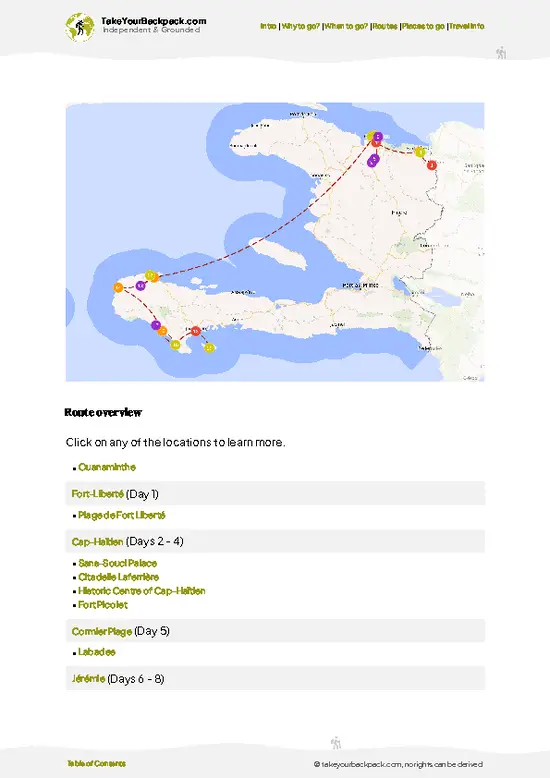
- Borgne waterfront: The working shore where fishing boats land their catch. Early morning is best, when the nets come in. Free, 1 hour.
- Borgne town market: Vegetables, charcoal, cloth and fruit from the hill farms. Go in the morning, when stalls are fullest. Bring small bills. Free to enter, 1 hour.
- Central church and square: The social heart of town, where people gather in the late afternoon. Free, 30 minutes.
- Hill trails above town: Footpaths through gardens and banana groves give wide views of the coast. Start early, before the heat. A local guide helps, about US$10 to 20, 2 to 3 hours.
- Nearby river and shoreline walks: Easy rambles at the edge of town where locals wash, fish and swim. Late afternoon is pleasant. Free, 1 hour.
- Borgne waterfront: The working shore where fishing boats land their catch. Early morning is best, when the nets come in. Free, 1 hour.
- Borgne town market: Vegetables, charcoal, cloth and fruit from the hill farms. Go in the morning, when stalls are fullest. Bring small bills. Free to enter, 1 hour.
- Central church and square: The social heart of town, where people gather in the late afternoon. Free, 30 minutes.
- Hill trails above town: Footpaths through gardens and banana groves give wide views of the coast. Start early, before the heat. A local guide helps, about US$10 to 20, 2 to 3 hours.
- Nearby river and shoreline walks: Easy rambles at the edge of town where locals wash, fish and swim. Late afternoon is pleasant. Free, 1 hour.
Spotted a mistake or missing something? Contact us.

 Best Backpacking
.jpg) Hi, I’m Johan (Netherlands 🇳🇱), the creator of TakeYourBackpack. Over the past 3 decades, I’ve backpacked through 90+ countries across six continents, gaining extensive experience with independent travel, long-term trips, and overland routes.
Hi, I’m Johan (Netherlands 🇳🇱), the creator of TakeYourBackpack. Over the past 3 decades, I’ve backpacked through 90+ countries across six continents, gaining extensive experience with independent travel, long-term trips, and overland routes.