×

Haiti🇭🇹 | citiesCap-Haïtiencolonial streets, Citadelle views, northern coastline | things to do and best time to go

Explore Plage de Cayes-JacmelExplore Gonaïves

Backpacking in Cap-Haïtien
🏆 Top pickcity ranked #1
By Johan Kruseman 🇳🇱 | Updated June 11, 2026

You land in Cap-Haïtien and hit your first real fork: do you burn half a day and a chunk of cash hiring a private driver straight to the Citadelle and nearby beaches, or do you wrestle with tap-taps, moto-taxis, and walking in the heat to save money and see how the city actually moves? That single choice sets your whole trip’s pattern of time vs. money vs. comfort. Cap-Haïtien sits on Haiti’s northern coast, facing the Atlantic, a compact port city backed by green hills. For backpackers, it’s intense but rewarding: crumbling French-colonial streets, the atmospheric main square, and easy access to the Citadelle Laferrière and Sans-Souci Palace, which are genuinely world-class. It’s cheaper than Port-au-Prince but not “ultra-budget” once you factor in transport and security-conscious guesthouses. Travel logistics can be slow and improvised, nightlife is local rather than backpacker-y, other travelers are rare, and safety requires awareness—but the city has a proud, gritty, historic energy that feels very different from the capital’s chaos or the beach-bubble of Labadee.

Discover everything you want to know in the 📖 Haiti Travel Guide.
Safety warning

The current risk level for Haiti is high. Check the advice before going.


Get your Haiti guide
99 ranked highlights, routes & tips, works offline (371 pages)
Loading the map 🌍
CLICK TO FILTER
cities
towns
villages
landmarks
national parks
hikes
beaches
attractions
festivals
SHOW COUNTRY’S BESTSHOW ALL

✨ Why go?
Ranked #1 city in Haiti
The unique appeal for travelers

Cap-Haïtien is a strategic basecamp for backpackers looking to explore northern Haiti. The city offers a blend of affordability and vibrancy that makes it a compelling stop. Hostels here are not just budget-friendly; they foster a sense of community, making it easy to meet fellow travelers and share tips.

The walkability of Cap-Haïtien is a major plus. You can stroll through the bustling streets, sampling local food from street vendors or cozy cafes. This city isn’t just a pit stop; it’s a place to soak in the culture.

As for nightlife, you’ll find lively bars where you can unwind after a day of exploration. The atmosphere is relaxed, and you can easily chat with locals or fellow backpackers.

What really sets Cap-Haïtien apart is its proximity to stunning day trips. You can dive into … read more 👉
Cap-Haïtien is a strategic basecamp for backpackers looking to explore northern Haiti. The city offers a blend of affordability and vibrancy that makes it a compelling stop. Hostels here are not just budget-friendly; they foster a sense of community, making it easy to meet fellow travelers and share tips.

The walkability of Cap-Haïtien is a major plus. You can stroll through the bustling streets, sampling local food from street vendors or cozy cafes. This city isn’t just a pit stop; it’s a place to soak in the culture.

As for nightlife, you’ll find lively bars where you can unwind after a day of exploration. The atmosphere is relaxed, and you can easily chat with locals or fellow backpackers.

What really sets Cap-Haïtien apart is its proximity to stunning day trips. You can dive into the rich history and natural beauty of the region without the hassle of long travel times. This makes it a smart choice for those who want to maximize their experience without sacrificing comfort or spending too much time on the road.
Want to include Cap-Haïtien in your Haiti route?
Create a personalized Haiti itinerary that includes Cap-Haïtien and the places that fit your trip — based on your travel style, budget, and available time. Get your route in seconds.

Generate my trip

💡 HighlightsEssential experiences to have while visiting Cap-Haïtien

  • Place d’Armes (Main Square) — The civic heart of Cap-Haïtien with a mix of colonial buildings, street life, and public monuments; a great spot to watch daily rhythms, street vendors, and local gatherings while feeling the city’s history under your feet.
  • Cathédrale Notre-Dame de l’Assomption — The city’s principal cathedral, notable for its architecture and role in community life; visiting gives a sense of local religious traditions and the historic center’s scale.
  • Historic Colonial Quarter / French-era Architecture — A walkable cluster of preserved and weathered colonial houses, balconies, and wooden townhomes that showcase northern Haiti’s 18th-19th century urban fabric and give Cap-Haïtien its distinctive look.
  • Front de Mer / Vieux Port (Seafront Promenade) — A lively stretch along
read more 👉
  • Place d’Armes (Main Square) — The civic heart of Cap-Haïtien with a mix of colonial buildings, street life, and public monuments; a great spot to watch daily rhythms, street vendors, and local gatherings while feeling the city’s history under your feet.
  • Cathédrale Notre-Dame de l’Assomption — The city’s principal cathedral, notable for its architecture and role in community life; visiting gives a sense of local religious traditions and the historic center’s scale.
  • Historic Colonial Quarter / French-era Architecture — A walkable cluster of preserved and weathered colonial houses, balconies, and wooden townhomes that showcase northern Haiti’s 18th-19th century urban fabric and give Cap-Haïtien its distinctive look.
  • Front de Mer / Vieux Port (Seafront Promenade) — A lively stretch along the harbor where fishermen, small boats, seafood stalls, and coastal views meet; excellent for sunset, people-watching, and getting a feel for the city’s connection to the sea.
  • Marché Central (Central Market) — A bustling, colorful market where locals buy produce, spices, and everyday goods; the best place to experience real local life, sample street food, and pick up practical souvenirs.
  • Musée du Cap (local history and art museum) — A small local museum with exhibits on the region’s history and culture; useful for context before you explore the city and nearby historic sites.
  • Rue commerçante du centre-ville — The main commercial streets packed with small shops, bakeries, and cafés; excellent for walking, bargain hunting, and seeing contemporary urban life away from tourist spots.
  • Local craft and textile stalls near the center — Scattered vendors selling locally made crafts, woven goods, and embroidered textiles; good for affordable, authentic pieces and supporting local artisans.
  • Neighborhood food stalls and street kitchens — Small, very local places serving Haitian staples—griyo, diri kole ak pwa, marinades—where the food is real and inexpensive, and where you get the truest taste of Cap-Haïtien.
A few excellent day trips outside the city: the Citadelle Laferrière and Sans-Souci Palace in Milot, and the cruise-area beaches at Labadee.
Spotted a mistake or missing something? Contact us.

🏘️ NeighborhoodsKey areas and districts to know

Cap-Haïtien is a vibrant hub for backpackers, blending rich history with a laid-back Caribbean vibe. Understanding the neighborhoods will help you maximize your experience.

Centre-Ville: This is the heart of Cap-Haïtien. You’ll find bustling markets, local eateries, and historical sites like the Citadelle. It’s walkable, with a lively atmosphere that pulses day and night. Perfect for short stays, but the noise might wear on you if you linger too long. Costs are moderate; street food is a steal.

Labadee: Known for its beaches, Labadee is a resort area that feels a bit more touristy. If you’re after sun and sand, this is your spot. It’s less walkable, requiring transport to get around, but the views are worth it. Expect higher prices here, especially for food and activities. Ideal for a short … read more 👉
Cap-Haïtien is a vibrant hub for backpackers, blending rich history with a laid-back Caribbean vibe. Understanding the neighborhoods will help you maximize your experience.

Centre-Ville: This is the heart of Cap-Haïtien. You’ll find bustling markets, local eateries, and historical sites like the Citadelle. It’s walkable, with a lively atmosphere that pulses day and night. Perfect for short stays, but the noise might wear on you if you linger too long. Costs are moderate; street food is a steal.

Labadee: Known for its beaches, Labadee is a resort area that feels a bit more touristy. If you’re after sun and sand, this is your spot. It’s less walkable, requiring transport to get around, but the views are worth it. Expect higher prices here, especially for food and activities. Ideal for a short beach getaway.

Ruelle de l’Intendance: A quieter, residential area that offers a more authentic experience. It’s less touristy, making it a great place to connect with locals. Walkability is decent, but you’ll want to plan your outings. Costs are lower, and it’s suitable for longer stays if you’re looking to immerse yourself in local life.

Nord-Ouest: This area is more off the beaten path, offering a glimpse into everyday Haitian life. It’s less developed, so expect limited amenities. Walkability can be tricky, and transport options are sparse. Costs are low, making it a budget-friendly choice, but it’s best for those who enjoy a bit of adventure and longer stays.

Each neighborhood offers a unique flavor, so choose wisely based on your priorities.

⌛️ 1 daySeeing the highlights in 24 hours

Cap-Haïtien, Haiti’s second-largest city, is a vibrant tapestry of history, culture, and stunning coastal views. It’s the gateway to the Citadelle Laferrière, a UNESCO World Heritage site, and offers a taste of authentic Haitian life that’s often overlooked by tourists. Spend a day here, and you’ll find a blend of rich history and local charm that makes every moment worthwhile.

Start your morning in the bustling neighborhood of Place d’Armes. Grab a coffee at a local café and soak in the atmosphere as vendors set up their stalls. The aroma of fresh bread mingles with the salty sea breeze, creating a sensory delight. After your caffeine fix, stroll over to the nearby Cathedral of Cap-Haïtien, a beautiful structure that reflects the city’s colonial past.

As the sun climbs higher, make your … read more 👉
Cap-Haïtien, Haiti’s second-largest city, is a vibrant tapestry of history, culture, and stunning coastal views. It’s the gateway to the Citadelle Laferrière, a UNESCO World Heritage site, and offers a taste of authentic Haitian life that’s often overlooked by tourists. Spend a day here, and you’ll find a blend of rich history and local charm that makes every moment worthwhile.

Start your morning in the bustling neighborhood of Place d’Armes. Grab a coffee at a local café and soak in the atmosphere as vendors set up their stalls. The aroma of fresh bread mingles with the salty sea breeze, creating a sensory delight. After your caffeine fix, stroll over to the nearby Cathedral of Cap-Haïtien, a beautiful structure that reflects the city’s colonial past.

As the sun climbs higher, make your way to the Citadelle Laferrière. It’s a bit of a trek, but the panoramic views from the top are worth every step. This fortress, built by Henri Christophe in the early 19th century, is a testament to Haiti’s fight for independence. Spend a couple of hours exploring its vast grounds and soaking in the history.

In the afternoon, head back to the city and explore the Labadee area, known for its stunning beaches. While it’s often a cruise ship stop, venture a bit further to find quieter spots where locals hang out. Enjoy a plate of griot (fried pork) from a nearby food stall, and don’t miss the chance to chat with locals who are eager to share their stories.

As evening approaches, return to Place d’Armes for a lively atmosphere. Street performers and musicians come alive as the sun sets. Grab a seat at a local eatery and savor a traditional Haitian meal while enjoying the vibrant energy around you.

This day in Cap-Haïtien isn’t just about ticking off sights; it’s about immersing yourself in the rhythm of the city. You’ll leave with a deeper appreciation for Haiti’s culture and history, making it a day well spent.
Turn your Cap-Haïtien visit into an Haiti adventure
Build a complete Haiti route with Cap-Haïtien, hidden gems, must-see destinations, and realistic travel times included.

Generate my trip

🌤️ When to go?Best time to visit Cap-Haïtien


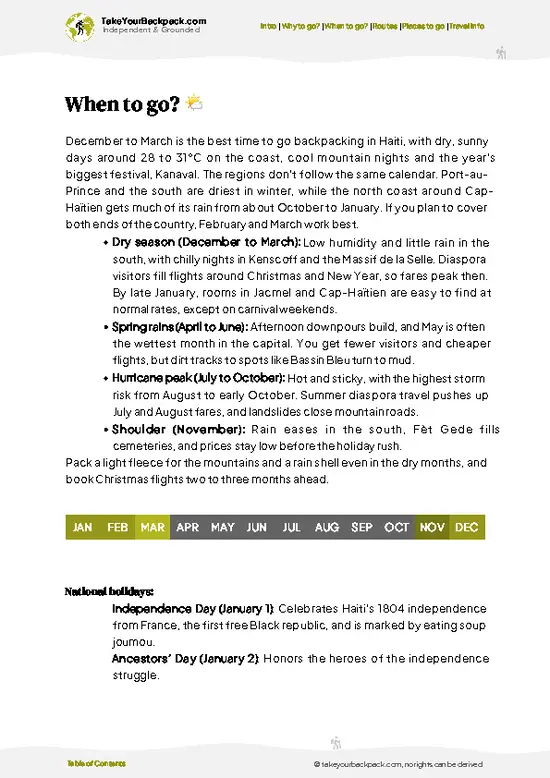
  • Weather: Cap-Haïtien’s dry season runs from November to March, offering the most reliable sunshine and minimal rain—ideal for trekking and exploring ruins without soggy setbacks. The wet season, May through October, brings heavy showers and humidity, which can turn trails slippery and uncomfortable.

  • Temperature: Expect highs around 28–31°C (82–88°F) during the dry months, with cooler evenings dipping to 20°C (68°F). The wet season heats up slightly, pushing highs closer to 32°C (90°F), which can sap your energy on long hikes.

  • Daylight Hours: Daylight is fairly consistent year-round, roughly 11 to 12 hours daily. However, the dry season’s clearer skies mean more usable daylight for outdoor activities, while the wet season’s cloud cover can make days feel shorter.

  • Crowds: Tourist numbers
read more 👉

  • Weather: Cap-Haïtien’s dry season runs from November to March, offering the most reliable sunshine and minimal rain—ideal for trekking and exploring ruins without soggy setbacks. The wet season, May through October, brings heavy showers and humidity, which can turn trails slippery and uncomfortable.

  • Temperature: Expect highs around 28–31°C (82–88°F) during the dry months, with cooler evenings dipping to 20°C (68°F). The wet season heats up slightly, pushing highs closer to 32°C (90°F), which can sap your energy on long hikes.

  • Daylight Hours: Daylight is fairly consistent year-round, roughly 11 to 12 hours daily. However, the dry season’s clearer skies mean more usable daylight for outdoor activities, while the wet season’s cloud cover can make days feel shorter.

  • Crowds: Tourist numbers peak in December and January, coinciding with holidays and the dry season. This means more fellow travelers but also higher prices and busier sites. Shoulder months like November and March offer a quieter vibe with nearly the same weather perks.

  • Seasonal Activities: The dry season aligns with cultural festivals and open-air markets, enriching your experience beyond just the landscape. The wet season sees fewer events and more indoor downtime, which might limit your options.

  • Price Fluctuations: Accommodation and flights spike during the dry season’s peak months, especially December. Booking early or targeting shoulder months can save you a significant chunk without sacrificing comfort or weather quality.


Pro-tip: Aim for late November or early March to strike the perfect balance between weather, crowd size, and cost—maximizing your backpacking value in Cap-Haïtien.


source: climatestotravel.comJANJanuary: highly recommended for travelingFEBFebruary: excellent for travelingMARMarch: highly recommended for travelingAPRApril: fair for travelingMAYMay: fair for travelingJUNJune: fair for travelingJULJuly: fair for travelingAUGAugust: fair for travelingSEPSeptember: fair for travelingOCTOctober: fair for travelingNOVNovember: highly recommended for travelingDECDecember: highly recommended for traveling
when-to-go

✈️ The backpacker research shortcutHaiti Travel Guide

An offline-friendly backpacking guide with optimized travel routes, ranked highlights, transport advice, and the best areas to stay.
example page 0 from our offline Travel Guide for Haiti
example page 1 from our offline Travel Guide for Haiti
example page 2 from our offline Travel Guide for Haiti
example page 3 from our offline Travel Guide for Haiti
example page 4 from our offline Travel Guide for Haiti
example page 5 from our offline Travel Guide for Haiti
example page 6 from our offline Travel Guide for Haiti
example page 7 from our offline Travel Guide for Haiti
The digital guide (371 pages) contains:
99 highlights, ranked by travel appeal
Optimized 5, 10 & 15-day travel routes
Cities, national parks, landmarks, beaches
How to get around
Offline-friendly for travel without Wi-Fi
👉 Click to see all 30+ guide features

📅 Plan smarter in minutes, not weeks
Month by month travel advice
Festivals & national holidays
Budget expectations

🗺️ Go to the right places, skip the overrated ones
Honest pros & cons of destinations
Top hikes, parks & viewpoints
Lesser-known places most travelers miss
Clear “worth it vs skip it” guidance

🛏️ Travel smoothly without rookie mistakes
Best areas to stay
Transport systems explained simply
Common scams & safety advice
SIM cards, money & practical tips

🌍 Understand the country, not just visit it
Culture & traditions
52 Essential phrases & customs
Festivals worth planning around
Traveler-friendly historical context
Insights that make places more meaningful

📱 Built for real travel conditions
Fully downloadable PDF
Works completely offline
Optimized for phone use
Useful in remote areas & buses
Everything in one place
Save weeks of stressful planning
Get instant access to your full guide. 30‑day money-back guarantee.


By proceeding you agree to our terms.
Sent to your inbox immediately after payment • 100% Secure Checkout
Best Backpacking Travel Advisor 2025 tourism awardBest Backpacking
Travel Advisor
2025
What others say about Take Your Backpack Guides:
⭐⭐⭐⭐⭐
Fantastic, amazing amount of information!
⭐⭐⭐⭐⭐
My goodness this is amazing, it's what I've been looking for hats off too you!
⭐⭐⭐⭐⭐
I think this is absolutely BRILLIANT
⭐⭐⭐⭐
Very complete and informative. It's still missing places, but I gotta to commend you
⭐⭐⭐⭐⭐
This is truly amazing, thank you, can't wait to explore it with my kids!
⭐⭐⭐⭐⭐
Awesome resource, thank you!
⭐⭐⭐⭐⭐
This is amazing! Can't wait to explore the ones I haven't seen
⭐⭐⭐⭐
I love this! Well done, great idea.
⭐⭐⭐⭐⭐
Thanks for taking the time to make this gem!
⭐⭐⭐⭐⭐
This might be the best website I've ever seen.
⭐⭐⭐⭐⭐
Congratulations, and thank you so much for your work; it's incredibly valuable.
⭐⭐⭐⭐
In all seriousness I think you did a great job pointing out the important spots
⭐⭐⭐⭐⭐
10/10 very good
⭐⭐⭐⭐⭐
As someone who's only just starting to visit regularly this is awesome, thank you.
⭐⭐⭐⭐
Thank you very much! I'm going to visit my dad, it's going to be very useful!
⭐⭐⭐⭐⭐
This is really cool! We'll be travelling for the first time and this definitely come in handy.
⭐⭐⭐⭐⭐
You are now our minister of culture, congratulations 👨‍💼
⭐⭐⭐⭐⭐
Just wanted to tell you that this is a pearl! Going to follow your recommendations.
⭐⭐⭐⭐⭐
This is so cool. I'll definitely be using the resource for my travels soon.
⭐⭐⭐⭐⭐
This is very impressive! Good work.
⭐⭐⭐⭐⭐
This is an amazing and informative site. Very well done!

🛏️ Where to stay?Best areas to stay in Haiti

Cap-Haïtien’s backpacker sweet spot is the area around the historic city center, especially near Rue 17 and Rue 19. This zone strikes a rare balance: it’s safe enough to walk around after dark, lively enough to meet other travelers, and packed with budget-friendly guesthouses and small hostels. You’re not just paying for a bed here—you’re buying into a social atmosphere where locals and backpackers mingle over street food or in small cafés.

Compared to the quieter, more residential neighborhoods on the outskirts, this central area offers a clear advantage: proximity to the city’s main attractions, … read more 👉
Cap-Haïtien’s backpacker sweet spot is the area around the historic city center, especially near Rue 17 and Rue 19. This zone strikes a rare balance: it’s safe enough to walk around after dark, lively enough to meet other travelers, and packed with budget-friendly guesthouses and small hostels. You’re not just paying for a bed here—you’re buying into a social atmosphere where locals and backpackers mingle over street food or in small cafés.

Compared to the quieter, more residential neighborhoods on the outskirts, this central area offers a clear advantage: proximity to the city’s main attractions, markets, and transport hubs. That means less time and money spent on taxis or confusing routes, which is a big win when you’re juggling limited resources. The vibe is casual but authentic, with a mix of Haitian culture and the occasional traveler’s buzz.

Avoid the northern industrial zones or the far-flung suburbs—they’re less safe and lack the social infrastructure backpackers crave. The trade-off here is clear: staying central means a bit more noise and crowds, but you gain convenience, safety, and a built-in community. For solo travelers especially, this neighborhood turns Cap-Haïtien from a logistical puzzle into a welcoming base camp.

🚌 Getting aroundMoving around without the hassle

Cap-Haïtien moves at its own rhythm—less a clockwork precision and more a pulse you feel in the streets. The city’s flow is a blend of laid-back Caribbean ease and bursts of hustle where schedules blur and intuition rules. You won’t find rigid timetables here; instead, transport operates on a flexible dance between demand and supply. This means your travel game is about reading the room, spotting the right moment, and knowing when to jump in or wait it out. Mastering this flow turns what looks like chaos into a strategic advantage, letting you stretch your budget without sacrificing the experience.


  • Walking: The most reliable and cost-free way to navigate Cap-Haïtien’s compact center. Streets are walkable, with plenty of sights and local life to soak up. Ideal for short hops and spontaneous
read more 👉
Cap-Haïtien moves at its own rhythm—less a clockwork precision and more a pulse you feel in the streets. The city’s flow is a blend of laid-back Caribbean ease and bursts of hustle where schedules blur and intuition rules. You won’t find rigid timetables here; instead, transport operates on a flexible dance between demand and supply. This means your travel game is about reading the room, spotting the right moment, and knowing when to jump in or wait it out. Mastering this flow turns what looks like chaos into a strategic advantage, letting you stretch your budget without sacrificing the experience.


  • Walking: The most reliable and cost-free way to navigate Cap-Haïtien’s compact center. Streets are walkable, with plenty of sights and local life to soak up. Ideal for short hops and spontaneous detours. No schedule, no cost, just your own pace.


  • Tap-Tap: These colorful shared minibuses are the city’s lifeblood for budget travelers. They run roughly from 6 a.m. to 7 p.m., though don’t expect strict adherence to these hours. Fares hover around 50 to 100 gourdes (about $0.50 to $1), making them the cheapest motorized option. They’re slow and crowded but offer an authentic slice of local life and a chance to chat with Haitians on the move.


  • Motorcycle Taxis (Motos): For when time is tight but cash is limited, motos zip through traffic with ease. Expect to pay 100 to 200 gourdes ($1 to $2) for short rides within the city. They operate from dawn until late evening, offering speed and flexibility but less comfort and safety. Helmets are rare, so buckle up mentally.


  • Shared Taxis: These are slightly more formal than tap-taps, often running fixed routes between neighborhoods or to nearby towns. Prices vary but generally start around 200 gourdes ($2). They run on a semi-regular schedule, departing when full, so timing is unpredictable but faster than tap-taps. Comfort is basic but better than motos or tap-taps.


  • Private Taxi: The priciest option, reserved for those prioritizing comfort and direct routes. Expect to pay upwards of 1,000 gourdes ($10) for a typical city trip. Available 24/7, they offer air-conditioned rides and door-to-door service, cutting travel time significantly but at a steep price for budget travelers.


Understanding these options is your key to hacking Cap-Haïtien’s transport system. You trade time for money or comfort for speed, but with a clear view of the trade-offs, you can pick the combo that fits your style and goals. The city’s pulse rewards those who adapt quickly and choose smartly—turning every trip into a win.

👛 Costs (as of 23 January 2026)Money, prices, and spending tips

Backpacking in Cap-Haïtien means balancing your budget with the reality of local prices, where every dollar stretches differently depending on the season and your choices.
  • Dorm Accommodation (High Season): Expect to pay around $10 to $15 per night for a bed in a shared dorm. High season drives prices up due to demand, especially from December to April.
  • Dorm Accommodation (Off-Season): In the quieter months, prices drop to about $7 to $10 per night. Fewer tourists mean better deals but also fewer options.
  • Meals: Street food and local eateries offer meals for $2 to $5. If you opt for a mid-range restaurant, expect to spend $7 to $12 per meal. Fresh seafood and Haitian staples dominate the menu.
  • Local Transport: Using tap-taps (shared minibuses) or moto-taxis, rides typically cost between
read more 👉
Backpacking in Cap-Haïtien means balancing your budget with the reality of local prices, where every dollar stretches differently depending on the season and your choices.
  • Dorm Accommodation (High Season): Expect to pay around $10 to $15 per night for a bed in a shared dorm. High season drives prices up due to demand, especially from December to April.
  • Dorm Accommodation (Off-Season): In the quieter months, prices drop to about $7 to $10 per night. Fewer tourists mean better deals but also fewer options.
  • Meals: Street food and local eateries offer meals for $2 to $5. If you opt for a mid-range restaurant, expect to spend $7 to $12 per meal. Fresh seafood and Haitian staples dominate the menu.
  • Local Transport: Using tap-taps (shared minibuses) or moto-taxis, rides typically cost between $0.25 and $1 per trip. They’re cheap but can be unpredictable in timing and comfort.
  • City Transport Pass: Cap-Haïtien doesn’t have a formal city transport pass system. Budgeting for individual rides is necessary, so plan for about $2 to $3 daily if you’re moving around frequently.
  • Basic Activities/Entry Fees: Visiting historical sites like the Citadelle Laferrière or Sans-Souci Palace usually costs around $5 to $10. Local guides might add $10 to $15 if you want a deeper dive into the history.
  • Miscellaneous Expenses: Bottled water, snacks, and small purchases add up to roughly $2 to $5 daily. Internet cafes or SIM cards for data can cost $5 to $10 depending on usage.

Cap-Haïtien’s backpacking daily budget typically falls between $20 and $40. You’re trading off comfort and convenience for authenticity and cost-efficiency. Knowing where to spend and where to save turns your trip into a strategic win rather than a financial gamble.
⚠️ Prices can change and everyone travels differently, so take this as a rough guide. Hope it helps you plan your adventure!

🚌 Day tripsBest day trips from Cap-Haïtien

Cap-Haïtien is a fantastic launchpad for exploring the rich culture and stunning landscapes of northern Haiti. With a mix of history, nature, and local flavor, these day trips will make your backpacking adventure truly rewarding.

Citadelle Laferrière
This iconic fortress is a must-see. Built in the early 19th century, it stands as a testament to Haiti’s fight for independence. The hike up to the Citadelle is steep but manageable, taking about 1.5 to 2 hours. Expect to spend around $10 for the entrance fee and transportation, which can be shared with fellow travelers to cut costs. The best time to visit is during the dry season, from November to March, when the views are crystal clear. A common mistake is underestimating the hike; wear sturdy shoes and bring water.
👉 Explore Citadelle read more 👉
Cap-Haïtien is a fantastic launchpad for exploring the rich culture and stunning landscapes of northern Haiti. With a mix of history, nature, and local flavor, these day trips will make your backpacking adventure truly rewarding.

Citadelle Laferrière
This iconic fortress is a must-see. Built in the early 19th century, it stands as a testament to Haiti’s fight for independence. The hike up to the Citadelle is steep but manageable, taking about 1.5 to 2 hours. Expect to spend around $10 for the entrance fee and transportation, which can be shared with fellow travelers to cut costs. The best time to visit is during the dry season, from November to March, when the views are crystal clear. A common mistake is underestimating the hike; wear sturdy shoes and bring water.
👉 Explore Citadelle Laferrière

Labadee Beach
If you’re craving sun and sand, Labadee is your spot. This private beach, often frequented by cruise ships, offers a slice of paradise without the crowds. It’s just a 30-minute drive from Cap-Haïtien, and you can enjoy a day of swimming, snorkeling, or simply lounging. Costs can vary, but expect to spend around $15 for transportation and a small fee for beach access. The best time to go is early in the morning to beat the cruise crowds. Many first-timers miss out on the local food stalls; don’t skip trying the grilled seafood!


Milot and the Sans-Souci Palace
A short drive from Cap-Haïtien, Milot is home to the ruins of the Sans-Souci Palace, once a royal residence. The site is rich in history and offers a glimpse into Haiti’s past. The trip takes about 30 minutes, and you can explore the ruins for about $5. Visit during the cooler hours of the day to avoid the heat. A common oversight is not hiring a local guide; they can provide invaluable context and stories that bring the ruins to life.


Bassin Bleu
For those who love nature, Bassin Bleu is a hidden treasure. This series of stunning blue pools is perfect for a refreshing swim. It’s about an hour’s drive from Cap-Haïtien, and you’ll likely spend around $10 for transportation and entrance. The best time to visit is during the dry season, when the water is at its bluest. Many backpackers miss the trailhead; ask locals for directions to avoid wandering off course.
👉 Explore Bassin Bleu

Cap-Haïtien City Tour
Don’t overlook the charm of Cap-Haïtien itself. A walking tour can reveal vibrant markets, colonial architecture, and local eateries. You can easily spend a day exploring for free or with minimal costs for food and drinks. The best time is early morning when the city is waking up. A common mistake is rushing through; take your time to soak in the atmosphere and chat with locals.
Want to know what more Haiti offers?
The Haiti Travel Guide describes 99 highlights, from cities to national parks, from beaches to hikes

Get the Travel Guide -

🍲 FoodLocal Flavors for Backpackers

In Cap-Haïtien, food and drinks are a vibrant celebration of local culture. You can’t visit without trying griot, marinated pork fried to crispy perfection, often served with pikliz, a spicy pickled vegetable mix that adds a zesty kick. Pair that with djon-djon, a black mushroom rice that’s earthy and rich, and you’ll understand why locals take pride in their cuisine.

Street food is where the magic happens. Vendors line the bustling streets, serving up akra (fried malanga fritters) and banan peze (fried plantains) that are crispy on the outside and soft inside. The aroma wafts through the air, drawing you in. Markets are lively, filled with the chatter of locals and the vibrant colors of fresh produce. Grab a cold Prestige beer or a refreshing coconut water from a street vendor to wash it … read more 👉
In Cap-Haïtien, food and drinks are a vibrant celebration of local culture. You can’t visit without trying griot, marinated pork fried to crispy perfection, often served with pikliz, a spicy pickled vegetable mix that adds a zesty kick. Pair that with djon-djon, a black mushroom rice that’s earthy and rich, and you’ll understand why locals take pride in their cuisine.

Street food is where the magic happens. Vendors line the bustling streets, serving up akra (fried malanga fritters) and banan peze (fried plantains) that are crispy on the outside and soft inside. The aroma wafts through the air, drawing you in. Markets are lively, filled with the chatter of locals and the vibrant colors of fresh produce. Grab a cold Prestige beer or a refreshing coconut water from a street vendor to wash it all down.

Eating customs here are relaxed but communal. Sharing food is common, so don’t be surprised if someone offers you a taste of their meal. It’s a way to bond. Just remember to greet your hosts with a friendly “Bon appétit!” before diving into the feast. In Cap-Haïtien, every bite tells a story, and every sip connects you to the heart of Haitian life.

🛡️ SafetyStaying Safe: What Travelers Should Know

Cap-Haïtien is generally safe for backpackers, but a few situational awareness tips can enhance your experience. Stick to well-trodden paths, especially around the bustling markets and waterfront. These areas are vibrant but can attract petty theft, so keep your belongings close.

If you’re traveling solo, consider your timing. While the city has a lively atmosphere during the day, it quiets down at night. Opt for well-lit streets and avoid wandering too far from populated areas after dark.

Scams are rare, but some locals may try to overcharge for services or goods. Always agree on prices beforehand, especially for taxis or guided tours. A friendly smile and a firm but polite demeanor can go a long way in navigating these situations.

Everyday annoyances might include persistent vendors … read more 👉
Cap-Haïtien is generally safe for backpackers, but a few situational awareness tips can enhance your experience. Stick to well-trodden paths, especially around the bustling markets and waterfront. These areas are vibrant but can attract petty theft, so keep your belongings close.

If you’re traveling solo, consider your timing. While the city has a lively atmosphere during the day, it quiets down at night. Opt for well-lit streets and avoid wandering too far from populated areas after dark.

Scams are rare, but some locals may try to overcharge for services or goods. Always agree on prices beforehand, especially for taxis or guided tours. A friendly smile and a firm but polite demeanor can go a long way in navigating these situations.

Everyday annoyances might include persistent vendors or street performers. A simple “no, thank you” usually suffices. With a bit of awareness and confidence, you can enjoy Cap-Haïtien’s rich culture without unnecessary stress.

Other Haitian cities near Cap-Haïtien

Explore more nearby:

  • Limbé—river town, fertile valley, rural clinics| 21 km away
  • Pilate—mountain foothills, coffee farms, winding roads| 37 km away
  • Ouanaminthe—border crossing, market town, Dominican proximity| 54 km away

💡 Not sure where to go next?
Create a personalized itinerary for Haiti including Cap-Haïtien and the places that fit your trip.

Generate my itinerary

👉 Discover all cities

Or checkout all Haiti has to offer (think cities, towns, villages, national parks, hikes, beaches, festivals)
Country photo of Haiti

We 💚 feedbackIs it worth it?

Cap-Haïtien has a raw energy that pulls you in. The streets pulse with life, and the local food is a revelation—don’t skip the griot. You might be surprised by the warmth of the people; they’ll share stories that make you feel at home. Just a heads-up: the infrastructure can be a bit rough, so be ready for some bumps. Embrace it. That’s where the real adventure lies. Trust me, you’ll leave with a piece of Haiti in your heart.

✍️ Help improve this page!
The information on this page is based on in-depth research, insights shared by experienced travelers, and feedback from the local travel community in Haiti. While every effort is made to keep the information accurate and current, conditions can change — so if you spot anything incorrect or outdated, please get in touch.


🙋‍♂️ Give feedback

👋 Meet the founderWho’s Behind Take Your Backpack?

Johan, backpacker and founder of TakeYourBackpackHi, I’m Johan (Netherlands 🇳🇱), the creator of TakeYourBackpack. Over the past decade, I’ve backpacked through 80+ countries across six continents, gaining extensive experience with independent travel, long-term trips, and overland routes.

This site is built on a combination of firsthand travel experience and carefully curated insights from other backpackers. Many guides are based on places I’ve personally visited, while others bring together tips, observations, and practical advice shared by trusted travelers I’ve met along the way.

The goal is to provide realistic, experience-driven guidance — not generic itineraries — so you can explore destinations with better context, clearer expectations, and more confidence.

Get full Haiti guide •
Instant download • 99 highlights • Full Offline guide