
×

Haiti🇭🇹 | landmarksChapelle Royale de MilotRoofed royal chapel, pale brick arches, Milot gate guides | things to do and best time to go

Explore Cathédrale Notre-DameExplore Ruine Fort Valliere

Backpacking in Chapelle Royale de Milot
👍 Recommendedunique site ranked #6
By Johan Kruseman 🇳🇱 | Updated October 20, 2026

Chapelle Royale de Milot was not a church for ordinary worship but the royal chapel of King Henri Christophe’s Sans-Souci palace complex, and it is the only part of the compound that still has its roof intact. It sits in the small town of Milot in the north of Haiti, a short drive south of Cap-Haïtien. The ruins are not worth rushing through on a tour bus schedule, and the guide hustle at the gate can wear you down. What is worth your time is the scale of the palace terraces, the pale brick arches, and the story of a formerly enslaved king who built Versailles-like grandeur in the hills. Crowds are thin and the entry price is low. Photographers and history readers will love it. Anyone wanting polished facilities and signage will not.

Discover everything you want to know in the 📖 Haiti Travel Guide.
Safety warning

The current risk level for Haiti is high. Check the advice before going.


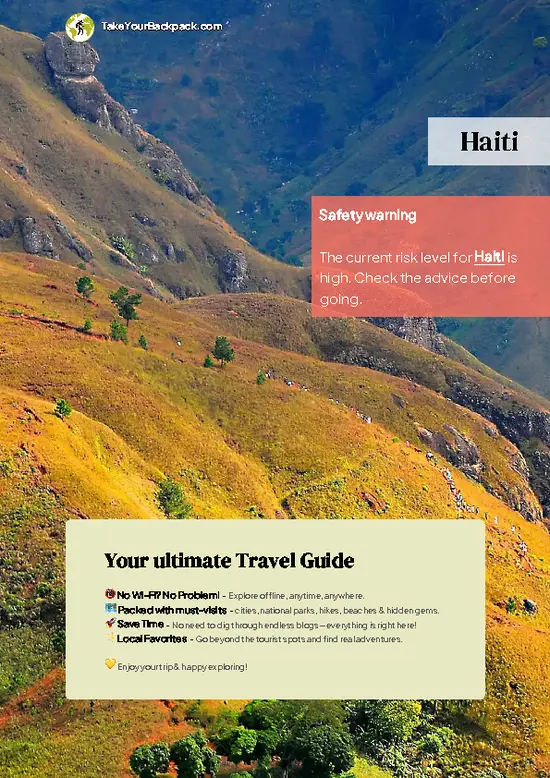
example page 0 from our offline Travel Guide for Haiti
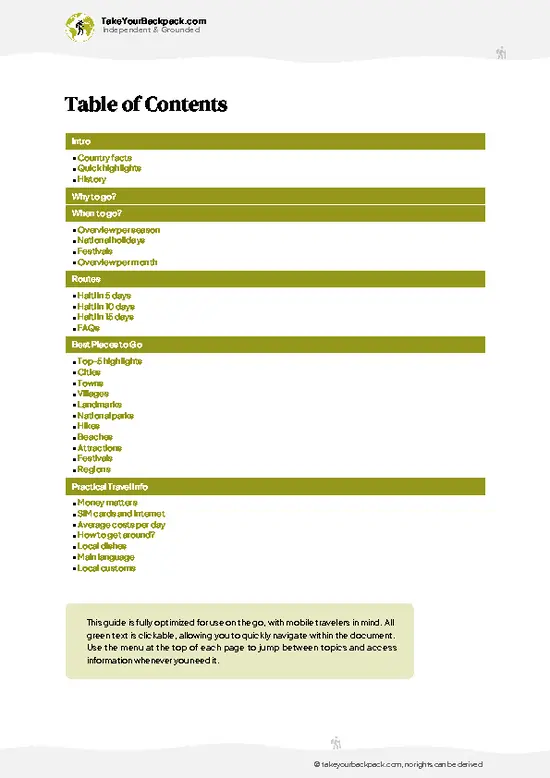
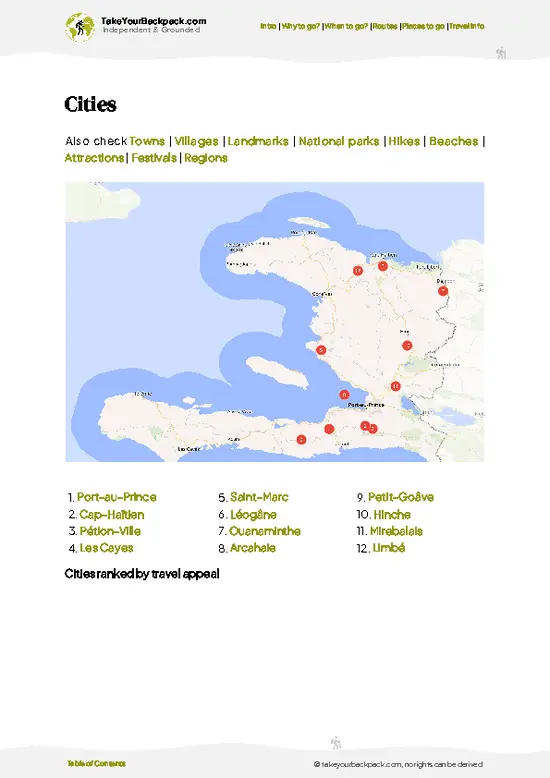
example page 1 from our offline Travel Guide for Haiti
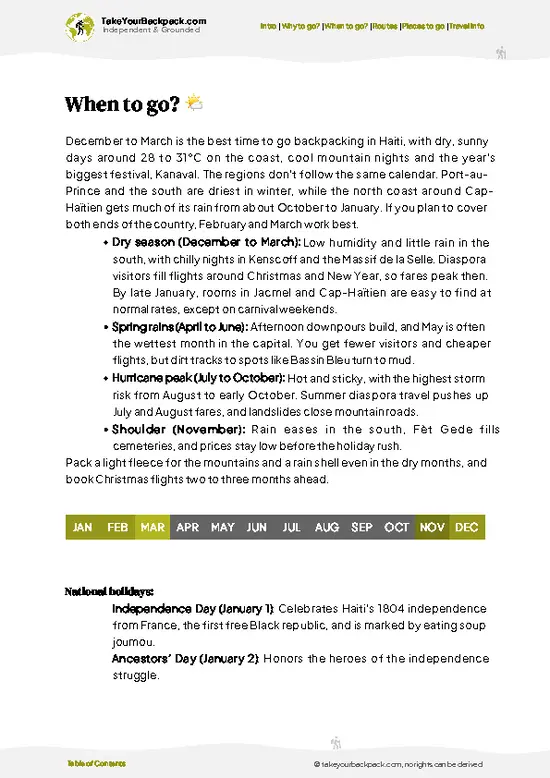
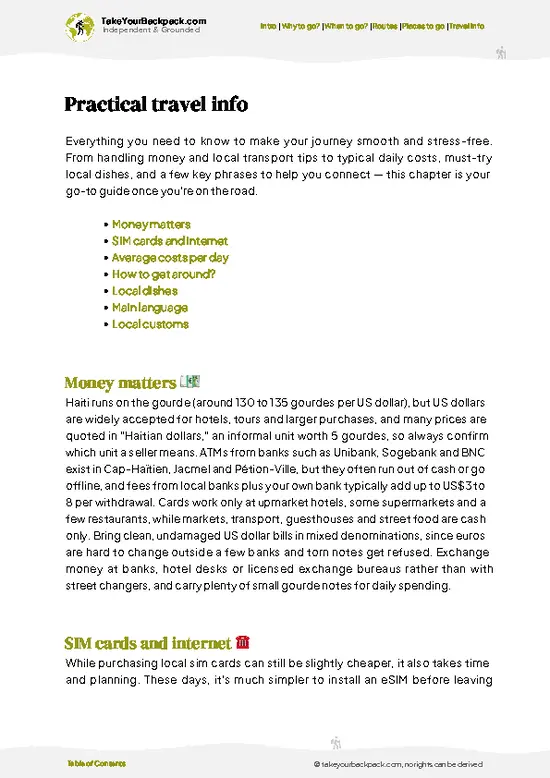
example page 2 from our offline Travel Guide for Haiti
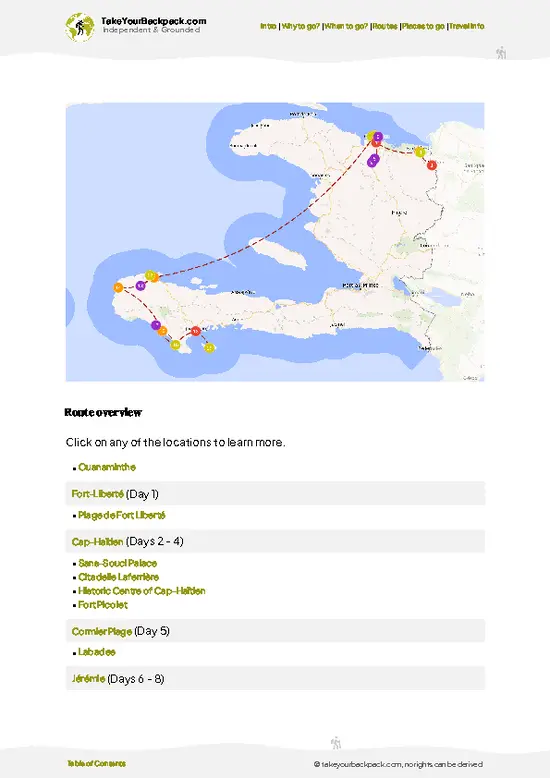
example page 3 from our offline Travel Guide for Haiti
example page 4 from our offline Travel Guide for Haiti
example page 5 from our offline Travel Guide for Haiti
example page 6 from our offline Travel Guide for Haiti
example page 7 from our offline Travel Guide for Haiti
Loading the map 🌍
CLICK TO FILTER
cities
towns
villages
landmarks
national parks
hikes
beaches
attractions
festivals
regions
SHOW COUNTRY’S BESTSHOW ALL

✨ Why go?
Ranked #6 unique site in Haiti
What makes it a must-see unique site

Chapelle Royale de Milot is the place where Haiti’s revolution stops being a date in a textbook and becomes stone you can touch. Few sites in the Caribbean let you stand inside the home of a king who took power after defeating a European army, and here you can walk the same terraces he did, with almost nobody else around. The effort of getting here is small, since Milot sits just inland from Cap-Haïtien, and the town is easy to reach by a local moto-taxi or shared ride.
The real draw is combining it with the Citadelle Laferrière on the mountain above, one of the largest fortresses in the Americas. Together they make a single, coherent story of Haiti’s early independence, and you can see both in a day. Add the lively old streets and food of Cap-Haïtien, and you have a northern Haiti route that … read more 👉
Chapelle Royale de Milot is the place where Haiti’s revolution stops being a date in a textbook and becomes stone you can touch. Few sites in the Caribbean let you stand inside the home of a king who took power after defeating a European army, and here you can walk the same terraces he did, with almost nobody else around. The effort of getting here is small, since Milot sits just inland from Cap-Haïtien, and the town is easy to reach by a local moto-taxi or shared ride.
The real draw is combining it with the Citadelle Laferrière on the mountain above, one of the largest fortresses in the Americas. Together they make a single, coherent story of Haiti’s early independence, and you can see both in a day. Add the lively old streets and food of Cap-Haïtien, and you have a northern Haiti route that feels rich, uncrowded and distinctly unlike any other Caribbean stop.

💡 HighlightsMust-see experiences and standout moments

  1. Chapelle Royale: The compound’s best-known building, a former royal chapel whose weathered walls and arched doorways give a sense of how formal court life once felt. It is where Christophe was reportedly buried before his remains were moved to the Citadelle.
  2. Sans-Souci Palace ruins: The shattered shell of the king’s palace, once among the grandest buildings in the Caribbean. Broken walls, grand staircases and open halls show how large the project was.
  3. The palace terraces and staircases: Wide stone steps climb in tiers, and from the upper levels you get long views over Milot and the green hills behind it.
  4. The old water channels: Christophe’s engineers brought spring water through the grounds, and traces of that system can still be followed around the ruins.
  5. Palace outbuildings and barracks: Smaller
… read more 👉
  1. Chapelle Royale: The compound’s best-known building, a former royal chapel whose weathered walls and arched doorways give a sense of how formal court life once felt. It is where Christophe was reportedly buried before his remains were moved to the Citadelle.
  2. Sans-Souci Palace ruins: The shattered shell of the king’s palace, once among the grandest buildings in the Caribbean. Broken walls, grand staircases and open halls show how large the project was.
  3. The palace terraces and staircases: Wide stone steps climb in tiers, and from the upper levels you get long views over Milot and the green hills behind it.
  4. The old water channels: Christophe’s engineers brought spring water through the grounds, and traces of that system can still be followed around the ruins.
  5. Palace outbuildings and barracks: Smaller structures around the main palace hint at the working side of the royal household, from soldiers to servants.
  6. Local guides’ storytelling: Guides at the gate explain Christophe’s rise, his rivalry with other Haitian leaders and the palace’s collapse in the 1842 earthquake. Agree on a fee before you start.
  7. Milot town and its market: A short stroll from the ruins brings you into everyday northern Haiti, with vendors, motorbikes and fruit stalls.
  8. Citadelle Laferrière: The huge mountaintop fortress that Christophe built, reached from Milot by a steep climb or horseback ride. It is the natural companion to the palace.
Chapelle Royale de Milot pairs best with the Citadelle Laferrière, since the palace ruins fit into a morning and the fortress climb fills the afternoon.
Spotted a mistake or missing something? Contact us.

🌤️ When to go?Best time to visit Chapelle Royale de Milot

  • December to March: Cool, dry mornings make the steep walk up to Sans-Souci and the Citadelle Laferrière easiest. Highs run 28 to 31°C (82 to 88°F), lows 19 to 22°C (66 to 72°F), and the ruins stay dry underfoot. This is peak season, with the most visitors and the highest guide and transport asking prices.
  • April to June: Afternoon downpours build, and heat climbs to 31 to 34°C (88 to 93°F). Start early and finish the climb before the clouds close in around the mountain.
  • July to August: Hottest stretch, with sticky humidity and the odd storm. Crowds thin and prices soften.
  • September to November: Hurricane season peaks into October. Roads can wash out and flights get disrupted, so keep your plans loose.
  • Daylight: Roughly 11 to 13 hours across the year, so aim to be on the trail by 8 a.m.
Chapelle … read more 👉
  • December to March: Cool, dry mornings make the steep walk up to Sans-Souci and the Citadelle Laferrière easiest. Highs run 28 to 31°C (82 to 88°F), lows 19 to 22°C (66 to 72°F), and the ruins stay dry underfoot. This is peak season, with the most visitors and the highest guide and transport asking prices.
  • April to June: Afternoon downpours build, and heat climbs to 31 to 34°C (88 to 93°F). Start early and finish the climb before the clouds close in around the mountain.
  • July to August: Hottest stretch, with sticky humidity and the odd storm. Crowds thin and prices soften.
  • September to November: Hurricane season peaks into October. Roads can wash out and flights get disrupted, so keep your plans loose.
  • Daylight: Roughly 11 to 13 hours across the year, so aim to be on the trail by 8 a.m.
Chapelle Royale de Milot is quietest on weekdays, so skip Sundays if you want the site to yourself.


source: climatestotravel.comJANJanuary: excellent for travelingFEBFebruary: excellent for travelingMARMarch: excellent for travelingAPRApril: highly recommended for travelingMAYMay: fair for travelingJUNJune: fair for travelingJULJuly: fair for travelingAUGAugust: fair for travelingSEPSeptember: fair for travelingOCTOctober: fair for travelingNOVNovember: highly recommended for travelingDECDecember: excellent for traveling
when-to-go

✈️ The backpacker research shortcutHaiti Travel Guide

An offline-friendly backpacking guide with optimized travel routes, ranked highlights, transport advice, and the best areas to stay.
example page 0 from our offline Travel Guide for Haiti
example page 1 from our offline Travel Guide for Haiti
example page 2 from our offline Travel Guide for Haiti
example page 3 from our offline Travel Guide for Haiti
example page 4 from our offline Travel Guide for Haiti
example page 5 from our offline Travel Guide for Haiti
example page 6 from our offline Travel Guide for Haiti
example page 7 from our offline Travel Guide for Haiti
The digital guide (332 pages) contains:
✅ 89 highlights, ranked by travel appeal
✅ Optimized 5, 10 & 15-day travel routes
✅ Cities, national parks, landmarks, beaches
✅ How to get around
✅ Offline-friendly for travel without Wi-Fi
👉 Click to see all 30+ guide features

📅 Plan smarter in minutes, not weeks
✅ Month by month travel advice
✅ Festivals & national holidays
✅ Budget expectations

🗺️ Go to the right places, skip the overrated ones
✅ Honest pros & cons of destinations
✅ Top hikes, parks & viewpoints
✅ Lesser-known places most travelers miss
✅ Clear “worth it vs skip it” guidance

🛏️ Travel smoothly without rookie mistakes
✅ Best areas to stay
✅ Transport systems explained simply
✅ Common scams & safety advice
✅ SIM cards, money & practical tips

🌍 Understand the country, not just visit it
✅ Culture & traditions
✅ 52 Essential phrases & customs
✅ Festivals worth planning around
✅ Traveler-friendly historical context
✅ Insights that make places more meaningful

📱 Built for real travel conditions
✅ Fully downloadable PDF
✅ Works completely offline
✅ Optimized for phone use
✅ Useful in remote areas & buses
✅ Everything in one place
Stop searching, start planning
Get instant access to your full guide. 30‑day money-back guarantee.
+ Add another guide for just

By proceeding you agree to our terms.
Sent to your inbox immediately after payment • 100% Secure Checkout
Best Backpacking Travel Advisor 2025 tourism awardBest Backpacking
Travel Advisor
2025
What others say about Take Your Backpack Guides:
⭐⭐⭐⭐⭐
Fantastic, amazing amount of information!
⭐⭐⭐⭐⭐
My goodness this is amazing, it's what I've been looking for hats off too you!
⭐⭐⭐⭐⭐
I think this is absolutely BRILLIANT
⭐⭐⭐⭐
Very complete and informative. It's still missing places, but I gotta to commend you
⭐⭐⭐⭐⭐
This is truly amazing, thank you, can't wait to explore it with my kids!
⭐⭐⭐⭐⭐
Awesome resource, thank you!
⭐⭐⭐⭐⭐
This is amazing! Can't wait to explore the ones I haven't seen
⭐⭐⭐⭐
I love this! Well done, great idea.
⭐⭐⭐⭐⭐
Thanks for taking the time to make this gem!
⭐⭐⭐⭐⭐
This might be the best website I've ever seen.
⭐⭐⭐⭐⭐
Congratulations, and thank you so much for your work; it's incredibly valuable.
⭐⭐⭐⭐
In all seriousness I think you did a great job pointing out the important spots
⭐⭐⭐⭐⭐
10/10 very good
⭐⭐⭐⭐⭐
As someone who's only just starting to visit regularly this is awesome, thank you.
⭐⭐⭐⭐
Thank you very much! I'm going to visit my dad, it's going to be very useful!
⭐⭐⭐⭐⭐
This is really cool! We'll be travelling for the first time and this definitely come in handy.
⭐⭐⭐⭐⭐
You are now our minister of culture, congratulations 👨‍💼
⭐⭐⭐⭐⭐
Just wanted to tell you that this is a pearl! Going to follow your recommendations.
⭐⭐⭐⭐⭐
This is so cool. I'll definitely be using the resource for my travels soon.
⭐⭐⭐⭐⭐
This is very impressive! Good work.
⭐⭐⭐⭐⭐
This is an amazing and informative site. Very well done!

🛏️ Where to stay?Choosing the right base

Stay in Cap-Haïtien, since Milot, 12 to 20 km south, has only a handful of basic guesthouses and almost no traveler scene. Cap-Haïtien is where you will find other budget travelers, restaurants, money exchange and the transport that runs to Milot daily.
The old center around the Rue 17 grid and the waterfront is the easiest base. It is walkable, full of 19th-century balconied buildings, and you can find a moto-taxi or tap-tap in minutes. Evenings feel livelier here, with street food and small bars, though you should still avoid walking alone late at night.
The quieter hillside and coastal edge, … read more 👉
Stay in Cap-Haïtien, since Milot, 12 to 20 km south, has only a handful of basic guesthouses and almost no traveler scene. Cap-Haïtien is where you will find other budget travelers, restaurants, money exchange and the transport that runs to Milot daily.
The old center around the Rue 17 grid and the waterfront is the easiest base. It is walkable, full of 19th-century balconied buildings, and you can find a moto-taxi or tap-tap in minutes. Evenings feel livelier here, with street food and small bars, though you should still avoid walking alone late at night.
The quieter hillside and coastal edge, toward Rival and the road to Labadee, suits you if you want sea breezes and calmer nights. Expect to take a short taxi into town.
Sleeping in Milot itself works if you want a dawn start at the Citadelle. Rooms are simple, meals are limited, and you will have a short walk to the chapel ruins and the trailhead. Most backpackers arrange a day return from Cap-Haïtien instead, and I would do the same. Book ahead in high season, December to March, and ask your host to arrange a trusted driver.

👛 Costs (as of 20 October 2026)Typical daily expenses

Chapelle Royale de Milot costs a backpacker about US$53 to 105 a day when based in Cap-Haïtien, with the Citadelle ticket as the biggest single item.
CategoryBudget RangeLocal Reality
Entrance ticketsUS$5 to 20The chapel ruins are small and often covered by a combined Milot site ticket with the Sans-Souci Palace and Citadelle. Prices for foreigners are higher than for Haitians and are paid in cash.
GuideUS$10 to 20Local guides wait at the entrance. Agree the price before walking.
Horse to the CitadelleUS$10 to 15Optional. The walk takes 1.5 to 2 hours uphill.
TransportUS$5 to 20Shared tap-tap or moto-taxi from Cap-Haïtien is cheap. A private car with waiting time costs more.
FoodUS$8 to 15Rice and beans, fried plantain and grilled meat at small local eateries.
AccommodationUS$15 to 35Basic rooms
… read more 👉
Chapelle Royale de Milot costs a backpacker about US$53 to 105 a day when based in Cap-Haïtien, with the Citadelle ticket as the biggest single item.
CategoryBudget RangeLocal Reality
Entrance ticketsUS$5 to 20The chapel ruins are small and often covered by a combined Milot site ticket with the Sans-Souci Palace and Citadelle. Prices for foreigners are higher than for Haitians and are paid in cash.
GuideUS$10 to 20Local guides wait at the entrance. Agree the price before walking.
Horse to the CitadelleUS$10 to 15Optional. The walk takes 1.5 to 2 hours uphill.
TransportUS$5 to 20Shared tap-tap or moto-taxi from Cap-Haïtien is cheap. A private car with waiting time costs more.
FoodUS$8 to 15Rice and beans, fried plantain and grilled meat at small local eateries.
AccommodationUS$15 to 35Basic rooms in Cap-Haïtien in high season. Low season runs a little cheaper.
Total Daily BudgetUS$53 to 105Pay in gourdes or US dollars, in small bills.
⚠️ Prices can change and everyone travels differently, so take this as a rough guide. Hope it helps you plan your adventure!

FAQFrequently asked questions about Chapelle Royale de Milot

Chapelle Royale de Milot is the ruined royal chapel of King Henri Christophe’s Sans-Souci Palace complex, built in the early 1800s. It sits in the village of Milot, about 20 km south of Cap-Haïtien, and is part of the UNESCO-listed National History Park. The chapel is where Christophe was said to have been crowned, and its weathered facade still stands near the palace ruins.
Allow 1 to 2 hours for the chapel and the Sans-Souci Palace ruins alone. If you add the climb to the Citadelle Laferrière, plan a full day of 5 to 7 hours including the 1.5 to 2 hour uphill walk. Chapelle Royale de Milot works well as a morning start before the afternoon heat and rain build.
Take a tap-tap or moto-taxi from Cap-Haïtien to Milot, a ride of roughly 30 to 45 minutes depending on traffic. Fares are about US$1 to 3 shared, or US$20 to 40 for a private car with waiting time. Chapelle Royale de Milot lies near the village center, a short walk from the ticket office, and most visitors fly into Cap-Haïtien airport or come by bus from Port-au-Prince.
⚠️ Things can change over time, so always validate details locally before you go.

Other Haitian landmarks near Chapelle Royale de Milot

Explore more nearby:

  • Sans-Souci Palace—Double staircase, red-brick ruin, 1842 quake cracks, shared Citadelle ticket| 0 km away
  • Citadelle Laferrière—Mountaintop fortress, cannonball pyramids, horse ride, cloud-level ramparts| 5 km away
  • Fort Picolet—Harbor-mouth ramparts, rusted cannons, fishing shoreline| 20 km away

💡 Not sure where to go next?
Create a personalized itinerary for Haiti including Chapelle Royale de Milot and the places that fit your trip.

Generate my itinerary

👉 Discover all landmarks

Or checkout all Haiti has to offer (think cities, towns, villages, national parks, hikes, beaches, festivals)
Country photo of Haiti

We 💚 feedbackParting advice and final tips

Chapelle Royale de Milot needs about two hours on its own, and a full day if you add the Citadelle. I would start early, before the heat and the midday crowd of guides builds, and bring small bills for tips and water. Skip rushing, since the quiet is the best part.

✍️ Help improve this page!
The information on this page is based on in-depth research, insights shared by experienced travelers, and feedback from the local travel community in Haiti. While every effort is made to keep the information accurate and current, conditions can change — so if you spot anything incorrect or outdated, please get in touch.


🙋‍♂️ Give feedback

👋 Meet the founderWho’s Behind Take Your Backpack?

Johan, backpacker and founder of TakeYourBackpackHi, I’m Johan (Netherlands 🇳🇱), the creator of TakeYourBackpack. Over the past 3 decades, I’ve backpacked through 90+ countries across six continents, gaining extensive experience with independent travel, long-term trips, and overland routes.

This site is built on a combination of firsthand travel experience and carefully curated insights from other backpackers. Many guides are based on places I’ve personally visited, while others bring together tips, observations, and practical advice shared by trusted travelers I’ve met along the way.

The goal is to provide realistic, experience-driven guidance — not generic itineraries — so you can explore destinations with better context, clearer expectations, and more confidence.