
×

Haiti🇭🇹 | festivalsHaitian CarnivalChamp de Mars, truck-mounted konpa, mizik rasin, Kanaval songs, masked characters | things to do and best time to go

Explore LimbéExplore Gonaïves Independence Day

Backpacking in Haitian Carnival
🏆 Top pickfestival ranked #1
By Johan Kruseman 🇳🇱 | Updated October 20, 2026

Haitian Carnival has no permanent home: the national celebration is moved between cities, so a bus ticket booked on assumption can land you in the wrong place. The Port-au-Prince version, centered on the Champ de Mars plaza downtown, is the loudest and most political. It peaks over the three days before Ash Wednesday, with warm-up Sundays in the weeks before. Expect konpa dance bands on huge trucks, mizik rasin groups playing drums and bamboo horns, and crowds that dance along behind them for hours. Most of the crowd is Haitian, from teenagers to grandmothers, and foreign backpackers are rare. Skip any grandstand seat. Stand in the street, where the sound hits your chest and the costumed characters pass close enough to touch. That is where the festival is. Plan on a long, sweaty, standing day with rum, fried snacks and no shade. The best moment comes when a roots band’s competition song turns a whole block into one chorus.

Discover everything you want to know in the 📖 Haiti Travel Guide.
Safety warning

The current risk level for Haiti is high. Check the advice before going.


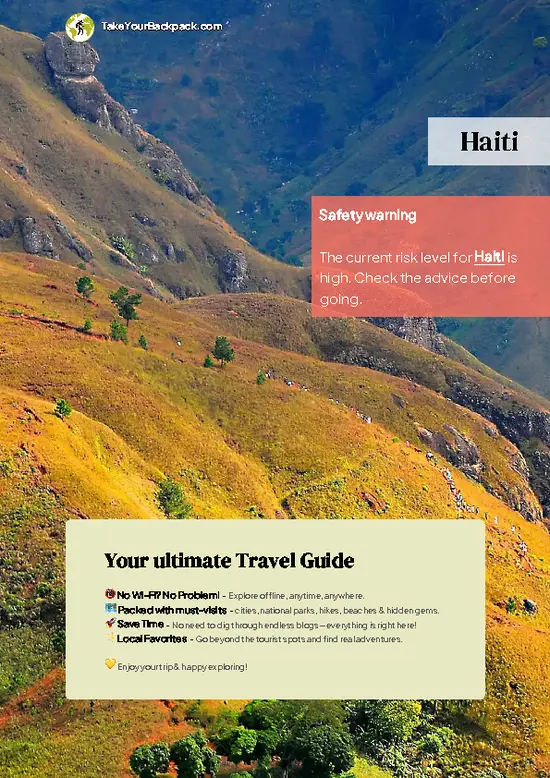
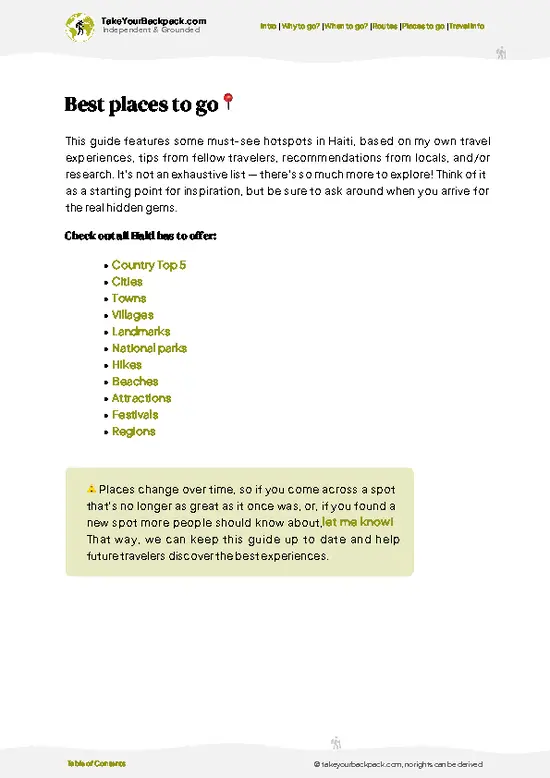
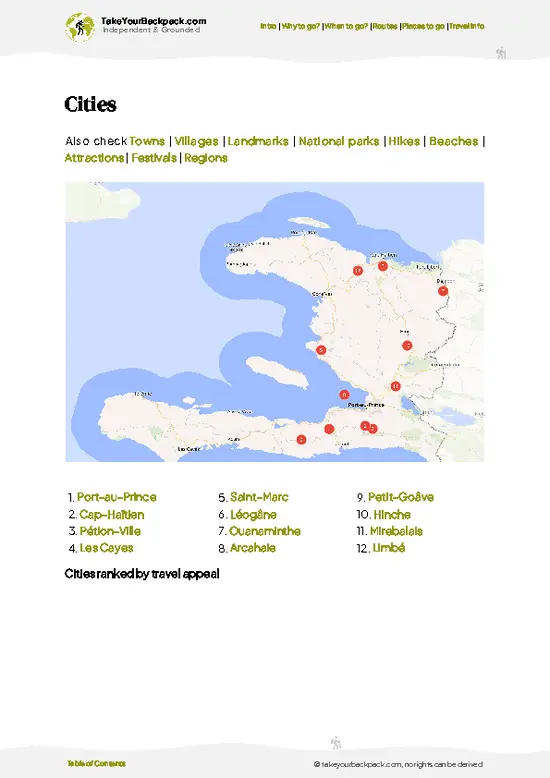
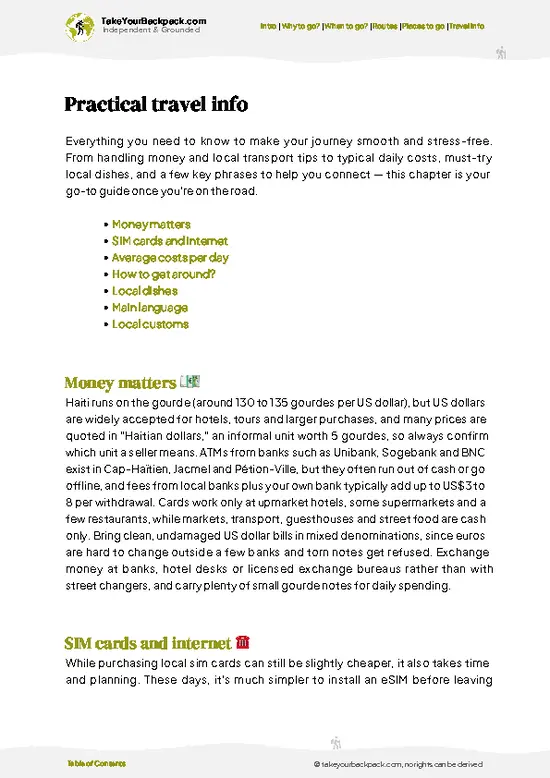
example page 0 from our offline Travel Guide for Haiti
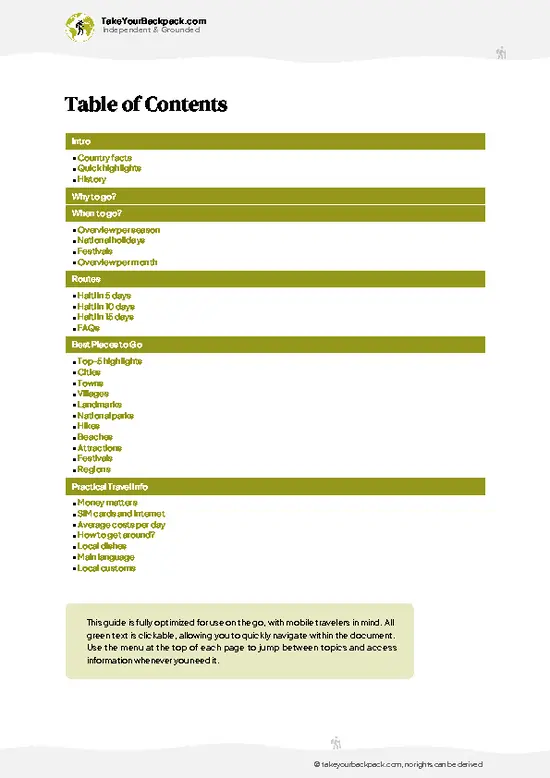
example page 1 from our offline Travel Guide for Haiti
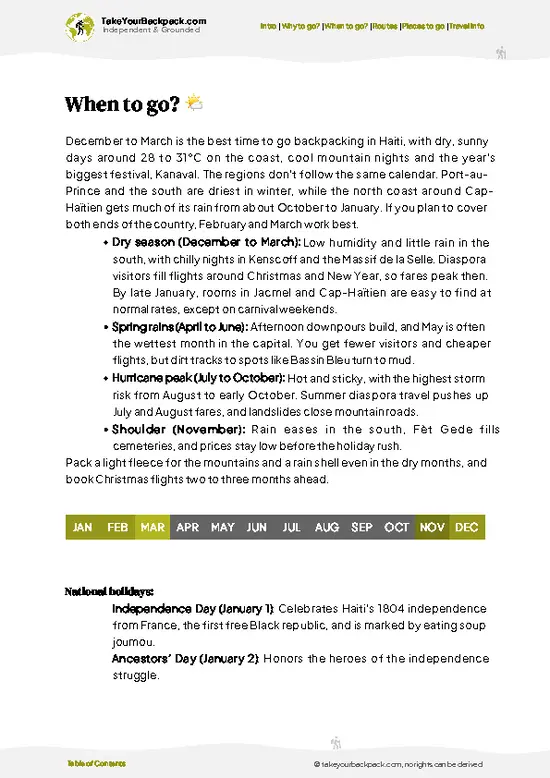
example page 2 from our offline Travel Guide for Haiti
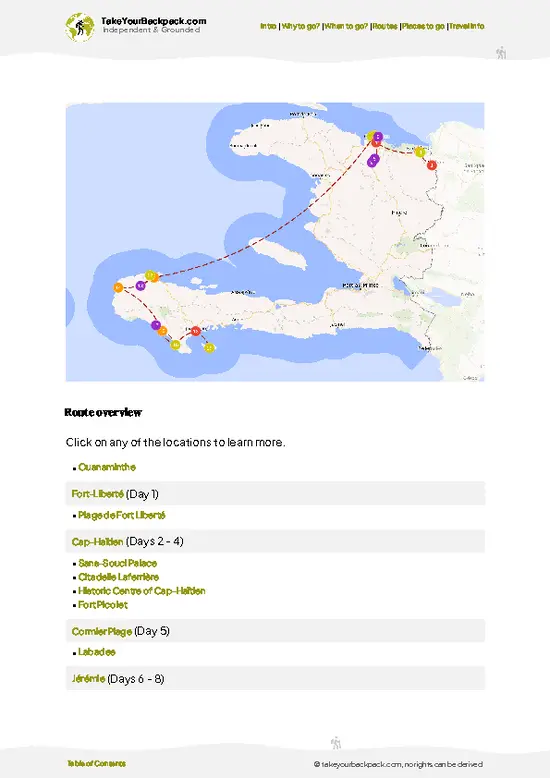
example page 3 from our offline Travel Guide for Haiti
example page 4 from our offline Travel Guide for Haiti
example page 5 from our offline Travel Guide for Haiti
example page 6 from our offline Travel Guide for Haiti
example page 7 from our offline Travel Guide for Haiti
Loading the map 🌍
CLICK TO FILTER
cities
towns
villages
landmarks
national parks
hikes
beaches
attractions
festivals
regions
SHOW COUNTRY’S BESTSHOW ALL

✨ Why go?
Ranked #1 festival in Haiti
Why Haitian Carnival should be on your travel list

Haitian Carnival is the one event where you see the whole country talking to itself in public, through songs that mock politicians and celebrate survival. That makes it very different from the polished parades of Rio or Trinidad, and it feels like a neighborhood event scaled up to a nation. If you travel with a Haitian host, you get invited into the crowd instead of watching from behind a barrier. Strangers share cups, dance next to you and explain the costumes without being asked.

The annual Kanaval song competition gives you a reason to learn Kreyòl phrases before you arrive, because every bar of the winning tune gets sung back by thousands. The Champ de Mars area gives the festival a focal point, and the traditional masked characters link it to the older street customs that came before … read more 👉
Haitian Carnival is the one event where you see the whole country talking to itself in public, through songs that mock politicians and celebrate survival. That makes it very different from the polished parades of Rio or Trinidad, and it feels like a neighborhood event scaled up to a nation. If you travel with a Haitian host, you get invited into the crowd instead of watching from behind a barrier. Strangers share cups, dance next to you and explain the costumes without being asked.

The annual Kanaval song competition gives you a reason to learn Kreyòl phrases before you arrive, because every bar of the winning tune gets sung back by thousands. The Champ de Mars area gives the festival a focal point, and the traditional masked characters link it to the older street customs that came before the trucks and speakers. Costs are low next to comparable Caribbean carnivals, since watching is free and food comes from street vendors. It also fits neatly into a longer trip through the Caribbean, with Jacmel and the north as natural add-ons.

💡 HighlightsMust-see experiences and standout moments

  1. The Champ de Mars parade grounds. The central plaza in Port-au-Prince is the traditional heart of the festival, with the Pantheon-style monuments of national heroes as a backdrop. Bands and floats pass here, and the crowd packs in tight. Arrive early to get a spot, and stay near the edges if you want room to move.
  2. Konpa bands on mobile stages. Big dance bands play from the backs of trucks stacked with speakers, running the same slow, swaying rhythm for hours. Their carnival songs are written to be shouted back, so even without Kreyòl you pick up the chorus by the second pass.
  3. Mizik rasin roots groups. These bands mix vodou drumming, bamboo horns called vaksin and call-and-response vocals. Boukman Eksperyans is the best known of them. Their sound is rawer than konpa, and it draws a different,
… read more 👉
  1. The Champ de Mars parade grounds. The central plaza in Port-au-Prince is the traditional heart of the festival, with the Pantheon-style monuments of national heroes as a backdrop. Bands and floats pass here, and the crowd packs in tight. Arrive early to get a spot, and stay near the edges if you want room to move.
  2. Konpa bands on mobile stages. Big dance bands play from the backs of trucks stacked with speakers, running the same slow, swaying rhythm for hours. Their carnival songs are written to be shouted back, so even without Kreyòl you pick up the chorus by the second pass.
  3. Mizik rasin roots groups. These bands mix vodou drumming, bamboo horns called vaksin and call-and-response vocals. Boukman Eksperyans is the best known of them. Their sound is rawer than konpa, and it draws a different, more political crowd.
  4. The Kanaval song competition. Each season bands release new songs to compete for the tune that defines the festival. The winner gets sung on every street. Ask a local which one is leading, and you will get a passionate argument and a chorus in return.
  5. Traditional masked characters. Among the floats you will see costumed figures such as the Lanse Kod, who snap ropes and demand coins, and painted, papier-mâché-masked players from the southern Jacmel tradition. The costumes are handmade and sometimes frightening. Keep a respectful distance and ask before photographing anyone.
Haitian Carnival needs no ticket or advance booking for the street parade, which is free to watch, so the only thing worth arranging ahead is a trusted local host or driver.
Spotted a mistake or missing something? Contact us.

🌤️ When to go?When is the celebration of Haitian Carnival?

Haitian Carnival peaks over the three days before Ash Wednesday (so February or early March, set by the Easter calendar), with the biggest national parade held in a different city each year and Port-au-Prince, Jacmel and Cap-Haïtien the usual hosts.
  • Best day: Go for Sunday and Monday (Mardi Gras). Sunday has the big bands and floats, and Monday brings the costumed crowds and the loudest rara and kompa trucks. Tuesday is the finale and the most packed.
  • Weather: Expect 28 to 32°C (82 to 90°F), strong sun and little rain. Bring a hat, sunscreen, a refillable bottle and shoes you can lose a toe-stomp in.
  • Booking: Reserve a bed four to six weeks ahead. Rates in host cities climb 30 to 60 percent, from about US$30 to US$45 a night for a basic room.
  • Crowds and roads: Arrive the Friday before. Roads clog
… read more 👉
Haitian Carnival peaks over the three days before Ash Wednesday (so February or early March, set by the Easter calendar), with the biggest national parade held in a different city each year and Port-au-Prince, Jacmel and Cap-Haïtien the usual hosts.
  • Best day: Go for Sunday and Monday (Mardi Gras). Sunday has the big bands and floats, and Monday brings the costumed crowds and the loudest rara and kompa trucks. Tuesday is the finale and the most packed.
  • Weather: Expect 28 to 32°C (82 to 90°F), strong sun and little rain. Bring a hat, sunscreen, a refillable bottle and shoes you can lose a toe-stomp in.
  • Booking: Reserve a bed four to six weeks ahead. Rates in host cities climb 30 to 60 percent, from about US$30 to US$45 a night for a basic room.
  • Crowds and roads: Arrive the Friday before. Roads clog around parade routes, so leave the morning after the finale or wait until midday.
Check the host city and route a few weeks out, because both can change late.


source: climatestotravel.comJANJanuary: not recommended for travelingFEBFebruary: excellent for travelingMARMarch: not recommended for travelingAPRApril: not recommended for travelingMAYMay: not recommended for travelingJUNJune: not recommended for travelingJULJuly: not recommended for travelingAUGAugust: not recommended for travelingSEPSeptember: not recommended for travelingOCTOctober: not recommended for travelingNOVNovember: not recommended for travelingDECDecember: not recommended for traveling

✈️ The backpacker research shortcutHaiti Travel Guide

An offline-friendly backpacking guide with optimized travel routes, ranked highlights, transport advice, and the best areas to stay.
example page 0 from our offline Travel Guide for Haiti
example page 1 from our offline Travel Guide for Haiti
example page 2 from our offline Travel Guide for Haiti
example page 3 from our offline Travel Guide for Haiti
example page 4 from our offline Travel Guide for Haiti
example page 5 from our offline Travel Guide for Haiti
example page 6 from our offline Travel Guide for Haiti
example page 7 from our offline Travel Guide for Haiti
The digital guide (332 pages) contains:
✅ 89 highlights, ranked by travel appeal
✅ Optimized 5, 10 & 15-day travel routes
✅ Cities, national parks, landmarks, beaches
✅ How to get around
✅ Offline-friendly for travel without Wi-Fi
👉 Click to see all 30+ guide features

📅 Plan smarter in minutes, not weeks
✅ Month by month travel advice
✅ Festivals & national holidays
✅ Budget expectations

🗺️ Go to the right places, skip the overrated ones
✅ Honest pros & cons of destinations
✅ Top hikes, parks & viewpoints
✅ Lesser-known places most travelers miss
✅ Clear “worth it vs skip it” guidance

🛏️ Travel smoothly without rookie mistakes
✅ Best areas to stay
✅ Transport systems explained simply
✅ Common scams & safety advice
✅ SIM cards, money & practical tips

🌍 Understand the country, not just visit it
✅ Culture & traditions
✅ 52 Essential phrases & customs
✅ Festivals worth planning around
✅ Traveler-friendly historical context
✅ Insights that make places more meaningful

📱 Built for real travel conditions
✅ Fully downloadable PDF
✅ Works completely offline
✅ Optimized for phone use
✅ Useful in remote areas & buses
✅ Everything in one place
Stop searching, start planning
Get instant access to your full guide. 30‑day money-back guarantee.
+ Add another guide for just

By proceeding you agree to our terms.
Sent to your inbox immediately after payment • 100% Secure Checkout
Best Backpacking Travel Advisor 2025 tourism awardBest Backpacking
Travel Advisor
2025
What others say about Take Your Backpack Guides:
⭐⭐⭐⭐⭐
Fantastic, amazing amount of information!
⭐⭐⭐⭐⭐
My goodness this is amazing, it's what I've been looking for hats off too you!
⭐⭐⭐⭐⭐
I think this is absolutely BRILLIANT
⭐⭐⭐⭐
Very complete and informative. It's still missing places, but I gotta to commend you
⭐⭐⭐⭐⭐
This is truly amazing, thank you, can't wait to explore it with my kids!
⭐⭐⭐⭐⭐
Awesome resource, thank you!
⭐⭐⭐⭐⭐
This is amazing! Can't wait to explore the ones I haven't seen
⭐⭐⭐⭐
I love this! Well done, great idea.
⭐⭐⭐⭐⭐
Thanks for taking the time to make this gem!
⭐⭐⭐⭐⭐
This might be the best website I've ever seen.
⭐⭐⭐⭐⭐
Congratulations, and thank you so much for your work; it's incredibly valuable.
⭐⭐⭐⭐
In all seriousness I think you did a great job pointing out the important spots
⭐⭐⭐⭐⭐
10/10 very good
⭐⭐⭐⭐⭐
As someone who's only just starting to visit regularly this is awesome, thank you.
⭐⭐⭐⭐
Thank you very much! I'm going to visit my dad, it's going to be very useful!
⭐⭐⭐⭐⭐
This is really cool! We'll be travelling for the first time and this definitely come in handy.
⭐⭐⭐⭐⭐
You are now our minister of culture, congratulations 👨‍💼
⭐⭐⭐⭐⭐
Just wanted to tell you that this is a pearl! Going to follow your recommendations.
⭐⭐⭐⭐⭐
This is so cool. I'll definitely be using the resource for my travels soon.
⭐⭐⭐⭐⭐
This is very impressive! Good work.
⭐⭐⭐⭐⭐
This is an amazing and informative site. Very well done!

🛏️ Where to stay?How to pick the right area

The safest and most social choice for a backpacker is the host city's established guesthouse district, close enough to walk to the parade but away from the main route. In Jacmel, the old town around the colonial streets near the Place d'Armes has small guesthouses, artist studios and a walkable seafront, and you can reach the Carnival route on foot. Cap-Haïtien works well around the Cap's historic center and the quieter streets toward the shore, where you can find locally run rooms and meet other travelers over breakfast. If the national parade is in Port-au-Prince, Pétion-Ville is the area to … read more 👉
The safest and most social choice for a backpacker is the host city's established guesthouse district, close enough to walk to the parade but away from the main route. In Jacmel, the old town around the colonial streets near the Place d'Armes has small guesthouses, artist studios and a walkable seafront, and you can reach the Carnival route on foot. Cap-Haïtien works well around the Cap's historic center and the quieter streets toward the shore, where you can find locally run rooms and meet other travelers over breakfast. If the national parade is in Port-au-Prince, Pétion-Ville is the area to pick. It is hillier and calmer than downtown, has guesthouses and restaurants, and is where most foreign visitors, aid workers and journalists stay, so you will find company. Stay in places with a gated courtyard and a host who can arrange a trusted driver. Sleeping within a short ride of the route matters more than saving a few dollars. Avoid walking back after dark when crowds thin. Rooms in all three areas fill early for Carnival weekend, and a shared room or a homestay arranged through local contacts is often the easiest way to split costs and get local guidance.

👛 Costs (as of 20 October 2026)Money, prices, and spending tips

Haitian Carnival costs a backpacker about US$85 to US$125 a day, counting a mid-priced guesthouse bed in host cities during the festival peak.
CategoryBudget RangeLocal Reality
Festival ticketsUS$0 to 15Street parades are free. Some grandstands and concerts charge a modest fee.
AccommodationUS$30 to 70Guesthouse rooms rise sharply in Carnival week, and prices are mostly paid in cash.
Local transportUS$10 to 25Shared tap-taps are cheap but crowded. Moto-taxis and private drivers cost more during street closures.
Food & drinksUS$12 to 25Street plates cost US$2 to 5. Beer is US$1.50 to 3, and restaurant meals cost more.
Miscellaneous expensesUS$8 to 15Costumes, face paint, water, sunscreen and tips for guides or drivers.
Total Daily BudgetUS$85 to 125Per person, per day, in high season.
⚠️ Prices can change and everyone travels differently, so take this as a rough guide. Hope it helps you plan your adventure!

🍲 FoodLocal Cuisine & Drinks

Street food is the soul of Carnival, and the smell of fried pork (griot) and frying plantains follows you along the route. Vendors sell akra (malanga fritters), bannann peze (twice-fried plantain), fritay plates with pikliz on the side, and grilled corn. Grab a plate and eat standing up beside a speaker stack.

For drinks, look for cold Prestige beer, sugary soda and rum poured from bottles, often infused with herbs, cinnamon or citrus. Fresh coconut water cut with a machete is the best cure for the midday heat. Try the kremas, a creamy, spiced coconut and rum drink, for something truly Haitian. Sweet pen patat (sweet potato pudding) and peanut brittle called tablèt keep you going between parade bands.

Cash is everything here. Carry small bills in gourdes and keep them in a front pocket, … read more 👉
Street food is the soul of Carnival, and the smell of fried pork (griot) and frying plantains follows you along the route. Vendors sell akra (malanga fritters), bannann peze (twice-fried plantain), fritay plates with pikliz on the side, and grilled corn. Grab a plate and eat standing up beside a speaker stack.

For drinks, look for cold Prestige beer, sugary soda and rum poured from bottles, often infused with herbs, cinnamon or citrus. Fresh coconut water cut with a machete is the best cure for the midday heat. Try the kremas, a creamy, spiced coconut and rum drink, for something truly Haitian. Sweet pen patat (sweet potato pudding) and peanut brittle called tablèt keep you going between parade bands.

Cash is everything here. Carry small bills in gourdes and keep them in a front pocket, since cards are almost never accepted at stalls. Portions are generous and prices are often negotiable, so ask before you order. Pick vendors with a steady line and food cooked fresh in front of you. Drink bottled or sealed water, skip ice unless you know its source, and share plates with new friends, which is how most conversations along the route begin.

FAQCommon questions from travelers

Haitian Carnival takes place in the days leading up to Ash Wednesday, usually in February or early March, with the main parades on Sunday, Monday and Tuesday. The host city for the national parade changes by year, with Port-au-Prince, Jacmel and Cap-Haïtien being common choices. Smaller pre-Carnival events and rara processions run on Sundays for weeks before.
Attending Haitian Carnival is largely free, because street parades need no ticket, though grandstand seats or concerts can cost around US$5 to US$15. Plan on US$85 to US$125 a day all in, with a guesthouse bed at US$30 to US$70 and street food at US$2 to US$5 a plate. Costs rise noticeably in the host city, especially for rooms and drivers.
Haitian Carnival does not require tickets for the street parades, which you watch along the route at no charge. Tickets are only needed for special grandstands, concerts or private parties, and are usually sold locally just days before at US$5 to US$15. Book your bed four to six weeks ahead, as rooms in Jacmel, Cap-Haïtien and Pétion-Ville fill quickly.
⚠️ Things can change over time, so always validate details locally before you go.

Other Haitian festivals near Haitian Carnival

Explore more nearby:


💡 Not sure where to go next?
Create a personalized itinerary for Haiti including Haitian Carnival and the places that fit your trip.

Generate my itinerary

👉 Discover all festivals

Or checkout all Haiti has to offer (think cities, towns, villages, national parks, hikes, beaches, festivals)
Country photo of Haiti

We 💚 feedbackKey takeaways before you go

Haitian Carnival works best in the late afternoon of the final Tuesday, when the heat eases, the bands are at full volume and the crowd has stopped holding back. I would arrive with a local host, bring water and small bills, and leave before the streets thin out after dark.

✍️ Help improve this page!
The information on this page is based on in-depth research, insights shared by experienced travelers, and feedback from the local travel community in Haiti. While every effort is made to keep the information accurate and current, conditions can change — so if you spot anything incorrect or outdated, please get in touch.


🙋‍♂️ Give feedback

👋 Meet the founderWho’s Behind Take Your Backpack?

Johan, backpacker and founder of TakeYourBackpackHi, I’m Johan (Netherlands 🇳🇱), the creator of TakeYourBackpack. Over the past 3 decades, I’ve backpacked through 90+ countries across six continents, gaining extensive experience with independent travel, long-term trips, and overland routes.

This site is built on a combination of firsthand travel experience and carefully curated insights from other backpackers. Many guides are based on places I’ve personally visited, while others bring together tips, observations, and practical advice shared by trusted travelers I’ve met along the way.

The goal is to provide realistic, experience-driven guidance — not generic itineraries — so you can explore destinations with better context, clearer expectations, and more confidence.