×

Haiti🇭🇹 | regionsÎle de la TortuePirate fort stair, Bas-Mouillage harbor, moto-taxi tracks, ridge trails, lobster lunches | things to do and best time to go

Explore Île-à-VacheExplore Jacmel

Backpacking in Île de la Tortue
👍 Recommendedregion ranked #20
By Johan Kruseman 🇳🇱 | Updated October 20, 2026

The moto-taxi bucks over a rutted track toward Pointe Ouest, and the sea flashes turquoise between mango trees and goats. Île de la Tortue sits off the northwest coast of Haiti, a rugged island with no resorts and little polish. Skip expecting smooth logistics or nightlife. Go for the quiet coves at Bas-Mouillage, the old pirate history, and fishing communities that still wave you in. Roads are rough, power is patchy, and the reward is a lunch of fresh lobster on an empty beach.

Discover everything you want to know in the 📖 Haiti Travel Guide.
Safety warning

The current risk level for Haiti is high. Check the advice before going.


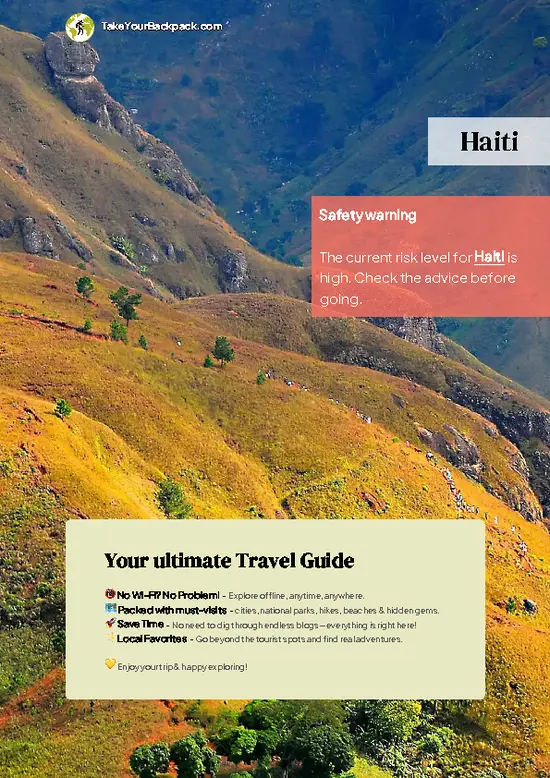
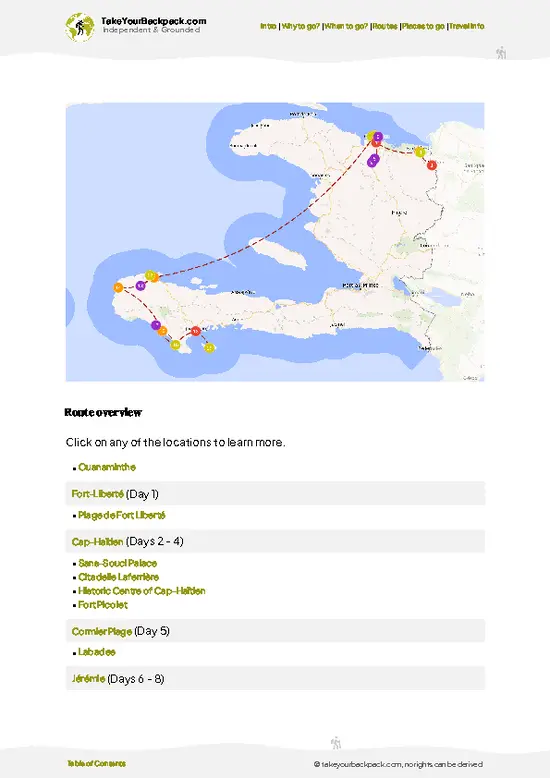
example page 0 from our offline Travel Guide for Haiti
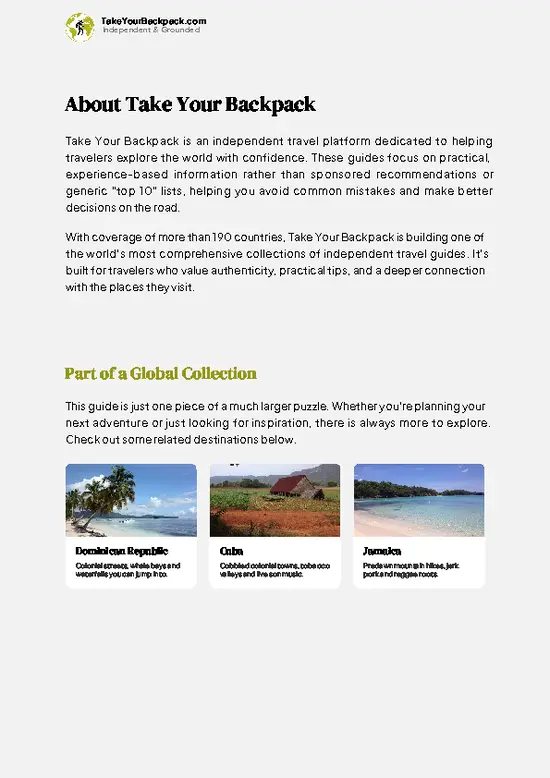
example page 1 from our offline Travel Guide for Haiti
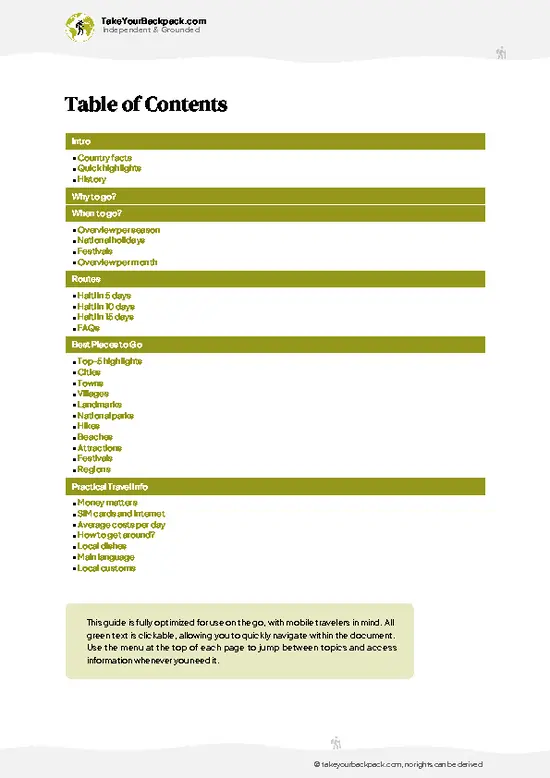
example page 2 from our offline Travel Guide for Haiti
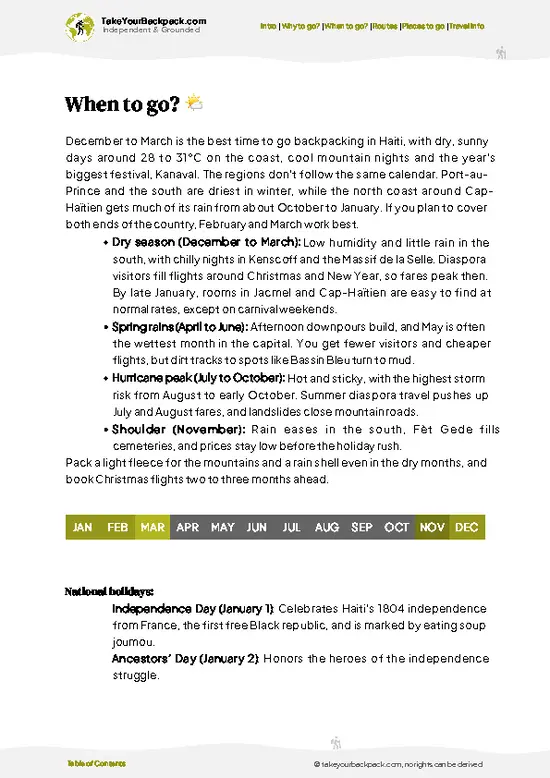
example page 3 from our offline Travel Guide for Haiti
example page 4 from our offline Travel Guide for Haiti
example page 5 from our offline Travel Guide for Haiti
example page 6 from our offline Travel Guide for Haiti
example page 7 from our offline Travel Guide for Haiti
Loading the map 🌍
CLICK TO FILTER
cities
towns
villages
landmarks
national parks
hikes
beaches
attractions
festivals
regions
SHOW COUNTRY’S BESTSHOW ALL

✨ Why go?
Ranked #20 region in Haiti
Reasons people choose to visit here

Île de la Tortue rewards travelers who want a place with almost no crowds and a layered past. The island is small enough to see in a few days, yet it packs in buccaneer ruins at Fort de Rocher, quiet coves, and a mountain spine of hiking trails. Movement is simple: a few moto-taxi tracks link the main villages, so you rarely spend a day just relocating. Staying put in one village and walking out works well, and locals welcome slow, curious visitors.

💡 HighlightsWhat this place is best known for

  1. Fort de Rocher: a 17th-century pirate stronghold on a rock above Cayonne, reached by a steep stone stair with sweeping views.
  2. Bas-Mouillage: a calm harbor village where fishing boats land and the island’s small guesthouses sit.
  3. Pointe Ouest: a remote western tip with open sea and few people.
  4. Palmiste: a village on the north coast with quiet beaches and a laid-back feel.
  5. Cayonne: a historic settlement at the base of the fort, good for wandering lanes and meeting fishermen.
  6. La Vallée: a green interior area of farms and footpaths that most visitors never reach.
  7. Anse Rouge: a lesser-known cove where locals swim and fish away from the main landing.
  8. Basse-Terre: the island’s coastal lowland, with market stalls and daily village life.
  9. Mountain ridge trails: walking routes through the center with views of
… read more 👉
  1. Fort de Rocher: a 17th-century pirate stronghold on a rock above Cayonne, reached by a steep stone stair with sweeping views.
  2. Bas-Mouillage: a calm harbor village where fishing boats land and the island’s small guesthouses sit.
  3. Pointe Ouest: a remote western tip with open sea and few people.
  4. Palmiste: a village on the north coast with quiet beaches and a laid-back feel.
  5. Cayonne: a historic settlement at the base of the fort, good for wandering lanes and meeting fishermen.
  6. La Vallée: a green interior area of farms and footpaths that most visitors never reach.
  7. Anse Rouge: a lesser-known cove where locals swim and fish away from the main landing.
  8. Basse-Terre: the island’s coastal lowland, with market stalls and daily village life.
  9. Mountain ridge trails: walking routes through the center with views of both coasts.
  10. Local fishing boat trip: a hired sailboat along the south shore, arranged at the harbor.
Seeing all of it takes about three full days.
Spotted a mistake or missing something? Contact us.

⌛️ 5 days5-day itinerary for Île de la Tortue

Day 1: Cayonne: Climb Fort de Rocher first, because the view explains the island and the stair is easier in morning cool. Spend the afternoon among the lanes below, where boats come in and the logic of the place makes sense.
Day 2-3: Bas-Mouillage and Palmiste: Roads are rough and moto-taxis set the pace, so pick a base and make loops. Swim at quiet coves, then head north to Palmiste for empty beaches and a slower evening. Detour to La Vallée on foot to see farms and inland paths without needing extra transport.
Day 4-5: Pointe Ouest: Go west for the island’s far edge, then keep the last day loose for a boat trip. If one day justifies the journey, make it Day 1, with the fort and the harbor at dusk.

🌤️ When to go?Best time to visit Île de la Tortue

Dry months from December to March give Île de la Tortue its calmest seas and the easiest crossings from the mainland.
  • Dry Season (Dec to Mar): Highs of 28 to 31°C (82 to 88°F), little rain, flat water, best snorkeling visibility.
  • Shoulder (Apr to Jun): 30 to 33°C (86 to 91°F), spring showers, quiet trails, lower prices.
  • Wet and Hurricane Months (Jul to Nov): Heat, heavy downpours, rough crossings, boats sometimes cancelled, and muddy paths.
Daylight runs roughly 11 to 13 hours, so start hikes early. Book the boat back a day early if you have a flight.

source: climatestotravel.comJANJanuary: excellent for travelingFEBFebruary: excellent for travelingMARMarch: excellent for travelingAPRApril: excellent for travelingMAYMay: fair for travelingJUNJune: fair for travelingJULJuly: fair for travelingAUGAugust: fair for travelingSEPSeptember: below average for travelingOCTOctober: below average for travelingNOVNovember: good for travelingDECDecember: highly recommended for traveling
when-to-go

✈️ The backpacker research shortcutHaiti Travel Guide

An offline-friendly backpacking guide with optimized travel routes, ranked highlights, transport advice, and the best areas to stay.
example page 0 from our offline Travel Guide for Haiti
example page 1 from our offline Travel Guide for Haiti
example page 2 from our offline Travel Guide for Haiti
example page 3 from our offline Travel Guide for Haiti
example page 4 from our offline Travel Guide for Haiti
example page 5 from our offline Travel Guide for Haiti
example page 6 from our offline Travel Guide for Haiti
example page 7 from our offline Travel Guide for Haiti
The digital guide (332 pages) contains:
✅ 89 highlights, ranked by travel appeal
✅ Optimized 5, 10 & 15-day travel routes
✅ Cities, national parks, landmarks, beaches
✅ How to get around
✅ Offline-friendly for travel without Wi-Fi
👉 Click to see all 30+ guide features

📅 Plan smarter in minutes, not weeks
✅ Month by month travel advice
✅ Festivals & national holidays
✅ Budget expectations

🗺️ Go to the right places, skip the overrated ones
✅ Honest pros & cons of destinations
✅ Top hikes, parks & viewpoints
✅ Lesser-known places most travelers miss
✅ Clear “worth it vs skip it” guidance

🛏️ Travel smoothly without rookie mistakes
✅ Best areas to stay
✅ Transport systems explained simply
✅ Common scams & safety advice
✅ SIM cards, money & practical tips

🌍 Understand the country, not just visit it
✅ Culture & traditions
✅ 52 Essential phrases & customs
✅ Festivals worth planning around
✅ Traveler-friendly historical context
✅ Insights that make places more meaningful

📱 Built for real travel conditions
✅ Fully downloadable PDF
✅ Works completely offline
✅ Optimized for phone use
✅ Useful in remote areas & buses
✅ Everything in one place
Stop searching, start planning
Get instant access to your full guide. 30‑day money-back guarantee.
+ Add another guide for just

By proceeding you agree to our terms.
Sent to your inbox immediately after payment • 100% Secure Checkout
Best Backpacking Travel Advisor 2025 tourism awardBest Backpacking
Travel Advisor
2025
What others say about Take Your Backpack Guides:
⭐⭐⭐⭐⭐
Fantastic, amazing amount of information!
⭐⭐⭐⭐⭐
My goodness this is amazing, it's what I've been looking for hats off too you!
⭐⭐⭐⭐⭐
I think this is absolutely BRILLIANT
⭐⭐⭐⭐
Very complete and informative. It's still missing places, but I gotta to commend you
⭐⭐⭐⭐⭐
This is truly amazing, thank you, can't wait to explore it with my kids!
⭐⭐⭐⭐⭐
Awesome resource, thank you!
⭐⭐⭐⭐⭐
This is amazing! Can't wait to explore the ones I haven't seen
⭐⭐⭐⭐
I love this! Well done, great idea.
⭐⭐⭐⭐⭐
Thanks for taking the time to make this gem!
⭐⭐⭐⭐⭐
This might be the best website I've ever seen.
⭐⭐⭐⭐⭐
Congratulations, and thank you so much for your work; it's incredibly valuable.
⭐⭐⭐⭐
In all seriousness I think you did a great job pointing out the important spots
⭐⭐⭐⭐⭐
10/10 very good
⭐⭐⭐⭐⭐
As someone who's only just starting to visit regularly this is awesome, thank you.
⭐⭐⭐⭐
Thank you very much! I'm going to visit my dad, it's going to be very useful!
⭐⭐⭐⭐⭐
This is really cool! We'll be travelling for the first time and this definitely come in handy.
⭐⭐⭐⭐⭐
You are now our minister of culture, congratulations 👨‍💼
⭐⭐⭐⭐⭐
Just wanted to tell you that this is a pearl! Going to follow your recommendations.
⭐⭐⭐⭐⭐
This is so cool. I'll definitely be using the resource for my travels soon.
⭐⭐⭐⭐⭐
This is very impressive! Good work.
⭐⭐⭐⭐⭐
This is an amazing and informative site. Very well done!

🛏️ Where to stay?Choosing the right base

Stay in Cayonne, the main port and the most practical base for backpackers on Île de la Tortue, with simple guesthouses from roughly US$15 to 40 a night. Boats land here, moto-taxis wait at the dock, and you can meet locals and the occasional fellow traveler over evening drinks. Palmiste, on the quieter coast, suits those after beaches, calm and sunset views, though choices are fewer and meals are basic. Both feel safe and friendly, as the island is small and everyone notices newcomers. Arrive with cash, since card payments are rare.

🚌 Getting aroundHow to get from A to B

Île de la Tortue is small enough that Cayonne and Palmiste, the main hubs, can each be walked in under 30 minutes, but the island is about 37 km long and walking between its far ends makes no sense in the heat. Roads are rough and few, and boats are the real connector. Reliability is moderate: schedules bend to weather and passenger numbers.
  • Motorboat from Port-de-Paix: The main crossing takes about 1 to 2 hours and costs roughly US$5 to 10. Sit low and bring a dry bag; you land at Cayonne beside fishermen mending nets.
  • Moto-taxi: Rides along the dirt roads cost about US$2 to 8 depending on distance. Hold tight on the hills, and you reach villages and viewpoints that walking would eat your afternoon to see.
  • Hiking: Trails between nearby villages and the coast take 30 to 90 minutes, shaded in
… read more 👉
Île de la Tortue is small enough that Cayonne and Palmiste, the main hubs, can each be walked in under 30 minutes, but the island is about 37 km long and walking between its far ends makes no sense in the heat. Roads are rough and few, and boats are the real connector. Reliability is moderate: schedules bend to weather and passenger numbers.
  • Motorboat from Port-de-Paix: The main crossing takes about 1 to 2 hours and costs roughly US$5 to 10. Sit low and bring a dry bag; you land at Cayonne beside fishermen mending nets.
  • Moto-taxi: Rides along the dirt roads cost about US$2 to 8 depending on distance. Hold tight on the hills, and you reach villages and viewpoints that walking would eat your afternoon to see.
  • Hiking: Trails between nearby villages and the coast take 30 to 90 minutes, shaded in patches, ending at quiet coves and sweeping sea views. Worth it; the long road slogs are not.
  • Chartered fishing boat: Hop between beaches and coastal villages for around US$20 to 50 a boat, depending on distance. You get empty sand and snorkeling spots no road reaches.
Agree every fare before you climb on, and cross in the morning when the sea is calmest.

🍲 FoodEating & Drinking in Île de la Tortue

Seafood rules here: grilled fish and lobster arrive fresh off the boats, often with fried plantains and fiery pikliz. Rice and beans, simmered with garlic and thyme, fill most plates. Expect meals at small family kitchens and beachside shacks for about US$3 to 8, plus fruit stands selling mango and sugar cane. Try fresh coconut water and local clairin rum, sharp and grassy. Meals take time because everything is cooked to order, so order early and be patient. Greet people before you ask for anything, and carry small bills.

🛡️ SafetyStaying Safe: What Travelers Should Know

Île de la Tortue beach is generally a laid-back spot, but keep your eyes peeled. The currents can surprise you, especially if you wander too far from the shore. Locals know where to swim, so follow their lead.

Watch for the flags—red means “maybe don’t,” while green says “go for it.” Jellyfish can make an appearance, but they’re not a constant threat. Just be mindful of your surroundings, and don’t leave valuables unattended; the beach vibe is chill, but opportunists exist. Enjoy the sun, but remember to reapply that sunscreen—Haiti’s sun doesn’t mess around!

FAQTraveler FAQ

Two to three days is enough for Île de la Tortue. Spend one day around Cayonne and its beaches, and another hiking or taking a moto-taxi to Palmiste and the coves, with a third for snorkeling by chartered boat at roughly US$20 to 50. Add a day of buffer if rough seas disrupt the 1 to 2 hour crossing from Port-de-Paix.
On Île de la Tortue you rely on moto-taxis, boats and your own feet. Moto-taxis cost about US$2 to 8 per ride on the dirt roads, and chartered fishing boats link beaches for around US$20 to 50. The mainland crossing from Port-de-Paix is a 1 to 2 hour motorboat ride at roughly US$5 to 10.
Île de la Tortue is known for its pirate history, when buccaneers made it a base in the 17th century. Today it draws visitors for quiet beaches, snorkeling, lobster and slow village life around Cayonne and Palmiste. The island is about 37 km long, and few tourists reach it, so expect empty sand and basic facilities.
⚠️ Things can change over time, so always validate details locally before you go.

Ideas for continuing your journey

Île de la Tortue isn’t the only highlight in Haiti. Explore all what Haiti has to offer.
Country photo of Haiti

We 💚 feedbackSumming up the experience

Île de la Tortue suits curious, low-maintenance travelers who like quiet and rough edges. Bring cash, a flashlight, and patience for slow rides. I would stay in one village and walk out, letting the island come to you.

✍️ Help improve this page!
The information on this page is based on in-depth research, insights shared by experienced travelers, and feedback from the local travel community in Haiti. While every effort is made to keep the information accurate and current, conditions can change — so if you spot anything incorrect or outdated, please get in touch.


🙋‍♂️ Give feedback

👋 Meet the founderWho’s Behind Take Your Backpack?

Johan, backpacker and founder of TakeYourBackpackHi, I’m Johan (Netherlands 🇳🇱), the creator of TakeYourBackpack. Over the past 3 decades, I’ve backpacked through 90+ countries across six continents, gaining extensive experience with independent travel, long-term trips, and overland routes.

This site is built on a combination of firsthand travel experience and carefully curated insights from other backpackers. Many guides are based on places I’ve personally visited, while others bring together tips, observations, and practical advice shared by trusted travelers I’ve met along the way.

The goal is to provide realistic, experience-driven guidance — not generic itineraries — so you can explore destinations with better context, clearer expectations, and more confidence.