×

Haiti🇭🇹 | best regionsNo region found in Haiti

Top regions elude us, but don’t let that stop your trip. Haiti is packed with lots of other highlights and hidden gems, scenic views, and unique adventures. And, if you know of any great region to add here, just contact us.

By Johan Kruseman 🇳🇱 | Updated May 14, 2026
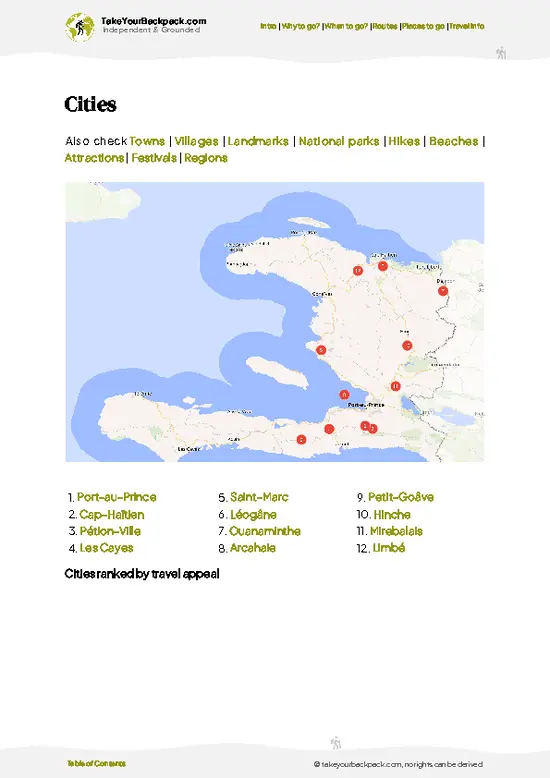
Explore the best cities in Haiti

Why go?Why These region Stand Out

Haiti’s regions are a tapestry of climatic diversity, cultural character, and landscapes that set it apart from other Caribbean nations. The country’s geography ranges from coastal plains to rugged mountains, creating distinct microclimates that influence everything from agriculture to daily life. This diversity means travelers can experience everything from the tropical heat of the south to the cooler, mountainous north, offering a rich variety of environments to explore.

However, Haiti’s infrastructure presents challenges. Roads can be rough, and public transport is often unreliable, which can lead to significant travel times between regions. This trade-off means that while you can cover a lot of ground, the depth of exploration may suffer. The longer you spend on the road, the less time … read more 👉
Haiti’s regions are a tapestry of climatic diversity, cultural character, and landscapes that set it apart from other Caribbean nations. The country’s geography ranges from coastal plains to rugged mountains, creating distinct microclimates that influence everything from agriculture to daily life. This diversity means travelers can experience everything from the tropical heat of the south to the cooler, mountainous north, offering a rich variety of environments to explore.

However, Haiti’s infrastructure presents challenges. Roads can be rough, and public transport is often unreliable, which can lead to significant travel times between regions. This trade-off means that while you can cover a lot of ground, the depth of exploration may suffer. The longer you spend on the road, the less time you have to immerse yourself in the local culture and history.

Culturally, Haiti is a vibrant mix of African, French, and indigenous influences, making it a unique destination for those seeking authentic experiences. Yet, the historical context of political instability and economic challenges can impact accessibility. Travelers should be prepared for potential delays and plan accordingly.

Understanding these constraints is crucial. The reward lies in the richness of experiences, but it requires a willingness to adapt and embrace the journey. In Haiti, the trade-offs are not just hurdles; they are part of what makes the experience genuinely transformative.
Our Approach to Ranking
The list of best regions in Haiti is created based on landscapes, local culture, attractions, vibes, and overall appeal. If you feel a region is missing in this list, please let us know.

When to go?When to Plan Your Trip

Climate Variation

Haiti’s climate is tropical, with distinct wet and dry seasons. The dry season typically runs from November to April, offering the most comfortable weather for exploration. Expect warm temperatures, low humidity, and plenty of sunshine. This is when most travelers flock to the country, so anticipate higher prices and larger crowds.

Optimal Months

The best months to visit are December through March. During this period, conditions are ideal for outdoor activities and cultural experiences. However, be prepared for the influx of tourists, especially around holidays.

Shoulder Seasons

April and November serve as shoulder months. These times can offer a sweet spot: fewer crowds and lower costs. However, weather can be unpredictable, with the potential for rain. This trade-off … read more 👉

Climate Variation

Haiti’s climate is tropical, with distinct wet and dry seasons. The dry season typically runs from November to April, offering the most comfortable weather for exploration. Expect warm temperatures, low humidity, and plenty of sunshine. This is when most travelers flock to the country, so anticipate higher prices and larger crowds.

Optimal Months

The best months to visit are December through March. During this period, conditions are ideal for outdoor activities and cultural experiences. However, be prepared for the influx of tourists, especially around holidays.

Shoulder Seasons

April and November serve as shoulder months. These times can offer a sweet spot: fewer crowds and lower costs. However, weather can be unpredictable, with the potential for rain. This trade-off can be worth it for those seeking a more intimate experience.

Peak Periods

Hurricane season runs from June to November, peaking in August and September. While some regions may experience heavy rainfall, this period can also bring lower prices. Travelers should weigh the risks of weather disruptions against potential savings.

Seasonal Constraints

Understanding these seasonal patterns is crucial. Plan trips around major festivals for rich cultural experiences, but be mindful of the associated crowds. Balancing comfort, cost, and experience will lead to a more rewarding visit.

region hoppingPlanning Your Route Efficiently

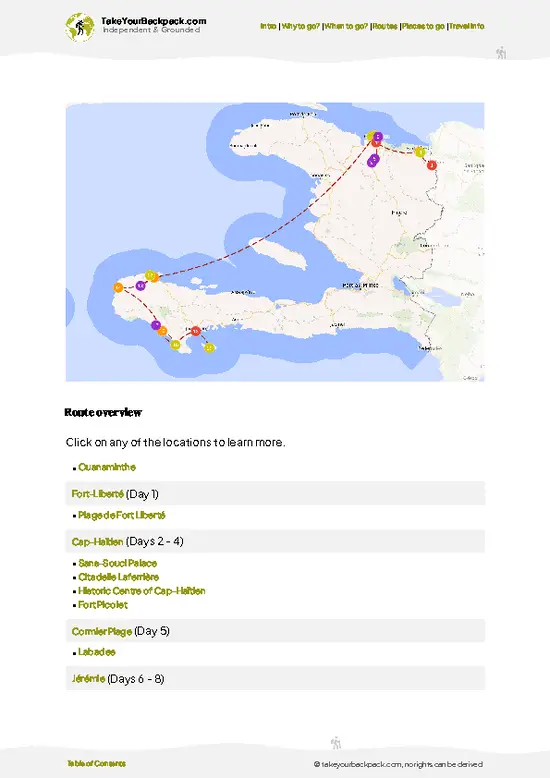
Start in Port-au-Prince, the gateway to Haiti. This bustling capital is where you’ll find the airport and a mix of culture and chaos. Spend a day or two here to acclimate. Visit the Iron Market and the Musée du Panthéon National Haïtien.

Next, head north to the Artibonite Valley. This region is rich in agriculture and offers a glimpse into local life. Allocate a day for exploring the countryside and sampling local cuisine.

From there, make your way to Cap-Haïtien. This coastal city is your launchpad for Citadelle Laferrière, a UNESCO World Heritage site. Plan for at least half a day here; the hike up is worth every step.

Then, consider a detour to Jacmel. Known for its vibrant arts scene, it’s a perfect contrast to the north. Spend a day soaking in the local art and beaches.

Finally,read more 👉
Start in Port-au-Prince, the gateway to Haiti. This bustling capital is where you’ll find the airport and a mix of culture and chaos. Spend a day or two here to acclimate. Visit the Iron Market and the Musée du Panthéon National Haïtien.

Next, head north to the Artibonite Valley. This region is rich in agriculture and offers a glimpse into local life. Allocate a day for exploring the countryside and sampling local cuisine.

From there, make your way to Cap-Haïtien. This coastal city is your launchpad for Citadelle Laferrière, a UNESCO World Heritage site. Plan for at least half a day here; the hike up is worth every step.

Then, consider a detour to Jacmel. Known for its vibrant arts scene, it’s a perfect contrast to the north. Spend a day soaking in the local art and beaches.

Finally, wrap up your trip in Les Cayes. This southern region is less touristy and offers stunning beaches. A couple of days here allows for relaxation and exploration.

Common mistakes include trying to cram too much into a short time. Prioritize experiences over destinations. Flexibility is key; weather can change plans quickly. Balancing speed with depth will enhance the journey, ensuring you savor each moment without feeling rushed.

Expert viewExpert Commentary on regions

Geographic Diversity
Haiti is a patchwork of landscapes, each region offering a distinct flavor. From the rugged mountains in the north to the coastal plains in the south, the geography shapes not just the scenery but the culture and lifestyle of its people. You’ll want to explore at least three regions to grasp the full spectrum of what Haiti has to offer. Each area has its own vibe, and the contrasts can be striking. However, be prepared for the reality that traveling between these regions can be time-consuming. The roads can be rough, and public transport is often unpredictable. Factor in extra time for travel, especially if you’re aiming to connect with local communities and truly experience the culture.

Transport Between Regions
Getting around Haiti is an adventure in itself. While … read more 👉
Geographic Diversity
Haiti is a patchwork of landscapes, each region offering a distinct flavor. From the rugged mountains in the north to the coastal plains in the south, the geography shapes not just the scenery but the culture and lifestyle of its people. You’ll want to explore at least three regions to grasp the full spectrum of what Haiti has to offer. Each area has its own vibe, and the contrasts can be striking. However, be prepared for the reality that traveling between these regions can be time-consuming. The roads can be rough, and public transport is often unpredictable. Factor in extra time for travel, especially if you’re aiming to connect with local communities and truly experience the culture.

Transport Between Regions
Getting around Haiti is an adventure in itself. While you might be tempted to hop from one region to another quickly, that’s a rookie mistake. The infrastructure is improving, but it’s still a mixed bag. Expect long waits for shared taxis or buses, and don’t be surprised if your journey takes twice as long as anticipated. If you’re planning to visit multiple regions, consider renting a vehicle or hiring a local driver who knows the ins and outs. This can save you time and energy, allowing you to focus on the experiences that matter. Just remember, the cost of hiring a driver can add up, so budget accordingly.

Cultural Variation
Each region has its own cultural identity, shaped by history, geography, and local traditions. In the north, you might find a stronger French influence, while the south leans more towards African roots. This cultural diversity is a treasure, but it also means you need to be adaptable. Some areas are more tourist-friendly, while others may require a bit more effort to navigate. Be respectful of local customs and be prepared for varying levels of hospitality. In some regions, you might find locals eager to share their stories, while in others, you may need to earn their trust first. Understanding these nuances can enhance your experience significantly.

Pacing Trade-Offs
When planning your itinerary, consider the pacing. It’s tempting to cram in as much as possible, but that can lead to burnout. Instead, focus on quality over quantity. Spend more time in fewer regions to really soak in the local culture and environment. This approach not only saves you energy but also allows for spontaneous moments that often become the highlights of your trip. If you’re rushing from one place to another, you’ll miss those little interactions that make travel worthwhile.

Safety & Cultural Considerations
Safety is a real concern in Haiti, and it varies by region. Some areas are more prone to crime, while others are relatively safe. Always stay informed about the current situation and heed local advice. Engaging with local guides can enhance your experience and provide an extra layer of safety. They know the lay of the land and can help you navigate cultural sensitivities. Remember, you’re a guest in someone else’s home, so approach interactions with respect and openness.

In summary, Haiti is a land of contrasts, and understanding its geographic diversity, transport challenges, cultural variations, and safety considerations will set you up for a rewarding experience. Prioritize your regions wisely, pace yourself, and immerse yourself in the rich tapestry of Haitian life.

✈️ The backpacker research shortcutHaiti Travel Guide

An offline-friendly backpacking guide with optimized travel routes, ranked highlights, transport advice, and the best areas to stay.
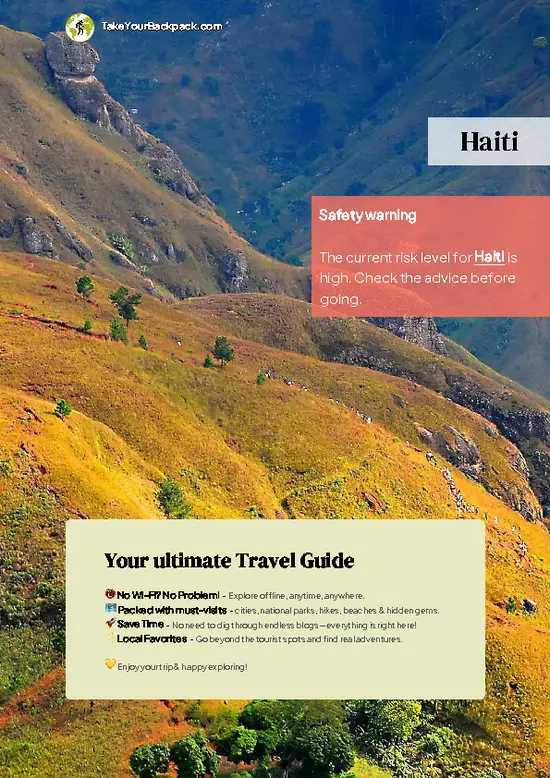
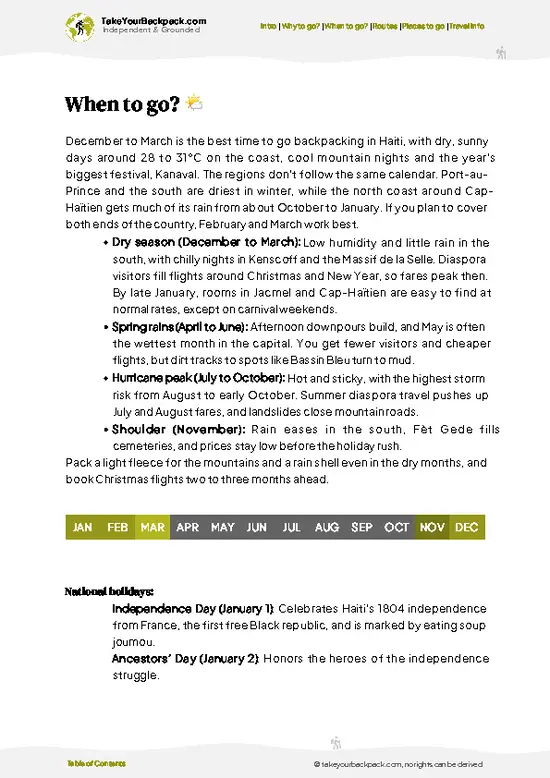
example page 0 from our offline Travel Guide for Haitiexample page 1 from our offline Travel Guide for Haitiexample page 2 from our offline Travel Guide for Haitiexample page 3 from our offline Travel Guide for Haitiexample page 4 from our offline Travel Guide for Haitiexample page 5 from our offline Travel Guide for Haiti
The digital guide (319 pages) contains:
99 highlights, ranked by travel appeal
Optimized 5, 10 & 15-day travel routes
Best neighborhoods to stay
How to get around
Offline-friendly for travel without Wi-Fi
👉 See all 30+ guide features

📅 Plan smarter in minutes, not weeks
Month by month travel advice
Festivals & national holidays
Budget expectations

🗺️ Go to the right places, skip the overrated ones
Honest pros & cons of destinations
Top hikes, parks & viewpoints
Lesser-known places most travelers miss
Clear “worth it vs skip it” guidance

🛏️ Travel smoothly without rookie mistakes
Best areas to stay
Transport systems explained simply
Common scams & safety advice
SIM cards, money & practical tips

🌍 Understand the country, not just visit it
Culture & traditions
52 Essential phrases & customs
Festivals worth planning around
Traveler-friendly historical context
Insights that make places more meaningful

📱 Built for real travel conditions
Fully downloadable PDF
Works completely offline
Optimized for phone use
Useful in remote areas & buses
Everything in one place
Save weeks of stressful planning
Get instant access to the full guide directly. 30-day money-back guarantee.


Sent to your inbox immediately after payment • 100% Secure Checkout
Best Backpacking Travel Advisor 2025 tourism awardBest Backpacking
Travel Advisor
2025
What others say about Take Your Backpack Guides:
⭐⭐⭐⭐⭐
Fantastic, amazing amount of information!
⭐⭐⭐⭐⭐
My goodness this is amazing, it's what I've been looking for hats off too you!
⭐⭐⭐⭐⭐
I think this is absolutely BRILLIANT
⭐⭐⭐⭐
Very complete and informative. It's still missing places, but I gotta to commend you
⭐⭐⭐⭐⭐
This is truly amazing, thank you, can't wait to explore it with my kids!
⭐⭐⭐⭐⭐
Awesome resource, thank you!
⭐⭐⭐⭐⭐
This is amazing! Can't wait to explore the ones I haven't seen
⭐⭐⭐⭐
I love this! Well done, great idea.
⭐⭐⭐⭐⭐
Thanks for taking the time to make this gem!
⭐⭐⭐⭐⭐
This might be the best website I've ever seen.
⭐⭐⭐⭐⭐
Congratulations, and thank you so much for your work; it's incredibly valuable.
⭐⭐⭐⭐
In all seriousness I think you did a great job pointing out the important spots
⭐⭐⭐⭐⭐
10/10 very good
⭐⭐⭐⭐⭐
As someone who's only just starting to visit regularly this is awesome, thank you.
⭐⭐⭐⭐
Thank you very much! I'm going to visit my dad, it's going to be very useful!
⭐⭐⭐⭐⭐
This is really cool! We'll be travelling for the first time and this definitely come in handy.
⭐⭐⭐⭐⭐
You are now our minister of culture, congratulations 👨‍💼
⭐⭐⭐⭐⭐
Just wanted to tell you that this is a pearl! Going to follow your recommendations.
⭐⭐⭐⭐⭐
This is so cool. I'll definitely be using the resource for my travels soon.
⭐⭐⭐⭐⭐
This is very impressive! Good work.
⭐⭐⭐⭐⭐
This is an amazing and informative site. Very well done!

🛏️ Where to stay?Top Places to Consider Staying

Yes—Haiti has hostels, guesthouses and budget hotels, though options are more limited than in major backpacking countries; most budget accommodation clusters around Port‑au‑Prince, Cap‑Haïtien and the coastal town of Jacmel.
In Port‑au‑Prince the best choices cluster in Pétion‑Ville (more amenities, nightlife, relatively safer but pricier) and Delmas (cheaper, closer to services, mixed safety), while downtown is cheaper but riskier after dark; in the north, Cap‑Haïtien offers budget stays near the waterfront and town center for easy access to the Citadelle and nearby beaches, and Jacmel has small guesthouses close to art venues and beaches with a quieter, walkable feel.
Expect basic facilities, … read more 👉
Yes—Haiti has hostels, guesthouses and budget hotels, though options are more limited than in major backpacking countries; most budget accommodation clusters around Port‑au‑Prince, Cap‑Haïtien and the coastal town of Jacmel.
In Port‑au‑Prince the best choices cluster in Pétion‑Ville (more amenities, nightlife, relatively safer but pricier) and Delmas (cheaper, closer to services, mixed safety), while downtown is cheaper but riskier after dark; in the north, Cap‑Haïtien offers budget stays near the waterfront and town center for easy access to the Citadelle and nearby beaches, and Jacmel has small guesthouses close to art venues and beaches with a quieter, walkable feel.
Expect basic facilities, intermittent hot water and power, few true dorm-style hostels, and prioritize places with secure compounds or arranged transport since safety and limited reliable transit are the main constraints outside tourist centers.

If you enjoy meeting fellow travelers, consider choosing hostels with high ratings for atmosphere. On the other hand, if you prefer having your own space, a hotel might be a better option.

HaitiMore Places Across Haiti

👋 Meet the founderWho’s Behind Take Your Backpack?

Johan, backpacker and founder of TakeYourBackpackHi, I’m Johan (Netherlands 🇳🇱), the creator of TakeYourBackpack. Over the past decade, I’ve backpacked through 80+ countries across six continents, gaining extensive experience with independent travel, long-term trips, and overland routes.

This site is built on a combination of firsthand travel experience and carefully curated insights from other backpackers. Many guides are based on places I’ve personally visited, while others bring together tips, observations, and practical advice shared by trusted travelers I’ve met along the way.

The goal is to provide realistic, experience-driven guidance — not generic itineraries — so you can explore destinations with better context, clearer expectations, and more confidence.

Get Full Country Guide |
Instant download • 99 highlights • Full Offline guide