×

Haiti🇭🇹 | townsMôle-Saint-Nicolaswindy cape, limestone cliffs, historic ruins | things to do and best time to go

Explore JeremieExplore Montrouis

Backpacking in Môle-Saint-Nicolas
🏆 Top picktown ranked #3
By Johan Kruseman 🇳🇱 | Updated June 1, 2026

Years ago, Môle-Saint-Nicolas felt like the end of the world in the best way: a dusty grid of streets, fishermen mending nets in the shade, and a bay so quiet you could hear the slap of every wave on the hulls. Today it’s still remote, but there’s more phone signal, a few more concrete houses, and just enough commerce to remind you the outside world exists. You’re on Haiti’s far northwest tip, facing Cuba across a wide, hazy channel, in a town that’s more outpost than resort. For backpackers, it works as a slow base for beaches, coastal walks, and fort ruins rather than a “things-to-do” checklist. It’s harder to reach than Port-de-Paix or Gonaïves, usually via rough roads and crowded transport, and you’ll walk most places once here. Nights are quiet, other travelers are rare, costs are low, and safety depends heavily on local relationships and staying low-profile.

Discover everything you want to know in the 📖 Haiti Travel Guide.
Safety warning

The current risk level for Haiti is high. Check the advice before going.


Get your Haiti guide
99 ranked highlights, routes & tips, works offline (371 pages)
Loading the map 🌍
CLICK TO FILTER
cities
towns
villages
landmarks
national parks
hikes
beaches
attractions
festivals
SHOW COUNTRY’S BESTSHOW ALL

✨ Why go?
Ranked #3 town in Haiti
What makes it a must-see town

Môle-Saint-Nicolas serves as a gateway for backpackers seeking to explore Haiti’s rugged beauty. Its proximity to stunning hikes, like the nearby La Visite National Park, makes it a prime spot for those eager to hit the trails. The beaches here are less crowded, offering a serene escape where you can soak in the sun without the tourist buzz.

Accommodations range from small-scale hostels to cozy guesthouses, fostering a friendly atmosphere that invites conversation among travelers. You’ll find local food stalls serving up fresh seafood and traditional dishes, perfect for fueling your adventures. The walkable streets make it easy to navigate, whether you’re heading to a beach or a local market.

Most backpackers tend to linger a few days, soaking in the laid-back vibe, making it ideal for … read more 👉
Môle-Saint-Nicolas serves as a gateway for backpackers seeking to explore Haiti’s rugged beauty. Its proximity to stunning hikes, like the nearby La Visite National Park, makes it a prime spot for those eager to hit the trails. The beaches here are less crowded, offering a serene escape where you can soak in the sun without the tourist buzz.

Accommodations range from small-scale hostels to cozy guesthouses, fostering a friendly atmosphere that invites conversation among travelers. You’ll find local food stalls serving up fresh seafood and traditional dishes, perfect for fueling your adventures. The walkable streets make it easy to navigate, whether you’re heading to a beach or a local market.

Most backpackers tend to linger a few days, soaking in the laid-back vibe, making it ideal for slow travelers and solo adventurers. If you’re looking for a quiet retreat with a touch of community, Môle-Saint-Nicolas is your spot.
Want to include Môle-Saint-Nicolas in your Haiti route?
Create a personalized Haiti itinerary that includes Môle-Saint-Nicolas and the places that fit your trip — based on your travel style, budget, and available time. Get your route in seconds.

Generate my trip

💡 HighlightsWhat this place is best known for

  • Baie de Môle (Môle Bay) — A naturally sheltered deep bay with clear turquoise water and broad sandy shallows; it’s the town’s lifeblood for fishing, swimming, sunset views, and watching traditional skiffs come and go. Walking the bayfront gives a real sense of why the town sits where it does.
  • Môle-Saint-Nicolas Fishing Harbor and Waterfront Market — The working harbor is where fishermen land the day’s catch and local sellers pack the market; visit early morning to see fish auctions, buy fresh seafood, and watch boat repairs and net-mending—the most authentic slice of daily life in town.
  • Town Center and Waterfront Promenade — Narrow streets, low-rise wooden houses and corners full of daily commerce form a compact, walkable center; the promenade and small plazas are perfect for people-watching,
read more 👉
  • Baie de Môle (Môle Bay) — A naturally sheltered deep bay with clear turquoise water and broad sandy shallows; it’s the town’s lifeblood for fishing, swimming, sunset views, and watching traditional skiffs come and go. Walking the bayfront gives a real sense of why the town sits where it does.
  • Môle-Saint-Nicolas Fishing Harbor and Waterfront Market — The working harbor is where fishermen land the day’s catch and local sellers pack the market; visit early morning to see fish auctions, buy fresh seafood, and watch boat repairs and net-mending—the most authentic slice of daily life in town.
  • Town Center and Waterfront Promenade — Narrow streets, low-rise wooden houses and corners full of daily commerce form a compact, walkable center; the promenade and small plazas are perfect for people-watching, street food, and getting a feel for local rhythms without leaving the heart of Môle.
  • Local Beaches and Reef Snorkeling Launches — Small sandy beaches right off town and short pirogue rides to nearby reefs offer easy snorkeling and swimming; local boatmen run inexpensive short trips to colorful coral gardens and quiet coves—great for a half-day of water time without complicated logistics.
  • Parish Church and Community Gatherings — The town’s central church and its gatherings (especially Sunday services and market-linked festivals) give visitors a direct cultural experience—music, communal life, and local traditions that reveal Môle’s social backbone.
Nearby day trips worth doing from Môle-Saint-Nicolas include the pirate-famous Île de la Tortue (Tortuga), the regional hub of Port-de-Paix, and the inland town of Bombardopolis.
Spotted a mistake or missing something? Contact us.

🏘️ NeighborhoodsKey areas and districts to know

Môle-Saint-Nicolas offers a unique blend of coastal charm and cultural depth, perfect for backpackers seeking authentic experiences.

Port de Môle: This bustling harbor area is the heartbeat of the town. You’ll find local fishermen unloading their catch, and the air is thick with the scent of salt and spices. It’s walkable, with plenty of street vendors and small eateries. Ideal for short stays, the vibrant atmosphere keeps you engaged, but it can get noisy at night.

L’Anse à Foleur: A quieter stretch, this neighborhood is perfect for those looking to unwind. The beaches here are less crowded, with soft sand and gentle waves. It’s a bit further from the main action, so transport options are limited, but the tranquility makes it worth it. Great for longer stays, especially if you want to soak … read more 👉
Môle-Saint-Nicolas offers a unique blend of coastal charm and cultural depth, perfect for backpackers seeking authentic experiences.

Port de Môle: This bustling harbor area is the heartbeat of the town. You’ll find local fishermen unloading their catch, and the air is thick with the scent of salt and spices. It’s walkable, with plenty of street vendors and small eateries. Ideal for short stays, the vibrant atmosphere keeps you engaged, but it can get noisy at night.

L’Anse à Foleur: A quieter stretch, this neighborhood is perfect for those looking to unwind. The beaches here are less crowded, with soft sand and gentle waves. It’s a bit further from the main action, so transport options are limited, but the tranquility makes it worth it. Great for longer stays, especially if you want to soak in the local vibe without the hustle.

Centre Ville: The town center is where you’ll find shops, markets, and the occasional live music. It’s lively during the day but calms down at night. Walkable and accessible, it’s a good base for exploring. Perfect for both short and longer visits, you’ll have everything you need within reach.

La Montagne: For those craving adventure, this hilly area offers stunning views and hiking trails. It’s less developed, so expect a more rugged experience. Transport can be tricky, but the payoff is worth it for the breathtaking scenery. Ideal for longer stays if you’re ready to embrace the outdoors.

⌛️ 1 dayHow to make the most of one day

Môle-Saint-Nicolas, perched on Haiti’s northern coast, is a town steeped in history and vibrant local culture. The air carries a salty tang mixed with the aroma of fresh fried plantains from street vendors. This is a place where the past whispers through the crumbling colonial architecture, and the lively chatter of locals fills the streets.

Start your morning with a stroll along the waterfront. The sun rises over the bay, casting a golden hue on the water. Grab a cup of coffee from a nearby café and savor the moment. The local fishermen are already out, their boats bobbing gently as they prepare for the day. After your caffeine fix, head to Fort Saint Joseph. This historic site offers a glimpse into the town’s strategic importance during colonial times. The views from the fort are breathtaking, … read more 👉
Môle-Saint-Nicolas, perched on Haiti’s northern coast, is a town steeped in history and vibrant local culture. The air carries a salty tang mixed with the aroma of fresh fried plantains from street vendors. This is a place where the past whispers through the crumbling colonial architecture, and the lively chatter of locals fills the streets.

Start your morning with a stroll along the waterfront. The sun rises over the bay, casting a golden hue on the water. Grab a cup of coffee from a nearby café and savor the moment. The local fishermen are already out, their boats bobbing gently as they prepare for the day. After your caffeine fix, head to Fort Saint Joseph. This historic site offers a glimpse into the town’s strategic importance during colonial times. The views from the fort are breathtaking, with the mountains framing the horizon.

In the afternoon, wander through the bustling streets of the La Plaine neighborhood. Here, you’ll find artisans crafting beautiful handmade goods. Engage with the locals; they’re eager to share their stories and traditions. Don’t miss the chance to visit the lesser-known but captivating Church of Saint Nicholas, where the intricate woodwork tells tales of devotion and craftsmanship.

As evening approaches, find a spot at a local eatery. Enjoy a plate of griot, the savory fried pork that’s a staple here, paired with pikliz for a spicy kick. The atmosphere is lively, filled with laughter and music. As the sun sets, the town transforms, and you’ll feel the pulse of Môle-Saint-Nicolas—a place where every moment is a connection to its rich heritage.
Turn your Môle-Saint-Nicolas visit into an Haiti adventure
Build a complete Haiti route with Môle-Saint-Nicolas, hidden gems, must-see destinations, and realistic travel times included.

Generate my trip

🌤️ When to go?Weather, crowds, and seasonal trade-offs


  • Weather: The dry season from November to March is your best bet. Expect clear skies and minimal rain, which means dusty trails stay firm and the sea stays calm for swimming or boat trips. The wet season, April to October, brings heavy showers and humidity that can turn paths into slippery mudslides.

  • Temperature: Daytime highs hover around 28-32°C (82-90°F) year-round, but the dry season feels more comfortable with lower humidity. Nights cool down to 20-24°C (68-75°F), perfect for sleeping without a fan. The wet season’s heat feels stickier, making rest less refreshing.

  • Daylight Hours: Daylight is fairly consistent, about 11-12 hours daily. Sunrise around 6:00 AM and sunset near 6:00 PM give you ample time to explore without rushing, especially during the dry season when skies are clear.
read more 👉

  • Weather: The dry season from November to March is your best bet. Expect clear skies and minimal rain, which means dusty trails stay firm and the sea stays calm for swimming or boat trips. The wet season, April to October, brings heavy showers and humidity that can turn paths into slippery mudslides.

  • Temperature: Daytime highs hover around 28-32°C (82-90°F) year-round, but the dry season feels more comfortable with lower humidity. Nights cool down to 20-24°C (68-75°F), perfect for sleeping without a fan. The wet season’s heat feels stickier, making rest less refreshing.

  • Daylight Hours: Daylight is fairly consistent, about 11-12 hours daily. Sunrise around 6:00 AM and sunset near 6:00 PM give you ample time to explore without rushing, especially during the dry season when skies are clear.

  • Crowds: Môle-Saint-Nicolas is off the beaten path, so crowds are light year-round. However, the dry season attracts a few more local visitors and Haitian weekenders, adding a lively but manageable buzz.

  • Seasonal Activities: The dry months are ideal for hiking, snorkeling, and cultural visits. Festivals and local markets pick up in December and January, offering a chance to dive into authentic Haitian life without the chaos of peak tourist spots.

  • Price Fluctuations: Prices for lodging and transport rise slightly during the dry season due to demand but remain reasonable compared to Haiti’s main tourist hubs. The wet season offers cheaper rates but at the cost of comfort and accessibility.


Pro-tip: Aim for late November to early March—when the air smells fresh after rain, the trails are firm, and the town hums with local energy—to get the most out of Môle-Saint-Nicolas without sweating the small stuff.


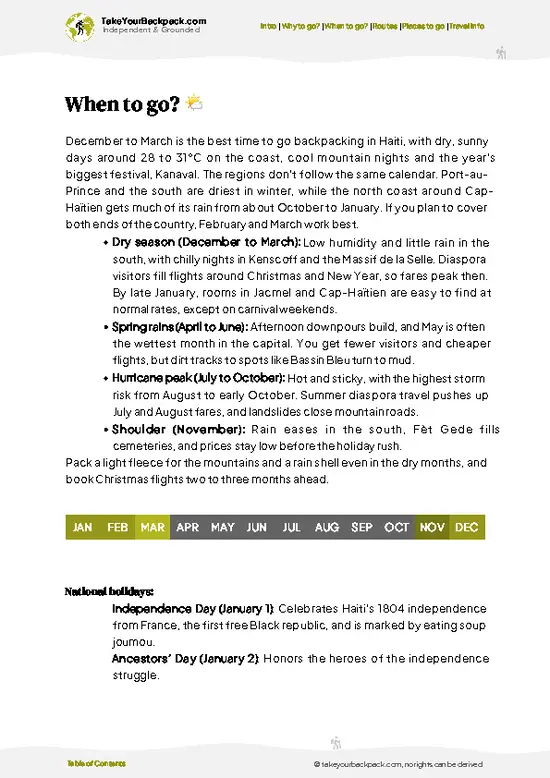
source: climatestotravel.comJANJanuary: excellent for travelingFEBFebruary: excellent for travelingMARMarch: excellent for travelingAPRApril: fair for travelingMAYMay: fair for travelingJUNJune: fair for travelingJULJuly: fair for travelingAUGAugust: fair for travelingSEPSeptember: fair for travelingOCTOctober: fair for travelingNOVNovember: highly recommended for travelingDECDecember: excellent for traveling
when-to-go

✈️ The backpacker research shortcutHaiti Travel Guide

An offline-friendly backpacking guide with optimized travel routes, ranked highlights, transport advice, and the best areas to stay.
example page 0 from our offline Travel Guide for Haiti
example page 1 from our offline Travel Guide for Haiti
example page 2 from our offline Travel Guide for Haiti
example page 3 from our offline Travel Guide for Haiti
example page 4 from our offline Travel Guide for Haiti
example page 5 from our offline Travel Guide for Haiti
example page 6 from our offline Travel Guide for Haiti
example page 7 from our offline Travel Guide for Haiti
The digital guide (371 pages) contains:
99 highlights, ranked by travel appeal
Optimized 5, 10 & 15-day travel routes
Cities, national parks, landmarks, beaches
How to get around
Offline-friendly for travel without Wi-Fi
👉 Click to see all 30+ guide features

📅 Plan smarter in minutes, not weeks
Month by month travel advice
Festivals & national holidays
Budget expectations

🗺️ Go to the right places, skip the overrated ones
Honest pros & cons of destinations
Top hikes, parks & viewpoints
Lesser-known places most travelers miss
Clear “worth it vs skip it” guidance

🛏️ Travel smoothly without rookie mistakes
Best areas to stay
Transport systems explained simply
Common scams & safety advice
SIM cards, money & practical tips

🌍 Understand the country, not just visit it
Culture & traditions
52 Essential phrases & customs
Festivals worth planning around
Traveler-friendly historical context
Insights that make places more meaningful

📱 Built for real travel conditions
Fully downloadable PDF
Works completely offline
Optimized for phone use
Useful in remote areas & buses
Everything in one place
Save weeks of stressful planning
Get instant access to your full guide. 30‑day money-back guarantee.


By proceeding you agree to our terms.
Sent to your inbox immediately after payment • 100% Secure Checkout
Best Backpacking Travel Advisor 2025 tourism awardBest Backpacking
Travel Advisor
2025
What others say about Take Your Backpack Guides:
⭐⭐⭐⭐⭐
Fantastic, amazing amount of information!
⭐⭐⭐⭐⭐
My goodness this is amazing, it's what I've been looking for hats off too you!
⭐⭐⭐⭐⭐
I think this is absolutely BRILLIANT
⭐⭐⭐⭐
Very complete and informative. It's still missing places, but I gotta to commend you
⭐⭐⭐⭐⭐
This is truly amazing, thank you, can't wait to explore it with my kids!
⭐⭐⭐⭐⭐
Awesome resource, thank you!
⭐⭐⭐⭐⭐
This is amazing! Can't wait to explore the ones I haven't seen
⭐⭐⭐⭐
I love this! Well done, great idea.
⭐⭐⭐⭐⭐
Thanks for taking the time to make this gem!
⭐⭐⭐⭐⭐
This might be the best website I've ever seen.
⭐⭐⭐⭐⭐
Congratulations, and thank you so much for your work; it's incredibly valuable.
⭐⭐⭐⭐
In all seriousness I think you did a great job pointing out the important spots
⭐⭐⭐⭐⭐
10/10 very good
⭐⭐⭐⭐⭐
As someone who's only just starting to visit regularly this is awesome, thank you.
⭐⭐⭐⭐
Thank you very much! I'm going to visit my dad, it's going to be very useful!
⭐⭐⭐⭐⭐
This is really cool! We'll be travelling for the first time and this definitely come in handy.
⭐⭐⭐⭐⭐
You are now our minister of culture, congratulations 👨‍💼
⭐⭐⭐⭐⭐
Just wanted to tell you that this is a pearl! Going to follow your recommendations.
⭐⭐⭐⭐⭐
This is so cool. I'll definitely be using the resource for my travels soon.
⭐⭐⭐⭐⭐
This is very impressive! Good work.
⭐⭐⭐⭐⭐
This is an amazing and informative site. Very well done!

🛏️ Where to stay?How to pick the right area

In Môle-Saint-Nicolas, the best spot for backpackers is the area around the town center, close to the waterfront. This neighborhood pulses with local life—fishermen hauling in their catch, street vendors grilling fresh fish, and kids darting through narrow alleys. Staying here means you’re not just a visitor; you’re part of the daily rhythm. The light here is sharp and clear, bouncing off the turquoise bay, making early mornings perfect for a quiet coffee while watching boats drift in.

Compared to the outskirts, this central zone feels safer and more connected. It’s where budget travelers and … read more 👉
In Môle-Saint-Nicolas, the best spot for backpackers is the area around the town center, close to the waterfront. This neighborhood pulses with local life—fishermen hauling in their catch, street vendors grilling fresh fish, and kids darting through narrow alleys. Staying here means you’re not just a visitor; you’re part of the daily rhythm. The light here is sharp and clear, bouncing off the turquoise bay, making early mornings perfect for a quiet coffee while watching boats drift in.

Compared to the outskirts, this central zone feels safer and more connected. It’s where budget travelers and solo backpackers naturally gather, drawn by the handful of simple guesthouses and hostels that offer basic but clean accommodations. These spots are social hubs, where you can swap stories with fellow travelers or locals over a shared meal. The vibe is unpretentious and welcoming, far from tourist traps or isolated resorts.

Venturing beyond this core, the streets become quieter but less secure after dark, and transport options thin out. So, anchoring yourself near the waterfront center isn’t just about convenience—it’s about tapping into the town’s heartbeat, where every scent of salt air and sound of creaking boats adds texture to your stay.

🚌 Getting aroundGetting around like a local

Môle-Saint-Nicolas moves at its own rhythm—less a clockwork town and more a place where time bends to the sun and the sea breeze. The streets don’t hum with the urgency of a city; instead, they unfold slowly, with locals weaving through daily life guided by intuition rather than strict timetables. The scent of saltwater mingles with the earthy aroma of worn stone and tropical foliage, while the light shifts dramatically from the soft gold of dawn to the sharp, almost harsh midday sun. This is a town where you don’t just get from point A to B—you absorb the space between, learning to read the subtle cues of when a boat might leave or when a tap-tap will fill up. Understanding this flow is your key to moving smoothly here, turning what could feel like chaos into a dance you’re invited to join. … read more 👉
Môle-Saint-Nicolas moves at its own rhythm—less a clockwork town and more a place where time bends to the sun and the sea breeze. The streets don’t hum with the urgency of a city; instead, they unfold slowly, with locals weaving through daily life guided by intuition rather than strict timetables. The scent of saltwater mingles with the earthy aroma of worn stone and tropical foliage, while the light shifts dramatically from the soft gold of dawn to the sharp, almost harsh midday sun. This is a town where you don’t just get from point A to B—you absorb the space between, learning to read the subtle cues of when a boat might leave or when a tap-tap will fill up. Understanding this flow is your key to moving smoothly here, turning what could feel like chaos into a dance you’re invited to join.


  • Walking: The heart of Môle-Saint-Nicolas is compact enough to explore on foot. Streets are uneven and often dusty, so sturdy shoes are a must. Walking lets you catch the small details—the chatter of vendors, the smell of grilled fish, the way the light plays on peeling paint. It’s free, flexible, and the best way to sync with the town’s unhurried pulse.


  • Tap-Taps: These brightly painted shared minibuses are the lifeblood of local transit. They don’t run on a strict schedule but leave when full, which means you’ll wait, sometimes under the sun, but the fare is dirt cheap—usually under $1 USD. Tap-taps are bumpy and noisy, but they’re fast enough to cover short distances and offer a genuine slice of Haitian daily life.


  • Motorcycle Taxis (Motos): When time is tight or the sun is relentless, motos are your go-to. They dart through narrow streets and rough patches with ease, cutting travel time significantly. Expect to negotiate fares upfront—usually a few dollars for short hops. Helmets aren’t always standard, so hold on tight and prepare for a thrilling ride.


  • Boat Transfers: For reaching nearby coastal spots or crossing bays, small boats operate on an informal schedule, often departing when enough passengers gather. The timing is fluid, so patience is essential. The ride offers stunning views of the coastline and a refreshing sea breeze, but be ready for a rustic experience—no frills, just the raw connection between sea and shore.


  • Private Car Hire: If your budget allows and you want to skip the unpredictability, hiring a private car with a driver is the smoothest option. It’s pricier but offers comfort, flexibility, and the chance to explore beyond the town limits on your own schedule. This option is best for those who want to maximize time without sacrificing ease.

👛 Costs (as of 16 January 2026)Typical daily expenses

Backpacking in Môle-Saint-Nicolas, Haiti, means embracing a raw, off-the-beaten-path vibe where costs stay low but the experience is rich with local color and simplicity.
  • Dorm Accommodation: Options here are sparse and basic. Expect to pay around $5 to $10 USD per night for a shared room or simple guesthouse bed. These places often lack frills but offer a clean, safe spot to crash, usually with a fan rather than air conditioning.
  • Meals: Street food and local eateries dominate. A hearty plate of rice, beans, and grilled fish or chicken will run you about $2 to $4 USD. Fresh fruit and snacks from market stalls cost under a dollar. If you want something a bit more substantial or imported, prices climb quickly, so sticking local is both cheaper and more authentic.
  • Local Transport: Transport
read more 👉
Backpacking in Môle-Saint-Nicolas, Haiti, means embracing a raw, off-the-beaten-path vibe where costs stay low but the experience is rich with local color and simplicity.
  • Dorm Accommodation: Options here are sparse and basic. Expect to pay around $5 to $10 USD per night for a shared room or simple guesthouse bed. These places often lack frills but offer a clean, safe spot to crash, usually with a fan rather than air conditioning.
  • Meals: Street food and local eateries dominate. A hearty plate of rice, beans, and grilled fish or chicken will run you about $2 to $4 USD. Fresh fruit and snacks from market stalls cost under a dollar. If you want something a bit more substantial or imported, prices climb quickly, so sticking local is both cheaper and more authentic.
  • Local Transport: Transport is mostly informal—shared tap-taps (colorful minibuses) or motorcycle taxis. A short ride within town costs around $0.50 to $1 USD. Longer trips to nearby villages or beaches might hit $2 to $5 USD. Walking is often the best way to soak in the atmosphere and save cash.
  • Basic Activities/Entry Fees: Môle-Saint-Nicolas is more about natural exploration than ticketed attractions. Visiting beaches or hiking nearby hills is usually free. If you hire a local guide for a day trip, expect to pay around $10 to $20 USD, which supports the community and enriches your experience.
  • Miscellaneous Expenses: Bottled water is essential and costs about $0.50 per liter. Internet access is patchy and often requires buying data bundles for your phone, roughly $5 for a few hundred MB. Small tips or souvenirs from local artisans might add a few dollars here and there.

All told, you’re looking at roughly $10 to $25 USD per day to cover the essentials in Môle-Saint-Nicolas. This range keeps you grounded in the local rhythm without skimping on safety or basic comfort, letting you focus on the rugged charm and genuine encounters that make this place stick in your memory.
⚠️ Prices can change and everyone travels differently, so take this as a rough guide. Hope it helps you plan your adventure!

🚌 Day tripsShort trips worth adding

Môle-Saint-Nicolas is a perfect launchpad for exploring Haiti’s rugged beauty and rich culture. With its laid-back vibe and stunning coastal views, you’ll find day trips that are both rewarding and accessible.

Cap-Haïtien
Just an hour’s drive from Môle-Saint-Nicolas, Cap-Haïtien is a bustling town steeped in history. The vibrant market is a feast for the senses—fresh mangoes, the scent of spices, and the sound of lively conversations fill the air. Don’t miss the Citadelle Laferrière, a UNESCO World Heritage site that looms majestically over the landscape. The entrance fee is around $10, and the hike up is steep but manageable. Aim for early morning to beat the heat and crowds. Many first-timers underestimate the time needed for the hike; plan for at least half a day.
👉 Explore Cap-Haïtien
read more 👉
Môle-Saint-Nicolas is a perfect launchpad for exploring Haiti’s rugged beauty and rich culture. With its laid-back vibe and stunning coastal views, you’ll find day trips that are both rewarding and accessible.

Cap-Haïtien
Just an hour’s drive from Môle-Saint-Nicolas, Cap-Haïtien is a bustling town steeped in history. The vibrant market is a feast for the senses—fresh mangoes, the scent of spices, and the sound of lively conversations fill the air. Don’t miss the Citadelle Laferrière, a UNESCO World Heritage site that looms majestically over the landscape. The entrance fee is around $10, and the hike up is steep but manageable. Aim for early morning to beat the heat and crowds. Many first-timers underestimate the time needed for the hike; plan for at least half a day.
👉 Explore Cap-Haïtien

Labadee
A short boat ride from Môle-Saint-Nicolas, Labadee offers a slice of paradise with its pristine beaches and crystal-clear waters. This is where you can unwind after a few days of trekking. The beach is free, but if you want to indulge in water sports, expect to spend around $30 for activities like snorkeling or jet skiing. The best time to visit is during the dry season, from November to March. A common mistake is to overlook the local food stalls; grab a plate of grilled fish for an authentic taste of the coast.
👉 Explore Labadee

La Visite National Park
For a taste of Haiti’s lush interior, head to La Visite National Park, about two hours away. The park is a hiker’s dream, with trails that wind through pine forests and offer breathtaking views. Entry is about $5, and you can easily spend a full day exploring. The best time to visit is during the cooler months, from December to February. Many backpackers miss the chance to hire a local guide, which can enhance your experience with insights into the flora and fauna.


Fort Liberté
Just a 45-minute drive from Môle-Saint-Nicolas, Fort Liberté is a charming coastal town with a rich history. The fort itself, built in the 18th century, is a fascinating glimpse into Haiti’s past. The entrance is free, and wandering the streets will reveal colorful murals and friendly locals. Plan for a half-day trip, ideally in the morning to enjoy the cooler temperatures. A common oversight is not bringing enough water; the heat can be intense, so stay hydrated while you explore.
Want to know what more Haiti offers?
The Haiti Travel Guide describes 99 highlights, from cities to national parks, from beaches to hikes

Get the Travel Guide -

🛡️ SafetyStaying Safe: What Travelers Should Know

Môle-Saint-Nicolas has a laid-back vibe, but staying aware is key. The waterfront can draw you in with its salty breeze and vibrant local life, yet it’s wise to keep an eye on your belongings, especially in crowded spots. Solo travelers should stick to well-lit areas after dark; the streets can feel empty, and you want to avoid any unnecessary discomfort.

While scams aren’t rampant, be cautious of overly friendly locals who might push for a sale or a tour. A polite but firm “no, thank you” usually suffices. Everyday annoyances include the occasional stray dog or a vendor who won’t take no for an answer. Carry yourself confidently, engage with locals respectfully, and you’ll find the charm of Môle-Saint-Nicolas unfolds beautifully.

Other Haitian towns near Môle-Saint-Nicolas

Explore more nearby:

  • Borgne—river mouth, fishing docks, rural market| 89 km away
  • Montrouis—beach resorts, salt flats, coastal lagoon| 118 km away
  • Terrier-Rouge—northern plains, sugarcane, quiet streets| 150 km away

💡 Not sure where to go next?
Create a personalized itinerary for Haiti including Môle-Saint-Nicolas and the places that fit your trip.

Generate my itinerary

👉 Discover all towns

Or checkout all Haiti has to offer (think cities, towns, villages, national parks, hikes, beaches, festivals)
Country photo of Haiti

We 💚 feedbackSumming up the experience

Môle-Saint-Nicolas has a raw, unfiltered vibe that feels like stepping back in time. The salty breeze carries whispers of history, and the local fishermen’s laughter is infectious. Don’t miss the sunset at the harbor; it’s a painter’s palette of colors. Just be ready for the uneven roads—your patience will pay off. Embrace the simplicity here; it’s where the real magic happens.

✍️ Help improve this page!
The information on this page is based on in-depth research, insights shared by experienced travelers, and feedback from the local travel community in Haiti. While every effort is made to keep the information accurate and current, conditions can change — so if you spot anything incorrect or outdated, please get in touch.


🙋‍♂️ Give feedback

👋 Meet the founderWho’s Behind Take Your Backpack?

Johan, backpacker and founder of TakeYourBackpackHi, I’m Johan (Netherlands 🇳🇱), the creator of TakeYourBackpack. Over the past decade, I’ve backpacked through 80+ countries across six continents, gaining extensive experience with independent travel, long-term trips, and overland routes.

This site is built on a combination of firsthand travel experience and carefully curated insights from other backpackers. Many guides are based on places I’ve personally visited, while others bring together tips, observations, and practical advice shared by trusted travelers I’ve met along the way.

The goal is to provide realistic, experience-driven guidance — not generic itineraries — so you can explore destinations with better context, clearer expectations, and more confidence.

Get full Haiti guide •
Instant download • 99 highlights • Full Offline guide