v2.webp)
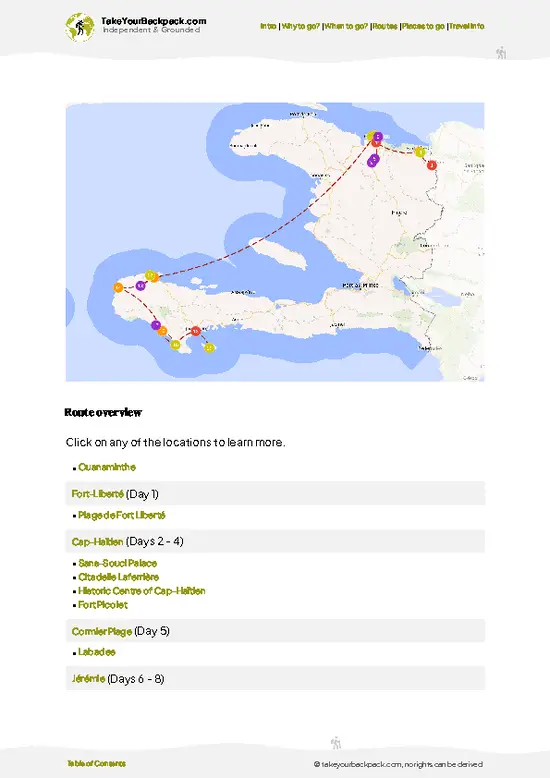
- Place Faustin Soulouque and the central square area: the town’s main public space, where you see church bells, vendors and gossiping elders. Early morning is calmest. Free, 30 to 45 minutes.
- Cathedral of Saint Joseph area and old churches: the main Catholic church anchors the center and shows the town’s colonial-era layout. Visit between services for quiet. Free or a small donation, 20 to 30 minutes.
- Marché de Petit-Goâve: dense with produce, charcoal, fried plantains and secondhand clothes. Go before 9 AM when it is busiest and coolest. Free entry, snacks about US$1 to 3, 1 hour.
- Waterfront and fishing landing: boats unload at dawn and mid-morning, and kids swim off the shore. A good place for photos if you ask first. Free, 45 minutes.
- Habitation Pierre-type sugar ruins and old plantation traces
- Place Faustin Soulouque and the central square area: the town’s main public space, where you see church bells, vendors and gossiping elders. Early morning is calmest. Free, 30 to 45 minutes.
- Cathedral of Saint Joseph area and old churches: the main Catholic church anchors the center and shows the town’s colonial-era layout. Visit between services for quiet. Free or a small donation, 20 to 30 minutes.
- Marché de Petit-Goâve: dense with produce, charcoal, fried plantains and secondhand clothes. Go before 9 AM when it is busiest and coolest. Free entry, snacks about US$1 to 3, 1 hour.
- Waterfront and fishing landing: boats unload at dawn and mid-morning, and kids swim off the shore. A good place for photos if you ask first. Free, 45 minutes.
- Habitation Pierre-type sugar ruins and old plantation traces nearby: scattered stone remnants in the surrounding hills reveal the colonial sugar economy. Hire a local guide on a motorcycle for US$5 to 10, 2 to 3 hours.
- Local music bars and rara processions: evenings bring compas from open-air bars, and rara bands parade in the weeks around Easter. Drinks US$1 to 3, 2 hours.
Spotted a mistake or missing something? Contact us.

 Best Backpacking
.jpg) Hi, I’m Johan (Netherlands 🇳🇱), the creator of TakeYourBackpack. Over the past 3 decades, I’ve backpacked through 90+ countries across six continents, gaining extensive experience with independent travel, long-term trips, and overland routes.
Hi, I’m Johan (Netherlands 🇳🇱), the creator of TakeYourBackpack. Over the past 3 decades, I’ve backpacked through 90+ countries across six continents, gaining extensive experience with independent travel, long-term trips, and overland routes.