v2.webp)
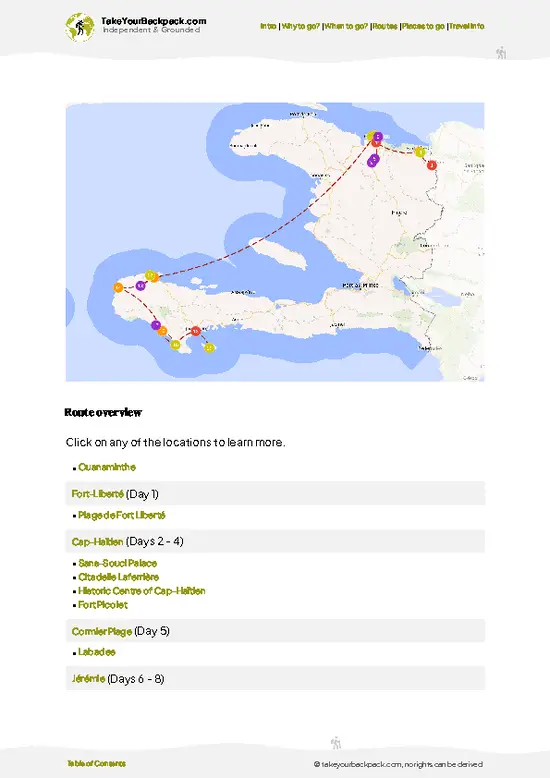
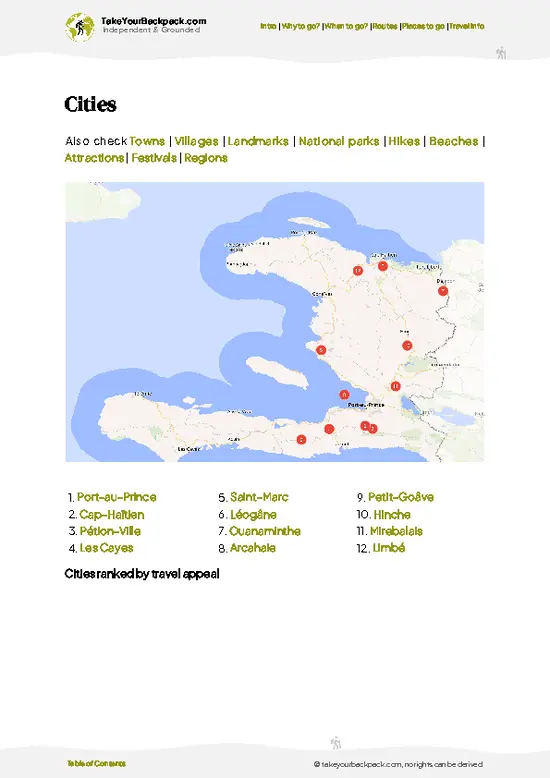
- Léogâne Central Market: The town's busiest spot, with produce, charcoal, cloth and street snacks spread along its streets. Go in the morning, when stalls are fullest. Free to enter, 1 to 2 hours.
- Place Anacaona area: The town center is named for the Taíno queen from this region, who ruled the chiefdom of Xaragua. Sit with a coffee and watch daily life. Free, 30 to 45 minutes, best late afternoon.
- Cathedral of Sainte-Rose-de-Lima: The main Catholic church anchors the town and shows how faith shapes daily routines. Visit outside Mass times. Free, about 30 minutes.
- Sugar-cane plains walk: The countryside around town is a patchwork of cane fields and small farms. Go early, with a local guide, for cooler air and safer navigation. Guide tips of roughly US$10 to 20, 2 to 3 hours.
- Local rara and Carnival
- Léogâne Central Market: The town's busiest spot, with produce, charcoal, cloth and street snacks spread along its streets. Go in the morning, when stalls are fullest. Free to enter, 1 to 2 hours.
- Place Anacaona area: The town center is named for the Taíno queen from this region, who ruled the chiefdom of Xaragua. Sit with a coffee and watch daily life. Free, 30 to 45 minutes, best late afternoon.
- Cathedral of Sainte-Rose-de-Lima: The main Catholic church anchors the town and shows how faith shapes daily routines. Visit outside Mass times. Free, about 30 minutes.
- Sugar-cane plains walk: The countryside around town is a patchwork of cane fields and small farms. Go early, with a local guide, for cooler air and safer navigation. Guide tips of roughly US$10 to 20, 2 to 3 hours.
- Local rara and Carnival rehearsals: In the weeks before Lent and during the Easter season, bands practice with bamboo trumpets and drums in the streets. Ask locally for dates. Usually free, 1 to 2 hours.
- Artisan workshops: Small studios in and near town work in metal, painting and craft. Ask a contact to introduce you. Purchases from about US$5 to 40, 1 hour.
Spotted a mistake or missing something? Contact us.

 Best Backpacking
.jpg) Hi, I’m Johan (Netherlands 🇳🇱), the creator of TakeYourBackpack. Over the past 3 decades, I’ve backpacked through 90+ countries across six continents, gaining extensive experience with independent travel, long-term trips, and overland routes.
Hi, I’m Johan (Netherlands 🇳🇱), the creator of TakeYourBackpack. Over the past 3 decades, I’ve backpacked through 90+ countries across six continents, gaining extensive experience with independent travel, long-term trips, and overland routes.