×

Haiti🇭🇹 | beachesPlage de Cayes-JacmelPainted boats, dark gray sand, kompa beat, village shoreline | things to do and best time to go

Explore Plage de MiragoâneExplore Cap-Haïtien

Backpacking in Plage de Cayes-Jacmel
🌟 Highlightbeach ranked #9
By Johan Kruseman 🇳🇱 | Updated October 20, 2026

Salt on your lips, a kompa beat leaking from a roadside speaker, and a fisherman dragging a painted wooden boat over dark gray sand: that is the first ten minutes at Plage de Cayes-Jacmel. The beach sits on the south coast of Haiti, east of Jacmel town. The scenery is the draw, with green hills dropping to a long curve of coast and almost no other foreigners. Swimming is fine on calm days, though currents pick up and there are no lifeguards. Litter collects near the village, so walk a few minutes along the shore. Skip it for surf or diving; the water is for wading and floating. Nearby you get cheap grilled fish and basic guesthouses. Compared with busier Jacmel beaches, it is quieter and far less polished.

Discover everything you want to know in the 📖 Haiti Travel Guide.
Safety warning

The current risk level for Haiti is high. Check the advice before going.


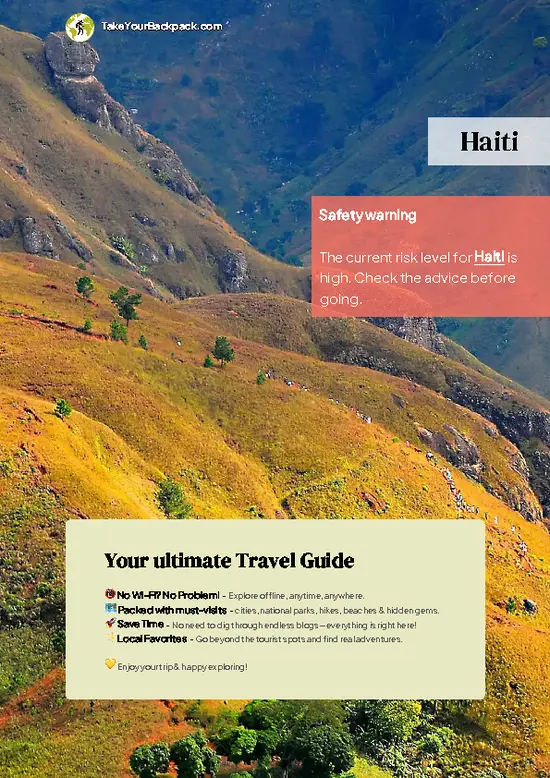
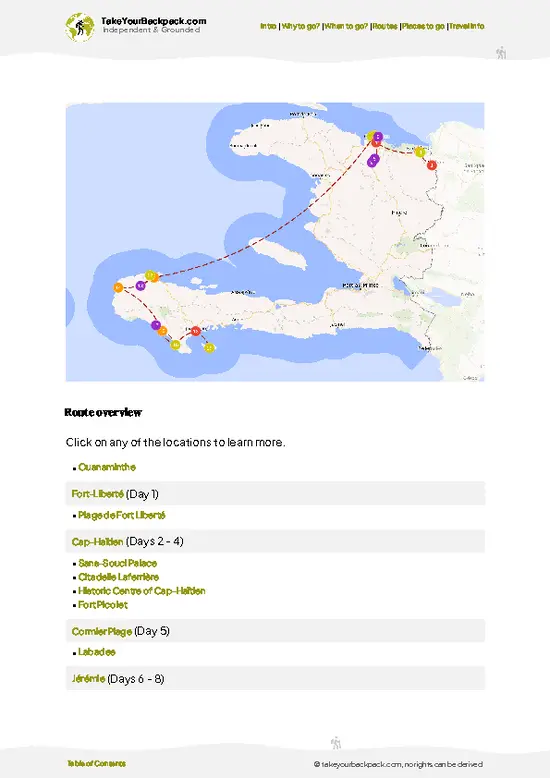
example page 0 from our offline Travel Guide for Haiti
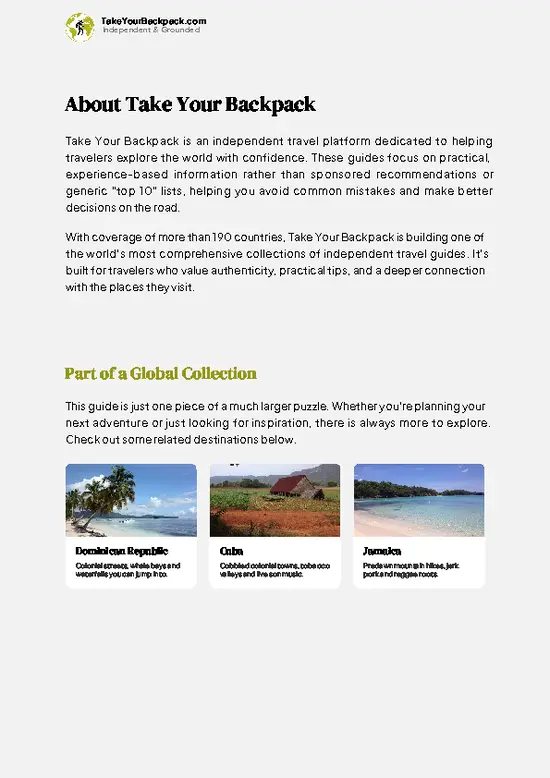
example page 1 from our offline Travel Guide for Haiti
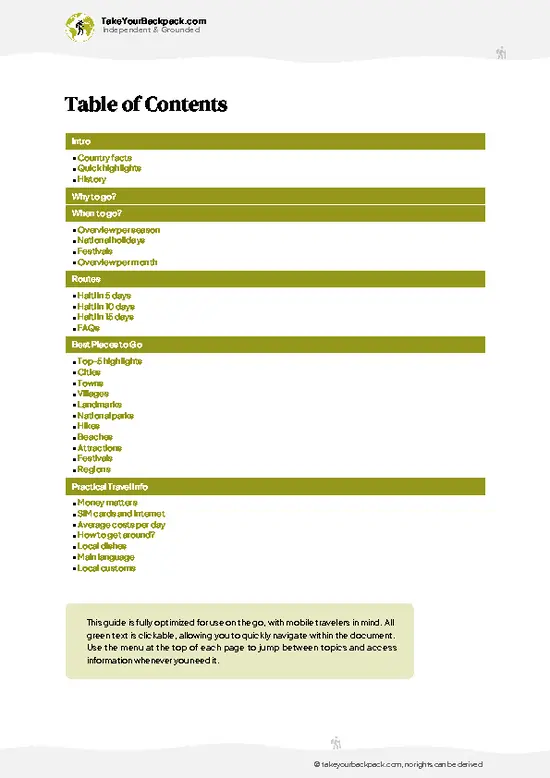
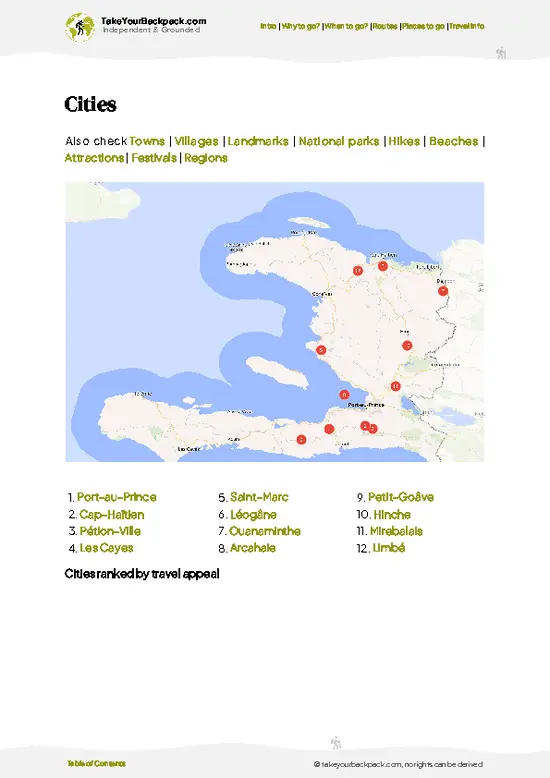
example page 2 from our offline Travel Guide for Haiti
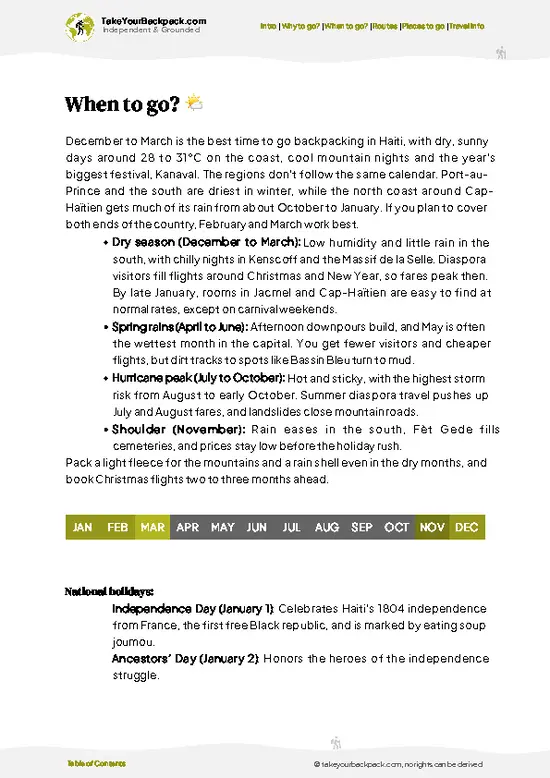
example page 3 from our offline Travel Guide for Haiti
example page 4 from our offline Travel Guide for Haiti
example page 5 from our offline Travel Guide for Haiti
example page 6 from our offline Travel Guide for Haiti
example page 7 from our offline Travel Guide for Haiti
Loading the map 🌍
CLICK TO FILTER
cities
towns
villages
landmarks
national parks
hikes
beaches
attractions
festivals
regions
SHOW COUNTRY’S BESTSHOW ALL

✨ Why go?
Ranked #9 beach in Haiti
Reasons people choose to visit here

Plage de Cayes-Jacmel earns its stop because it is the calm option on a coast where most travelers rush straight to Jacmel’s art studios and carnival workshops. You come here to slow down after bumpy mountain roads, and the pace is set by fishing crews rather than tour schedules. The social side is local: kids playing football on the sand, women selling fried plantains, and men who will happily talk boats and tides if you manage some Creole or French. It also suits anyone wanting a cheap day by the sea without resort prices, since a plate of fresh fish under a thatch shelter is the whole menu. The fishing boats pulled up on the shore give it a working feel that polished beaches lack, and the water is clean enough for a long, lazy dip on a calm morning.

💡 HighlightsKey sights and experiences for travelers

  1. Fishing boats on the shore: The colorful wooden boats hauled onto the sand are the beach’s signature sight. Come in the early morning when crews unload their catch and mend nets.
  2. Swimming in the calm bay: On gentle days the water is warm and easy for wading and floating. Stay close to shore, since there are no lifeguards and currents can strengthen.
  3. Grilled fish at a beach shelter: Local cooks grill the day’s catch and serve it with fried plantains and a sharp, spicy cabbage relish. Pay in cash and ask the price before ordering.
  4. Walking the shoreline: Heading away from the village leads to cleaner, emptier sand with views of green hills behind the coast. It is the best spot for photos and quiet.
  5. Evening on the sand: As the light fades, locals gather to chat, play music and watch the boats. It
… read more 👉
  1. Fishing boats on the shore: The colorful wooden boats hauled onto the sand are the beach’s signature sight. Come in the early morning when crews unload their catch and mend nets.
  2. Swimming in the calm bay: On gentle days the water is warm and easy for wading and floating. Stay close to shore, since there are no lifeguards and currents can strengthen.
  3. Grilled fish at a beach shelter: Local cooks grill the day’s catch and serve it with fried plantains and a sharp, spicy cabbage relish. Pay in cash and ask the price before ordering.
  4. Walking the shoreline: Heading away from the village leads to cleaner, emptier sand with views of green hills behind the coast. It is the best spot for photos and quiet.
  5. Evening on the sand: As the light fades, locals gather to chat, play music and watch the boats. It is low-key and social rather than a party scene, so bring a small flashlight for the walk back.
Plan on half a day for all of it, or a full day if you linger over lunch.
Spotted a mistake or missing something? Contact us.

🌤️ When to go?Choosing the right time of year

  • Dry Season (December to March): Mornings and afternoons run 24 to 31°C (75 to 88°F), with little rain and calm, clear water. Daylight lasts roughly 11 to 12 hours. Weekends fill with Haitian families from Port-au-Prince, and prices at nearby guesthouses edge up.
  • Spring Rains (April to June): Afternoon downpours arrive, humidity climbs, and highs reach 30 to 33°C (86 to 91°F). The beach empties and rooms are easy to bargain down.
  • Hot Summer (July to September): Expect 31 to 34°C (88 to 93°F), strong sun, and hurricane risk that peaks from August through October. Diaspora visitors arrive in July and August.
  • Carnival Season (February): Jacmel's pre-Lent Carnival, a short ride away, packs rooms and raises rates sharply.
Book a February visit weeks ahead, or come in late November for warm water and thin crowds.

source: climatestotravel.comJANJanuary: excellent for travelingFEBFebruary: excellent for travelingMARMarch: excellent for travelingAPRApril: fair for travelingMAYMay: fair for travelingJUNJune: fair for travelingJULJuly: fair for travelingAUGAugust: fair for travelingSEPSeptember: fair for travelingOCTOctober: fair for travelingNOVNovember: highly recommended for travelingDECDecember: excellent for traveling
when-to-go

✈️ The backpacker research shortcutHaiti Travel Guide

An offline-friendly backpacking guide with optimized travel routes, ranked highlights, transport advice, and the best areas to stay.
example page 0 from our offline Travel Guide for Haiti
example page 1 from our offline Travel Guide for Haiti
example page 2 from our offline Travel Guide for Haiti
example page 3 from our offline Travel Guide for Haiti
example page 4 from our offline Travel Guide for Haiti
example page 5 from our offline Travel Guide for Haiti
example page 6 from our offline Travel Guide for Haiti
example page 7 from our offline Travel Guide for Haiti
The digital guide (332 pages) contains:
✅ 89 highlights, ranked by travel appeal
✅ Optimized 5, 10 & 15-day travel routes
✅ Cities, national parks, landmarks, beaches
✅ How to get around
✅ Offline-friendly for travel without Wi-Fi
👉 Click to see all 30+ guide features

📅 Plan smarter in minutes, not weeks
✅ Month by month travel advice
✅ Festivals & national holidays
✅ Budget expectations

🗺️ Go to the right places, skip the overrated ones
✅ Honest pros & cons of destinations
✅ Top hikes, parks & viewpoints
✅ Lesser-known places most travelers miss
✅ Clear “worth it vs skip it” guidance

🛏️ Travel smoothly without rookie mistakes
✅ Best areas to stay
✅ Transport systems explained simply
✅ Common scams & safety advice
✅ SIM cards, money & practical tips

🌍 Understand the country, not just visit it
✅ Culture & traditions
✅ 52 Essential phrases & customs
✅ Festivals worth planning around
✅ Traveler-friendly historical context
✅ Insights that make places more meaningful

📱 Built for real travel conditions
✅ Fully downloadable PDF
✅ Works completely offline
✅ Optimized for phone use
✅ Useful in remote areas & buses
✅ Everything in one place
Stop searching, start planning
Get instant access to your full guide. 30‑day money-back guarantee.
+ Add another guide for just

By proceeding you agree to our terms.
Sent to your inbox immediately after payment • 100% Secure Checkout
Best Backpacking Travel Advisor 2025 tourism awardBest Backpacking
Travel Advisor
2025
What others say about Take Your Backpack Guides:
⭐⭐⭐⭐⭐
Fantastic, amazing amount of information!
⭐⭐⭐⭐⭐
My goodness this is amazing, it's what I've been looking for hats off too you!
⭐⭐⭐⭐⭐
I think this is absolutely BRILLIANT
⭐⭐⭐⭐
Very complete and informative. It's still missing places, but I gotta to commend you
⭐⭐⭐⭐⭐
This is truly amazing, thank you, can't wait to explore it with my kids!
⭐⭐⭐⭐⭐
Awesome resource, thank you!
⭐⭐⭐⭐⭐
This is amazing! Can't wait to explore the ones I haven't seen
⭐⭐⭐⭐
I love this! Well done, great idea.
⭐⭐⭐⭐⭐
Thanks for taking the time to make this gem!
⭐⭐⭐⭐⭐
This might be the best website I've ever seen.
⭐⭐⭐⭐⭐
Congratulations, and thank you so much for your work; it's incredibly valuable.
⭐⭐⭐⭐
In all seriousness I think you did a great job pointing out the important spots
⭐⭐⭐⭐⭐
10/10 very good
⭐⭐⭐⭐⭐
As someone who's only just starting to visit regularly this is awesome, thank you.
⭐⭐⭐⭐
Thank you very much! I'm going to visit my dad, it's going to be very useful!
⭐⭐⭐⭐⭐
This is really cool! We'll be travelling for the first time and this definitely come in handy.
⭐⭐⭐⭐⭐
You are now our minister of culture, congratulations 👨‍💼
⭐⭐⭐⭐⭐
Just wanted to tell you that this is a pearl! Going to follow your recommendations.
⭐⭐⭐⭐⭐
This is so cool. I'll definitely be using the resource for my travels soon.
⭐⭐⭐⭐⭐
This is very impressive! Good work.
⭐⭐⭐⭐⭐
This is an amazing and informative site. Very well done!

🛏️ Where to stay?Choosing the right base

Jacmel town is the best base for backpackers, sitting about 10 to 15 minutes by moto-taxi or car from Plage de Cayes-Jacmel along the coast road. Guesthouses there run roughly US$25 to 60 a night for a private room, and dorm-style beds are rare. The old center around the Bel Air and Rue du Commerce streets has restaurants, artists' workshops, and other travelers to swap plans with, which is what makes it the social option. It is walkable by day, and moto-taxis cover short hops for about US$1 to 2.

Staying right at Cayes-Jacmel suits quieter travelers. A few small guesthouses and family-run lodgings … read more 👉
Jacmel town is the best base for backpackers, sitting about 10 to 15 minutes by moto-taxi or car from Plage de Cayes-Jacmel along the coast road. Guesthouses there run roughly US$25 to 60 a night for a private room, and dorm-style beds are rare. The old center around the Bel Air and Rue du Commerce streets has restaurants, artists' workshops, and other travelers to swap plans with, which is what makes it the social option. It is walkable by day, and moto-taxis cover short hops for about US$1 to 2.

Staying right at Cayes-Jacmel suits quieter travelers. A few small guesthouses and family-run lodgings sit near the shore, usually US$20 to 50, with the sea outside the door and fish grilled by local cooks. Evenings are very quiet, and options are limited, so message ahead. Many people split the difference: two nights in Jacmel for company, then a night or two by the water.

🛡️ SafetyStaying Safe: What Travelers Should Know

Plage de Cayes-Jacmel is a calm local beach, and swimming here is usually easy on settled days. The water is warm and the waves modest, though currents can pick up after storms or heavy rain, so watch where local fishermen and children swim and stay near them. There are no lifeguards or flag systems. Mornings are the gentlest time, and afternoon sun is fierce, so bring a hat, reef-safe sunscreen, and plenty of water. Sea urchins can sit on rocky patches, which makes water shoes useful. Keep phones and cash minimal on the sand, and don't leave bags unattended while you swim. Locals are friendly, and vendors may approach, so a polite no is enough. Hurricane season brings rougher seas, so check the forecast.

FAQTraveler FAQ

From Port-au-Prince, Plage de Cayes-Jacmel is reached by road through Jacmel, a trip that typically takes 3 to 4 hours depending on conditions, and security there should be checked right before travel. From Jacmel, a moto-taxi or shared taxi covers the remaining 10 to 15 minutes for roughly US$1 to 5. Private drivers can be hired for the whole day for about US$50 to 100.
Plage de Cayes-Jacmel suits swimming best, with warm, generally gentle water on calm mornings. Surfing is not established here, and no board rentals or lessons are available nearby. Snorkeling is possible if you bring your own mask, but visibility varies and it is not a reef destination. Water shoes help on rocky spots.
Plage de Cayes-Jacmel has no entrance fee, and you can walk onto the sand freely. Small costs add up through grilled fish meals at about US$5 to 12, drinks at US$1 to 3, and sometimes a few dollars for a chair or shade. Pay in local currency or dollars, and keep small bills for vendors and moto-taxis.
⚠️ Things can change over time, so always validate details locally before you go.

Other Haitian beaches near Plage de Cayes-Jacmel

Explore more nearby:

  • Ti Mouillage—Local cove, painted boats, no facilities, Jacmel side trips| 2 km away
  • Raymond Les Bains—Wide shallow sand, Les Cayes side, fish stands, Bassin-Bleu access| 2 km away
  • Jacmel Beach—Dark gritty sand, almond-shaded boats, old-town seafront, papier-mâché masks| 15 km away

💡 Not sure where to go next?
Create a personalized itinerary for Haiti including Plage de Cayes-Jacmel and the places that fit your trip.

Generate my itinerary

👉 Discover all beaches

Or checkout all Haiti has to offer (think cities, towns, villages, national parks, hikes, beaches, festivals)
Country photo of Haiti

We 💚 feedbackIs it worth it?

Plage de Cayes-Jacmel disappoints people who arrive at midday expecting facilities and a polished strip. Go early instead, when the boats are landing and the sand is cleanest, and bring cash, water and sun protection. Walk past the village end before you unroll a towel, and eat the fish.

✍️ Help improve this page!
The information on this page is based on in-depth research, insights shared by experienced travelers, and feedback from the local travel community in Haiti. While every effort is made to keep the information accurate and current, conditions can change — so if you spot anything incorrect or outdated, please get in touch.


🙋‍♂️ Give feedback

👋 Meet the founderWho’s Behind Take Your Backpack?

Johan, backpacker and founder of TakeYourBackpackHi, I’m Johan (Netherlands 🇳🇱), the creator of TakeYourBackpack. Over the past 3 decades, I’ve backpacked through 90+ countries across six continents, gaining extensive experience with independent travel, long-term trips, and overland routes.

This site is built on a combination of firsthand travel experience and carefully curated insights from other backpackers. Many guides are based on places I’ve personally visited, while others bring together tips, observations, and practical advice shared by trusted travelers I’ve met along the way.

The goal is to provide realistic, experience-driven guidance — not generic itineraries — so you can explore destinations with better context, clearer expectations, and more confidence.