×

Haiti🇭🇹 | best beachesExplore the 10 Best beaches in Haiti

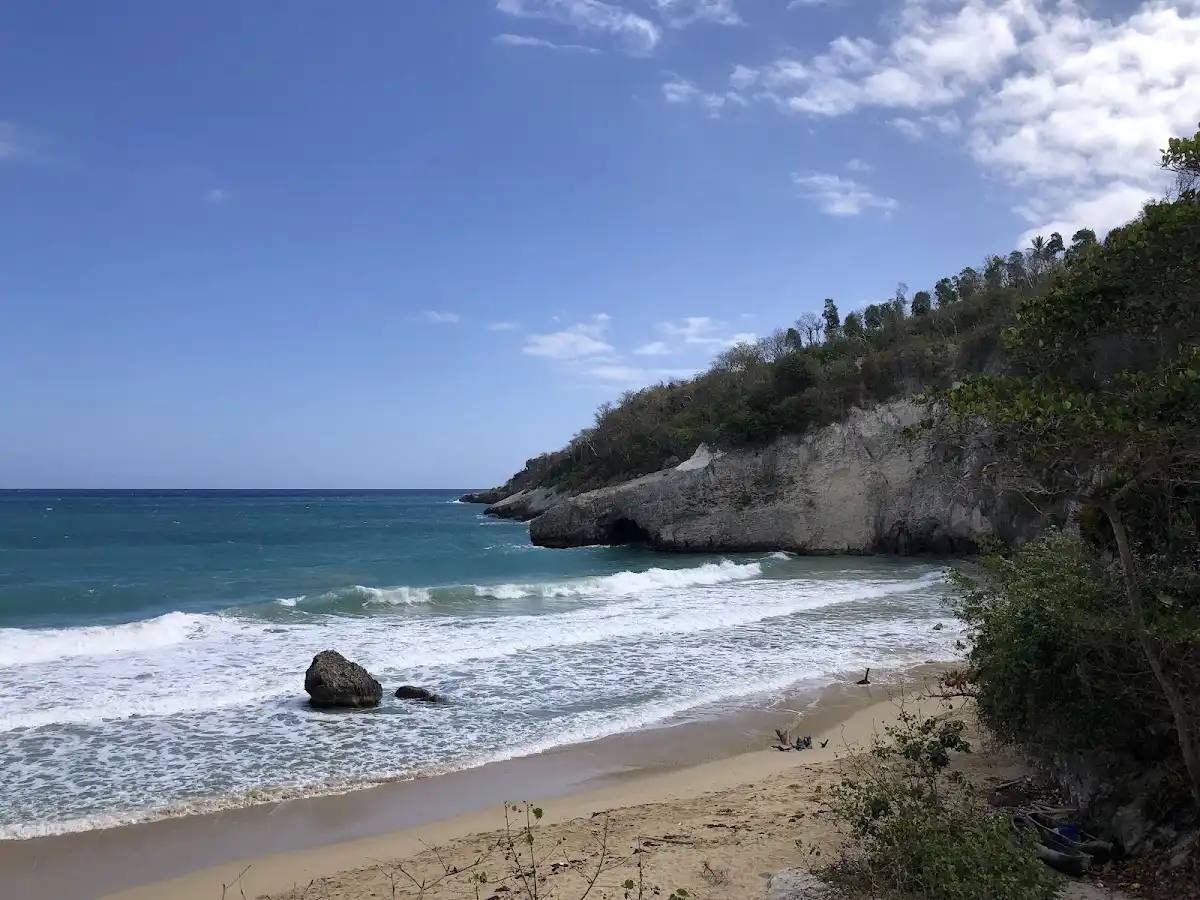
Beaches in Haiti are working coastlines first and resorts second. Expect no developed beach infrastructure across most of the country, which means no chains, no rental gear and few signs. The Côte des Arcadins north of Port-au-Prince has gated resorts with day passes and the easiest access. The southern peninsula around Jacmel and Les Cayes is cheaper, quieter and rougher to reach. The north coast has the best-known sand, but it runs through longer road journeys. For independent travel, the resort strip is the only option that works without a private driver and local contacts. Skip anywhere that needs a long, unplanned overland leg.

By Johan Kruseman 🇳🇱 | Updated October 20, 2026
Explore the best attractions in Haiti

Why go?Why These beach Stand Out

Haiti has the raw ingredients for excellent beaches: a long, indented coastline on the Caribbean and Atlantic, warm water year-round and offshore islands with reef. Almost none of it is developed for visitors. Decades of political instability, limited public investment and weak tourism infrastructure mean few hotels, few paved coastal roads and almost no organized transport between beaches. That is why Haiti is not a place to tick off beaches the way you would in the Dominican Republic next door.

The upside is empty sand and prices set by local demand, not by cruise traffic. Where beaches are visitor-ready, they are usually private or gated, charging a day-use fee that includes a chair, and sometimes food.

Before choosing Haiti for beaches, know that security conditions change quickly, especially … read more 👉
Haiti has the raw ingredients for excellent beaches: a long, indented coastline on the Caribbean and Atlantic, warm water year-round and offshore islands with reef. Almost none of it is developed for visitors. Decades of political instability, limited public investment and weak tourism infrastructure mean few hotels, few paved coastal roads and almost no organized transport between beaches. That is why Haiti is not a place to tick off beaches the way you would in the Dominican Republic next door.

The upside is empty sand and prices set by local demand, not by cruise traffic. Where beaches are visitor-ready, they are usually private or gated, charging a day-use fee that includes a chair, and sometimes food.

Before choosing Haiti for beaches, know that security conditions change quickly, especially around Port-au-Prince, and that many governments advise against travel. Road blockades, fuel shortages and gang activity on the main routes out of the capital can close access for days. Flights and local contacts matter more than the beach itself. Plan around current advisories, hire vetted local drivers and treat this as a destination for experienced, flexible travelers, not a casual beach week.
Why These Made the Cut
The list of best beaches in Haiti is created based on beauty, vibe, water quality, activities, and surrounding scenery. If you feel a beach is missing in this list, please let us know.

When to go?When to Plan Your Trip

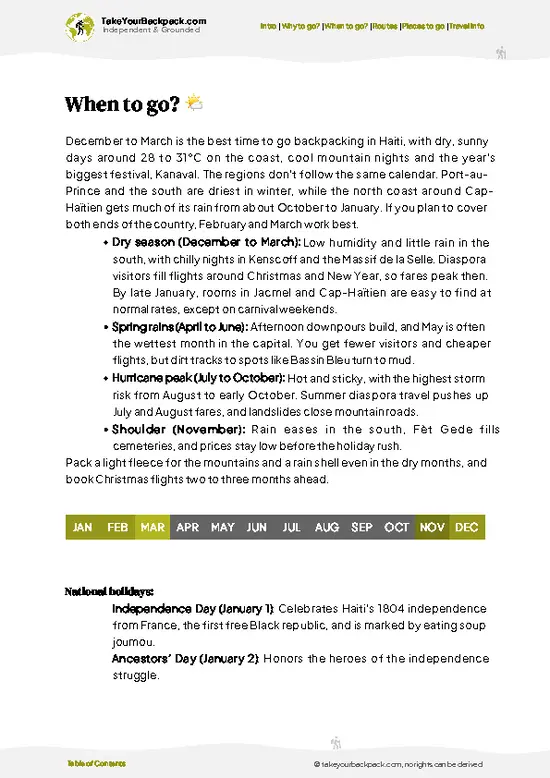
Best months: The best months for beaches in Haiti are December to March, when the dry season brings sunny days, low humidity and sea conditions that are calmer on the Caribbean side. Temperatures sit around 26 to 31°C (79 to 88°F) on the coast, and rainfall is at its lowest.
Shoulder seasons: April to May and November are workable. It is hotter, 29 to 33°C (84 to 91°F), with afternoon showers building, and roads stay mostly passable. Rates at resort day-use beaches rarely change by season, so the saving here is small. Pick shoulder months for fewer people, not for better prices.
What to avoid: Skip June to October if beach days are the goal. This is the wet season and the main Atlantic hurricane season, with peak risk from August to October. Heavy rain washes out unpaved roads, especially on … read more 👉
Best months: The best months for beaches in Haiti are December to March, when the dry season brings sunny days, low humidity and sea conditions that are calmer on the Caribbean side. Temperatures sit around 26 to 31°C (79 to 88°F) on the coast, and rainfall is at its lowest.
Shoulder seasons: April to May and November are workable. It is hotter, 29 to 33°C (84 to 91°F), with afternoon showers building, and roads stay mostly passable. Rates at resort day-use beaches rarely change by season, so the saving here is small. Pick shoulder months for fewer people, not for better prices.
What to avoid: Skip June to October if beach days are the goal. This is the wet season and the main Atlantic hurricane season, with peak risk from August to October. Heavy rain washes out unpaved roads, especially on the southern peninsula, and storm surf makes swimming unsafe. Sea visibility drops after storms.
Regional differences: The north coast gets more winter rain than the south, with showers possible from November to January. The south and the Côte des Arcadins are drier in those months. Crowds are thin everywhere, but Easter week and Carnival season (February) fill resort beaches with Haitian families and push weekend fees and bookings up.

beach hoppingPlanning Your Route Efficiently

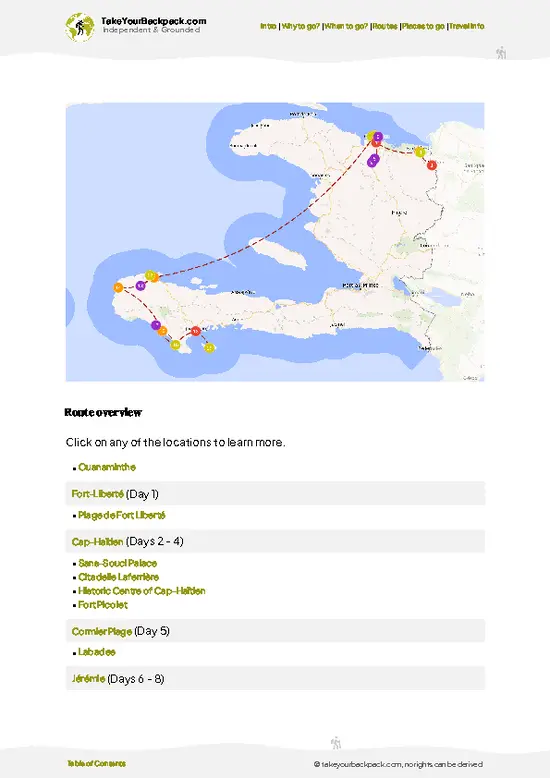
How many days: A trip combining several beaches in Haiti needs 7 to 10 days, because the distances are short on the map and slow on the ground. Roads are often rough, and a 100 km leg can take 3 to 5 hours.
Which regions group together: The Côte des Arcadins (about 1 to 1.5 hours from Port-au-Prince) pairs easily with the capital as a base. The south, around Jacmel and the Les Cayes area, is a separate trip: Jacmel is roughly 2.5 to 4 hours from the capital, and Les Cayes around 4 to 6. The north around Cap-Haïtien is better reached by domestic flight than by the long road from Port-au-Prince, which takes 6 to 8 hours or more.
Direction and pacing: Choose one region per trip and add a second only if flights connect it. Allow 2 to 3 nights per stop, so a day is not spent entirely in a vehicle. … read more 👉
How many days: A trip combining several beaches in Haiti needs 7 to 10 days, because the distances are short on the map and slow on the ground. Roads are often rough, and a 100 km leg can take 3 to 5 hours.
Which regions group together: The Côte des Arcadins (about 1 to 1.5 hours from Port-au-Prince) pairs easily with the capital as a base. The south, around Jacmel and the Les Cayes area, is a separate trip: Jacmel is roughly 2.5 to 4 hours from the capital, and Les Cayes around 4 to 6. The north around Cap-Haïtien is better reached by domestic flight than by the long road from Port-au-Prince, which takes 6 to 8 hours or more.
Direction and pacing: Choose one region per trip and add a second only if flights connect it. Allow 2 to 3 nights per stop, so a day is not spent entirely in a vehicle. Travel in daylight, and leave a buffer day before any departing flight.
Planning mistakes: The common error is stacking three coastlines in one week. It leaves almost no time on sand and exposes you to blockades and delays. Another is booking tight connections around the capital. Build slack instead, confirm road conditions the day before and keep a drive-or-fly alternative ready.

The ListTop beaches of Haiti

1 Labadee

Cruise peninsula, zip line, aqua park, artisan market

Ride the zip line over the bay, then cool off in sheltered water or browse Haitian painting and metalwork at the market.

2 Kokoye Beach

Coconut palms, Gulf of Gonâve, green coconuts, dous makos

Rest in deep palm shade above sheltered gulf water, drink coconut cracked open on the spot, and taste Petit-Goâve sweets.

3 Port-Salut

Long gray-gold crescent, shallow bay, lobster on the grill, Île-à-Vache

Walk kilometers of palm-lined sand at dawn, soak in calm water, and book a boatman for a full day on Île-à-Vache.

haiti-beach-port-salut
© Google | Dieubens Tv

4 Cormier Plage

Sheltered sand, resort grounds, conch and fish, Citadelle detour

Float in shallow, sheltered water below green hills, eat grilled fish or conch on the sand, and pair it with a Citadelle day.

5 Gelée Beach

Pale sand, coconut palms, lobster shacks, dawn boats

Walk a long curve of palm-backed sand, wade far out in warm shallows, and buy fish straight from boats landing in the morning.

haiti-beach-gelee-beach
© Google |

6 Raymond Les Bains

Wide shallow sand, Les Cayes side, fish stands, Bassin-Bleu access

Wade through warm, gentle shallows on a wide, quiet shore, then plan a guided pool visit and an old-town walk in Jacmel.

7 Jacmel Beach

Dark gritty sand, almond-shaded boats, old-town seafront, papier-mâché masks

Pair a dip in the bay with fish at beachfront stalls, then walk inland to colonial balconies, mask workshops and art studios.

haiti-beach-jacmel-beach
© Google |

8 Plage de Cayes-Jacmel

Painted boats, dark gray sand, kompa beat, village shoreline

Arrive at dawn as crews unload and mend nets, then follow the shore away from the village toward cleaner, emptier sand.

9 Plage de Port-Morgan

Lodge cove, clean sand, rock snorkeling, Île-à-Vache boats

Swim a small, sheltered cove, snorkel along its rocky sides, and use it as a base for caves and island boat trips.

10 Pointe Sable

Dark-gold sand, coconut fronds, southern sunsets, stroll to Port-Salut

Follow a long, curving shore of dark-gold sand past palms and small bays, with early fishing activity and sunsets over open water.

11 Plage de Belle-Anse

Fishing landing, gray-gold sand, rough road in, hill footpaths

Watch wooden boats unload on the sand, swim a quiet bay, then climb footpaths through farms for views back over the water.

12 Plage de Fort Liberté

Enclosed bay, Fort Dauphin, glassy water, colonial street grid

Float in flat, warm bay water, climb the old fort walls, and wander the French-planned streets before quiet evenings at the waterfront.

13 Plage de Miragoâne

Local bay, Nippes fishing families, freshwater lake, town market

Join townspeople at the water’s edge, buy fish from the boats, and add the nearby lake and a loud, cheap market.

14 Plage de Gonaïves

Working waterfront, hauled sloops, murky bay, independence history

Watch crews unload the morning catch beside the hulls, eat fried fish at the stalls, then visit the sites tied to 1804.

15 Plage de Saint-Louis-du-Sud

Public shore, landing catch, pikliz plates, south-coast market

Greet fishermen as boats land, eat fried fish and plantain on the shore, then walk inland to the town market.

16 Cadras Beach

Half-day from Cap-Haïtien, green hills, weekday calm, beachside grills

Swim in gentle water backed by green hills, then eat grilled fish with plantain and walk over to neighboring Cormier Plage.

17 Anse d’Azur

Free sandy shore, calm cove, grilled fish shacks, rocky-edge snorkeling

Wade into a clear, gently sloping cove west of Jacmel, then eat grilled fish with plantain while fishing boats come and go.

haiti-beach-anse-dazur
© Google |

18 Ti Mouillage

Local cove, painted boats, no facilities, Jacmel side trips

Take an easy swim in a sheltered cove, watch boats hauled up the sand, and save evenings for Jacmel’s old town.

Think you know Haiti?

Prove you’re a true local — uncover 8 lesser-known beaches in Haiti that locals tend to keep to themselves.
Loading the map 🌍

Expert viewExpert Commentary on beaches

How many beaches to visit: I advise two to four beaches on one trip, from one region. Getting between beaches in Haiti eats hours, and road disruption can erase a day. Two beaches with a fixed base give you room to absorb a delay, while more than four turns the trip into a transport exercise.
Which kind to prioritize: First-time visitors and anyone short on time should choose resort day-pass beaches on the Côte des Arcadins. They are close to the capital, come with food and chairs, and carry the least logistical risk. Travelers who value local life should pick southern or northern fishing-village beaches, which are quieter and cheaper but need a driver and more patience. Skip remote, unsigned coves unless a local you trust is taking you. Nothing there is staffed if something goes wrong.
What … read more 👉
How many beaches to visit: I advise two to four beaches on one trip, from one region. Getting between beaches in Haiti eats hours, and road disruption can erase a day. Two beaches with a fixed base give you room to absorb a delay, while more than four turns the trip into a transport exercise.
Which kind to prioritize: First-time visitors and anyone short on time should choose resort day-pass beaches on the Côte des Arcadins. They are close to the capital, come with food and chairs, and carry the least logistical risk. Travelers who value local life should pick southern or northern fishing-village beaches, which are quieter and cheaper but need a driver and more patience. Skip remote, unsigned coves unless a local you trust is taking you. Nothing there is staffed if something goes wrong.
What it costs: Budget US$40 to 80 a day as a backpacker, and more if you rely on private cars. Day-use fees at resort beaches run roughly US$10 to 30, with some packages including lunch. Local beaches may charge only a small access or parking fee, around US$1 to 5. A private driver for the day costs about US$60 to 120, and it is the biggest line in the budget. Shared tap-taps are far cheaper but slow, crowded and impractical for beach gear. Bring enough cash in US dollars and Haitian gourdes, because card machines are rare outside resorts.
Costs and delays that catch travelers out: Fuel shortages and blockades can double a driver’s quote or cancel a trip at short notice. Agree the full price and return time before leaving, and keep a day free. Resort fees often exclude drinks and activities, so ask what is covered. Boat transfers to offshore sandbars are negotiated, and prices rise quickly when you look like a tourist. Fix the fare before boarding.
Safety and culture: Check current government advisories before booking, and avoid traveling after dark. Leave valuables at your accommodation and use licensed or recommended drivers. Currents and shore breaks can be strong, and lifeguards are rare, so swim only where locals are in the water. Ask before photographing people, especially fishers and families, and expect to be asked for a tip. Dress modestly away from resort areas, and keep swimwear for the beach itself. Many beaches are also working landing spots, so keep clear of boats and nets.

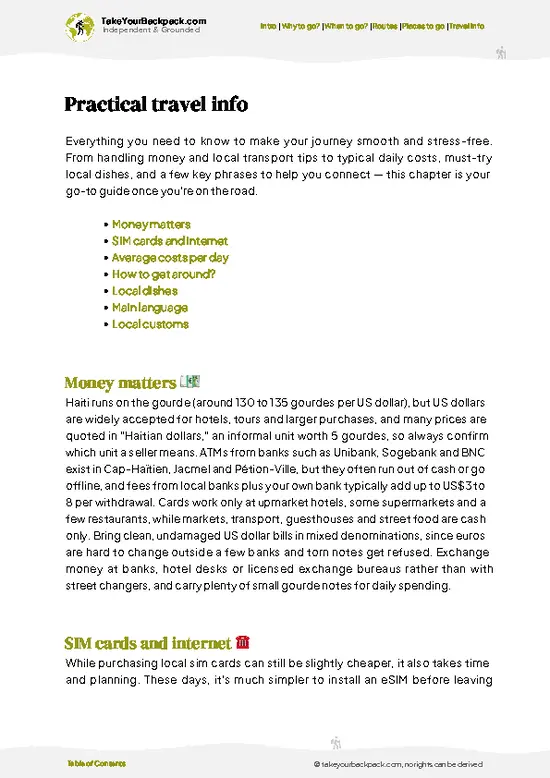
✈️ The backpacker research shortcutHaiti Travel Guide

An offline-friendly backpacking guide with optimized travel routes, ranked highlights, transport advice, and the best areas to stay.
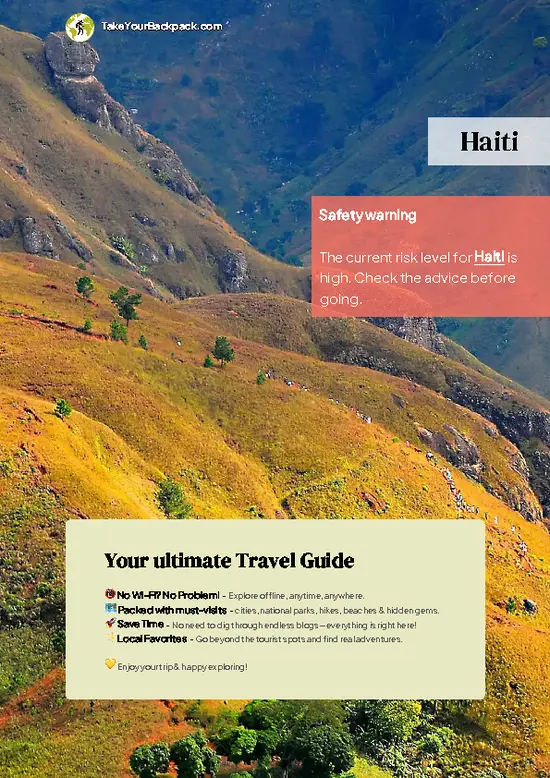
example page 0 from our offline Travel Guide for Haiti
example page 1 from our offline Travel Guide for Haiti
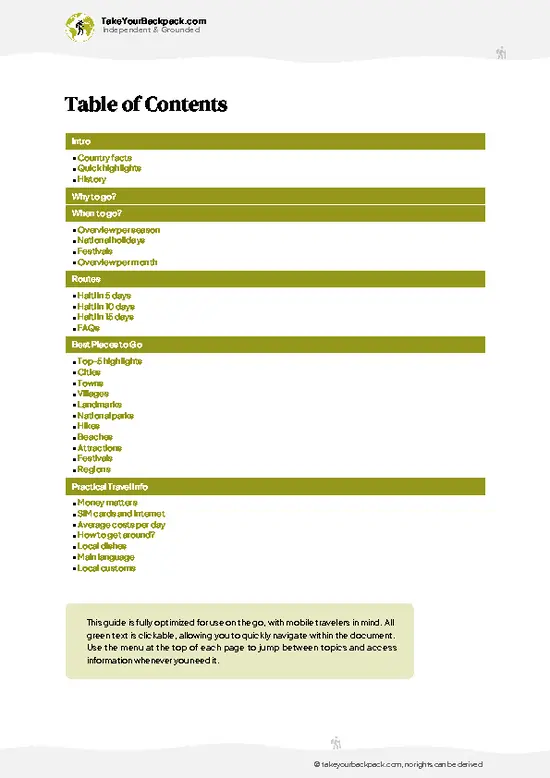
example page 2 from our offline Travel Guide for Haiti
example page 3 from our offline Travel Guide for Haiti
example page 4 from our offline Travel Guide for Haiti
example page 5 from our offline Travel Guide for Haiti
example page 6 from our offline Travel Guide for Haiti
example page 7 from our offline Travel Guide for Haiti
The digital guide (332 pages) contains:
✅ 89 highlights, ranked by travel appeal
✅ Optimized 5, 10 & 15-day travel routes
✅ Cities, national parks, landmarks, beaches
✅ How to get around
✅ Offline-friendly for travel without Wi-Fi
👉 Click to see all 30+ guide features

📅 Plan smarter in minutes, not weeks
✅ Month by month travel advice
✅ Festivals & national holidays
✅ Budget expectations

🗺️ Go to the right places, skip the overrated ones
✅ Honest pros & cons of destinations
✅ Top hikes, parks & viewpoints
✅ Lesser-known places most travelers miss
✅ Clear “worth it vs skip it” guidance

🛏️ Travel smoothly without rookie mistakes
✅ Best areas to stay
✅ Transport systems explained simply
✅ Common scams & safety advice
✅ SIM cards, money & practical tips

🌍 Understand the country, not just visit it
✅ Culture & traditions
✅ 52 Essential phrases & customs
✅ Festivals worth planning around
✅ Traveler-friendly historical context
✅ Insights that make places more meaningful

📱 Built for real travel conditions
✅ Fully downloadable PDF
✅ Works completely offline
✅ Optimized for phone use
✅ Useful in remote areas & buses
✅ Everything in one place
Stop searching, start planning
Get instant access to your full guide. 30‑day money-back guarantee.
+ Add another guide for just

By proceeding you agree to our terms.
Sent to your inbox immediately after payment • 100% Secure Checkout
Best Backpacking Travel Advisor 2025 tourism awardBest Backpacking
Travel Advisor
2025
What others say about Take Your Backpack Guides:
⭐⭐⭐⭐⭐
Fantastic, amazing amount of information!
⭐⭐⭐⭐⭐
My goodness this is amazing, it's what I've been looking for hats off too you!
⭐⭐⭐⭐⭐
I think this is absolutely BRILLIANT
⭐⭐⭐⭐
Very complete and informative. It's still missing places, but I gotta to commend you
⭐⭐⭐⭐⭐
This is truly amazing, thank you, can't wait to explore it with my kids!
⭐⭐⭐⭐⭐
Awesome resource, thank you!
⭐⭐⭐⭐⭐
This is amazing! Can't wait to explore the ones I haven't seen
⭐⭐⭐⭐
I love this! Well done, great idea.
⭐⭐⭐⭐⭐
Thanks for taking the time to make this gem!
⭐⭐⭐⭐⭐
This might be the best website I've ever seen.
⭐⭐⭐⭐⭐
Congratulations, and thank you so much for your work; it's incredibly valuable.
⭐⭐⭐⭐
In all seriousness I think you did a great job pointing out the important spots
⭐⭐⭐⭐⭐
10/10 very good
⭐⭐⭐⭐⭐
As someone who's only just starting to visit regularly this is awesome, thank you.
⭐⭐⭐⭐
Thank you very much! I'm going to visit my dad, it's going to be very useful!
⭐⭐⭐⭐⭐
This is really cool! We'll be travelling for the first time and this definitely come in handy.
⭐⭐⭐⭐⭐
You are now our minister of culture, congratulations 👨‍💼
⭐⭐⭐⭐⭐
Just wanted to tell you that this is a pearl! Going to follow your recommendations.
⭐⭐⭐⭐⭐
This is so cool. I'll definitely be using the resource for my travels soon.
⭐⭐⭐⭐⭐
This is very impressive! Good work.
⭐⭐⭐⭐⭐
This is an amazing and informative site. Very well done!

🛏️ Where to stay?Top Areas to Stay

Haiti has almost no hostels in the dorm-bed sense, so budget travel here means family-run guesthouses and small hotels, typically around 4,000 to 8,000 HTG (US$30 to 60) a night. In Cap-Haïtien, the grid-street Centre-Ville keeps you close to the waterfront boulevard and to transport for the Citadelle, with the calmest evenings in the country, while the beach strip at Cormier west of town is quieter but needs a car or moto to get anywhere; in Jacmel, the walkable historic center among the old iron-balconied mansions has the easiest low-key bar scene. Pétion-Ville in Port-au-Prince has the capital’s widest choice of rooms and restaurants, but gang violence affects much of the city and the roads … read more 👉
Haiti has almost no hostels in the dorm-bed sense, so budget travel here means family-run guesthouses and small hotels, typically around 4,000 to 8,000 HTG (US$30 to 60) a night. In Cap-Haïtien, the grid-street Centre-Ville keeps you close to the waterfront boulevard and to transport for the Citadelle, with the calmest evenings in the country, while the beach strip at Cormier west of town is quieter but needs a car or moto to get anywhere; in Jacmel, the walkable historic center among the old iron-balconied mansions has the easiest low-key bar scene. Pétion-Ville in Port-au-Prince has the capital’s widest choice of rooms and restaurants, but gang violence affects much of the city and the roads in and out, so stay there only with a current security briefing and pre-arranged transport.

If you enjoy meeting fellow travelers, consider choosing hostels with high ratings for atmosphere. On the other hand, if you prefer having your own space, a hotel might be a better option.

HaitiDiscover the Country

👋 Meet the founderWho’s Behind Take Your Backpack?

Johan, backpacker and founder of TakeYourBackpackHi, I’m Johan (Netherlands 🇳🇱), the creator of TakeYourBackpack. Over the past 3 decades, I’ve backpacked through 90+ countries across six continents, gaining extensive experience with independent travel, long-term trips, and overland routes.

This site is built on a combination of firsthand travel experience and carefully curated insights from other backpackers. Many guides are based on places I’ve personally visited, while others bring together tips, observations, and practical advice shared by trusted travelers I’ve met along the way.

The goal is to provide realistic, experience-driven guidance — not generic itineraries — so you can explore destinations with better context, clearer expectations, and more confidence.