×

Honduras🇭🇳 | townsIntibucáSunday plaza market, Lenca backstrap looms, hand-thrown pottery, highland quiet | things to do and best time to go

Explore MarcalaExplore Santa Lucía

Backpacking in Intibucá
👌 Worth visitingtown ranked #12
By Johan Kruseman 🇳🇱 | Updated October 22, 2026

The Sunday market is why most people come to Intibucá, and it earns the trip: Lenca women sell handwoven textiles, pottery and farm produce around the plaza. What gets overlooked is the town itself on any other day, quiet and unhurried, with weavers working from home. Intibucá sits in the western highlands of Honduras, directly beside La Esperanza. I bought a small weaving straight from the person who made it, and you can ask to watch the loom work. Skip a nightlife hunt, there isn’t one. Spend your time on the plaza, the church and the workshops, which give you cloth with a maker’s name attached.

Discover everything you want to know in the 📖 Honduras Travel Guide.


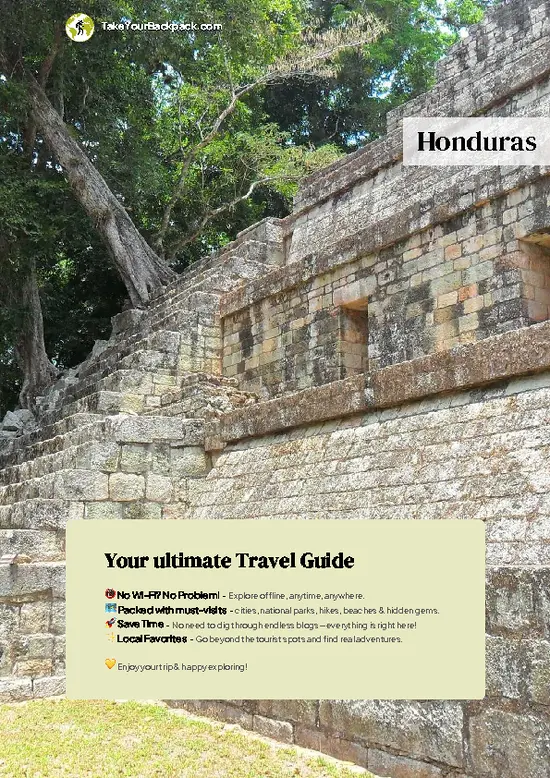
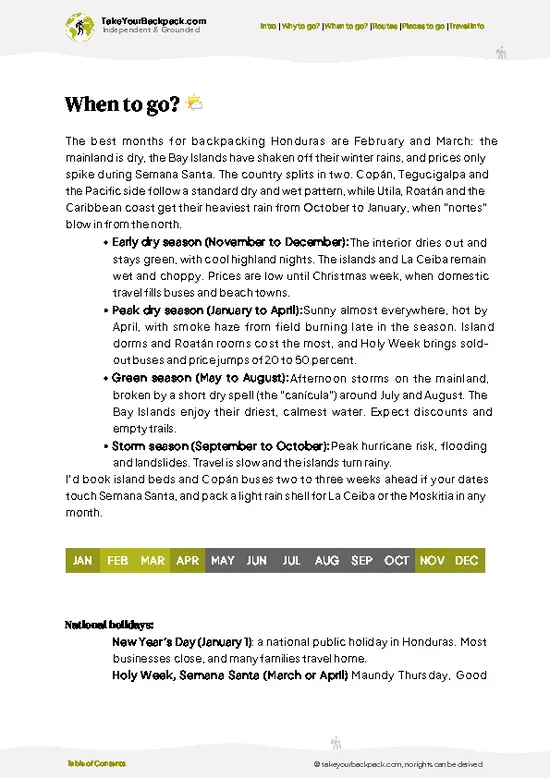
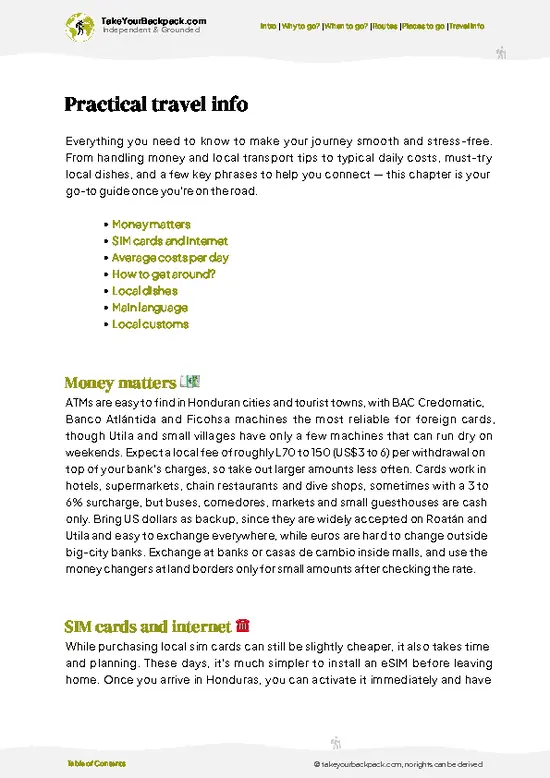
example page 0 from our offline Travel Guide for Honduras
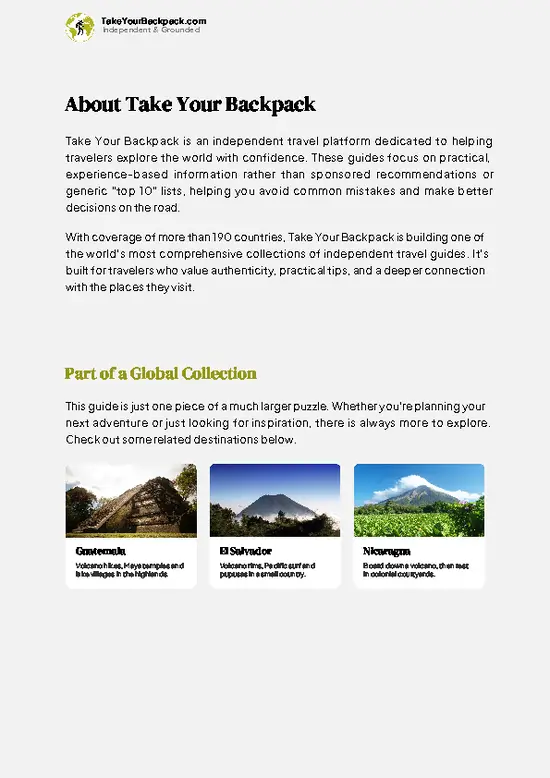
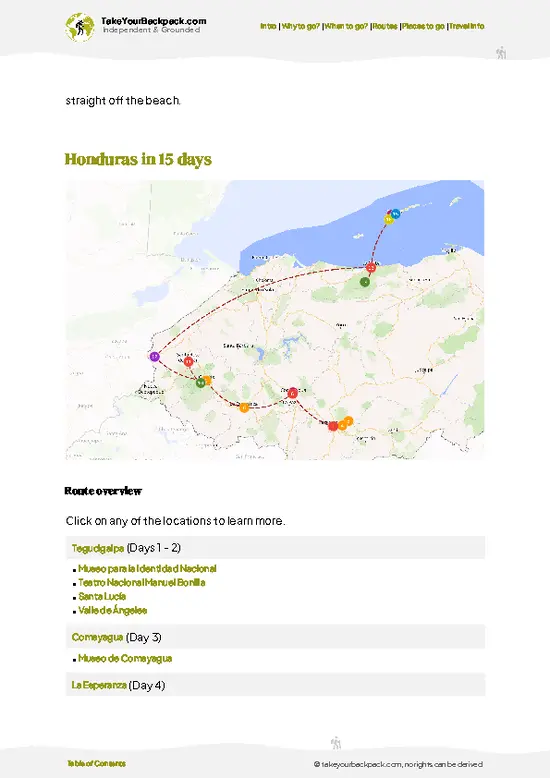
example page 1 from our offline Travel Guide for Honduras
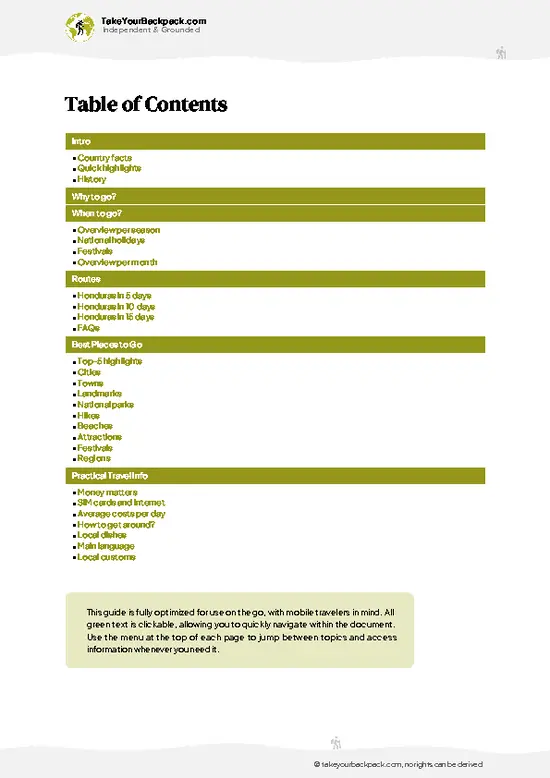
example page 2 from our offline Travel Guide for Honduras
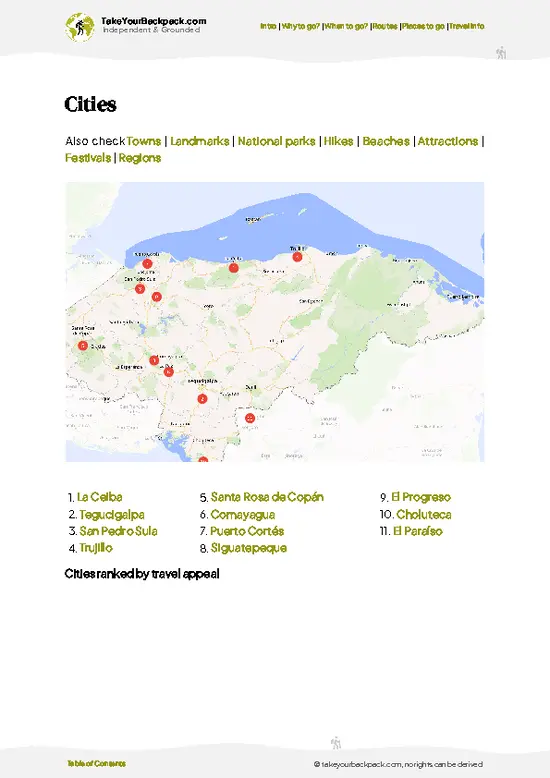
example page 3 from our offline Travel Guide for Honduras
example page 4 from our offline Travel Guide for Honduras
example page 5 from our offline Travel Guide for Honduras
example page 6 from our offline Travel Guide for Honduras
example page 7 from our offline Travel Guide for Honduras
Loading the map 🌍
CLICK TO FILTER
cities
towns
landmarks
national parks
hikes
beaches
attractions
festivals
regions
SHOW COUNTRY’S BESTSHOW ALL

✨ Why go?
Ranked #12 town in Honduras
What sets this place apart

Intibucá is where you come to meet Lenca culture directly instead of reading about it in a museum. The draw is the Sunday market, when the plaza fills with weavers, potters and farmers from surrounding villages, and the chance to talk with artisans who sell from their own doorways on quieter days. Most travelers pass through for a day or one night, and a slow traveler can stretch that to two to see the town without the crowds. It is calm, with few hostels and little nightlife, so it suits solo travelers, culture-minded backpackers and anyone who likes buying crafts at the source. The neighboring La Esperanza supplies more services, while Intibucá keeps the older, more Indigenous character. Hikers and those wanting nightlife should look elsewhere.

💡 HighlightsKey sights and experiences for travelers

  1. Sunday Market: The town’s best-known event, spread around the plaza with textiles, pottery, beans, corn and fresh produce. Go early, by about 8 AM, before it gets crowded. Entry is free, allow 2 to 3 hours, and bring small bills for bargaining.
  2. Parque Central: The town plaza is the social center, with benches, vendors and people-watching. It is free and best in the early evening or on market day. Allow 30 to 45 minutes.
  3. Iglesia de Intibucá: The town church faces the plaza and shows the Catholic-Lenca blend of local life. Visits are free, usually 15 to 30 minutes, and mornings are quietest.
  4. Lenca weaving workshops: Artisans make textiles at home and will often show you the loom if you ask politely. Prices for pieces run roughly US$5 to 40 depending on size, and a visit takes 30 to 60 minutes.
… read more 👉
  1. Sunday Market: The town’s best-known event, spread around the plaza with textiles, pottery, beans, corn and fresh produce. Go early, by about 8 AM, before it gets crowded. Entry is free, allow 2 to 3 hours, and bring small bills for bargaining.
  2. Parque Central: The town plaza is the social center, with benches, vendors and people-watching. It is free and best in the early evening or on market day. Allow 30 to 45 minutes.
  3. Iglesia de Intibucá: The town church faces the plaza and shows the Catholic-Lenca blend of local life. Visits are free, usually 15 to 30 minutes, and mornings are quietest.
  4. Lenca weaving workshops: Artisans make textiles at home and will often show you the loom if you ask politely. Prices for pieces run roughly US$5 to 40 depending on size, and a visit takes 30 to 60 minutes. Mornings on weekdays are best.
  5. Pottery stalls and craft shops: Lenca ceramics with traditional patterns are sold around town. Small pieces cost about US$3 to 15, and browsing takes about an hour. Buy directly from the maker when you can.
Nearby, you can day trip to Parque Nacional Montaña de Celaque, Gracias and the town of Yamaranguila. Start with the Sunday market if your dates allow it, because everything else in town is quieter and easy to fit around it.
Spotted a mistake or missing something? Contact us.

Things to do near Intibucá

Ratings based on Tripadvisor reviews. When you book through this link, you support our work at no extra cost to you.

🏘️ NeighborhoodsHow different areas shape the experience

Intibucá is small, and its parts are easy to tell apart on a walk of an hour or two.
  • Central plaza and church: The Lenca heart of town, with a modest church, benches and kids running between vendors. Skip the interior if you are short on time; the plaza is where you hear Lenca spoken and see women in traditional dress, which is the point.
  • Sunday market area: The streets around the market fill with produce, potatoes, cabbages, secondhand clothes and handwoven goods. Arrive early and eat a hot tamal or fresh tortillas standing up. Come on another day and it is quiet, so not worth a special trip.
  • Artisan blocks: A few weaving and pottery sellers work from homes and small shops. Prices are fairer than in tourist towns, and you can watch a backstrap loom in use before you buy a runner.
  • Border with
… read more 👉
Intibucá is small, and its parts are easy to tell apart on a walk of an hour or two.
  • Central plaza and church: The Lenca heart of town, with a modest church, benches and kids running between vendors. Skip the interior if you are short on time; the plaza is where you hear Lenca spoken and see women in traditional dress, which is the point.
  • Sunday market area: The streets around the market fill with produce, potatoes, cabbages, secondhand clothes and handwoven goods. Arrive early and eat a hot tamal or fresh tortillas standing up. Come on another day and it is quiet, so not worth a special trip.
  • Artisan blocks: A few weaving and pottery sellers work from homes and small shops. Prices are fairer than in tourist towns, and you can watch a backstrap loom in use before you buy a runner.
  • Border with La Esperanza: Streets run straight into the neighboring town with no clear line. The strip has more shops, pharmacies, ATMs and cafes, and it is the only place for evening food. Nightlife is basically absent, so plan on early nights.

⌛️ 1 dayWhat you can realistically do in a day

8:00 AM, Sunday market: Start here because the stalls are freshest and the aisles easiest to walk before midmorning crowds. Look at textiles, pottery and produce, and eat a pastry or tamale from a vendor. Walk slowly and ask before photographing people.
10:30 AM, Parque Central and church: Walk the few steps to the plaza, sit on a bench and watch the market flow, then step inside the church for a quiet look. It is a good moment to let the sensory overload settle.
12:30 PM, Lunch: Eat local at a comfortable family-run comedor near the plaza, ordering whatever the cook recommends. Beans, tortillas and grilled meat are typical.
2:00 PM, Weaving workshop: Walk to a home workshop on a side street, away from the main market, and ask to see a loom in use. Buying directly gives the maker the full price … read more 👉
8:00 AM, Sunday market: Start here because the stalls are freshest and the aisles easiest to walk before midmorning crowds. Look at textiles, pottery and produce, and eat a pastry or tamale from a vendor. Walk slowly and ask before photographing people.
10:30 AM, Parque Central and church: Walk the few steps to the plaza, sit on a bench and watch the market flow, then step inside the church for a quiet look. It is a good moment to let the sensory overload settle.
12:30 PM, Lunch: Eat local at a comfortable family-run comedor near the plaza, ordering whatever the cook recommends. Beans, tortillas and grilled meat are typical.
2:00 PM, Weaving workshop: Walk to a home workshop on a side street, away from the main market, and ask to see a loom in use. Buying directly gives the maker the full price and you a piece with a story.
4:00 PM, Pottery browse: Visit smaller craft shops, compare patterns and pick one small piece for the pack.
5:30 PM, Back at the plaza: Finish with a coffee and watch the evening settle in as families gather.

🌤️ When to go?Choosing the right time of year

The best months for Intibucá are November to April, when skies are dry and the highland air is crisp.
  • Dry Season (November to April): Days reach 22 to 26°C (72 to 79°F) and nights drop to 8 to 12°C (46 to 54°F), cold enough for a real jacket. Daylight lasts about 11 to 13 hours. Prices stay steady.
  • Rainy Season (May to October): Afternoon downpours, 15 to 24°C (59 to 75°F), muddy tracks and green fields. Fewer visitors and slightly lower prices.
  • Festivals: Lenca events and Holy Week bring crowds and pricier beds, so book ahead.
Plan for a Sunday so the market is part of your visit.

source: climatestotravel.comJANJanuary: excellent for travelingFEBFebruary: excellent for travelingMARMarch: highly recommended for travelingAPRApril: highly recommended for travelingMAYMay: fair for travelingJUNJune: fair for travelingJULJuly: fair for travelingAUGAugust: fair for travelingSEPSeptember: fair for travelingOCTOctober: fair for travelingNOVNovember: highly recommended for travelingDECDecember: excellent for traveling
when-to-go

✈️ The backpacker research shortcutHonduras Travel Guide

An offline-friendly backpacking guide with optimized travel routes, ranked highlights, transport advice, and the best areas to stay.
example page 0 from our offline Travel Guide for Honduras
example page 1 from our offline Travel Guide for Honduras
example page 2 from our offline Travel Guide for Honduras
example page 3 from our offline Travel Guide for Honduras
example page 4 from our offline Travel Guide for Honduras
example page 5 from our offline Travel Guide for Honduras
example page 6 from our offline Travel Guide for Honduras
example page 7 from our offline Travel Guide for Honduras
The digital guide (255 pages) contains:
✅ 70 highlights, ranked by travel appeal
✅ Optimized 5, 10 & 15-day travel routes
✅ Cities, national parks, landmarks, beaches
✅ How to get around
✅ Offline-friendly for travel without Wi-Fi
👉 Click to see all 30+ guide features

📅 Plan smarter in minutes, not weeks
✅ Month by month travel advice
✅ Festivals & national holidays
✅ Budget expectations

🗺️ Go to the right places, skip the overrated ones
✅ Honest pros & cons of destinations
✅ Top hikes, parks & viewpoints
✅ Lesser-known places most travelers miss
✅ Clear “worth it vs skip it” guidance

🛏️ Travel smoothly without rookie mistakes
✅ Best areas to stay
✅ Transport systems explained simply
✅ Common scams & safety advice
✅ SIM cards, money & practical tips

🌍 Understand the country, not just visit it
✅ Culture & traditions
✅ 52 Essential phrases & customs
✅ Festivals worth planning around
✅ Traveler-friendly historical context
✅ Insights that make places more meaningful

📱 Built for real travel conditions
✅ Fully downloadable PDF
✅ Works completely offline
✅ Optimized for phone use
✅ Useful in remote areas & buses
✅ Everything in one place
Stop searching, start planning
Get instant access to your full guide. 30‑day money-back guarantee.
+ Add another guide for just

By proceeding you agree to our terms.
Sent to your inbox immediately after payment • 100% Secure Checkout
Best Backpacking Travel Advisor 2025 tourism awardBest Backpacking
Travel Advisor
2025
What others say about Take Your Backpack Guides:
⭐⭐⭐⭐⭐
Fantastic, amazing amount of information!
⭐⭐⭐⭐⭐
My goodness this is amazing, it's what I've been looking for hats off too you!
⭐⭐⭐⭐⭐
I think this is absolutely BRILLIANT
⭐⭐⭐⭐
Very complete and informative. It's still missing places, but I gotta to commend you
⭐⭐⭐⭐⭐
This is truly amazing, thank you, can't wait to explore it with my kids!
⭐⭐⭐⭐⭐
Awesome resource, thank you!
⭐⭐⭐⭐⭐
This is amazing! Can't wait to explore the ones I haven't seen
⭐⭐⭐⭐
I love this! Well done, great idea.
⭐⭐⭐⭐⭐
Thanks for taking the time to make this gem!
⭐⭐⭐⭐⭐
This might be the best website I've ever seen.
⭐⭐⭐⭐⭐
Congratulations, and thank you so much for your work; it's incredibly valuable.
⭐⭐⭐⭐
In all seriousness I think you did a great job pointing out the important spots
⭐⭐⭐⭐⭐
10/10 very good
⭐⭐⭐⭐⭐
As someone who's only just starting to visit regularly this is awesome, thank you.
⭐⭐⭐⭐
Thank you very much! I'm going to visit my dad, it's going to be very useful!
⭐⭐⭐⭐⭐
This is really cool! We'll be travelling for the first time and this definitely come in handy.
⭐⭐⭐⭐⭐
You are now our minister of culture, congratulations 👨‍💼
⭐⭐⭐⭐⭐
Just wanted to tell you that this is a pearl! Going to follow your recommendations.
⭐⭐⭐⭐⭐
This is so cool. I'll definitely be using the resource for my travels soon.
⭐⭐⭐⭐⭐
This is very impressive! Good work.
⭐⭐⭐⭐⭐
This is an amazing and informative site. Very well done!

🛏️ Where to stay?Best areas and accommodation options

The best choice is the strip where Intibucá meets La Esperanza, since that is where budget beds, ATMs and late food cluster. Expect simple guesthouses and basic rooms rather than a big hostel scene, at roughly US$10 to 25 a night; dorm beds are scarce, so a cheap private room is often the realistic budget option. Streets there are lit and walkable at night, and taxis pass regularly. Noise is mild, mostly roosters and early market traffic.

The second option is near Intibucá's central plaza, which is quieter and puts you beside the Sunday market. Fewer places operate, so book ahead for market weekends … read more 👉
The best choice is the strip where Intibucá meets La Esperanza, since that is where budget beds, ATMs and late food cluster. Expect simple guesthouses and basic rooms rather than a big hostel scene, at roughly US$10 to 25 a night; dorm beds are scarce, so a cheap private room is often the realistic budget option. Streets there are lit and walkable at night, and taxis pass regularly. Noise is mild, mostly roosters and early market traffic.

The second option is near Intibucá's central plaza, which is quieter and puts you beside the Sunday market. Fewer places operate, so book ahead for market weekends and festivals. Bring a warm layer, as many cheap rooms have no heating and the highland nights are cold. Transport links are weaker there, but a taxi to the terminal costs only a couple of dollars.

🚌 Getting aroundMoving around without the hassle

From the La Esperanza bus terminal, Intibucá sits a short ride away, about 5 to 10 minutes by taxi (US$1.50 to 3) or a 20 to 30 minute uphill walk along the main road. Traffic is light, but the roads are steep and hilly, and public transport is informal. Most backpackers walk in town and use cheap shared rides for everything else.
  • Walking: The best option in the center, since the plaza, market and weaving shops sit close together. Cobbled slopes will wear out sandals, but you get the smells of woodsmoke and fresh bread.
  • Local taxis: Short hops cost US$1 to 3, and they run from early morning until around 9 pm. Agree on the fare first. Worth it after dark, when the hills are chilly and unlit.
  • Mototaxis and pickups: Cheap rides to outlying villages, US$0.50 to 2. They are bumpy and open to the wind,
… read more 👉
From the La Esperanza bus terminal, Intibucá sits a short ride away, about 5 to 10 minutes by taxi (US$1.50 to 3) or a 20 to 30 minute uphill walk along the main road. Traffic is light, but the roads are steep and hilly, and public transport is informal. Most backpackers walk in town and use cheap shared rides for everything else.
  • Walking: The best option in the center, since the plaza, market and weaving shops sit close together. Cobbled slopes will wear out sandals, but you get the smells of woodsmoke and fresh bread.
  • Local taxis: Short hops cost US$1 to 3, and they run from early morning until around 9 pm. Agree on the fare first. Worth it after dark, when the hills are chilly and unlit.
  • Mototaxis and pickups: Cheap rides to outlying villages, US$0.50 to 2. They are bumpy and open to the wind, but you see farms and pine ridges from the back.
  • Local buses: Minibuses link the area with surrounding towns for US$0.50 to 3, mostly from first light until late afternoon. Schedules are loose, so skip them if you are tight on time. Long-distance buses to Tegucigalpa (about 3 to 4 hours, US$6 to 9) leave from the neighboring terminal.

👛 Costs (as of 22 October 2026)How expensive it really is

Intibucá costs about US$32 a day for a backpacker in high season.
CategoryBudget RangeLocal Reality
Dorm accommodationUS$10 to 15 (high season), US$8 to 12 (low)Dorms are rare, so a basic private room is the usual choice.
MealsUS$7 to 11Baleadas cost US$1 to 2 and a set lunch US$3 to 5.
Local transportUS$2 to 4Shared taxis and minibuses are cheap.
Basic activities/entry feesUS$3 to 7Market and plaza are free; weaving visits and parks are small fees.
MiscellaneousUS$2 to 4Snacks, water and laundry.
Total Daily BudgetUS$32Per person, high season.
Eating at the market stalls instead of restaurants can cut your food bill by half.
⚠️ Prices can change and everyone travels differently, so take this as a rough guide. Hope it helps you plan your adventure!

🚌 Day tripsShort trips worth adding

Intibucá is an easy base for day trips, since pickups and minibuses reach most highland sights in under two hours.
Montaña de Celaque: Cloud forest and Honduras’s tallest peak sit to the west, but the park is best treated as a long day or overnight. Reaching the Gracias entrance takes 1.5 to 2 hours by bus (US$3 to 5), and entry runs about US$6 to 10. Go in the dry season and start early, because afternoon cloud blocks the views.
👉 Explore Celaque National Park
Gracias: A colonial town with a fort, hot springs on its outskirts and warm evening air after the cold uplands. The bus takes about 1.5 hours (US$3 to 4). Budget US$15 to 25 with a springs entry of US$5 to 10. First-timers often leave too late and miss the last bus back.
👉 Explore Gracias
Yamaranguila: A Lenca highland town with potato fields, … read more 👉
Intibucá is an easy base for day trips, since pickups and minibuses reach most highland sights in under two hours.
Montaña de Celaque: Cloud forest and Honduras’s tallest peak sit to the west, but the park is best treated as a long day or overnight. Reaching the Gracias entrance takes 1.5 to 2 hours by bus (US$3 to 5), and entry runs about US$6 to 10. Go in the dry season and start early, because afternoon cloud blocks the views.
👉 Explore Celaque National Park
Gracias: A colonial town with a fort, hot springs on its outskirts and warm evening air after the cold uplands. The bus takes about 1.5 hours (US$3 to 4). Budget US$15 to 25 with a springs entry of US$5 to 10. First-timers often leave too late and miss the last bus back.
👉 Explore Gracias
Yamaranguila: A Lenca highland town with potato fields, pine hills and a quiet main square. A pickup ride takes 30 to 60 minutes (US$1 to 2). It suits a slow half day, and the dry months give clear views.

🍲 FoodWhat to Eat & Drink

In Intibucá, food is a gateway to the heart of Honduran highland life. The air often carries the scent of freshly made tamales, wrapped in banana leaves, their masa soft and rich with local spices. Don’t miss carne asada, grilled to smoky perfection, usually paired with beans and rice—a simple combo that tastes like tradition on a plate. For drinks, horchata—a sweet, cinnamon-infused rice milk—is a refreshing staple, especially after a day trekking the hills.

Backpackers find their rhythm at bustling markets and street stalls where locals gather, trading stories over steaming bowls of sopa de mondongo (tripe soup) or crispy fried plantains. Casual eateries here are unpretentious but packed with flavor, offering a chance to eat like a local without the tourist markup.

Expect a relaxed vibe … read more 👉
In Intibucá, food is a gateway to the heart of Honduran highland life. The air often carries the scent of freshly made tamales, wrapped in banana leaves, their masa soft and rich with local spices. Don’t miss carne asada, grilled to smoky perfection, usually paired with beans and rice—a simple combo that tastes like tradition on a plate. For drinks, horchata—a sweet, cinnamon-infused rice milk—is a refreshing staple, especially after a day trekking the hills.

Backpackers find their rhythm at bustling markets and street stalls where locals gather, trading stories over steaming bowls of sopa de mondongo (tripe soup) or crispy fried plantains. Casual eateries here are unpretentious but packed with flavor, offering a chance to eat like a local without the tourist markup.

Expect a relaxed vibe around meals. Sharing food is common, and meals stretch out, giving you time to savor both the flavors and the company. Don’t rush—this is where comfort meets culture, and every bite tells a story.

🛡️ SafetyScams, Hazards, and Annoyances

Intibucá is calm and mostly safe for backpackers. The main annoyances are petty: keep your phone out of sight in crowded Sunday market lanes, where pickpockets operate. After dark the streets empty and are poorly lit in places, so take a taxi rather than walking back from the La Esperanza strip. Solo travelers do fine with ordinary city habits. Agree on taxi fares first, and carry small bills so nobody invents change. Hikes on remote tracks are better done with others or a local.

FAQCommon questions from travelers

Intibucá is worth a stop of its own if you like Lenca culture and highland markets. The Sunday market and its weavers are the draw, and Celaque and Gracias lie 1.5 to 2 hours away. It is far too quiet to be a nightlife destination.
Plan on 1 to 2 days in Intibucá. One day covers the plaza, weavers and Sunday market, and a second lets you do a day trip to Gracias (about 1.5 hours by bus). Add a night if you want to hike near Celaque.
Intibucá can be done as a day trip from Tegucigalpa, though it is a long one. The ride takes roughly 3 to 4 hours each way and costs about US$6 to 9 by bus. Staying one night allows a relaxed Sunday market morning and avoids last-bus pressure.
⚠️ Things can change over time, so always validate details locally before you go.

Other Honduran towns near Intibucá

Explore more nearby:

  • La Esperanza—Cool mountains, backstrap looms, smoked cheese, Intibucá hub| 2 km away
  • Marcala—Coffee cooperatives, bakeries, valley miradors, Marcala fair| 23 km away
  • Gracias—Lenca crafts, hilltop fort, Celaque gateway, hot springs| 54 km away

💡 Not sure where to go next?
Create a personalized itinerary for Honduras including Intibucá and the places that fit your trip.

Generate my itinerary

👉 Discover all towns

Or checkout all Honduras has to offer (think cities, towns, villages, national parks, hikes, beaches, festivals)
Country photo of Honduras

We 💚 feedbackKey takeaways before you go

Come on a Sunday, early, when the plaza is full of weavers and the light is soft on the hills. Intibucá has few nightlife options, so I would spend the evening at a plaza bench and bring cash in small bills for the stalls.

✈️ When did I visit Honduras?
Honduras I visited during my half year trip through South and Central America back in 2003

✍️ Help improve this page!
The information on this page is based on my own backpacking experience in Honduras, supplemented with up-to-date research and feedback from other travelers. Travel details can change, so if you notice anything outdated or incomplete, feel free to let me know.


🙋‍♂️ Give feedback

👋 Meet the founderWho’s Behind Take Your Backpack?

Johan, backpacker and founder of TakeYourBackpackHi, I’m Johan (Netherlands 🇳🇱), the creator of TakeYourBackpack. Over the past 3 decades, I’ve backpacked through 90+ countries across six continents, gaining extensive experience with independent travel, long-term trips, and overland routes.

This site is built on a combination of firsthand travel experience and carefully curated insights from other backpackers. Many guides are based on places I’ve personally visited, while others bring together tips, observations, and practical advice shared by trusted travelers I’ve met along the way.

The goal is to provide realistic, experience-driven guidance — not generic itineraries — so you can explore destinations with better context, clearer expectations, and more confidence.