×

Honduras🇭🇳 | best townsDiscover the 10 Best towns Across Honduras

Honduras is a country of small towns, and they split into three types that feel nothing alike. The Caribbean coast and Bay Islands bring dive shops, English-speaking staff and the highest prices, with dorm beds often US$10 to 20. The western highlands offer colonial streets, coffee farms and cool nights at a much lower cost, with easy bus links. The interior and Mosquitia are cheap and rarely visited, but slow and logistically hard. Skip the big industrial cities as stops; they give you little to see. For independent travel, the highlands and the islands are the easiest to manage, and the remote east is for those with spare days.

By Johan Kruseman 🇳🇱 | Updated October 23, 2026
Explore the best landmarks in Honduras

Why go?Key Factors That Shape the Experience

Honduras suits town-hopping because its mountainous geography kept settlements small and distinct. Spanish colonial silver and coffee wealth built highland plazas and churches, while the Caribbean side developed through Garifuna communities, British-era island settlement and banana-company ports. That gives a real spread of culture within one small country, and it is why a town here is defined by its setting rather than its size.

The infrastructure is uneven. Main routes between the western highlands, the north coast and the capital are paved and served by frequent buses, but side roads turn rough, and rain can close them. Public transport is slow, with chicken buses and minibuses that leave when full. Tourist services are thinner than in Guatemala or Costa Rica, so fewer polished hostels … read more 👉
Honduras suits town-hopping because its mountainous geography kept settlements small and distinct. Spanish colonial silver and coffee wealth built highland plazas and churches, while the Caribbean side developed through Garifuna communities, British-era island settlement and banana-company ports. That gives a real spread of culture within one small country, and it is why a town here is defined by its setting rather than its size.

The infrastructure is uneven. Main routes between the western highlands, the north coast and the capital are paved and served by frequent buses, but side roads turn rough, and rain can close them. Public transport is slow, with chicken buses and minibuses that leave when full. Tourist services are thinner than in Guatemala or Costa Rica, so fewer polished hostels and fewer organized tours exist outside the main hubs. That keeps prices low and crowds small, which is the main appeal.

Before choosing Honduras, accept that safety varies sharply by place and that the country has one of the higher homicide rates in the region, concentrated in big cities and certain barrios rather than visitor towns. Plan around daytime travel, use direct buses, and do not expect English outside the islands. Travelers who want a smooth, packaged trip should choose elsewhere. Those who want cheap, uncrowded towns will find them here.
Why These Made the Cut
The list of best towns in Honduras is created based on charm, local culture, atmosphere, hidden gems, and visitor appeal. If you feel a town is missing in this list, please let us know.

When to go?Optimal Periods for Travel

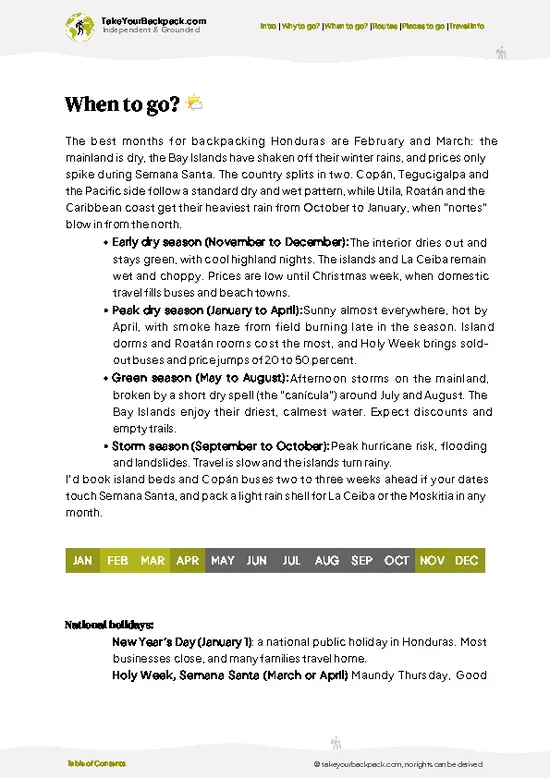
Best Months: The best months for towns in Honduras are November to April, when the dry season brings clear skies and passable roads across most of the country. Highland towns in the west sit at roughly 1,000 to 1,600 meters, with daytime temperatures around 20 to 27°C and nights that can drop to 10°C or lower in December and January, so bring a warm layer. The lowlands and Caribbean coast stay hot at 28 to 33°C year-round.
Shoulder and Wet Seasons: May and October to early November are shoulder months, with the wet season starting in May and running to roughly October. In the highlands, rain tends to arrive in afternoon downpours, and views often stay good in the mornings, so this is workable if you move early. The north coast and the Mosquitia are different: their wettest period is October … read more 👉
Best Months: The best months for towns in Honduras are November to April, when the dry season brings clear skies and passable roads across most of the country. Highland towns in the west sit at roughly 1,000 to 1,600 meters, with daytime temperatures around 20 to 27°C and nights that can drop to 10°C or lower in December and January, so bring a warm layer. The lowlands and Caribbean coast stay hot at 28 to 33°C year-round.
Shoulder and Wet Seasons: May and October to early November are shoulder months, with the wet season starting in May and running to roughly October. In the highlands, rain tends to arrive in afternoon downpours, and views often stay good in the mornings, so this is workable if you move early. The north coast and the Mosquitia are different: their wettest period is October to January, when heavy rain and rough seas can disrupt boats, flights and unpaved roads. Avoid the east in that window.
Peak Periods and Prices: The real peaks are Semana Santa (the week before Easter), when Hondurans flood the beaches and islands and rooms fill up, and the Christmas to New Year period. Book ahead for those, expecting rates 20 to 50 percent higher on the coast. The Bay Islands are busiest from February to April. Outside those weeks, highland prices barely move, so there is little reason to chase a particular month there.

town hoppingSuggested Travel Strategies

Trip Length: A trip combining several towns in Honduras needs 10 to 14 days, and 7 days only works if you stay within one region. Honduras is small, but roads are slow, and buses average 40 to 50 km/h on mixed routes.
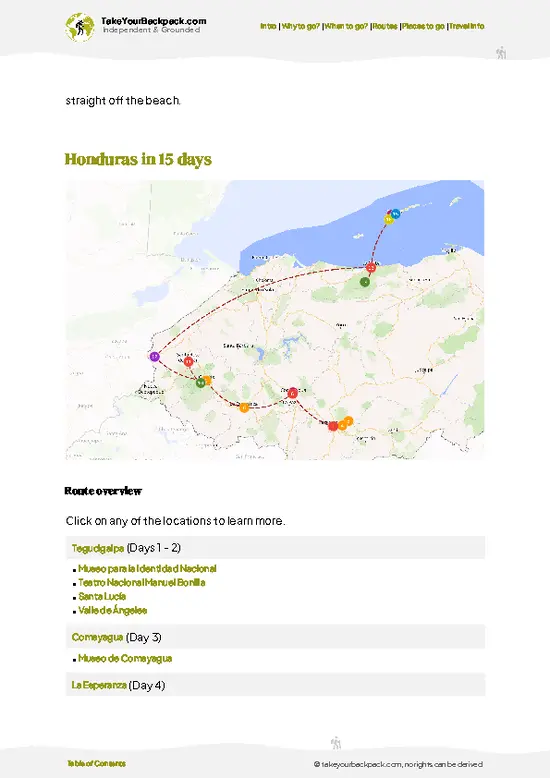
Grouping and Direction: The western highlands cluster tightly, with 1 to 3 hours between towns, so they work as a single block. The north coast and Bay Islands form the second block, reached by San Pedro Sula or La Ceiba. The interior and the east sit apart and only suit travelers with a week or more to spare. A sensible direction runs from the highlands east toward the coast, then out to the islands, finishing where flights home are cheapest. San Pedro Sula is the main transport hub, with buses to nearly everywhere, and the trip from the west highlands to the north coast takes … read more 👉
Trip Length: A trip combining several towns in Honduras needs 10 to 14 days, and 7 days only works if you stay within one region. Honduras is small, but roads are slow, and buses average 40 to 50 km/h on mixed routes.
Grouping and Direction: The western highlands cluster tightly, with 1 to 3 hours between towns, so they work as a single block. The north coast and Bay Islands form the second block, reached by San Pedro Sula or La Ceiba. The interior and the east sit apart and only suit travelers with a week or more to spare. A sensible direction runs from the highlands east toward the coast, then out to the islands, finishing where flights home are cheapest. San Pedro Sula is the main transport hub, with buses to nearly everywhere, and the trip from the west highlands to the north coast takes roughly 3 to 6 hours.
Time Per Stop and Common Mistakes: Allow 2 to 3 nights in highland stops and 3 to 5 on the islands, where diving or boat trips take time. One night is rarely worth the transit cost anywhere. The commonest mistake is cramming the highlands, coast and east into a week, spending most of it on buses. Another is booking onward travel for the afternoon, when buses fill and daylight is short. Leave early, ideally before 9 a.m., and do not plan a long road trip across the country in the wet season. Cut a region rather than rush all three.

The ListMust-Visit towns in Honduras

1 Utila

Dive shops, iguana station, front street, ferry pier

Book certification courses along the waterfront, visit the iguana research station, and end days with baleadas and pier bars.

honduras-city-utila
© Google | Uwe Delau

2 Gracias

Lenca crafts, hilltop fort, Celaque gateway, hot springs

Climb to the old fort for valley views, visit Lenca weaving cooperatives, and use the compact center for day trips into the highlands.

honduras-city-gracias
© Google | Luiz Al Serrano

3 Valle de Ángeles

Woodcarving workshops, craft market, galleries, hill viewpoints

Browse carvers’ and potters’ workshops, linger in gallery cafés, and climb a short trail for views over the valley.

4 Santa Lucía

Pine hills, hilltop mirador, cultural center, capital escape

Escape the capital’s traffic for cobbled lanes, a short climb to the lookout at sunset, and an early quiet night.

5 Omoa

Spanish fort, seafood shacks, fishing docks, Caribbean bay

Walk the walls of the Spanish fort, then follow the shoreline to fish docks and family seafood kitchens.

honduras-city-omoa
© Google | Ulices Posso

6 La Esperanza

Cool mountains, backstrap looms, smoked cheese, Intibucá hub

Visit family weaving workshops, taste mountain produce at the market, and settle into early evenings before exploring nearby pine hills.

7 Marcala

Coffee cooperatives, bakeries, valley miradors, Marcala fair

Taste freshly roasted beans at cooperative shops, arrange farm visits, and climb to viewpoints above the coffee terraces.

8 Amapala

Island ferry pier, fish stalls, wooden boatyards, Gulf of Fonseca

Watch fishermen land the catch at the pier, eat ceviche beside the boats, and wander weathered wooden streets above the gulf.

9 Yuscarán

Colonial mansions, aguardiente town, small museum, hill lookout

Walk streets of balconied 19th-century houses, check the local museum for mining history, and climb to a view over red roofs.

10 Santa Bárbara

Church plaza, covered market, municipal palace, base town

Rest for a night or two near the parish church, eat well at the market, and plan onward trips toward lake and mountains.

honduras-city-santa-barbara
© Google |

11 Puerto Lempira

Caratasca lagoon, Miskito neighborhoods, boat docks, remote airstrip

Stroll the lagoon edge, meet Miskito basket makers, and watch the dock where boats and flights tie the town to the world.

12 Intibucá

Sunday plaza market, Lenca backstrap looms, hand-thrown pottery, highland quiet

Browse woven cloth and pottery around the plaza on market Sunday, then ask weavers in their homes to show the loom behind each piece.

13 La Entrada

Road junction, bus terminal, baleada plates, Copán access

Change buses at the crossroads, eat cheaply at market comedores, and spend a dusk hour in the park before moving on.

14 Cantarranas

Patron-saint fiesta, plaza church, quiet lanes, highland walks

Time a visit for the December patron saint festival, or simply wander painted lanes, sample market cooking, and rest in the plaza.

15 Guaimaca

Dawn buses, tortilla griddles, eastern highway, rural fincas

Stay a night on the Olancho road, start early among woodsmoke and griddles, and use the plain center for nearby countryside visits.

16 Campamento

Olancho highway stop, grilled meat comedores, market and plaza

Break the Tegucigalpa to Juticalpa run here, eating baleadas near the plaza and browsing the market before heading on.

17 Talanga

Highway pause, covered market, plain plaza

Eat cheaply at the market and watch the plaza fill in the late afternoon.

Think you know Honduras?

Prove you’re a true local — uncover 7 lesser-known towns in Honduras that locals tend to keep to themselves.
Loading the map 🌍

Expert viewPro Tips for Exploring the Best

How Many Towns: Plan on four to five towns in two weeks, and three if you have ten days. Transit in Honduras eats more hours than the map suggests, and a stop shorter than two nights costs more in bus fares and energy than it gives back. Adding a sixth rarely adds anything but a longer list.
Choosing by Travel Style: Prioritize by what you want. Divers and beach seekers should put an island or coastal town first, since the diving is cheaper than in most of the Caribbean, with open-water certification commonly around US$300 to 400. Culture and coffee travelers should favor highland colonial towns, which are cheaper and cooler. The remote east is for people who enjoy slow river and boat travel and accept uncertain schedules. If time is tight, skip the large commercial cities, which offer little … read more 👉
How Many Towns: Plan on four to five towns in two weeks, and three if you have ten days. Transit in Honduras eats more hours than the map suggests, and a stop shorter than two nights costs more in bus fares and energy than it gives back. Adding a sixth rarely adds anything but a longer list.
Choosing by Travel Style: Prioritize by what you want. Divers and beach seekers should put an island or coastal town first, since the diving is cheaper than in most of the Caribbean, with open-water certification commonly around US$300 to 400. Culture and coffee travelers should favor highland colonial towns, which are cheaper and cooler. The remote east is for people who enjoy slow river and boat travel and accept uncertain schedules. If time is tight, skip the large commercial cities, which offer little to see and are where most of the safety concerns sit.
What It Costs: A realistic budget is US$25 to 40 a day in the highlands, covering a dorm or basic private room (US$8 to 20), meals (US$6 to 12) and local buses. On the islands, expect US$45 to 80 a day because food and rooms cost more. Intercity buses typically run US$3 to 12 a leg, with premium services on main routes costing more. Entry fees for sites and parks are generally US$5 to 15, and guides cost US$20 to 50 for a half day. Boat transfers to the islands or the coast add US$10 to 30. Carry small lempira notes, because change for large bills is hard to find in small towns, and ATMs can be empty or limited outside the main centers. Withdraw cash in larger towns before heading out.
Safety and Local Etiquette: Danger depends on the place and time. Travel in daylight, avoid arriving by bus after dark, and use hotel-arranged or radio taxis instead of hailing one. Do not walk empty streets at night even in small towns, and leave flashy jewelry and spare phones behind. Reputable bus companies with terminals are safer than informal pickups on main routes. Check current advisories before leaving and again before crossing to remote areas, since conditions change by department.
Culturally, Hondurans value a greeting before any request, so say buenos días first. Dress modestly away from the beach. Ask before photographing people, and be aware that Garifuna communities on the coast appreciate respect for local culture and fair payment for any guided visits or cultural performances. Tap water is not safe to drink, so buy sealed water or bring a filter, and carry insect repellent for dengue, which peaks in the wet months. A basic Spanish vocabulary matters far more here than in the islands and will earn you better prices and directions.

✈️ The backpacker research shortcutHonduras Travel Guide

An offline-friendly backpacking guide with optimized travel routes, ranked highlights, transport advice, and the best areas to stay.
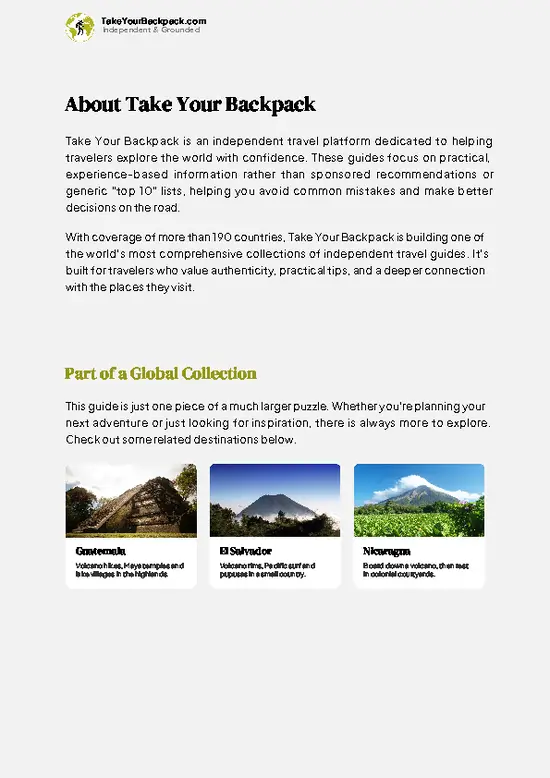
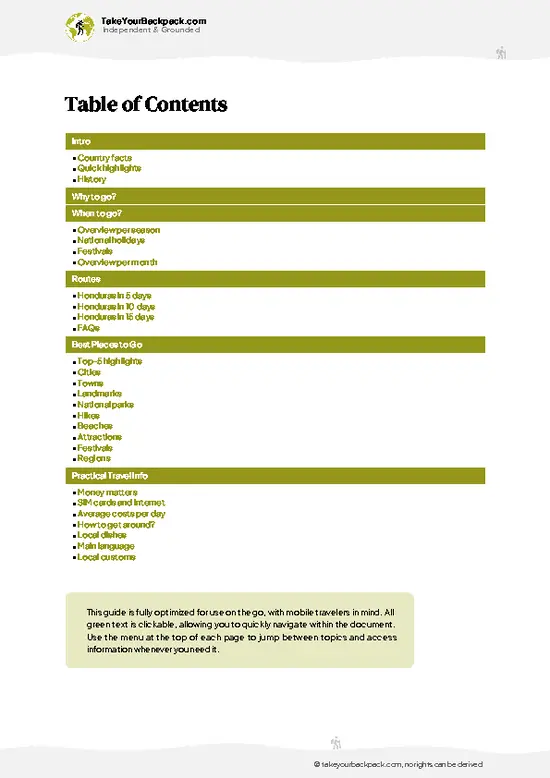
example page 0 from our offline Travel Guide for Honduras
example page 1 from our offline Travel Guide for Honduras
example page 2 from our offline Travel Guide for Honduras
example page 3 from our offline Travel Guide for Honduras
example page 4 from our offline Travel Guide for Honduras
example page 5 from our offline Travel Guide for Honduras
example page 6 from our offline Travel Guide for Honduras
example page 7 from our offline Travel Guide for Honduras
The digital guide (255 pages) contains:
✅ 70 highlights, ranked by travel appeal
✅ Optimized 5, 10 & 15-day travel routes
✅ Cities, national parks, landmarks, beaches
✅ How to get around
✅ Offline-friendly for travel without Wi-Fi
👉 Click to see all 30+ guide features

📅 Plan smarter in minutes, not weeks
✅ Month by month travel advice
✅ Festivals & national holidays
✅ Budget expectations

🗺️ Go to the right places, skip the overrated ones
✅ Honest pros & cons of destinations
✅ Top hikes, parks & viewpoints
✅ Lesser-known places most travelers miss
✅ Clear “worth it vs skip it” guidance

🛏️ Travel smoothly without rookie mistakes
✅ Best areas to stay
✅ Transport systems explained simply
✅ Common scams & safety advice
✅ SIM cards, money & practical tips

🌍 Understand the country, not just visit it
✅ Culture & traditions
✅ 52 Essential phrases & customs
✅ Festivals worth planning around
✅ Traveler-friendly historical context
✅ Insights that make places more meaningful

📱 Built for real travel conditions
✅ Fully downloadable PDF
✅ Works completely offline
✅ Optimized for phone use
✅ Useful in remote areas & buses
✅ Everything in one place
Stop searching, start planning
Get instant access to your full guide. 30‑day money-back guarantee.
+ Add another guide for just

By proceeding you agree to our terms.
Sent to your inbox immediately after payment • 100% Secure Checkout
Best Backpacking Travel Advisor 2025 tourism awardBest Backpacking
Travel Advisor
2025
What others say about Take Your Backpack Guides:
⭐⭐⭐⭐⭐
Fantastic, amazing amount of information!
⭐⭐⭐⭐⭐
My goodness this is amazing, it's what I've been looking for hats off too you!
⭐⭐⭐⭐⭐
I think this is absolutely BRILLIANT
⭐⭐⭐⭐
Very complete and informative. It's still missing places, but I gotta to commend you
⭐⭐⭐⭐⭐
This is truly amazing, thank you, can't wait to explore it with my kids!
⭐⭐⭐⭐⭐
Awesome resource, thank you!
⭐⭐⭐⭐⭐
This is amazing! Can't wait to explore the ones I haven't seen
⭐⭐⭐⭐
I love this! Well done, great idea.
⭐⭐⭐⭐⭐
Thanks for taking the time to make this gem!
⭐⭐⭐⭐⭐
This might be the best website I've ever seen.
⭐⭐⭐⭐⭐
Congratulations, and thank you so much for your work; it's incredibly valuable.
⭐⭐⭐⭐
In all seriousness I think you did a great job pointing out the important spots
⭐⭐⭐⭐⭐
10/10 very good
⭐⭐⭐⭐⭐
As someone who's only just starting to visit regularly this is awesome, thank you.
⭐⭐⭐⭐
Thank you very much! I'm going to visit my dad, it's going to be very useful!
⭐⭐⭐⭐⭐
This is really cool! We'll be travelling for the first time and this definitely come in handy.
⭐⭐⭐⭐⭐
You are now our minister of culture, congratulations 👨‍💼
⭐⭐⭐⭐⭐
Just wanted to tell you that this is a pearl! Going to follow your recommendations.
⭐⭐⭐⭐⭐
This is so cool. I'll definitely be using the resource for my travels soon.
⭐⭐⭐⭐⭐
This is very impressive! Good work.
⭐⭐⭐⭐⭐
This is an amazing and informative site. Very well done!

🛏️ Where to stay?Top Areas to Stay

Honduras has a solid hostel scene, with dorm beds typically around L250 to 500 (US$10 to 20) and private rooms in guesthouses from about L600 (US$25), concentrated where backpackers actually go rather than in the big cities. On the Bay Islands, Utila has the most and cheapest beds plus a loud dive-bar night scene, while West End on Roatán costs more but puts you on a walkable beach strip; inland, the cobbled grid of Copán Ruinas is quiet, safe and a short walk from the ruins, and the Lake Yojoa area around Los Naranjos and Peña Blanca is all hammocks and early nights. In Tegucigalpa, stick to Colonia Palmira and the streets near Boulevard Morazán, where options are fewer and pricier but the … read more 👉
Honduras has a solid hostel scene, with dorm beds typically around L250 to 500 (US$10 to 20) and private rooms in guesthouses from about L600 (US$25), concentrated where backpackers actually go rather than in the big cities. On the Bay Islands, Utila has the most and cheapest beds plus a loud dive-bar night scene, while West End on Roatán costs more but puts you on a walkable beach strip; inland, the cobbled grid of Copán Ruinas is quiet, safe and a short walk from the ruins, and the Lake Yojoa area around Los Naranjos and Peña Blanca is all hammocks and early nights. In Tegucigalpa, stick to Colonia Palmira and the streets near Boulevard Morazán, where options are fewer and pricier but the area is calmer and close to restaurants, and treat San Pedro Sula as a one-night transit stop near the bus terminal.

If you enjoy meeting fellow travelers, consider choosing hostels with high ratings for atmosphere. On the other hand, if you prefer having your own space, a hotel might be a better option.

HondurasDiscover the Country

👋 Meet the founderWho’s Behind Take Your Backpack?

Johan, backpacker and founder of TakeYourBackpackHi, I’m Johan (Netherlands 🇳🇱), the creator of TakeYourBackpack. Over the past 3 decades, I’ve backpacked through 90+ countries across six continents, gaining extensive experience with independent travel, long-term trips, and overland routes.

This site is built on a combination of firsthand travel experience and carefully curated insights from other backpackers. Many guides are based on places I’ve personally visited, while others bring together tips, observations, and practical advice shared by trusted travelers I’ve met along the way.

The goal is to provide realistic, experience-driven guidance — not generic itineraries — so you can explore destinations with better context, clearer expectations, and more confidence.