
×

Honduras🇭🇳 | national parksLa Tigra National ParkEl Rosario mine ruins, Granadillas trail, La Cascada falls, capital-valley mirador | things to do and best time to go

Explore Jeannette Kawas National ParkExplore Pico Bonito National Park

Backpacking in La Tigra
🌟 Highlightnational park ranked #4
By Johan Kruseman 🇳🇱 | Updated October 23, 2026

I walked into the cloud forest at La Tigra in jeans and city sneakers, certain the trail would be dry, and spent the next hour sliding on wet clay while my shoes filled with mud. Lesson learned: bring real boots. La Tigra National Park sits in the mountains north of Tegucigalpa, in the capital region of Honduras. The upside is obvious: mossy cloud forest, quetzal chances, quiet trails, and a short trip from the city. The downsides are just as plain. Paths can be slick, fog hides views, and wildlife sightings take patience, so skip any plan built on guaranteed animals. Weekends bring local families to the lower trails, so go on a weekday. Carry cash for entry and snacks, and start early to avoid late starts and missed rides. A good first day: reach the entrance by mid-morning, pick one loop, and be heading down before afternoon fog thickens.

Discover everything you want to know in the 📖 Honduras Travel Guide.


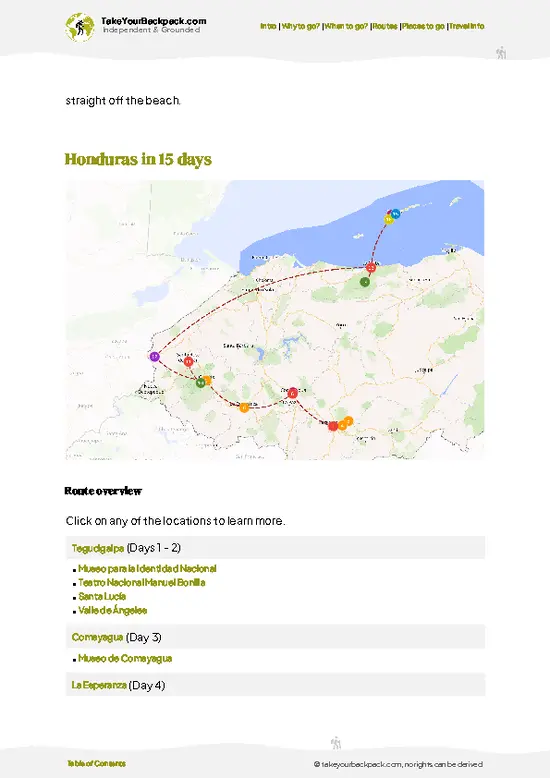
example page 0 from our offline Travel Guide for Honduras
example page 1 from our offline Travel Guide for Honduras
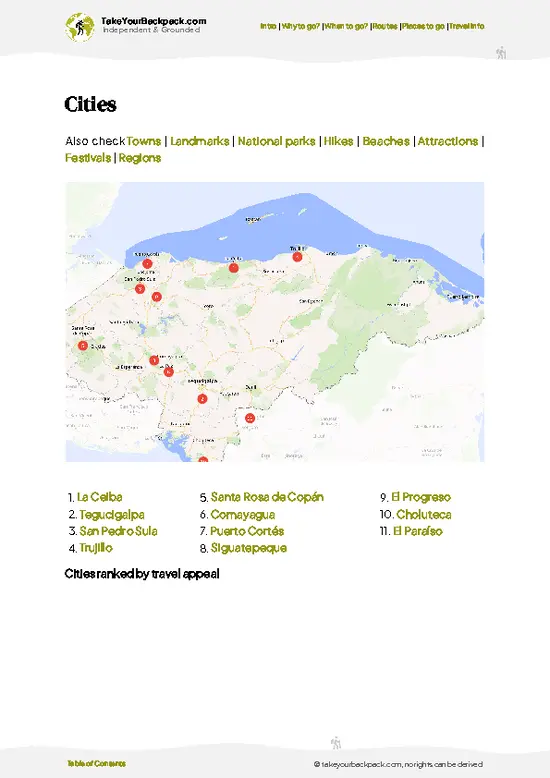
example page 2 from our offline Travel Guide for Honduras
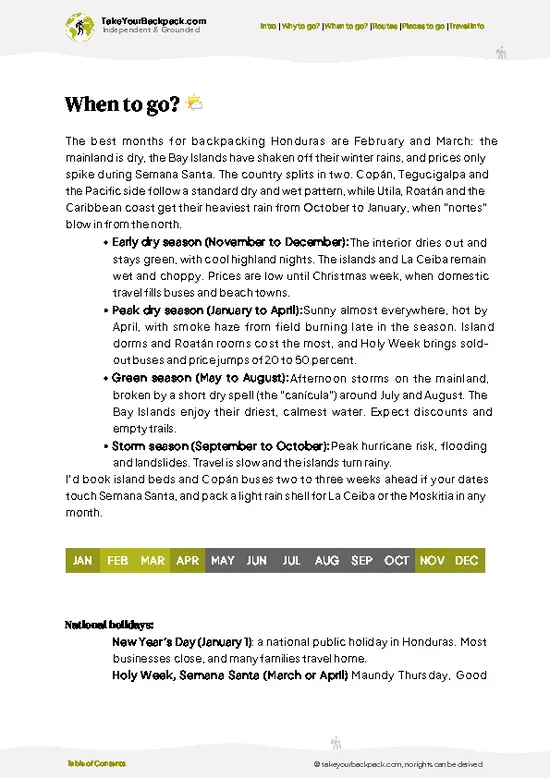
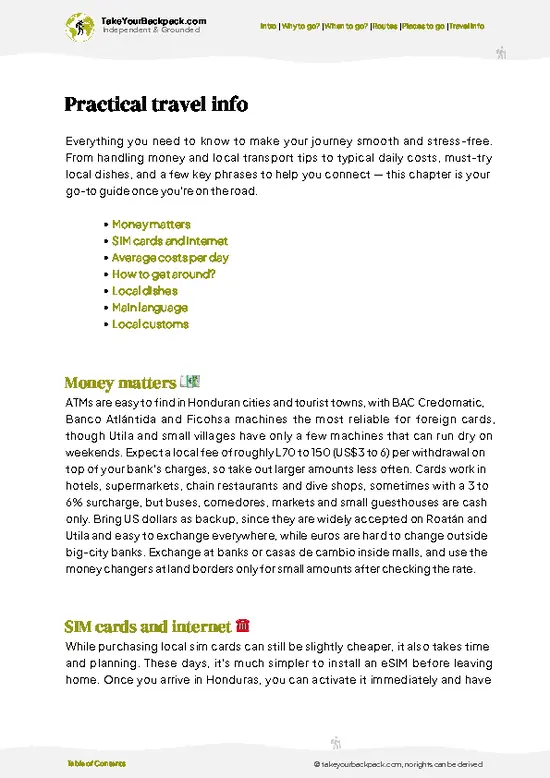
example page 3 from our offline Travel Guide for Honduras
example page 4 from our offline Travel Guide for Honduras
example page 5 from our offline Travel Guide for Honduras
example page 6 from our offline Travel Guide for Honduras
example page 7 from our offline Travel Guide for Honduras
Loading the map 🌍
CLICK TO FILTER
cities
towns
landmarks
national parks
hikes
beaches
attractions
festivals
regions
SHOW COUNTRY’S BESTSHOW ALL

✨ Why go?
Ranked #4 national park in Honduras
Reasons people choose to explore here

La Tigra National Park suits independent walkers because the trail network is compact, well marked, and easy to piece together without a guide. You can pick a short loop for a morning or string together longer routes that climb into the high forest.

The park rewards patience. Its cloud forest holds orchids, giant ferns, and a chance at the resplendent quetzal, and you will often have a path to yourself on weekdays. The old El Rosario mine buildings give the walk some history, with rusted machinery and stone ruins sitting inside the forest.

It also works as a quick reset from the capital. You can leave a hostel in Tegucigalpa after breakfast, hike all day, and be back for dinner. If you prefer mountain air to long transport days, this is an easy, flexible way to get a real forest walk in Honduras without committing to a remote trip.

💡 HighlightsDon't-miss highlights and experiences

  1. Cloud forest canopy: The park’s signature sight is dense, mossy forest draped in epiphytes, orchids, and tree ferns, with fog drifting between trunks.
  2. Resplendent quetzal spotting: The shimmering green bird is the star of birdwatching here, most likely seen in the early morning among wild avocado trees.
  3. El Rosario mine ruins: Old mining buildings and equipment from the park’s gold and silver era sit near the visitor area, giving a look at the area’s industrial past.
  4. Sendero Granadillas: This is the easiest forest walk near the main visitor area, with shaded paths and plenty of birdsong.
  5. Sendero La Cascada: A forest trail leading to a small waterfall, best after rain when the flow is stronger.
  6. Bird and wildlife watching: Look for toucanets, hummingbirds, and, with luck, mammals such as armadillos
… read more 👉
  1. Cloud forest canopy: The park’s signature sight is dense, mossy forest draped in epiphytes, orchids, and tree ferns, with fog drifting between trunks.
  2. Resplendent quetzal spotting: The shimmering green bird is the star of birdwatching here, most likely seen in the early morning among wild avocado trees.
  3. El Rosario mine ruins: Old mining buildings and equipment from the park’s gold and silver era sit near the visitor area, giving a look at the area’s industrial past.
  4. Sendero Granadillas: This is the easiest forest walk near the main visitor area, with shaded paths and plenty of birdsong.
  5. Sendero La Cascada: A forest trail leading to a small waterfall, best after rain when the flow is stronger.
  6. Bird and wildlife watching: Look for toucanets, hummingbirds, and, with luck, mammals such as armadillos or coatis along quieter paths.
  7. Mirador viewpoints: On clear mornings, ridge lookouts give views over forested slopes toward the capital valley.
All of this can be covered in one full day, or a relaxed two-day visit if you want slower birdwatching.
Spotted a mistake or missing something? Contact us.

Things to do around La Tigra National Park

Ratings based on Tripadvisor reviews. When you book through this link, you support our work at no extra cost to you.

🌤️ When to go?When to go for the best experience

  • Dry Season (November to April): Trails are firm and cloud forest views open up most mornings. Days run 18 to 24°C (64 to 75°F), nights drop to 8 to 12°C (46 to 54°F), and daylight lasts roughly 11 to 12.5 hours.
  • Hottest, Driest Stretch (March to April): Haze from regional burning can dull distant views, and the forest floor gets crunchy and dusty. Expect 20 to 26°C (68 to 79°F).
  • Wet Season (May to October): Afternoon downpours turn clay paths slick, and fog often settles by midday. Temperatures sit around 16 to 23°C (61 to 73°F). Mosses, orchids and bromeliads look their best, and the park is almost empty on weekdays.
  • Crowds and Prices: Weekends and Honduran holidays such as Semana Santa bring day-trippers from Tegucigalpa. Park fees and lodging stay the same year-round, so there is no real price
… read more 👉
  • Dry Season (November to April): Trails are firm and cloud forest views open up most mornings. Days run 18 to 24°C (64 to 75°F), nights drop to 8 to 12°C (46 to 54°F), and daylight lasts roughly 11 to 12.5 hours.
  • Hottest, Driest Stretch (March to April): Haze from regional burning can dull distant views, and the forest floor gets crunchy and dusty. Expect 20 to 26°C (68 to 79°F).
  • Wet Season (May to October): Afternoon downpours turn clay paths slick, and fog often settles by midday. Temperatures sit around 16 to 23°C (61 to 73°F). Mosses, orchids and bromeliads look their best, and the park is almost empty on weekdays.
  • Crowds and Prices: Weekends and Honduran holidays such as Semana Santa bring day-trippers from Tegucigalpa. Park fees and lodging stay the same year-round, so there is no real price swing.
Start hiking by 8 a.m. in any season, because clouds usually close in by early afternoon and quetzal sightings are best at first light.


source: climatestotravel.comJANJanuary: excellent for travelingFEBFebruary: excellent for travelingMARMarch: excellent for travelingAPRApril: highly recommended for travelingMAYMay: fair for travelingJUNJune: fair for travelingJULJuly: fair for travelingAUGAugust: fair for travelingSEPSeptember: fair for travelingOCTOctober: fair for travelingNOVNovember: highly recommended for travelingDECDecember: excellent for traveling
honduras-national-park-la-tigra-national-park
© Google | Michelle Maradiaga

✈️ The backpacker research shortcutHonduras Travel Guide

An offline-friendly backpacking guide with optimized travel routes, ranked highlights, transport advice, and the best areas to stay.
example page 0 from our offline Travel Guide for Honduras
example page 1 from our offline Travel Guide for Honduras
example page 2 from our offline Travel Guide for Honduras
example page 3 from our offline Travel Guide for Honduras
example page 4 from our offline Travel Guide for Honduras
example page 5 from our offline Travel Guide for Honduras
example page 6 from our offline Travel Guide for Honduras
example page 7 from our offline Travel Guide for Honduras
The digital guide (255 pages) contains:
✅ 70 highlights, ranked by travel appeal
✅ Optimized 5, 10 & 15-day travel routes
✅ Cities, national parks, landmarks, beaches
✅ How to get around
✅ Offline-friendly for travel without Wi-Fi
👉 Click to see all 30+ guide features

📅 Plan smarter in minutes, not weeks
✅ Month by month travel advice
✅ Festivals & national holidays
✅ Budget expectations

🗺️ Go to the right places, skip the overrated ones
✅ Honest pros & cons of destinations
✅ Top hikes, parks & viewpoints
✅ Lesser-known places most travelers miss
✅ Clear “worth it vs skip it” guidance

🛏️ Travel smoothly without rookie mistakes
✅ Best areas to stay
✅ Transport systems explained simply
✅ Common scams & safety advice
✅ SIM cards, money & practical tips

🌍 Understand the country, not just visit it
✅ Culture & traditions
✅ 52 Essential phrases & customs
✅ Festivals worth planning around
✅ Traveler-friendly historical context
✅ Insights that make places more meaningful

📱 Built for real travel conditions
✅ Fully downloadable PDF
✅ Works completely offline
✅ Optimized for phone use
✅ Useful in remote areas & buses
✅ Everything in one place
Stop searching, start planning
Get instant access to your full guide. 30‑day money-back guarantee.
+ Add another guide for just

By proceeding you agree to our terms.
Sent to your inbox immediately after payment • 100% Secure Checkout
Best Backpacking Travel Advisor 2025 tourism awardBest Backpacking
Travel Advisor
2025
What others say about Take Your Backpack Guides:
⭐⭐⭐⭐⭐
Fantastic, amazing amount of information!
⭐⭐⭐⭐⭐
My goodness this is amazing, it's what I've been looking for hats off too you!
⭐⭐⭐⭐⭐
I think this is absolutely BRILLIANT
⭐⭐⭐⭐
Very complete and informative. It's still missing places, but I gotta to commend you
⭐⭐⭐⭐⭐
This is truly amazing, thank you, can't wait to explore it with my kids!
⭐⭐⭐⭐⭐
Awesome resource, thank you!
⭐⭐⭐⭐⭐
This is amazing! Can't wait to explore the ones I haven't seen
⭐⭐⭐⭐
I love this! Well done, great idea.
⭐⭐⭐⭐⭐
Thanks for taking the time to make this gem!
⭐⭐⭐⭐⭐
This might be the best website I've ever seen.
⭐⭐⭐⭐⭐
Congratulations, and thank you so much for your work; it's incredibly valuable.
⭐⭐⭐⭐
In all seriousness I think you did a great job pointing out the important spots
⭐⭐⭐⭐⭐
10/10 very good
⭐⭐⭐⭐⭐
As someone who's only just starting to visit regularly this is awesome, thank you.
⭐⭐⭐⭐
Thank you very much! I'm going to visit my dad, it's going to be very useful!
⭐⭐⭐⭐⭐
This is really cool! We'll be travelling for the first time and this definitely come in handy.
⭐⭐⭐⭐⭐
You are now our minister of culture, congratulations 👨‍💼
⭐⭐⭐⭐⭐
Just wanted to tell you that this is a pearl! Going to follow your recommendations.
⭐⭐⭐⭐⭐
This is so cool. I'll definitely be using the resource for my travels soon.
⭐⭐⭐⭐⭐
This is very impressive! Good work.
⭐⭐⭐⭐⭐
This is an amazing and informative site. Very well done!

🛏️ Where to stay?Best areas to stay in Honduras

The best base for most backpackers is the village of San Juancito, on the park’s eastern edge, with Tegucigalpa as the fallback for budget dorms and bus connections. Inside the park, the Jutiapa and Rosario visitor center areas offer basic cabins and designated camping, so you can sleep beside the trails and be up before the day-trippers. Cabins run roughly US$15 to 30 per person and camping about US$5 to 10, though you should bring your own sleeping bag, food and a warm layer, since nights get cold. Book cabins ahead through the park’s administrators, especially for weekends.
San Juancito is a … read more 👉
The best base for most backpackers is the village of San Juancito, on the park’s eastern edge, with Tegucigalpa as the fallback for budget dorms and bus connections. Inside the park, the Jutiapa and Rosario visitor center areas offer basic cabins and designated camping, so you can sleep beside the trails and be up before the day-trippers. Cabins run roughly US$15 to 30 per person and camping about US$5 to 10, though you should bring your own sleeping bag, food and a warm layer, since nights get cold. Book cabins ahead through the park’s administrators, especially for weekends.
San Juancito is a former silver-mining village with a handful of simple guesthouses and homestays, typically US$10 to 25 a night. It is quiet, there are small comedores for meals, and you can walk into the park from the Rosario entrance. Expect limited nightlife and few services.
Tegucigalpa, about an hour to 90 minutes away by road, has hostels in Colonia Palmira and the center, usually US$12 to 25 for a dorm bed or basic room. It suits one-day visits with an early taxi or tour out, and it has the ATMs, supermarkets and onward buses you will want before heading to the coast or Copán.

👛 Costs (as of 23 October 2026)Typical daily expenses

La Tigra National Park costs a backpacker roughly US$30 to 79 a day, including entry, a cabin or guesthouse bed, local transport and simple meals. The figures below are estimates and shift with the exchange rate, which matters since you pay in lempiras.
CategoryBudget RangeLocal Reality
Entrance FeeUS$8 to 12Foreign visitors pay more than Hondurans, and the ticket is bought at the Rosario or Jutiapa entrance in cash.
Accommodation (high season)US$10 to 30Guesthouses in San Juancito are the cheapest, while park cabins cost more. Camping is about US$5 to 10.
Local TransportUS$4 to 12Buses from Tegucigalpa to San Juancito are cheap but slow. A taxi or shared ride costs more but saves time.
Food and SuppliesUS$8 to 15Comedores serve a plato típico for US$3 to 5. Stock up in Tegucigalpa before heading
… read more 👉
La Tigra National Park costs a backpacker roughly US$30 to 79 a day, including entry, a cabin or guesthouse bed, local transport and simple meals. The figures below are estimates and shift with the exchange rate, which matters since you pay in lempiras.
CategoryBudget RangeLocal Reality
Entrance FeeUS$8 to 12Foreign visitors pay more than Hondurans, and the ticket is bought at the Rosario or Jutiapa entrance in cash.
Accommodation (high season)US$10 to 30Guesthouses in San Juancito are the cheapest, while park cabins cost more. Camping is about US$5 to 10.
Local TransportUS$4 to 12Buses from Tegucigalpa to San Juancito are cheap but slow. A taxi or shared ride costs more but saves time.
Food and SuppliesUS$8 to 15Comedores serve a plato típico for US$3 to 5. Stock up in Tegucigalpa before heading up.
Guide (optional)US$0 to 10Trails are marked so a guide is not required, but local guides can be hired for bird-watching.
Total Daily BudgetUS$30 to 79Camping and self-catering sit at the lower end of the range.
⚠️ Prices can change and everyone travels differently, so take this as a rough guide. Hope it helps you plan your adventure!

🥾 TrailsPlan your hike in La Tigra: routes, terrain, and sights

La Tigra National Park is a steep, forested mountain park with well-marked trails of varying difficulty, and most hikers pick one or two routes per day.

  • Sendero Granadillas: A gentle walk of about 1 kilometer, about an hour. Easy, shaded, and good for first-timers.
  • Sendero La Cascada: The park's hardest trail, about 7 kilometers and up to 7 hours. Expect roots, stairs, and slick clay after rain, ending at a small waterfall.
  • Sendero Bosque Nublado: A longer, more demanding climb into the higher cloud forest, usually 3 to 5 hours depending on the route. This is the best option for birds and the dense,
… read more 👉
La Tigra National Park is a steep, forested mountain park with well-marked trails of varying difficulty, and most hikers pick one or two routes per day.

  • Sendero Granadillas: A gentle walk of about 1 kilometer, about an hour. Easy, shaded, and good for first-timers.
  • Sendero La Cascada: The park's hardest trail, about 7 kilometers and up to 7 hours. Expect roots, stairs, and slick clay after rain, ending at a small waterfall.
  • Sendero Bosque Nublado: A longer, more demanding climb into the higher cloud forest, usually 3 to 5 hours depending on the route. This is the best option for birds and the dense, misty forest.
  • El Rosario area: Short walks around the old mine buildings, easy and flat, ideal for a relaxed half hour of exploring.
The terrain is uneven and often damp, with mud, steep sections, and cooler, foggy conditions at higher elevations. Wear boots with grip, bring a light rain layer, and carry water and snacks.

Getting there is straightforward from Tegucigalpa by a combination of local bus and taxi, or by hired car for more flexibility, and the access road is rough in places. Weekends draw local visitors to the lower trails, while weekdays are quiet. An entrance fee applies, payable in lempiras, so carry cash. Starting early gives you the best chance at wildlife and clearer views.
⚠️ Hiking info can sometimes be outdated or inaccurate. Before you hit the trail, check the latest conditions with locals. If you do spot anything that's off, I'd love to hear from you, so I can update it for fellow travelers.

🛡️ SafetySafety Tips and Common Scams in La Tigra

La Tigra is a well-managed park where the main problems are mud, fog and underpreparation rather than danger. Trails are signed and ranger-maintained, but junctions in thick cloud can confuse, so carry a downloaded offline map and stay on marked routes. Clay surfaces get greasy after rain, and the steep sections near Rosario and the upper loops are easy to slip on, so wear shoes with real tread and bring trekking poles if you have them. It gets cold and damp at around 2,000 meters elevation, so pack a rain jacket and a fleece even for a day hike. Water is not reliably treated, so carry at least 2 liters and a filter. Wildlife is mostly birds, monkeys and the occasional snake, so watch your step and keep your distance. Leave the park by late afternoon, as there are few lights on the trail. … read more 👉
La Tigra is a well-managed park where the main problems are mud, fog and underpreparation rather than danger. Trails are signed and ranger-maintained, but junctions in thick cloud can confuse, so carry a downloaded offline map and stay on marked routes. Clay surfaces get greasy after rain, and the steep sections near Rosario and the upper loops are easy to slip on, so wear shoes with real tread and bring trekking poles if you have them. It gets cold and damp at around 2,000 meters elevation, so pack a rain jacket and a fleece even for a day hike. Water is not reliably treated, so carry at least 2 liters and a filter. Wildlife is mostly birds, monkeys and the occasional snake, so watch your step and keep your distance. Leave the park by late afternoon, as there are few lights on the trail. Robbery on the trails is rare, but travel to San Juancito and the entrance in daylight, and keep valuables minimal.

FAQTraveler FAQ

One full day covers the main loops at La Tigra National Park, such as the Sendero Bosque Nublado, which takes around 3 hours. Two days let you add the Jutiapa side and an early morning of bird-watching. Staying overnight in a cabin or San Juancito means you start before the day-trippers arrive.
Yes, La Tigra National Park is reachable without a car. Buses leave Tegucigalpa for San Juancito, which takes roughly 1.5 to 2 hours, or you can take a taxi for about an hour to the Jutiapa entrance. The trails are on foot, so a vehicle is not needed once inside, though bus schedules are limited and the last one back leaves in the afternoon.
Yes, La Tigra National Park charges an entrance fee, roughly US$8 to 12 for foreign visitors and less for Hondurans. You pay in cash at the Rosario or Jutiapa entrance, and no separate hiking permit is needed for the marked trails. Camping and cabin stays are booked and paid for separately, at about US$5 to 30 per person.
⚠️ Things can change over time, so always validate details locally before you go.

Other Honduran national parks near La Tigra

Explore more nearby:


💡 Not sure where to go next?
Create a personalized itinerary for Honduras including La Tigra and the places that fit your trip.

Generate my itinerary

👉 Discover all national parks

Or checkout all Honduras has to offer (think cities, towns, villages, national parks, hikes, beaches, festivals)
Country photo of Honduras

We 💚 feedbackFinal thoughts on exploring La Tigra

La Tigra National Park is at its best early on a weekday morning, when the fog is still lifting and the birds are loud. I would arrive at opening, hike the higher loop first, and save the easy trails for later. The drier months give firmer footing, but the forest looks richest right after rain.

✈️ When did I visit Honduras?
Honduras I visited during my half year trip through South and Central America back in 2003

✍️ Help improve this page!
The information on this page is based on my own backpacking experience in Honduras, supplemented with up-to-date research and feedback from other travelers. Travel details can change, so if you notice anything outdated or incomplete, feel free to let me know.


🙋‍♂️ Give feedback

👋 Meet the founderWho’s Behind Take Your Backpack?

Johan, backpacker and founder of TakeYourBackpackHi, I’m Johan (Netherlands 🇳🇱), the creator of TakeYourBackpack. Over the past 3 decades, I’ve backpacked through 90+ countries across six continents, gaining extensive experience with independent travel, long-term trips, and overland routes.

This site is built on a combination of firsthand travel experience and carefully curated insights from other backpackers. Many guides are based on places I’ve personally visited, while others bring together tips, observations, and practical advice shared by trusted travelers I’ve met along the way.

The goal is to provide realistic, experience-driven guidance — not generic itineraries — so you can explore destinations with better context, clearer expectations, and more confidence.