×

Honduras🇭🇳 | attractionsMuseo Garífuna de HondurasGarífuna drums, punta dance, cassava bread, dügü | things to do and best time to go

Explore Fortaleza de San Fernando de OmoaExplore Punta Sal Beach

Backpacking in Museo Garífuna de Honduras
By Johan Kruseman 🇳🇱 | Updated October 23, 2026

Come for a few unhurried hours and you get Garífuna history told by the people who carry it, which no Roatán resort package will give you. Museo Garífuna de Honduras sits on the north coast of Honduras, east of Trujillo, in the Colón department where Garífuna villages line the Caribbean. It is small, so do not plan a full day around it. Crowds are rare and costs stay low. The wow-factor is not spectacle but context. I still hear a hand drum from a yard nearby, a dull, rolling thump that made me stop walking mid-street. Skip it if you want polished displays with English panels everywhere. Go for the story of exile and survival, and for the smell of coconut bread baking next door.

Discover everything you want to know in the 📖 Honduras Travel Guide.


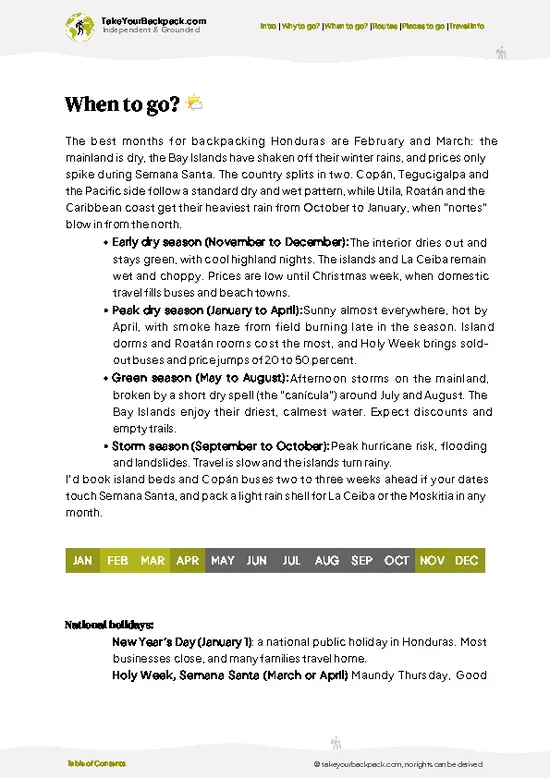
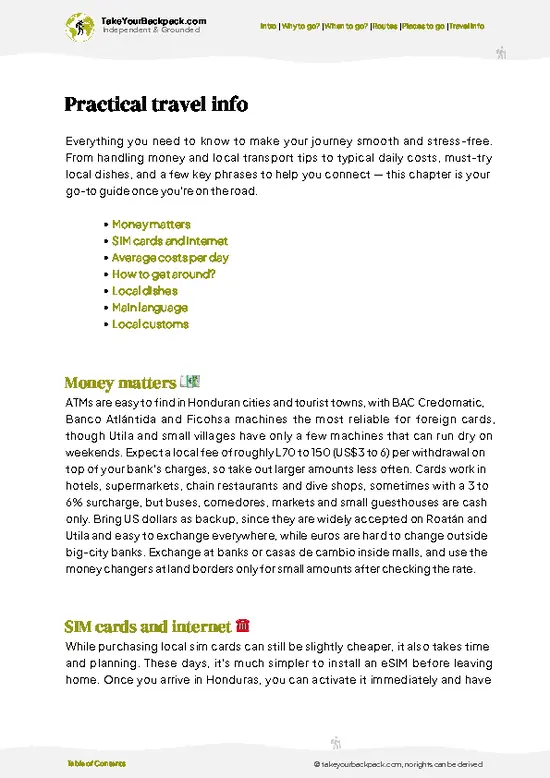
example page 0 from our offline Travel Guide for Honduras
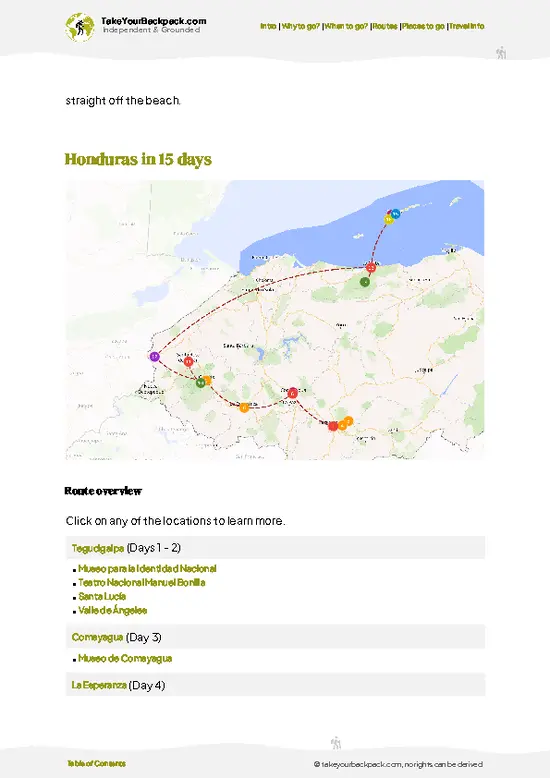
example page 1 from our offline Travel Guide for Honduras
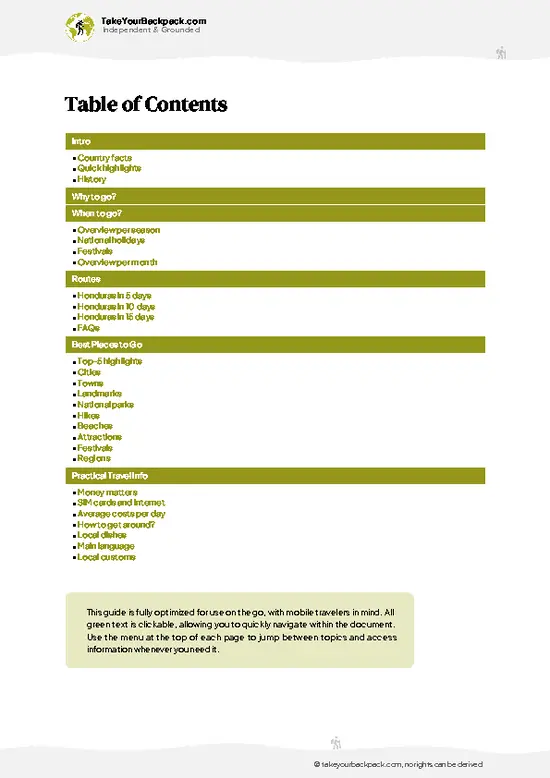
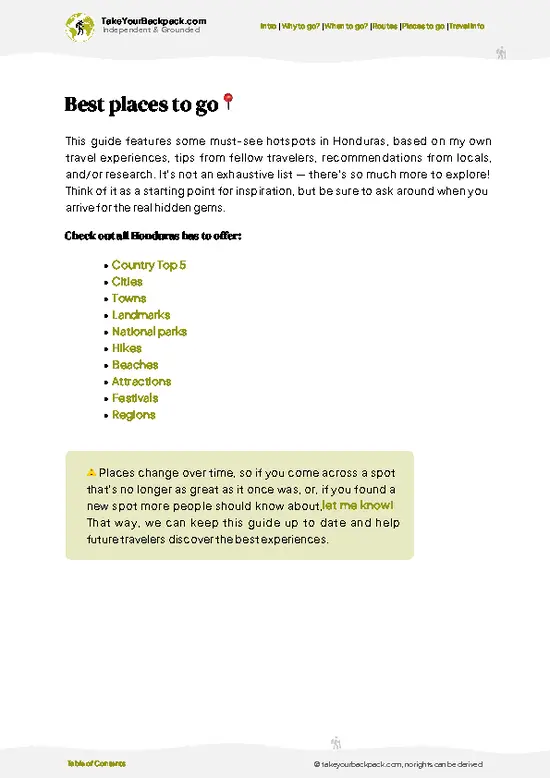
example page 2 from our offline Travel Guide for Honduras
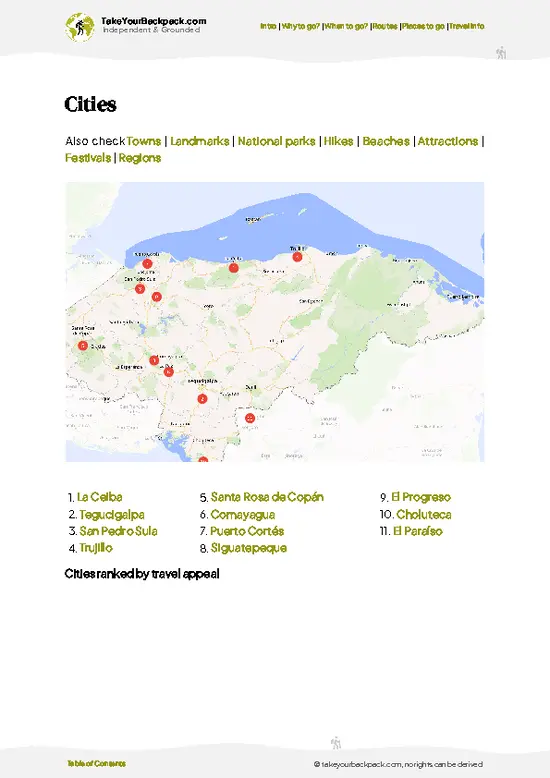
example page 3 from our offline Travel Guide for Honduras
example page 4 from our offline Travel Guide for Honduras
example page 5 from our offline Travel Guide for Honduras
example page 6 from our offline Travel Guide for Honduras
example page 7 from our offline Travel Guide for Honduras
Loading the map 🌍
CLICK TO FILTER
cities
towns
landmarks
national parks
hikes
beaches
attractions
festivals
regions
SHOW COUNTRY’S BESTSHOW ALL

✨ Why go?
Ranked #99 attraction in Honduras
Reasons people choose to visit here

Museo Garífuna de Honduras gives you the backstory to everything you will eat, hear and see along this coast. The Garífuna descend from Africans and Indigenous Caribs who resisted the British on Saint Vincent and were deported to Roatán in 1797, then spread along the mainland shore. Knowing that turns a plate of fish in coconut sauce or a night of drumming from background color into something you understand.

The culture also carries real weight. UNESCO recognized the Garífuna language, dance and music as Intangible Heritage of Humanity, and few places in Honduras let you meet it this directly. It is a milestone on the north coast route, a place to slow down between beaches and ruins. It rewards curiosity more than a checklist, so talk to whoever is there and ask questions.

💡 HighlightsMust-see experiences and standout moments

  1. Garífuna migration story: the account of the 1797 deportation from Saint Vincent to Roatán and the move onto the mainland coast. It explains why this community exists here at all.
  2. Garífuna drums: the large wooden drums behind punta and other rhythms. Seeing how they are made and played makes the sound you hear in the villages make sense.
  3. Punta dance: the fast hip-driven dance Garífuna communities perform at celebrations. It is the clearest way to see how African and Indigenous traditions blended.
  4. Ereba cassava bread: the thin flatbread made by grating, pressing and baking bitter cassava. It is the staple of Garífuna kitchens, and the process is a lesson in itself.
  5. Hudut: the fish and coconut stew served with mashed plantain. Learning how it is built helps you order it properly in nearby villages.
… read more 👉
  1. Garífuna migration story: the account of the 1797 deportation from Saint Vincent to Roatán and the move onto the mainland coast. It explains why this community exists here at all.
  2. Garífuna drums: the large wooden drums behind punta and other rhythms. Seeing how they are made and played makes the sound you hear in the villages make sense.
  3. Punta dance: the fast hip-driven dance Garífuna communities perform at celebrations. It is the clearest way to see how African and Indigenous traditions blended.
  4. Ereba cassava bread: the thin flatbread made by grating, pressing and baking bitter cassava. It is the staple of Garífuna kitchens, and the process is a lesson in itself.
  5. Hudut: the fish and coconut stew served with mashed plantain. Learning how it is built helps you order it properly in nearby villages.
  6. Garífuna language: an Arawakan-rooted tongue mixed with French, English, Spanish and African influences. Hearing it spoken is a surprise if you expect only Spanish.
  7. Spiritual traditions: the ancestor ceremonies known as dügü, central to Garífuna identity. They explain the weight behind much of the music and dance.
Museo Garífuna de Honduras is a small stop where you can usually turn up without booking, though asking locally about drumming or cooking sessions in advance helps.
Spotted a mistake or missing something? Contact us.

🌤️ When to go?Seasonal considerations and timing

  • Dry Season (February to May): Rain eases and the sea calms, so boat trips and beach days are easiest. Highs run 29 to 33°C (84 to 91°F). Holy Week (Semana Santa) fills Caribbean hotels and lifts prices.
  • Wet Season (June to September): Showers are short but frequent, and humidity is heavy. Expect 27 to 31°C (81 to 88°F). Rooms are cheaper and the museum is quiet.
  • Northern Rains (October to January): The Caribbean coast gets its heaviest rain now, with road delays and rough seas. Temperatures sit at 24 to 29°C (75 to 84°F). Daylight lasts about 11 to 13 hours across the year.
  • Garífuna Events: The Garífuna arrival anniversary on April 12 brings drumming, dance and food to the coast, so rooms tighten up.
Book ahead for Semana Santa and mid-April, and plan museum visits for the cooler morning hours.

source: climatestotravel.comJANJanuary: fair for travelingFEBFebruary: excellent for travelingMARMarch: excellent for travelingAPRApril: excellent for travelingMAYMay: excellent for travelingJUNJune: good for travelingJULJuly: highly recommended for travelingAUGAugust: highly recommended for travelingSEPSeptember: good for travelingOCTOctober: below average for travelingNOVNovember: fair for travelingDECDecember: below average for traveling
when-to-go

✈️ The backpacker research shortcutHonduras Travel Guide

An offline-friendly backpacking guide with optimized travel routes, ranked highlights, transport advice, and the best areas to stay.
example page 0 from our offline Travel Guide for Honduras
example page 1 from our offline Travel Guide for Honduras
example page 2 from our offline Travel Guide for Honduras
example page 3 from our offline Travel Guide for Honduras
example page 4 from our offline Travel Guide for Honduras
example page 5 from our offline Travel Guide for Honduras
example page 6 from our offline Travel Guide for Honduras
example page 7 from our offline Travel Guide for Honduras
The digital guide (255 pages) contains:
✅ 70 highlights, ranked by travel appeal
✅ Optimized 5, 10 & 15-day travel routes
✅ Cities, national parks, landmarks, beaches
✅ How to get around
✅ Offline-friendly for travel without Wi-Fi
👉 Click to see all 30+ guide features

📅 Plan smarter in minutes, not weeks
✅ Month by month travel advice
✅ Festivals & national holidays
✅ Budget expectations

🗺️ Go to the right places, skip the overrated ones
✅ Honest pros & cons of destinations
✅ Top hikes, parks & viewpoints
✅ Lesser-known places most travelers miss
✅ Clear “worth it vs skip it” guidance

🛏️ Travel smoothly without rookie mistakes
✅ Best areas to stay
✅ Transport systems explained simply
✅ Common scams & safety advice
✅ SIM cards, money & practical tips

🌍 Understand the country, not just visit it
✅ Culture & traditions
✅ 52 Essential phrases & customs
✅ Festivals worth planning around
✅ Traveler-friendly historical context
✅ Insights that make places more meaningful

📱 Built for real travel conditions
✅ Fully downloadable PDF
✅ Works completely offline
✅ Optimized for phone use
✅ Useful in remote areas & buses
✅ Everything in one place
Stop searching, start planning
Get instant access to your full guide. 30‑day money-back guarantee.
+ Add another guide for just

By proceeding you agree to our terms.
Sent to your inbox immediately after payment • 100% Secure Checkout
Best Backpacking Travel Advisor 2025 tourism awardBest Backpacking
Travel Advisor
2025
What others say about Take Your Backpack Guides:
⭐⭐⭐⭐⭐
Fantastic, amazing amount of information!
⭐⭐⭐⭐⭐
My goodness this is amazing, it's what I've been looking for hats off too you!
⭐⭐⭐⭐⭐
I think this is absolutely BRILLIANT
⭐⭐⭐⭐
Very complete and informative. It's still missing places, but I gotta to commend you
⭐⭐⭐⭐⭐
This is truly amazing, thank you, can't wait to explore it with my kids!
⭐⭐⭐⭐⭐
Awesome resource, thank you!
⭐⭐⭐⭐⭐
This is amazing! Can't wait to explore the ones I haven't seen
⭐⭐⭐⭐
I love this! Well done, great idea.
⭐⭐⭐⭐⭐
Thanks for taking the time to make this gem!
⭐⭐⭐⭐⭐
This might be the best website I've ever seen.
⭐⭐⭐⭐⭐
Congratulations, and thank you so much for your work; it's incredibly valuable.
⭐⭐⭐⭐
In all seriousness I think you did a great job pointing out the important spots
⭐⭐⭐⭐⭐
10/10 very good
⭐⭐⭐⭐⭐
As someone who's only just starting to visit regularly this is awesome, thank you.
⭐⭐⭐⭐
Thank you very much! I'm going to visit my dad, it's going to be very useful!
⭐⭐⭐⭐⭐
This is really cool! We'll be travelling for the first time and this definitely come in handy.
⭐⭐⭐⭐⭐
You are now our minister of culture, congratulations 👨‍💼
⭐⭐⭐⭐⭐
Just wanted to tell you that this is a pearl! Going to follow your recommendations.
⭐⭐⭐⭐⭐
This is so cool. I'll definitely be using the resource for my travels soon.
⭐⭐⭐⭐⭐
This is very impressive! Good work.
⭐⭐⭐⭐⭐
This is an amazing and informative site. Very well done!

🛏️ Where to stay?Where staying makes the most sense

The best base for the museum is the Garífuna village of Tornabé, or nearby Tela, which has the most hostels and the easiest transport. Tela sits on a calm bay with a long beach, a walkable center, and a steady flow of backpackers. Bars and restaurants stay open late, and solo travelers meet others easily in shared dorms and on group trips to Punta Sal and Jardín Botánico Lancetilla. Night walks along the beach are best avoided, so take a short taxi after dark.

For a quieter, more cultural stay, choose a guesthouse in a Garífuna community such as Triunfo de la Cruz, where you can eat fresh fish, … read more 👉
The best base for the museum is the Garífuna village of Tornabé, or nearby Tela, which has the most hostels and the easiest transport. Tela sits on a calm bay with a long beach, a walkable center, and a steady flow of backpackers. Bars and restaurants stay open late, and solo travelers meet others easily in shared dorms and on group trips to Punta Sal and Jardín Botánico Lancetilla. Night walks along the beach are best avoided, so take a short taxi after dark.

For a quieter, more cultural stay, choose a guesthouse in a Garífuna community such as Triunfo de la Cruz, where you can eat fresh fish, hear punta drumming and chat with local families. Dorm beds cost about US$8 to 14 and simple private rooms US$20 to 40. Stay within the village center and arrive before dark.

👛 Costs (as of 23 October 2026)What things cost and how to budget

Museo Garífuna de Honduras works out to about US$25 to 63 per day for a backpacker based on this stretch of coast. Prices are paid in the local currency, and the figures below are converted to US dollars.
CategoryBudget RangeLocal Reality
Museum entryUS$2 to 5Small fee, sometimes lower for Hondurans. Cash only.
Accommodation (high season)US$10 to 25Dorm beds in Tela, simple private rooms cost more at holiday peaks.
FoodUS$6 to 12Fried fish with coconut rice and tapado soup at beachside shacks.
Local transportUS$2 to 6Colectivo taxis and buses along the coast road, plus short taxi rides.
ActivitiesUS$5 to 15Village drumming evenings, boat trips or a guided walk, when offered.
Total Daily BudgetUS$25 to 63Typical mid-point around US$40 per day.


source: virtualtourist.com
⚠️ Prices can change and everyone travels differently, so take this as a rough guide. Hope it helps you plan your adventure!

FAQFrequently asked questions about Museo Garífuna de Honduras

Allow one to two hours for Museo Garífuna de Honduras itself, which is a small museum. Pair it with a half day in a nearby village such as Triunfo de la Cruz or Tornabé for music, food and beach time. Most travelers fit everything into one full day from Tela.
Museo Garífuna de Honduras is worth the small entry fee of roughly US$2 to 5 if you want context on Garífuna language, drumming, cassava bread and migration from St. Vincent. It is compact, so it suits a short stop and not a full day. Visiting before a village meal or evening drumming makes the culture easier to follow.
To reach Museo Garífuna de Honduras, travel to Tela on the north coast, about 1.5 to 2 hours by bus from San Pedro Sula (US$4 to 8). From Tela, colectivos or taxis cover the short coastal distance to the Garífuna villages for about US$1 to 10. Confirm opening hours locally and carry cash.
⚠️ Things can change over time, so always validate details locally before you go.

Other Honduran attractions near Museo Garífuna de Honduras

Explore more nearby:


💡 Not sure where to go next?
Create a personalized itinerary for Honduras including Museo Garífuna de Honduras and the places that fit your trip.

Generate my itinerary

👉 Discover all attractions

Or checkout all Honduras has to offer (think cities, towns, villages, national parks, hikes, beaches, festivals)
Country photo of Honduras

We 💚 feedbackWhat to keep in mind

Museo Garífuna de Honduras works best in the dry months, roughly February to May, when coastal roads are easier and village events run outdoors. I would go in the morning, when it is calm and people have time to talk, then stay for the late afternoon, when drumming and cooking smells drift along the street.

✈️ When did I visit Honduras?
Honduras I visited during my half year trip through South and Central America back in 2003

✍️ Help improve this page!
The information on this page is based on my own backpacking experience in Honduras, supplemented with up-to-date research and feedback from other travelers. Travel details can change, so if you notice anything outdated or incomplete, feel free to let me know.


🙋‍♂️ Give feedback

👋 Meet the founderWho’s Behind Take Your Backpack?

Johan, backpacker and founder of TakeYourBackpackHi, I’m Johan (Netherlands 🇳🇱), the creator of TakeYourBackpack. Over the past 3 decades, I’ve backpacked through 90+ countries across six continents, gaining extensive experience with independent travel, long-term trips, and overland routes.

This site is built on a combination of firsthand travel experience and carefully curated insights from other backpackers. Many guides are based on places I’ve personally visited, while others bring together tips, observations, and practical advice shared by trusted travelers I’ve met along the way.

The goal is to provide realistic, experience-driven guidance — not generic itineraries — so you can explore destinations with better context, clearer expectations, and more confidence.