
×

Honduras🇭🇳 | townsPuerto LempiraCaratasca lagoon, Miskito neighborhoods, boat docks, remote airstrip | things to do and best time to go

Explore La EntradaExplore Talanga

Backpacking in Puerto Lempira
👍 Recommendedtown ranked #11
By Johan Kruseman 🇳🇱 | Updated October 23, 2026

Most people come to Puerto Lempira as the gateway to La Mosquitia, and almost nobody lingers. What gets overlooked is that the town itself is a working Miskito hub on Caratasca Lagoon, with a busy waterfront and dugout cayucos unloading fish. It sits in Gracias a Dios, in the far northeast of Honduras, and you arrive by small plane or a long boat trip. The streets are dusty and flat, so skip hunting for sights and walk the lagoon edge for the sunsets over the water. Eat fried fish with coconut rice at a plain waterfront comedor, around US$4 to 6. Bring enough cash, because ATMs here are unreliable.

Discover everything you want to know in the 📖 Honduras Travel Guide.


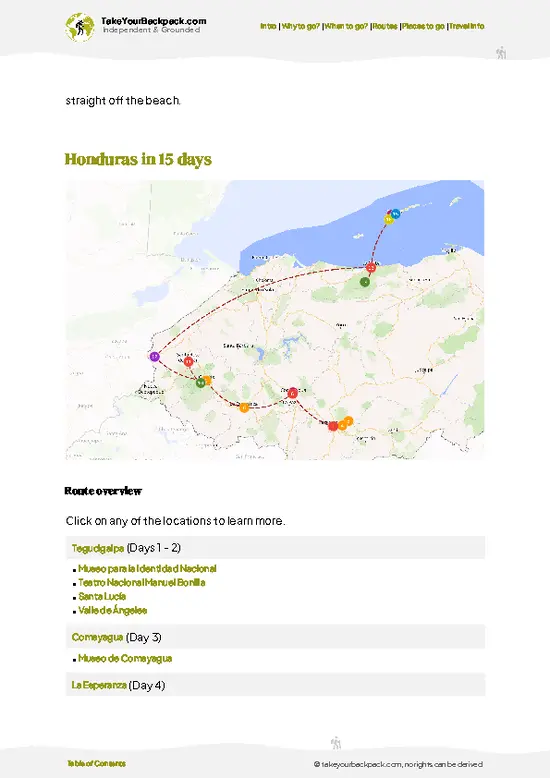
example page 0 from our offline Travel Guide for Honduras
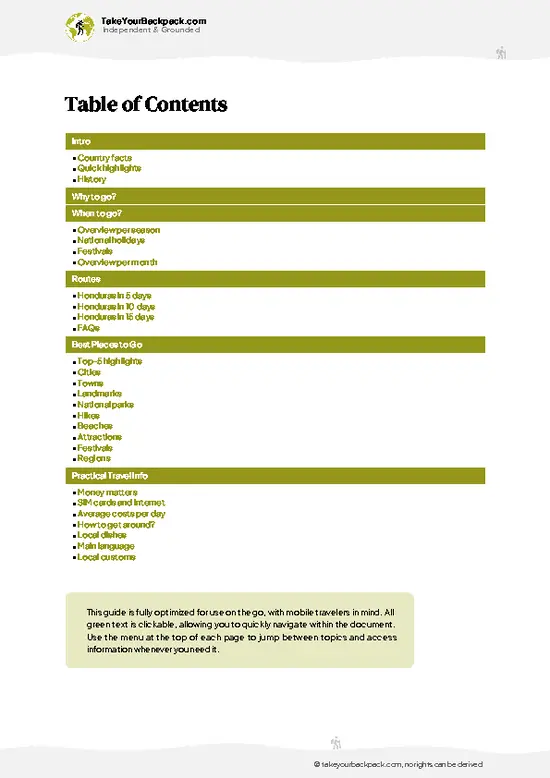
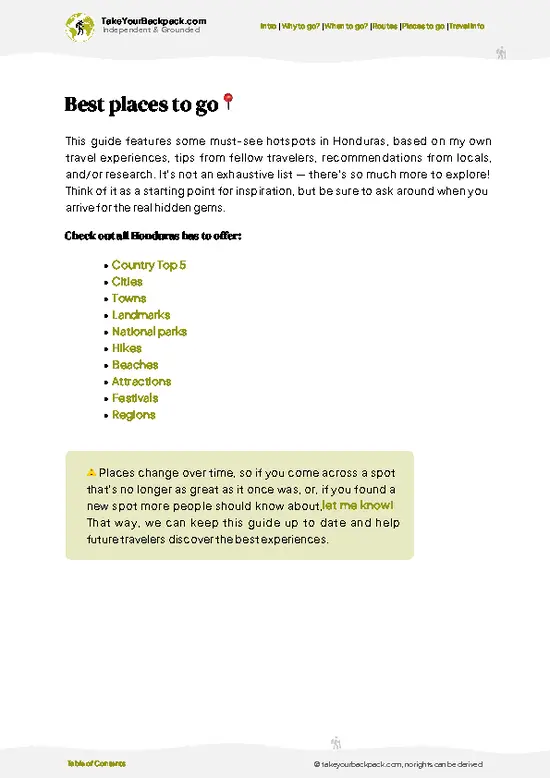
example page 1 from our offline Travel Guide for Honduras
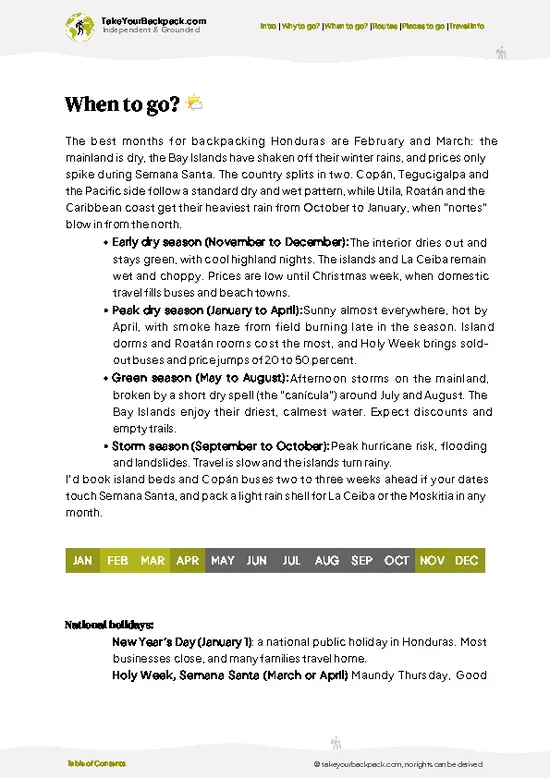
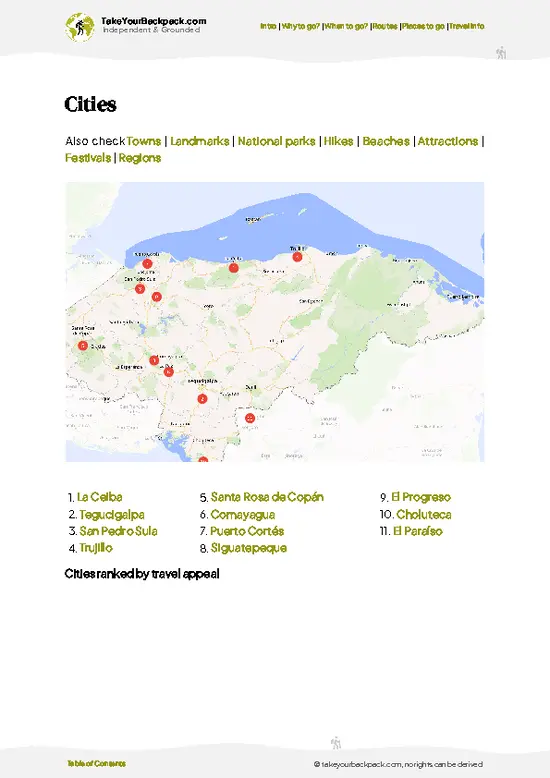
example page 2 from our offline Travel Guide for Honduras
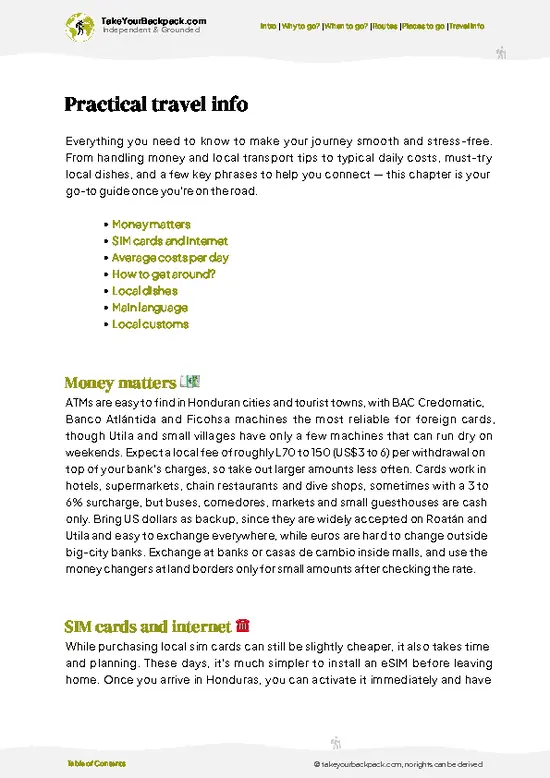
example page 3 from our offline Travel Guide for Honduras
example page 4 from our offline Travel Guide for Honduras
example page 5 from our offline Travel Guide for Honduras
example page 6 from our offline Travel Guide for Honduras
example page 7 from our offline Travel Guide for Honduras
Loading the map 🌍
CLICK TO FILTER
cities
towns
landmarks
national parks
hikes
beaches
attractions
festivals
regions
SHOW COUNTRY’S BESTSHOW ALL

✨ Why go?
Ranked #11 town in Honduras
What makes this town worth visiting

Puerto Lempira is the practical door to the lagoon country, and that is its real pull. From here you can hire a boat to Miskito villages, reach Caratasca Lagoon's islands, and arrange onward trips into the Mosquitia wilderness. Most travelers stay one or two nights to sort transport and supplies. The town has a few simple guesthouses, and the Caratasca Lagoon waterfront is where you meet boatmen and locals. Food is local and straightforward, with fried fish and coconut bread at small stalls. You will hear Miskito as much as Spanish, which is part of the interest. It suits independent, flexible, Spanish-speaking travelers who like remote places. It is poor for anyone wanting nightlife or polished sights, and a short stop is plenty unless you are heading out by boat.

💡 HighlightsDon't-miss highlights and experiences

  1. Caratasca Lagoon waterfront: The town's main reason to exist, where cayucos and small boats come and go. Go at dawn or late afternoon when fishers return. Free, 1 to 2 hours.
  2. Central market: Fish, plantains, cassava, coconut bread and basic supplies, with Miskito vendors. Mornings are liveliest. Free to enter, a meal costs US$3 to 6, about 1 hour.
  3. Town dock and boat landing: Watch passenger boats and cargo load, and talk to boat owners about trips across the lagoon. Early morning is best. Free, 45 minutes.
  4. Parque Central: A simple plaza where locals gather in the evening, useful for a cold drink and a sense of daily life. Free, 30 to 60 minutes.
  5. Sunset along the lagoon shore: The open water gives wide skies, and the walk is easy from any guesthouse. Free, about 1 hour.
For a first visit, the lagoon … read more 👉
  1. Caratasca Lagoon waterfront: The town's main reason to exist, where cayucos and small boats come and go. Go at dawn or late afternoon when fishers return. Free, 1 to 2 hours.
  2. Central market: Fish, plantains, cassava, coconut bread and basic supplies, with Miskito vendors. Mornings are liveliest. Free to enter, a meal costs US$3 to 6, about 1 hour.
  3. Town dock and boat landing: Watch passenger boats and cargo load, and talk to boat owners about trips across the lagoon. Early morning is best. Free, 45 minutes.
  4. Parque Central: A simple plaza where locals gather in the evening, useful for a cold drink and a sense of daily life. Free, 30 to 60 minutes.
  5. Sunset along the lagoon shore: The open water gives wide skies, and the walk is easy from any guesthouse. Free, about 1 hour.
For a first visit, the lagoon waterfront gives you the town in one stretch. Beyond Puerto Lempira, boat trips reach Miskito villages on the lagoon, and longer journeys lead toward Rus Rus and the wider Mosquitia rainforest.
Spotted a mistake or missing something? Contact us.

🏘️ NeighborhoodsUnderstanding the local layout

Puerto Lempira is small enough to cover on foot in an afternoon, and the useful parts split into a few distinct zones on the edge of Laguna de Caratasca.
  • Waterfront and the dock: The wooden piers on the lagoon are where boats leave for Miskito villages and where fishermen unload. Walk it at dawn or late afternoon for flat light, pelicans and a breeze that breaks the heat. Skip it at midday, when it is empty and hot.
  • Central streets around the market: Paved and dusty by turns, with the market, small comedores, pharmacies, shops and the few money-changing options. Order grilled fish or rice with coconut beans for a few dollars. Expect motorbike taxis, not sights.
  • Barrio near the airstrip: Quiet residential blocks of wooden stilt houses and kids playing football. Nothing to tick off, but a ten-minute
… read more 👉
Puerto Lempira is small enough to cover on foot in an afternoon, and the useful parts split into a few distinct zones on the edge of Laguna de Caratasca.
  • Waterfront and the dock: The wooden piers on the lagoon are where boats leave for Miskito villages and where fishermen unload. Walk it at dawn or late afternoon for flat light, pelicans and a breeze that breaks the heat. Skip it at midday, when it is empty and hot.
  • Central streets around the market: Paved and dusty by turns, with the market, small comedores, pharmacies, shops and the few money-changing options. Order grilled fish or rice with coconut beans for a few dollars. Expect motorbike taxis, not sights.
  • Barrio near the airstrip: Quiet residential blocks of wooden stilt houses and kids playing football. Nothing to tick off, but a ten-minute stroll shows how Miskito families live. Go only if you have spare time.
  • Outskirts and roads toward neighboring communities: Flat lanes through pine savanna and lagoon edges, good by bicycle or motorbike taxi at sunset. There is no nightlife to speak of beyond a few bars with loud music, so plan on early nights.

⌛️ 1 dayHow to make the most of one day

A waterfront and market day, slow and low-key.
7:00 AM, Lagoon dock: Watch fishers land the morning catch and chat with boatmen about trips. Walk ten minutes into town afterward.
8:30 AM, Central market: Eat fried fish or coconut bread for breakfast, then browse produce and local goods. Take your time with the vendors.
10:30 AM, Parque Central: Sit with a cold drink, then walk to the shore. It is a short stroll.
12:30 PM, Waterfront comedor: Lunch on fish with rice and beans, and rest through the hottest hours.
3:00 PM, Residential Miskito streets away from the center: Wander the quieter wooden-house neighborhoods near the lagoon edge, where children play and nets dry in yards. Rarely part of any itinerary, and greetings are welcome.
5:30 PM, Lagoon shore: Watch the sunset over the water, then eat nearby and turn in early.

🌤️ When to go?Seasonal considerations and timing

February to May is the driest stretch on the Mosquitia coast, when boats run easily and trails stay passable.
  • Dry Season (Feb to May): Highs reach 30 to 34°C (86 to 93°F), with little rain and about 11 to 13 hours of daylight. Easiest for lagoon trips, though it gets hot by midday.
  • Wet Season (Jun to Jan): Heavy downpours are frequent, peaking around October to December, when northern storms can flood roads and cancel flights. Temperatures sit at 24 to 31°C (75 to 88°F).
  • Crowds and prices: Visitors are few year-round. Fuel and boat charters cost more when supplies are tight, with no real peak-season surcharge.
Book small flights early for Semana Santa, when families travel home.

source: climatestotravel.comJANJanuary: good for travelingFEBFebruary: excellent for travelingMARMarch: excellent for travelingAPRApril: excellent for travelingMAYMay: highly recommended for travelingJUNJune: fair for travelingJULJuly: fair for travelingAUGAugust: fair for travelingSEPSeptember: below average for travelingOCTOctober: below average for travelingNOVNovember: fair for travelingDECDecember: good for traveling
when-to-go

✈️ The backpacker research shortcutHonduras Travel Guide

An offline-friendly backpacking guide with optimized travel routes, ranked highlights, transport advice, and the best areas to stay.
example page 0 from our offline Travel Guide for Honduras
example page 1 from our offline Travel Guide for Honduras
example page 2 from our offline Travel Guide for Honduras
example page 3 from our offline Travel Guide for Honduras
example page 4 from our offline Travel Guide for Honduras
example page 5 from our offline Travel Guide for Honduras
example page 6 from our offline Travel Guide for Honduras
example page 7 from our offline Travel Guide for Honduras
The digital guide (255 pages) contains:
✅ 70 highlights, ranked by travel appeal
✅ Optimized 5, 10 & 15-day travel routes
✅ Cities, national parks, landmarks, beaches
✅ How to get around
✅ Offline-friendly for travel without Wi-Fi
👉 Click to see all 30+ guide features

📅 Plan smarter in minutes, not weeks
✅ Month by month travel advice
✅ Festivals & national holidays
✅ Budget expectations

🗺️ Go to the right places, skip the overrated ones
✅ Honest pros & cons of destinations
✅ Top hikes, parks & viewpoints
✅ Lesser-known places most travelers miss
✅ Clear “worth it vs skip it” guidance

🛏️ Travel smoothly without rookie mistakes
✅ Best areas to stay
✅ Transport systems explained simply
✅ Common scams & safety advice
✅ SIM cards, money & practical tips

🌍 Understand the country, not just visit it
✅ Culture & traditions
✅ 52 Essential phrases & customs
✅ Festivals worth planning around
✅ Traveler-friendly historical context
✅ Insights that make places more meaningful

📱 Built for real travel conditions
✅ Fully downloadable PDF
✅ Works completely offline
✅ Optimized for phone use
✅ Useful in remote areas & buses
✅ Everything in one place
Stop searching, start planning
Get instant access to your full guide. 30‑day money-back guarantee.
+ Add another guide for just

By proceeding you agree to our terms.
Sent to your inbox immediately after payment • 100% Secure Checkout
Best Backpacking Travel Advisor 2025 tourism awardBest Backpacking
Travel Advisor
2025
What others say about Take Your Backpack Guides:
⭐⭐⭐⭐⭐
Fantastic, amazing amount of information!
⭐⭐⭐⭐⭐
My goodness this is amazing, it's what I've been looking for hats off too you!
⭐⭐⭐⭐⭐
I think this is absolutely BRILLIANT
⭐⭐⭐⭐
Very complete and informative. It's still missing places, but I gotta to commend you
⭐⭐⭐⭐⭐
This is truly amazing, thank you, can't wait to explore it with my kids!
⭐⭐⭐⭐⭐
Awesome resource, thank you!
⭐⭐⭐⭐⭐
This is amazing! Can't wait to explore the ones I haven't seen
⭐⭐⭐⭐
I love this! Well done, great idea.
⭐⭐⭐⭐⭐
Thanks for taking the time to make this gem!
⭐⭐⭐⭐⭐
This might be the best website I've ever seen.
⭐⭐⭐⭐⭐
Congratulations, and thank you so much for your work; it's incredibly valuable.
⭐⭐⭐⭐
In all seriousness I think you did a great job pointing out the important spots
⭐⭐⭐⭐⭐
10/10 very good
⭐⭐⭐⭐⭐
As someone who's only just starting to visit regularly this is awesome, thank you.
⭐⭐⭐⭐
Thank you very much! I'm going to visit my dad, it's going to be very useful!
⭐⭐⭐⭐⭐
This is really cool! We'll be travelling for the first time and this definitely come in handy.
⭐⭐⭐⭐⭐
You are now our minister of culture, congratulations 👨‍💼
⭐⭐⭐⭐⭐
Just wanted to tell you that this is a pearl! Going to follow your recommendations.
⭐⭐⭐⭐⭐
This is so cool. I'll definitely be using the resource for my travels soon.
⭐⭐⭐⭐⭐
This is very impressive! Good work.
⭐⭐⭐⭐⭐
This is an amazing and informative site. Very well done!

🛏️ Where to stay?How to pick the right area

The streets close to the central market and waterfront are the best base in Puerto Lempira, because everything you need sits within a ten-minute walk. Budget rooms in guesthouses are available there, typically US$12 to 25 for a basic private room, and dorm-style beds are rare. Fans are common and air conditioning costs more, so check the room before paying.

This center area is also where motorbike taxis wait, the dock for lagoon boats is close, and shops and comedores stay open into the evening. Streets are dimly lit after dark but people are out until about 9 pm, which makes it easier to walk … read more 👉
The streets close to the central market and waterfront are the best base in Puerto Lempira, because everything you need sits within a ten-minute walk. Budget rooms in guesthouses are available there, typically US$12 to 25 for a basic private room, and dorm-style beds are rare. Fans are common and air conditioning costs more, so check the room before paying.

This center area is also where motorbike taxis wait, the dock for lagoon boats is close, and shops and comedores stay open into the evening. Streets are dimly lit after dark but people are out until about 9 pm, which makes it easier to walk back from dinner. Expect some noise from music and roosters.

The quieter blocks toward the airstrip are a second choice if you want less noise. They are a bit farther from food and the dock, so you will use motorbike taxis more. Book ahead around holidays, when rooms fill with visiting families and workers.

🚌 Getting aroundTransportation options and practical tips

Paying for a private boat or flight before checking the shared options is the mistake that burns the most cash in Puerto Lempira. Most backpackers walk the compact center, then use motorbike taxis and shared lagoon boats for everything beyond it. Roads out of town are limited, and the wet season turns them to mud.
  • Walking: The center takes about 15 minutes end to end. Go in the early morning or late afternoon, and you get the cooler air and the dock activity.
  • Motorbike taxi: Rides in town cost roughly US$0.50 to 1.50. They are fast, they are everywhere, and drivers know every lane. A helmet is rare, so go slowly.
  • Shared pickup or truck: Vehicles run on the few roads to nearby communities for about US$2 to 8, usually in the morning. Departures are when the cab fills, so arrive early and expect
… read more 👉
Paying for a private boat or flight before checking the shared options is the mistake that burns the most cash in Puerto Lempira. Most backpackers walk the compact center, then use motorbike taxis and shared lagoon boats for everything beyond it. Roads out of town are limited, and the wet season turns them to mud.
  • Walking: The center takes about 15 minutes end to end. Go in the early morning or late afternoon, and you get the cooler air and the dock activity.
  • Motorbike taxi: Rides in town cost roughly US$0.50 to 1.50. They are fast, they are everywhere, and drivers know every lane. A helmet is rare, so go slowly.
  • Shared pickup or truck: Vehicles run on the few roads to nearby communities for about US$2 to 8, usually in the morning. Departures are when the cab fills, so arrive early and expect a bumpy, dusty seat in the open bed with big skies around you.
  • Lagoon boats (lanchas): The main way to reach Miskito villages and the coast. Shared seats cost about US$5 to 20 depending on distance, and a private charter runs US$60 to 150 or more with fuel. You get the best view of the lagoon, but bring a rain cover.
  • Small plane: Light aircraft connect to La Ceiba and Tegucigalpa, often US$100 to 200 one way. It is the only quick way out, and it saves a multi-day trip. Flights depend on weather and fill up, so book early.

👛 Costs (as of 23 October 2026)How expensive it really is

Puerto Lempira costs about US$36 to 70 a day for a backpacker in high season, mostly because boats and food are pricier in this remote region.
CategoryBudget RangeLocal Reality
Dorm accommodationUS$12 to 20Dorms are rare, so a basic private room with a fan is the norm.
MealsUS$9 to 14Fish, rice and beans at comedores cost US$3 to 5 each.
Local transportUS$2 to 5Motorbike taxis cost US$0.50 to 1.50 a ride.
Basic activities/entry feesUS$10 to 25Shared boat seats to nearby villages are the main expense.
Miscellaneous expensesUS$3 to 6Water, snacks and phone credit.
Total Daily BudgetUS$36 to 70About US$53 at a typical mid-point in high season.
Share boat seats with other passengers rather than chartering, which can cut the cost by more than half. Pay in cash, since cards are rarely accepted.

source: honduras.travel
⚠️ Prices can change and everyone travels differently, so take this as a rough guide. Hope it helps you plan your adventure!

🚌 Day tripsEasy escapes and nearby places

Puerto Lempira works as a base for boat-based day trips across Laguna de Caratasca, though everything depends on tides, weather and a driver willing to go.
Lagoon Miskito Villages: Shared or chartered boats reach stilt-house communities on the lagoon in 30 minutes to 2 hours each way. You see daily life, fishing and cayuco building. Budget US$10 to 40 shared, more for a private boat. Dry season is smoothest, and a common mistake is not arranging a return time before leaving.

Mistruk: This Miskito community on the lagoon is reachable by boat in around one to two hours, with simple meals of fish and plantain. Expect to spend about US$20 to 50 including the boat. Go early so you are back before afternoon storms.

Kaukira: Kaukira sits across the water and can be reached by boat in roughly one … read more 👉
Puerto Lempira works as a base for boat-based day trips across Laguna de Caratasca, though everything depends on tides, weather and a driver willing to go.
Lagoon Miskito Villages: Shared or chartered boats reach stilt-house communities on the lagoon in 30 minutes to 2 hours each way. You see daily life, fishing and cayuco building. Budget US$10 to 40 shared, more for a private boat. Dry season is smoothest, and a common mistake is not arranging a return time before leaving.

Mistruk: This Miskito community on the lagoon is reachable by boat in around one to two hours, with simple meals of fish and plantain. Expect to spend about US$20 to 50 including the boat. Go early so you are back before afternoon storms.

Kaukira: Kaukira sits across the water and can be reached by boat in roughly one to two hours. Fishing is the main business, and the beach and lagoon views are the draw. Plan US$20 to 60 round trip. Go in the dry months, when conditions are calmer.

🛡️ SafetySafety Tips and Common Scams in Puerto Lempira

Puerto Lempira is generally calm for travelers, and the small size means people notice strangers and tend to look out for them. Carry only the cash you need, since banking is limited and replacing money is hard. After dark, stick to lit central streets and use a motorbike taxi rather than walking the outskirts, especially if you are alone. Pickpocketing is uncommon, but keep your phone out of sight at the market. The real annoyances are practical: boat drivers who quote high prices to outsiders, so agree on the fare and the return time first. Drug trafficking passes through the wider Mosquitia region, so avoid asking about it, skip remote night travel, and do not wander into unfamiliar areas.

FAQTraveler FAQ

Puerto Lempira is worth visiting if you want the Mosquitia region, not a quick stopover. It is the main hub of Laguna de Caratasca and the gateway to Miskito villages reachable by lancha. Expect rough logistics, with flights from La Ceiba costing roughly US$100 to 200 one way.
Plan two to four days in Puerto Lempira. One day covers the waterfront, market and town, and one or two more allow boat trips to lagoon communities for US$10 to 40 each. Add a buffer day, since weather can cancel flights and boats.
Puerto Lempira is not realistic as a day trip from a nearby city, because the closest large cities such as La Ceiba are far away and linked mainly by small plane or a long boat and road trip via Batalla. A flight takes about an hour, but the fare and the weather risk make a same-day return impractical. Stay at least one night.
⚠️ Things can change over time, so always validate details locally before you go.

Other Honduran towns near Puerto Lempira

Explore more nearby:

  • Campamento—Olancho highway stop, grilled meat comedores, market and plaza| 320 km away
  • Guaimaca—Dawn buses, tortilla griddles, eastern highway, rural fincas| 337 km away
  • Utila—Dive shops, iguana station, front street, ferry pier| 346 km away

💡 Not sure where to go next?
Create a personalized itinerary for Honduras including Puerto Lempira and the places that fit your trip.

Generate my itinerary

👉 Discover all towns

Or checkout all Honduras has to offer (think cities, towns, villages, national parks, hikes, beaches, festivals)
Country photo of Honduras

We 💚 feedbackIs it worth it?

Many travelers arrive in Puerto Lempira without cash or a boat plan, then lose a day sorting both. I would withdraw money before flying in, ask about boats the evening you land, and keep a buffer day in case weather or fuel delays things.

✈️ When did I visit Honduras?
Honduras I visited during my half year trip through South and Central America back in 2003

✍️ Help improve this page!
The information on this page is based on my own backpacking experience in Honduras, supplemented with up-to-date research and feedback from other travelers. Travel details can change, so if you notice anything outdated or incomplete, feel free to let me know.


🙋‍♂️ Give feedback

👋 Meet the founderWho’s Behind Take Your Backpack?

Johan, backpacker and founder of TakeYourBackpackHi, I’m Johan (Netherlands 🇳🇱), the creator of TakeYourBackpack. Over the past 3 decades, I’ve backpacked through 90+ countries across six continents, gaining extensive experience with independent travel, long-term trips, and overland routes.

This site is built on a combination of firsthand travel experience and carefully curated insights from other backpackers. Many guides are based on places I’ve personally visited, while others bring together tips, observations, and practical advice shared by trusted travelers I’ve met along the way.

The goal is to provide realistic, experience-driven guidance — not generic itineraries — so you can explore destinations with better context, clearer expectations, and more confidence.