×

Hong Kong🇭🇰 | landmarksTsing Shan MonasteryAncient temple complex, incense pavilions, forested hillside | things to do and best time to go

Explore Water World Ocean Park Hong KongExplore Chi Lin Nunnery

Backpacking in Tsing Shan Monastery
👀 For curious travelersunique site ranked #9
By Johan Kruseman 🇳🇱 | Updated September 4, 2026

Forget the Instagram fantasy: Tsing Shan Monastery isn’t some mist-shrouded, monk-filled mountain retreat where you’ll meditate in perfect silence. It’s real Hong Kong—alive, imperfect, and layered with history. You’ll find it tucked above Tuen Mun, on the western edge of the New Territories, a world away from the city’s glass towers but still within reach of the MTR and a sweaty uphill walk. Here’s the truth: you won’t be alone. Locals come to pray, school groups chatter past, and yes, the odd influencer will pose by the ancient archway. But the crowds thin out fast, and the deeper you wander, the more the city noise fades. The monastery’s bones are old—over 1,500 years of Buddhist history, with incense curling through weathered courtyards and a view that, on a clear day, will make you forget the skyscrapers below. Entry is free, the vibe is contemplative but never sterile, and the photo ops are honest—think faded murals, mossy stone, and real worship, not staged serenity.

Discover everything you want to know in the 📖 Hong Kong Travel Guide.
Loading the map 🌍
CLICK TO FILTER
towns
landmarks
national parks
hikes
beaches
attractions
festivals
regions
SHOW COUNTRY’S BESTSHOW ALL

✨ Why go?
Ranked #9 unique site in Hong Kong
Why visitors keep coming back

Tsing Shan Monastery in Hong Kong doesn’t scream “world wonder” on the usual tourist radar, but that’s exactly why it’s a must for backpackers who know what’s up. Forget the Instagram-perfect skyline shots—this place offers something far more grounded: a genuine slice of spiritual calm tucked into a rugged hillside. The hike up isn’t a casual stroll; it’s a solid 30-45 minute climb that weeds out the casual sightseer. That effort pays off with sweeping views of the South China Sea and a chance to wander through centuries-old temples where incense smoke curls in the salty air.

The cost? Practically nothing. No entrance fees, no overpriced tours. Just your own two feet and a bit of time. It’s also a smart add-on if you’re exploring the New Territories or heading to nearby beaches and villages. … read more 👉
Tsing Shan Monastery in Hong Kong doesn’t scream “world wonder” on the usual tourist radar, but that’s exactly why it’s a must for backpackers who know what’s up. Forget the Instagram-perfect skyline shots—this place offers something far more grounded: a genuine slice of spiritual calm tucked into a rugged hillside. The hike up isn’t a casual stroll; it’s a solid 30-45 minute climb that weeds out the casual sightseer. That effort pays off with sweeping views of the South China Sea and a chance to wander through centuries-old temples where incense smoke curls in the salty air.

The cost? Practically nothing. No entrance fees, no overpriced tours. Just your own two feet and a bit of time. It’s also a smart add-on if you’re exploring the New Territories or heading to nearby beaches and villages. You’re not making a special trip just for the monastery—it slots naturally into a broader route, making your day richer without stretching your schedule or budget.

In a city that’s often all hustle and neon, Tsing Shan Monastery is a rare pause button. It’s not flashy, but it’s real. And that’s why backpackers who want more than just a postcard keep coming back.
Want to include Tsing Shan Monastery in your Hong Kong route?
Create a personalized Hong Kong itinerary that includes Tsing Shan Monastery and the places that fit your trip — based on your travel style, budget, and available time. Get your route in seconds.

Generate my trip

💡 HighlightsEssential experiences to have while visiting Tsing Shan Monastery

The Main Hall (Daxiong Baodian)
Forget the Instagram filters—this is the real deal. The Main Hall isn’t just another incense-choked photo op. It’s a living, breathing relic from the early 20th century, built in 1918, and still pulsing with the quiet energy of daily Buddhist practice. The architecture is classic southern Chinese, but what sets it apart is the sense of continuity: monks and laypeople actually use this space. The air is thick with sandalwood and the low hum of chanting, not the click of camera shutters. If you want to see faith in action, not just in stone, stand quietly at the threshold and watch the rhythm of devotion unfold.


The Ancient Bronze Bell
This isn’t your average temple bell. Cast in 1749, the bronze bell at Tsing Shan Monastery is older than most countries. It’s … read more 👉
The Main Hall (Daxiong Baodian)
Forget the Instagram filters—this is the real deal. The Main Hall isn’t just another incense-choked photo op. It’s a living, breathing relic from the early 20th century, built in 1918, and still pulsing with the quiet energy of daily Buddhist practice. The architecture is classic southern Chinese, but what sets it apart is the sense of continuity: monks and laypeople actually use this space. The air is thick with sandalwood and the low hum of chanting, not the click of camera shutters. If you want to see faith in action, not just in stone, stand quietly at the threshold and watch the rhythm of devotion unfold.


The Ancient Bronze Bell
This isn’t your average temple bell. Cast in 1749, the bronze bell at Tsing Shan Monastery is older than most countries. It’s battered, yes, but that’s the point—every dent is a chapter in Hong Kong’s story. The bell is still rung during major ceremonies, and if you’re lucky enough to hear it, the sound is less a chime and more a seismic event. It vibrates through your chest, a reminder that you’re standing in a place where centuries overlap. No filter can capture that.


The Tsing Shan Path
Here’s the truth: the walk up to the monastery is not a gentle stroll. It’s a sweaty, uphill grind, especially in Hong Kong’s humidity. But this is where the crowds thin out and the city’s noise drops away. The path is lined with ancient stone lanterns and mossy steps, and if you hit it early, you’ll have the forest to yourself—just you, the birds, and the occasional wild monkey. The payoff isn’t just the view (though the panorama over Tuen Mun is worth every drop of sweat), but the sense of arrival. You’ve earned your peace and quiet.


The Hall of Three Sages
Most visitors miss this tucked-away hall, which is a mistake. The Hall of Three Sages is a riot of color and symbolism, dedicated to Amitabha Buddha, Avalokitesvara, and Mahasthamaprapta. The statues are intricate, the murals even more so, but what really sets this hall apart is the atmosphere. It’s quieter, cooler, and feels like a secret—one that’s been kept for centuries. If you want a moment of reflection without the crowds, this is your spot.


The Monastery’s Living Community
Here’s the myth-buster: Tsing Shan Monastery isn’t a museum. It’s a functioning Buddhist community. Monks live, study, and practice here, and if you’re respectful, you’ll catch glimpses of daily rituals—chanting, sweeping, tending to the gardens. This is what makes the place magic: it’s not frozen in time for tourists. It’s alive, imperfect, and utterly real. If you’re looking for authenticity, this is it.
Spotted a mistake or missing something? Contact us.

🌤️ When to go?Seasonal considerations and timing


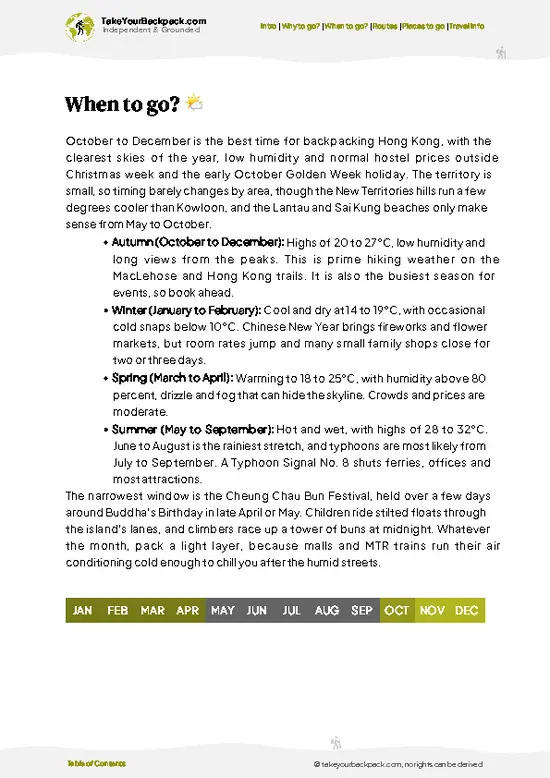
  • Weather: Hong Kong’s subtropical climate means Tsing Shan Monastery gets muggy and rainy from May through September, with humidity often above 80%. If you hate sweat and sudden downpours, avoid these months. October to December offers crisp, dry air that makes hiking and exploring far more pleasant.

  • Temperature: Winter months (December to February) hover around 14-18°C (57-64°F), cool but rarely freezing. Summer (June to August) can push 28-32°C (82-90°F), which feels hotter with the humidity. Spring and autumn are your sweet spots, balancing warmth and comfort.

  • Daylight Hours: From March to September, you get roughly 12 to 14 hours of daylight, perfect for early starts and late returns. Winter days shrink to about 10 hours, so plan your visit accordingly to avoid rushing through the
read more 👉

  • Weather: Hong Kong’s subtropical climate means Tsing Shan Monastery gets muggy and rainy from May through September, with humidity often above 80%. If you hate sweat and sudden downpours, avoid these months. October to December offers crisp, dry air that makes hiking and exploring far more pleasant.

  • Temperature: Winter months (December to February) hover around 14-18°C (57-64°F), cool but rarely freezing. Summer (June to August) can push 28-32°C (82-90°F), which feels hotter with the humidity. Spring and autumn are your sweet spots, balancing warmth and comfort.

  • Daylight Hours: From March to September, you get roughly 12 to 14 hours of daylight, perfect for early starts and late returns. Winter days shrink to about 10 hours, so plan your visit accordingly to avoid rushing through the site.

  • Crowds: Weekends and public holidays, especially around Chinese New Year (January/February) and Mid-Autumn Festival (September/October), pack the monastery with locals and tourists alike. For a quieter, more reflective experience, aim for weekdays outside these peak times.

  • Seasonal Activities: The monastery hosts occasional Buddhist ceremonies and festivals, mostly in spring and autumn. These events add cultural depth but also bring crowds. If you want authenticity without the crush, skip the big festival days.

  • Price Fluctuations: Entry to Tsing Shan Monastery is free, but nearby transport and accommodation can spike during peak tourist seasons (October to December). Booking in advance during these months saves headaches and inflated costs.


Pro-tip: Visit in late autumn (October-November) for the best mix of weather, manageable crowds, and cultural events that don’t feel like a tourist circus.


source: climatestotravel.comJANJanuary: good for travelingFEBFebruary: good for travelingMARMarch: highly recommended for travelingAPRApril: highly recommended for travelingMAYMay: fair for travelingJUNJune: fair for travelingJULJuly: fair for travelingAUGAugust: fair for travelingSEPSeptember: good for travelingOCTOctober: excellent for travelingNOVNovember: excellent for travelingDECDecember: highly recommended for traveling
when-to-go

✈️ The backpacker research shortcutHong Kong Travel Guide

An offline-friendly backpacking guide with optimized travel routes, ranked highlights, transport advice, and the best areas to stay.
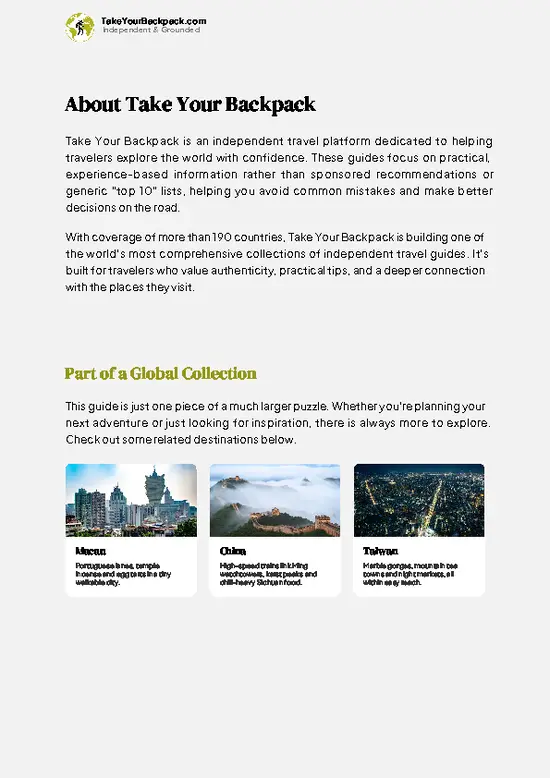
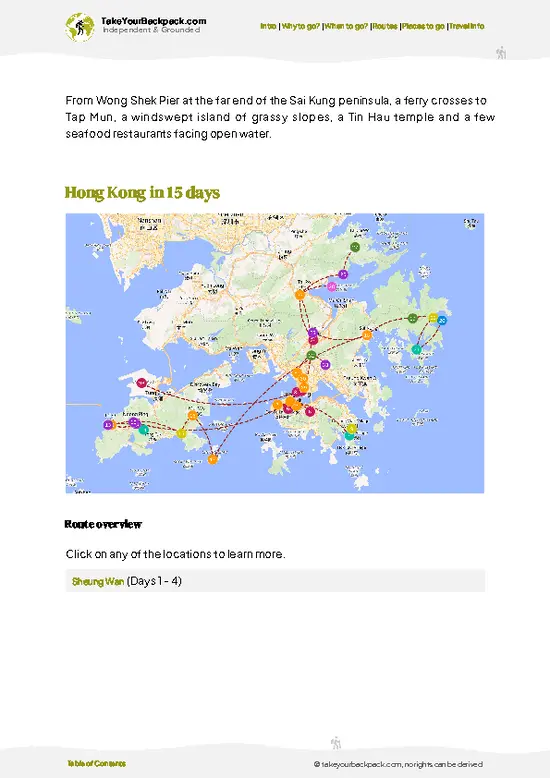
example page 0 from our offline Travel Guide for Hong Kong
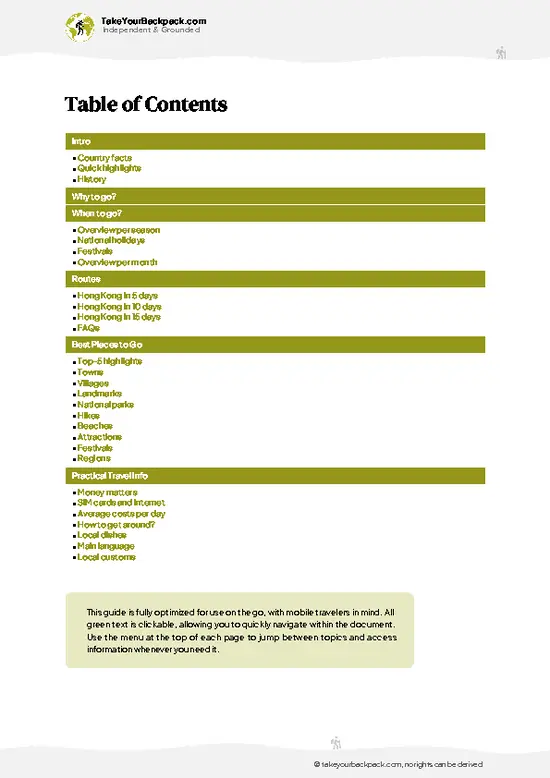
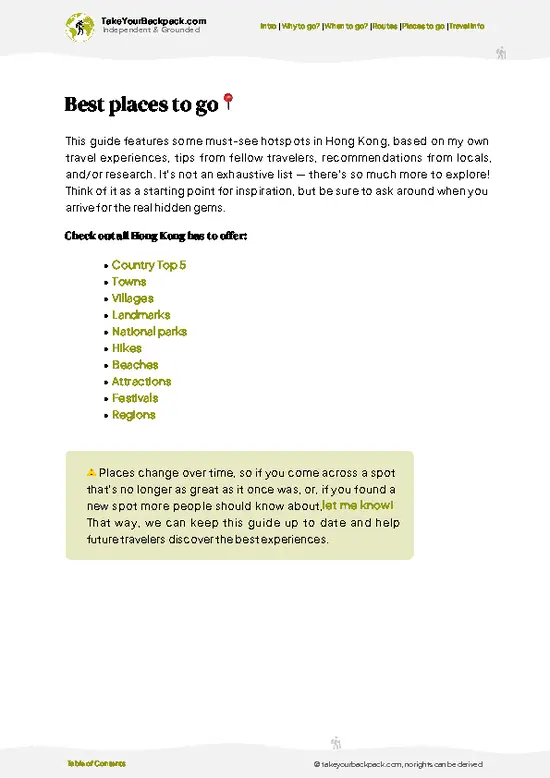
example page 1 from our offline Travel Guide for Hong Kong
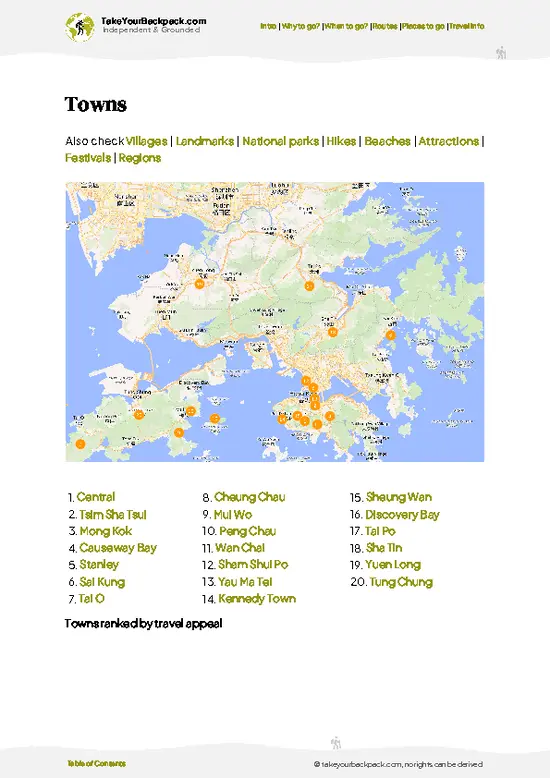
example page 2 from our offline Travel Guide for Hong Kong
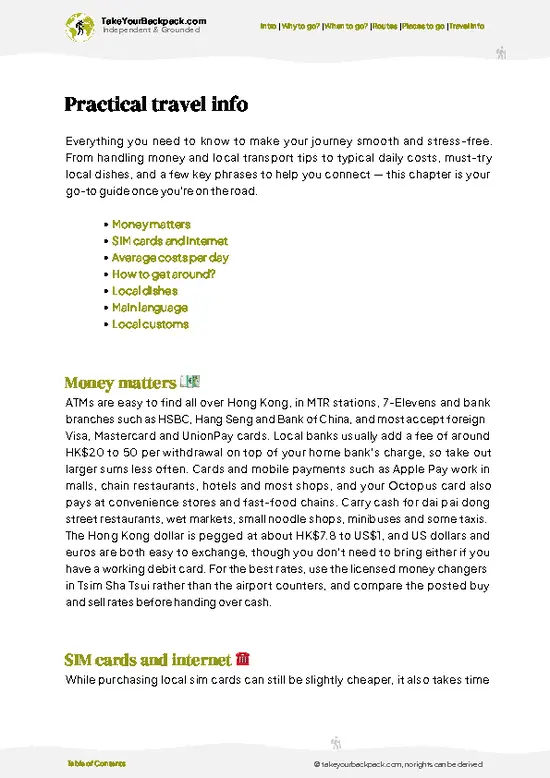
example page 3 from our offline Travel Guide for Hong Kong
example page 4 from our offline Travel Guide for Hong Kong
example page 5 from our offline Travel Guide for Hong Kong
example page 6 from our offline Travel Guide for Hong Kong
example page 7 from our offline Travel Guide for Hong Kong
The digital guide (357 pages) contains:
98 highlights, ranked by travel appeal
Optimized 5, 10 & 15-day travel routes
Cities, national parks, landmarks, beaches
How to get around
Offline-friendly for travel without Wi-Fi
👉 Click to see all 30+ guide features

📅 Plan smarter in minutes, not weeks
Month by month travel advice
Festivals & national holidays
Budget expectations

🗺️ Go to the right places, skip the overrated ones
Honest pros & cons of destinations
Top hikes, parks & viewpoints
Lesser-known places most travelers miss
Clear “worth it vs skip it” guidance

🛏️ Travel smoothly without rookie mistakes
Best areas to stay
Transport systems explained simply
Common scams & safety advice
SIM cards, money & practical tips

🌍 Understand the country, not just visit it
Culture & traditions
52 Essential phrases & customs
Festivals worth planning around
Traveler-friendly historical context
Insights that make places more meaningful

📱 Built for real travel conditions
Fully downloadable PDF
Works completely offline
Optimized for phone use
Useful in remote areas & buses
Everything in one place
Save weeks of stressful planning
Get instant access to your full guide. 30‑day money-back guarantee.
+ Add another guide for just US$7.80

By proceeding you agree to our terms.
Sent to your inbox immediately after payment • 100% Secure Checkout
Best Backpacking Travel Advisor 2025 tourism awardBest Backpacking
Travel Advisor
2025
What others say about Take Your Backpack Guides:
⭐⭐⭐⭐⭐
Fantastic, amazing amount of information!
⭐⭐⭐⭐⭐
My goodness this is amazing, it's what I've been looking for hats off too you!
⭐⭐⭐⭐⭐
I think this is absolutely BRILLIANT
⭐⭐⭐⭐
Very complete and informative. It's still missing places, but I gotta to commend you
⭐⭐⭐⭐⭐
This is truly amazing, thank you, can't wait to explore it with my kids!
⭐⭐⭐⭐⭐
Awesome resource, thank you!
⭐⭐⭐⭐⭐
This is amazing! Can't wait to explore the ones I haven't seen
⭐⭐⭐⭐
I love this! Well done, great idea.
⭐⭐⭐⭐⭐
Thanks for taking the time to make this gem!
⭐⭐⭐⭐⭐
This might be the best website I've ever seen.
⭐⭐⭐⭐⭐
Congratulations, and thank you so much for your work; it's incredibly valuable.
⭐⭐⭐⭐
In all seriousness I think you did a great job pointing out the important spots
⭐⭐⭐⭐⭐
10/10 very good
⭐⭐⭐⭐⭐
As someone who's only just starting to visit regularly this is awesome, thank you.
⭐⭐⭐⭐
Thank you very much! I'm going to visit my dad, it's going to be very useful!
⭐⭐⭐⭐⭐
This is really cool! We'll be travelling for the first time and this definitely come in handy.
⭐⭐⭐⭐⭐
You are now our minister of culture, congratulations 👨‍💼
⭐⭐⭐⭐⭐
Just wanted to tell you that this is a pearl! Going to follow your recommendations.
⭐⭐⭐⭐⭐
This is so cool. I'll definitely be using the resource for my travels soon.
⭐⭐⭐⭐⭐
This is very impressive! Good work.
⭐⭐⭐⭐⭐
This is an amazing and informative site. Very well done!

🛏️ Where to stay?How to pick the right area

Tsing Shan Monastery isn’t exactly the kind of place you stumble upon by accident. It’s tucked away on Tsing Yi Island, a spot that’s a bit off the usual Hong Kong backpacker radar. So, if you’re aiming to soak in the monastery’s quiet, spiritual vibe without breaking the bank or getting swallowed by tourist mobs, your best bet is to base yourself in the nearby neighborhoods rather than right next door.

Start with Tsuen Wan. It’s a gritty, working-class area that’s surprisingly backpacker-friendly. You’ll find plenty of budget guesthouses and hostels here, and the vibe is real—no polished tourist … read more 👉
Tsing Shan Monastery isn’t exactly the kind of place you stumble upon by accident. It’s tucked away on Tsing Yi Island, a spot that’s a bit off the usual Hong Kong backpacker radar. So, if you’re aiming to soak in the monastery’s quiet, spiritual vibe without breaking the bank or getting swallowed by tourist mobs, your best bet is to base yourself in the nearby neighborhoods rather than right next door.

Start with Tsuen Wan. It’s a gritty, working-class area that’s surprisingly backpacker-friendly. You’ll find plenty of budget guesthouses and hostels here, and the vibe is real—no polished tourist traps. It’s a place where locals grab their late-night noodles and where you can catch a glimpse of everyday Hong Kong life. Plus, it’s well connected by MTR, so hopping over to Tsing Shan Monastery is straightforward without the hassle of expensive taxis.

Another solid option is Kwai Chung. It’s industrial but has pockets of affordable accommodation and a decent social scene for solo travelers who want to meet others without the usual hostel party chaos. It’s safe, practical, and close enough to the monastery to make early morning visits doable.

Forget the flashy downtown hostels if your goal is authentic access to Tsing Shan Monastery. These neighborhoods offer the gritty charm and budget sense that make your trip feel like an adventure, not a checklist.

👛 Costs (as of 4 September 2026)What things cost and how to budget

Visiting Tsing Shan Monastery in Hong Kong is an affordable cultural experience with costs varying depending on your travel style.
  • Transportation: Public transport to the monastery typically costs between USD3 to 10 round trip, using buses or the MTR plus a short taxi ride.
  • Entrance Fee: The monastery itself is free to enter, but donations are appreciated for upkeep.
  • Food and Drink: Nearby eateries offer meals ranging from USD5 to 15 for local dishes, with snacks and drinks available for under USD5.
  • Guided Tours: Optional guided tours or audio guides can cost between USD15 to 30 if you want deeper insight into the site’s history and significance.
⚠️ Prices can change and everyone travels differently, so take this as a rough guide. Hope it helps you plan your adventure!

FAQTraveler FAQ

Tsing Shan Monastery is one of the oldest Buddhist monasteries in Hong Kong, dating back to the 9th century. It is located in Tuen Mun and is known for its serene environment and historic architecture. The site includes several temples, statues, and a famous stone inscription.
You need about 1 to 2 hours to visit Tsing Shan Monastery to fully explore the temples, enjoy the peaceful surroundings, and take photos. This allows enough time to walk around the complex and appreciate the historical details without rushing.
To get to Tsing Shan Monastery, take the MTR to Tuen Mun Station, then catch bus number 61M or 252 to the Tsing Shan Monastery stop. The monastery is about a 10-minute walk from the bus stop, located on Tsing Shan Hill Road.
⚠️ Things can change over time, so always validate details locally before you go.

Other Hong Kongese landmarks near Tsing Shan Monastery

Explore more nearby:


💡 Not sure where to go next?
Create a personalized itinerary for Hong Kong including Tsing Shan Monastery and the places that fit your trip.

Generate my itinerary

👉 Discover all landmarks

Or checkout all Hong Kong has to offer (think cities, towns, villages, national parks, hikes, beaches, festivals)
Country photo of Hong Kong

We 💚 feedbackKey takeaways before you go

Tsing Shan Monastery isn’t some polished postcard spot—expect a steady stream of visitors, especially on weekends. But that’s part of its charm: a living, breathing place where locals come to pray, chat, and find a moment of calm amid the city’s chaos. The real magic hits when you catch the scent of incense mixing with the sea breeze and spot the intricate carvings that don’t get the Instagram spotlight. It’s not about perfection here; it’s about feeling connected to something quietly enduring.

✍️ Help improve this page!
The information on this page is based on in-depth research, insights shared by experienced travelers, and feedback from the local travel community in Hong Kong. While every effort is made to keep the information accurate and current, conditions can change — so if you spot anything incorrect or outdated, please get in touch.


🙋‍♂️ Give feedback

👋 Meet the founderWho’s Behind Take Your Backpack?

Johan, backpacker and founder of TakeYourBackpackHi, I’m Johan (Netherlands 🇳🇱), the creator of TakeYourBackpack. Over the past decade, I’ve backpacked through 80+ countries across six continents, gaining extensive experience with independent travel, long-term trips, and overland routes.

This site is built on a combination of firsthand travel experience and carefully curated insights from other backpackers. Many guides are based on places I’ve personally visited, while others bring together tips, observations, and practical advice shared by trusted travelers I’ve met along the way.

The goal is to provide realistic, experience-driven guidance — not generic itineraries — so you can explore destinations with better context, clearer expectations, and more confidence.

Get full Hong Kong guide •
Instant download • 98 highlights • Full Offline guide