×

Hong Kong🇭🇰 | best landmarksThe Must-See 8 landmarks in Hong Kong

Hong Kong packs landmarks into a territory you can cross in an hour, so the real choice is the kind you want: skyline icons on Hong Kong Island, temples and street life in Kowloon, or big outdoor sights across the New Territories and outlying islands. Island and Kowloon sights are a short MTR ride apart and mostly free or cheap, though the famous viewpoints get packed after dark. Outer sights cost a ferry or bus fare and a little patience, and reward you with space. For independent travel, go early on weekdays, pick up an Octopus card, and keep your evenings for the lights.

By Johan Kruseman 🇳🇱 | Updated October 19, 2026
Explore the best national parks in Hong Kong

Why go?Understanding Their Importance

Hong Kong suits landmark-hunting because of one thing: density. A former British colony turned Chinese special administrative region, it layers Cantonese temples, colonial-era buildings, fishing-village heritage and one of the world's most vertical skylines inside roughly 1,100 square kilometers. Steep hills meeting a deep harbor created the dramatic views, and the compact, hilly geography means sights sit close to each other, so you can see a lot without a car.

The infrastructure is the other big advantage. The MTR, trams, buses and the Star Ferry link almost everything, with clear English signage, and a single Octopus card pays for most of it. Many sights are free or cost under HK$100 (about US$13).

Before you commit, know the limits. The climate shapes everything: summer heat and humidity … read more 👉
Hong Kong suits landmark-hunting because of one thing: density. A former British colony turned Chinese special administrative region, it layers Cantonese temples, colonial-era buildings, fishing-village heritage and one of the world's most vertical skylines inside roughly 1,100 square kilometers. Steep hills meeting a deep harbor created the dramatic views, and the compact, hilly geography means sights sit close to each other, so you can see a lot without a car.

The infrastructure is the other big advantage. The MTR, trams, buses and the Star Ferry link almost everything, with clear English signage, and a single Octopus card pays for most of it. Many sights are free or cost under HK$100 (about US$13).

Before you commit, know the limits. The climate shapes everything: summer heat and humidity are heavy, and typhoon warnings can close ferries, peak transport and outdoor sights. Haze and cloud can wipe out a skyline view, so check visibility the same day rather than booking around it. Crowds are real at headline spots, especially weekends, mainland holidays and sunset, while the quieter outlying places thin out fast on weekdays. Hong Kong is expensive for beds, but landmarks are one of its better-value pleasures.
Evaluating the Top Choices
The list of best unique sites in Hong Kong is created based on history or culture, wow factor, atmosphere, quirks, and memorability. If you feel a unique site is missing in this list, please let us know.

When to go?Seasonal Guide to Visiting

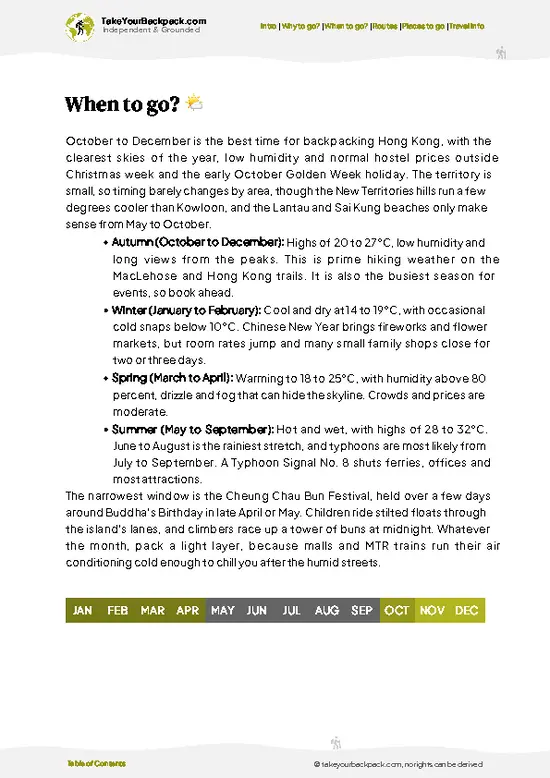
Best months: October to December: The best months for landmarks in Hong Kong are October to December, when humidity drops, skies turn clearer and daytime highs sit around 20 to 28°C, so walking between stops stays comfortable and harbor views are sharpest. Rain is minimal, often under 50 mm a month in November and December.
Shoulder seasons: January to February is cooler, 12 to 19°C, with damp gray days now and then, but fewer crowds and lower hotel rates outside Lunar New Year, when prices jump and some local businesses close for several days. March and April bring fog and rising humidity, then pleasant stretches before the heat builds. Late spring can be misty enough to hide skyline views.
Summer and typhoon season: May to September is hot and wet, 27 to 33°C with high humidity, and rainfall … read more 👉
Best months: October to December: The best months for landmarks in Hong Kong are October to December, when humidity drops, skies turn clearer and daytime highs sit around 20 to 28°C, so walking between stops stays comfortable and harbor views are sharpest. Rain is minimal, often under 50 mm a month in November and December.
Shoulder seasons: January to February is cooler, 12 to 19°C, with damp gray days now and then, but fewer crowds and lower hotel rates outside Lunar New Year, when prices jump and some local businesses close for several days. March and April bring fog and rising humidity, then pleasant stretches before the heat builds. Late spring can be misty enough to hide skyline views.
Summer and typhoon season: May to September is hot and wet, 27 to 33°C with high humidity, and rainfall peaks at 300 to 450 mm in June and August. Typhoon season runs roughly May to November, with September the riskiest. A signal 8 halts ferries and most buses, so keep a spare day. Hotels are often cheaper in summer, but outdoor sights are sweaty and storms can spoil views.
Crowd peaks: Golden Week in early October and the Lunar New Year weeks bring the biggest crowds. Go on weekday mornings, and save sunset views for clear evenings.

unique site hoppingOptimizing Your Multi-Stop Itinerary

How long to allow: A trip combining several landmarks in Hong Kong needs 3 to 5 days, enough to cover the island, Kowloon and one outer area without rushing.
How the regions group: Start on Hong Kong Island, where Central, Sheung Wan and the Peak area sit within 20 to 30 minutes of each other by MTR, tram or bus. Cross the harbor to Kowloon by Star Ferry (about 10 minutes) or MTR from Central to Tsim Sha Tsui (roughly 5 minutes). Finish with the New Territories or Lantau, which are the longest hops: 45 to 90 minutes each way from Central by MTR, bus or ferry. Working outward, with the farthest sights last, keeps your base central.
Time per stop: Most urban sights need 1 to 2 hours. Temples take about an hour, and hilltop or island areas need a half day to a full day with travel.
Planning mistakes: … read more 👉
How long to allow: A trip combining several landmarks in Hong Kong needs 3 to 5 days, enough to cover the island, Kowloon and one outer area without rushing.
How the regions group: Start on Hong Kong Island, where Central, Sheung Wan and the Peak area sit within 20 to 30 minutes of each other by MTR, tram or bus. Cross the harbor to Kowloon by Star Ferry (about 10 minutes) or MTR from Central to Tsim Sha Tsui (roughly 5 minutes). Finish with the New Territories or Lantau, which are the longest hops: 45 to 90 minutes each way from Central by MTR, bus or ferry. Working outward, with the farthest sights last, keeps your base central.
Time per stop: Most urban sights need 1 to 2 hours. Temples take about an hour, and hilltop or island areas need a half day to a full day with travel.
Planning mistakes: Travelers often cram island and outer stops into one day and lose hours to transit. Pair two nearby urban sights per half day instead. Another common error is sending outdoor stops to the hottest midday hours, so put them early morning and keep indoor or covered stops for afternoon. Many also reserve skyline evenings for a hazy night. Hold one flexible evening so you can pick the clearest sky.

The ListTop landmarks of Hong Kong

1 Tian Tan Buddha

Giant bronze statue, mountaintop platform, Po Lin Monastery

Ascend broad stone steps to encounter a monumental Buddha and panoramic vistas, with incense drifting from nearby monastic halls.

2 Ngong Ping 360

Cable car ride, panoramic mountain views, glass-bottom cabins

Ride above forested hills and open sea, arriving at a plateau that connects visitors to Lantau’s spiritual and natural landmarks.

3 Ten Thousand Buddhas Monastery

Steep hillside path, golden Buddha statues, secluded temple

Climb a staircase lined with unique Buddha figures to reach a peaceful sanctuary surrounded by forested slopes and distant city views.

4 Wong Tai Sin Temple

Fortune-telling stalls, Taoist altars, incense clouds

Observe worshippers seeking guidance through rituals and divination in a busy temple complex known for its vibrant religious activity.

5 Chi Lin Nunnery

Tang dynasty architecture, lotus ponds, Buddhist halls

Admire intricate wooden structures and tranquil gardens that reflect centuries-old Buddhist traditions amid the city’s urban landscape.

6 Tai O Promenade

Stilt houses, fishing village, tidal creek

Wander past traditional homes on stilts and observe daily life shaped by tidal rhythms and a long-standing fishing heritage.

hong-kong-unique-site-tai-o-promenade
© Google |

7 Tai Mei Tuk

Cycling trails, reservoir dam, mountain backdrop

Cycle or walk along a scenic causeway where the Plover Cove Reservoir meets rural villages and distant peaks frame the horizon.

8 Tsing Shan Monastery

Ancient temple complex, incense pavilions, forested hillside

Experience a centuries-old sanctuary set among wooded slopes, where quiet courtyards and ornate halls invite reflection.

Loading the map 🌍

Expert viewPro Tips for Exploring the Best

How many to visit: I advise 6 to 8 landmarks over a 4 to 5 day stay. Hong Kong is dense, but heat, humidity, stairs and crowds cut your stamina. Two sights per day, one morning and one late afternoon or evening, leaves room for food and rest.
Prioritizing by travel style: First-timers and photographers should lean toward the skyline and harbor sights, and book them for the clearest evenings. Culture seekers get more from temples and heritage buildings, best visited early when worshippers are present. Hikers and budget travelers should choose outdoor and outlying sights, which are mostly free and far quieter. Mix at least one of each kind so the trip does not feel repetitive.
Budget: Plan roughly US$25 to 45 a day for landmarks, local food and transport, excluding your bed. Many temples and promenades … read more 👉
How many to visit: I advise 6 to 8 landmarks over a 4 to 5 day stay. Hong Kong is dense, but heat, humidity, stairs and crowds cut your stamina. Two sights per day, one morning and one late afternoon or evening, leaves room for food and rest.
Prioritizing by travel style: First-timers and photographers should lean toward the skyline and harbor sights, and book them for the clearest evenings. Culture seekers get more from temples and heritage buildings, best visited early when worshippers are present. Hikers and budget travelers should choose outdoor and outlying sights, which are mostly free and far quieter. Mix at least one of each kind so the trip does not feel repetitive.
Budget: Plan roughly US$25 to 45 a day for landmarks, local food and transport, excluding your bed. Many temples and promenades are free, and others charge about HK$10 to 50 (US$1.30 to 6.50). Observation decks and cable cars cost HK$60 to 250 (US$8 to 32), and the pricier ones often have online discounts. Octopus card transport is about HK$5 to 20 (US$0.65 to 2.60) a ride, and the Star Ferry is under HK$7. Guided tours run US$30 to 80, and are mainly worth it for heritage walks or outer islands. A good rule is to pay for one or two headline experiences and keep the rest free.
Safety: Hong Kong is very safe, with low violent crime. Watch for pickpockets in packed viewpoints and markets, keep your bag zipped, and stay on marked trails, especially in summer. Heat exhaustion is the more common risk, so carry 1 to 2 liters of water and use sunscreen. Stay off cliff edges and watch trail warnings during black rainstorm signals or typhoon signals. Hillsides can slip after heavy rain.
Cultural considerations: At working temples, dress modestly with shoulders and knees covered, speak quietly, and do not point cameras at worshippers up close. Never stub out or step over incense and offerings. Ask before photographing people, and avoid stepping on thresholds when entering. Follow queue etiquette at ferries and escalators, stand right on escalators, and be patient in crowds. Carry small cash, since some temples and small sights do not take cards. Learn a friendly “m goi” (thanks, excuse me) to earn smiles.

✈️ The backpacker research shortcutHong Kong Travel Guide

An offline-friendly backpacking guide with optimized travel routes, ranked highlights, transport advice, and the best areas to stay.
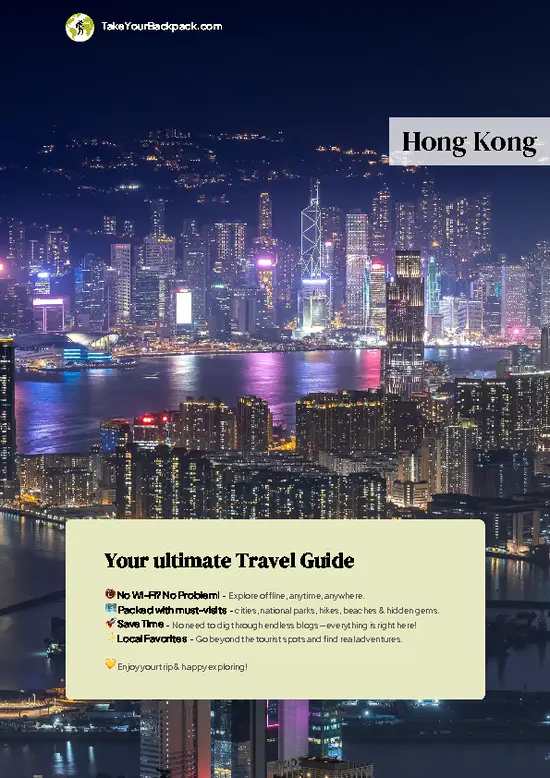
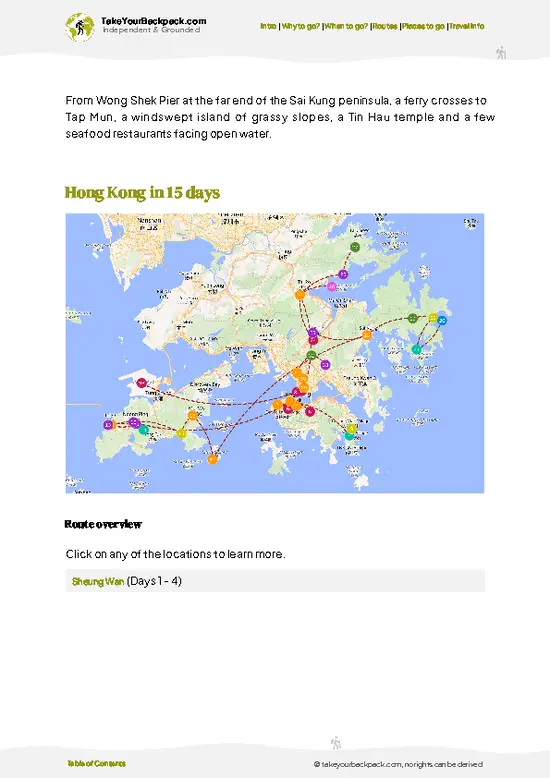
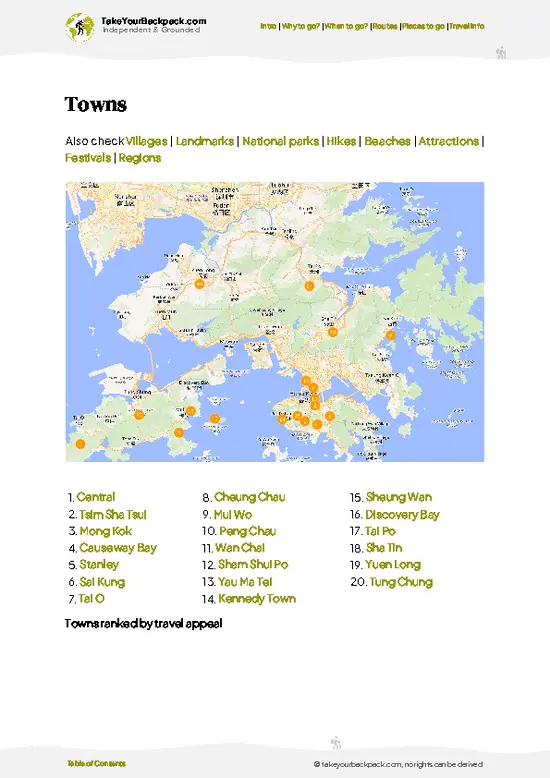
example page 0 from our offline Travel Guide for Hong Kong
example page 1 from our offline Travel Guide for Hong Kong
example page 2 from our offline Travel Guide for Hong Kong
example page 3 from our offline Travel Guide for Hong Kong
example page 4 from our offline Travel Guide for Hong Kong
example page 5 from our offline Travel Guide for Hong Kong
example page 6 from our offline Travel Guide for Hong Kong
example page 7 from our offline Travel Guide for Hong Kong
The digital guide (359 pages) contains:
✅ 97 highlights, ranked by travel appeal
✅ Optimized 5, 10 & 15-day travel routes
✅ Cities, national parks, landmarks, beaches
✅ How to get around
✅ Offline-friendly for travel without Wi-Fi
👉 Click to see all 30+ guide features

📅 Plan smarter in minutes, not weeks
✅ Month by month travel advice
✅ Festivals & national holidays
✅ Budget expectations

🗺️ Go to the right places, skip the overrated ones
✅ Honest pros & cons of destinations
✅ Top hikes, parks & viewpoints
✅ Lesser-known places most travelers miss
✅ Clear “worth it vs skip it” guidance

🛏️ Travel smoothly without rookie mistakes
✅ Best areas to stay
✅ Transport systems explained simply
✅ Common scams & safety advice
✅ SIM cards, money & practical tips

🌍 Understand the country, not just visit it
✅ Culture & traditions
✅ 52 Essential phrases & customs
✅ Festivals worth planning around
✅ Traveler-friendly historical context
✅ Insights that make places more meaningful

📱 Built for real travel conditions
✅ Fully downloadable PDF
✅ Works completely offline
✅ Optimized for phone use
✅ Useful in remote areas & buses
✅ Everything in one place
Stop searching, start planning
Get instant access to your full guide. 30‑day money-back guarantee.
+ Add another guide for just

By proceeding you agree to our terms.
Sent to your inbox immediately after payment • 100% Secure Checkout
Best Backpacking Travel Advisor 2025 tourism awardBest Backpacking
Travel Advisor
2025
What others say about Take Your Backpack Guides:
⭐⭐⭐⭐⭐
Fantastic, amazing amount of information!
⭐⭐⭐⭐⭐
My goodness this is amazing, it's what I've been looking for hats off too you!
⭐⭐⭐⭐⭐
I think this is absolutely BRILLIANT
⭐⭐⭐⭐
Very complete and informative. It's still missing places, but I gotta to commend you
⭐⭐⭐⭐⭐
This is truly amazing, thank you, can't wait to explore it with my kids!
⭐⭐⭐⭐⭐
Awesome resource, thank you!
⭐⭐⭐⭐⭐
This is amazing! Can't wait to explore the ones I haven't seen
⭐⭐⭐⭐
I love this! Well done, great idea.
⭐⭐⭐⭐⭐
Thanks for taking the time to make this gem!
⭐⭐⭐⭐⭐
This might be the best website I've ever seen.
⭐⭐⭐⭐⭐
Congratulations, and thank you so much for your work; it's incredibly valuable.
⭐⭐⭐⭐
In all seriousness I think you did a great job pointing out the important spots
⭐⭐⭐⭐⭐
10/10 very good
⭐⭐⭐⭐⭐
As someone who's only just starting to visit regularly this is awesome, thank you.
⭐⭐⭐⭐
Thank you very much! I'm going to visit my dad, it's going to be very useful!
⭐⭐⭐⭐⭐
This is really cool! We'll be travelling for the first time and this definitely come in handy.
⭐⭐⭐⭐⭐
You are now our minister of culture, congratulations 👨‍💼
⭐⭐⭐⭐⭐
Just wanted to tell you that this is a pearl! Going to follow your recommendations.
⭐⭐⭐⭐⭐
This is so cool. I'll definitely be using the resource for my travels soon.
⭐⭐⭐⭐⭐
This is very impressive! Good work.
⭐⭐⭐⭐⭐
This is an amazing and informative site. Very well done!

🛏️ Where to stay?Where to Base Yourself

Hong Kong has plenty of hostels and guesthouses, with dorm beds typically running HK$150 to 350 (US$20 to 45) a night and private rooms often the size of a closet. Tsim Sha Tsui puts you on the harbor promenade with the densest cluster of cheap guesthouses, though the older blocks can feel cramped and hectic, while Mong Kok and Yau Ma Tei are a bit cheaper, close to the night markets and street food, and very loud until late. On Hong Kong Island, Causeway Bay and Wan Chai keep you near shopping and the bar scene, and Sheung Wan is quieter and more local but pricier per bed, and the whole city stays very safe after dark.

If you enjoy meeting fellow travelers, consider choosing hostels with high … read more 👉
Hong Kong has plenty of hostels and guesthouses, with dorm beds typically running HK$150 to 350 (US$20 to 45) a night and private rooms often the size of a closet. Tsim Sha Tsui puts you on the harbor promenade with the densest cluster of cheap guesthouses, though the older blocks can feel cramped and hectic, while Mong Kok and Yau Ma Tei are a bit cheaper, close to the night markets and street food, and very loud until late. On Hong Kong Island, Causeway Bay and Wan Chai keep you near shopping and the bar scene, and Sheung Wan is quieter and more local but pricier per bed, and the whole city stays very safe after dark.

If you enjoy meeting fellow travelers, consider choosing hostels with high ratings for atmosphere. On the other hand, if you prefer having your own space, a hotel might be a better option.

Hong KongExpand Your Journey

👋 Meet the founderWho’s Behind Take Your Backpack?

Johan, backpacker and founder of TakeYourBackpackHi, I’m Johan (Netherlands 🇳🇱), the creator of TakeYourBackpack. Over the past 3 decades, I’ve backpacked through 90+ countries across six continents, gaining extensive experience with independent travel, long-term trips, and overland routes.

This site is built on a combination of firsthand travel experience and carefully curated insights from other backpackers. Many guides are based on places I’ve personally visited, while others bring together tips, observations, and practical advice shared by trusted travelers I’ve met along the way.

The goal is to provide realistic, experience-driven guidance — not generic itineraries — so you can explore destinations with better context, clearer expectations, and more confidence.