×

Indonesia🇮🇩 | citiesAtambuaborder town, Timor culture, dry hills | things to do and best time to go

Explore WaingapuExplore Bau-Bau

Backpacking in Atambua
👌 Worth visitingcity ranked #34
By Johan Kruseman 🇳🇱 | Updated June 5, 2026

Most people only realize after leaving that Atambua is the cheapest, calmest launchpad for crossing between Indonesia and Timor-Leste, not Kupang. Sitting in West Timor’s Belu Regency, right by the land border, it’s a scruffy, friendly frontier town rather than a classic “destination.” You get low prices, simple warungs, a big church scene, and a dusty market, but almost no nightlife or backpacker crowd, so meeting other travelers is rare. Compared with Kupang, Atambua feels safer, quieter, and more conservative, with fewer sights but smoother border logistics and a very real, everyday-Indonesia vibe that’s oddly satisfying if you like watching how a border town actually works.

Discover everything you want to know in the 📖 Indonesia Travel Guide.
Loading the map 🌍
CLICK TO FILTER
cities
towns
landmarks
national parks
hikes
beaches
attractions
festivals
regions
SHOW COUNTRY’S BESTSHOW ALL

✨ Why go?
Ranked #34 city in Indonesia
What sets this place apart

Atambua is a strategic stop for backpackers weaving through Indonesia. It offers a solid basecamp for day trips into the surrounding landscapes, making it easy to explore without the hassle of constant packing. The hostel scene is vibrant yet affordable, providing a chance to meet fellow travelers. Food options range from local warungs to international fare, satisfying diverse palates. The city is walkable, allowing you to soak in the local vibe without needing transport. While nightlife isn’t wild, it has its charm, perfect for unwinding after a day of adventure. If you’re looking for a short stop with practical benefits, Atambua fits the bill.
Want to include Atambua in your Indonesia route?
Create a personalized Indonesia itinerary that includes Atambua and the places that fit your trip — based on your travel style, budget, and available time. Get your route in seconds.

Generate my trip

💡 HighlightsWhat this place is best known for

  • Katedral Hati Kudus Yesus (Sacred Heart Cathedral) — The spiritual and architectural heart of Atambua; big, active cathedral that reflects the city’s strong Catholic culture, with regular services, community activity, and a calm compound that’s meaningful to visit even outside Mass times.
  • Pasar Atambua (Atambua Central Market) — The liveliest slice of the city: a bustling market where local farmers, traders and cross-border sellers from nearby Timor-Leste trade fresh produce, spices and traditional goods. Great for people-watching, cheap street food and seeing everyday life up close.
  • Taman Kota / Alun-Alun Atambua (City Park and Public Square) — The main public square and park where locals gather in evenings; a good spot to soak up the town rhythm, watch street vendors, catch community
read more 👉
  • Katedral Hati Kudus Yesus (Sacred Heart Cathedral) — The spiritual and architectural heart of Atambua; big, active cathedral that reflects the city’s strong Catholic culture, with regular services, community activity, and a calm compound that’s meaningful to visit even outside Mass times.
  • Pasar Atambua (Atambua Central Market) — The liveliest slice of the city: a bustling market where local farmers, traders and cross-border sellers from nearby Timor-Leste trade fresh produce, spices and traditional goods. Great for people-watching, cheap street food and seeing everyday life up close.
  • Taman Kota / Alun-Alun Atambua (City Park and Public Square) — The main public square and park where locals gather in evenings; a good spot to soak up the town rhythm, watch street vendors, catch community events, and get a feel for local social life without leaving the city center.
  • Pusat Kuliner Jalan Raya (Local Food Street) — A cluster of warungs and small eateries along the main roads serving Timorese and Indonesian comfort food—grilled fish, spicy sambals and local coffee. It’s the practical place to sample regional flavors affordably and chat with friendly vendors.
  • Pasar Seni/Kerajinan Lokal (Local Craft Stalls) — Small shops and street stalls selling woven textiles, beadwork and everyday handicrafts made in West Timor. Not a formal museum, but where you’ll find genuine local handicrafts and meet the makers when they’re present.
A few excellent day trips outside Atambua: the Mota’ain border crossing into Timor-Leste (border towns and markets), the coastal towns and beaches along the north coast, and treks into the nearby Timorese highlands—Mota’ain is my personal favorite for the energetic cross-border market atmosphere.
Spotted a mistake or missing something? Contact us.

🏘️ NeighborhoodsKey areas and districts to know

Atambua offers a unique blend of culture and accessibility for backpackers. Here’s how the neighborhoods stack up:

Central Atambua: This is the heartbeat of the city. It’s bustling, with local markets and street food. Costs are low, and you can walk everywhere. Nightlife is lively but not overwhelming. Perfect for short stays to soak in the local vibe.

Oelamasi: A quieter area, ideal for those seeking a more relaxed atmosphere. It’s slightly more expensive but offers cozy guesthouses. Walkability is decent, and transport options are available. Great for longer stays if you want to recharge.

Fatukbot: Known for its scenic views and local charm, this area is less touristy. Costs are moderate, and it’s a bit more spread out, requiring transport. It’s peaceful, making it suitable for longer stays focused on exploration.

⌛️ 1 dayA smart one-day plan

Atambua, Indonesia, is a vibrant blend of culture and nature, often overlooked by travelers. This city offers a unique glimpse into the lives of the Belu people, with its rich traditions and stunning landscapes.

Start your morning at the bustling Pasar Atambua, where the aroma of fresh produce and local snacks fills the air. Grab some breakfast from a street vendor—try the sweet potato fritters. Afterward, take a stroll through the nearby traditional villages, like Tais, where you can witness the intricate weaving techniques that have been passed down through generations.

In the afternoon, head to the scenic Lake Lulik. It’s a peaceful spot for a picnic or a leisurely walk. The surrounding hills provide a perfect backdrop for some stunning photos. If you’re feeling adventurous, consider … read more 👉
Atambua, Indonesia, is a vibrant blend of culture and nature, often overlooked by travelers. This city offers a unique glimpse into the lives of the Belu people, with its rich traditions and stunning landscapes.

Start your morning at the bustling Pasar Atambua, where the aroma of fresh produce and local snacks fills the air. Grab some breakfast from a street vendor—try the sweet potato fritters. Afterward, take a stroll through the nearby traditional villages, like Tais, where you can witness the intricate weaving techniques that have been passed down through generations.

In the afternoon, head to the scenic Lake Lulik. It’s a peaceful spot for a picnic or a leisurely walk. The surrounding hills provide a perfect backdrop for some stunning photos. If you’re feeling adventurous, consider a short hike to the nearby hills for panoramic views of the area.

As evening falls, explore the lively streets of the city center. Stop by a local warung for dinner; the grilled fish is a must-try. For a unique experience, visit the local night market, where you can mingle with residents and sample street food that’s off the typical tourist radar. This day in Atambua will leave you with a deeper appreciation for its culture and community.
Turn your Atambua visit into an Indonesia adventure
Build a complete Indonesia route with Atambua, hidden gems, must-see destinations, and realistic travel times included.

Generate my trip

🌤️ When to go?When to go for the best experience


  • Weather: The dry season from May to October is your best bet—expect less rain, making trails and roads more reliable. The wet season (November to April) brings heavy downpours that can stall your plans and turn paths into mudslides.

  • Temperature: Temperatures hover between 24°C and 32°C (75°F to 90°F) year-round, but humidity spikes during the wet season, making it feel hotter and stickier.

  • Daylight Hours: Roughly 11 to 12 hours of daylight year-round, so no drastic shifts to worry about. Plan your hikes and explorations knowing the sun sets around 6 PM.

  • Crowds: Atambua isn’t a tourist hotspot, so crowds are minimal year-round. Peak local activity aligns with dry season festivals, adding cultural flavor without overwhelming numbers.

  • Seasonal Activities: Dry months open up outdoor
read more 👉

  • Weather: The dry season from May to October is your best bet—expect less rain, making trails and roads more reliable. The wet season (November to April) brings heavy downpours that can stall your plans and turn paths into mudslides.

  • Temperature: Temperatures hover between 24°C and 32°C (75°F to 90°F) year-round, but humidity spikes during the wet season, making it feel hotter and stickier.

  • Daylight Hours: Roughly 11 to 12 hours of daylight year-round, so no drastic shifts to worry about. Plan your hikes and explorations knowing the sun sets around 6 PM.

  • Crowds: Atambua isn’t a tourist hotspot, so crowds are minimal year-round. Peak local activity aligns with dry season festivals, adding cultural flavor without overwhelming numbers.

  • Seasonal Activities: Dry months open up outdoor adventures—trekking, village visits, and river crossings. Wet season limits access but offers lush landscapes if you don’t mind the soggy trade-off.

  • Price Fluctuations: Prices for accommodation and transport stay fairly stable, but expect slight hikes during dry season festivals when locals and a few travelers converge.


Pro-tip: Aim for the shoulder months of May or October—dry enough for comfort, fewer festival crowds, and better deals on lodging.


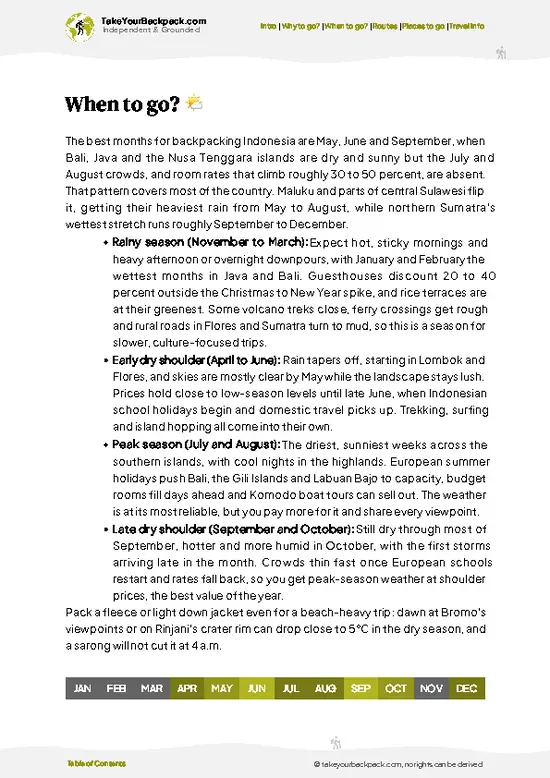
source: climatestotravel.comJANJanuary: fair for travelingFEBFebruary: fair for travelingMARMarch: fair for travelingAPRApril: fair for travelingMAYMay: highly recommended for travelingJUNJune: excellent for travelingJULJuly: excellent for travelingAUGAugust: excellent for travelingSEPSeptember: excellent for travelingOCTOctober: highly recommended for travelingNOVNovember: fair for travelingDECDecember: fair for traveling
when-to-go

✈️ The backpacker research shortcutIndonesia Travel Guide

An offline-friendly backpacking guide with optimized travel routes, ranked highlights, transport advice, and the best areas to stay.
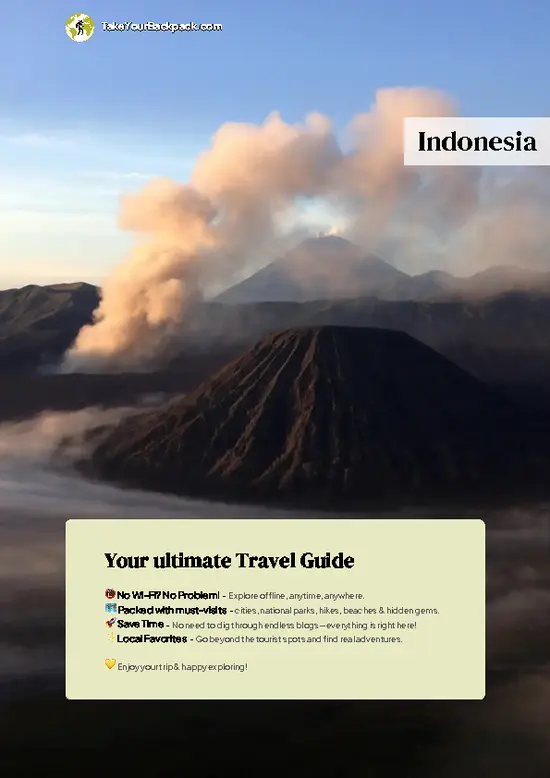
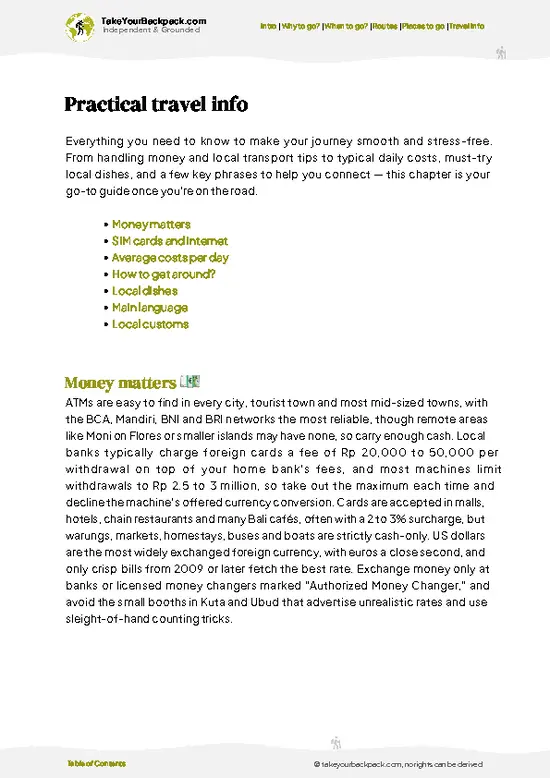
example page 0 from our offline Travel Guide for Indonesia
example page 1 from our offline Travel Guide for Indonesia
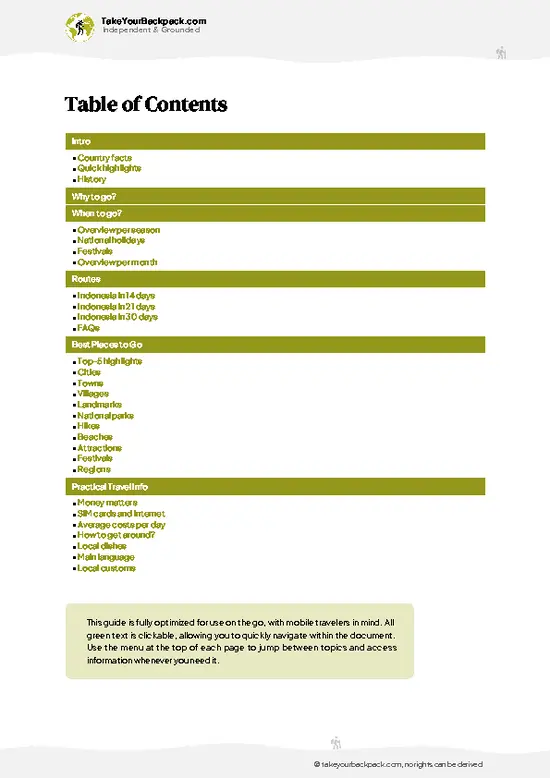
example page 2 from our offline Travel Guide for Indonesia
example page 3 from our offline Travel Guide for Indonesia
example page 4 from our offline Travel Guide for Indonesia
example page 5 from our offline Travel Guide for Indonesia
example page 6 from our offline Travel Guide for Indonesia
example page 7 from our offline Travel Guide for Indonesia
The digital guide (550 pages) contains:
155 highlights, ranked by travel appeal
Optimized 14, 21 & 30-day travel routes
Cities, national parks, landmarks, beaches
How to get around
Offline-friendly for travel without Wi-Fi
👉 Click to see all 30+ guide features

📅 Plan smarter in minutes, not weeks
Month by month travel advice
Festivals & national holidays
Budget expectations

🗺️ Go to the right places, skip the overrated ones
Honest pros & cons of destinations
Top hikes, parks & viewpoints
Lesser-known places most travelers miss
Clear “worth it vs skip it” guidance

🛏️ Travel smoothly without rookie mistakes
Best areas to stay
Transport systems explained simply
Common scams & safety advice
SIM cards, money & practical tips

🌍 Understand the country, not just visit it
Culture & traditions
52 Essential phrases & customs
Festivals worth planning around
Traveler-friendly historical context
Insights that make places more meaningful

📱 Built for real travel conditions
Fully downloadable PDF
Works completely offline
Optimized for phone use
Useful in remote areas & buses
Everything in one place
Save weeks of stressful planning
Get instant access to your full guide. 30‑day money-back guarantee.


By proceeding you agree to our terms.
Sent to your inbox immediately after payment • 100% Secure Checkout
Best Backpacking Travel Advisor 2025 tourism awardBest Backpacking
Travel Advisor
2025
What others say about Take Your Backpack Guides:
⭐⭐⭐⭐⭐
Fantastic, amazing amount of information!
⭐⭐⭐⭐⭐
My goodness this is amazing, it's what I've been looking for hats off too you!
⭐⭐⭐⭐⭐
I think this is absolutely BRILLIANT
⭐⭐⭐⭐
Very complete and informative. It's still missing places, but I gotta to commend you
⭐⭐⭐⭐⭐
This is truly amazing, thank you, can't wait to explore it with my kids!
⭐⭐⭐⭐⭐
Awesome resource, thank you!
⭐⭐⭐⭐⭐
This is amazing! Can't wait to explore the ones I haven't seen
⭐⭐⭐⭐
I love this! Well done, great idea.
⭐⭐⭐⭐⭐
Thanks for taking the time to make this gem!
⭐⭐⭐⭐⭐
This might be the best website I've ever seen.
⭐⭐⭐⭐⭐
Congratulations, and thank you so much for your work; it's incredibly valuable.
⭐⭐⭐⭐
In all seriousness I think you did a great job pointing out the important spots
⭐⭐⭐⭐⭐
10/10 very good
⭐⭐⭐⭐⭐
As someone who's only just starting to visit regularly this is awesome, thank you.
⭐⭐⭐⭐
Thank you very much! I'm going to visit my dad, it's going to be very useful!
⭐⭐⭐⭐⭐
This is really cool! We'll be travelling for the first time and this definitely come in handy.
⭐⭐⭐⭐⭐
You are now our minister of culture, congratulations 👨‍💼
⭐⭐⭐⭐⭐
Just wanted to tell you that this is a pearl! Going to follow your recommendations.
⭐⭐⭐⭐⭐
This is so cool. I'll definitely be using the resource for my travels soon.
⭐⭐⭐⭐⭐
This is very impressive! Good work.
⭐⭐⭐⭐⭐
This is an amazing and informative site. Very well done!

🛏️ Where to stay?Where staying makes the most sense

In Atambua, the best spot for backpackers is the city center around Jalan Merdeka. This area strikes a solid balance between safety and social buzz, making it a natural hub for budget travelers and solo adventurers. Hostels and guesthouses cluster here, offering affordable beds without sacrificing basic comfort. Compared to the quieter, more residential outskirts, the city center pulses with local markets, street food stalls, and easy access to transport—key for anyone wanting to dive into daily life or plan onward journeys. It’s not luxury, but it’s where you’ll meet fellow travelers and locals … read more 👉
In Atambua, the best spot for backpackers is the city center around Jalan Merdeka. This area strikes a solid balance between safety and social buzz, making it a natural hub for budget travelers and solo adventurers. Hostels and guesthouses cluster here, offering affordable beds without sacrificing basic comfort. Compared to the quieter, more residential outskirts, the city center pulses with local markets, street food stalls, and easy access to transport—key for anyone wanting to dive into daily life or plan onward journeys. It’s not luxury, but it’s where you’ll meet fellow travelers and locals alike, keeping your trip both practical and engaging.

🚌 Getting aroundTransportation options and practical tips

Atambua moves at its own rhythm—less a clockwork city and more a pulse you feel underfoot. The flow here is a mix of laid-back patience and bursts of urgency, where schedules exist but bend to the reality of road conditions and local habits. You’ll find that timing isn’t always precise, but the trade-off is a kind of freedom: you decide how much time you want to spend waiting versus moving. Comfort is a relative term, and money spent often buys you speed or shelter from the tropical sun. Understanding this balance is your key to mastering Atambua’s transit game.


  • Walking: The ultimate budget option. Free, flexible, and perfect for exploring the town center’s compact streets. Expect to spend 15-30 minutes between most key spots, but prepare for uneven sidewalks and occasional street vendors
read more 👉
Atambua moves at its own rhythm—less a clockwork city and more a pulse you feel underfoot. The flow here is a mix of laid-back patience and bursts of urgency, where schedules exist but bend to the reality of road conditions and local habits. You’ll find that timing isn’t always precise, but the trade-off is a kind of freedom: you decide how much time you want to spend waiting versus moving. Comfort is a relative term, and money spent often buys you speed or shelter from the tropical sun. Understanding this balance is your key to mastering Atambua’s transit game.


  • Walking: The ultimate budget option. Free, flexible, and perfect for exploring the town center’s compact streets. Expect to spend 15-30 minutes between most key spots, but prepare for uneven sidewalks and occasional street vendors blocking your path.

  • Ojek (Motorcycle Taxi): Runs from dawn until late evening, costing around IDR 10,000–20,000 per short trip. Fast and nimble, it’s your best bet for beating the heat and traffic jams, though comfort is minimal and helmets aren’t always guaranteed.

  • Angkot (Shared Minivan): Operating roughly 6 AM to 6 PM, fares hover around IDR 5,000–10,000. It’s slow and often packed, but unbeatable for budget travelers who want to cover longer distances without breaking the bank. Expect frequent stops and a noisy, lively atmosphere.

  • Private Car Hire: More expensive, starting at IDR 300,000 per day, but offers the highest comfort and flexibility. Ideal if you’re traveling with a group or aiming for remote spots outside town where public transit doesn’t reach.

👛 Costs (as of 20 December 2024)How expensive it really is

Backpacking in Atambua, Indonesia, offers a clear-cut trade-off between cost and comfort, with prices that reflect its off-the-beaten-path status. Here’s how your daily budget breaks down:
  • Dorm Accommodation (High Season): Expect to pay around $8 to $12 per night. These are basic but clean guesthouses or hostels, often with shared bathrooms and limited amenities.
  • Dorm Accommodation (Off-Season): Prices drop to about $5 to $8 per night. Fewer tourists mean better bargaining power, but some places might close or reduce services.
  • Meals: Local warungs serve meals for $1.50 to $3 each. Stick to rice, vegetables, and fish or chicken dishes to keep costs low and authentic. Western-style food or imported goods will push your meal cost higher.
  • Local Transport: Motorbike taxis (ojeks) are the go-to,
read more 👉
Backpacking in Atambua, Indonesia, offers a clear-cut trade-off between cost and comfort, with prices that reflect its off-the-beaten-path status. Here’s how your daily budget breaks down:
  • Dorm Accommodation (High Season): Expect to pay around $8 to $12 per night. These are basic but clean guesthouses or hostels, often with shared bathrooms and limited amenities.
  • Dorm Accommodation (Off-Season): Prices drop to about $5 to $8 per night. Fewer tourists mean better bargaining power, but some places might close or reduce services.
  • Meals: Local warungs serve meals for $1.50 to $3 each. Stick to rice, vegetables, and fish or chicken dishes to keep costs low and authentic. Western-style food or imported goods will push your meal cost higher.
  • Local Transport: Motorbike taxis (ojeks) are the go-to, costing roughly $0.50 to $1.50 per short ride. Renting a motorbike yourself runs about $7 to $10 per day if you want full control and flexibility.
  • City Transport Pass: Atambua doesn’t have a formal city transport pass system. Budget around $1 to $2 daily if you rely on multiple ojeks or shared transport options.
  • Basic Activities/Entry Fees: Most cultural sites and natural attractions charge minimal fees, usually under $2. Guided tours are rare and tend to be informal, so expect to negotiate directly with locals.
  • Miscellaneous Expenses: This covers bottled water, snacks, occasional internet cafes, or small souvenirs. Budget around $2 to $4 daily to cover these incidentals without stress.

In total, you’re looking at a daily spend between $12 and $25, depending on how much you lean into comfort or scrimp on convenience. Atambua rewards those who embrace simplicity and local rhythms, so the real value lies in spending smart, not just cheap.


source: indonesia.travel
⚠️ Prices can change and everyone travels differently, so take this as a rough guide. Hope it helps you plan your adventure!

🚌 Day tripsWhere to go beyond the main area

Atambua is a fantastic launchpad for day trips that dive deep into the heart of East Nusa Tenggara. Here are some standout options that pack a punch without draining your wallet.

Kefamenanu
Just an hour’s drive from Atambua, Kefamenanu offers a glimpse into traditional life. Visit local markets bustling with vendors selling fresh produce and handmade crafts. The real treasure is the surrounding hills, perfect for a short hike. Keep your budget under $10 for transport and snacks. The best time to go is during the dry season, from April to October. A common mistake? Skipping the market; it’s where the real culture thrives.


Lake Lulik
About two hours away, Lake Lulik is a serene escape. The shimmering waters are ideal for a picnic or a refreshing dip. Bring your own food to keep costs … read more 👉
Atambua is a fantastic launchpad for day trips that dive deep into the heart of East Nusa Tenggara. Here are some standout options that pack a punch without draining your wallet.

Kefamenanu
Just an hour’s drive from Atambua, Kefamenanu offers a glimpse into traditional life. Visit local markets bustling with vendors selling fresh produce and handmade crafts. The real treasure is the surrounding hills, perfect for a short hike. Keep your budget under $10 for transport and snacks. The best time to go is during the dry season, from April to October. A common mistake? Skipping the market; it’s where the real culture thrives.


Lake Lulik
About two hours away, Lake Lulik is a serene escape. The shimmering waters are ideal for a picnic or a refreshing dip. Bring your own food to keep costs low—around $5 for transport. Aim for early morning visits to avoid the crowds and catch the sunrise. Many first-timers miss the scenic trails around the lake, which offer stunning views.


Bikomi
Roughly 90 minutes from Atambua, Bikomi is known for its lush landscapes and friendly locals. Engage with the community and explore the rice paddies. The trip can be done for about $15, including transport and a local meal. The dry season is best for clear skies. A common pitfall is not learning a few local phrases; it goes a long way in making connections.
Want to know what more Indonesia offers?
The Indonesia Travel Guide describes 155 highlights, from cities to national parks, from beaches to hikes

Get the Travel Guide -

🍲 FoodWhat to Eat & Drink

In Atambua, local cuisine bursts with flavor and character. Don’t miss the sate—skewered meat grilled to perfection, often served with a spicy peanut sauce that dances on your taste buds. Pair it with nasi goreng, a fragrant fried rice dish that’s a staple here.

Street food stalls are the heartbeat of the city, where you can grab a quick bite while mingling with locals. The markets are alive with the aroma of grilled fish and fresh vegetables, inviting you to explore.

When it comes to drinks, try the arak, a traditional spirit made from fermented rice, often shared among friends. Remember, sharing food is a sign of hospitality, so don’t hesitate to join in!

🛡️ SafetyTraveler Safety Guide

Atambua is generally safe, but a few areas require extra awareness. Stick to well-lit streets at night, especially if you’re solo. Keep your belongings close in crowded markets; petty theft can happen.

Watch for common scams, like inflated taxi fares or overly friendly locals pushing tours. Approach interactions with a friendly but cautious demeanor. Trust your instincts—if something feels off, it probably is. By staying alert and grounded, you can navigate Atambua with ease and enjoy its local charm without unnecessary hassle.

Other Indonesian cities near Atambua

Explore more nearby:

  • Bau-Bau—Buton heritage, island fortress, Sulawesi coast| 474 km away
  • Waingapu—dry savannah, traditional villages, horse culture| 514 km away
  • Kendari—harbor city, seafood eateries, Tolaki culture| 626 km away

💡 Not sure where to go next?
Create a personalized itinerary for Indonesia including Atambua and the places that fit your trip.

Generate my itinerary

👉 Discover all cities

Or checkout all Indonesia has to offer (think cities, towns, villages, national parks, hikes, beaches, festivals)
Country photo of Indonesia

We 💚 feedbackFinal thoughts on visiting Atambua

Atambua offers a raw glimpse into Indonesian culture, where the local markets pulse with life and the food is a flavor explosion. But be ready for limited tourist infrastructure; it’s not a five-star experience. Embrace the chaos, and you’ll find the real heart of Indonesia.

✈️ When did I visit Indonesia?
As part of my 1.5 year travel around the world trip, I visited Indonesia twice (and it was worth it. First in September 2015 and a bit later again in January and February 2016.

✍️ Help improve this page!
The information on this page is based on my own backpacking experience in Indonesia, supplemented with up-to-date research and feedback from other travelers. Travel details can change, so if you notice anything outdated or incomplete, feel free to let me know.


🙋‍♂️ Give feedback

👋 Meet the founderWho’s Behind Take Your Backpack?

Johan, backpacker and founder of TakeYourBackpackHi, I’m Johan (Netherlands 🇳🇱), the creator of TakeYourBackpack. Over the past decade, I’ve backpacked through 80+ countries across six continents, gaining extensive experience with independent travel, long-term trips, and overland routes.

This site is built on a combination of firsthand travel experience and carefully curated insights from other backpackers. Many guides are based on places I’ve personally visited, while others bring together tips, observations, and practical advice shared by trusted travelers I’ve met along the way.

The goal is to provide realistic, experience-driven guidance — not generic itineraries — so you can explore destinations with better context, clearer expectations, and more confidence.

Get full Indonesia guide •
Instant download • 155 highlights • Full Offline guide