×

Indonesia🇮🇩 | citiesBau-BauButon heritage, island fortress, Sulawesi coast | things to do and best time to go

Explore AtambuaExplore Tual

Backpacking in Bau-Bau
👀 For curious travelerscity ranked #42
By Johan Kruseman 🇳🇱 | Updated June 7, 2026

You land in Bau-Bau and hit your first real fork: burn time and sweat on slow ferries and bemos, or pay extra for flights and private cars so you actually see the island instead of its waiting rooms. Bau-Bau sits on Buton Island, off Southeast Sulawesi, and it feels raw and local: cheap food, friendly but shy people, almost no backpacker scene. The hilltop fortress and coastal views are worth the detour, but nightlife is sleepy, English is rare, and compared with Kendari or Makassar it’s cheaper, safer, and far less convenient.

Discover everything you want to know in the 📖 Indonesia Travel Guide.
Loading the map 🌍
CLICK TO FILTER
cities
towns
landmarks
national parks
hikes
beaches
attractions
festivals
regions
SHOW COUNTRY’S BESTSHOW ALL

✨ Why go?
Ranked #42 city in Indonesia
Why visitors keep coming back

Bau-Bau is a strategic basecamp for backpackers exploring Southeast Sulawesi. The city offers a solid mix of affordable hostels and local eateries, making it easy to stretch your budget. Its walkability means you can explore vibrant markets and street food stalls without hassle. While the nightlife isn’t wild, it has a laid-back charm perfect for unwinding after a day of adventure. Plus, Bau-Bau serves as a convenient launchpad for day trips to stunning nearby islands. If you’re looking for a place that balances comfort and accessibility, Bau-Bau is worth more than just a quick stop.
Want to include Bau-Bau in your Indonesia route?
Create a personalized Indonesia itinerary that includes Bau-Bau and the places that fit your trip — based on your travel style, budget, and available time. Get your route in seconds.

Generate my trip

💡 HighlightsDon't-miss highlights and experiences

  • Benteng Keraton Buton (Buton Palace Fortress) — The town’s headline act: a sprawling stone fortress that wraps around the old palace area. Walk the ramparts, poke into old gates and corridors, and you’ll get why Bau-Bau’s history feels so tangible here.
  • Istana Keraton Buton (Sultan’s Palace) — Inside the fortress compound, the palace complex still carries royal atmosphere. Traditional architecture, royal artifacts and guarded courtyards give a direct look at the old Sultanate’s life and local court traditions.
  • Museum Keraton Buton (Buton Palace Museum) — Small but focused: ethnography, royal regalia, maps and objects that explain local customs and the Sultanate’s past. Great place to orient yourself before exploring the fortress and old quarter.
  • Masjid Keraton Buton (Palace Mosque)
read more 👉
  • Benteng Keraton Buton (Buton Palace Fortress) — The town’s headline act: a sprawling stone fortress that wraps around the old palace area. Walk the ramparts, poke into old gates and corridors, and you’ll get why Bau-Bau’s history feels so tangible here.
  • Istana Keraton Buton (Sultan’s Palace) — Inside the fortress compound, the palace complex still carries royal atmosphere. Traditional architecture, royal artifacts and guarded courtyards give a direct look at the old Sultanate’s life and local court traditions.
  • Museum Keraton Buton (Buton Palace Museum) — Small but focused: ethnography, royal regalia, maps and objects that explain local customs and the Sultanate’s past. Great place to orient yourself before exploring the fortress and old quarter.
  • Masjid Keraton Buton (Palace Mosque) — A historic mosque connected to the palace complex. The building and its setting show how religion and royal power have interwoven here for centuries; worth timing a visit around prayer to see daily life.
  • Pelabuhan Murhum (Murhum Harbor & Fish Market) — A working port where ferries and fishing boats come and go. Early-morning fish auctions, boat traffic and waterfront activity are raw, photogenic, and a quick cultural immersion into coastal life.
  • Pasar Sentral Bau-Bau (Central Market) — Hustle, color and local flavors. Vendors sell fresh seafood, tropical fruit, spices and Butonese snacks. It’s the place to try street food, buy dried fish or pick up handmade textiles.
  • Kampung Wolio / Kampung Keraton (Old Wolio Quarter) — Narrow lanes, traditional wooden houses and village life tucked just outside the palace walls. Walkable, informal and full of small encounters with craftsmen, neighbours and daily rituals.
  • Traditional Boatbuilding Yards (harbor workshops) — Watch carpenters fashion wooden boats the old way. The yards around the port are noisy, oily and fascinating — a living craft that keeps the local economy and identity afloat.
  • Bukit Wolio / Betoambari Viewpoint — A short climb from the old town gives you a skyline of the fortress, the harbor and the archipelago beyond. Best for sunset; bring a camera and patience for the local breeze and street snacks on the way down.
  • Taman Kota & Waterfront Promenade — The city’s public green space and seafront stretch where locals hang out at dusk. Not flashy, but perfect for people-watching, catching the sea breeze and sampling grills from nearby vendors.
A few easy day trips outside Bau-Bau: Kabaena Island for quiet beaches and snorkeling, nearby smaller islets for short-snooze beach stops, and the Buton countryside around Pasarwajo for traditional villages — my personal favorite for a day trip is Kabaena.
Spotted a mistake or missing something? Contact us.

🏘️ NeighborhoodsNeighborhood guide to Bau-Bau

Bau-Bau offers a unique blend of culture and adventure, perfect for backpackers seeking authentic experiences.

Kampung Tua: This historic neighborhood is a cultural hub. Expect vibrant local markets and traditional architecture. It’s budget-friendly and walkable, making it ideal for short stays. The nightlife is low-key, with local eateries serving up delicious street food.

Pasar Wajo: A bustling market area, it’s great for immersing yourself in local life. Prices are reasonable, and the walkability is excellent. While it’s lively during the day, evenings are quieter, perfect for those who prefer a more relaxed vibe.

Batu Putih: This coastal area offers stunning views and beach access. It’s a bit pricier but worth it for the scenery. Transport options are available, making it suitable for … read more 👉
Bau-Bau offers a unique blend of culture and adventure, perfect for backpackers seeking authentic experiences.

Kampung Tua: This historic neighborhood is a cultural hub. Expect vibrant local markets and traditional architecture. It’s budget-friendly and walkable, making it ideal for short stays. The nightlife is low-key, with local eateries serving up delicious street food.

Pasar Wajo: A bustling market area, it’s great for immersing yourself in local life. Prices are reasonable, and the walkability is excellent. While it’s lively during the day, evenings are quieter, perfect for those who prefer a more relaxed vibe.

Batu Putih: This coastal area offers stunning views and beach access. It’s a bit pricier but worth it for the scenery. Transport options are available, making it suitable for longer stays, especially if you enjoy water activities.

⌛️ 1 dayA smart one-day plan

Bau-Bau, a charming coastal city in Indonesia, offers a unique blend of culture and natural beauty. Start your day in the bustling market of Pasar Wajo. The vibrant colors and aromas of fresh produce and local snacks will awaken your senses. Grab some traditional breakfast—perhaps a warm bowl of soto, a savory soup that’s a local favorite.

After fueling up, head to the historic fortress of Benteng Wolio. This site, often overlooked by tourists, provides a glimpse into the city’s past and stunning views of the coastline. Spend your afternoon wandering through the nearby neighborhood of Kambowa, where you can interact with locals and discover artisanal crafts.

As the sun sets, make your way to the beach at Nirwana. It’s the perfect spot to unwind, with soft sands and gentle waves. Enjoy a … read more 👉
Bau-Bau, a charming coastal city in Indonesia, offers a unique blend of culture and natural beauty. Start your day in the bustling market of Pasar Wajo. The vibrant colors and aromas of fresh produce and local snacks will awaken your senses. Grab some traditional breakfast—perhaps a warm bowl of soto, a savory soup that’s a local favorite.

After fueling up, head to the historic fortress of Benteng Wolio. This site, often overlooked by tourists, provides a glimpse into the city’s past and stunning views of the coastline. Spend your afternoon wandering through the nearby neighborhood of Kambowa, where you can interact with locals and discover artisanal crafts.

As the sun sets, make your way to the beach at Nirwana. It’s the perfect spot to unwind, with soft sands and gentle waves. Enjoy a simple dinner at a local warung, where you can savor grilled fish while listening to the soothing sounds of the ocean. This day in Bau-Bau, filled with authentic experiences, will leave you feeling enriched and inspired.
Turn your Bau-Bau visit into an Indonesia adventure
Build a complete Indonesia route with Bau-Bau, hidden gems, must-see destinations, and realistic travel times included.

Generate my trip

🌤️ When to go?Seasonal considerations and timing


  • Topic: Weather – Bau-Bau’s dry season from May to September offers clear skies and minimal rain, perfect for trekking and beach time. The wet season (October to April) brings heavy showers that can disrupt plans and muddy trails.

  • Topic: Temperature – Expect steady warmth year-round, averaging 27–32°C (81–90°F). Nights cool slightly in the dry season, making sleep more comfortable without sacrificing tropical vibes.

  • Topic: Daylight Hours – Roughly 12 hours of daylight year-round, but the dry season’s consistent sun means more reliable daylight for activities without early cloud cover.

  • Topic: Crowds – Bau-Bau remains low-key, but the dry season sees a modest uptick in visitors. You’ll find a balance between solitude and social energy, unlike the near-empty wet months.

  • Topic: Seasonal Activities
read more 👉

  • Topic: Weather – Bau-Bau’s dry season from May to September offers clear skies and minimal rain, perfect for trekking and beach time. The wet season (October to April) brings heavy showers that can disrupt plans and muddy trails.

  • Topic: Temperature – Expect steady warmth year-round, averaging 27–32°C (81–90°F). Nights cool slightly in the dry season, making sleep more comfortable without sacrificing tropical vibes.

  • Topic: Daylight Hours – Roughly 12 hours of daylight year-round, but the dry season’s consistent sun means more reliable daylight for activities without early cloud cover.

  • Topic: Crowds – Bau-Bau remains low-key, but the dry season sees a modest uptick in visitors. You’ll find a balance between solitude and social energy, unlike the near-empty wet months.

  • Topic: Seasonal Activities – Dry months unlock outdoor adventures like island hopping and diving. The wet season limits these but offers lush landscapes and fewer tourists.

  • Topic: Price Fluctuations – Prices peak slightly during the dry season due to demand but stay reasonable compared to Indonesia’s hotspots. The wet season offers the best deals if you don’t mind the rain.


Pro-tip: Aim for the shoulder months of April or October to catch fewer crowds, decent weather, and better prices—a strategic sweet spot for savvy backpackers.


source: climatestotravel.comJANJanuary: fair for travelingFEBFebruary: fair for travelingMARMarch: fair for travelingAPRApril: highly recommended for travelingMAYMay: excellent for travelingJUNJune: excellent for travelingJULJuly: excellent for travelingAUGAugust: excellent for travelingSEPSeptember: excellent for travelingOCTOctober: highly recommended for travelingNOVNovember: fair for travelingDECDecember: fair for traveling
when-to-go

✈️ The backpacker research shortcutIndonesia Travel Guide

An offline-friendly backpacking guide with optimized travel routes, ranked highlights, transport advice, and the best areas to stay.
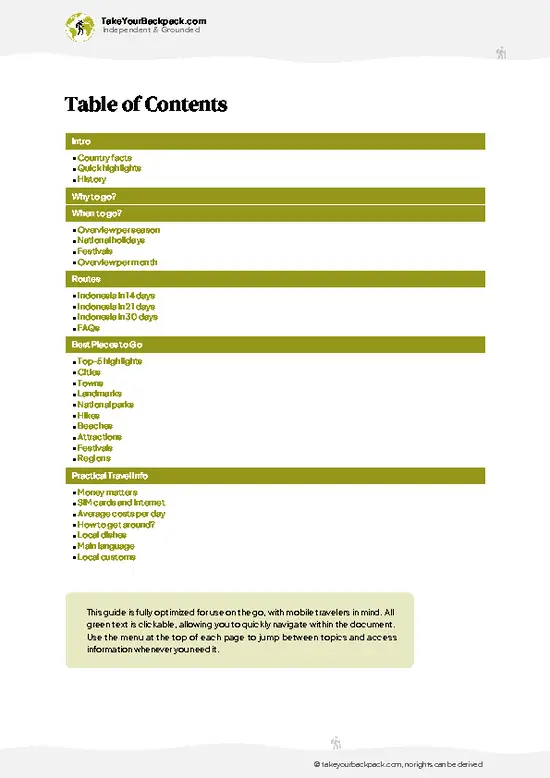
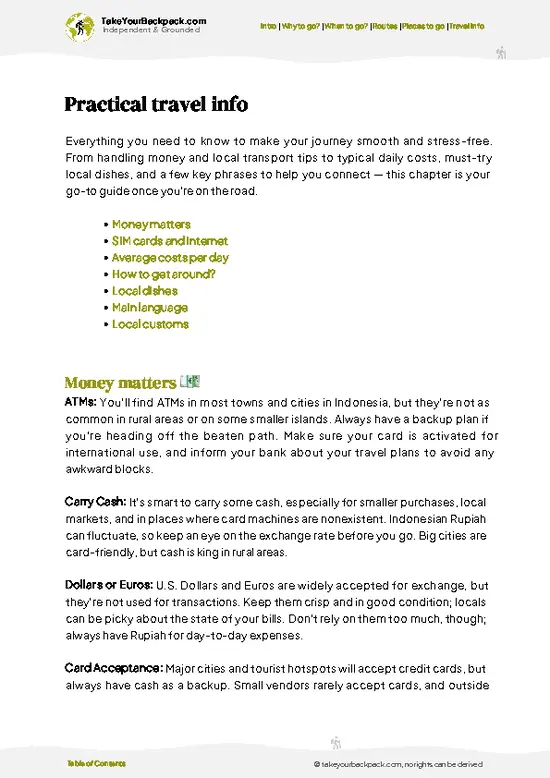
example page 0 from our offline Travel Guide for Indonesia
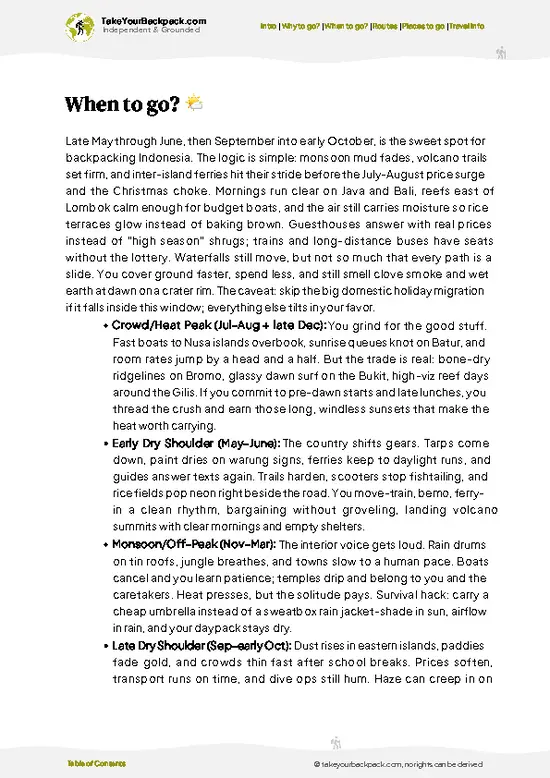
example page 1 from our offline Travel Guide for Indonesia
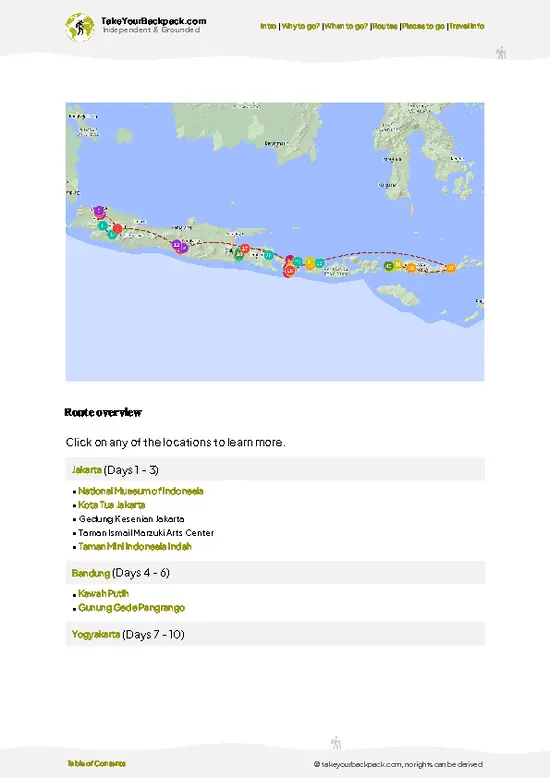
example page 2 from our offline Travel Guide for Indonesia
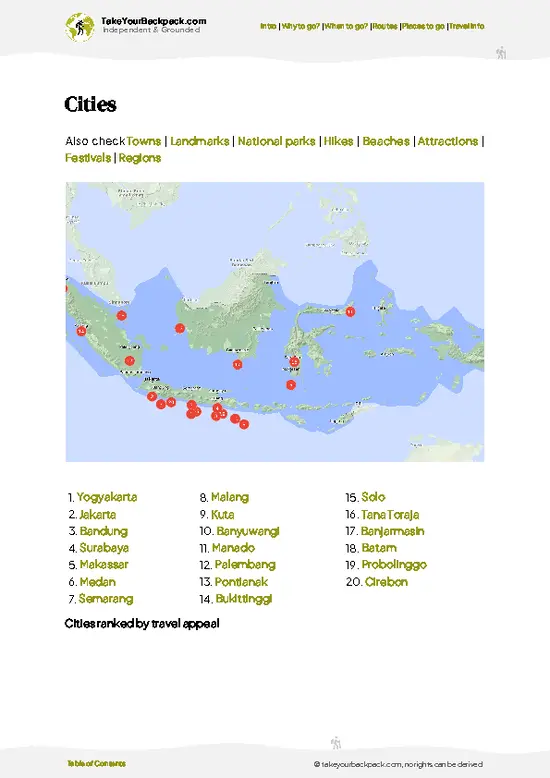
example page 3 from our offline Travel Guide for Indonesia
example page 4 from our offline Travel Guide for Indonesia
example page 5 from our offline Travel Guide for Indonesia
example page 6 from our offline Travel Guide for Indonesia
example page 7 from our offline Travel Guide for Indonesia
The digital guide (550 pages) contains:
155 highlights, ranked by travel appeal
Optimized 14, 21 & 30-day travel routes
Cities, national parks, landmarks, beaches
How to get around
Offline-friendly for travel without Wi-Fi
👉 Click to see all 30+ guide features

📅 Plan smarter in minutes, not weeks
Month by month travel advice
Festivals & national holidays
Budget expectations

🗺️ Go to the right places, skip the overrated ones
Honest pros & cons of destinations
Top hikes, parks & viewpoints
Lesser-known places most travelers miss
Clear “worth it vs skip it” guidance

🛏️ Travel smoothly without rookie mistakes
Best areas to stay
Transport systems explained simply
Common scams & safety advice
SIM cards, money & practical tips

🌍 Understand the country, not just visit it
Culture & traditions
52 Essential phrases & customs
Festivals worth planning around
Traveler-friendly historical context
Insights that make places more meaningful

📱 Built for real travel conditions
Fully downloadable PDF
Works completely offline
Optimized for phone use
Useful in remote areas & buses
Everything in one place
Save weeks of stressful planning
Get instant access to your full guide. 30‑day money-back guarantee.


By proceeding you agree to our terms.
Sent to your inbox immediately after payment • 100% Secure Checkout
Best Backpacking Travel Advisor 2025 tourism awardBest Backpacking
Travel Advisor
2025
What others say about Take Your Backpack Guides:
⭐⭐⭐⭐⭐
Fantastic, amazing amount of information!
⭐⭐⭐⭐⭐
My goodness this is amazing, it's what I've been looking for hats off too you!
⭐⭐⭐⭐⭐
I think this is absolutely BRILLIANT
⭐⭐⭐⭐
Very complete and informative. It's still missing places, but I gotta to commend you
⭐⭐⭐⭐⭐
This is truly amazing, thank you, can't wait to explore it with my kids!
⭐⭐⭐⭐⭐
Awesome resource, thank you!
⭐⭐⭐⭐⭐
This is amazing! Can't wait to explore the ones I haven't seen
⭐⭐⭐⭐
I love this! Well done, great idea.
⭐⭐⭐⭐⭐
Thanks for taking the time to make this gem!
⭐⭐⭐⭐⭐
This might be the best website I've ever seen.
⭐⭐⭐⭐⭐
Congratulations, and thank you so much for your work; it's incredibly valuable.
⭐⭐⭐⭐
In all seriousness I think you did a great job pointing out the important spots
⭐⭐⭐⭐⭐
10/10 very good
⭐⭐⭐⭐⭐
As someone who's only just starting to visit regularly this is awesome, thank you.
⭐⭐⭐⭐
Thank you very much! I'm going to visit my dad, it's going to be very useful!
⭐⭐⭐⭐⭐
This is really cool! We'll be travelling for the first time and this definitely come in handy.
⭐⭐⭐⭐⭐
You are now our minister of culture, congratulations 👨‍💼
⭐⭐⭐⭐⭐
Just wanted to tell you that this is a pearl! Going to follow your recommendations.
⭐⭐⭐⭐⭐
This is so cool. I'll definitely be using the resource for my travels soon.
⭐⭐⭐⭐⭐
This is very impressive! Good work.
⭐⭐⭐⭐⭐
This is an amazing and informative site. Very well done!

🛏️ Where to stay?Choosing the right base

In Bau-Bau, the sweet spot for backpackers is the downtown area near the harbor. It’s where you’ll find a cluster of budget hostels and guesthouses, making it easy to meet fellow travelers without sacrificing safety. This neighborhood hums with local life—street food stalls, markets, and a laid-back vibe that’s social but not overwhelming. Compared to the quieter residential zones, downtown offers better access to transport and nightlife, which is crucial when you want to maximize your time without burning cash on taxis. It’s a practical choice that balances comfort and connection, perfect for … read more 👉
In Bau-Bau, the sweet spot for backpackers is the downtown area near the harbor. It’s where you’ll find a cluster of budget hostels and guesthouses, making it easy to meet fellow travelers without sacrificing safety. This neighborhood hums with local life—street food stalls, markets, and a laid-back vibe that’s social but not overwhelming. Compared to the quieter residential zones, downtown offers better access to transport and nightlife, which is crucial when you want to maximize your time without burning cash on taxis. It’s a practical choice that balances comfort and connection, perfect for solo adventurers who want to plug into the city’s pulse without overspending.

🚌 Getting aroundTransportation options and practical tips

Bau-Bau moves at its own rhythm—neither a frantic rush nor a laid-back drift. It’s a city where schedules exist but bend to the pulse of local life. You’ll find moments where buses and boats leave precisely on the hour, and others where you wait, watching the sun dip, knowing the next ride will come when it’s ready. This blend of order and improvisation means your travel choices here are a dance between patience, speed, and comfort. Mastering this flow is your ticket to squeezing the most out of every rupiah and every minute.


  • Walking: The ultimate budget option. Bau-Bau’s compact center rewards those who explore on foot—free, flexible, and perfect for soaking in street scenes. Expect to cover 3-5 km easily in an hour, but prepare for uneven sidewalks and tropical heat.

  • Angkot (Minibus):
read more 👉
Bau-Bau moves at its own rhythm—neither a frantic rush nor a laid-back drift. It’s a city where schedules exist but bend to the pulse of local life. You’ll find moments where buses and boats leave precisely on the hour, and others where you wait, watching the sun dip, knowing the next ride will come when it’s ready. This blend of order and improvisation means your travel choices here are a dance between patience, speed, and comfort. Mastering this flow is your ticket to squeezing the most out of every rupiah and every minute.


  • Walking: The ultimate budget option. Bau-Bau’s compact center rewards those who explore on foot—free, flexible, and perfect for soaking in street scenes. Expect to cover 3-5 km easily in an hour, but prepare for uneven sidewalks and tropical heat.

  • Angkot (Minibus): Runs roughly from 6 AM to 7 PM, fares hover around IDR 3,000-5,000. It’s slow and crowded but dirt-cheap and a direct line to local neighborhoods. Comfort is minimal; expect standing room and frequent stops.

  • Motorcycle Taxi (Ojek): Available 24/7, prices start at IDR 10,000 for short hops. Fast and flexible, it’s your best bet when time is tight but you want to avoid the heat and crowds. Negotiation skills boost value here.

  • Public Ferry: Connects Bau-Bau with nearby islands, departing early morning and late afternoon. Tickets cost around IDR 15,000-25,000. It’s slower but offers a scenic, breezy break from city transit and a chance to recharge.

👛 Costs (as of 20 December 2024)Money, prices, and spending tips

Backpacking in Bau-Bau, Indonesia, offers a straightforward cost structure that rewards those who understand the trade-offs between time, money, and comfort. Here’s the breakdown of what you’re likely to spend daily as an independent traveler:
  • Dorm Accommodation (High Season): Expect to pay around $8 to $12 per night. High season drives prices up due to demand, but dorms remain basic—think simple beds, shared bathrooms, and minimal extras.
  • Dorm Accommodation (Off-Season): Prices drop to about $5 to $8 per night. This is when you can snag a quieter, cheaper spot, though some places might reduce services or close temporarily.
  • Meals: Local warungs and street food stalls serve filling meals for $1.50 to $3 each. If you opt for a mix of local and occasional Western-style food, budget around
read more 👉
Backpacking in Bau-Bau, Indonesia, offers a straightforward cost structure that rewards those who understand the trade-offs between time, money, and comfort. Here’s the breakdown of what you’re likely to spend daily as an independent traveler:
  • Dorm Accommodation (High Season): Expect to pay around $8 to $12 per night. High season drives prices up due to demand, but dorms remain basic—think simple beds, shared bathrooms, and minimal extras.
  • Dorm Accommodation (Off-Season): Prices drop to about $5 to $8 per night. This is when you can snag a quieter, cheaper spot, though some places might reduce services or close temporarily.
  • Meals: Local warungs and street food stalls serve filling meals for $1.50 to $3 each. If you opt for a mix of local and occasional Western-style food, budget around $6 to $10 daily for three meals.
  • Local Transport: Bajaj rides and motorbike taxis typically cost $0.50 to $1.50 per short trip. Using these for quick hops around town keeps costs low and travel efficient.
  • City Transport Pass: Bau-Bau doesn’t have a formal city transport pass system. Instead, budget for individual rides or occasional rentals, which keeps flexibility but requires daily budgeting.
  • Basic Activities/Entry Fees: Entrance to local cultural sites or parks usually ranges from $1 to $3. These are modest fees but add up if you’re hitting multiple spots in a day.
  • Miscellaneous Expenses: This covers water, snacks, occasional internet cafes, or small tips—plan for around $2 to $4 daily.

All told, a realistic daily budget for backpacking in Bau-Bau falls between $15 and $25. This range balances comfort and economy without sacrificing the experience. Knowing when to splurge on a quiet dorm bed or save by eating local food turns your trip from a random expense into a smart investment in memories.


source: indonesia.travel
⚠️ Prices can change and everyone travels differently, so take this as a rough guide. Hope it helps you plan your adventure!

🚌 Day tripsEasy escapes and nearby places

Bau-Bau, Indonesia, is a fantastic launchpad for day trips that blend adventure with cultural immersion. Here are some standout options.

Wakatobi National Park
A short boat ride from Bau-Bau, Wakatobi is a diver’s paradise. The coral reefs here are teeming with marine life, making it a must-visit for snorkelers and divers alike. Expect to spend around IDR 500,000 for a day trip, including gear rental. The best time to go is during the dry season, from April to October. Many first-timers underestimate the need for sunscreen; the sun can be relentless out on the water.
👉 Explore Wakatobi National Park

Sampolawa Beach
Just an hour’s drive from the city, Sampolawa Beach offers stunning views and a laid-back vibe. You can enjoy fresh seafood at local warungs for under IDR 100,000. The beach … read more 👉
Bau-Bau, Indonesia, is a fantastic launchpad for day trips that blend adventure with cultural immersion. Here are some standout options.

Wakatobi National Park
A short boat ride from Bau-Bau, Wakatobi is a diver’s paradise. The coral reefs here are teeming with marine life, making it a must-visit for snorkelers and divers alike. Expect to spend around IDR 500,000 for a day trip, including gear rental. The best time to go is during the dry season, from April to October. Many first-timers underestimate the need for sunscreen; the sun can be relentless out on the water.
👉 Explore Wakatobi National Park

Sampolawa Beach
Just an hour’s drive from the city, Sampolawa Beach offers stunning views and a laid-back vibe. You can enjoy fresh seafood at local warungs for under IDR 100,000. The beach is best visited in the morning to avoid crowds and catch the sunrise. A common mistake is not bringing enough water; it can get hot quickly.


Batu Sahu Waterfall
This hidden gem is about a 90-minute trek from Bau-Bau. The waterfall cascades into a natural pool, perfect for a refreshing dip. The trek costs nothing, but you might want to budget IDR 50,000 for snacks. Visit during the rainy season for a more impressive flow, but be cautious of slippery paths. Many overlook the need for sturdy footwear.
Want to know what more Indonesia offers?
The Indonesia Travel Guide describes 155 highlights, from cities to national parks, from beaches to hikes

Get the Travel Guide -

🍲 FoodLocal Flavors for Backpackers

In Bau-Bau, local cuisine is a vibrant tapestry of flavors. Dive into sate—grilled skewers marinated in rich spices, often served with a spicy peanut sauce. Don’t miss ikan bakar, grilled fish that’s smoky and tender, usually enjoyed with a side of tangy sambal.

Street food stalls are the heartbeat of the city, where you can savor these dishes while mingling with locals. Markets buzz with energy, offering fresh fruits and snacks that burst with flavor.

When it comes to drinks, try es kelapa muda, a refreshing coconut drink that cools you down. Embrace the communal dining style; sharing plates is the norm, fostering a sense of connection. Enjoy the laid-back vibe, and don’t rush—savor every bite and sip.

🛡️ SafetyTraveler Safety Guide

Bau-Bau is generally safe, but awareness is key. Stick to well-lit areas at night, especially if you’re solo. The waterfront can be lively but watch your belongings in crowded spots.

Common scams are rare, but be cautious with overly friendly locals offering unsolicited help; they might expect a tip. Street vendors can be persistent, so a polite but firm “no thanks” works wonders. Carry yourself confidently, and trust your instincts. This approach keeps you engaged and aware, turning potential annoyances into manageable interactions.

Other Indonesian cities near Bau-Bau

Explore more nearby:

  • Kendari—harbor city, seafood eateries, Tolaki culture| 168 km away
  • Makassar—seafood markets, fort ruins, waterfront promenade| 352 km away
  • Tana Toraja—cliff graves, tongkonan houses, ritual ceremonies| 416 km away

💡 Not sure where to go next?
Create a personalized itinerary for Indonesia including Bau-Bau and the places that fit your trip.

Generate my itinerary

👉 Discover all cities

Or checkout all Indonesia has to offer (think cities, towns, villages, national parks, hikes, beaches, festivals)
Country photo of Indonesia

We 💚 feedbackWhat to keep in mind

Bau-Bau’s charm lies in its untouched beaches and vibrant local culture. You’ll feel like you’ve stepped into a postcard. But be ready for limited infrastructure; getting around can be a challenge. Embrace the adventure, and you’ll find the rewards are worth the effort.

✈️ When did I visit Indonesia?
As part of my 1.5 year travel around the world trip, I visited Indonesia twice (and it was worth it. First in September 2015 and a bit later again in January and February 2016.

✍️ Help improve this page!
The information on this page is based on my own backpacking experience in Indonesia, supplemented with up-to-date research and feedback from other travelers. Travel details can change, so if you notice anything outdated or incomplete, feel free to let me know.


🙋‍♂️ Give feedback

👋 Meet the founderWho’s Behind Take Your Backpack?

Johan, backpacker and founder of TakeYourBackpackHi, I’m Johan (Netherlands 🇳🇱), the creator of TakeYourBackpack. Over the past decade, I’ve backpacked through 80+ countries across six continents, gaining extensive experience with independent travel, long-term trips, and overland routes.

This site is built on a combination of firsthand travel experience and carefully curated insights from other backpackers. Many guides are based on places I’ve personally visited, while others bring together tips, observations, and practical advice shared by trusted travelers I’ve met along the way.

The goal is to provide realistic, experience-driven guidance — not generic itineraries — so you can explore destinations with better context, clearer expectations, and more confidence.

Get full Indonesia guide •
Instant download • 155 highlights • Full Offline guide