×

Indonesia🇮🇩 | festivalsKasada FestivalMount Bromo crater rim, Tengger people, offerings thrown, midnight climb | things to do and best time to go

Explore Cap Go MehExplore Reog Ponorogo Festival

Backpacking in Kasada
👍 Recommendedfestival ranked #10
By Johan Kruseman 🇳🇱 | Updated October 4, 2026

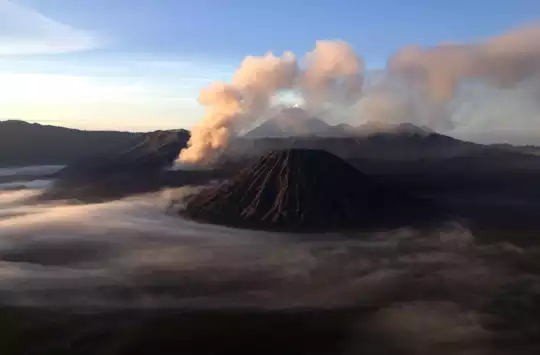
Kasada Festival used to be a purely local ritual, performed by a handful of villagers at dawn with little fanfare. Today, it draws hundreds of backpackers who trek up Mount Bromo in East Java to witness one of Indonesia's most visceral ceremonies. Held annually at the crater rim of this active volcano, Kasada is where Hindu-Buddhist tradition meets raw geological drama. Villagers hurl offerings of rice, vegetables, and livestock into the smoking caldera to appease the mountain spirit. I remember standing in pre-dawn darkness, shoulders pressed against strangers, watching flames flicker across faces as the first offerings tumbled into the abyss below. The air tasted of sulfur and anticipation. It's a festival that rewards early arrival and genuine curiosity, but demands respect for the ceremony itself.

Discover everything you want to know in the 📖 Indonesia Travel Guide.


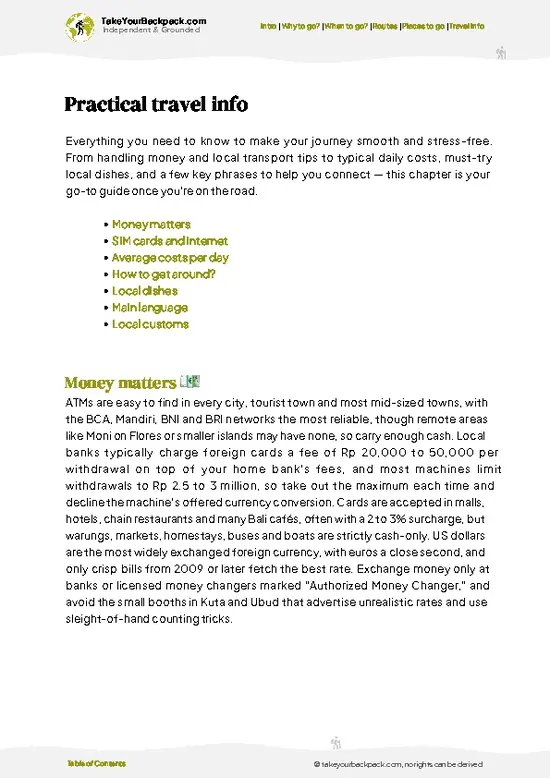
example page 0 from our offline Travel Guide for Indonesia
example page 1 from our offline Travel Guide for Indonesia
example page 2 from our offline Travel Guide for Indonesia
example page 3 from our offline Travel Guide for Indonesia
example page 4 from our offline Travel Guide for Indonesia
example page 5 from our offline Travel Guide for Indonesia
example page 6 from our offline Travel Guide for Indonesia
example page 7 from our offline Travel Guide for Indonesia
Loading the map 🌍
CLICK TO FILTER
cities
towns
villages
landmarks
national parks
hikes
beaches
attractions
festivals
regions
SHOW COUNTRY’S BESTSHOW ALL

✨ Why go?
Ranked #10 festival in Indonesia
What sets this place apart

Kasada draws backpackers because it offers authentic spiritual practice rather than a staged performance. You're not watching from bleachers; you're standing at the crater's edge during a real ceremony that has continued for centuries. The social energy is intense but focused: travelers from across the world gather in shared awe, creating temporary community around something genuinely significant. It's affordable compared to major festivals elsewhere in Southeast Asia, with budget accommodation and transport readily available. The festival fits naturally into longer East Java routes, pairing easily with visits to Mount Ijen, Surabaya, or Bali. The physical challenge of the pre-dawn trek filters out casual tourists, leaving a crowd of travelers who came to experience something real.

💡 HighlightsDon't-miss highlights and experiences

  1. The Pre-Dawn Trek to the Crater Rim: Starting around 2 or 3 a.m., you climb through darkness with hundreds of others, headlamps bobbing upward. Reaching the rim just before sunrise, with the crater smoking below and the sky shifting from black to orange, is the festival's defining moment.
  2. Witnessing the Offering Ritual: Watch villagers in traditional dress approach the crater edge and cast offerings into the caldera. The ceremony is brief but intense, rooted in centuries of Hindu-Javanese tradition. The physical act of throwing into an active volcano creates a visceral connection to the landscape.
  3. The Sunrise Over the Caldera: The moment the sun clears the horizon and illuminates the crater's interior is visually extraordinary. Sulfur clouds glow yellow and orange. This alone justifies the early
… read more 👉
  1. The Pre-Dawn Trek to the Crater Rim: Starting around 2 or 3 a.m., you climb through darkness with hundreds of others, headlamps bobbing upward. Reaching the rim just before sunrise, with the crater smoking below and the sky shifting from black to orange, is the festival's defining moment.
  2. Witnessing the Offering Ritual: Watch villagers in traditional dress approach the crater edge and cast offerings into the caldera. The ceremony is brief but intense, rooted in centuries of Hindu-Javanese tradition. The physical act of throwing into an active volcano creates a visceral connection to the landscape.
  3. The Sunrise Over the Caldera: The moment the sun clears the horizon and illuminates the crater's interior is visually extraordinary. Sulfur clouds glow yellow and orange. This alone justifies the early wake-up.
  4. The Crowd Experience at the Rim: Thousands of people pressed together in silence, watching something sacred unfold. The shared focus creates an unusual sense of collective reverence, rare at modern festivals.
  5. Exploring the Surrounding Volcanic Landscape: After the ceremony, many travelers stay to hike the rim, visit nearby Mount Semeru, or descend into the sand sea below. The geology is dramatic and the trails are less crowded once the ceremony ends.
I'd pick the pre-dawn trek first. It's the spine of the entire experience: the physical effort, the darkness, the anticipation, and the payoff of standing at the crater's edge as the world wakes up. Everything else flows from that moment.
Spotted a mistake or missing something? Contact us.

🌤️ When to go?When is the celebration of Kasada Festival?

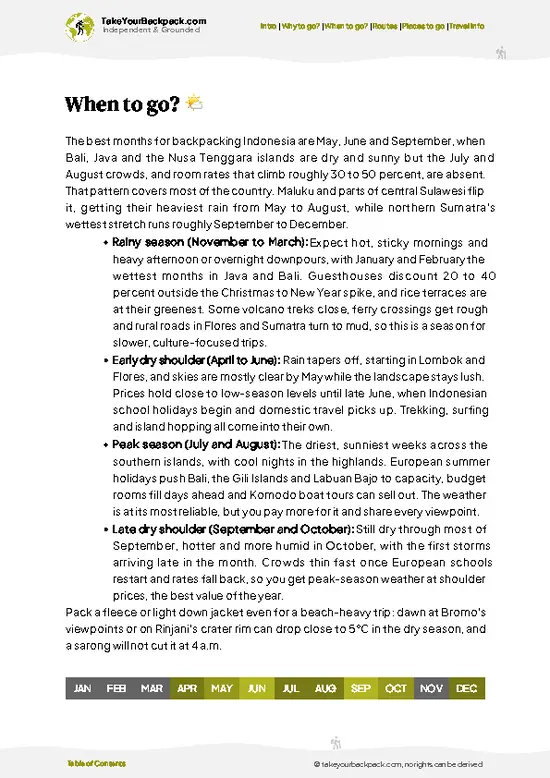
  • Dry Season (May to September): The best window for Kasada. Clear skies, cooler temperatures around 10 to 15°C (50 to 59°F) at the summit, and stable trails. Crowds peak in July and August. Prices for accommodation and transport rise 20 to 30 percent during these months.
  • Transition Months (April, October): Fewer travelers, still decent weather, and lower prices. Temperatures range 12 to 18°C (54 to 64°F). Rain is possible but not guaranteed.
  • Wet Season (November to March): Heavy rain, fog obscuring the crater, and slippery trails. Temperatures stay around 15 to 20°C (59 to 68°F). Accommodation is cheapest, but the ceremony experience suffers significantly.
Book accommodation 2 to 3 weeks ahead during dry season; the dry months fill quickly with tour groups.

source: climatestotravel.comJANJanuary: not recommended for travelingFEBFebruary: not recommended for travelingMARMarch: not recommended for travelingAPRApril: not recommended for travelingMAYMay: not recommended for travelingJUNJune: not recommended for travelingJULJuly: excellent for travelingAUGAugust: not recommended for travelingSEPSeptember: not recommended for travelingOCTOctober: not recommended for travelingNOVNovember: not recommended for travelingDECDecember: not recommended for traveling

✈️ The backpacker research shortcutIndonesia Travel Guide

An offline-friendly backpacking guide with optimized travel routes, ranked highlights, transport advice, and the best areas to stay.
example page 0 from our offline Travel Guide for Indonesia
example page 1 from our offline Travel Guide for Indonesia
example page 2 from our offline Travel Guide for Indonesia
example page 3 from our offline Travel Guide for Indonesia
example page 4 from our offline Travel Guide for Indonesia
example page 5 from our offline Travel Guide for Indonesia
example page 6 from our offline Travel Guide for Indonesia
example page 7 from our offline Travel Guide for Indonesia
The digital guide (460 pages) contains:
✅ 153 highlights, ranked by travel appeal
✅ Optimized 14, 21 & 30-day travel routes
✅ Cities, national parks, landmarks, beaches
✅ How to get around
✅ Offline-friendly for travel without Wi-Fi
👉 Click to see all 30+ guide features

📅 Plan smarter in minutes, not weeks
✅ Month by month travel advice
✅ Festivals & national holidays
✅ Budget expectations

🗺️ Go to the right places, skip the overrated ones
✅ Honest pros & cons of destinations
✅ Top hikes, parks & viewpoints
✅ Lesser-known places most travelers miss
✅ Clear “worth it vs skip it” guidance

🛏️ Travel smoothly without rookie mistakes
✅ Best areas to stay
✅ Transport systems explained simply
✅ Common scams & safety advice
✅ SIM cards, money & practical tips

🌍 Understand the country, not just visit it
✅ Culture & traditions
✅ 52 Essential phrases & customs
✅ Festivals worth planning around
✅ Traveler-friendly historical context
✅ Insights that make places more meaningful

📱 Built for real travel conditions
✅ Fully downloadable PDF
✅ Works completely offline
✅ Optimized for phone use
✅ Useful in remote areas & buses
✅ Everything in one place
Stop searching, start planning
Get instant access to your full guide. 30‑day money-back guarantee.
+ Add another guide for just

By proceeding you agree to our terms.
Sent to your inbox immediately after payment • 100% Secure Checkout
Best Backpacking Travel Advisor 2025 tourism awardBest Backpacking
Travel Advisor
2025
What others say about Take Your Backpack Guides:
⭐⭐⭐⭐⭐
Fantastic, amazing amount of information!
⭐⭐⭐⭐⭐
My goodness this is amazing, it's what I've been looking for hats off too you!
⭐⭐⭐⭐⭐
I think this is absolutely BRILLIANT
⭐⭐⭐⭐
Very complete and informative. It's still missing places, but I gotta to commend you
⭐⭐⭐⭐⭐
This is truly amazing, thank you, can't wait to explore it with my kids!
⭐⭐⭐⭐⭐
Awesome resource, thank you!
⭐⭐⭐⭐⭐
This is amazing! Can't wait to explore the ones I haven't seen
⭐⭐⭐⭐
I love this! Well done, great idea.
⭐⭐⭐⭐⭐
Thanks for taking the time to make this gem!
⭐⭐⭐⭐⭐
This might be the best website I've ever seen.
⭐⭐⭐⭐⭐
Congratulations, and thank you so much for your work; it's incredibly valuable.
⭐⭐⭐⭐
In all seriousness I think you did a great job pointing out the important spots
⭐⭐⭐⭐⭐
10/10 very good
⭐⭐⭐⭐⭐
As someone who's only just starting to visit regularly this is awesome, thank you.
⭐⭐⭐⭐
Thank you very much! I'm going to visit my dad, it's going to be very useful!
⭐⭐⭐⭐⭐
This is really cool! We'll be travelling for the first time and this definitely come in handy.
⭐⭐⭐⭐⭐
You are now our minister of culture, congratulations 👨‍💼
⭐⭐⭐⭐⭐
Just wanted to tell you that this is a pearl! Going to follow your recommendations.
⭐⭐⭐⭐⭐
This is so cool. I'll definitely be using the resource for my travels soon.
⭐⭐⭐⭐⭐
This is very impressive! Good work.
⭐⭐⭐⭐⭐
This is an amazing and informative site. Very well done!

🛏️ Where to stay?Where staying makes the most sense

Most backpackers base themselves in Cemoro Lawang, the small village at the base of Mount Bromo, a 20-minute walk from the crater trailhead. It's the obvious choice: guesthouses are budget-friendly (USD 8 to 20 per night), the community is social, and you can sleep until 1 or 2 a.m. before the trek. The village has a backpacker vibe without being overdeveloped. Nearby Probolinggo, a larger town 45 minutes away by minibus, offers more accommodation variety and cheaper options if you're flexible on location. For a quieter base, Tosari, on the opposite side of the mountain, is less crowded but requires … read more 👉
Most backpackers base themselves in Cemoro Lawang, the small village at the base of Mount Bromo, a 20-minute walk from the crater trailhead. It's the obvious choice: guesthouses are budget-friendly (USD 8 to 20 per night), the community is social, and you can sleep until 1 or 2 a.m. before the trek. The village has a backpacker vibe without being overdeveloped. Nearby Probolinggo, a larger town 45 minutes away by minibus, offers more accommodation variety and cheaper options if you're flexible on location. For a quieter base, Tosari, on the opposite side of the mountain, is less crowded but requires a longer approach. Cemoro Lawang is the sweet spot: close enough to the trailhead to minimize sleep loss, social enough to find trekking partners, and affordable enough to leave budget for the experience itself.

👛 Costs (as of 4 October 2026)Money, prices, and spending tips

Attending Kasada Festival costs between USD 35 and 65 per day for independent backpackers, depending on season and personal spending. Here's the breakdown:
CategoryBudget RangeLocal Reality
Festival ticketsFree to USD 5No official ticket required. Some guides charge USD 3 to 5 for organized treks; independent trekking is free.
AccommodationUSD 8 to 25Guesthouses in Cemoro Lawang range USD 8 to 15 for basic rooms, USD 20 to 25 for better options. Prices rise 20 to 30 percent in July and August.
Local transportUSD 3 to 8Minibus from Probolinggo to Cemoro Lawang costs USD 2 to 3. Jeep rentals for sunrise viewing run USD 5 to 8 per person.
Food & drinksUSD 8 to 15Meals at warungs cost USD 1.50 to 3. Pre-dawn snacks and coffee add USD 2 to 3. Bottled water is USD 0.50 to 1.
MiscellaneousUSD 5 to 12Guides
… read more 👉
Attending Kasada Festival costs between USD 35 and 65 per day for independent backpackers, depending on season and personal spending. Here's the breakdown:
CategoryBudget RangeLocal Reality
Festival ticketsFree to USD 5No official ticket required. Some guides charge USD 3 to 5 for organized treks; independent trekking is free.
AccommodationUSD 8 to 25Guesthouses in Cemoro Lawang range USD 8 to 15 for basic rooms, USD 20 to 25 for better options. Prices rise 20 to 30 percent in July and August.
Local transportUSD 3 to 8Minibus from Probolinggo to Cemoro Lawang costs USD 2 to 3. Jeep rentals for sunrise viewing run USD 5 to 8 per person.
Food & drinksUSD 8 to 15Meals at warungs cost USD 1.50 to 3. Pre-dawn snacks and coffee add USD 2 to 3. Bottled water is USD 0.50 to 1.
MiscellaneousUSD 5 to 12Guides (optional) cost USD 10 to 20. Souvenirs and extra snacks account for USD 5 to 12.
Most backpackers spend 2 to 3 days in the area, making the total trip cost USD 70 to 195. Dry season (July to August) runs 30 percent higher than shoulder months.
⚠️ Prices can change and everyone travels differently, so take this as a rough guide. Hope it helps you plan your adventure!

🍲 FoodLocal Cuisine & Drinks

Festival food at Kasada centers on simple, warming meals designed to fuel the pre-dawn trek. Nasi kuning (turmeric rice), fried eggs, and strong coffee are standard breakfast fare in Cemoro Lawang guesthouses, served around midnight or 1 a.m. Local warungs sell instant noodles, fried tempeh, and boiled eggs at the trailhead for those who want to eat while climbing. The village has a few small shops selling snacks and bottled water, though prices are marked up slightly. After descending, many travelers eat at warung stalls near the parking area, where you'll find gado-gado, satay, and fresh fruit juice. Bring cash: most small vendors don't accept cards. The food isn't refined, but it's functional and authentic. The real reward is eating a proper meal after the trek, when everything tastes better.

FAQCommon questions from travelers

Kasada Festival takes place annually in November, coinciding with the Javanese month of Kasada. The exact date shifts each year based on the lunar calendar, typically falling between late October and early November. Check the official Indonesia tourism site or local guides for the precise date in your travel year, as it varies.
Attending Kasada is free; there is no official entrance fee or ticket required. However, most travelers spend USD 35 to 65 per day for accommodation, food, transport, and optional guide services. A typical 2 to 3-day visit costs USD 70 to 195 total, depending on season and personal choices.
No advance tickets are required for Kasada Festival itself. However, booking accommodation in Cemoro Lawang 2 to 3 weeks ahead is essential during dry season (May to September), as guesthouses fill quickly. Independent trekking to the crater is free; organized guide services should be arranged a few days before arrival.
⚠️ Things can change over time, so always validate details locally before you go.

Other Indonesian festivals near Kasada

Explore more nearby:


💡 Not sure where to go next?
Create a personalized itinerary for Indonesia including Kasada and the places that fit your trip.

Generate my itinerary

👉 Discover all festivals

Or checkout all Indonesia has to offer (think cities, towns, villages, national parks, hikes, beaches, festivals)
Country photo of Indonesia

We 💚 feedbackIs it worth it?

Kasada Festival delivers raw cultural intensity and a genuine connection to Javanese tradition that few travelers experience. The volcano's unpredictability and the grueling climb test your limits, but standing at the crater rim as locals toss offerings into the darkness makes the physical toll worthwhile.

✈️ When did I visit Indonesia?
As part of my 1.5 year travel around the world trip, I visited Indonesia twice (and it was worth it): first in September 2015 and a bit later again in January and February 2016.

✍️ Help improve this page!
The information on this page is based on my own backpacking experience in Indonesia, supplemented with up-to-date research and feedback from other travelers. Travel details can change, so if you notice anything outdated or incomplete, feel free to let me know.


🙋‍♂️ Give feedback

👋 Meet the founderWho’s Behind Take Your Backpack?

Johan, backpacker and founder of TakeYourBackpackHi, I’m Johan (Netherlands 🇳🇱), the creator of TakeYourBackpack. Over the past 3 decades, I’ve backpacked through 90+ countries across six continents, gaining extensive experience with independent travel, long-term trips, and overland routes.

This site is built on a combination of firsthand travel experience and carefully curated insights from other backpackers. Many guides are based on places I’ve personally visited, while others bring together tips, observations, and practical advice shared by trusted travelers I’ve met along the way.

The goal is to provide realistic, experience-driven guidance — not generic itineraries — so you can explore destinations with better context, clearer expectations, and more confidence.