×

Indonesia🇮🇩 | festivalsCap Go Mehdragon dances, Chinese temples, street parades | things to do and best time to go

Explore Bau Nyale FestivalExplore Kasada Festival

Backpacking in Cap Go Meh
🌟 Highlightfestival ranked #9
By Johan Kruseman 🇳🇱 | Updated June 5, 2026

Ten years ago Cap Go Meh in Singkawang felt raw and local: dragon dances scraping past you, firecrackers at ear-level, trance mediums stumbling through incense smoke while aunties shoved free snacks into your hands. Today it’s louder, bigger, and heavily photographed, but still one of Indonesia’s wildest Chinese New Year finales. Held mainly in Singkawang, West Kalimantan (with smaller versions in other Chinese-Indonesian hubs), it runs around the fifteenth day of Lunar New Year and pulls a mix of local families, Jakarta weekenders, and a thin but growing line of backpackers. Expect drums, gongs, chaotic parades, and a street-party vibe that swings between spiritual and circus. It’s worth it if you like intensity and don’t mind crowds; skip it if you crave quiet reflection.

Discover everything you want to know in the 📖 Indonesia Travel Guide.
Loading the map 🌍
CLICK TO FILTER
cities
towns
landmarks
national parks
hikes
beaches
attractions
festivals
regions
SHOW COUNTRY’S BESTSHOW ALL

✨ Why go?
Ranked #9 festival in Indonesia
What makes it a must-see festival

Backpackers flock to Cap Go Meh in Indonesia for a burst of social energy that transforms the ordinary into the extraordinary. This festival, marking the end of the Lunar New Year celebrations, is a vibrant tapestry of temporary community. You’ll find yourself swept up in parades, traditional dances, and the intoxicating aroma of street food. It’s not just a spectacle; it’s a chance for cultural immersion that’s hard to replicate elsewhere.

Planning your route around this event isn’t just smart; it’s essential. The festival offers an affordable alternative to pricier global events, allowing you to experience rich traditions without breaking the bank. Plus, it fits seamlessly into longer travel plans, serving as a perfect pivot point between destinations.

By aligning your journey with Cap read more 👉
Backpackers flock to Cap Go Meh in Indonesia for a burst of social energy that transforms the ordinary into the extraordinary. This festival, marking the end of the Lunar New Year celebrations, is a vibrant tapestry of temporary community. You’ll find yourself swept up in parades, traditional dances, and the intoxicating aroma of street food. It’s not just a spectacle; it’s a chance for cultural immersion that’s hard to replicate elsewhere.

Planning your route around this event isn’t just smart; it’s essential. The festival offers an affordable alternative to pricier global events, allowing you to experience rich traditions without breaking the bank. Plus, it fits seamlessly into longer travel plans, serving as a perfect pivot point between destinations.

By aligning your journey with Cap Go Meh, you’re not just checking off a box; you’re diving into a whirlwind of sights, sounds, and connections that will fuel your adventure. Don’t miss out on this electrifying experience that redefines what travel can be.
Want to include Cap Go Meh in your Indonesia route?
Create a personalized Indonesia itinerary that includes Cap Go Meh and the places that fit your trip — based on your travel style, budget, and available time. Get your route in seconds.

Generate my trip

💡 HighlightsPlaces and moments you shouldn't skip

  • Lion and Dragon Dances (Barongsai & Naga) — Thunderous drums, nimble acrobats and sinuous dragon puppets weaving through crowded streets. Indonesian Cap Go Meh ramps up the choreography and scale compared with what you might see elsewhere, with street-level stunts and occasional fireworks that make the whole thing feel like a living movie scene.
  • Tatung and Trance Medium Rituals — Performers enter trance, do piercing and other dangerous-feeling feats while the crowd watches in a mix of reverence and astonishment. It’s intense, spiritual, and unmistakably local—one of the most visceral, unforgettable parts of the festival (personal favorite).
  • Temple Ceremonies and Ancestral Offerings — Low-key, smoky, and deeply meaningful: families bring incense, food offerings and prayers at ornate temples.
read more 👉
  • Lion and Dragon Dances (Barongsai & Naga) — Thunderous drums, nimble acrobats and sinuous dragon puppets weaving through crowded streets. Indonesian Cap Go Meh ramps up the choreography and scale compared with what you might see elsewhere, with street-level stunts and occasional fireworks that make the whole thing feel like a living movie scene.
  • Tatung and Trance Medium Rituals — Performers enter trance, do piercing and other dangerous-feeling feats while the crowd watches in a mix of reverence and astonishment. It’s intense, spiritual, and unmistakably local—one of the most visceral, unforgettable parts of the festival (personal favorite).
  • Temple Ceremonies and Ancestral Offerings — Low-key, smoky, and deeply meaningful: families bring incense, food offerings and prayers at ornate temples. The contrast between these solemn rituals and the raucous parades around them highlights how Cap Go Meh blends devotion with celebration.
  • Street Parades, Costumes and Cultural Fusion — Bright costumes, floats and processions mix Chinese traditions with regional Indonesian styles, music and dance. You’ll see a local twist everywhere—traditional motifs borrowed from nearby ethnic groups, hybrid performances, and community groups showing off their heritage.
  • Food Markets and Communal Feasting — Night markets swell with stalls serving Chinese-Indonesian dishes, sweet snacks and special festival treats—perfect for grazing between performances. Eating with locals around temple grounds or parade routes is how the festival really tastes like the place you’re in.
Spotted a mistake or missing something? Contact us.

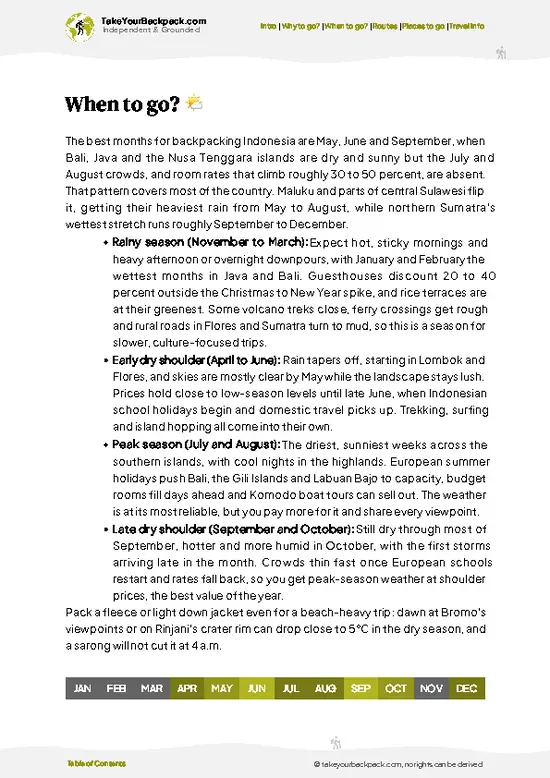
🌤️ When to go?When is the celebration of Cap Go Meh?


  • Topic: Weather – Cap Go Meh falls in February or March, smack in the middle of Indonesia’s rainy season. Expect heavy showers and humidity around 25-30°C (77-86°F). Rain can soak your plans, so pack quick-dry gear and embrace the wet vibe.

  • Topic: Temperature – Daytime temps hover between 25-30°C (77-86°F), cooling slightly at night. It’s warm but sticky, so stay hydrated and plan active exploring for early mornings or late afternoons.

  • Topic: Daylight Hours – Indonesia sits near the equator, so daylight stays steady at about 12 hours. You get consistent sunrise around 6:00 AM and sunset near 6:00 PM, giving you a reliable window to chase the festival’s energy.

  • Topic: Crowds – The festival draws locals and tourists alike, but it’s not a crush-fest. Arriving early in the day helps you
read more 👉

  • Topic: Weather – Cap Go Meh falls in February or March, smack in the middle of Indonesia’s rainy season. Expect heavy showers and humidity around 25-30°C (77-86°F). Rain can soak your plans, so pack quick-dry gear and embrace the wet vibe.

  • Topic: Temperature – Daytime temps hover between 25-30°C (77-86°F), cooling slightly at night. It’s warm but sticky, so stay hydrated and plan active exploring for early mornings or late afternoons.

  • Topic: Daylight Hours – Indonesia sits near the equator, so daylight stays steady at about 12 hours. You get consistent sunrise around 6:00 AM and sunset near 6:00 PM, giving you a reliable window to chase the festival’s energy.

  • Topic: Crowds – The festival draws locals and tourists alike, but it’s not a crush-fest. Arriving early in the day helps you dodge the busiest moments and snag prime viewing spots without elbowing through crowds.

  • Topic: Seasonal Activities – Cap Go Meh is the climax of Lunar New Year celebrations, so timing your visit here means catching vibrant parades, dragon dances, and street feasts that vanish after the festival ends.

  • Topic: Price Fluctuations – Expect accommodation and transport prices to spike slightly during the festival. Booking ahead locks in better rates and spares you last-minute stress that drains both wallet and energy.


Pro-tip: Arrive a day early to acclimate to the humidity and secure your spot—this buffer turns festival chaos into a smooth, immersive experience.


source: climatestotravel.comJANJanuary: not recommended for travelingFEBFebruary: excellent for travelingMARMarch: not recommended for travelingAPRApril: not recommended for travelingMAYMay: not recommended for travelingJUNJune: not recommended for travelingJULJuly: not recommended for travelingAUGAugust: not recommended for travelingSEPSeptember: not recommended for travelingOCTOctober: not recommended for travelingNOVNovember: not recommended for travelingDECDecember: not recommended for traveling

✈️ The backpacker research shortcutIndonesia Travel Guide

An offline-friendly backpacking guide with optimized travel routes, ranked highlights, transport advice, and the best areas to stay.
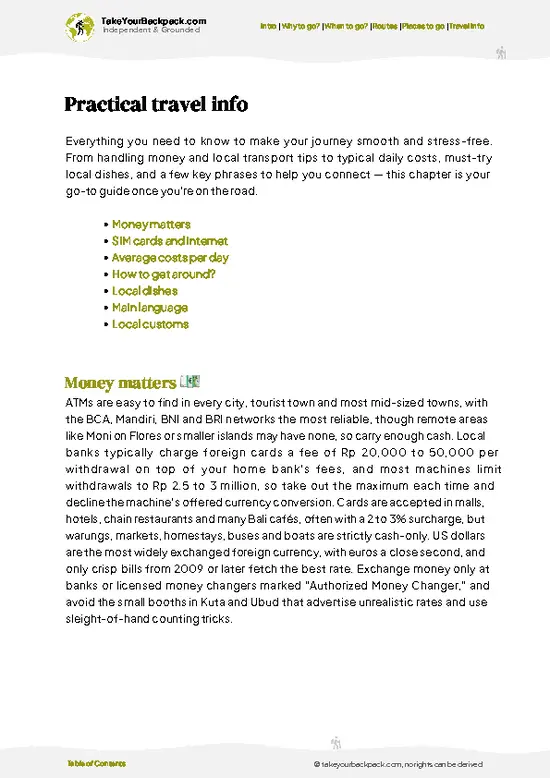
example page 0 from our offline Travel Guide for Indonesia
example page 1 from our offline Travel Guide for Indonesia
example page 2 from our offline Travel Guide for Indonesia
example page 3 from our offline Travel Guide for Indonesia
example page 4 from our offline Travel Guide for Indonesia
example page 5 from our offline Travel Guide for Indonesia
example page 6 from our offline Travel Guide for Indonesia
example page 7 from our offline Travel Guide for Indonesia
The digital guide (550 pages) contains:
155 highlights, ranked by travel appeal
Optimized 14, 21 & 30-day travel routes
Cities, national parks, landmarks, beaches
How to get around
Offline-friendly for travel without Wi-Fi
👉 Click to see all 30+ guide features

📅 Plan smarter in minutes, not weeks
Month by month travel advice
Festivals & national holidays
Budget expectations

🗺️ Go to the right places, skip the overrated ones
Honest pros & cons of destinations
Top hikes, parks & viewpoints
Lesser-known places most travelers miss
Clear “worth it vs skip it” guidance

🛏️ Travel smoothly without rookie mistakes
Best areas to stay
Transport systems explained simply
Common scams & safety advice
SIM cards, money & practical tips

🌍 Understand the country, not just visit it
Culture & traditions
52 Essential phrases & customs
Festivals worth planning around
Traveler-friendly historical context
Insights that make places more meaningful

📱 Built for real travel conditions
Fully downloadable PDF
Works completely offline
Optimized for phone use
Useful in remote areas & buses
Everything in one place
Save weeks of stressful planning
Get instant access to your full guide. 30‑day money-back guarantee.


By proceeding you agree to our terms.
Sent to your inbox immediately after payment • 100% Secure Checkout
Best Backpacking Travel Advisor 2025 tourism awardBest Backpacking
Travel Advisor
2025
What others say about Take Your Backpack Guides:
⭐⭐⭐⭐⭐
Fantastic, amazing amount of information!
⭐⭐⭐⭐⭐
My goodness this is amazing, it's what I've been looking for hats off too you!
⭐⭐⭐⭐⭐
I think this is absolutely BRILLIANT
⭐⭐⭐⭐
Very complete and informative. It's still missing places, but I gotta to commend you
⭐⭐⭐⭐⭐
This is truly amazing, thank you, can't wait to explore it with my kids!
⭐⭐⭐⭐⭐
Awesome resource, thank you!
⭐⭐⭐⭐⭐
This is amazing! Can't wait to explore the ones I haven't seen
⭐⭐⭐⭐
I love this! Well done, great idea.
⭐⭐⭐⭐⭐
Thanks for taking the time to make this gem!
⭐⭐⭐⭐⭐
This might be the best website I've ever seen.
⭐⭐⭐⭐⭐
Congratulations, and thank you so much for your work; it's incredibly valuable.
⭐⭐⭐⭐
In all seriousness I think you did a great job pointing out the important spots
⭐⭐⭐⭐⭐
10/10 very good
⭐⭐⭐⭐⭐
As someone who's only just starting to visit regularly this is awesome, thank you.
⭐⭐⭐⭐
Thank you very much! I'm going to visit my dad, it's going to be very useful!
⭐⭐⭐⭐⭐
This is really cool! We'll be travelling for the first time and this definitely come in handy.
⭐⭐⭐⭐⭐
You are now our minister of culture, congratulations 👨‍💼
⭐⭐⭐⭐⭐
Just wanted to tell you that this is a pearl! Going to follow your recommendations.
⭐⭐⭐⭐⭐
This is so cool. I'll definitely be using the resource for my travels soon.
⭐⭐⭐⭐⭐
This is very impressive! Good work.
⭐⭐⭐⭐⭐
This is an amazing and informative site. Very well done!

🛏️ Where to stay?Best areas to stay in Indonesia

For the vibrant Cap Go Meh festival in Indonesia, you want to be in the thick of the action without breaking the bank. Head to the heart of Singkawang or Pontianak. These areas pulse with energy during the festival, making them perfect for backpackers seeking a social vibe.

Singkawang offers a mix of local charm and accessibility. You’ll find budget-friendly guesthouses that cater to solo travelers. The streets come alive with food stalls and cultural performances, so you can dive into the festivities right outside your door.

Pontianak, on the other hand, is a bustling hub. It’s packed with … read more 👉
For the vibrant Cap Go Meh festival in Indonesia, you want to be in the thick of the action without breaking the bank. Head to the heart of Singkawang or Pontianak. These areas pulse with energy during the festival, making them perfect for backpackers seeking a social vibe.

Singkawang offers a mix of local charm and accessibility. You’ll find budget-friendly guesthouses that cater to solo travelers. The streets come alive with food stalls and cultural performances, so you can dive into the festivities right outside your door.

Pontianak, on the other hand, is a bustling hub. It’s packed with hostels that attract fellow adventurers. Here, you can swap stories over a cheap meal or join a group to explore the nearby sights. Safety is a priority, with a friendly atmosphere that welcomes newcomers.

Both locations keep you close to the festival’s pulse while allowing you to recharge for the next day’s adventures. Avoid the tourist traps and focus on these areas to maximize your experience without draining your wallet.

👛 Costs (as of 17 December 2024)Money, prices, and spending tips

Cap Go Meh in Indonesia is a vibrant celebration that can be a whirlwind of excitement and culture. But before you dive in, let’s break down the costs to keep your energy and budget intact.
  • Festival Tickets: Entry to Cap Go Meh is generally free, but some special events or performances may charge a small fee. Expect to pay around €5 to €15 ($5 to $15) for premium experiences or reserved seating. Keep an eye out for local announcements to snag the best deals.
  • Accommodation: Options range widely. Budget hostels start at about €10 to €20 ($10 to $20) per night. Mid-range hotels can run from €30 to €60 ($30 to $60). If you want a unique experience, consider homestays, which can be around €15 to €40 ($15 to $40) per night. Book early to avoid inflated prices.
  • Local Transport: Getting around can be
read more 👉
Cap Go Meh in Indonesia is a vibrant celebration that can be a whirlwind of excitement and culture. But before you dive in, let’s break down the costs to keep your energy and budget intact.
  • Festival Tickets: Entry to Cap Go Meh is generally free, but some special events or performances may charge a small fee. Expect to pay around €5 to €15 ($5 to $15) for premium experiences or reserved seating. Keep an eye out for local announcements to snag the best deals.
  • Accommodation: Options range widely. Budget hostels start at about €10 to €20 ($10 to $20) per night. Mid-range hotels can run from €30 to €60 ($30 to $60). If you want a unique experience, consider homestays, which can be around €15 to €40 ($15 to $40) per night. Book early to avoid inflated prices.
  • Local Transport: Getting around can be affordable. Public transport is your best bet, costing about €0.50 to €2 ($0.50 to $2) per ride. If you prefer taxis or ride-sharing, budget around €5 to €10 ($5 to $10) for short trips. Renting a bike can also be a fun way to explore, typically around €3 to €5 ($3 to $5) per day.
  • Food & Drinks: Street food is a highlight and incredibly budget-friendly. You can enjoy meals for as little as €1 to €3 ($1 to $3). If you opt for sit-down restaurants, expect to pay between €5 to €15 ($5 to $15) per meal. Don’t forget to try local drinks, which usually cost around €1 ($1) each.
  • Miscellaneous Expenses: This includes souvenirs, tips, and any unexpected costs. Set aside about €10 to €30 ($10 to $30) for this category. Bargaining is common, so don’t hesitate to negotiate prices at markets.

Being aware of these costs helps you navigate the festival without draining your resources. Focus on the experiences that matter, and keep your budget in check for the moments that truly count.


source: indonesia.travel
⚠️ Prices can change and everyone travels differently, so take this as a rough guide. Hope it helps you plan your adventure!

🍲 FoodWhat to Eat & Drink

At the Cap Go Meh festival in Indonesia, the air buzzes with the aroma of sizzling street food. You’ll find nasi goreng (fried rice) and satay skewers grilling to perfection, their smoky scent pulling you in. Don’t miss the kue cubir, a sweet, chewy cake that’s a local favorite. Each bite is a burst of nostalgia, a taste of home for many.

As you navigate the stalls, embrace the chaos. Lines can be long, but that’s part of the experience. Chat with locals; they’re often eager to share their favorites. Bring cash—many vendors don’t accept cards, and you don’t want to miss out on that last bowl of bakso (meatball soup) because you’re fumbling for change.

Sharing is a big part of the festival vibe. Grab a few dishes and pass them around. It’s not just about eating; it’s about connecting. Serving … read more 👉
At the Cap Go Meh festival in Indonesia, the air buzzes with the aroma of sizzling street food. You’ll find nasi goreng (fried rice) and satay skewers grilling to perfection, their smoky scent pulling you in. Don’t miss the kue cubir, a sweet, chewy cake that’s a local favorite. Each bite is a burst of nostalgia, a taste of home for many.

As you navigate the stalls, embrace the chaos. Lines can be long, but that’s part of the experience. Chat with locals; they’re often eager to share their favorites. Bring cash—many vendors don’t accept cards, and you don’t want to miss out on that last bowl of bakso (meatball soup) because you’re fumbling for change.

Sharing is a big part of the festival vibe. Grab a few dishes and pass them around. It’s not just about eating; it’s about connecting. Serving sizes can be generous, so pace yourself. Dive into the fresh coconut water to cool off; it’s a refreshing antidote to the festival heat. Each sip is a reminder that you’re not just a spectator—you’re part of something vibrant and alive.

Other Indonesian festivals near Cap Go Meh

Explore more nearby:

  • Bintan Moon Run—night race, tropical island, illuminated trails| 562 km away
  • Kuningan—yellow rice, farewell to ancestors, temple processions| 743 km away
  • Dieng Culture Festival—mountain sunrise, dreadlock-cutting ritual, volcanic plateau| 801 km away

💡 Not sure where to go next?
Create a personalized itinerary for Indonesia including Cap Go Meh and the places that fit your trip.

Generate my itinerary

👉 Discover all festivals

Or checkout all Indonesia has to offer (think cities, towns, villages, national parks, hikes, beaches, festivals)
Country photo of Indonesia

We 💚 feedbackWhat to keep in mind

Cap Go Meh is a riot of color and culture, where the streets pulse with the rhythm of drums and laughter. You’ll dive into a feast of flavors and traditions that’ll stick with you long after you leave. But be ready for the crowds; they can be overwhelming. Embrace the chaos, and you’ll find that the energy of the festival is worth every moment spent navigating through it.

✈️ When did I visit Indonesia?
As part of my 1.5 year travel around the world trip, I visited Indonesia twice (and it was worth it. First in September 2015 and a bit later again in January and February 2016.

✍️ Help improve this page!
The information on this page is based on my own backpacking experience in Indonesia, supplemented with up-to-date research and feedback from other travelers. Travel details can change, so if you notice anything outdated or incomplete, feel free to let me know.


🙋‍♂️ Give feedback

👋 Meet the founderWho’s Behind Take Your Backpack?

Johan, backpacker and founder of TakeYourBackpackHi, I’m Johan (Netherlands 🇳🇱), the creator of TakeYourBackpack. Over the past decade, I’ve backpacked through 80+ countries across six continents, gaining extensive experience with independent travel, long-term trips, and overland routes.

This site is built on a combination of firsthand travel experience and carefully curated insights from other backpackers. Many guides are based on places I’ve personally visited, while others bring together tips, observations, and practical advice shared by trusted travelers I’ve met along the way.

The goal is to provide realistic, experience-driven guidance — not generic itineraries — so you can explore destinations with better context, clearer expectations, and more confidence.

Get full Indonesia guide •
Instant download • 155 highlights • Full Offline guide