×

Indonesia🇮🇩 | citiesPagar Alamtea plantations, cool mountain air, megalithic sites | things to do and best time to go

Explore MalangExplore Yogyakarta

Backpacking in Pagar Alam
👀 For curious travelerscity ranked #38
By Johan Kruseman 🇳🇱 | Updated October 15, 2026

Pagar Alam isn't a beach town or a temple circuit—it's a highland city in South Sumatra where coffee plantations and waterfalls dominate the landscape, not Instagram crowds. Perched at 600 meters elevation, it's cooler and quieter than the coastal lowlands, making it a genuine basecamp for trekking and rural exploration. The city suits travelers seeking authentic highland culture and outdoor access over nightlife and tourist infrastructure. I remember stepping off the minibus into thick morning mist, the air sharp with coffee and earth, locals already moving through the market with purpose. Pagar Alam trades comfort for character and rewards curiosity over convenience.

Discover everything you want to know in the 📖 Indonesia Travel Guide.


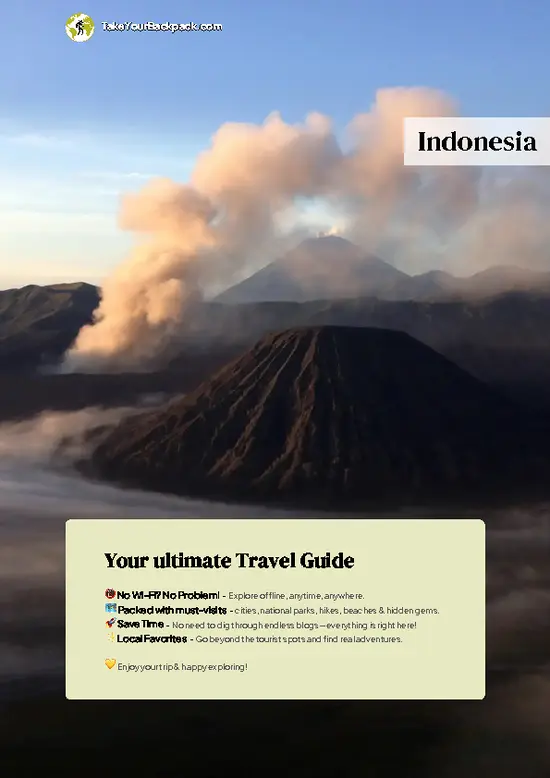
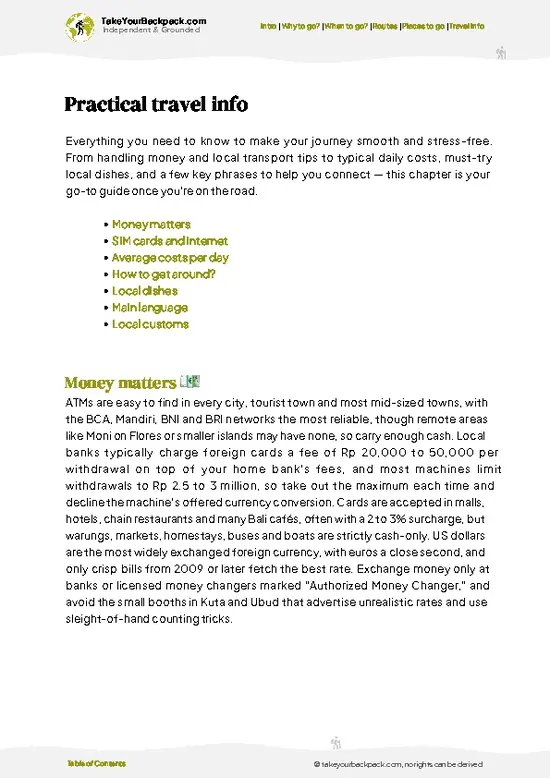
example page 0 from our offline Travel Guide for Indonesia
example page 1 from our offline Travel Guide for Indonesia
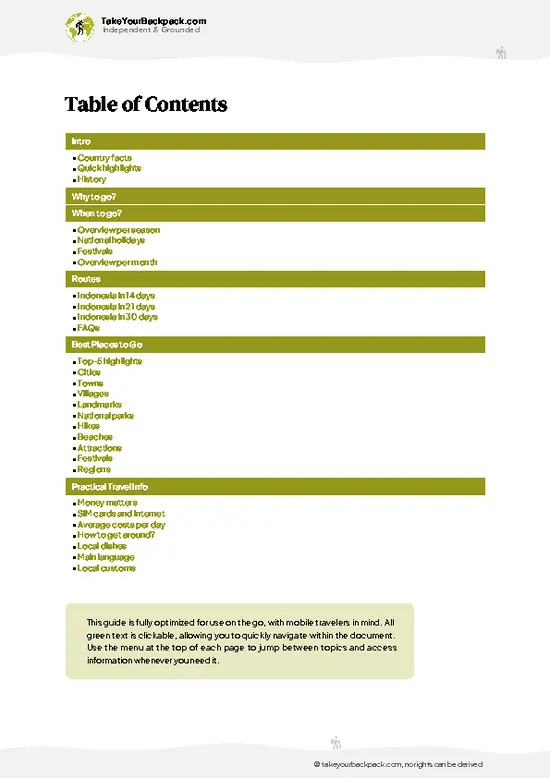
example page 2 from our offline Travel Guide for Indonesia
example page 3 from our offline Travel Guide for Indonesia
example page 4 from our offline Travel Guide for Indonesia
example page 5 from our offline Travel Guide for Indonesia
example page 6 from our offline Travel Guide for Indonesia
example page 7 from our offline Travel Guide for Indonesia
Loading the map 🌍
CLICK TO FILTER
cities
towns
villages
landmarks
national parks
hikes
beaches
attractions
festivals
regions
SHOW COUNTRY’S BESTSHOW ALL

✨ Why go?
Ranked #38 city in Indonesia
Why visitors keep coming back

Pagar Alam works as a basecamp for day trips into coffee plantations, waterfalls, and mountain villages rather than a destination unto itself. The walkable town center connects budget hostels, local warungs, and transport hubs efficiently. Onward travel to Palembang, Bengkulu, or the Kerinci highlands is straightforward by minibus. The city attracts backpackers seeking rural immersion and outdoor activities—trekking, waterfall swimming, plantation tours—without the tourist markup of Bandung or Lake Toba. Hostels are basic but social, and food costs stay low. It's best as a 2 to 3-day stop rather than a long stay, ideal for travelers routing through Sumatra's interior.

💡 HighlightsEssential experiences to have while visiting Pagar Alam

  1. Dempo Waterfall: A 40-meter cascade in a forested ravine 8 kilometers south of town, accessible by motorbike taxi or on foot. The pool below is swimmable and rarely crowded. Best visited early morning to avoid afternoon heat. Allow 3 to 4 hours round trip. Entry is free; motorbike taxi costs around US$8 to 12 return.
  2. Pagar Alam Coffee Plantations: Working farms on the hillsides around the city offer informal tours where you can see processing and taste fresh coffee. Most plantations welcome visitors without advance booking. Spend 2 to 3 hours walking through the plants and learning from farmers. No fixed cost, but a small tip (US$2 to 5) is appreciated.
  3. Tanjung Lasa Waterfall: A larger, multi-tiered waterfall 12 kilometers northeast, less visited than Dempo. The trek involves a 1.5 to 2-hour
… read more 👉
  1. Dempo Waterfall: A 40-meter cascade in a forested ravine 8 kilometers south of town, accessible by motorbike taxi or on foot. The pool below is swimmable and rarely crowded. Best visited early morning to avoid afternoon heat. Allow 3 to 4 hours round trip. Entry is free; motorbike taxi costs around US$8 to 12 return.
  2. Pagar Alam Coffee Plantations: Working farms on the hillsides around the city offer informal tours where you can see processing and taste fresh coffee. Most plantations welcome visitors without advance booking. Spend 2 to 3 hours walking through the plants and learning from farmers. No fixed cost, but a small tip (US$2 to 5) is appreciated.
  3. Tanjung Lasa Waterfall: A larger, multi-tiered waterfall 12 kilometers northeast, less visited than Dempo. The trek involves a 1.5 to 2-hour hike through forest. Best in the dry season (June to September). Motorbike taxi and guide cost around US$15 to 20 total.
  4. Pagar Alam Town Market: The central pasar is where locals buy produce, spices, and daily goods. Early morning (6:00 to 8:00 AM) is most active. It's free to walk through and gives a genuine sense of highland town life. Allow 1 to 1.5 hours.
  5. Bukit Serelo Viewpoint: A hilltop overlook on the town's edge offering views of the surrounding plantations and valleys. Reachable by a short walk or motorbike. Best at sunrise or late afternoon. Free entry; takes 1 to 2 hours including the walk.
  6. Curup Terjun Waterfall: A smaller, easier waterfall 6 kilometers west, good for a half-day trip. The walk is gentle and suitable for all fitness levels. Allow 2 to 3 hours. Free entry; motorbike taxi costs US$6 to 10 return.
Day trips from Pagar Alam also reach the Kerinci Seblat National Park (for serious trekking), the highland village of Kersik Tuo, and the Bengkulu coast. I'd pick Kerinci Seblat first if you have 2 to 3 days and enjoy multi-day treks; otherwise, Kersik Tuo offers highland culture and cooler air in a single day.
Spotted a mistake or missing something? Contact us.

🏘️ NeighborhoodsHow different areas shape the experience

  • Pasar Sentral (Central Market): The pulsing heart of Pagar Alam, where locals converge to trade, eat, and move through the day. Wander past fruit stalls, textile vendors, and warung serving fresh noodles. The energy peaks at dawn and settles by afternoon. Highly walkable, dense, and cheap to explore on foot.
  • Jalan Merdeka: The main commercial strip running through town, lined with shops, cafés, and small restaurants. Less chaotic than the market but still animated. Good for grabbing meals and supplies without the crush. Flat and easy to navigate.
  • Residential Quarters: Quieter neighborhoods spreading outward where locals live. Fewer tourists, lower prices for food and lodging, and a genuine sense of daily life. Walking reveals small warungs and family-run guesthouses. Peaceful but requires more effort to find services.

⌛️ 1 daySeeing the highlights in 24 hours

Pagar Alam rewards a slow morning and afternoon exploring the town and one nearby waterfall, with time to absorb the highland rhythm.

7:00 AM: Town Market. Start early at the pasar pusat to see vendors setting up and locals buying breakfast. The energy peaks before 8:00 AM. Grab coffee and a local snack (martabak or roti) from a stall for US$1 to 2. Walk back toward the town center, about 15 to 20 minutes on foot.

9:00 AM: Bukit Serelo Viewpoint. Head uphill to this overlook on the town's edge for views of the plantations and valleys. The walk takes 30 to 45 minutes or hire a motorbike taxi for US$3 to 5. Spend 45 minutes here, then return to town.

11:30 AM: Local Warung Lunch. Eat at a small restaurant near the town center. Order nasi kuning, rendang, or gado-gado. Cost is US$2 to 4 per … read more 👉
Pagar Alam rewards a slow morning and afternoon exploring the town and one nearby waterfall, with time to absorb the highland rhythm.

7:00 AM: Town Market. Start early at the pasar pusat to see vendors setting up and locals buying breakfast. The energy peaks before 8:00 AM. Grab coffee and a local snack (martabak or roti) from a stall for US$1 to 2. Walk back toward the town center, about 15 to 20 minutes on foot.

9:00 AM: Bukit Serelo Viewpoint. Head uphill to this overlook on the town's edge for views of the plantations and valleys. The walk takes 30 to 45 minutes or hire a motorbike taxi for US$3 to 5. Spend 45 minutes here, then return to town.

11:30 AM: Local Warung Lunch. Eat at a small restaurant near the town center. Order nasi kuning, rendang, or gado-gado. Cost is US$2 to 4 per meal. Rest here for an hour.

1:00 PM: Dempo Waterfall. Take a motorbike taxi (US$8 to 12 return) to this 40-meter waterfall 8 kilometers south. Swim in the pool and explore the forest for 2 to 3 hours. Return to town by 5:00 PM.

🌤️ When to go?When to go for the best experience

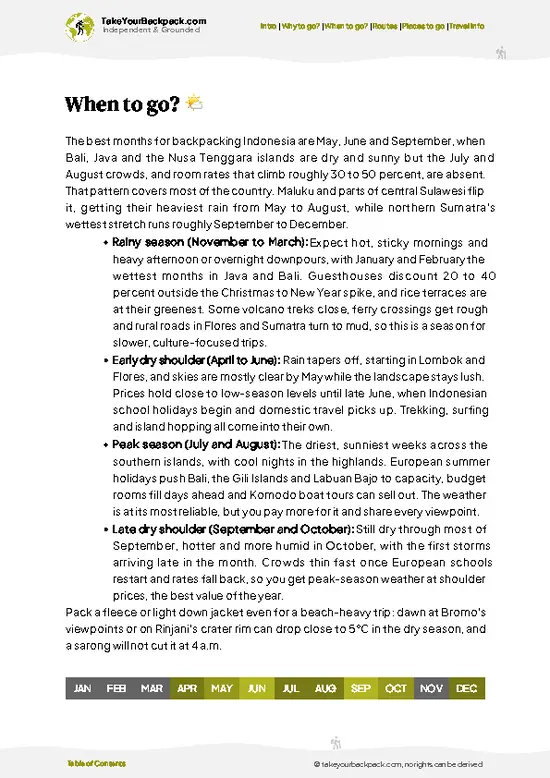
  • Dry Season (May to September): Clear skies, warm days (25 to 30°C / 77 to 86°F), and reliable travel conditions. Crowds peak in July and August. Prices rise slightly but roads stay passable.
  • Wet Season (October to April): Heavy rain, cooler temperatures (20 to 25°C / 68 to 77°F), and fewer tourists. Accommodation and food drop in price. Roads can flood; travel becomes slower and less predictable.
Visit May to September for the easiest logistics; October to April rewards patience with lower costs and authentic quiet.

source: climatestotravel.comJANJanuary: below average for travelingFEBFebruary: below average for travelingMARMarch: fair for travelingAPRApril: good for travelingMAYMay: good for travelingJUNJune: highly recommended for travelingJULJuly: excellent for travelingAUGAugust: excellent for travelingSEPSeptember: highly recommended for travelingOCTOctober: good for travelingNOVNovember: fair for travelingDECDecember: below average for traveling
when-to-go

✈️ The backpacker research shortcutIndonesia Travel Guide

An offline-friendly backpacking guide with optimized travel routes, ranked highlights, transport advice, and the best areas to stay.
example page 0 from our offline Travel Guide for Indonesia
example page 1 from our offline Travel Guide for Indonesia
example page 2 from our offline Travel Guide for Indonesia
example page 3 from our offline Travel Guide for Indonesia
example page 4 from our offline Travel Guide for Indonesia
example page 5 from our offline Travel Guide for Indonesia
example page 6 from our offline Travel Guide for Indonesia
example page 7 from our offline Travel Guide for Indonesia
The digital guide (460 pages) contains:
✅ 153 highlights, ranked by travel appeal
✅ Optimized 14, 21 & 30-day travel routes
✅ Cities, national parks, landmarks, beaches
✅ How to get around
✅ Offline-friendly for travel without Wi-Fi
👉 Click to see all 30+ guide features

📅 Plan smarter in minutes, not weeks
✅ Month by month travel advice
✅ Festivals & national holidays
✅ Budget expectations

🗺️ Go to the right places, skip the overrated ones
✅ Honest pros & cons of destinations
✅ Top hikes, parks & viewpoints
✅ Lesser-known places most travelers miss
✅ Clear “worth it vs skip it” guidance

🛏️ Travel smoothly without rookie mistakes
✅ Best areas to stay
✅ Transport systems explained simply
✅ Common scams & safety advice
✅ SIM cards, money & practical tips

🌍 Understand the country, not just visit it
✅ Culture & traditions
✅ 52 Essential phrases & customs
✅ Festivals worth planning around
✅ Traveler-friendly historical context
✅ Insights that make places more meaningful

📱 Built for real travel conditions
✅ Fully downloadable PDF
✅ Works completely offline
✅ Optimized for phone use
✅ Useful in remote areas & buses
✅ Everything in one place
Stop searching, start planning
Get instant access to your full guide. 30‑day money-back guarantee.
+ Add another guide for just

By proceeding you agree to our terms.
Sent to your inbox immediately after payment • 100% Secure Checkout
Best Backpacking Travel Advisor 2025 tourism awardBest Backpacking
Travel Advisor
2025
What others say about Take Your Backpack Guides:
⭐⭐⭐⭐⭐
Fantastic, amazing amount of information!
⭐⭐⭐⭐⭐
My goodness this is amazing, it's what I've been looking for hats off too you!
⭐⭐⭐⭐⭐
I think this is absolutely BRILLIANT
⭐⭐⭐⭐
Very complete and informative. It's still missing places, but I gotta to commend you
⭐⭐⭐⭐⭐
This is truly amazing, thank you, can't wait to explore it with my kids!
⭐⭐⭐⭐⭐
Awesome resource, thank you!
⭐⭐⭐⭐⭐
This is amazing! Can't wait to explore the ones I haven't seen
⭐⭐⭐⭐
I love this! Well done, great idea.
⭐⭐⭐⭐⭐
Thanks for taking the time to make this gem!
⭐⭐⭐⭐⭐
This might be the best website I've ever seen.
⭐⭐⭐⭐⭐
Congratulations, and thank you so much for your work; it's incredibly valuable.
⭐⭐⭐⭐
In all seriousness I think you did a great job pointing out the important spots
⭐⭐⭐⭐⭐
10/10 very good
⭐⭐⭐⭐⭐
As someone who's only just starting to visit regularly this is awesome, thank you.
⭐⭐⭐⭐
Thank you very much! I'm going to visit my dad, it's going to be very useful!
⭐⭐⭐⭐⭐
This is really cool! We'll be travelling for the first time and this definitely come in handy.
⭐⭐⭐⭐⭐
You are now our minister of culture, congratulations 👨‍💼
⭐⭐⭐⭐⭐
Just wanted to tell you that this is a pearl! Going to follow your recommendations.
⭐⭐⭐⭐⭐
This is so cool. I'll definitely be using the resource for my travels soon.
⭐⭐⭐⭐⭐
This is very impressive! Good work.
⭐⭐⭐⭐⭐
This is an amazing and informative site. Very well done!

🛏️ Where to stay?Best areas and accommodation options

Base yourself in or near Pasar Sentral or along Jalan Merdeka for the best balance of budget accommodation, safety, and access to food and transport. Both areas have guesthouses and simple hostels in the US$8 to 15 range per night. The market district buzzes with activity until evening, then quiets; Jalan Merdeka stays livelier but slightly noisier. Both are walkable to everything in town and serve as natural hubs for day trips. Avoid isolated residential areas unless you have local guidance; they lack services and feel disconnected at night.

🚌 Getting aroundHow to get around Pagar Alam

Many visitors assume they need to hire a driver or motorbike immediately, wasting money on transport they don't need. Pagar Alam is small and walkable; most neighborhoods sit within 20 to 30 minutes on foot. Reliable public transport is limited, so plan accordingly.

  • Walking: The cheapest and most rewarding option for exploring the town center and nearby areas. Free, flexible, and reveals details you'd miss from a vehicle. Takes time but costs nothing.
  • Ojek (Motorcycle Taxi): Ubiquitous and fast for longer distances or when tired. US$1 to 3 per ride depending on distance. Negotiate before boarding. Drivers know shortcuts and can drop you anywhere.
  • Angkot (Minibus): Shared minibuses running fixed routes through town and to nearby villages. US$0.50 to 1 per ride. Slow, crowded, but authentic and
… read more 👉
Many visitors assume they need to hire a driver or motorbike immediately, wasting money on transport they don't need. Pagar Alam is small and walkable; most neighborhoods sit within 20 to 30 minutes on foot. Reliable public transport is limited, so plan accordingly.

  • Walking: The cheapest and most rewarding option for exploring the town center and nearby areas. Free, flexible, and reveals details you'd miss from a vehicle. Takes time but costs nothing.
  • Ojek (Motorcycle Taxi): Ubiquitous and fast for longer distances or when tired. US$1 to 3 per ride depending on distance. Negotiate before boarding. Drivers know shortcuts and can drop you anywhere.
  • Angkot (Minibus): Shared minibuses running fixed routes through town and to nearby villages. US$0.50 to 1 per ride. Slow, crowded, but authentic and cheap. Departs when full, not on schedule.
  • Rental Motorbike: Gives independence for day trips and exploring outlying areas. US$5 to 8 per day. Requires an international license and comfort with local traffic. Fuel costs US$1 to 2 per day.

👛 Costs (as of 15 October 2026)Money, prices, and spending tips

Budget backpackers spend US$20 to 35 per day in Pagar Alam, covering basic accommodation, meals, and local transport. Costs are lower than major cities and prices remain stable year-round.
CategoryBudget RangeLocal Reality
Dorm accommodation (high season)US$10 to 15Simple guesthouses and hostels; clean, basic rooms with shared bathrooms
Dorm accommodation (off-season)US$8 to 12Same facilities; prices drop 15 to 20 percent October to April
MealsUS$1.50 to 4Warung meals US$1.50 to 2.50; casual restaurants US$3 to 4
Local transportUS$0.50 to 3Angkot US$0.50 to 1; ojek US$1 to 3 depending on distance
City transport passN/ANo pass system; pay per ride
Basic activities/entry feesUS$0 to 5Most sites free or minimal; guide fees US$10 to 15 for day trips
Miscellaneous expensesUS$2 to 5Snacks, coffee, laundry,
… read more 👉
Budget backpackers spend US$20 to 35 per day in Pagar Alam, covering basic accommodation, meals, and local transport. Costs are lower than major cities and prices remain stable year-round.
CategoryBudget RangeLocal Reality
Dorm accommodation (high season)US$10 to 15Simple guesthouses and hostels; clean, basic rooms with shared bathrooms
Dorm accommodation (off-season)US$8 to 12Same facilities; prices drop 15 to 20 percent October to April
MealsUS$1.50 to 4Warung meals US$1.50 to 2.50; casual restaurants US$3 to 4
Local transportUS$0.50 to 3Angkot US$0.50 to 1; ojek US$1 to 3 depending on distance
City transport passN/ANo pass system; pay per ride
Basic activities/entry feesUS$0 to 5Most sites free or minimal; guide fees US$10 to 15 for day trips
Miscellaneous expensesUS$2 to 5Snacks, coffee, laundry, and incidentals
Total Daily BudgetUS$20 to 35Comfortable budget travel with meals, transport, and occasional activities
Eat at warungs instead of tourist restaurants to stretch your budget further.
⚠️ Prices can change and everyone travels differently, so take this as a rough guide. Hope it helps you plan your adventure!

🚌 Day tripsBest day trips from Pagar Alam

Pagar Alam sits in South Sumatra's highlands, surrounded by tea plantations, waterfalls, and small villages worth a half-day or full-day excursion.

Dempo Crater Lake
A steep hike to a crater lake at elevation, offering views across the highlands and a chance to walk through tea fields. The round trip takes 4 to 5 hours from town. Cost is minimal (guide optional, US$10 to 15). Go in dry season; wet season makes the trail slippery and visibility poor. Start early to avoid afternoon clouds.

Curup Tenang Waterfall
A modest waterfall in a quiet forest setting, 30 to 40 minutes by ojek from town. The walk to the falls is short and easy. Total cost around US$8 to 12 including transport and a simple meal. Best visited in wet season when water flow is strong. First-timers often underestimate how slippery … read more 👉
Pagar Alam sits in South Sumatra's highlands, surrounded by tea plantations, waterfalls, and small villages worth a half-day or full-day excursion.

Dempo Crater Lake
A steep hike to a crater lake at elevation, offering views across the highlands and a chance to walk through tea fields. The round trip takes 4 to 5 hours from town. Cost is minimal (guide optional, US$10 to 15). Go in dry season; wet season makes the trail slippery and visibility poor. Start early to avoid afternoon clouds.

Curup Tenang Waterfall
A modest waterfall in a quiet forest setting, 30 to 40 minutes by ojek from town. The walk to the falls is short and easy. Total cost around US$8 to 12 including transport and a simple meal. Best visited in wet season when water flow is strong. First-timers often underestimate how slippery rocks get; wear proper shoes.

Tea Plantations
Walk or ride through working tea estates on the outskirts. Many allow visitors to observe picking and processing. No entry fee; a small tip to workers is appreciated. Accessible year-round and photogenic in any season. Combine with a local warung lunch for a full morning.


🍲 FoodLocal Flavors for Backpackers

Pagar Alam's food centers on Padang cuisine, a rich, spice-forward style from West Sumatra. Try rendang (meat slow-cooked in coconut and spices), gulai (curry), and sambal (chili paste) at any warung. Nasi kuning (turmeric rice) and ikan bakar (grilled fish) appear regularly. Street vendors sell martabak (stuffed pancakes) and perkedel (potato fritters) for snacks. The market is the best place to eat cheaply and authentically; sit at a warung counter and point to dishes. Coffee culture is strong; local kopi is dark, thick, and cheap. Meals cost US$1 to 3 at casual spots.

🛡️ SafetySafety Tips and Common Scams in Pagar Alam

Pagar Alam is a quiet, low-crime town where backpackers move freely without significant risk. Petty theft from unattended bags happens occasionally in the market, so keep valuables close and stay aware in crowded areas. Solo travel, including at night, is safe; locals are accustomed to visitors and helpful. Scams are rare. The main annoyance is persistent but harmless attention from curious locals, especially in quieter neighborhoods. Carry a copy of your passport and keep originals in your accommodation. Standard precautions suffice.

FAQTraveler FAQ

Two to three days is ideal. One day covers the town market and one waterfall; two days allow a plantation tour and a second waterfall or village visit. Three days gives you time to trek into Kerinci Seblat National Park or explore the surrounding highlands without rushing.
Pagar Alam is safe for solo backpackers. Petty theft is rare, and locals are accustomed to foreign visitors. Standard precautions apply: avoid walking alone late at night, keep valuables secure, and use registered motorbike taxis. The town has a police station and basic medical facilities.
Pagar Alam is known for its coffee plantations, highland waterfalls, and role as a basecamp for trekking in Sumatra's interior. It's also recognized as a working agricultural town where tourism is secondary, making it appealing to backpackers seeking authentic rural Indonesia rather than tourist infrastructure.
⚠️ Things can change over time, so always validate details locally before you go.

Other Indonesian cities near Pagar Alam

Explore more nearby:

  • Palembang—Musi River, floating houses, songket weaving| 205 km away
  • Jakarta—Kota Tua, KRL commuter trains, mega-mall culture, street food| 463 km away
  • Bogor—Botanical garden, Presidential Palace, rain city, Jakarta escape| 487 km away

💡 Not sure where to go next?
Create a personalized itinerary for Indonesia including Pagar Alam and the places that fit your trip.

Generate my itinerary

👉 Discover all cities

Or checkout all Indonesia has to offer (think cities, towns, villages, national parks, hikes, beaches, festivals)
Country photo of Indonesia

We 💚 feedbackWhat to keep in mind

Pagar Alam rewards visitors with genuine mountain culture and coffee plantations most tourists skip entirely. The catch is infrastructure: roads are rough, English is sparse, and amenities feel basic. But that's precisely why it stays real.

✈️ When did I visit Indonesia?
As part of my 1.5 year travel around the world trip, I visited Indonesia twice (and it was worth it): first in September 2015 and a bit later again in January and February 2016.

✍️ Help improve this page!
The information on this page is based on my own backpacking experience in Indonesia, supplemented with up-to-date research and feedback from other travelers. Travel details can change, so if you notice anything outdated or incomplete, feel free to let me know.


🙋‍♂️ Give feedback

👋 Meet the founderWho’s Behind Take Your Backpack?

Johan, backpacker and founder of TakeYourBackpackHi, I’m Johan (Netherlands 🇳🇱), the creator of TakeYourBackpack. Over the past 3 decades, I’ve backpacked through 90+ countries across six continents, gaining extensive experience with independent travel, long-term trips, and overland routes.

This site is built on a combination of firsthand travel experience and carefully curated insights from other backpackers. Many guides are based on places I’ve personally visited, while others bring together tips, observations, and practical advice shared by trusted travelers I’ve met along the way.

The goal is to provide realistic, experience-driven guidance — not generic itineraries — so you can explore destinations with better context, clearer expectations, and more confidence.