×

Indonesia🇮🇩 | citiesPalembangMusi River, floating houses, songket weaving | things to do and best time to go

Explore ManadoExplore Pontianak

Backpacking in Palembang
🌟 Highlightcity ranked #13
By Johan Kruseman 🇳🇱 | Updated October 15, 2026

Palembang sits on the Musi River in South Sumatra, and here's what most travelers miss: it's a genuine working city, not a tourist stage, which means prices stay low and locals actually want to talk to you. The city pulses with river life, colonial architecture, and food that tastes like someone's grandmother is still cooking it. I remember standing on a bridge at dusk, watching wooden boats drift past while the smell of grilled fish and spice drifted up from the water below. Palembang suits travelers seeking authentic Southeast Asia without the crowds of Java or Bali. It's slower, cheaper, and less polished than Yogyakarta, but richer in character. The trade-off is straightforward: fewer English speakers and less tourist infrastructure, but genuine connection and real value in return.

Discover everything you want to know in the 📖 Indonesia Travel Guide.


example page 0 from our offline Travel Guide for Indonesia
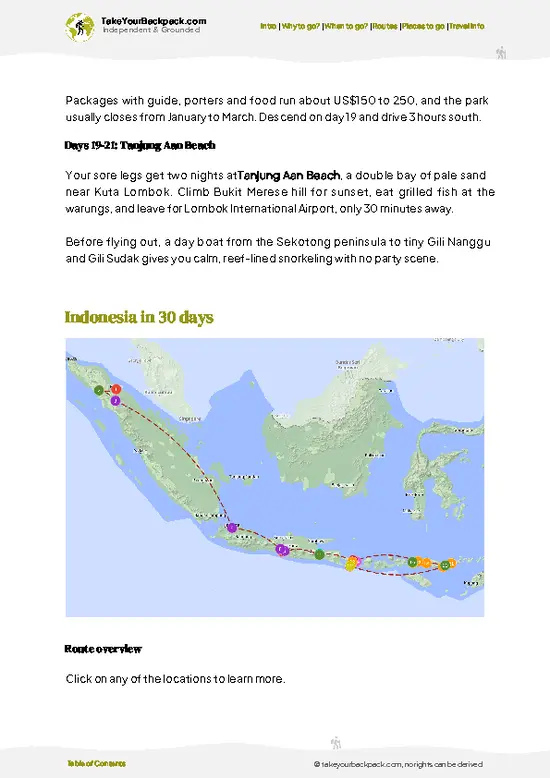
example page 1 from our offline Travel Guide for Indonesia
example page 2 from our offline Travel Guide for Indonesia
example page 3 from our offline Travel Guide for Indonesia
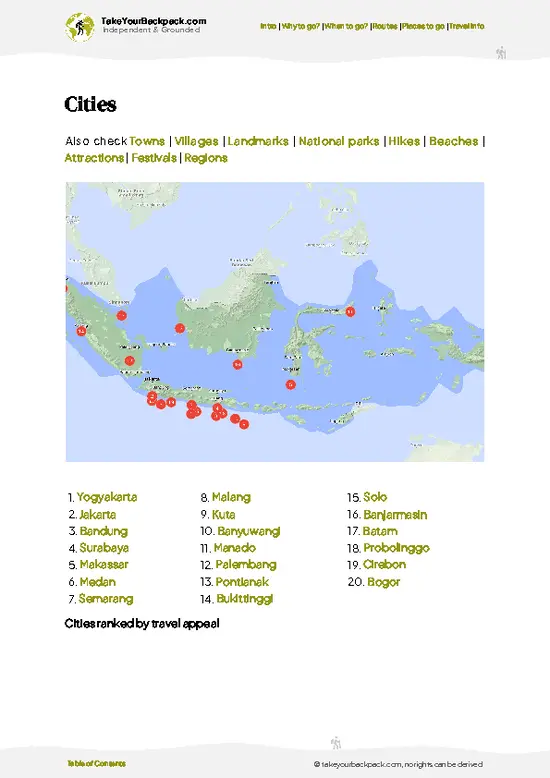
example page 4 from our offline Travel Guide for Indonesia
example page 5 from our offline Travel Guide for Indonesia
example page 6 from our offline Travel Guide for Indonesia
example page 7 from our offline Travel Guide for Indonesia
Loading the map 🌍
CLICK TO FILTER
cities
towns
villages
landmarks
national parks
hikes
beaches
attractions
festivals
regions
SHOW COUNTRY’S BESTSHOW ALL

✨ Why go?
Ranked #13 city in Indonesia
What makes it a must-see city

Palembang works as a basecamp for exploring South Sumatra and a genuine pause in a longer Indonesia route. The city itself rewards slow exploration: the Musi River defines daily life, the old colonial quarter still breathes history, and the food scene is serious and affordable. Hostels cluster near the river, making it easy to meet other travelers without feeling forced. Walkability covers the center, though longer distances need a cheap ride. Onward travel is straightforward to Bangka Island, Jambi, or back toward Java. Palembang attracts backpackers who want to step off the main trail, eat well, and understand how a real Indonesian city works, rather than those chasing famous landmarks or nightlife.

💡 HighlightsPlaces and moments you shouldn't skip

  1. Musi River: The city's spine and soul. Watch wooden boats, fishermen, and daily life from the bridges or take a sunrise boat ride. Best at dawn or dusk. Free to walk; boat tours US$5 to 10 per person, 1 to 2 hours.
  2. Ampera Bridge: An iconic 1965 steel bridge with views across the river and the city. Walk it at sunset for the best light and atmosphere. Free. 20 to 30 minutes.
  3. Masjid Agung Palembang: A grand mosque with intricate tilework and a peaceful courtyard. Visitors welcome outside prayer times; dress respectfully. Free. 30 to 45 minutes.
  4. Benteng Kuto Besak: A restored 18th-century fortress overlooking the river, now a museum and cultural space. Climb the walls for river views. US$2 to 3 entry. 1 to 1.5 hours.
  5. Palembang Old Town (Ilir Timur): Wander narrow streets lined with shophouses, temples,
… read more 👉
  1. Musi River: The city's spine and soul. Watch wooden boats, fishermen, and daily life from the bridges or take a sunrise boat ride. Best at dawn or dusk. Free to walk; boat tours US$5 to 10 per person, 1 to 2 hours.
  2. Ampera Bridge: An iconic 1965 steel bridge with views across the river and the city. Walk it at sunset for the best light and atmosphere. Free. 20 to 30 minutes.
  3. Masjid Agung Palembang: A grand mosque with intricate tilework and a peaceful courtyard. Visitors welcome outside prayer times; dress respectfully. Free. 30 to 45 minutes.
  4. Benteng Kuto Besak: A restored 18th-century fortress overlooking the river, now a museum and cultural space. Climb the walls for river views. US$2 to 3 entry. 1 to 1.5 hours.
  5. Palembang Old Town (Ilir Timur): Wander narrow streets lined with shophouses, temples, and mosques. The architecture tells the city's trading past. Free to explore. 1.5 to 2 hours.
  6. Balaputra Dewa Museum: Houses artifacts from the Srivijaya Empire, the maritime kingdom that once ruled the region. Small but focused. US$3 to 4 entry. 1 to 1.5 hours.
  7. Pulau Kemaro: A small island in the Musi River with a temple and legend-soaked history. Accessible by boat from the city center. US$3 to 5 boat ride. 1.5 to 2 hours.
Close by, Bangka Island (2 to 3 hours by ferry) offers beaches and tin-mining history, while the Rafflesia reserves near Jambi (4 to 5 hours inland) showcase the world's largest flower. I'd pick Bangka first: it's easier to reach, the beaches are genuine, and the contrast with the river city sharpens both experiences.
Spotted a mistake or missing something? Contact us.

🏘️ NeighborhoodsWhere things are and how it's laid out

  • Ilir Timur: The commercial heart where energy concentrates. Markets pulse with activity, street food vendors stake corners, and the Musi River waterfront draws evening crowds. Walk the narrow lanes between shops, dodge motorbikes, and hunt for local eats. Walkability is high but chaotic; expect noise and motion. Budget stays cluster here, making it the cheapest base but noisier than quieter zones.
  • Ilir Barat: Calmer than its eastern counterpart, with wider streets and less frenetic commerce. Colonial architecture survives in pockets, and the pace allows genuine exploration. Fewer tourists means lower prices for food and lodging. Walkable and safer-feeling at night, though fewer nightlife options. Best value for comfort-conscious backpackers.
  • Seberang Ulu: Across the Musi River, this area feels
… read more 👉
  • Ilir Timur: The commercial heart where energy concentrates. Markets pulse with activity, street food vendors stake corners, and the Musi River waterfront draws evening crowds. Walk the narrow lanes between shops, dodge motorbikes, and hunt for local eats. Walkability is high but chaotic; expect noise and motion. Budget stays cluster here, making it the cheapest base but noisier than quieter zones.
  • Ilir Barat: Calmer than its eastern counterpart, with wider streets and less frenetic commerce. Colonial architecture survives in pockets, and the pace allows genuine exploration. Fewer tourists means lower prices for food and lodging. Walkable and safer-feeling at night, though fewer nightlife options. Best value for comfort-conscious backpackers.
  • Seberang Ulu: Across the Musi River, this area feels removed from the main drag. Quieter residential streets, local warungs, and genuine neighborhood life. Fewer backpackers means authentic encounters but fewer creature comforts. Walkable but requires crossing the river; transport links are slower. Trade comfort for authenticity and lower costs.

⌛️ 1 dayA smart one-day plan

Palembang rewards a slow morning and afternoon focused on the river and old town, where history and daily life overlap. Start early to catch the river's best light and energy.

6:30 AM: Musi River at Ampera Bridge. Arrive before sunrise to watch fishermen and boats emerge from the mist. The light is soft, the water is calm, and locals are just beginning their day. Walk the bridge's length and grab coffee from a street vendor on the eastern bank.

8:00 AM: Benteng Kuto Besak. Head south along the river to this restored fortress. Climb the walls for views across the water and the city waking up. The museum inside is small but worth 30 minutes. Entry is US$2 to 3.

10:00 AM: Palembang Old Town (Ilir Timur). Walk inland into the narrow streets of the old quarter. Stop at small temples, shophouses, … read more 👉
Palembang rewards a slow morning and afternoon focused on the river and old town, where history and daily life overlap. Start early to catch the river's best light and energy.

6:30 AM: Musi River at Ampera Bridge. Arrive before sunrise to watch fishermen and boats emerge from the mist. The light is soft, the water is calm, and locals are just beginning their day. Walk the bridge's length and grab coffee from a street vendor on the eastern bank.

8:00 AM: Benteng Kuto Besak. Head south along the river to this restored fortress. Climb the walls for views across the water and the city waking up. The museum inside is small but worth 30 minutes. Entry is US$2 to 3.

10:00 AM: Palembang Old Town (Ilir Timur). Walk inland into the narrow streets of the old quarter. Stop at small temples, shophouses, and a local warung for mid-morning snacks. This is where the city's trading past is still visible in the architecture.

12:30 PM: Lunch at a riverside warung. Eat pempek (tapioca and fish cakes) or grilled fish. These are Palembang specialties and cost US$2 to 4 per dish.

2:30 PM: Pulau Kemaro. Take a boat from the main dock (US$3 to 5) to this small island temple. The legend and the views are worth the short trip. Return by 4:00 PM.

5:00 PM: Masjid Agung Palembang. Visit the grand mosque as the afternoon light hits the tilework. The courtyard is peaceful and the architecture is intricate. Free entry; dress respectfully.

🌤️ When to go?Seasonal considerations and timing

  • Dry Season (May to September): Best window for visiting. Temperatures hover around 26 to 32°C (79 to 90°F), humidity drops, and rain stays rare. Daylight runs roughly 12 hours. Crowds peak in July and August; prices rise slightly but remain reasonable.
  • Wet Season (October to April): Heavy rainfall, especially November to March, with temperatures 24 to 31°C (75 to 88°F). Streets flood in low areas. Fewer tourists mean lower prices and easier accommodation, but outdoor exploration becomes difficult.
Visit May to September for reliable weather and comfortable exploration.

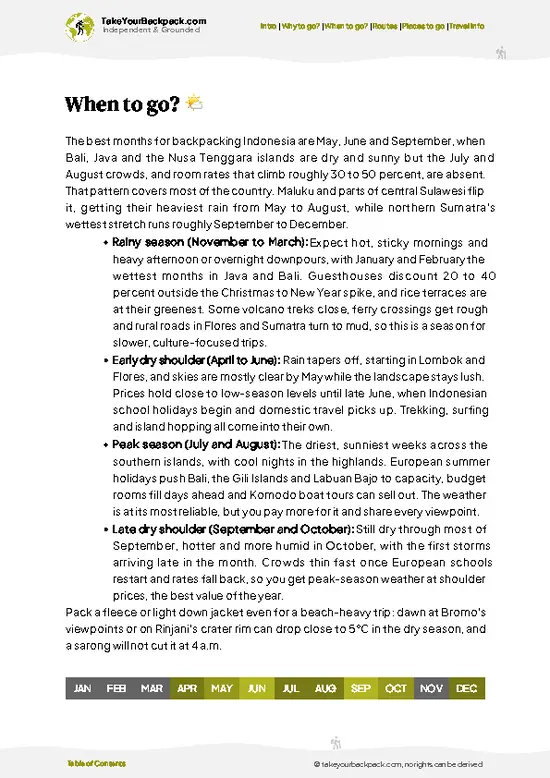
source: climatestotravel.comJANJanuary: fair for travelingFEBFebruary: fair for travelingMARMarch: fair for travelingAPRApril: fair for travelingMAYMay: highly recommended for travelingJUNJune: highly recommended for travelingJULJuly: excellent for travelingAUGAugust: excellent for travelingSEPSeptember: highly recommended for travelingOCTOctober: fair for travelingNOVNovember: fair for travelingDECDecember: fair for traveling
when-to-go

✈️ The backpacker research shortcutIndonesia Travel Guide

An offline-friendly backpacking guide with optimized travel routes, ranked highlights, transport advice, and the best areas to stay.
example page 0 from our offline Travel Guide for Indonesia
example page 1 from our offline Travel Guide for Indonesia
example page 2 from our offline Travel Guide for Indonesia
example page 3 from our offline Travel Guide for Indonesia
example page 4 from our offline Travel Guide for Indonesia
example page 5 from our offline Travel Guide for Indonesia
example page 6 from our offline Travel Guide for Indonesia
example page 7 from our offline Travel Guide for Indonesia
The digital guide (460 pages) contains:
✅ 153 highlights, ranked by travel appeal
✅ Optimized 14, 21 & 30-day travel routes
✅ Cities, national parks, landmarks, beaches
✅ How to get around
✅ Offline-friendly for travel without Wi-Fi
👉 Click to see all 30+ guide features

📅 Plan smarter in minutes, not weeks
✅ Month by month travel advice
✅ Festivals & national holidays
✅ Budget expectations

🗺️ Go to the right places, skip the overrated ones
✅ Honest pros & cons of destinations
✅ Top hikes, parks & viewpoints
✅ Lesser-known places most travelers miss
✅ Clear “worth it vs skip it” guidance

🛏️ Travel smoothly without rookie mistakes
✅ Best areas to stay
✅ Transport systems explained simply
✅ Common scams & safety advice
✅ SIM cards, money & practical tips

🌍 Understand the country, not just visit it
✅ Culture & traditions
✅ 52 Essential phrases & customs
✅ Festivals worth planning around
✅ Traveler-friendly historical context
✅ Insights that make places more meaningful

📱 Built for real travel conditions
✅ Fully downloadable PDF
✅ Works completely offline
✅ Optimized for phone use
✅ Useful in remote areas & buses
✅ Everything in one place
Stop searching, start planning
Get instant access to your full guide. 30‑day money-back guarantee.
+ Add another guide for just

By proceeding you agree to our terms.
Sent to your inbox immediately after payment • 100% Secure Checkout
Best Backpacking Travel Advisor 2025 tourism awardBest Backpacking
Travel Advisor
2025
What others say about Take Your Backpack Guides:
⭐⭐⭐⭐⭐
Fantastic, amazing amount of information!
⭐⭐⭐⭐⭐
My goodness this is amazing, it's what I've been looking for hats off too you!
⭐⭐⭐⭐⭐
I think this is absolutely BRILLIANT
⭐⭐⭐⭐
Very complete and informative. It's still missing places, but I gotta to commend you
⭐⭐⭐⭐⭐
This is truly amazing, thank you, can't wait to explore it with my kids!
⭐⭐⭐⭐⭐
Awesome resource, thank you!
⭐⭐⭐⭐⭐
This is amazing! Can't wait to explore the ones I haven't seen
⭐⭐⭐⭐
I love this! Well done, great idea.
⭐⭐⭐⭐⭐
Thanks for taking the time to make this gem!
⭐⭐⭐⭐⭐
This might be the best website I've ever seen.
⭐⭐⭐⭐⭐
Congratulations, and thank you so much for your work; it's incredibly valuable.
⭐⭐⭐⭐
In all seriousness I think you did a great job pointing out the important spots
⭐⭐⭐⭐⭐
10/10 very good
⭐⭐⭐⭐⭐
As someone who's only just starting to visit regularly this is awesome, thank you.
⭐⭐⭐⭐
Thank you very much! I'm going to visit my dad, it's going to be very useful!
⭐⭐⭐⭐⭐
This is really cool! We'll be travelling for the first time and this definitely come in handy.
⭐⭐⭐⭐⭐
You are now our minister of culture, congratulations 👨‍💼
⭐⭐⭐⭐⭐
Just wanted to tell you that this is a pearl! Going to follow your recommendations.
⭐⭐⭐⭐⭐
This is so cool. I'll definitely be using the resource for my travels soon.
⭐⭐⭐⭐⭐
This is very impressive! Good work.
⭐⭐⭐⭐⭐
This is an amazing and informative site. Very well done!

🛏️ Where to stay?Best areas to stay in Indonesia

Ilir Timur and Ilir Barat offer the best combination of budget beds and walkability. Ilir Timur has the most hostel density and cheapest dorm rates (US$8 to 12 per night), plus direct access to markets and street food, but expect noise from traffic and commerce until late. Ilir Barat costs slightly more (US$10 to 15) but feels calmer, with quieter streets and easier sleep. Both neighborhoods sit close to the river and main transport hubs, so reaching day-trip departure points is straightforward. Safety is solid in both areas at night; stick to main streets and you'll move freely. Ilir Timur rewards … read more 👉
Ilir Timur and Ilir Barat offer the best combination of budget beds and walkability. Ilir Timur has the most hostel density and cheapest dorm rates (US$8 to 12 per night), plus direct access to markets and street food, but expect noise from traffic and commerce until late. Ilir Barat costs slightly more (US$10 to 15) but feels calmer, with quieter streets and easier sleep. Both neighborhoods sit close to the river and main transport hubs, so reaching day-trip departure points is straightforward. Safety is solid in both areas at night; stick to main streets and you'll move freely. Ilir Timur rewards budget-first travelers; Ilir Barat suits those trading a few extra dollars for peace.

🚌 Getting aroundMoving around without the hassle

From the main bus station (Terminal Ampera) to the city center, take a local minibus (angkot) for US$0.50 to 1, or negotiate a motorcycle taxi (ojek) for US$2 to 4. The city sprawls but remains navigable; most backpackers rely on a mix of walking, angkots, and ojeks to move between neighborhoods and attractions.

  • Walking: Flat terrain and short distances between neighborhoods make walking practical for exploring. Expect heat, humidity, and occasional chaotic traffic; best done early morning or late afternoon. Free, but slow (30 to 45 minutes across the center).
  • Angkot (shared minibus): The backbone of local transport. US$0.50 to 1 per ride, no fixed schedule, and routes are color-coded. Crowded during rush hours but reliable and cheap. Runs roughly 5 am to 9 pm.
  • Ojek (motorcycle taxi): Fast
… read more 👉
From the main bus station (Terminal Ampera) to the city center, take a local minibus (angkot) for US$0.50 to 1, or negotiate a motorcycle taxi (ojek) for US$2 to 4. The city sprawls but remains navigable; most backpackers rely on a mix of walking, angkots, and ojeks to move between neighborhoods and attractions.

  • Walking: Flat terrain and short distances between neighborhoods make walking practical for exploring. Expect heat, humidity, and occasional chaotic traffic; best done early morning or late afternoon. Free, but slow (30 to 45 minutes across the center).
  • Angkot (shared minibus): The backbone of local transport. US$0.50 to 1 per ride, no fixed schedule, and routes are color-coded. Crowded during rush hours but reliable and cheap. Runs roughly 5 am to 9 pm.
  • Ojek (motorcycle taxi): Fast and flexible for short distances. US$1 to 3 depending on distance; negotiate before boarding. Quicker than angkot but less comfortable and requires balance on a moving bike. Available 24 hours.
  • Becak (pedicab): Slow but atmospheric for short hops. US$1 to 2 per ride, negotiable. Gives you street-level views and a genuine local experience, though it's exhausting in heat. Mostly daytime operation.

👛 Costs (as of 15 October 2026)What things cost and how to budget

Budget backpackers spend US$25 to 40 daily in Palembang, with significant savings possible by eating street food and using local transport.
CategoryBudget RangeLocal Reality
Dorm accommodation (high season)US$10 to 15Clean, basic rooms in Ilir Timur and Ilir Barat; fans standard, AC costs extra
Dorm accommodation (off-season)US$8 to 12Same quality, lower rates; negotiable for weekly stays
MealsUS$2 to 6Street food and warungs US$1 to 3; sit-down restaurants US$4 to 8
Local transportUS$0.50 to 3Angkot US$0.50 to 1; ojek US$1 to 3 depending on distance
City transport passN/ANo pass system; pay per ride
Basic activities/entry feesUS$2 to 5Museums US$2 to 3; boat tours US$15 to 25 split among group
Miscellaneous expensesUS$3 to 8Drinks, snacks, laundry, SIM card top-ups
Total Daily BudgetUS$25 to 40Achievable
… read more 👉
Budget backpackers spend US$25 to 40 daily in Palembang, with significant savings possible by eating street food and using local transport.
CategoryBudget RangeLocal Reality
Dorm accommodation (high season)US$10 to 15Clean, basic rooms in Ilir Timur and Ilir Barat; fans standard, AC costs extra
Dorm accommodation (off-season)US$8 to 12Same quality, lower rates; negotiable for weekly stays
MealsUS$2 to 6Street food and warungs US$1 to 3; sit-down restaurants US$4 to 8
Local transportUS$0.50 to 3Angkot US$0.50 to 1; ojek US$1 to 3 depending on distance
City transport passN/ANo pass system; pay per ride
Basic activities/entry feesUS$2 to 5Museums US$2 to 3; boat tours US$15 to 25 split among group
Miscellaneous expensesUS$3 to 8Drinks, snacks, laundry, SIM card top-ups
Total Daily BudgetUS$25 to 40Achievable by eating local, using angkots, and skipping paid attractions
Eat where locals eat: warungs and street stalls cost half what tourist-facing restaurants charge and taste better.
⚠️ Prices can change and everyone travels differently, so take this as a rough guide. Hope it helps you plan your adventure!

🚌 Day tripsEasy escapes and nearby places

Palembang sits on the Musi River and near enough to several worthwhile escapes that don't require overnight stays.

Musi River Boat Tour
A half-day on the water reveals how the city and surrounding villages depend on the river. Hire a small motorboat (US$15 to 25 for a group) and cruise upstream past fishing villages, floating houses, and mangrove edges. The trip takes 2 to 3 hours and works best in the dry season when water levels are stable. Go early to avoid afternoon heat and catch village life at its most active.


Ampera Bridge at Sunset
The iconic bridge is a 10-minute walk or short angkot ride from the center. Climb to the top (free) for views across the city and river. The real payoff comes at dusk when light softens and locals gather. Bring water; there's no shade. Best visited late … read more 👉
Palembang sits on the Musi River and near enough to several worthwhile escapes that don't require overnight stays.

Musi River Boat Tour
A half-day on the water reveals how the city and surrounding villages depend on the river. Hire a small motorboat (US$15 to 25 for a group) and cruise upstream past fishing villages, floating houses, and mangrove edges. The trip takes 2 to 3 hours and works best in the dry season when water levels are stable. Go early to avoid afternoon heat and catch village life at its most active.


Ampera Bridge at Sunset
The iconic bridge is a 10-minute walk or short angkot ride from the center. Climb to the top (free) for views across the city and river. The real payoff comes at dusk when light softens and locals gather. Bring water; there's no shade. Best visited late afternoon, year-round.


Palembang Museum
A compact museum covering the city's sultanate history and colonial past. Located in Ilir Timur, it's a 15-minute walk from most hostels. Entry costs US$2 to 3. Spend 1 to 2 hours here. Go on a weekday morning to avoid school groups.

🍲 FoodLocal Cuisine & Drinks

Palembang's food centers on the Musi River and its fishing heritage. Pempek, a savory cake of fish and tapioca served with a dark, tangy sauce, is the signature dish and available everywhere from street carts to casual restaurants. Try it fresh from morning vendors for the best texture. Tekwan, a soup of fish cake and shrimp, appears in every warung and costs US$1 to 2 per bowl.

Street food dominates the eating scene. Markets like Pasar 16 Ilir pulse with grilled fish, satay stalls, and fresh fruit. Warungs (casual eateries) line every neighborhood; order by pointing at what others eat. Kopi Palembang, strong black coffee served with condensed milk, is the morning ritual. Locals eat early and eat often; join them at 6 am for breakfast or 4 pm for afternoon snacks. Alcohol is available but … read more 👉
Palembang's food centers on the Musi River and its fishing heritage. Pempek, a savory cake of fish and tapioca served with a dark, tangy sauce, is the signature dish and available everywhere from street carts to casual restaurants. Try it fresh from morning vendors for the best texture. Tekwan, a soup of fish cake and shrimp, appears in every warung and costs US$1 to 2 per bowl.

Street food dominates the eating scene. Markets like Pasar 16 Ilir pulse with grilled fish, satay stalls, and fresh fruit. Warungs (casual eateries) line every neighborhood; order by pointing at what others eat. Kopi Palembang, strong black coffee served with condensed milk, is the morning ritual. Locals eat early and eat often; join them at 6 am for breakfast or 4 pm for afternoon snacks. Alcohol is available but less central to the culture than in other Indonesian cities.

🛡️ SafetyStaying Safe: What Travelers Should Know

Palembang is broadly safe for backpackers. Petty theft happens in crowded markets and on packed angkots, so keep valuables close and bags zipped. Avoid displaying expensive cameras or jewelry. Ilir Timur, the busiest commercial zone, draws pickpockets during peak hours; stay alert but not paranoid. Solo travel is fine; women report no particular harassment beyond standard street attention. Night walking is safe in main neighborhoods, though quieter side streets feel isolated after 10 pm. Scams are rare compared to other Indonesian cities. Drink tap water only if boiled; street food is generally safe if busy (high turnover means fresh). Use registered taxis or ojek apps rather than hailing random bikes at night.

FAQFrequently asked questions about Palembang

Two to three days is ideal. Spend one full day exploring the river, old town, and main sites like Benteng Kuto Besak and Masjid Agung. Use a second day for Pulau Kemaro or a boat ride upriver, and a third day to rest or take a day trip to Bangka Island. Most backpackers stay 2 to 3 nights in hostels near the river.
Palembang is safe for solo backpackers. Petty theft exists in crowded areas, but violent crime against tourists is rare. Use standard precautions: avoid walking alone very late at night, keep valuables secure, and stay aware in busy markets. Locals are generally friendly and helpful to solo travelers.
Palembang is known for its role in the ancient Srivijaya Empire, its position on the Musi River as a working port city, and pempek, a local tapioca and fish cake dish that is iconic to the region. It's also a gateway to South Sumatra's natural attractions and a genuine, less-touristed alternative to Java's main cities.
⚠️ Things can change over time, so always validate details locally before you go.

Other Indonesian cities near Palembang

Explore more nearby:

  • Pagar Alam—tea plantations, cool mountain air, megalithic sites| 205 km away
  • Jakarta—Kota Tua, KRL commuter trains, mega-mall culture, street food| 422 km away
  • Bogor—Botanical garden, Presidential Palace, rain city, Jakarta escape| 461 km away

💡 Not sure where to go next?
Create a personalized itinerary for Indonesia including Palembang and the places that fit your trip.

Generate my itinerary

👉 Discover all cities

Or checkout all Indonesia has to offer (think cities, towns, villages, national parks, hikes, beaches, festivals)
Country photo of Indonesia

We 💚 feedbackKey takeaways before you go

Palembang rewards you with genuine Southeast Asian energy and a fraction of the tourist crowds you'd face in Java. The catch is the heat and humidity are relentless, and English speakers are sparse outside hotels. But if you crave authentic Indonesia without the backpacker circuit, this is it.

✈️ When did I visit Indonesia?
As part of my 1.5 year travel around the world trip, I visited Indonesia twice (and it was worth it): first in September 2015 and a bit later again in January and February 2016.

✍️ Help improve this page!
The information on this page is based on my own backpacking experience in Indonesia, supplemented with up-to-date research and feedback from other travelers. Travel details can change, so if you notice anything outdated or incomplete, feel free to let me know.


🙋‍♂️ Give feedback

👋 Meet the founderWho’s Behind Take Your Backpack?

Johan, backpacker and founder of TakeYourBackpackHi, I’m Johan (Netherlands 🇳🇱), the creator of TakeYourBackpack. Over the past 3 decades, I’ve backpacked through 90+ countries across six continents, gaining extensive experience with independent travel, long-term trips, and overland routes.

This site is built on a combination of firsthand travel experience and carefully curated insights from other backpackers. Many guides are based on places I’ve personally visited, while others bring together tips, observations, and practical advice shared by trusted travelers I’ve met along the way.

The goal is to provide realistic, experience-driven guidance — not generic itineraries — so you can explore destinations with better context, clearer expectations, and more confidence.