

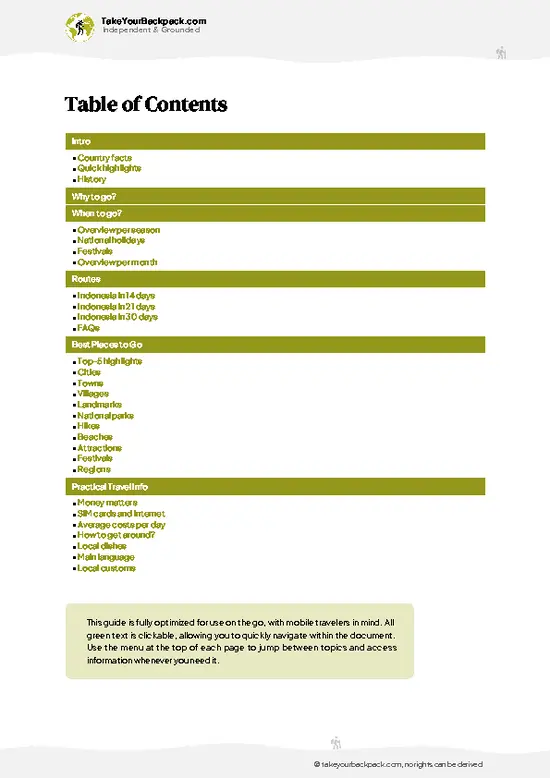

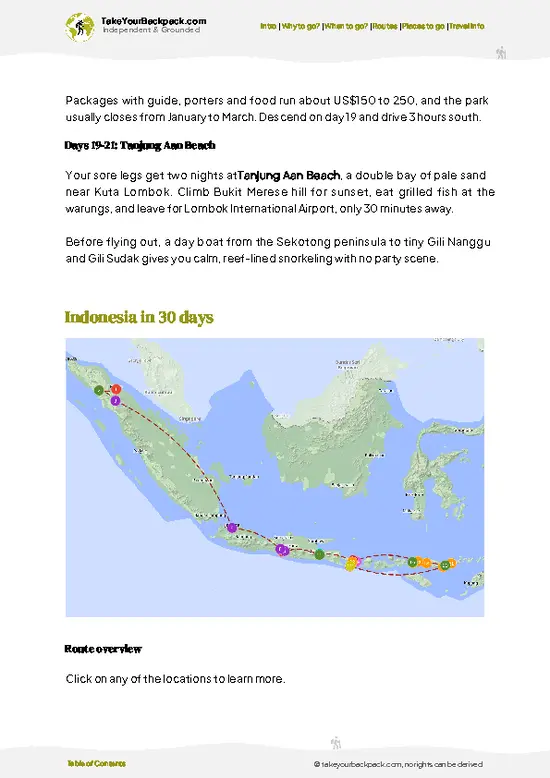

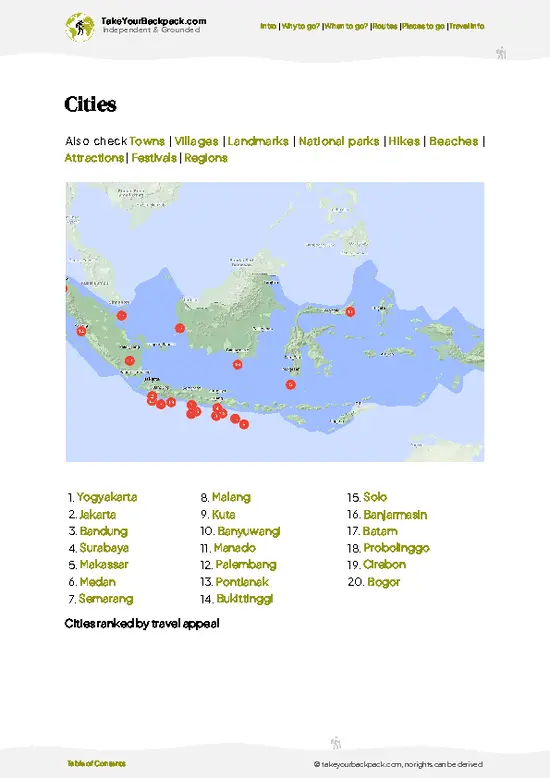
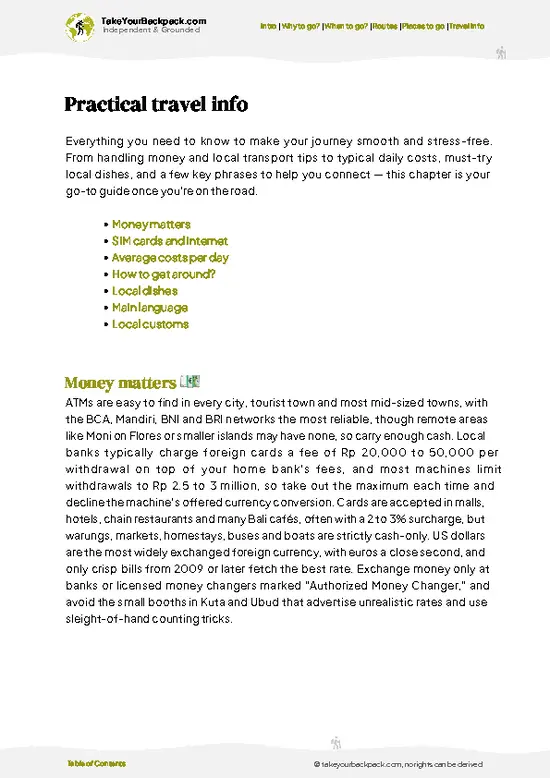
Tenganan Ancient Village (Desa Tenganan Pegringsingan)
Step through the stone gateway and you’re in a living museum—except the villagers aren’t actors, and the rituals aren’t for show. Tenganan is one of Bali’s oldest Bali Aga villages, where the layout, customs, and even the air feel different from the rest of the island. The houses line up in perfect symmetry, their thatched roofs and carved doors holding centuries of stories. You’ll hear the clack of weaving looms and the laughter of kids playing traditional games. The best time to visit is early morning, when the sunlight slants through the trees and the village is just waking up. Entry is by donation (IDR 20,000-50,000 is respectful). Give yourself at least 1-2 hours to wander, but don’t rush—this is a place to slow down and watch daily … read more 👉
Tenganan Ancient Village (Desa Tenganan Pegringsingan)
Step through the stone gateway and you’re in a living museum—except the villagers aren’t actors, and the rituals aren’t for show. Tenganan is one of Bali’s oldest Bali Aga villages, where the layout, customs, and even the air feel different from the rest of the island. The houses line up in perfect symmetry, their thatched roofs and carved doors holding centuries of stories. You’ll hear the clack of weaving looms and the laughter of kids playing traditional games. The best time to visit is early morning, when the sunlight slants through the trees and the village is just waking up. Entry is by donation (IDR 20,000-50,000 is respectful). Give yourself at least 1-2 hours to wander, but don’t rush—this is a place to slow down and watch daily life unfold.
Geringsing Weaving Workshops
Tenganan is the only place in Bali where you can see the double ikat process—an ancient, mind-bendingly complex technique that takes years to master. The scent of natural dyes—roots, leaves, and sometimes smoky wood—hangs in the air. Watch as artisans tie, dye, and weave threads into patterns that look almost mathematical. If you’re lucky, you’ll catch a demonstration and can try your hand at the loom (expect to tip IDR 30,000-50,000 for a mini-lesson). The best time is late morning, when the workshops are active but not crowded. Allow 45 minutes to an hour for a real look at the process.
Bale Agung and Village Council Hall
This long, open-sided pavilion is the heart of Tenganan’s communal life. It’s where elders gather, ceremonies unfold, and the annual Perang Pandan (pandanus war) is planned. Even when there’s no festival, you’ll feel the gravity of tradition here—the worn bamboo floors, the scent of incense, the quiet conversations in the shade. Visit in the afternoon, when the light softens and you might catch a rehearsal or a meeting. Free to enter, but be respectful—this is not a tourist stage. Ten to twenty minutes is enough unless you’re invited to stay longer.
Traditional Lontar Manuscript Workshop
Hidden in a side lane, you’ll find artisans etching stories onto dried palm leaves—lontar manuscripts. The scratch of the stylus, the faint aroma of coconut oil, and the patience in each movement make this a meditative stop. Some artists will let you try etching your own simple design (small fee, around IDR 20,000). Best visited midday when the light is good for detail work. Spend 20-30 minutes; longer if you get drawn into conversation.
Village Perimeter Walk
Circle the edge of Tenganan on foot and you’ll see the transition from manicured village to wild, bird-filled forest. The path is uneven, shaded by ancient trees, and sometimes you’ll hear the distant clang of a gamelan rehearsal. This is where you’ll feel the contrast between the ordered world of the village and the untamed hills beyond. Early morning or late afternoon is best for cooler air and golden light. Free, and takes about 30-40 minutes at a relaxed pace.
For day trips just outside Tenganan, the water palaces of Tirta Gangga, the black sand beaches of Candidasa, and the Bat Cave Temple (Goa Lawah) are all within easy reach—Tirta Gangga, with its cool pools and mossy statues, is my personal favorite for a midday escape.
Step through the stone gateway and you’re in a living museum—except the villagers aren’t actors, and the rituals aren’t for show. Tenganan is one of Bali’s oldest Bali Aga villages, where the layout, customs, and even the air feel different from the rest of the island. The houses line up in perfect symmetry, their thatched roofs and carved doors holding centuries of stories. You’ll hear the clack of weaving looms and the laughter of kids playing traditional games. The best time to visit is early morning, when the sunlight slants through the trees and the village is just waking up. Entry is by donation (IDR 20,000-50,000 is respectful). Give yourself at least 1-2 hours to wander, but don’t rush—this is a place to slow down and watch daily life unfold.
Geringsing Weaving Workshops
Tenganan is the only place in Bali where you can see the double ikat process—an ancient, mind-bendingly complex technique that takes years to master. The scent of natural dyes—roots, leaves, and sometimes smoky wood—hangs in the air. Watch as artisans tie, dye, and weave threads into patterns that look almost mathematical. If you’re lucky, you’ll catch a demonstration and can try your hand at the loom (expect to tip IDR 30,000-50,000 for a mini-lesson). The best time is late morning, when the workshops are active but not crowded. Allow 45 minutes to an hour for a real look at the process.
Bale Agung and Village Council Hall
This long, open-sided pavilion is the heart of Tenganan’s communal life. It’s where elders gather, ceremonies unfold, and the annual Perang Pandan (pandanus war) is planned. Even when there’s no festival, you’ll feel the gravity of tradition here—the worn bamboo floors, the scent of incense, the quiet conversations in the shade. Visit in the afternoon, when the light softens and you might catch a rehearsal or a meeting. Free to enter, but be respectful—this is not a tourist stage. Ten to twenty minutes is enough unless you’re invited to stay longer.
Traditional Lontar Manuscript Workshop
Hidden in a side lane, you’ll find artisans etching stories onto dried palm leaves—lontar manuscripts. The scratch of the stylus, the faint aroma of coconut oil, and the patience in each movement make this a meditative stop. Some artists will let you try etching your own simple design (small fee, around IDR 20,000). Best visited midday when the light is good for detail work. Spend 20-30 minutes; longer if you get drawn into conversation.
Village Perimeter Walk
Circle the edge of Tenganan on foot and you’ll see the transition from manicured village to wild, bird-filled forest. The path is uneven, shaded by ancient trees, and sometimes you’ll hear the distant clang of a gamelan rehearsal. This is where you’ll feel the contrast between the ordered world of the village and the untamed hills beyond. Early morning or late afternoon is best for cooler air and golden light. Free, and takes about 30-40 minutes at a relaxed pace.
For day trips just outside Tenganan, the water palaces of Tirta Gangga, the black sand beaches of Candidasa, and the Bat Cave Temple (Goa Lawah) are all within easy reach—Tirta Gangga, with its cool pools and mossy statues, is my personal favorite for a midday escape.
Spotted a mistake or missing something? Contact us.
v2.webp)


Best Backpacking
Hi, I’m Johan (Netherlands 🇳🇱), the creator of TakeYourBackpack. Over the past decade, I’ve backpacked through 80+ countries across six continents, gaining extensive experience with independent travel, long-term trips, and overland routes.