×

Indonesia🇮🇩 | townsUbudart galleries, rice paddies, wellness retreats | things to do and best time to go

Explore Menjangan islandExplore Ende

Backpacking in Ubud
🏆 Top picktown ranked #1
By Johan Kruseman 🇳🇱 | Updated July 30, 2026

Ubud isn’t a jungle hermitage where you’ll find yourself meditating alone under a waterfall; it’s a busy little town in Bali’s interior, about an hour north of Denpasar, where incense smoke from family shrines mixes with exhaust from scooters and the smell of roasting coffee. For backpackers, it’s less a remote escape and more a comfortable hub: rice terraces and temple complexes in the hills by day, smoothie bowls and Bintang in courtyard cafés by night. It works best as a base for day trips to waterfalls, ridge walks, and nearby villages, not as a pure nature stay or a quick transit stop. The center is walkable but chaotic; you’ll still rely on scooters or rides for most sights. It’s social and easy to meet people in hostels and co-working cafés, but nightlife is mild compared with Canggu or Kuta. Prices sit mid-range for Bali, safety is generally good, and compared with beach towns, Ubud feels more introspective and cultural, but also more overtly touristic.

Discover everything you want to know in the 📖 Indonesia Travel Guide.
Loading the map 🌍
CLICK TO FILTER
cities
towns
landmarks
national parks
hikes
beaches
attractions
festivals
regions
SHOW COUNTRY’S BESTSHOW ALL

✨ Why go?
Ranked #1 town in Indonesia
What sets this place apart

Backpackers flock to Ubud for its unique blend of culture and convenience. This town serves as a strategic hub for those eager to explore the rice terraces and hiking trails of Bali’s interior. The cooler climate here is a welcome relief from the coastal heat, making it ideal for those long walks or early morning treks.

Accommodations range from small-scale hostels to cozy guesthouses, fostering a friendly social atmosphere. You’ll find travelers sharing stories over local food at warungs, where the aroma of spices fills the air. Streets are walkable, encouraging you to meander and discover art galleries or yoga studios tucked away in corners.

Most backpackers tend to linger a few days, soaking in the vibrant culture and engaging with the local community. It’s a place for slow travelers, … read more 👉
Backpackers flock to Ubud for its unique blend of culture and convenience. This town serves as a strategic hub for those eager to explore the rice terraces and hiking trails of Bali’s interior. The cooler climate here is a welcome relief from the coastal heat, making it ideal for those long walks or early morning treks.

Accommodations range from small-scale hostels to cozy guesthouses, fostering a friendly social atmosphere. You’ll find travelers sharing stories over local food at warungs, where the aroma of spices fills the air. Streets are walkable, encouraging you to meander and discover art galleries or yoga studios tucked away in corners.

Most backpackers tend to linger a few days, soaking in the vibrant culture and engaging with the local community. It’s a place for slow travelers, solo adventurers, and small groups looking for a balance of quiet reflection and social interaction. While nightlife isn’t the main draw, the evenings can be lively with cultural performances. Ubud isn’t just a stop; it’s a chance to connect with the heart of Bali.
Want to include Ubud in your Indonesia route?
Create a personalized Indonesia itinerary that includes Ubud and the places that fit your trip — based on your travel style, budget, and available time. Get your route in seconds.

Generate my trip

💡 HighlightsTop highlights of Ubud

  • Puri Saren Royal Palace (Ubud Palace) — The old royal compound sits in the heart of town; great for carved Balinese architecture, nightly traditional dance performances, and a peek into the royal family’s ceremonial life.
  • Sacred Monkey Forest Sanctuary — A working temple complex wrapped in jungle where long-tailed macaques roam; it’s equal parts nature, ancient shrines, and the slightly chaotic thrill of getting up close to curious monkeys.
  • Ubud Art Market (Pasar Ubud) — The colourful, packed market where locals sell textiles, woodcarvings, and souvenirs; bargaining here is part of the experience and you’ll see the everyday commerce that supports local artisans.
  • Pura Taman Saraswati (Saraswati Temple) — A beautiful lotus-pond temple with intricate stone reliefs and peaceful vibes right
read more 👉
  • Puri Saren Royal Palace (Ubud Palace) — The old royal compound sits in the heart of town; great for carved Balinese architecture, nightly traditional dance performances, and a peek into the royal family’s ceremonial life.
  • Sacred Monkey Forest Sanctuary — A working temple complex wrapped in jungle where long-tailed macaques roam; it’s equal parts nature, ancient shrines, and the slightly chaotic thrill of getting up close to curious monkeys.
  • Ubud Art Market (Pasar Ubud) — The colourful, packed market where locals sell textiles, woodcarvings, and souvenirs; bargaining here is part of the experience and you’ll see the everyday commerce that supports local artisans.
  • Pura Taman Saraswati (Saraswati Temple) — A beautiful lotus-pond temple with intricate stone reliefs and peaceful vibes right in town; excellent for photos and a quiet moment amid floral ponds and frangipani.
  • Campuhan Ridge Walk — A short, scenic ridge trail offering open views of rice fields and river valleys; best at sunrise or late afternoon when light and breeze make the walk magical and not unbearably hot.
  • Blanco Renaissance Museum — The flamboyant former home-studio of artist Antonio Blanco; it’s quirky, intimate, and full of dramatic paintings and sweeping valley views that capture a certain Ubud eccentricity.
  • Agung Rai Museum of Art (ARMA) — A substantial private museum with Balinese and Indonesian art, plus cultural programs and gardens; it’s a solid place to learn local art history without leaving town.
  • Neka Art Museum — A well-curated collection that traces Balinese art’s evolution and foreign influences; the grounds and explanatory labels make it a useful stop to understand the island’s visual culture.
  • Puri Lukisan Museum — Ubud’s oldest art museum, focused on classical Balinese painting and sculpture; compact, historically important, and a calm contrast to busier galleries.
  • Setia Darma House of Masks and Puppets — One of the world’s most extensive mask and puppet collections, with pieces from across Indonesia and beyond; great for anyone interested in performance traditions and ritual craft.
A few easy day trips outside Ubud: the Tegalalang rice terraces, Tegenungan Waterfall, Tirta Empul holy-water temple, and the Mount Batur sunrise trek — my personal favorite is the Mount Batur sunrise hike for the scenery and sheer “worth the alarm” payoff.
Spotted a mistake or missing something? Contact us.

Things to do around Ubud

Ratings based on Tripadvisor reviews. When you book through this link, you support our work at no extra cost to you.

🏘️ NeighborhoodsKey areas and districts to know

Ubud is the cultural heart of Bali, where lush rice terraces meet vibrant art scenes. Each neighborhood offers a unique flavor, making it essential to choose wisely for your stay.

Ubud Center
This is the bustling core, where you’ll find the famous Ubud Market and countless cafes. The vibe is lively, perfect for those who thrive on energy. Walkability is high, with everything from shops to temples within reach. Expect mid-range prices, but you can find budget options if you dig a little. Nightlife is limited to cozy bars and live music, making it suitable for short stays or those wanting to soak in the local culture without the party scene.

Campuhan Ridge
Just a short walk from the center, this area offers a quieter escape. The ridge walk is a must-do, with stunning views and a refreshing … read more 👉
Ubud is the cultural heart of Bali, where lush rice terraces meet vibrant art scenes. Each neighborhood offers a unique flavor, making it essential to choose wisely for your stay.

Ubud Center
This is the bustling core, where you’ll find the famous Ubud Market and countless cafes. The vibe is lively, perfect for those who thrive on energy. Walkability is high, with everything from shops to temples within reach. Expect mid-range prices, but you can find budget options if you dig a little. Nightlife is limited to cozy bars and live music, making it suitable for short stays or those wanting to soak in the local culture without the party scene.

Campuhan Ridge
Just a short walk from the center, this area offers a quieter escape. The ridge walk is a must-do, with stunning views and a refreshing breeze. Accommodations here lean towards boutique guesthouses, often at a higher price but worth it for the tranquility. It’s ideal for longer stays, especially if you’re into yoga or meditation. The atmosphere is serene, perfect for unwinding after a day of exploring.

Penestanan
Known for its artistic vibe, Penestanan is a haven for creatives. The streets are lined with art studios and wellness centers. Prices here vary, with budget hostels and upscale villas coexisting. It’s walkable but a bit more spread out, so be prepared for some wandering. The nightlife is low-key, making it great for those looking to recharge. This area suits longer stays, especially for those wanting to immerse themselves in the local art scene.

Sayan
A bit further out, Sayan is where luxury meets nature. The views of the Ayung River are breathtaking, and the accommodations reflect that—think upscale resorts and eco-lodges. While transport is necessary to get into town, the peace and quiet are unmatched. This area is perfect for those looking to splurge a bit and enjoy a longer retreat in a serene setting.

⌛️ 1 dayA smart one-day plan

Ubud, the cultural heart of Bali, pulses with life, art, and spirituality. It’s a place where the air is thick with the scent of incense and the sound of gamelan music drifts through the streets. You’ll find rice terraces that seem to stretch into infinity and local artisans crafting everything from intricate wood carvings to vibrant textiles.

Start your morning at the Ubud Traditional Market. Arrive early to beat the crowds and soak in the vibrant colors of fresh produce and handmade crafts. The market is a sensory feast: the sweet aroma of tropical fruits mingles with the earthy scent of spices. Grab a fresh coconut from a vendor and sip it while you wander. This is a great way to fuel up before your adventure.

Next, head to the Tegallalang Rice Terraces. It’s a short drive from the market, … read more 👉
Ubud, the cultural heart of Bali, pulses with life, art, and spirituality. It’s a place where the air is thick with the scent of incense and the sound of gamelan music drifts through the streets. You’ll find rice terraces that seem to stretch into infinity and local artisans crafting everything from intricate wood carvings to vibrant textiles.

Start your morning at the Ubud Traditional Market. Arrive early to beat the crowds and soak in the vibrant colors of fresh produce and handmade crafts. The market is a sensory feast: the sweet aroma of tropical fruits mingles with the earthy scent of spices. Grab a fresh coconut from a vendor and sip it while you wander. This is a great way to fuel up before your adventure.

Next, head to the Tegallalang Rice Terraces. It’s a short drive from the market, and the views are worth the trip. The terraces are a stunning example of Bali’s subak irrigation system, and you can take a leisurely walk along the paths. The morning light casts a golden hue over the fields, making it a perfect backdrop for photos. If you’re feeling adventurous, try the swing that overlooks the terraces for a thrill and a view that’s hard to beat.

In the afternoon, visit the Agung Rai Museum of Art in the Pengosekan neighborhood. This spot often gets overlooked by tourists, but it’s a treasure trove of Balinese art. The peaceful gardens and the sound of trickling water create a serene atmosphere. Spend some time here to appreciate the local artistry and maybe even chat with a few artists.

As evening approaches, make your way to Campuhan Ridge Walk. This scenic trail offers a refreshing escape from the bustling town. The golden hour light transforms the landscape into a canvas of greens and golds. It’s a perfect way to unwind after a day of exploration.

Wrap up your day with dinner at a local warung. Try the Nasi Campur, a mixed rice dish that’s a staple in Balinese cuisine. The flavors will linger, reminding you of the rich culture you’ve just experienced. Ubud isn’t just a destination; it’s a journey into the heart of Bali, where every moment feels like a step deeper into its vibrant soul.
Turn your Ubud visit into an Indonesia adventure
Build a complete Indonesia route with Ubud, hidden gems, must-see destinations, and realistic travel times included.

Generate my trip

🌤️ When to go?Seasonal considerations and timing


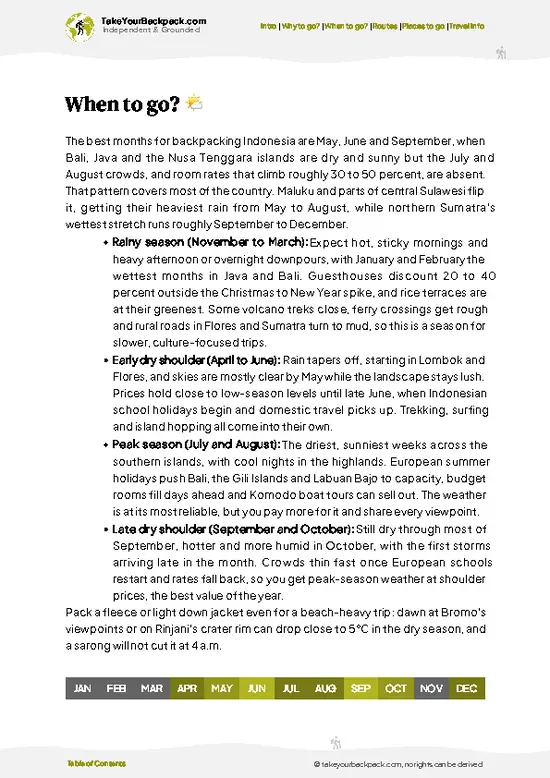
  • Weather: Ubud’s dry season from April to October offers clear skies and minimal rain, making trails and temples more accessible. The wet season, November to March, brings heavy afternoon showers that can turn dirt paths into slippery mud, dampening outdoor plans.

  • Temperature: Daytime temps hover around 27-32°C (80-90°F) year-round, but humidity spikes in the wet season, making the air feel heavier. Dry months feel fresher, especially in the mornings when the jungle scent sharpens.

  • Daylight Hours: Roughly 11-12 hours of daylight year-round, with sunrise around 6:15-6:30 AM and sunset near 6:30 PM. Early mornings are golden and quiet—prime for temple visits before crowds arrive.

  • Crowds: Peak season aligns with the dry months, especially July and August, when tourists flood in. This
read more 👉

  • Weather: Ubud’s dry season from April to October offers clear skies and minimal rain, making trails and temples more accessible. The wet season, November to March, brings heavy afternoon showers that can turn dirt paths into slippery mud, dampening outdoor plans.

  • Temperature: Daytime temps hover around 27-32°C (80-90°F) year-round, but humidity spikes in the wet season, making the air feel heavier. Dry months feel fresher, especially in the mornings when the jungle scent sharpens.

  • Daylight Hours: Roughly 11-12 hours of daylight year-round, with sunrise around 6:15-6:30 AM and sunset near 6:30 PM. Early mornings are golden and quiet—prime for temple visits before crowds arrive.

  • Crowds: Peak season aligns with the dry months, especially July and August, when tourists flood in. This means busier streets and higher prices but also more vibrant cultural events.

  • Seasonal Activities: The dry season hosts major festivals like Galungan and Kuningan, offering rich cultural immersion. Wet season slows down the pace but brings lush greenery and fewer tourists, perfect for introspective hikes.

  • Price Fluctuations: Accommodation and tours spike during dry season and holidays. The wet season sees significant drops, rewarding those willing to brave occasional rain with better deals and quieter guesthouses.


Pro-tip: Visit just before or after peak season—May, June, or September—when the weather is still dry, crowds thin, and prices soften, giving you the best balance of comfort and authenticity.


source: climatestotravel.comJANJanuary: fair for travelingFEBFebruary: fair for travelingMARMarch: fair for travelingAPRApril: highly recommended for travelingMAYMay: excellent for travelingJUNJune: excellent for travelingJULJuly: highly recommended for travelingAUGAugust: highly recommended for travelingSEPSeptember: excellent for travelingOCTOctober: highly recommended for travelingNOVNovember: fair for travelingDECDecember: fair for traveling
when-to-go

✈️ The backpacker research shortcutIndonesia Travel Guide

An offline-friendly backpacking guide with optimized travel routes, ranked highlights, transport advice, and the best areas to stay.
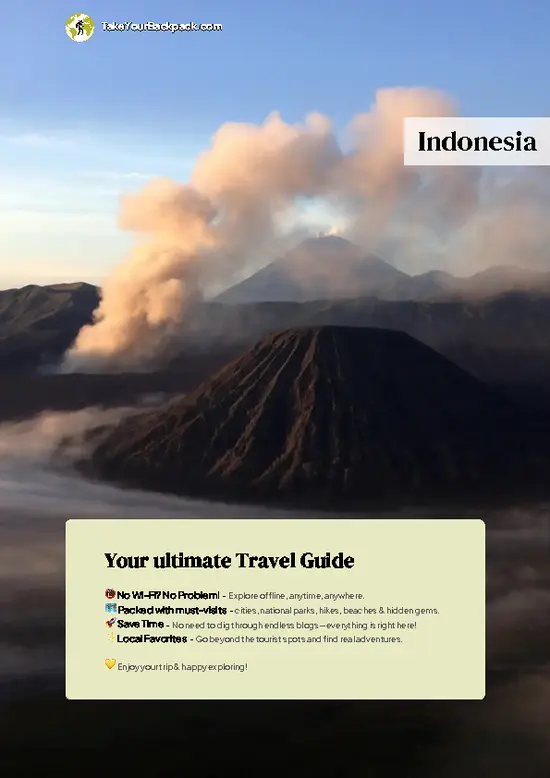
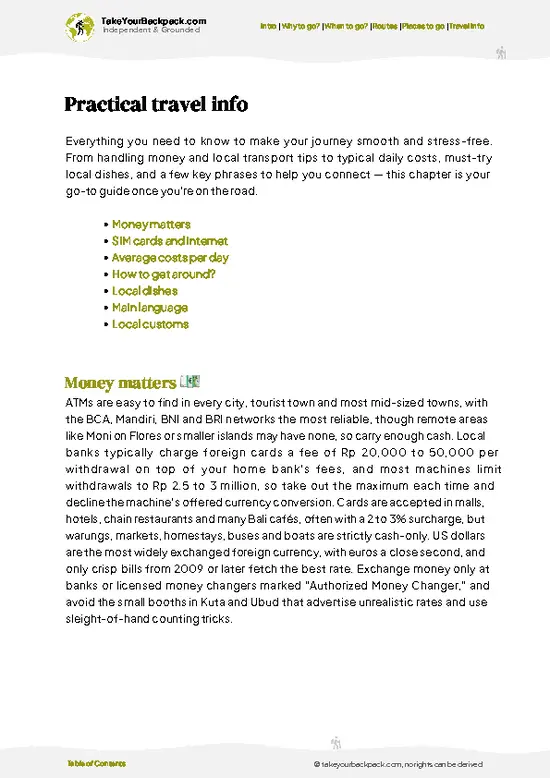
example page 0 from our offline Travel Guide for Indonesia
example page 1 from our offline Travel Guide for Indonesia
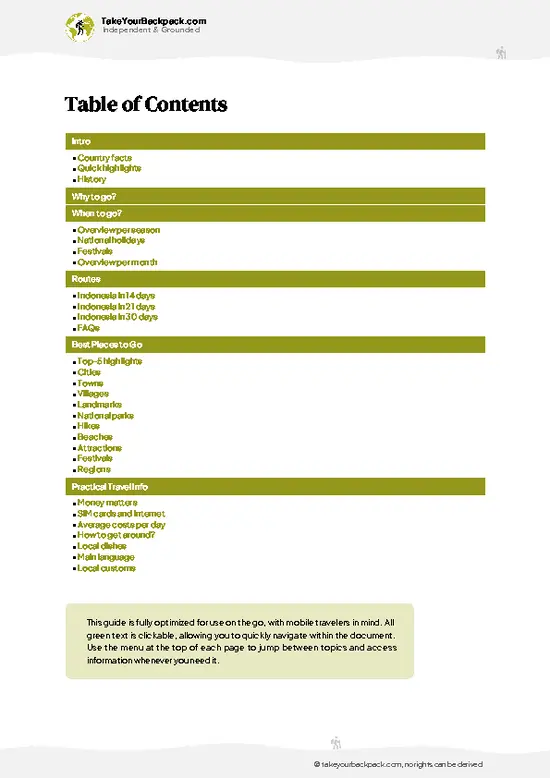
example page 2 from our offline Travel Guide for Indonesia
example page 3 from our offline Travel Guide for Indonesia
example page 4 from our offline Travel Guide for Indonesia
example page 5 from our offline Travel Guide for Indonesia
example page 6 from our offline Travel Guide for Indonesia
example page 7 from our offline Travel Guide for Indonesia
The digital guide (546 pages) contains:
156 highlights, ranked by travel appeal
Optimized 14, 21 & 30-day travel routes
Cities, national parks, landmarks, beaches
How to get around
Offline-friendly for travel without Wi-Fi
👉 Click to see all 30+ guide features

📅 Plan smarter in minutes, not weeks
Month by month travel advice
Festivals & national holidays
Budget expectations

🗺️ Go to the right places, skip the overrated ones
Honest pros & cons of destinations
Top hikes, parks & viewpoints
Lesser-known places most travelers miss
Clear “worth it vs skip it” guidance

🛏️ Travel smoothly without rookie mistakes
Best areas to stay
Transport systems explained simply
Common scams & safety advice
SIM cards, money & practical tips

🌍 Understand the country, not just visit it
Culture & traditions
52 Essential phrases & customs
Festivals worth planning around
Traveler-friendly historical context
Insights that make places more meaningful

📱 Built for real travel conditions
Fully downloadable PDF
Works completely offline
Optimized for phone use
Useful in remote areas & buses
Everything in one place
Save weeks of stressful planning
Get instant access to your full guide. 30‑day money-back guarantee.


By proceeding you agree to our terms.
Sent to your inbox immediately after payment • 100% Secure Checkout
Best Backpacking Travel Advisor 2025 tourism awardBest Backpacking
Travel Advisor
2025
What others say about Take Your Backpack Guides:
⭐⭐⭐⭐⭐
Fantastic, amazing amount of information!
⭐⭐⭐⭐⭐
My goodness this is amazing, it's what I've been looking for hats off too you!
⭐⭐⭐⭐⭐
I think this is absolutely BRILLIANT
⭐⭐⭐⭐
Very complete and informative. It's still missing places, but I gotta to commend you
⭐⭐⭐⭐⭐
This is truly amazing, thank you, can't wait to explore it with my kids!
⭐⭐⭐⭐⭐
Awesome resource, thank you!
⭐⭐⭐⭐⭐
This is amazing! Can't wait to explore the ones I haven't seen
⭐⭐⭐⭐
I love this! Well done, great idea.
⭐⭐⭐⭐⭐
Thanks for taking the time to make this gem!
⭐⭐⭐⭐⭐
This might be the best website I've ever seen.
⭐⭐⭐⭐⭐
Congratulations, and thank you so much for your work; it's incredibly valuable.
⭐⭐⭐⭐
In all seriousness I think you did a great job pointing out the important spots
⭐⭐⭐⭐⭐
10/10 very good
⭐⭐⭐⭐⭐
As someone who's only just starting to visit regularly this is awesome, thank you.
⭐⭐⭐⭐
Thank you very much! I'm going to visit my dad, it's going to be very useful!
⭐⭐⭐⭐⭐
This is really cool! We'll be travelling for the first time and this definitely come in handy.
⭐⭐⭐⭐⭐
You are now our minister of culture, congratulations 👨‍💼
⭐⭐⭐⭐⭐
Just wanted to tell you that this is a pearl! Going to follow your recommendations.
⭐⭐⭐⭐⭐
This is so cool. I'll definitely be using the resource for my travels soon.
⭐⭐⭐⭐⭐
This is very impressive! Good work.
⭐⭐⭐⭐⭐
This is an amazing and informative site. Very well done!

🛏️ Where to stay?Best areas and accommodation options

Ubud’s heart beats strongest around its central area, especially near the Monkey Forest Road and Jalan Hanoman. This is where backpackers find their rhythm—safe streets lined with affordable hostels, buzzing cafés, and a steady hum of fellow travelers swapping stories over cheap coffee or fresh coconut water. The light here filters through dense tropical leaves, casting dappled shadows on the sidewalks, creating a chill atmosphere that invites lingering. It’s social without being overwhelming, a place where solo travelers can easily strike up conversations or find a quiet corner to recharge.

read more 👉
Ubud’s heart beats strongest around its central area, especially near the Monkey Forest Road and Jalan Hanoman. This is where backpackers find their rhythm—safe streets lined with affordable hostels, buzzing cafés, and a steady hum of fellow travelers swapping stories over cheap coffee or fresh coconut water. The light here filters through dense tropical leaves, casting dappled shadows on the sidewalks, creating a chill atmosphere that invites lingering. It’s social without being overwhelming, a place where solo travelers can easily strike up conversations or find a quiet corner to recharge.

Venture a bit further out toward the Penestanan neighborhood, just a short scooter ride away, and you’ll tap into a more laid-back vibe. This area is quieter, with rice paddies framing the edges and a slower pace that’s perfect for those who want to escape the tourist buzz but still stay connected. Hostels here tend to be smaller, often with communal spaces that encourage mingling without the noise of the town center.

Avoid the outskirts like Ubud’s eastern edges or the main road to the north, where transport options thin out and the vibe shifts toward isolated guesthouses rather than social hubs. Staying central or in Penestanan means you’re plugged into Ubud’s pulse—easy access to markets, yoga studios, and the cultural spots that make this town a backpacker magnet. It’s about balancing convenience with atmosphere, so you get the full Ubud experience without the hassle.

🚌 Getting aroundHow to get from A to B

Ubud moves at its own pace, a rhythm that’s less about strict timetables and more about the ebb and flow of daily life. The air carries the scent of incense and wet earth, and the streets pulse with scooters weaving through a mix of locals, tourists, and monks. It’s not a place where you’ll find a clock dictating your every move; instead, you’ll learn to read the cues—the slow trickle of people heading to market, the lull in traffic during midday heat, the sudden burst of activity as the sun dips behind the rice terraces. This town rewards patience and curiosity, and mastering its transit options means embracing a bit of chaos with a practical mindset.


  • Walking: Ubud’s compact center is best explored on foot. The streets are narrow and often crowded, but walking lets you soak in the smells
read more 👉
Ubud moves at its own pace, a rhythm that’s less about strict timetables and more about the ebb and flow of daily life. The air carries the scent of incense and wet earth, and the streets pulse with scooters weaving through a mix of locals, tourists, and monks. It’s not a place where you’ll find a clock dictating your every move; instead, you’ll learn to read the cues—the slow trickle of people heading to market, the lull in traffic during midday heat, the sudden burst of activity as the sun dips behind the rice terraces. This town rewards patience and curiosity, and mastering its transit options means embracing a bit of chaos with a practical mindset.


  • Walking: Ubud’s compact center is best explored on foot. The streets are narrow and often crowded, but walking lets you soak in the smells of fresh fruit stalls, hear the clatter of gamelan music from nearby temples, and spot street art tucked into alleyways. Most key sites are within 20 minutes of each other, making walking the cheapest and most immersive option.


  • Local Bemos (Mini Vans): These shared minibuses run on flexible schedules, usually starting around 7 AM and winding down by 7 PM. Fares hover around 10,000–15,000 IDR ($0.70–$1.00). They’re slow and can get cramped, but they’re a budget-friendly way to reach nearby villages or the outskirts of Ubud. Expect frequent stops and a lively atmosphere—think bargaining for seats and locals chatting loudly.


  • Motorbike Rentals: Renting a scooter is the fastest way to navigate Ubud and its surroundings. Daily rates start at about 50,000 IDR ($3.50). You’ll need a valid license and a steady hand to handle the sometimes chaotic traffic and uneven roads. The freedom to chase sunrise views over the rice fields or dart into hidden warungs makes this a favorite for those comfortable on two wheels.


  • Ride-Hailing Apps (Gojek/Grab): These apps offer motorbike and car rides on demand, with prices typically starting around 15,000 IDR ($1). They’re a reliable option when you want to avoid haggling or walking in the heat. Drivers know the shortcuts and can navigate Ubud’s maze-like streets efficiently, but expect surge pricing during peak hours or festivals.


  • Taxi Services: Metered taxis are rare in Ubud, so most drivers negotiate fixed fares. Trips within town usually cost 50,000–70,000 IDR ($3.50–$5), which is pricier than other options but offers comfort and air conditioning. Use taxis for airport transfers or when traveling with heavy luggage, but always agree on the price beforehand to avoid surprises.

👛 Costs (as of 30 July 2026)What things cost and how to budget

Backpacking in Ubud, Indonesia, offers a rich blend of culture, nature, and affordability, but knowing the real costs helps you plan a trip that feels both smooth and rewarding.
  • Dorm Accommodation: Expect to pay around $5 to $12 per night for a bed in a shared dorm. These hostels often come with basic amenities like free Wi-Fi and communal kitchens, but the vibe can range from quiet retreats to lively social hubs. Booking ahead during peak season can save you from scrambling for space.
  • Meals: Street food and warungs (local eateries) serve up hearty meals for $1.50 to $3. Think fragrant nasi campur plates or spicy mie goreng, fresh and filling. Western-style cafes and restaurants push prices up to $5-$8 per meal, but the quality and atmosphere often justify the splurge.
  • Local Transport:
read more 👉
Backpacking in Ubud, Indonesia, offers a rich blend of culture, nature, and affordability, but knowing the real costs helps you plan a trip that feels both smooth and rewarding.
  • Dorm Accommodation: Expect to pay around $5 to $12 per night for a bed in a shared dorm. These hostels often come with basic amenities like free Wi-Fi and communal kitchens, but the vibe can range from quiet retreats to lively social hubs. Booking ahead during peak season can save you from scrambling for space.
  • Meals: Street food and warungs (local eateries) serve up hearty meals for $1.50 to $3. Think fragrant nasi campur plates or spicy mie goreng, fresh and filling. Western-style cafes and restaurants push prices up to $5-$8 per meal, but the quality and atmosphere often justify the splurge.
  • Local Transport: Getting around Ubud is mostly on foot or by scooter. Renting a scooter costs about $5 to $7 per day, which is the best way to explore nearby rice terraces and temples at your own pace. Alternatively, short rides on local bemos or taxis usually run $1 to $3, but they can be less flexible and more time-consuming.
  • Basic Activities/Entry Fees: Entrance to popular spots like the Monkey Forest or the Tegalalang Rice Terrace is around $2 to $5. Yoga classes, a big draw here, typically cost $7 to $12 per session. Many temples and cultural sites have small fees that add up, so budgeting $5 to $10 daily for activities keeps you covered without surprises.
  • Miscellaneous Expenses: This includes bottled water, snacks, occasional coffee, or small souvenirs. Plan for about $2 to $5 daily. Ubud’s markets and shops offer plenty of tempting buys, but sticking to essentials helps keep your budget lean.

All told, a realistic daily budget for backpacking in Ubud falls between $15 and $35. This range covers the essentials and a few extras, letting you soak in the atmosphere without constant money stress. The trick is balancing local eats and transport with a couple of splurges on activities that make the place come alive.


source: indonesia.travel
⚠️ Prices can change and everyone travels differently, so take this as a rough guide. Hope it helps you plan your adventure!

🚌 Day tripsEasy escapes and nearby places

Ubud is a fantastic launchpad for exploring the heart of Bali. Its lush landscapes and vibrant culture make it a perfect base for day trips that are both rewarding and accessible.

Mount Batur Sunrise Trek
Waking up at 2 AM might sound brutal, but the thrill of watching the sunrise from the summit of Mount Batur is worth every groggy moment. The trek takes about two hours, and the path is well-marked, though it can be steep and rocky. You’ll feel the cool mountain air on your skin as you ascend, and the scent of damp earth fills your lungs. Once at the top, the golden sun spilling over the horizon is a sight that’ll stick with you long after you’ve returned to Ubud. Budget around $50 for a guided tour, which usually includes breakfast and transport. The best time to go is during the dry … read more 👉
Ubud is a fantastic launchpad for exploring the heart of Bali. Its lush landscapes and vibrant culture make it a perfect base for day trips that are both rewarding and accessible.

Mount Batur Sunrise Trek
Waking up at 2 AM might sound brutal, but the thrill of watching the sunrise from the summit of Mount Batur is worth every groggy moment. The trek takes about two hours, and the path is well-marked, though it can be steep and rocky. You’ll feel the cool mountain air on your skin as you ascend, and the scent of damp earth fills your lungs. Once at the top, the golden sun spilling over the horizon is a sight that’ll stick with you long after you’ve returned to Ubud. Budget around $50 for a guided tour, which usually includes breakfast and transport. The best time to go is during the dry season, from April to October. A common mistake? Forgetting to bring a warm layer; it gets chilly at the top!


Tegallalang Rice Terraces
Just a short drive from Ubud, the Tegallalang Rice Terraces are a stunning example of Bali’s iconic landscape. Spend a leisurely morning wandering through the terraces, where the vibrant green rice paddies stretch out like a patchwork quilt. The atmosphere is serene, with the sound of rustling leaves and distant roosters crowing. Entry is free, but consider a small donation for the local farmers. Aim to visit early to avoid the crowds and capture that perfect Instagram shot. A common pitfall is skipping the walk down to the lower terraces; the views are even more breathtaking from below.


Goa Gajah (Elephant Cave)
This ancient site is a fascinating blend of history and spirituality. The intricate carvings at the entrance of Goa Gajah are mesmerizing, and the cool, damp air inside the cave offers a refreshing contrast to the heat outside. It’s about a 30-minute drive from Ubud, and you can easily spend a couple of hours exploring the site and its surrounding gardens. Entry is around $2, making it a budget-friendly stop. The best time to visit is in the morning when it’s less crowded. Many first-timers rush through; take your time to soak in the atmosphere and the history.
👉 Explore Goa Gajah

Campuhan Ridge Walk
For a more laid-back experience, the Campuhan Ridge Walk is a must. This scenic trail offers panoramic views of the lush valleys and hills surrounding Ubud. The walk is about 2 kilometers one way, and the golden light of the late afternoon makes for stunning photos. It’s free to access, and you can easily fit it into your day after visiting a nearby café. The best time to go is just before sunset, but be cautious of the slippery paths after rain. A common mistake is not bringing enough water; stay hydrated as you enjoy the views!
Want to know what more Indonesia offers?
The Indonesia Travel Guide describes 156 highlights, from cities to national parks, from beaches to hikes

Get the Travel Guide -

🛡️ SafetySafety Tips and Common Scams in Ubud

Ubud is generally safe, but a few practical tips can enhance your experience. The streets are lively, filled with the scent of incense and the sound of chatter, but keep your wits about you, especially in crowded markets. Watch for pickpockets in busy areas like the Ubud Art Market; keep your valuables close and your bag zipped.

Solo travelers should feel comfortable, but avoid wandering too far off the beaten path after dark. The main streets are well-lit and bustling, but side alleys can feel isolated. If you’re out late, consider a trusted ride-hailing app instead of walking.

Scams are rare but can happen. Be cautious of overly friendly locals offering unsolicited help or guiding you to specific shops. Politely decline and trust your instincts.

Every annoyance, like the occasional aggressive … read more 👉
Ubud is generally safe, but a few practical tips can enhance your experience. The streets are lively, filled with the scent of incense and the sound of chatter, but keep your wits about you, especially in crowded markets. Watch for pickpockets in busy areas like the Ubud Art Market; keep your valuables close and your bag zipped.

Solo travelers should feel comfortable, but avoid wandering too far off the beaten path after dark. The main streets are well-lit and bustling, but side alleys can feel isolated. If you’re out late, consider a trusted ride-hailing app instead of walking.

Scams are rare but can happen. Be cautious of overly friendly locals offering unsolicited help or guiding you to specific shops. Politely decline and trust your instincts.

Every annoyance, like the occasional aggressive sales pitch, is part of the local charm. A firm but friendly “no, thank you” usually does the trick. Embrace the quirks, and you’ll find that the beauty of Ubud is well worth the minor bumps along the way.

Other Indonesian towns near Ubud

Explore more nearby:

  • Tenganan—walled village, double ikat, Bali Aga customs| 34 km away
  • Senggigi—beachfront strips, sunset bars, Lombok gateway| 86 km away
  • Sade—thatched houses, Sasak weaving, communal courtyards| 119 km away

💡 Not sure where to go next?
Create a personalized itinerary for Indonesia including Ubud and the places that fit your trip.

Generate my itinerary

👉 Discover all towns

Or checkout all Indonesia has to offer (think cities, towns, villages, national parks, hikes, beaches, festivals)
Country photo of Indonesia

We 💚 feedbackFinal thoughts on visiting Ubud

Ubud’s charm lies in its vibrant culture and lush landscapes. The scent of incense wafts through the air as you wander past art shops and rice paddies. But be ready for the crowds; it can feel like a bustling market at times. Embrace the chaos, though. It’s part of the experience. The energy here is infectious, and the moments of tranquility make the hustle worth it. Just find your quiet spot to recharge amidst the buzz.

✈️ When did I visit Indonesia?
As part of my 1.5 year travel around the world trip, I visited Indonesia twice (and it was worth it. First in September 2015 and a bit later again in January and February 2016.

✍️ Help improve this page!
The information on this page is based on my own backpacking experience in Indonesia, supplemented with up-to-date research and feedback from other travelers. Travel details can change, so if you notice anything outdated or incomplete, feel free to let me know.


🙋‍♂️ Give feedback

👋 Meet the founderWho’s Behind Take Your Backpack?

Johan, backpacker and founder of TakeYourBackpackHi, I’m Johan (Netherlands 🇳🇱), the creator of TakeYourBackpack. Over the past decade, I’ve backpacked through 80+ countries across six continents, gaining extensive experience with independent travel, long-term trips, and overland routes.

This site is built on a combination of firsthand travel experience and carefully curated insights from other backpackers. Many guides are based on places I’ve personally visited, while others bring together tips, observations, and practical advice shared by trusted travelers I’ve met along the way.

The goal is to provide realistic, experience-driven guidance — not generic itineraries — so you can explore destinations with better context, clearer expectations, and more confidence.

Get full Indonesia guide •
Instant download • 156 highlights • Full Offline guide