×

Iran🇮🇷 | townsSusaArchaeological mounds, ancient palace, ziggurat | things to do and best time to go

Explore SareynExplore Chalus

Backpacking in Susa
👍 Recommendedtown ranked #7
By Johan Kruseman 🇳🇱 | Updated October 15, 2026

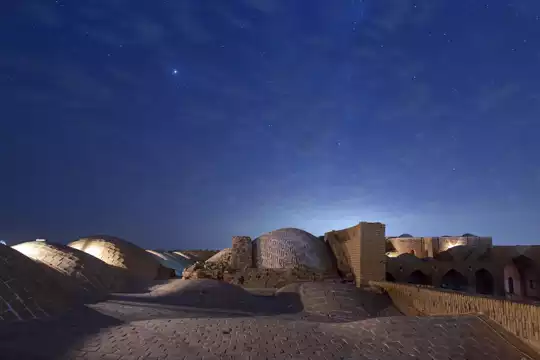
Most people hear “Susa” and picture a dusty, empty ruin in the middle of nowhere; in reality, it’s a lived-in provincial town wrapped around one of Iran’s most important archaeological sites. Susa sits in southwest Iran, in Khuzestan province, roughly between Ahvaz and the Iraqi border, with the heat and flat light of the Mesopotamian plain pressing in from all sides. For backpackers, it’s less a hangout and more a purposeful stop: you come to walk the ancient acropolis, glance across at Daniel’s Tomb, feel the dry wind on the citadel walls, then move on. The town itself is low-key, a bit scruffy, with simple eateries and basic guesthouses rather than social hostels, so meeting other travelers is hit-or-miss. Buses from Ahvaz make it easy enough to reach, and you can walk most places once you’re there. Compared with livelier Shushtar or practical Ahvaz, Susa is quieter, cheaper, more atmospheric, and best treated as a one- or two-night pause on a longer Khuzestan loop.

Discover everything you want to know in the 📖 Iran Travel Guide.
Safety warning

The current risk level for Iran is high. Check the advice before going.


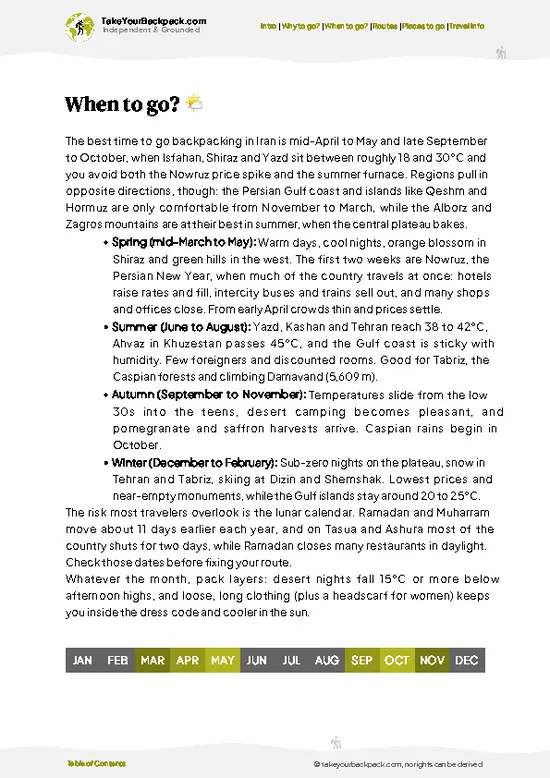
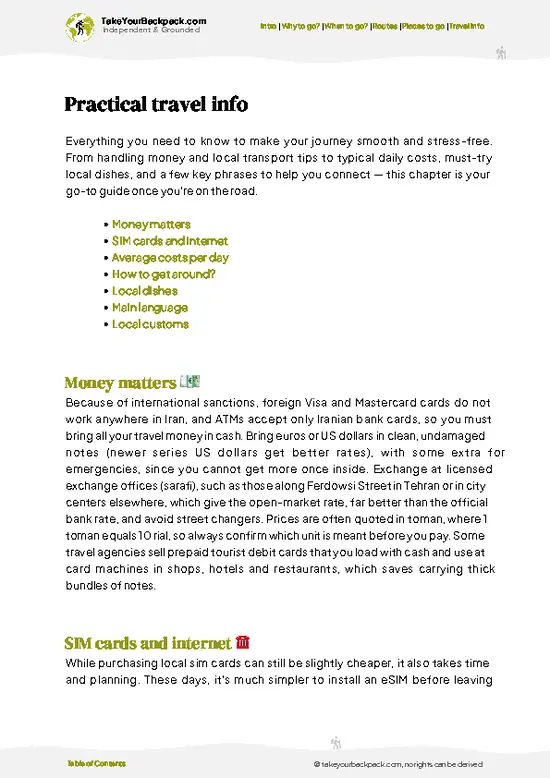
example page 0 from our offline Travel Guide for Iran
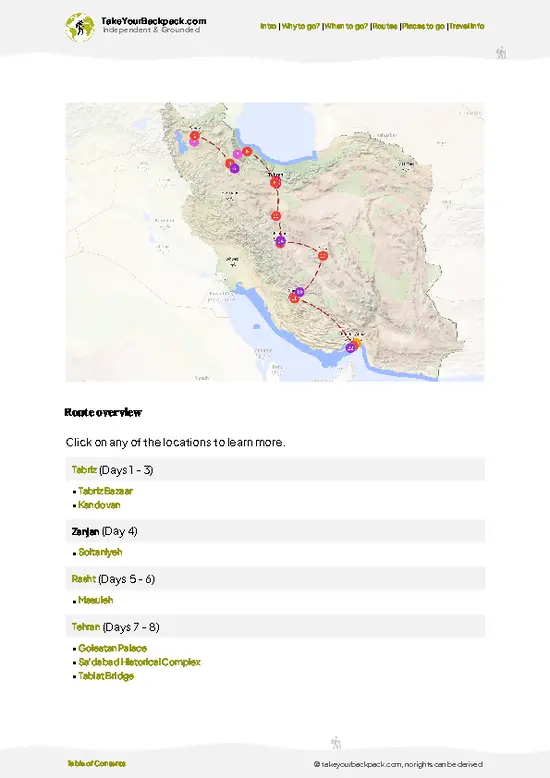
example page 1 from our offline Travel Guide for Iran
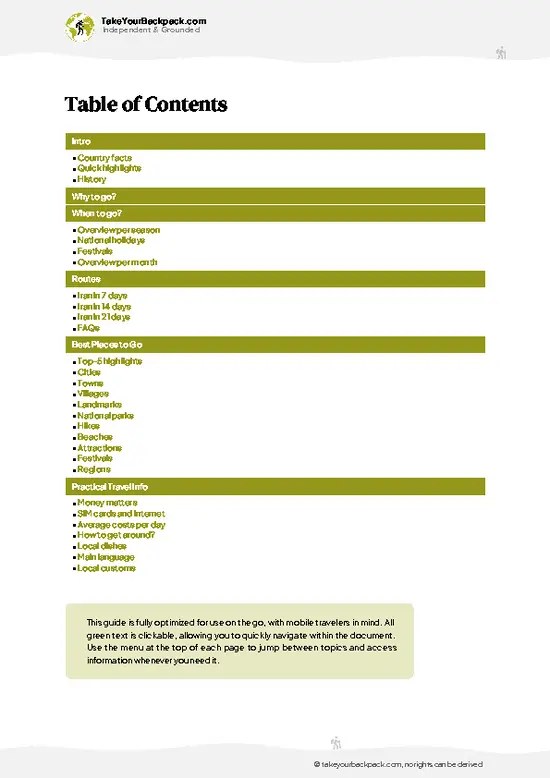
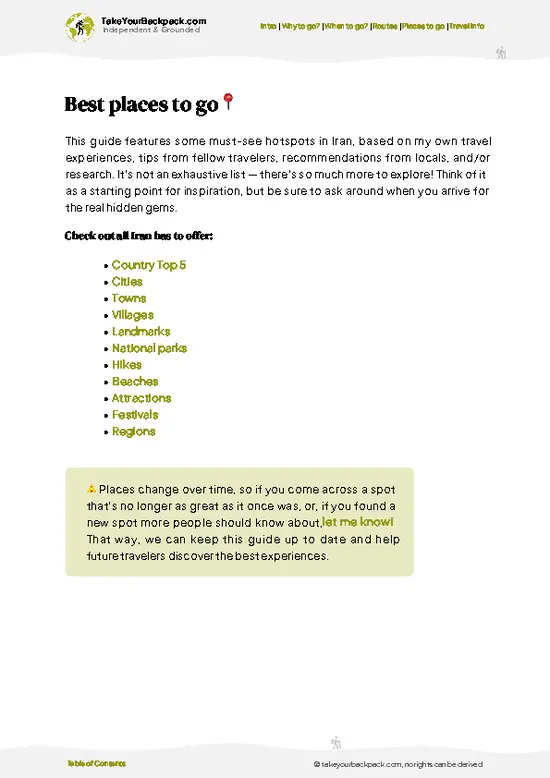
example page 2 from our offline Travel Guide for Iran
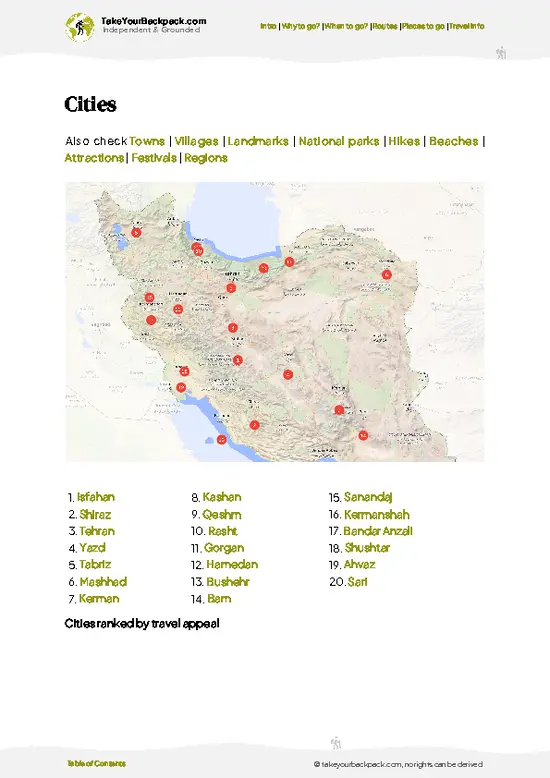
example page 3 from our offline Travel Guide for Iran
example page 4 from our offline Travel Guide for Iran
example page 5 from our offline Travel Guide for Iran
example page 6 from our offline Travel Guide for Iran
example page 7 from our offline Travel Guide for Iran
Loading the map 🌍
CLICK TO FILTER
cities
towns
villages
landmarks
national parks
hikes
beaches
attractions
festivals
regions
SHOW COUNTRY’S BESTSHOW ALL

✨ Why go?
Ranked #7 town in Iran
The unique appeal for travelers

Backpackers flock to Susa for its strategic location along the route to stunning hikes and cultural sites. The walkable streets invite exploration, while small-scale hostels and guesthouses create a cozy, communal vibe. You’ll find locals serving up delicious, home-cooked meals that make every bite feel like a warm embrace. Many travelers stay a few days, soaking in the friendly atmosphere and connecting with fellow adventurers. It’s perfect for slow travelers and solo explorers looking for a blend of quiet reflection and social interaction. If you’re after a quick stop, you might miss the heart of this charming town.

💡 HighlightsPlaces and moments you shouldn't skip

  1. Tell of Susa (Shush Acropolis) — The big earthen mound that defines the city: walkable layers of settlement where Elamite, Babylonian and Achaemenid cities once stacked on top of one another. It’s the single best place to feel the long sweep of history under your feet.
  2. Achaemenid palace ruins — Low stone foundations, column bases and fragments from the palatial quarter of ancient Susa. Not shiny, but powerful: you can see the footprint of imperial architecture and imagine courtyards that hosted Persian kings and envoys.
  3. Elamite temple precinct (area of Inshushinak) — The religious heart of ancient Susa. The ruined platforms and temple traces here speak to pre-Achaemenid Elamite religion and civic life; archaeologically rich and atmospheric at sunrise or late afternoon.
  4. In-situ bas-reliefs
… read more 👉
  1. Tell of Susa (Shush Acropolis) — The big earthen mound that defines the city: walkable layers of settlement where Elamite, Babylonian and Achaemenid cities once stacked on top of one another. It’s the single best place to feel the long sweep of history under your feet.
  2. Achaemenid palace ruins — Low stone foundations, column bases and fragments from the palatial quarter of ancient Susa. Not shiny, but powerful: you can see the footprint of imperial architecture and imagine courtyards that hosted Persian kings and envoys.
  3. Elamite temple precinct (area of Inshushinak) — The religious heart of ancient Susa. The ruined platforms and temple traces here speak to pre-Achaemenid Elamite religion and civic life; archaeologically rich and atmospheric at sunrise or late afternoon.
  4. In-situ bas-reliefs and glazed-brick fragments — Scattered painted bricks, carved fragments and trace reliefs still lie where they were found. They’re small, tactile reminders of the city’s lost polychrome grandeur — impressive when you know what the colors once looked like.
  5. Susa (Shush) Museum — Compact and well-curated: the museum gathers finds from the tell and nearby sites (including material from Chogha Zanbil). Cuneiform bowls, clay tablets, cylinder seals and ceramics give context to what you see in the field.
  6. Tomb of Daniel (Maqam-e Daniyal) — A working pilgrimage site with a distinctive dome inside the modern town. It’s culturally important to local communities and offers a close-up look at how ancient sites remain part of living religious life.
  7. Qal‘eh Shush (Shush citadel / excavation camp area) — The modest fortress/compound associated with early archaeological work in Susa. It’s a tangible reminder of the 19th-20th-century digs and a useful viewpoint to understand the modern history of excavation here.
  8. Old bazaar and traditional streets — The market around the city center is where you meet everyday Susa: sellers, local snacks, simple teahouses and carpets. Great for people-watching and picking up practical travel supplies or a cheap, honest meal.
  9. Friday Mosque (Masjid-e Jameh of Shush) — The city’s main congregational mosque: less about grand ornamentation and more about local life, rhythm and architecture adapted to the Khuzestan climate. Visit respectfully during non-prayer times to see the courtyard and tilework.
  10. Active archaeological trenches and visitor pathways — Depending on the season you can walk short, signposted trenches and paths around the tell and palace areas. They’re not polished tourist zones, but they’re where archaeologists still work — and that’s a neat, granular way to watch history being uncovered.
A few real day-trip highlights outside the city: the UNESCO site of Chogha Zanbil (the Elamite ziggurat), the Haft-Tappeh/industrial-era archaeological area nearby, and the Shushtar Historical Hydraulic System — all reachable from Susa and perfect for a full-day outing.
Spotted a mistake or missing something? Contact us.

🏘️ NeighborhoodsUnderstanding the local layout

Susa, a town steeped in history, offers a rich tapestry of experiences for backpackers. Here’s how to navigate its neighborhoods.

Downtown Susa: The heart of the action. Bustling bazaars and local eateries create a lively atmosphere. Affordable accommodations abound, making it perfect for budget travelers. Walkable streets mean you can explore on foot, soaking in the scents of spices and fresh bread. Ideal for short stays, but you might find yourself lingering longer.

Old Town: A quieter vibe with charming architecture. This area feels like stepping back in time. It’s less touristy, offering a more authentic experience. Perfect for longer stays if you want to immerse yourself in local life. Transport options are limited, so plan to walk or bike.

New District: Modern and spacious, with a … read more 👉
Susa, a town steeped in history, offers a rich tapestry of experiences for backpackers. Here’s how to navigate its neighborhoods.

Downtown Susa: The heart of the action. Bustling bazaars and local eateries create a lively atmosphere. Affordable accommodations abound, making it perfect for budget travelers. Walkable streets mean you can explore on foot, soaking in the scents of spices and fresh bread. Ideal for short stays, but you might find yourself lingering longer.

Old Town: A quieter vibe with charming architecture. This area feels like stepping back in time. It’s less touristy, offering a more authentic experience. Perfect for longer stays if you want to immerse yourself in local life. Transport options are limited, so plan to walk or bike.

New District: Modern and spacious, with a mix of cafes and shops. It’s a bit pricier but offers a more relaxed atmosphere. Great for those who enjoy nightlife, with bars and music venues nearby. Good transport links make it easy to explore further afield.

⌛️ 1 dayWhat you can realistically do in a day

Susa, Iran, is a tapestry of history and culture, where ancient ruins whisper tales of empires past. Start your morning at the bustling local bazaar. The air is thick with the scent of spices and fresh bread, and the vibrant colors of textiles draw you in. Grab a warm, flaky pastry from a vendor and sip on sweet tea while soaking in the lively atmosphere.

As the sun climbs, head to the ruins of the ancient city of Susa. The crumbling walls and intricate carvings are a tangible link to the past. Spend a couple of hours wandering through the site, letting the history seep into your bones.

In the afternoon, explore the quieter neighborhood of Shahrak-e Keshavarz, where you can find the lesser-known but charming Tomb of Daniel. This serene spot is often overlooked but offers a peaceful respite … read more 👉
Susa, Iran, is a tapestry of history and culture, where ancient ruins whisper tales of empires past. Start your morning at the bustling local bazaar. The air is thick with the scent of spices and fresh bread, and the vibrant colors of textiles draw you in. Grab a warm, flaky pastry from a vendor and sip on sweet tea while soaking in the lively atmosphere.

As the sun climbs, head to the ruins of the ancient city of Susa. The crumbling walls and intricate carvings are a tangible link to the past. Spend a couple of hours wandering through the site, letting the history seep into your bones.

In the afternoon, explore the quieter neighborhood of Shahrak-e Keshavarz, where you can find the lesser-known but charming Tomb of Daniel. This serene spot is often overlooked but offers a peaceful respite and a chance to reflect.

As evening falls, return to the heart of Susa for dinner at a local eatery. Enjoy a plate of khoresh, a traditional stew, while the sun sets, painting the sky in hues of orange and pink. This day in Susa isn’t just about sights; it’s about feeling the pulse of a town that’s both ancient and alive.

🌤️ When to go?Choosing the right time of year

  • Topic: Weather and Temperature - Susa’s climate swings dramatically. Spring (March to May) offers mild days around 20-25°C (68-77°F) and cool nights, perfect for hiking without overheating. Summers scorch, often topping 40°C (104°F), turning outdoor exploration into a sweat-drenched slog. Winters dip to 5-10°C (41-50°F), crisp but manageable if you layer up.
  • Topic: Daylight Hours - Spring and autumn provide balanced daylight, roughly 12-13 hours, giving you ample time to explore ruins and markets before dusk. Winter days shrink to about 10 hours, meaning you’ll want to start early to maximize daylight for trekking or sightseeing.
  • Topic: Crowds - Tourist numbers peak in spring and autumn when the weather is just right. This means more energy in town but also busier sites. Winter sees fewer
… read more 👉
  • Topic: Weather and Temperature - Susa’s climate swings dramatically. Spring (March to May) offers mild days around 20-25°C (68-77°F) and cool nights, perfect for hiking without overheating. Summers scorch, often topping 40°C (104°F), turning outdoor exploration into a sweat-drenched slog. Winters dip to 5-10°C (41-50°F), crisp but manageable if you layer up.
  • Topic: Daylight Hours - Spring and autumn provide balanced daylight, roughly 12-13 hours, giving you ample time to explore ruins and markets before dusk. Winter days shrink to about 10 hours, meaning you’ll want to start early to maximize daylight for trekking or sightseeing.
  • Topic: Crowds - Tourist numbers peak in spring and autumn when the weather is just right. This means more energy in town but also busier sites. Winter sees fewer visitors, offering a quieter, more intimate experience but with limited daylight and chillier air.
  • Topic: Seasonal Activities - Spring bursts with local festivals and fresh produce markets, adding layers of culture to your trek. Autumn brings harvest celebrations and a mellow vibe, while winter’s calm lets you focus on the ancient ruins without distraction.
  • Topic: Price Fluctuations - Expect accommodation and transport costs to rise in spring and autumn due to demand. Winter offers the best deals but be ready for fewer services and colder nights.
Pro-tip: Aim for late March or early October—when the air smells like blooming flowers or ripe fruit, the light softens the ruins just right, and the town hums with local life without the crush of crowds.


source: climatestotravel.comJANJanuary: good for travelingFEBFebruary: good for travelingMARMarch: excellent for travelingAPRApril: excellent for travelingMAYMay: excellent for travelingJUNJune: fair for travelingJULJuly: below average for travelingAUGAugust: below average for travelingSEPSeptember: good for travelingOCTOctober: highly recommended for travelingNOVNovember: highly recommended for travelingDECDecember: good for traveling
when-to-go

✈️ The backpacker research shortcutIran Travel Guide

An offline-friendly backpacking guide with optimized travel routes, ranked highlights, transport advice, and the best areas to stay.
example page 0 from our offline Travel Guide for Iran
example page 1 from our offline Travel Guide for Iran
example page 2 from our offline Travel Guide for Iran
example page 3 from our offline Travel Guide for Iran
example page 4 from our offline Travel Guide for Iran
example page 5 from our offline Travel Guide for Iran
example page 6 from our offline Travel Guide for Iran
example page 7 from our offline Travel Guide for Iran
The digital guide (407 pages) contains:
✅ 115 highlights, ranked by travel appeal
✅ Optimized 7, 14 & 21-day travel routes
✅ Cities, national parks, landmarks, beaches
✅ How to get around
✅ Offline-friendly for travel without Wi-Fi
👉 Click to see all 30+ guide features

📅 Plan smarter in minutes, not weeks
✅ Month by month travel advice
✅ Festivals & national holidays
✅ Budget expectations

🗺️ Go to the right places, skip the overrated ones
✅ Honest pros & cons of destinations
✅ Top hikes, parks & viewpoints
✅ Lesser-known places most travelers miss
✅ Clear “worth it vs skip it” guidance

🛏️ Travel smoothly without rookie mistakes
✅ Best areas to stay
✅ Transport systems explained simply
✅ Common scams & safety advice
✅ SIM cards, money & practical tips

🌍 Understand the country, not just visit it
✅ Culture & traditions
✅ 52 Essential phrases & customs
✅ Festivals worth planning around
✅ Traveler-friendly historical context
✅ Insights that make places more meaningful

📱 Built for real travel conditions
✅ Fully downloadable PDF
✅ Works completely offline
✅ Optimized for phone use
✅ Useful in remote areas & buses
✅ Everything in one place
Stop searching, start planning
Get instant access to your full guide. 30‑day money-back guarantee.
+ Add another guide for just

By proceeding you agree to our terms.
Sent to your inbox immediately after payment • 100% Secure Checkout
Best Backpacking Travel Advisor 2025 tourism awardBest Backpacking
Travel Advisor
2025
What others say about Take Your Backpack Guides:
⭐⭐⭐⭐⭐
Fantastic, amazing amount of information!
⭐⭐⭐⭐⭐
My goodness this is amazing, it's what I've been looking for hats off too you!
⭐⭐⭐⭐⭐
I think this is absolutely BRILLIANT
⭐⭐⭐⭐
Very complete and informative. It's still missing places, but I gotta to commend you
⭐⭐⭐⭐⭐
This is truly amazing, thank you, can't wait to explore it with my kids!
⭐⭐⭐⭐⭐
Awesome resource, thank you!
⭐⭐⭐⭐⭐
This is amazing! Can't wait to explore the ones I haven't seen
⭐⭐⭐⭐
I love this! Well done, great idea.
⭐⭐⭐⭐⭐
Thanks for taking the time to make this gem!
⭐⭐⭐⭐⭐
This might be the best website I've ever seen.
⭐⭐⭐⭐⭐
Congratulations, and thank you so much for your work; it's incredibly valuable.
⭐⭐⭐⭐
In all seriousness I think you did a great job pointing out the important spots
⭐⭐⭐⭐⭐
10/10 very good
⭐⭐⭐⭐⭐
As someone who's only just starting to visit regularly this is awesome, thank you.
⭐⭐⭐⭐
Thank you very much! I'm going to visit my dad, it's going to be very useful!
⭐⭐⭐⭐⭐
This is really cool! We'll be travelling for the first time and this definitely come in handy.
⭐⭐⭐⭐⭐
You are now our minister of culture, congratulations 👨‍💼
⭐⭐⭐⭐⭐
Just wanted to tell you that this is a pearl! Going to follow your recommendations.
⭐⭐⭐⭐⭐
This is so cool. I'll definitely be using the resource for my travels soon.
⭐⭐⭐⭐⭐
This is very impressive! Good work.
⭐⭐⭐⭐⭐
This is an amazing and informative site. Very well done!

🛏️ Where to stay?How to pick the right area

In Susa, the best spot for backpackers is the area around the city center, near the archaeological sites and the bazaar. This neighborhood hums with life during the day—the scent of spices and fresh bread drifts through the air, and the sun casts sharp shadows on ancient stone walls. Staying here means you’re steps away from the ruins, so you can catch the morning light hitting the ziggurat without the crowds. It’s also where you’ll find the handful of budget hostels that cater to solo travelers and small groups, offering a chance to swap stories over tea in shared common rooms.

Compared to the … read more 👉
In Susa, the best spot for backpackers is the area around the city center, near the archaeological sites and the bazaar. This neighborhood hums with life during the day—the scent of spices and fresh bread drifts through the air, and the sun casts sharp shadows on ancient stone walls. Staying here means you’re steps away from the ruins, so you can catch the morning light hitting the ziggurat without the crowds. It’s also where you’ll find the handful of budget hostels that cater to solo travelers and small groups, offering a chance to swap stories over tea in shared common rooms.

Compared to the quieter residential districts on the outskirts, this central zone feels safer and more social. The streets are busy but not chaotic, with locals who are used to visitors and generally welcoming. You won’t find flashy nightlife, but the evening bazaars and street vendors create a low-key buzz that’s perfect for winding down after a day of exploring.

Avoid the industrial areas or newer suburbs—they’re less walkable and lack the character that makes Susa’s center so magnetic. The payoff here is a genuine connection to the city’s pulse, where every corner invites you to slow down and soak in the layers of history and daily life.

🚌 Getting aroundHow to get around Susa

Susa moves at a pace that feels like a conversation between the past and present—streets where the scent of aged stone mingles with fresh mountain air, and the rhythm isn’t dictated by clocks but by the sun’s slow crawl over the Alps. This town isn’t about rigid schedules or frantic rush; it’s about reading the subtle cues of daily life, where locals drift between piazzas and markets with a relaxed certainty. For a traveler, that means mastering the flow is less about strict timetables and more about syncing with the natural pulse of the place. You’ll find that moving through Susa is a dance of timing your steps with the quiet moments between the tourist rush and the local lull.
  • Walking: The heart of Susa is compact and best explored on foot. Strolling through cobblestone streets lets you
… read more 👉
Susa moves at a pace that feels like a conversation between the past and present—streets where the scent of aged stone mingles with fresh mountain air, and the rhythm isn’t dictated by clocks but by the sun’s slow crawl over the Alps. This town isn’t about rigid schedules or frantic rush; it’s about reading the subtle cues of daily life, where locals drift between piazzas and markets with a relaxed certainty. For a traveler, that means mastering the flow is less about strict timetables and more about syncing with the natural pulse of the place. You’ll find that moving through Susa is a dance of timing your steps with the quiet moments between the tourist rush and the local lull.
  • Walking: The heart of Susa is compact and best explored on foot. Strolling through cobblestone streets lets you catch the scent of fresh espresso and the cool shadow of medieval walls. Walking is free, naturally, and the best way to soak in the town’s texture, especially early morning or late afternoon when the light softens and the crowds thin.
  • Local Bus (Linea 1 and 2): These buses connect Susa with nearby villages and the train station. They run roughly from 6:30 AM to 8:30 PM, with tickets costing around €1.50. The buses aren’t the fastest, but they’re reliable and give you a chance to see the outskirts without breaking the bank. Expect a modest level of comfort—think practical seats and occasional chatter from locals.
  • Regional Train: The train station sits just outside the historic center, about a 10-minute walk downhill. Trains run frequently to Turin and other regional hubs from early morning until late evening, with tickets starting at €3.50. This is your best bet for quick, budget-friendly day trips or arriving fresh from the airport. The trains are clean and punctual, offering a smooth contrast to the town’s laid-back vibe.
  • Taxi Services: Taxis are available but tend to be pricey compared to other options—expect fares starting around €8 for short rides within town. Use taxis sparingly, mainly if you’re hauling heavy gear or traveling late when buses stop running. They offer door-to-door convenience but don’t expect a luxury ride; it’s a straightforward, no-frills service.

👛 Costs (as of 15 October 2026)How expensive it really is

Backpacking in Susa, Iran, offers a rare glimpse into ancient history with surprisingly manageable daily costs, especially if you know where to look and how to move around.
  • Dorm Accommodation: Expect to pay around $8 to $15 per night for a bed in a basic guesthouse or hostel dorm. These places are simple but clean, often family-run, giving you a chance to connect with locals. Private rooms push the price up but still stay reasonable.
  • Meals: Street food and small local eateries dominate here. A filling meal of traditional Iranian dishes like kebabs or stews will set you back about $2 to $5. If you want something a bit more substantial or Western-style, plan for $6 to $10. Breakfasts are usually cheap and hearty, often under $2.
  • Local Transport: Susa is compact, so walking is your best bet
… read more 👉
Backpacking in Susa, Iran, offers a rare glimpse into ancient history with surprisingly manageable daily costs, especially if you know where to look and how to move around.
  • Dorm Accommodation: Expect to pay around $8 to $15 per night for a bed in a basic guesthouse or hostel dorm. These places are simple but clean, often family-run, giving you a chance to connect with locals. Private rooms push the price up but still stay reasonable.
  • Meals: Street food and small local eateries dominate here. A filling meal of traditional Iranian dishes like kebabs or stews will set you back about $2 to $5. If you want something a bit more substantial or Western-style, plan for $6 to $10. Breakfasts are usually cheap and hearty, often under $2.
  • Local Transport: Susa is compact, so walking is your best bet to soak in the atmosphere. For longer trips or to nearby ruins, shared taxis or minibuses cost around $1 to $3 per ride. Avoid private taxis unless you’re in a group splitting the fare.
  • Basic Activities/Entry Fees: Visiting the archaeological sites and museums is the main draw. Entry fees are modest, typically $2 to $5. Guided tours, if you want one, might cost $10 to $20 but can deepen your understanding of the ruins and history.
  • Miscellaneous Expenses: Bottled water, snacks, and small souvenirs usually add up to $1 to $3 daily. Internet cafes or SIM cards for data are affordable, around $5 for a decent package, which can stretch over several days.

All told, you’re looking at roughly $15 to $30 per day to cover the essentials without skimping on comfort or experience. This budget lets you move freely, eat well, and dive into Susa’s rich past without the stress of overspending.


source: irantravelingcenter.com
⚠️ Prices can change and everyone travels differently, so take this as a rough guide. Hope it helps you plan your adventure!

🚌 Day tripsWhere to go beyond the main area

Susa, Iran, is a backpacker’s dream base for day trips, offering a rich tapestry of history and culture just a bus ride away.

Shushtar Historical Hydraulic System
Just a short 45-minute bus ride from Susa, Shushtar is a UNESCO World Heritage site that showcases ancient engineering marvels. The sound of rushing water fills the air as you wander through the intricate canals and waterfalls. Bring a camera; the light hitting the water creates a mesmerizing glow. Expect to spend around 200,000 IRR for transportation and a small entry fee. Early spring or late fall is ideal for pleasant weather. Many first-timers miss the chance to explore the lesser-known pathways, which offer stunning views away from the crowds.
👉 Explore Shushtar Historical Hydraulic System

Chogha Zanbil Ziggurat
About … read more 👉
Susa, Iran, is a backpacker’s dream base for day trips, offering a rich tapestry of history and culture just a bus ride away.

Shushtar Historical Hydraulic System
Just a short 45-minute bus ride from Susa, Shushtar is a UNESCO World Heritage site that showcases ancient engineering marvels. The sound of rushing water fills the air as you wander through the intricate canals and waterfalls. Bring a camera; the light hitting the water creates a mesmerizing glow. Expect to spend around 200,000 IRR for transportation and a small entry fee. Early spring or late fall is ideal for pleasant weather. Many first-timers miss the chance to explore the lesser-known pathways, which offer stunning views away from the crowds.
👉 Explore Shushtar Historical Hydraulic System

Chogha Zanbil Ziggurat
About an hour away, this ancient ziggurat stands as a testament to Elamite civilization. The scent of earth and history envelops you as you approach the towering structure. Entry is about 150,000 IRR, and the journey is worth every rial. Late afternoon visits provide a golden hour glow that enhances the site’s beauty. A common mistake is to rush through; take your time to absorb the atmosphere and imagine the lives once lived here.


Pasargadae
Roughly two hours from Susa, Pasargadae is the burial site of Cyrus the Great. The vast, open landscape invites contemplation, and the ruins whisper stories of an ancient empire. Budget around 300,000 IRR for the trip. Spring is perfect for wildflowers dotting the landscape. Many backpackers overlook the nearby gardens, which are a peaceful spot for a picnic.

🛡️ SafetyStaying Safe: What Travelers Should Know

Susa is generally safe, but staying aware enhances your experience. Stick to well-lit areas at night, especially around the bazaar, where the energy shifts as the sun sets. Solo travelers should blend in; avoid drawing attention to yourself.

Watch for common scams, like overly friendly locals offering unsolicited help that leads to unwanted detours. Carry small bills for purchases to avoid confusion. A calm demeanor and a polite smile go a long way in navigating everyday annoyances, making your journey smoother and more enjoyable.

FAQCommon questions from travelers

Susa is worth visiting for its significant archaeological and historical sites, especially the ancient ruins of the Elamite, Persian, and Parthian periods. It offers a unique glimpse into early civilization with landmarks like the Apadana Palace and the Tomb of Daniel. It is more than just a stopover if you are interested in history and archaeology.
You need about 1 to 2 full days to explore Susa properly, including the archaeological sites and the local museum. This allows enough time to see the main ruins and understand the historical context without rushing.
Yes, Susa can be visited as a day trip from nearby cities like Ahvaz, which is about 120 kilometers away. The trip takes around 2 hours each way by car, making it feasible for a day visit if you start early.
⚠️ Things can change over time, so always validate details locally before you go.

Other Iranian towns near Susa

Explore more nearby:

  • Ramsar—Caspian coastline, forested hills, hot springs| 570 km away
  • Chalus—Coastal road, forested hills, beach access| 575 km away
  • Lahijan—Tea plantations, hillside gardens, misty mornings| 580 km away

💡 Not sure where to go next?
Create a personalized itinerary for Iran including Susa and the places that fit your trip.

Generate my itinerary

👉 Discover all towns

Or checkout all Iran has to offer (think cities, towns, villages, national parks, hikes, beaches, festivals)
Country photo of Iran

We 💚 feedbackKey takeaways before you go

Susa hums with history, but don’t rush through it. The best surprise? The warmth of locals who’ll share stories over tea. Just be ready for the heat—hydrate and pace yourself. It’s all part of the experience, and trust me, it’s worth every drop.

✍️ Help improve this page!
The information on this page is based on in-depth research, insights shared by experienced travelers, and feedback from the local travel community in Iran. While every effort is made to keep the information accurate and current, conditions can change — so if you spot anything incorrect or outdated, please get in touch.


🙋‍♂️ Give feedback

👋 Meet the founderWho’s Behind Take Your Backpack?

Johan, backpacker and founder of TakeYourBackpackHi, I’m Johan (Netherlands 🇳🇱), the creator of TakeYourBackpack. Over the past 3 decades, I’ve backpacked through 90+ countries across six continents, gaining extensive experience with independent travel, long-term trips, and overland routes.

This site is built on a combination of firsthand travel experience and carefully curated insights from other backpackers. Many guides are based on places I’ve personally visited, while others bring together tips, observations, and practical advice shared by trusted travelers I’ve met along the way.

The goal is to provide realistic, experience-driven guidance — not generic itineraries — so you can explore destinations with better context, clearer expectations, and more confidence.