×

Iraq🇮🇶 | regionsAl-Anbar Desertendless dunes, remote wadis, Bedouin camps | things to do and best time to go

Explore Mount QandilExplore Kurdistan Region

Backpacking in Al-Anbar Desert
👀 For curious travelersregion ranked #5
By Johan Kruseman 🇳🇱 | Updated June 2, 2026

Everyone talks about Al-Anbar Desert like it’s just “that place with the endless sand and war headlines,” but if you’re actually traveling, what matters more is how much time, money, and comfort you’re willing to trade for raw, off-grid experience. Al-Anbar sprawls across western Iraq, brushing Syria, Jordan, and Saudi Arabia, and it feels every bit like a frontier. For backpackers, the upside is huge: big-sky emptiness, star fields that look fake, old caravan routes, and towns like Ramadi and Hit where life feels more real than curated. The downside: security can be volatile, distances are long, public transport thin, and tourist infrastructure almost nonexistent. It’s cheaper than Kurdistan and far less polished than Baghdad or Najaf; you pay in sweat, logistics, and patience instead of cash. If you want comfort and convenience, go north. If you want edge and authenticity, this is it.

Discover everything you want to know in the 📖 Iraq Travel Guide.
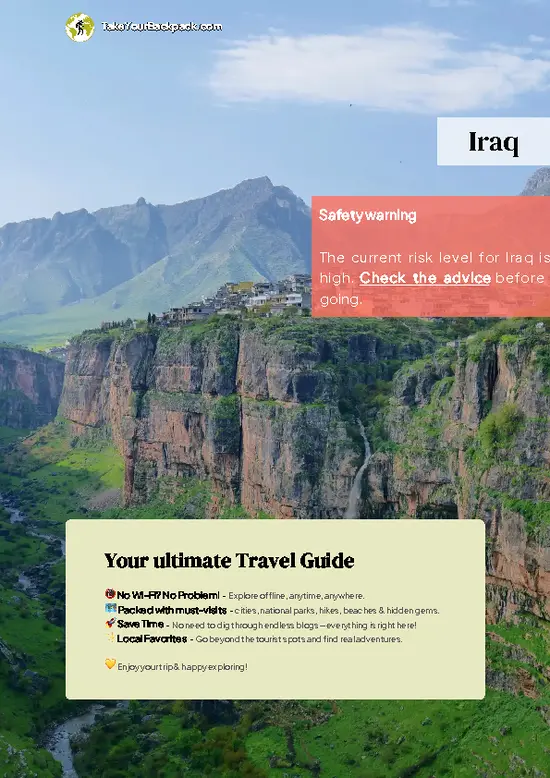
Safety warning

The current risk level for Iraq is high. Check the advice before going.


Get your Iraq guide
107 ranked highlights, routes & tips, works offline (375 pages)
Loading the map 🌍
CLICK TO FILTER
cities
towns
landmarks
national parks
hikes
beaches
attractions
festivals
regions
SHOW COUNTRY’S BESTSHOW ALL

✨ Why go?
Ranked #5 region in Iraq
Why Al-Anbar Desert should be on your travel list

Backpackers flock to the Al-Anbar Desert for a mix of adventure and culture that’s hard to beat. First off, the variety of landscapes is jaw-dropping. You’ve got vast sand dunes, rugged mountains, and ancient ruins all within reach. It’s like nature’s own buffet, and you can sample it all without constantly packing up your gear.

Then there’s the transport flexibility. Renting a local vehicle or hopping on a shared taxi lets you explore at your own pace. You can linger at a stunning sunset or dive into a bustling market without the pressure of a rigid schedule.

What really sets Al-Anbar apart is the chance to mix nature and culture seamlessly. Spend your mornings hiking through breathtaking terrain, then transition to afternoons exploring local traditions and cuisine. This slow travel approach … read more 👉
Backpackers flock to the Al-Anbar Desert for a mix of adventure and culture that’s hard to beat. First off, the variety of landscapes is jaw-dropping. You’ve got vast sand dunes, rugged mountains, and ancient ruins all within reach. It’s like nature’s own buffet, and you can sample it all without constantly packing up your gear.

Then there’s the transport flexibility. Renting a local vehicle or hopping on a shared taxi lets you explore at your own pace. You can linger at a stunning sunset or dive into a bustling market without the pressure of a rigid schedule.

What really sets Al-Anbar apart is the chance to mix nature and culture seamlessly. Spend your mornings hiking through breathtaking terrain, then transition to afternoons exploring local traditions and cuisine. This slow travel approach means you’re not just passing through; you’re soaking it all in. It’s about creating memories that stick, not just snapshots.
Want to include Al-Anbar Desert in your Iraq route?
Create a personalized Iraq itinerary that includes Al-Anbar Desert and the places that fit your trip — based on your travel style, budget, and available time. Get your route in seconds.

Generate my trip

💡 HighlightsKey sights and experiences for travelers

  1. Haditha Dam & Lake Qadisiyah — A massive engineering landmark on the Euphrates that has punched a big lake out of the desert. Cliffs, small reed islands and broad water views make it one of the few big “water” sights in western Iraq; locals fish here and the sunsets over the reservoir are surprisingly dramatic.
  2. Hit (Hīt) and the Bitumen Springs — Natural asphalt seeps right on the riverbank have been used since antiquity; you can still find the dark, tarry outcrops and the smell of bitumen in the air. It’s a weirdly tactile piece of Mesopotamian material culture and a unique natural feature you won’t find in many other desert regions.
  3. Anah old town and riverside ruins — A long-occupied Euphrates settlement with narrow lanes, crumbling riverfront houses, and palm groves. The setting — old
read more 👉
  1. Haditha Dam & Lake Qadisiyah — A massive engineering landmark on the Euphrates that has punched a big lake out of the desert. Cliffs, small reed islands and broad water views make it one of the few big “water” sights in western Iraq; locals fish here and the sunsets over the reservoir are surprisingly dramatic.
  2. Hit (Hīt) and the Bitumen Springs — Natural asphalt seeps right on the riverbank have been used since antiquity; you can still find the dark, tarry outcrops and the smell of bitumen in the air. It’s a weirdly tactile piece of Mesopotamian material culture and a unique natural feature you won’t find in many other desert regions.
  3. Anah old town and riverside ruins — A long-occupied Euphrates settlement with narrow lanes, crumbling riverfront houses, and palm groves. The setting — old masonry leaning toward the river — feels like a living fragment of Iraq’s riverine past and is great for slow wandering along the bank.
  4. Rawa old town and river islands (Hidden gem) — Small, whitewashed riverside houses, quiet canals and a handful of vegetated islets make Rawa a quietly photogenic spot on the Euphrates. Very few foreign visitors come; local boat rides and watching fishermen work at dawn are what make this place special.
  5. Lake Habbaniyah and the Habbaniya shoreline — A shallow lake with reedbeds and a long local history as a lakeside gathering place. You’ll find simple lakeside cafés, good birdwatching in migration season, and relics of the 20th-century RAF presence if you’re into modern history without the museum crowd.
  6. Ar-Rutbah town and surrounding desert (Hidden gem) — Rutbah is a genuine desert transit town with an old airstrip, wide horizons and fast, empty roads out to the deeper sands. Stay with a local family or a small guesthouse and use it as a base for sunrise dune walks, stars at night and raw Bedouin hospitality you won’t get nearer to the big cities.
  7. Al-Qa’im riverfront and frontier oasis — Where the Euphrates threads close to the western border and pockets of palm groves and market life persist. The long riverbanks, local date markets and the sense of a frontier town give you a slice of desert-riverside life that’s regionally specific.
  8. Desert dune camping & Bedouin nights (near Rawa / Al-Qa’im) — Pitch a camp outside a small town, spend the night under clear desert skies and get hosted tea and stories from Bedouin guides. The star fields, silence between winds and simple camp cuisine are an experience particular to this wide, empty landscape.
  9. Small tells and local archaeology along the Euphrates (around Anah & Haditha) (Hidden gem) — Scattered low mounds and ruined riverbank enclosures that don’t make guidebooks but are visible from the shore. They give a real sense of the deep, layered human story of the Euphrates — best appreciated slowly and with a local who knows the spots.
  10. Ramadi corniche and date markets — The city’s riverfront is where townsfolk gather, sell fresh local dates and watch the river traffic. It’s an easy place to connect with everyday Anbari life, sample local produce, and see how desert and river cultures merge in this governorate.
Spotted a mistake or missing something? Contact us.
⌛️ 5 daysSeeing the highlights in 5 days

Day 1: Ramadi
Start your journey in Ramadi, the heart of Al-Anbar. The transport system here is surprisingly efficient, with shared taxis and buses connecting you to key spots. Spend the day exploring the local markets and sampling street food. The bustling atmosphere is a perfect introduction to the region’s culture. You’ll want to acclimate to the heat and pace before heading deeper into the desert.

Day 2: Fallujah
From Ramadi, it’s a short ride to Fallujah. This city has a rich history, and you can visit the iconic mosques and memorials. The transport options are straightforward, but be mindful of timing; local buses can fill up quickly. Spend the afternoon wandering the streets, soaking in the stories etched into the walls. This is where you start to feel the pulse of Al-Anbar.

Day … read more 👉
Day 1: Ramadi
Start your journey in Ramadi, the heart of Al-Anbar. The transport system here is surprisingly efficient, with shared taxis and buses connecting you to key spots. Spend the day exploring the local markets and sampling street food. The bustling atmosphere is a perfect introduction to the region’s culture. You’ll want to acclimate to the heat and pace before heading deeper into the desert.

Day 2: Fallujah
From Ramadi, it’s a short ride to Fallujah. This city has a rich history, and you can visit the iconic mosques and memorials. The transport options are straightforward, but be mindful of timing; local buses can fill up quickly. Spend the afternoon wandering the streets, soaking in the stories etched into the walls. This is where you start to feel the pulse of Al-Anbar.

Day 3: Al-Qaim
Next, make your way to Al-Qaim, a bit further out. The journey takes longer, but it’s worth it. The landscape shifts dramatically, and you’ll see the vast desert stretching out before you. Here, you can explore ancient ruins and meet local tribes. This is where the real adventure begins, and the slower pace allows for deeper connections.

Day 4: Off-Path Reward: Lake Tharthar
Take a detour to Lake Tharthar. It’s a hidden spot where you can relax and enjoy the serene waters. The journey is a bit off the beaten path, but the tranquility is a refreshing break from the desert heat. You’ll find locals fishing and picnicking, giving you a taste of everyday life.

Day 5: Return to Ramadi
Wrap up your trip by heading back to Ramadi. Reflect on your experiences and grab any last-minute souvenirs. This day is essential for tying together the threads of your journey. The must-do experience? The local cuisine. Seek out a family-run restaurant for a meal that encapsulates the flavors of Al-Anbar. It’s the perfect way to end your adventure, leaving you with memories that linger long after you’ve left.
Turn your Al-Anbar Desert visit into an Iraq adventure
Build a complete Iraq route with Al-Anbar Desert, hidden gems, must-see destinations, and realistic travel times included.

Generate my trip

🌤️ When to go?Best time to visit Al-Anbar Desert


  • Weather: The Al-Anbar Desert is brutal in summer, with temperatures soaring above 45°C (113°F). Avoid June to August unless you’re a heat warrior. Winter months, December through February, offer a cool reprieve, hovering around 15-20°C (59-68°F), perfect for trekking without frying your skin.

  • Temperature swings: Nights can get surprisingly cold, dropping to near 5°C (41°F) in winter. Pack layers—you’ll want a warm jacket for evenings despite the daytime warmth.

  • Daylight hours: Expect roughly 10-12 hours of daylight in winter, stretching to 14 hours in summer. Early starts are your friend to beat the heat and catch the desert’s golden light.

  • Crowds: The desert sees few tourists year-round, but winter draws local travelers escaping city chills. You’ll find more company then, but still
read more 👉

  • Weather: The Al-Anbar Desert is brutal in summer, with temperatures soaring above 45°C (113°F). Avoid June to August unless you’re a heat warrior. Winter months, December through February, offer a cool reprieve, hovering around 15-20°C (59-68°F), perfect for trekking without frying your skin.

  • Temperature swings: Nights can get surprisingly cold, dropping to near 5°C (41°F) in winter. Pack layers—you’ll want a warm jacket for evenings despite the daytime warmth.

  • Daylight hours: Expect roughly 10-12 hours of daylight in winter, stretching to 14 hours in summer. Early starts are your friend to beat the heat and catch the desert’s golden light.

  • Crowds: The desert sees few tourists year-round, but winter draws local travelers escaping city chills. You’ll find more company then, but still nothing like a packed trail.

  • Seasonal activities: Winter is prime for camel treks and stargazing events, while spring brings wildflower blooms—rare but worth timing if you want that splash of color in the sand.

  • Price fluctuations: Off-peak summer months see lower prices but higher risks. Winter rates climb slightly due to demand but reward you with comfort and better experiences.


Pro-tip: Book your desert nights in winter early to snag the best guides and campsites—locals know this window is gold.


source: climatestotravel.comJANJanuary: excellent for travelingFEBFebruary: excellent for travelingMARMarch: highly recommended for travelingAPRApril: good for travelingMAYMay: fair for travelingJUNJune: below average for travelingJULJuly: below average for travelingAUGAugust: below average for travelingSEPSeptember: fair for travelingOCTOctober: good for travelingNOVNovember: highly recommended for travelingDECDecember: excellent for traveling
when-to-go

✈️ The backpacker research shortcutIraq Travel Guide

An offline-friendly backpacking guide with optimized travel routes, ranked highlights, transport advice, and the best areas to stay.
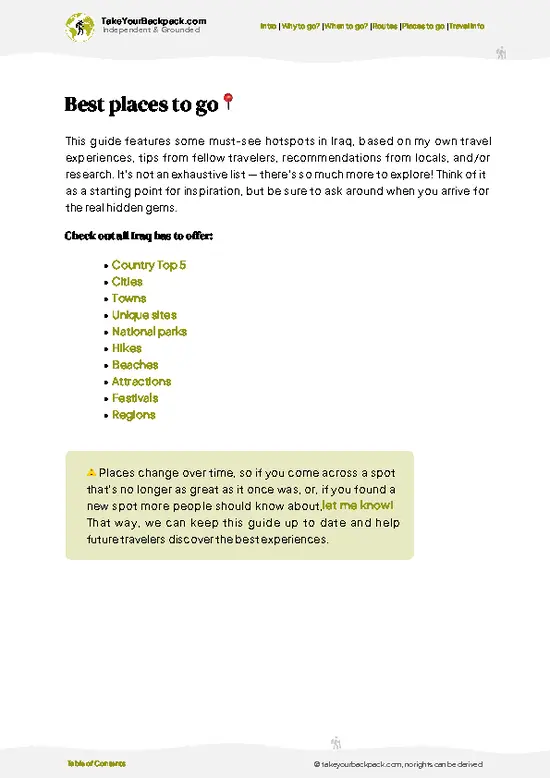
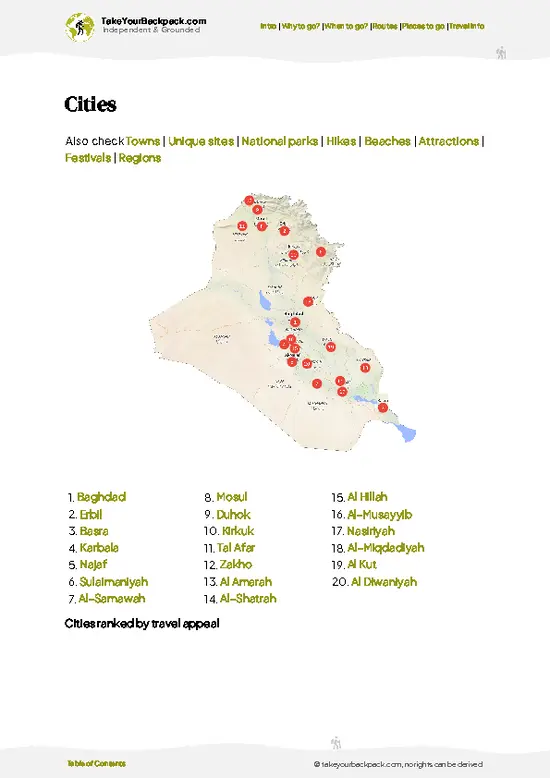
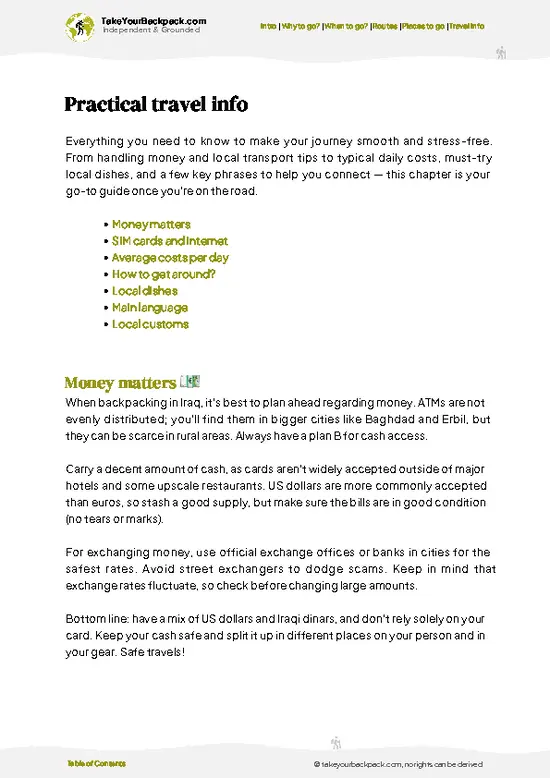
example page 0 from our offline Travel Guide for Iraq
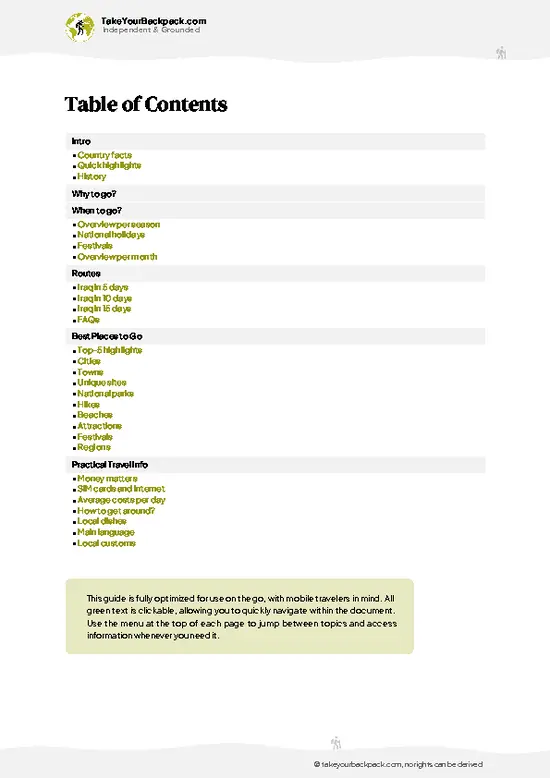
example page 1 from our offline Travel Guide for Iraq
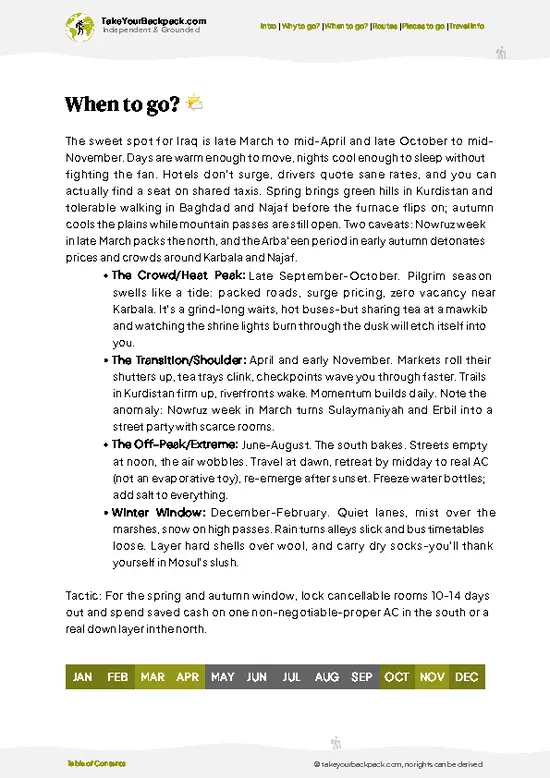
example page 2 from our offline Travel Guide for Iraq
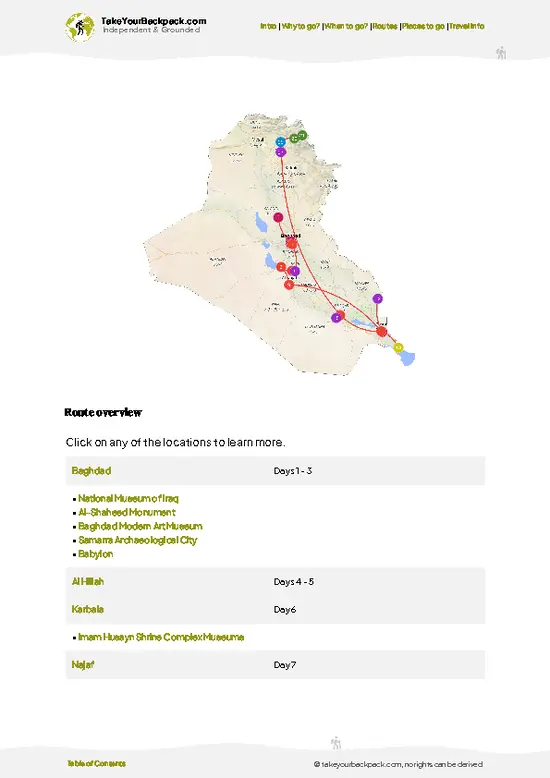
example page 3 from our offline Travel Guide for Iraq
example page 4 from our offline Travel Guide for Iraq
example page 5 from our offline Travel Guide for Iraq
example page 6 from our offline Travel Guide for Iraq
example page 7 from our offline Travel Guide for Iraq
The digital guide (375 pages) contains:
107 highlights, ranked by travel appeal
Optimized 5, 10 & 15-day travel routes
Cities, national parks, landmarks, beaches
How to get around
Offline-friendly for travel without Wi-Fi
👉 Click to see all 30+ guide features

📅 Plan smarter in minutes, not weeks
Month by month travel advice
Festivals & national holidays
Budget expectations

🗺️ Go to the right places, skip the overrated ones
Honest pros & cons of destinations
Top hikes, parks & viewpoints
Lesser-known places most travelers miss
Clear “worth it vs skip it” guidance

🛏️ Travel smoothly without rookie mistakes
Best areas to stay
Transport systems explained simply
Common scams & safety advice
SIM cards, money & practical tips

🌍 Understand the country, not just visit it
Culture & traditions
52 Essential phrases & customs
Festivals worth planning around
Traveler-friendly historical context
Insights that make places more meaningful

📱 Built for real travel conditions
Fully downloadable PDF
Works completely offline
Optimized for phone use
Useful in remote areas & buses
Everything in one place
Save weeks of stressful planning
Get instant access to your full guide. 30‑day money-back guarantee.


By proceeding you agree to our terms.
Sent to your inbox immediately after payment • 100% Secure Checkout
Best Backpacking Travel Advisor 2025 tourism awardBest Backpacking
Travel Advisor
2025
What others say about Take Your Backpack Guides:
⭐⭐⭐⭐⭐
Fantastic, amazing amount of information!
⭐⭐⭐⭐⭐
My goodness this is amazing, it's what I've been looking for hats off too you!
⭐⭐⭐⭐⭐
I think this is absolutely BRILLIANT
⭐⭐⭐⭐
Very complete and informative. It's still missing places, but I gotta to commend you
⭐⭐⭐⭐⭐
This is truly amazing, thank you, can't wait to explore it with my kids!
⭐⭐⭐⭐⭐
Awesome resource, thank you!
⭐⭐⭐⭐⭐
This is amazing! Can't wait to explore the ones I haven't seen
⭐⭐⭐⭐
I love this! Well done, great idea.
⭐⭐⭐⭐⭐
Thanks for taking the time to make this gem!
⭐⭐⭐⭐⭐
This might be the best website I've ever seen.
⭐⭐⭐⭐⭐
Congratulations, and thank you so much for your work; it's incredibly valuable.
⭐⭐⭐⭐
In all seriousness I think you did a great job pointing out the important spots
⭐⭐⭐⭐⭐
10/10 very good
⭐⭐⭐⭐⭐
As someone who's only just starting to visit regularly this is awesome, thank you.
⭐⭐⭐⭐
Thank you very much! I'm going to visit my dad, it's going to be very useful!
⭐⭐⭐⭐⭐
This is really cool! We'll be travelling for the first time and this definitely come in handy.
⭐⭐⭐⭐⭐
You are now our minister of culture, congratulations 👨‍💼
⭐⭐⭐⭐⭐
Just wanted to tell you that this is a pearl! Going to follow your recommendations.
⭐⭐⭐⭐⭐
This is so cool. I'll definitely be using the resource for my travels soon.
⭐⭐⭐⭐⭐
This is very impressive! Good work.
⭐⭐⭐⭐⭐
This is an amazing and informative site. Very well done!

🛏️ Where to stay?Where staying makes the most sense

When you’re navigating the Al-Anbar Desert, the right base can make all the difference. Start in Ramadi. It’s a city that’s been on the mend, and you’ll find a mix of local cafes and bustling markets. The vibe is friendly, and you can easily connect with locals who are eager to share their stories.

Next up, consider Fallujah. It’s often overlooked, but it’s rich in history and has a growing backpacker scene. The streets are alive with chatter, and you can find spots to grab a bite or sip tea while soaking in the atmosphere.

Don’t skip Haditha either. Nestled by the Euphrates, it’s a quieter … read more 👉
When you’re navigating the Al-Anbar Desert, the right base can make all the difference. Start in Ramadi. It’s a city that’s been on the mend, and you’ll find a mix of local cafes and bustling markets. The vibe is friendly, and you can easily connect with locals who are eager to share their stories.

Next up, consider Fallujah. It’s often overlooked, but it’s rich in history and has a growing backpacker scene. The streets are alive with chatter, and you can find spots to grab a bite or sip tea while soaking in the atmosphere.

Don’t skip Haditha either. Nestled by the Euphrates, it’s a quieter option with stunning views. The locals are welcoming, and you’ll find plenty of opportunities for outdoor adventures, like hiking or exploring ancient ruins.

Timing is key. Visit during the cooler months, ideally from November to March, to avoid the scorching heat. This way, you can enjoy the social scene without melting away. Each of these places offers a unique slice of life in the desert, making your journey not just about the destination, but the connections you forge along the way.

🚌 Getting aroundHow to get around Al-Anbar Desert

The Al-Anbar Desert is a realm where time feels elastic, bending to the whims of the sun and the rhythm of the wind. Here, schedules are more like suggestions than hard rules. You’ll find yourself navigating a landscape that’s both stark and beautiful, where the vastness invites exploration but also demands patience. The locals move with a casual confidence, often relying on intuition rather than a strict timetable. This isn’t a place for the rigidly organized; it’s for those who can embrace the unexpected, savoring the journey as much as the destination.


  • Shared Taxis: These are your best bet for getting around. They typically run from major towns like Ramadi to smaller villages. Expect to pay around 5,000 IQD for a ride, with departures whenever they fill up—usually within an hour or two.
read more 👉
The Al-Anbar Desert is a realm where time feels elastic, bending to the whims of the sun and the rhythm of the wind. Here, schedules are more like suggestions than hard rules. You’ll find yourself navigating a landscape that’s both stark and beautiful, where the vastness invites exploration but also demands patience. The locals move with a casual confidence, often relying on intuition rather than a strict timetable. This isn’t a place for the rigidly organized; it’s for those who can embrace the unexpected, savoring the journey as much as the destination.


  • Shared Taxis: These are your best bet for getting around. They typically run from major towns like Ramadi to smaller villages. Expect to pay around 5,000 IQD for a ride, with departures whenever they fill up—usually within an hour or two. They’re fast and can be a bit cramped, but you’ll get a taste of local life.


  • Minibuses: A step up in comfort, these can take you between larger cities and towns. Prices hover around 10,000 IQD, and they leave when full, often taking about 2-3 hours for longer routes. The ride is smoother, and you might even score a window seat for those sweeping desert views.


  • Private Car Rentals: If you’re feeling adventurous and want to explore at your own pace, renting a car can be a game-changer. Prices start around 50,000 IQD per day. Just be prepared for some rough patches and limited signage. This option gives you the freedom to stop and soak in the desert’s vastness.


  • Motorcycle Rentals: For the thrill-seekers, renting a motorcycle can be exhilarating. Expect to pay about 30,000 IQD per day. It’s a fantastic way to feel the wind and the sun on your skin, but make sure you’re comfortable with the terrain and local driving customs.


Master Tactical Tip: Always negotiate your fare before getting in, especially with shared taxis and minibuses. It’s part of the local culture and can save you from unexpected surprises. Plus, it’s a great way to break the ice with locals. Embrace the flow, and let the desert guide your adventure.

🍲 FoodEating & Drinking in Al-Anbar Desert

In the **Al-Anbar Desert**, food is a celebration of simplicity and flavor. You can’t miss the **kebabs**—grilled to perfection over open flames, they’re smoky and juicy, often served with fresh **flatbread**. Pair that with a side of **tabbouleh**, a zesty salad bursting with parsley, tomatoes, and a squeeze of lemon.

For a true local experience, hit up the **street vendors**. The aroma of **spiced rice** and **lamb** wafts through the air, inviting you to indulge. Don’t overlook the **chai**; it’s a ritual here, brewed strong and sweet, perfect for sipping while chatting with locals.

Markets are your best bet for authentic bites. Wander through stalls filled with **dates** and **nuts**, sampling as you go. Dining is often communal; expect to share dishes and stories. When invited to … read more 👉
In the **Al-Anbar Desert**, food is a celebration of simplicity and flavor. You can’t miss the **kebabs**—grilled to perfection over open flames, they’re smoky and juicy, often served with fresh **flatbread**. Pair that with a side of **tabbouleh**, a zesty salad bursting with parsley, tomatoes, and a squeeze of lemon.

For a true local experience, hit up the **street vendors**. The aroma of **spiced rice** and **lamb** wafts through the air, inviting you to indulge. Don’t overlook the **chai**; it’s a ritual here, brewed strong and sweet, perfect for sipping while chatting with locals.

Markets are your best bet for authentic bites. Wander through stalls filled with **dates** and **nuts**, sampling as you go. Dining is often communal; expect to share dishes and stories. When invited to eat, it’s customary to accept—refusing can be seen as impolite.

Remember, meals are often enjoyed sitting on the ground, so embrace the laid-back vibe. Just be mindful of your hands; using your right hand is the norm. This isn’t just food; it’s a way to connect with the heart of the desert.

Other Iraqi regions near Al-Anbar Desert

Explore more nearby:


💡 Not sure where to go next?
Create a personalized itinerary for Iraq including Al-Anbar Desert and the places that fit your trip.

Generate my itinerary

👉 Discover all regions

Or checkout all Iraq has to offer (think cities, towns, villages, national parks, hikes, beaches, festivals)
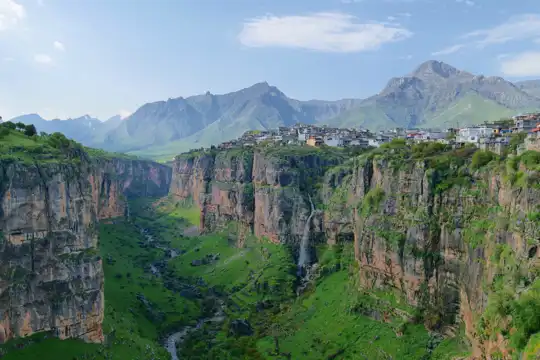
Country photo of Iraq

We 💚 feedbackWhat to keep in mind

The Al-Anbar Desert has a raw, unfiltered vibe that pulls you in. Expect vast, open spaces where the silence is almost palpable, and the sunsets? They’ll catch you off guard with their intensity. A surprise? The warmth of the locals; they’re curious and welcoming, eager to share stories over tea. Just a heads-up: the heat can be relentless. Stay hydrated and plan your outings for early morning or late afternoon. Trust me, it’s worth every moment.

✍️ Help improve this page!
The information on this page is based on in-depth research, insights shared by experienced travelers, and feedback from the local travel community in Iraq. While every effort is made to keep the information accurate and current, conditions can change — so if you spot anything incorrect or outdated, please get in touch.


🙋‍♂️ Give feedback

👋 Meet the founderWho’s Behind Take Your Backpack?

Johan, backpacker and founder of TakeYourBackpackHi, I’m Johan (Netherlands 🇳🇱), the creator of TakeYourBackpack. Over the past decade, I’ve backpacked through 80+ countries across six continents, gaining extensive experience with independent travel, long-term trips, and overland routes.

This site is built on a combination of firsthand travel experience and carefully curated insights from other backpackers. Many guides are based on places I’ve personally visited, while others bring together tips, observations, and practical advice shared by trusted travelers I’ve met along the way.

The goal is to provide realistic, experience-driven guidance — not generic itineraries — so you can explore destinations with better context, clearer expectations, and more confidence.

Get full Iraq guide •
Instant download • 107 highlights • Full Offline guide