

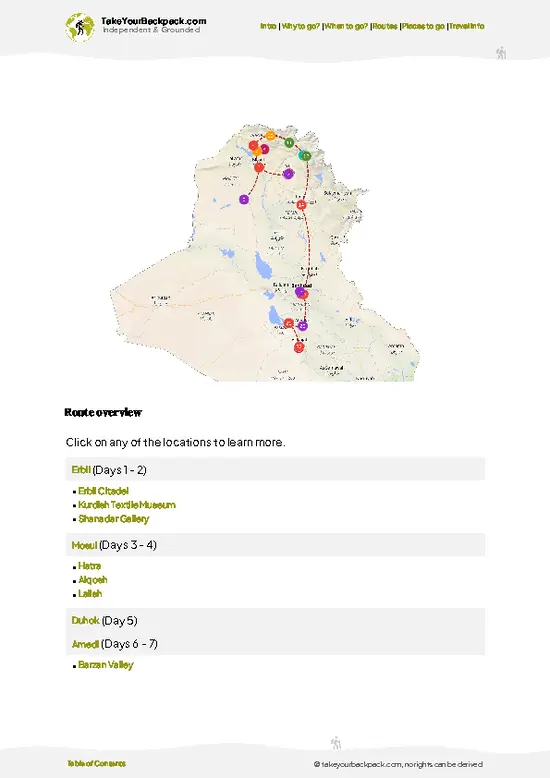
The Carpet Gallery
Forget the Instagram fantasy of endless, empty halls—this place is compact, and yes, you’ll share the space with a handful of other curious travelers and a few local families. But the carpets themselves? They’re the real showstoppers. These aren’t generic souvenirs; each rug is a living archive, handwoven by Kurdish women, with patterns that double as coded stories of love, war, and migration. You’ll spot tribal motifs you won’t find in any bazaar outside Kurdistan. The colors are earthy, sometimes faded, sometimes shockingly vibrant—evidence of natural dyes and decades of use. You can get close enough to see the knots and even smell the lanolin. No glass cases, no velvet ropes. Just you and the work of hands that have seen more history than most textbooks.
The Loom Demonstration
If … read more 👉
The Carpet Gallery
Forget the Instagram fantasy of endless, empty halls—this place is compact, and yes, you’ll share the space with a handful of other curious travelers and a few local families. But the carpets themselves? They’re the real showstoppers. These aren’t generic souvenirs; each rug is a living archive, handwoven by Kurdish women, with patterns that double as coded stories of love, war, and migration. You’ll spot tribal motifs you won’t find in any bazaar outside Kurdistan. The colors are earthy, sometimes faded, sometimes shockingly vibrant—evidence of natural dyes and decades of use. You can get close enough to see the knots and even smell the lanolin. No glass cases, no velvet ropes. Just you and the work of hands that have seen more history than most textbooks.
The Loom Demonstration
If you’re lucky enough to catch a live weaving session, stop everything. This isn’t a staged performance for tourists; it’s a working loom, operated by women who learned the craft from their grandmothers. The rhythm of the shuttle, the clack of the frame, the focus in the weaver’s eyes—it’s hypnotic. You’ll understand in five minutes why this skill is both art and survival. Ask questions. They’ll answer, sometimes with a smile, sometimes with a story.
Traditional Kurdish Dress Exhibit
Skip the costume shop photo ops. Here, you’ll see actual garments worn for weddings, festivals, and daily life—some over a century old. The embroidery is dense, the colors unapologetically bold. Each piece is a lesson in regional identity, stitched by hand, often with silver thread or coins sewn right into the fabric. You’ll leave knowing the difference between a Sorani and a Badini dress, and why that matters.
The Courtyard
Step outside for a minute. The museum’s stone courtyard is a microcosm of Erbil’s old city—sun-bleached, a little rough around the edges, but alive with conversation and the smell of strong tea. It’s the best place to decompress, people-watch, and let the sensory overload of the galleries settle in. If you want a photo that actually feels like Kurdistan, this is where you’ll get it.
Spotted a mistake or missing something? Contact us.

 Best Backpacking
 Hi, I’m Johan (Netherlands 🇳🇱), the creator of TakeYourBackpack. Over the past 3 decades, I’ve backpacked through 90+ countries across six continents, gaining extensive experience with independent travel, long-term trips, and overland routes.