×

Iraq🇮🇶 | landmarksQasr al-ShirqatAssyrian palace, riverbank cliffs, carved reliefs, archaeological layers | things to do and best time to go

Explore KhadimiyahExplore Samarra

Backpacking in Qasr al-Shirqat
👀 For curious travelersunique site ranked #8
By Johan Kruseman 🇳🇱 | Updated June 7, 2026

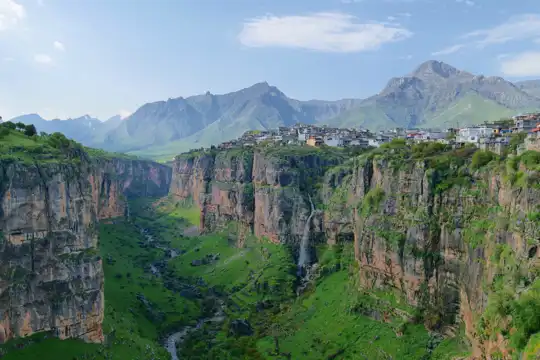
Everyone talks about Qasr al‑Shirqat like it’s just another “ancient ruins” photo stop, but the real reason to come isn’t a single postcard shot; it’s the feeling of standing in a half-forgotten Assyrian stronghold on a bend of the Tigris, in Salah al-Din Governorate in northern Iraq, with almost no one else around. For backpackers, this place is equal parts awe and effort. The wow-factor is real if you care about deep-time history and can see past erosion and neglect; if you want polished museum-style ruins, you’ll be underwhelmed. Access and security logistics can be complicated, and you won’t find cheap, easy public transport or café culture at the gate. But the lack of crowds, raw atmosphere, and heavy sense of story make every photo feel earned, not staged.

Discover everything you want to know in the 📖 Iraq Travel Guide.
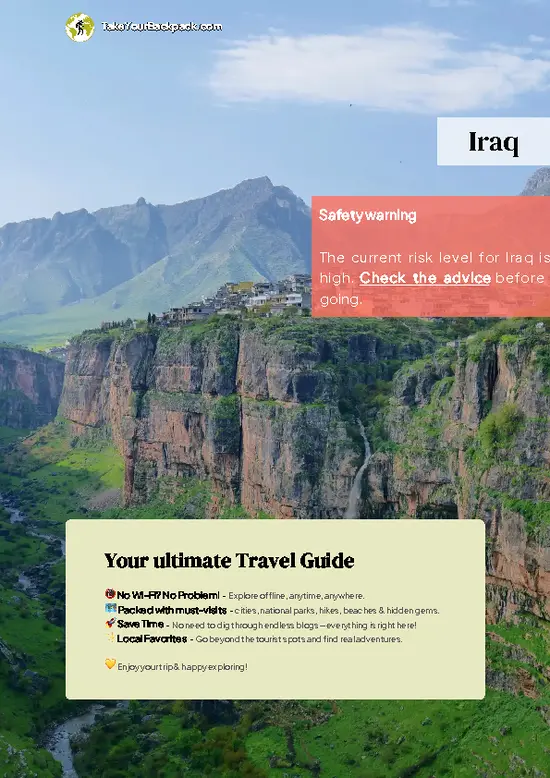
Safety warning

The current risk level for Iraq is high. Check the advice before going.


Get your Iraq guide
107 ranked highlights, routes & tips, works offline (375 pages)
Loading the map 🌍
CLICK TO FILTER
cities
towns
landmarks
national parks
hikes
beaches
attractions
festivals
regions
SHOW COUNTRY’S BESTSHOW ALL

✨ Why go?
Ranked #8 unique site in Iraq
What makes this unique site worth visiting

Qasr al-Shirqat isn’t just another dusty ruin; it’s a gateway to understanding Iraq’s rich history. Yes, you’ll encounter crowds—but they’re mostly locals, eager to share stories and insights that no guidebook can provide. The cost? Minimal. You can explore this ancient site without breaking the bank, making it a smart stop for budget-conscious travelers.

What sets Qasr al-Shirqat apart is its uniqueness. This isn’t just a pile of stones; it’s a testament to the architectural prowess of the ancient world, with intricate designs that tell tales of a bygone era. It fits seamlessly into a broader route through Iraq, allowing you to experience the diverse landscapes and cultures of the region.

Make time for this site. It’s not just about the Instagram shot; it’s about the authentic connectionsread more 👉
Qasr al-Shirqat isn’t just another dusty ruin; it’s a gateway to understanding Iraq’s rich history. Yes, you’ll encounter crowds—but they’re mostly locals, eager to share stories and insights that no guidebook can provide. The cost? Minimal. You can explore this ancient site without breaking the bank, making it a smart stop for budget-conscious travelers.

What sets Qasr al-Shirqat apart is its uniqueness. This isn’t just a pile of stones; it’s a testament to the architectural prowess of the ancient world, with intricate designs that tell tales of a bygone era. It fits seamlessly into a broader route through Iraq, allowing you to experience the diverse landscapes and cultures of the region.

Make time for this site. It’s not just about the Instagram shot; it’s about the authentic connections you’ll forge and the insights you’ll gain. Trust me, this is where the real magic happens.
Want to include Qasr al-Shirqat in your Iraq route?
Create a personalized Iraq itinerary that includes Qasr al-Shirqat and the places that fit your trip — based on your travel style, budget, and available time. Get your route in seconds.

Generate my trip

💡 HighlightsMust-see experiences and standout moments

  • The crumbling citadel walls — big, chunky masonry that still reads as a defensive place: towers, curtain walls and collapsed chambers that give a real sense of scale and of a fortress you can walk through rather than just gape at from a distance.
  • Riverfront setting on the Tigris — the site sits next to the river, so you get the waterline, old landing points and wide river vistas that explain why the spot mattered for trade and movement. Sunrise or late-afternoon light makes the stone and water glow.
  • Reused stonework and architectural details — look closely and you’ll see blocks and carved fragments repurposed into later walls, plus doorways, arch remnants and mason’s marks that show different construction phases stacked on top of each other.
  • Layers of occupation (a real palimpsest)
read more 👉
  • The crumbling citadel walls — big, chunky masonry that still reads as a defensive place: towers, curtain walls and collapsed chambers that give a real sense of scale and of a fortress you can walk through rather than just gape at from a distance.
  • Riverfront setting on the Tigris — the site sits next to the river, so you get the waterline, old landing points and wide river vistas that explain why the spot mattered for trade and movement. Sunrise or late-afternoon light makes the stone and water glow.
  • Reused stonework and architectural details — look closely and you’ll see blocks and carved fragments repurposed into later walls, plus doorways, arch remnants and mason’s marks that show different construction phases stacked on top of each other.
  • Layers of occupation (a real palimpsest) — pottery sherds, foundations and wall repairs reveal multiple eras of use. You’ll leave with a clear impression that people kept coming back here for centuries, each leaving a patchwork of changes.
  • The lookout points and panoramas — climb what’s safe and you’ll get sweeping views of the surrounding plain, the river bend and nearby settlements. Great for framing photos and for imagining the military logic of the place.
  • Local village life and hospitality — the site is still part of a living landscape: farmers, shepherds and small markets nearby mean you can combine ruins with a cup of tea and a chat, which adds cultural color to the visit.
  • Birdlife and riverside nature — the river corridor attracts waders and migrating species; even in a quick stop you’ll notice reeds, birds and the quieter side of Iraqi river ecosystems—handy for a relaxed hour away from the stones.
Spotted a mistake or missing something? Contact us.
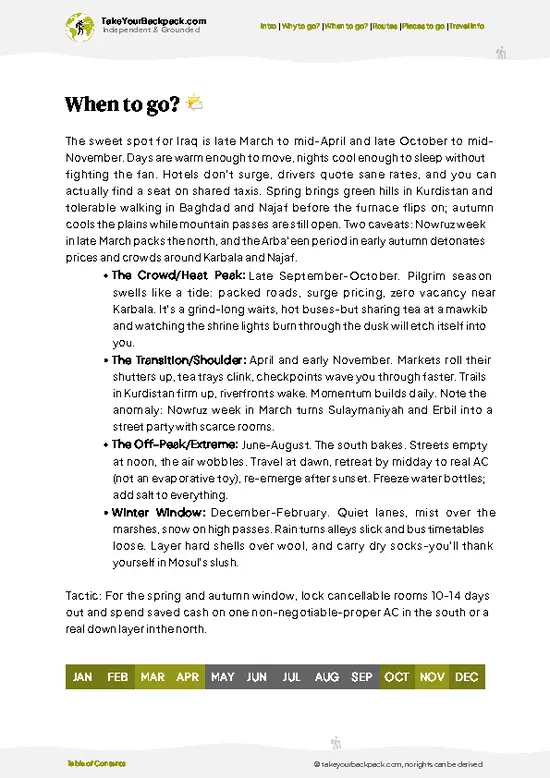
🌤️ When to go?Choosing the right time of year


  • Weather: The brutal Iraqi summers hit Qasr al-Shirqat with highs often soaring above 45°C (113°F), making midday exploration a sweat-drenched slog. Winters are mild and dry, with temperatures ranging from 10°C to 20°C (50°F to 68°F), perfect for wandering without overheating or freezing.

  • Temperature: Spring and autumn offer the sweet spot—daytime temps hover between 20°C and 30°C (68°F to 86°F), comfortable for long hikes and photography without the oppressive heat or chill.

  • Daylight Hours: Expect roughly 11 to 13 hours of daylight year-round. Longer days in summer mean more time to explore but also more sun exposure, so early starts are key.

  • Crowds: Forget Instagram’s empty shots. Qasr al-Shirqat sees a trickle of local tourists mainly during cooler months. Peak season (late autumn
read more 👉

  • Weather: The brutal Iraqi summers hit Qasr al-Shirqat with highs often soaring above 45°C (113°F), making midday exploration a sweat-drenched slog. Winters are mild and dry, with temperatures ranging from 10°C to 20°C (50°F to 68°F), perfect for wandering without overheating or freezing.

  • Temperature: Spring and autumn offer the sweet spot—daytime temps hover between 20°C and 30°C (68°F to 86°F), comfortable for long hikes and photography without the oppressive heat or chill.

  • Daylight Hours: Expect roughly 11 to 13 hours of daylight year-round. Longer days in summer mean more time to explore but also more sun exposure, so early starts are key.

  • Crowds: Forget Instagram’s empty shots. Qasr al-Shirqat sees a trickle of local tourists mainly during cooler months. Peak season (late autumn to early spring) brings manageable crowds, but it’s never a crush.

  • Seasonal Activities: Spring’s wildflowers and autumn’s mild breezes add unexpected charm. Winter nights can be chilly, so pack layers if you camp nearby.

  • Price Fluctuations: Prices for guides and accommodations spike slightly in peak season but remain reasonable compared to global hotspots. Off-season deals exist but come with weather trade-offs.


Pro-tip: Aim for late October to early December—cool temps, fewer crowds, and the landscape shows its raw, rugged beauty without the Instagram gloss.


source: climatestotravel.comJANJanuary: highly recommended for travelingFEBFebruary: highly recommended for travelingMARMarch: highly recommended for travelingAPRApril: good for travelingMAYMay: fair for travelingJUNJune: below average for travelingJULJuly: below average for travelingAUGAugust: below average for travelingSEPSeptember: fair for travelingOCTOctober: excellent for travelingNOVNovember: excellent for travelingDECDecember: highly recommended for traveling
when-to-go

✈️ The backpacker research shortcutIraq Travel Guide

An offline-friendly backpacking guide with optimized travel routes, ranked highlights, transport advice, and the best areas to stay.
example page 0 from our offline Travel Guide for Iraq
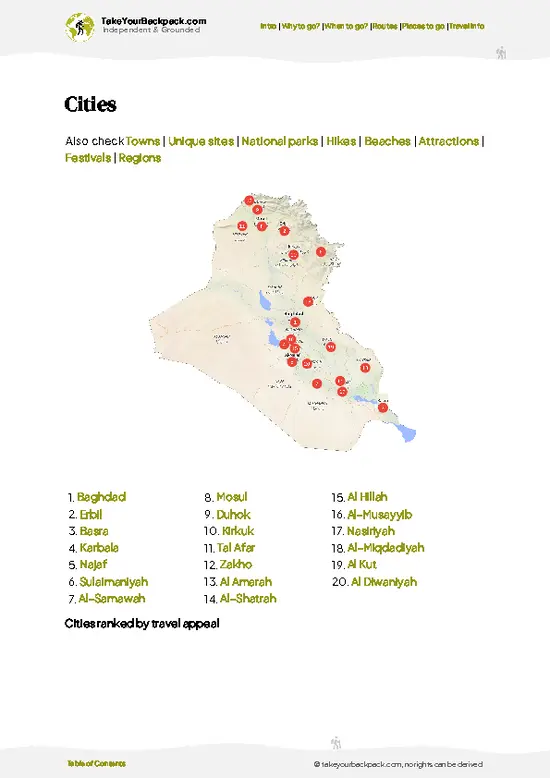
example page 1 from our offline Travel Guide for Iraq
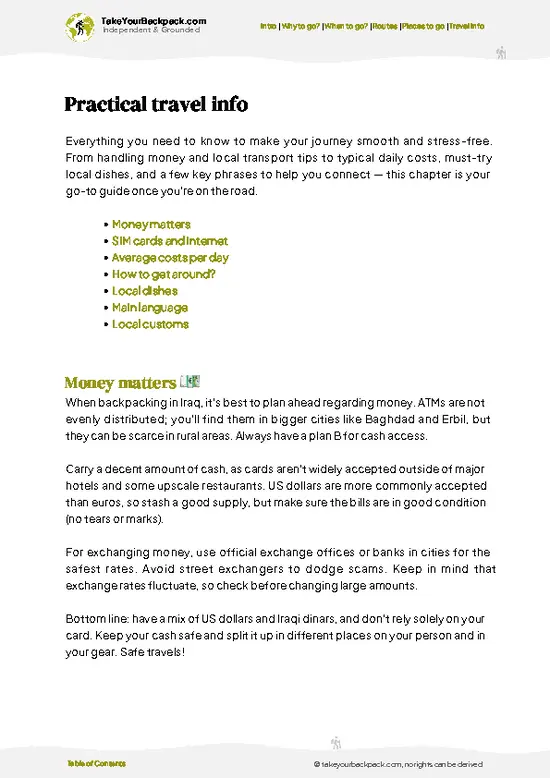
example page 2 from our offline Travel Guide for Iraq
example page 3 from our offline Travel Guide for Iraq
example page 4 from our offline Travel Guide for Iraq
example page 5 from our offline Travel Guide for Iraq
example page 6 from our offline Travel Guide for Iraq
example page 7 from our offline Travel Guide for Iraq
The digital guide (375 pages) contains:
107 highlights, ranked by travel appeal
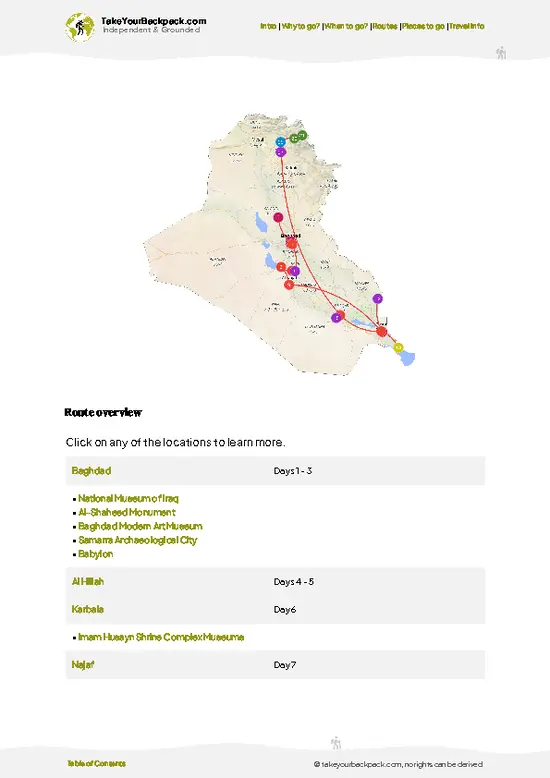
Optimized 5, 10 & 15-day travel routes
Cities, national parks, landmarks, beaches
How to get around
Offline-friendly for travel without Wi-Fi
👉 Click to see all 30+ guide features

📅 Plan smarter in minutes, not weeks
Month by month travel advice
Festivals & national holidays
Budget expectations

🗺️ Go to the right places, skip the overrated ones
Honest pros & cons of destinations
Top hikes, parks & viewpoints
Lesser-known places most travelers miss
Clear “worth it vs skip it” guidance

🛏️ Travel smoothly without rookie mistakes
Best areas to stay
Transport systems explained simply
Common scams & safety advice
SIM cards, money & practical tips

🌍 Understand the country, not just visit it
Culture & traditions
52 Essential phrases & customs
Festivals worth planning around
Traveler-friendly historical context
Insights that make places more meaningful

📱 Built for real travel conditions
Fully downloadable PDF
Works completely offline
Optimized for phone use
Useful in remote areas & buses
Everything in one place
Save weeks of stressful planning
Get instant access to your full guide. 30‑day money-back guarantee.


By proceeding you agree to our terms.
Sent to your inbox immediately after payment • 100% Secure Checkout
Best Backpacking Travel Advisor 2025 tourism awardBest Backpacking
Travel Advisor
2025
What others say about Take Your Backpack Guides:
⭐⭐⭐⭐⭐
Fantastic, amazing amount of information!
⭐⭐⭐⭐⭐
My goodness this is amazing, it's what I've been looking for hats off too you!
⭐⭐⭐⭐⭐
I think this is absolutely BRILLIANT
⭐⭐⭐⭐
Very complete and informative. It's still missing places, but I gotta to commend you
⭐⭐⭐⭐⭐
This is truly amazing, thank you, can't wait to explore it with my kids!
⭐⭐⭐⭐⭐
Awesome resource, thank you!
⭐⭐⭐⭐⭐
This is amazing! Can't wait to explore the ones I haven't seen
⭐⭐⭐⭐
I love this! Well done, great idea.
⭐⭐⭐⭐⭐
Thanks for taking the time to make this gem!
⭐⭐⭐⭐⭐
This might be the best website I've ever seen.
⭐⭐⭐⭐⭐
Congratulations, and thank you so much for your work; it's incredibly valuable.
⭐⭐⭐⭐
In all seriousness I think you did a great job pointing out the important spots
⭐⭐⭐⭐⭐
10/10 very good
⭐⭐⭐⭐⭐
As someone who's only just starting to visit regularly this is awesome, thank you.
⭐⭐⭐⭐
Thank you very much! I'm going to visit my dad, it's going to be very useful!
⭐⭐⭐⭐⭐
This is really cool! We'll be travelling for the first time and this definitely come in handy.
⭐⭐⭐⭐⭐
You are now our minister of culture, congratulations 👨‍💼
⭐⭐⭐⭐⭐
Just wanted to tell you that this is a pearl! Going to follow your recommendations.
⭐⭐⭐⭐⭐
This is so cool. I'll definitely be using the resource for my travels soon.
⭐⭐⭐⭐⭐
This is very impressive! Good work.
⭐⭐⭐⭐⭐
This is an amazing and informative site. Very well done!

🛏️ Where to stay?Best areas to stay in Iraq

Staying near Qasr al-Shirqat, Iraq, can feel like stepping into a history book, but let’s cut through the hype. The area is not overrun with tourists, which is a plus, but that also means fewer options.

Focus on the town of Shirqat itself. It’s a small, bustling place where you can find local guesthouses that offer a glimpse into daily life. These spots are often run by families who are eager to share stories over a cup of tea. You’ll feel the warmth of genuine hospitality here, which is a refreshing change from sterile hotel chains.

Safety is a concern, so stick to well-trodden paths and engage … read more 👉
Staying near Qasr al-Shirqat, Iraq, can feel like stepping into a history book, but let’s cut through the hype. The area is not overrun with tourists, which is a plus, but that also means fewer options.

Focus on the town of Shirqat itself. It’s a small, bustling place where you can find local guesthouses that offer a glimpse into daily life. These spots are often run by families who are eager to share stories over a cup of tea. You’ll feel the warmth of genuine hospitality here, which is a refreshing change from sterile hotel chains.

Safety is a concern, so stick to well-trodden paths and engage with locals. They can guide you to the best places to eat and explore. The social scene is low-key but authentic; you might find yourself sharing a meal with fellow travelers or locals, swapping stories and laughter.

If you’re looking for a more communal vibe, consider nearby towns with shared accommodations. Just remember, the real magic lies in the connections you make and the stories you gather along the way.

👛 Costs (as of 8 June 2026)What things cost and how to budget

Visiting Qasr al-Shirqat in Iraq is an adventure that comes with its own set of costs. Here’s a breakdown to help you plan without the fluff.
  • Entry Fees: Expect to pay around $5 to $10 for entry. This fee supports site maintenance and gives you access to the ruins. It’s a small price for a glimpse into history.
  • Transportation: Getting there can vary widely. If you’re traveling from Baghdad, a taxi might cost you between $100 to $150 one way. Public transport is cheaper but less reliable. Budget around $20 to $30 if you’re brave enough to navigate local buses.
  • Accommodation: Options are limited but available. A basic hotel room in nearby towns can range from $30 to $60 per night. For a more comfortable stay, expect to pay $70 to $100. Booking ahead is wise, especially during peak seasons.
  • Food:
read more 👉
Visiting Qasr al-Shirqat in Iraq is an adventure that comes with its own set of costs. Here’s a breakdown to help you plan without the fluff.
  • Entry Fees: Expect to pay around $5 to $10 for entry. This fee supports site maintenance and gives you access to the ruins. It’s a small price for a glimpse into history.
  • Transportation: Getting there can vary widely. If you’re traveling from Baghdad, a taxi might cost you between $100 to $150 one way. Public transport is cheaper but less reliable. Budget around $20 to $30 if you’re brave enough to navigate local buses.
  • Accommodation: Options are limited but available. A basic hotel room in nearby towns can range from $30 to $60 per night. For a more comfortable stay, expect to pay $70 to $100. Booking ahead is wise, especially during peak seasons.
  • Food: Local eateries are affordable. A meal can cost anywhere from $5 to $15. Street food is even cheaper, but always check for freshness. It’s a great way to taste local flavors without breaking the bank.
  • Guided Tours: If you want deeper insights, consider a guide. Prices typically range from $50 to $100 for a half-day tour. This can enhance your experience significantly, especially in a place rich with history.

These costs can fluctuate based on the season and local conditions, but this gives you a solid framework. Prepare for an experience that’s raw and real, far from the polished images you see online.
⚠️ Prices can change and everyone travels differently, so take this as a rough guide. Hope it helps you plan your adventure!

Other Iraqi landmarks near Qasr al-Shirqat

Explore more nearby:

  • Hatra—stone temples, circular fortifications, Greco-Parthian carvings, desert isolation| 45 km away
  • Erbil Citadel—hilltop mound, layered settlements, Kurdish heritage, panoramic views| 104 km away
  • Samarra—spiral minaret, Abbasid mosque, river plain, brickwork patterns| 162 km away

💡 Not sure where to go next?
Create a personalized itinerary for Iraq including Qasr al-Shirqat and the places that fit your trip.

Generate my itinerary

👉 Discover all landmarks

Or checkout all Iraq has to offer (think cities, towns, villages, national parks, hikes, beaches, festivals)
Country photo of Iraq

We 💚 feedbackSumming up the experience

Qasr al-Shirqat isn’t just a stop; it’s a vibe. The ruins whisper stories of ancient empires, but don’t expect solitude. Crowds can be a buzzkill, especially during peak times. The best surprise? The locals. They’re genuinely welcoming and eager to share their history. Just be ready for the heat—bring plenty of water. This place has a pulse that’s worth feeling, but it demands respect and preparation.

✍️ Help improve this page!
The information on this page is based on in-depth research, insights shared by experienced travelers, and feedback from the local travel community in Iraq. While every effort is made to keep the information accurate and current, conditions can change — so if you spot anything incorrect or outdated, please get in touch.


🙋‍♂️ Give feedback

👋 Meet the founderWho’s Behind Take Your Backpack?

Johan, backpacker and founder of TakeYourBackpackHi, I’m Johan (Netherlands 🇳🇱), the creator of TakeYourBackpack. Over the past decade, I’ve backpacked through 80+ countries across six continents, gaining extensive experience with independent travel, long-term trips, and overland routes.

This site is built on a combination of firsthand travel experience and carefully curated insights from other backpackers. Many guides are based on places I’ve personally visited, while others bring together tips, observations, and practical advice shared by trusted travelers I’ve met along the way.

The goal is to provide realistic, experience-driven guidance — not generic itineraries — so you can explore destinations with better context, clearer expectations, and more confidence.

Get full Iraq guide •
Instant download • 107 highlights • Full Offline guide