v2.webp)
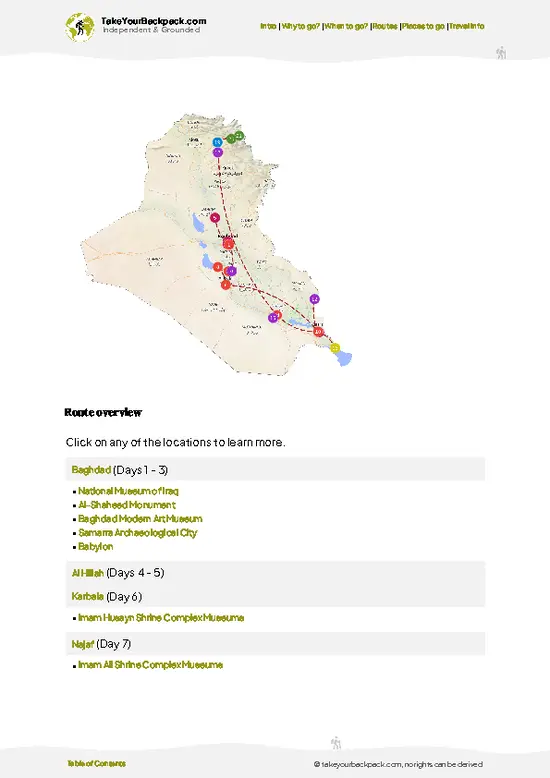
- Malwiya Minaret (Great Mosque spiral) — That corkscrew tower is the image everyone thinks of: a 9th-century spiral ramp that rises above the plain and still reads as unapologetically monumental. It’s architecture you can’t miss, and from afar it tells you this was once the Abbasid capital on a grand scale.
- Great Mosque of Samarra — Once one of the largest mosques in the world, its vast footprint and surviving brickwork give a real sense of Abbasid ambition. The scale and layout are extraordinary for a 9th-century city; seeing the remains helps you imagine what a medieval megacity looked like.
- Abu Dulaf Mosque and minaret — A quieter sibling to the Malwiya, Abu Dulaf’s mosque has its own towering minaret and simpler, raw charm. It’s less crowded, so you can linger on the form and the way
- Malwiya Minaret (Great Mosque spiral) — That corkscrew tower is the image everyone thinks of: a 9th-century spiral ramp that rises above the plain and still reads as unapologetically monumental. It’s architecture you can’t miss, and from afar it tells you this was once the Abbasid capital on a grand scale.
- Great Mosque of Samarra — Once one of the largest mosques in the world, its vast footprint and surviving brickwork give a real sense of Abbasid ambition. The scale and layout are extraordinary for a 9th-century city; seeing the remains helps you imagine what a medieval megacity looked like.
- Abu Dulaf Mosque and minaret — A quieter sibling to the Malwiya, Abu Dulaf’s mosque has its own towering minaret and simpler, raw charm. It’s less crowded, so you can linger on the form and the way light plays on the ancient bricks.
- Al-Askari Shrine (Golden Mosque) — One of Shia Islam’s major shrines with a famously gilded dome; its spiritual and cultural importance for Iraqis is huge. Parts were damaged in the past and later restored, which makes visiting a reminder of both loss and resilience.
- Samarra Archaeological City (palaces and urban plan) — The archaeological zone isn’t just isolated monuments but the bones of a whole capital: palace platforms, street traces and fortifications that show deliberate urban planning. UNESCO protects the site, and wandering among the ruins gives a strong sense of Islamic history in the making.
- Samarra-style stucco and decorative art — Look closely at the ruins and museum pieces and you’ll spot a distinctive stucco vocabulary — swirls, vegetal motifs and rhythmic patterns that influenced Islamic art for centuries. It’s a treat if you like architectural detail and craft history.
- Tigris riverfront and local life — The city sits on the Tigris, so evenings near the river and a browse through small markets give a taste of everyday Iraq beyond the archaeology. It’s practical, human and often the most memorable part of a visit — plain tea, river views, and local conversation.
Spotted a mistake or missing something? Contact us.

 Best Backpacking
.jpg) Hi, I’m Johan (Netherlands 🇳🇱), the creator of TakeYourBackpack. Over the past decade, I’ve backpacked through 80+ countries across six continents, gaining extensive experience with independent travel, long-term trips, and overland routes.
Hi, I’m Johan (Netherlands 🇳🇱), the creator of TakeYourBackpack. Over the past decade, I’ve backpacked through 80+ countries across six continents, gaining extensive experience with independent travel, long-term trips, and overland routes.