×

Israel🇮🇱 | attractionsCarmel Marketproduce stalls, street food, local spices, bustling alleys | things to do and best time to go

Explore ANU – Museum of the Jewish PeopleExplore Jaffa Old Port and Flea Market

Backpacking in Carmel Market
👍 Recommendedattraction ranked #8
By Johan Kruseman 🇳🇱 | Updated September 4, 2026

Carmel Market isn’t just Tel Aviv’s tourist bazaar—it’s the city’s unofficial open-air comedy club, where the banter between vendors is as sharp as the scent of cumin and the price of a pomegranate can drop by half if you haggle with a smile. Smack in the heart of Tel Aviv, this market is a sensory overload: yes, it’s crowded, yes, you’ll dodge elbows and selfie sticks, and yes, prices spike for the unprepared. But here’s the kicker—locals actually shop here, and if you wander past the main drag, you’ll find hole-in-the-wall hummus joints and spice stalls that never make it to Instagram. Compared to Jerusalem’s Mahane Yehuda, Carmel is less polished, more chaotic, and a lot more fun if you’re game for the hustle.

Discover everything you want to know in the 📖 Israel Travel Guide.
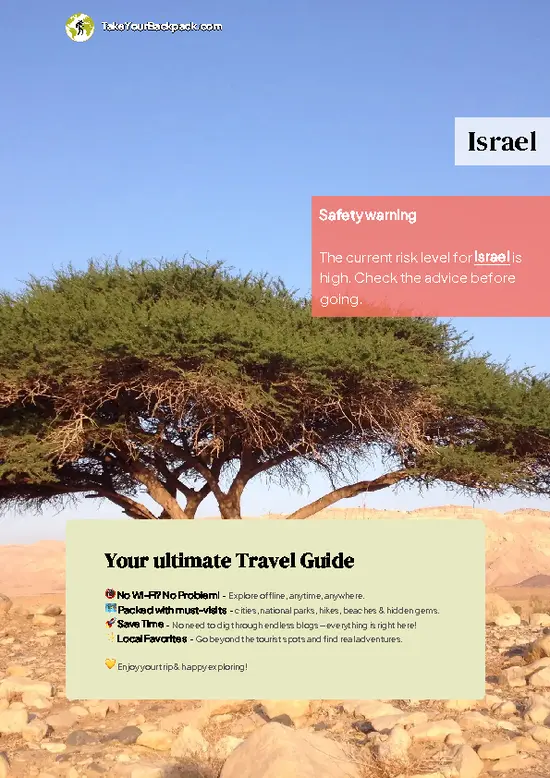
Safety warning

The current risk level for Israel is high. Check the advice before going.


Get your Israel guide
81 ranked highlights, routes & tips, works offline (299 pages)
Loading the map 🌍
CLICK TO FILTER
cities
towns
villages
landmarks
national parks
hikes
beaches
attractions
festivals
regions
SHOW COUNTRY’S BESTSHOW ALL

✨ Why go?
Ranked #8 attraction in Israel
Why Carmel Market should be on your travel list

Carmel Market in Tel Aviv is not some Instagram-perfect postcard where every corner is a photo op without effort. Yes, it’s crowded—shoulder-to-shoulder with locals and tourists alike—and prices can spike if you don’t haggle hard or know where to look. But here’s the real deal: this market is the beating heart of Tel Aviv’s daily life, a chaotic symphony of smells, sounds, and colors that no staged tour can replicate. It’s where you taste the pulse of Israel’s diverse cultures, from fresh za’atar and olives to sizzling street food that hits your senses like a wake-up call. The market’s history runs deep, evolving from a humble farmers’ bazaar into a sprawling urban hub that reflects the country’s complex identity. For backpackers, it’s a milestone—a place to test your bargaining skills, dive … read more 👉
Carmel Market in Tel Aviv is not some Instagram-perfect postcard where every corner is a photo op without effort. Yes, it’s crowded—shoulder-to-shoulder with locals and tourists alike—and prices can spike if you don’t haggle hard or know where to look. But here’s the real deal: this market is the beating heart of Tel Aviv’s daily life, a chaotic symphony of smells, sounds, and colors that no staged tour can replicate. It’s where you taste the pulse of Israel’s diverse cultures, from fresh za’atar and olives to sizzling street food that hits your senses like a wake-up call. The market’s history runs deep, evolving from a humble farmers’ bazaar into a sprawling urban hub that reflects the country’s complex identity. For backpackers, it’s a milestone—a place to test your bargaining skills, dive into local rhythms, and fuel up before hitting the next leg of your journey. Skip it, and you miss the gritty, unfiltered soul of Israeli street life.
Want to include Carmel Market in your Israel route?
Create a personalized Israel itinerary that includes Carmel Market and the places that fit your trip — based on your travel style, budget, and available time. Get your route in seconds.

Generate my trip

💡 HighlightsKey sights and experiences for travelers

The Produce Gauntlet
Forget the Instagram shots of perfect pomegranates. Carmel Market’s fruit and vegetable stands are a full-contact sport. You’ll dodge locals haggling over tomatoes, get barked at by vendors, and—if you’re lucky—score a taste of something you’ve never seen outside a Middle Eastern cookbook. The real thrill is in the chaos: the shouts, the smells, the sticky fingers from a wedge of fresh sabra (prickly pear). This is the market’s heartbeat, not a curated photo op.


Sabich and Bourekas Stalls
You can eat your way through Tel Aviv, but Carmel Market is where the city’s carb game hits its peak. Sabich—eggplant, egg, and amba sauce stuffed in pita—comes hot, messy, and unapologetically filling. Bourekas, those flaky, cheese-stuffed pastries, are sold by the kilo and best eaten … read more 👉
The Produce Gauntlet
Forget the Instagram shots of perfect pomegranates. Carmel Market’s fruit and vegetable stands are a full-contact sport. You’ll dodge locals haggling over tomatoes, get barked at by vendors, and—if you’re lucky—score a taste of something you’ve never seen outside a Middle Eastern cookbook. The real thrill is in the chaos: the shouts, the smells, the sticky fingers from a wedge of fresh sabra (prickly pear). This is the market’s heartbeat, not a curated photo op.


Sabich and Bourekas Stalls
You can eat your way through Tel Aviv, but Carmel Market is where the city’s carb game hits its peak. Sabich—eggplant, egg, and amba sauce stuffed in pita—comes hot, messy, and unapologetically filling. Bourekas, those flaky, cheese-stuffed pastries, are sold by the kilo and best eaten standing up, crumbs everywhere. Skip the sit-down restaurants; the best bites are from the guys who barely look up from their griddles.


The Spice Alley
This isn’t a sanitized “spice market” for tourists. Here, you’ll find barrels of za’atar, sumac, and dried chilies, all sold by weight and scooped with the same battered tin cups used for decades. The air is thick with cumin and cardamom. If you’re used to supermarket spices, prepare for a sensory ambush. Ask for a taste—most vendors are proud to show off their blends, and you’ll walk away with a bag that perfumes your backpack for days.


Friday Morning Frenzy
If you think you know crowds, you haven’t seen Carmel Market on a Friday before Shabbat. It’s a human river: grandmothers elbowing for challah, hipsters hunting for craft beer, and everyone else just trying to get out alive. It’s loud, it’s sweaty, and it’s the most honest slice of Tel Aviv life you’ll find. This is my personal favorite—there’s no filter, no pretense, just pure, unvarnished energy.


Street Performers and Pop-Up Art
Carmel Market isn’t just about food. On weekends, the side alleys fill with buskers, magicians, and the occasional political street artist. Some are brilliant, some are bizarre, but all add to the market’s unpredictable pulse. You might stumble on a jazz trio wedged between a fishmonger and a falafel stand, and for a few minutes, the market becomes Tel Aviv’s most democratic stage.
Spotted a mistake or missing something? Contact us.

Things to do around Carmel Market

Ratings based on Tripadvisor reviews. When you book through this link, you support our work at no extra cost to you.

🌤️ When to go?Seasonal considerations and timing


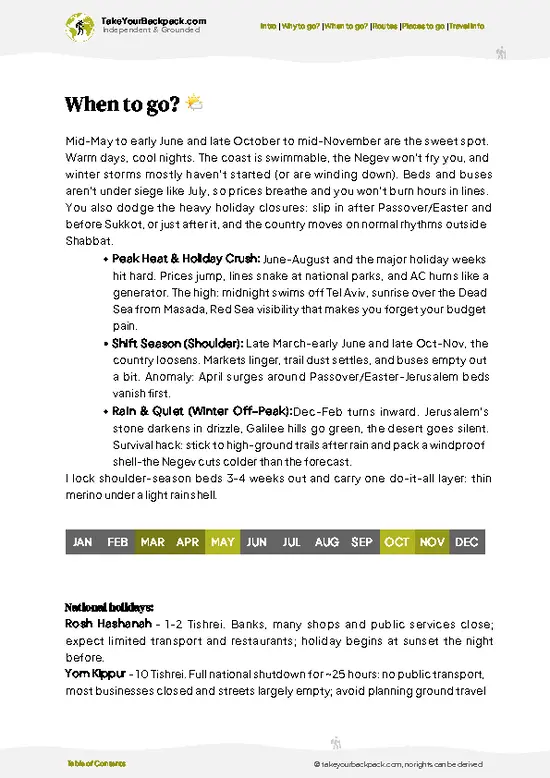
  • Weather: The best months to visit Carmel Market are from March to May and September to November. During these shoulder seasons, temperatures hover between 18-25°C (64-77°F), avoiding the brutal summer heat that can soar above 30°C (86°F) and make wandering the market exhausting.

  • Daylight Hours: Spring and fall offer a sweet spot with around 11-13 hours of daylight, giving you plenty of time to explore without rushing, unlike the shorter winter days that cut your market time short.

  • Crowds: Peak tourist season in summer (June to August) floods the market with visitors, pushing prices up and making the experience feel more like a scramble than a stroll. Early mornings on weekdays in spring or fall are your best bet for a more local vibe.

  • Seasonal Activities: Spring brings fresh produce
read more 👉

  • Weather: The best months to visit Carmel Market are from March to May and September to November. During these shoulder seasons, temperatures hover between 18-25°C (64-77°F), avoiding the brutal summer heat that can soar above 30°C (86°F) and make wandering the market exhausting.

  • Daylight Hours: Spring and fall offer a sweet spot with around 11-13 hours of daylight, giving you plenty of time to explore without rushing, unlike the shorter winter days that cut your market time short.

  • Crowds: Peak tourist season in summer (June to August) floods the market with visitors, pushing prices up and making the experience feel more like a scramble than a stroll. Early mornings on weekdays in spring or fall are your best bet for a more local vibe.

  • Seasonal Activities: Spring brings fresh produce and vibrant flowers, while fall introduces a bounty of nuts and spices. Summer’s heat limits fresh offerings, and winter can be quieter but less colorful.

  • Price Fluctuations: Expect higher prices during summer and Jewish holidays when demand spikes. Visiting off-peak means better deals and more room to haggle without feeling rushed.


Pro-tip: Hit the market right when it opens on a weekday in April or October—cool air, fewer crowds, and vendors eager to make a sale make for the most authentic and rewarding experience.


source: climatestotravel.comJANJanuary: fair for travelingFEBFebruary: fair for travelingMARMarch: excellent for travelingAPRApril: excellent for travelingMAYMay: excellent for travelingJUNJune: fair for travelingJULJuly: below average for travelingAUGAugust: below average for travelingSEPSeptember: excellent for travelingOCTOctober: excellent for travelingNOVNovember: highly recommended for travelingDECDecember: fair for traveling
when-to-go

✈️ The backpacker research shortcutIsrael Travel Guide

An offline-friendly backpacking guide with optimized travel routes, ranked highlights, transport advice, and the best areas to stay.
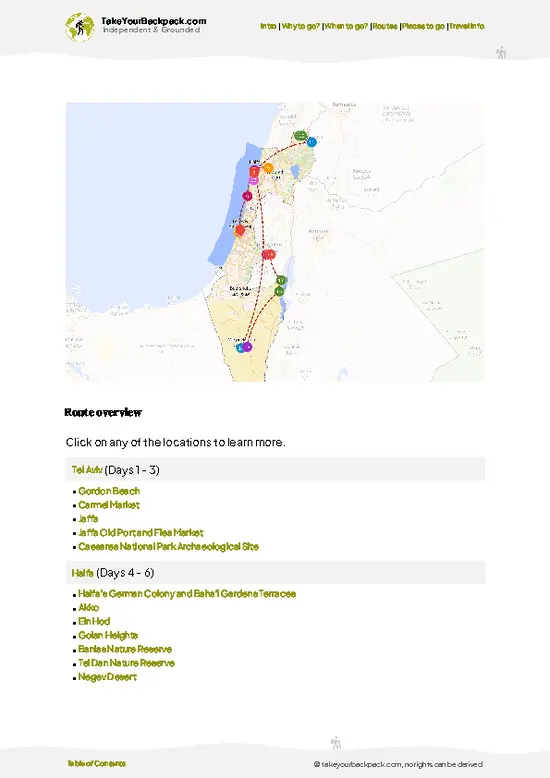
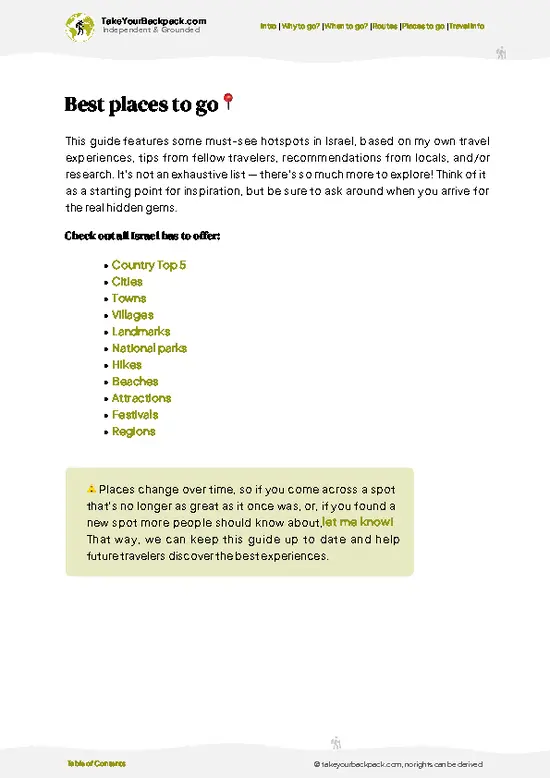
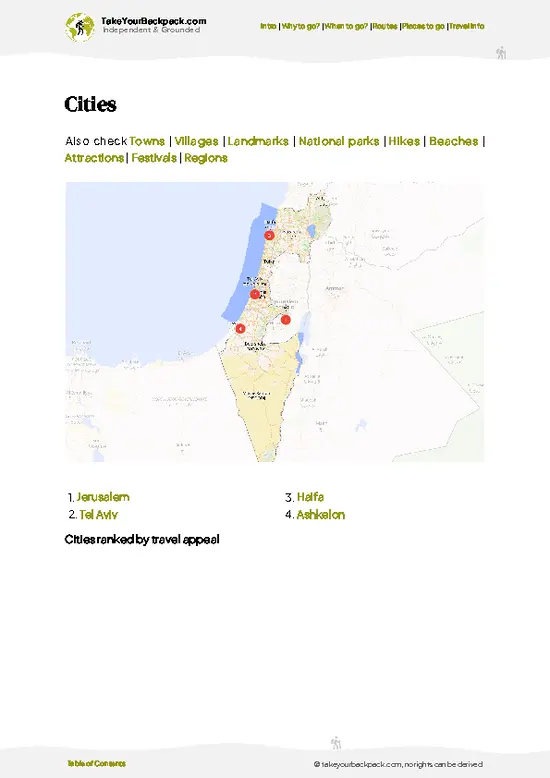
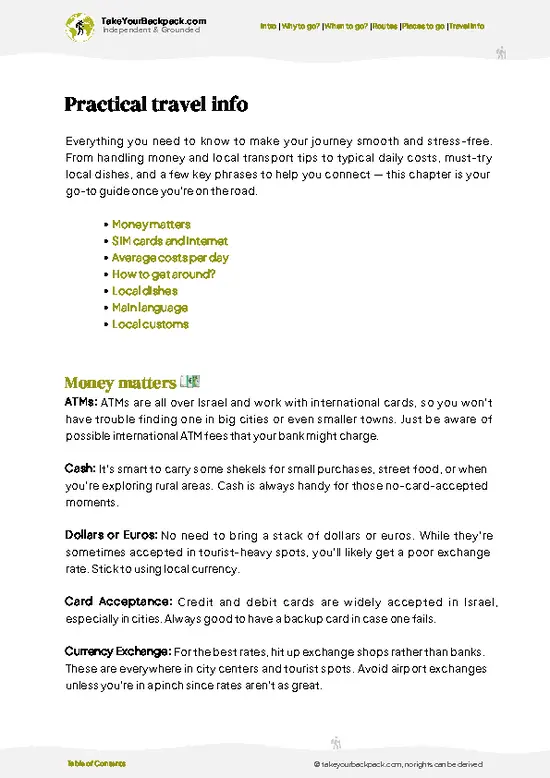
example page 0 from our offline Travel Guide for Israel
example page 1 from our offline Travel Guide for Israel
example page 2 from our offline Travel Guide for Israel
example page 3 from our offline Travel Guide for Israel
example page 4 from our offline Travel Guide for Israel
example page 5 from our offline Travel Guide for Israel
example page 6 from our offline Travel Guide for Israel
example page 7 from our offline Travel Guide for Israel
The digital guide (299 pages) contains:
81 highlights, ranked by travel appeal
Optimized 5, 10 & 15-day travel routes
Cities, national parks, landmarks, beaches
How to get around
Offline-friendly for travel without Wi-Fi
👉 Click to see all 30+ guide features

📅 Plan smarter in minutes, not weeks
Month by month travel advice
Festivals & national holidays
Budget expectations

🗺️ Go to the right places, skip the overrated ones
Honest pros & cons of destinations
Top hikes, parks & viewpoints
Lesser-known places most travelers miss
Clear “worth it vs skip it” guidance

🛏️ Travel smoothly without rookie mistakes
Best areas to stay
Transport systems explained simply
Common scams & safety advice
SIM cards, money & practical tips

🌍 Understand the country, not just visit it
Culture & traditions
52 Essential phrases & customs
Festivals worth planning around
Traveler-friendly historical context
Insights that make places more meaningful

📱 Built for real travel conditions
Fully downloadable PDF
Works completely offline
Optimized for phone use
Useful in remote areas & buses
Everything in one place
Save weeks of stressful planning
Get instant access to your full guide. 30‑day money-back guarantee.
+ Add another guide for just US$7.80

By proceeding you agree to our terms.
Sent to your inbox immediately after payment • 100% Secure Checkout
Best Backpacking Travel Advisor 2025 tourism awardBest Backpacking
Travel Advisor
2025
What others say about Take Your Backpack Guides:
⭐⭐⭐⭐⭐
Fantastic, amazing amount of information!
⭐⭐⭐⭐⭐
My goodness this is amazing, it's what I've been looking for hats off too you!
⭐⭐⭐⭐⭐
I think this is absolutely BRILLIANT
⭐⭐⭐⭐
Very complete and informative. It's still missing places, but I gotta to commend you
⭐⭐⭐⭐⭐
This is truly amazing, thank you, can't wait to explore it with my kids!
⭐⭐⭐⭐⭐
Awesome resource, thank you!
⭐⭐⭐⭐⭐
This is amazing! Can't wait to explore the ones I haven't seen
⭐⭐⭐⭐
I love this! Well done, great idea.
⭐⭐⭐⭐⭐
Thanks for taking the time to make this gem!
⭐⭐⭐⭐⭐
This might be the best website I've ever seen.
⭐⭐⭐⭐⭐
Congratulations, and thank you so much for your work; it's incredibly valuable.
⭐⭐⭐⭐
In all seriousness I think you did a great job pointing out the important spots
⭐⭐⭐⭐⭐
10/10 very good
⭐⭐⭐⭐⭐
As someone who's only just starting to visit regularly this is awesome, thank you.
⭐⭐⭐⭐
Thank you very much! I'm going to visit my dad, it's going to be very useful!
⭐⭐⭐⭐⭐
This is really cool! We'll be travelling for the first time and this definitely come in handy.
⭐⭐⭐⭐⭐
You are now our minister of culture, congratulations 👨‍💼
⭐⭐⭐⭐⭐
Just wanted to tell you that this is a pearl! Going to follow your recommendations.
⭐⭐⭐⭐⭐
This is so cool. I'll definitely be using the resource for my travels soon.
⭐⭐⭐⭐⭐
This is very impressive! Good work.
⭐⭐⭐⭐⭐
This is an amazing and informative site. Very well done!

🛏️ Where to stay?Where staying makes the most sense

Carmel Market is a sensory overload—colors, smells, and noise all cranked to eleven. But here’s the truth: it’s crowded, especially midday, and prices can spike if you don’t know the rhythm. That’s the Instagram gloss. The real magic? It’s in the neighborhoods just around the market, where locals live and breathe the city’s pulse without the tourist circus.

If you want to be close, look at staying in the Nachalat Binyamin or Kerem HaTeimanim areas. These spots are a stone’s throw from the market but offer a quieter, more authentic vibe. They’re safe, packed with small cafés and street art, and … read more 👉
Carmel Market is a sensory overload—colors, smells, and noise all cranked to eleven. But here’s the truth: it’s crowded, especially midday, and prices can spike if you don’t know the rhythm. That’s the Instagram gloss. The real magic? It’s in the neighborhoods just around the market, where locals live and breathe the city’s pulse without the tourist circus.

If you want to be close, look at staying in the Nachalat Binyamin or Kerem HaTeimanim areas. These spots are a stone’s throw from the market but offer a quieter, more authentic vibe. They’re safe, packed with small cafés and street art, and attract a mix of solo travelers and budget backpackers who want to connect rather than just pass through. You’ll find communal spaces where it’s easy to strike up conversations, and the prices here won’t gouge your wallet like the market stalls might.

Skip the flashy tourist zones. Instead, dive into these neighborhoods where the city’s real stories unfold, and your stay feels like a chapter, not just a pit stop.

👛 Costs (as of 4 September 2026)Travel costs and budget guide for Carmel Market

A visit to Carmel Market in Tel Aviv offers a variety of affordable dining options. For instance, a hearty falafel sandwich typically costs between 25-45 ILS (€6-€11), while a generous hummus plate with pita and sides is priced around 30-50 ILS (€8-€14). Additionally, a refreshing glass of fresh-squeezed orange juice or a strong Turkish coffee can be found for approximately 10-15 ILS (€3-€4). ([555travel.com](https://www.555travel.com/greensea-travel-faqs/is-tel-aviv-expensive-to-visit-f238/?utm_source=openai))
⚠️ Prices can change and everyone travels differently, so take this as a rough guide. Hope it helps you plan your adventure!

FAQFrequently asked questions about Carmel Market

2 to 3 hours is sufficient to explore Carmel Market thoroughly, allowing time to browse stalls, sample food, and soak in the atmosphere. Weekdays are less crowded, making for a quicker visit. Saturdays are closed due to Shabbat.
Yes, Carmel Market is worth the entrance fee as it is free to enter and offers a vibrant local experience with fresh produce, spices, and street food. It provides a genuine taste of Tel Aviv's culture and daily life without any cost.
You can get to Carmel Market by taking the Tel Aviv bus lines 5, 18, or 25, which stop nearby. It is also within walking distance from the Carmel Center and the nearest train station, HaHagana, about 2 kilometers away.
⚠️ Things can change over time, so always validate details locally before you go.

Other Israeli attractions near Carmel Market

Explore more nearby:


💡 Not sure where to go next?
Create a personalized itinerary for Israel including Carmel Market and the places that fit your trip.

Generate my itinerary

👉 Discover all attractions

Or checkout all Israel has to offer (think cities, towns, villages, national parks, hikes, beaches, festivals)
Country photo of Israel

We 💚 feedbackSumming up the experience

Carmel Market is a sensory overload in the best way—raw, chaotic, and bursting with fresh produce, spices, and street food that hits your taste buds like a local love letter. But brace yourself: it’s packed, noisy, and can feel like a pressure cooker during peak hours. If you want the real pulse of Tel Aviv without the sanitized tourist gloss, this is your spot—just come ready to dive in headfirst.

✈️ When did I visit Israel?
In October 2013 I visited Israel and the Westbank.

✍️ Help improve this page!
The information on this page is based on my own backpacking experience in Israel, supplemented with up-to-date research and feedback from other travelers. Travel details can change, so if you notice anything outdated or incomplete, feel free to let me know.


🙋‍♂️ Give feedback

👋 Meet the founderWho’s Behind Take Your Backpack?

Johan, backpacker and founder of TakeYourBackpackHi, I’m Johan (Netherlands 🇳🇱), the creator of TakeYourBackpack. Over the past decade, I’ve backpacked through 80+ countries across six continents, gaining extensive experience with independent travel, long-term trips, and overland routes.

This site is built on a combination of firsthand travel experience and carefully curated insights from other backpackers. Many guides are based on places I’ve personally visited, while others bring together tips, observations, and practical advice shared by trusted travelers I’ve met along the way.

The goal is to provide realistic, experience-driven guidance — not generic itineraries — so you can explore destinations with better context, clearer expectations, and more confidence.

Get full Israel guide •
Instant download • 81 highlights • Full Offline guide