v2.webp)



The Shrine of the Book
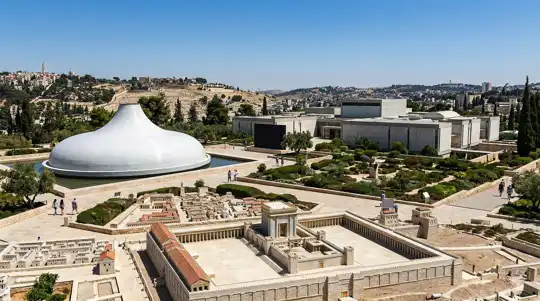
Let’s cut through the hype: yes, you’ll see the Dead Sea Scrolls, and yes, you’ll be sharing the space with a crowd of selfie sticks and tour groups. But the Shrine of the Book is more than a relic display. The architecture alone—half buried, half gleaming white dome—feels like a Bond villain’s lair meets a sci-fi temple. Inside, the scrolls are displayed with reverence and drama, under low light that makes you lean in and really look. The sense of ancient human hands at work is palpable. This is the kind of artifact that makes you realize history isn’t just a school subject; it’s a living, breathing thing. If you only have time for one gallery, make it this one.
The Model of Second Temple Jerusalem
Forget the digital reconstructions—this is a sprawling, physical model … read more 👉
Let’s cut through the hype: yes, you’ll see the Dead Sea Scrolls, and yes, you’ll be sharing the space with a crowd of selfie sticks and tour groups. But the Shrine of the Book is more than a relic display. The architecture alone—half buried, half gleaming white dome—feels like a Bond villain’s lair meets a sci-fi temple. Inside, the scrolls are displayed with reverence and drama, under low light that makes you lean in and really look. The sense of ancient human hands at work is palpable. This is the kind of artifact that makes you realize history isn’t just a school subject; it’s a living, breathing thing. If you only have time for one gallery, make it this one.
The Model of Second Temple Jerusalem
Forget the digital reconstructions—this is a sprawling, physical model … read more 👉
The Shrine of the Book
Let’s cut through the hype: yes, you’ll see the Dead Sea Scrolls, and yes, you’ll be sharing the space with a crowd of selfie sticks and tour groups. But the Shrine of the Book is more than a relic display. The architecture alone—half buried, half gleaming white dome—feels like a Bond villain’s lair meets a sci-fi temple. Inside, the scrolls are displayed with reverence and drama, under low light that makes you lean in and really look. The sense of ancient human hands at work is palpable. This is the kind of artifact that makes you realize history isn’t just a school subject; it’s a living, breathing thing. If you only have time for one gallery, make it this one.
The Model of Second Temple Jerusalem
Forget the digital reconstructions—this is a sprawling, physical model of Jerusalem as it looked in 66 CE, before the Romans flattened it. It’s outdoors, the sun beating down, and you’ll find yourself squinting at tiny colonnades and miniature markets, tracing the city walls with your finger. The detail is obsessive, and the scale (1:50) means you can actually walk around and get a sense of the city’s layout. It’s a rare moment where history feels tactile and spatial, not just a string of dates. Kids and adults both get sucked in. This is my personal favorite—there’s something about seeing the city as a living organism, not just a pile of stones, that hits different.
Archaeology Wing
Here’s where the museum flexes its muscles. The Archaeology Wing is a greatest-hits parade of ancient Israel, from prehistoric tools to Roman mosaics. But what sets it apart isn’t just the breadth—it’s the curation. You get context, not just objects. There’s a 6,000-year-old mask that looks like it could be from a modern art gallery, and a collection of ancient coins that tell you more about power and propaganda than any textbook. If you’re the kind of person who wants to see the real, gritty layers of civilization, this is where you’ll linger.
Israeli Art Pavilion
Skip the tired “East meets West” clichés. The Israeli Art Pavilion is a punchy, sometimes jarring, always thought-provoking collection of modern and contemporary Israeli art. You’ll see the country’s contradictions and complexities laid bare—politics, identity, humor, and heartbreak, all in one place. It’s not always comfortable, but it’s never boring. If you want to understand the pulse of Israel today, this is your shortcut.
Art Garden (Billy Rose Sculpture Garden)
Most sculpture gardens are just lawns with statues. This one is a desert dreamscape, designed by Isamu Noguchi, where the landscape and the art are in constant conversation. You’ll find works by Henry Moore, Picasso, and Rodin, but the real magic is how the harsh Jerusalem light and the rough stone terraces transform the pieces throughout the day. It’s a place to wander, sit, and let the city noise fade. If you need a breather from the galleries, this is your oasis—no filter needed.
Let’s cut through the hype: yes, you’ll see the Dead Sea Scrolls, and yes, you’ll be sharing the space with a crowd of selfie sticks and tour groups. But the Shrine of the Book is more than a relic display. The architecture alone—half buried, half gleaming white dome—feels like a Bond villain’s lair meets a sci-fi temple. Inside, the scrolls are displayed with reverence and drama, under low light that makes you lean in and really look. The sense of ancient human hands at work is palpable. This is the kind of artifact that makes you realize history isn’t just a school subject; it’s a living, breathing thing. If you only have time for one gallery, make it this one.
The Model of Second Temple Jerusalem
Forget the digital reconstructions—this is a sprawling, physical model of Jerusalem as it looked in 66 CE, before the Romans flattened it. It’s outdoors, the sun beating down, and you’ll find yourself squinting at tiny colonnades and miniature markets, tracing the city walls with your finger. The detail is obsessive, and the scale (1:50) means you can actually walk around and get a sense of the city’s layout. It’s a rare moment where history feels tactile and spatial, not just a string of dates. Kids and adults both get sucked in. This is my personal favorite—there’s something about seeing the city as a living organism, not just a pile of stones, that hits different.
Archaeology Wing
Here’s where the museum flexes its muscles. The Archaeology Wing is a greatest-hits parade of ancient Israel, from prehistoric tools to Roman mosaics. But what sets it apart isn’t just the breadth—it’s the curation. You get context, not just objects. There’s a 6,000-year-old mask that looks like it could be from a modern art gallery, and a collection of ancient coins that tell you more about power and propaganda than any textbook. If you’re the kind of person who wants to see the real, gritty layers of civilization, this is where you’ll linger.
Israeli Art Pavilion
Skip the tired “East meets West” clichés. The Israeli Art Pavilion is a punchy, sometimes jarring, always thought-provoking collection of modern and contemporary Israeli art. You’ll see the country’s contradictions and complexities laid bare—politics, identity, humor, and heartbreak, all in one place. It’s not always comfortable, but it’s never boring. If you want to understand the pulse of Israel today, this is your shortcut.
Art Garden (Billy Rose Sculpture Garden)
Most sculpture gardens are just lawns with statues. This one is a desert dreamscape, designed by Isamu Noguchi, where the landscape and the art are in constant conversation. You’ll find works by Henry Moore, Picasso, and Rodin, but the real magic is how the harsh Jerusalem light and the rough stone terraces transform the pieces throughout the day. It’s a place to wander, sit, and let the city noise fade. If you need a breather from the galleries, this is your oasis—no filter needed.
Spotted a mistake or missing something? Contact us.

Full-Day Private and Guided Tour of the Jerusalem's Old City

Classic Jerusalem Old City - Self Guiding Tour

Private Full Day Return to Zion Jerusalem Tour

A Self-Guided Walking Tour of Jerusalem's Old City

Jerusalem Old City Walking Tour

Jerusalem Highlights Private Walking Tour With A Guide

Private Tour : Tower of David and Jerusalem Old City Quarters

Jerusalem Old City - Classic Private Tour

Special Magic Christmas Tour in Jerusalem (Walking)

 Best Backpacking
.jpg) Hi, I’m Johan (Netherlands 🇳🇱), the creator of TakeYourBackpack. Over the past 3 decades, I’ve backpacked through 90+ countries across six continents, gaining extensive experience with independent travel, long-term trips, and overland routes.
Hi, I’m Johan (Netherlands 🇳🇱), the creator of TakeYourBackpack. Over the past 3 decades, I’ve backpacked through 90+ countries across six continents, gaining extensive experience with independent travel, long-term trips, and overland routes.