

The Hall of Names
Forget the Instagram shots of endless corridors—this is the emotional core of Yad Vashem. The Hall of Names is a circular chamber lined floor-to-ceiling with files, each one a testimony to a life cut short. The silence here is heavy, but it’s not empty. It’s the weight of six million stories, some with only a name, others with a photograph or a scrap of memory. The mirrored ceiling multiplies the faces, making it impossible to escape the scale. This isn’t just a memorial; it’s a confrontation with the reality of loss, and it’s impossible to walk out unchanged.
The Children’s Memorial
You’ll hear about this one, but nothing prepares you for the experience. Step inside a darkened cavern, and you’re surrounded by the flicker of five candles reflected into what feels like infinity. … read more 👉
The Hall of Names
Forget the Instagram shots of endless corridors—this is the emotional core of Yad Vashem. The Hall of Names is a circular chamber lined floor-to-ceiling with files, each one a testimony to a life cut short. The silence here is heavy, but it’s not empty. It’s the weight of six million stories, some with only a name, others with a photograph or a scrap of memory. The mirrored ceiling multiplies the faces, making it impossible to escape the scale. This isn’t just a memorial; it’s a confrontation with the reality of loss, and it’s impossible to walk out unchanged.
The Children’s Memorial
You’ll hear about this one, but nothing prepares you for the experience. Step inside a darkened cavern, and you’re surrounded by the flicker of five candles reflected into what feels like infinity. Names, ages, and countries of murdered children echo in the darkness. It’s not subtle, and it’s not supposed to be. The effect is haunting, but also strangely beautiful—a reminder that remembrance can be both devastating and dignified.
The Holocaust History Museum
This isn’t your standard museum with glass cases and dusty artifacts. The architecture itself is a wedge of concrete that cuts through the hillside, forcing you to move chronologically through the events. The path is deliberate: you can’t skip ahead, you can’t look away. Multimedia displays, survivor testimonies, and personal belongings make the history visceral. You’ll see a battered suitcase, a child’s shoe, a letter home—mundane objects that become anchors in a sea of horror. The museum doesn’t just tell you what happened; it makes you feel the stakes.
The Avenue of the Righteous Among the Nations
Here’s where the narrative shifts from despair to defiance. This tree-lined path honors non-Jews who risked everything to save others. Each tree is a living tribute, and the plaques tell stories that are as gripping as any thriller—smuggling children in suitcases, hiding families in cellars, forging documents under the noses of the Gestapo. It’s a reminder that even in the darkest times, courage is possible. This one is my personal favorite, because it’s proof that history isn’t just about what people suffered, but what they dared to do for each other.
The Cattle Car Memorial
A real German cattle car, perched on the edge of a ravine, marks the spot where so many journeys to the camps began. It’s not sanitized for comfort. You can step inside, feel the claustrophobia, and realize how little separated life from death. It’s a blunt, physical artifact that cuts through abstraction and forces you to reckon with the logistics of evil.
The Memorial to the Deportees
This open-air monument is easy to overlook, but don’t. It’s a freight car balanced on a rail that juts out over the Jerusalem forest, a literal dead end. The symbolism is sharp: journeys that went nowhere, lives suspended over the abyss. It’s stark, it’s honest, and it’s a gut punch—no filter, no softening.
Spotted a mistake or missing something? Contact us.

Best seller! Jerusalem old city four quarters tour

Private Tour Jerusalem Old City

JERUSALEM private tour with ELAD VAZANA - Life in Israel & Palestine Then & Now

Morning Private Tour to Discover Jerusalem

Bethlehem Half Day Private Tour - Pick up from Jerusalem/Tel Aviv/Ashdod

Full-Day Private and Guided Tour of the Jerusalem's Old City

Fun and Meaningful Day Holy Land Tours

Biblical tours

Full Day Private Christian Tour in Jerusalem with Tour Guide

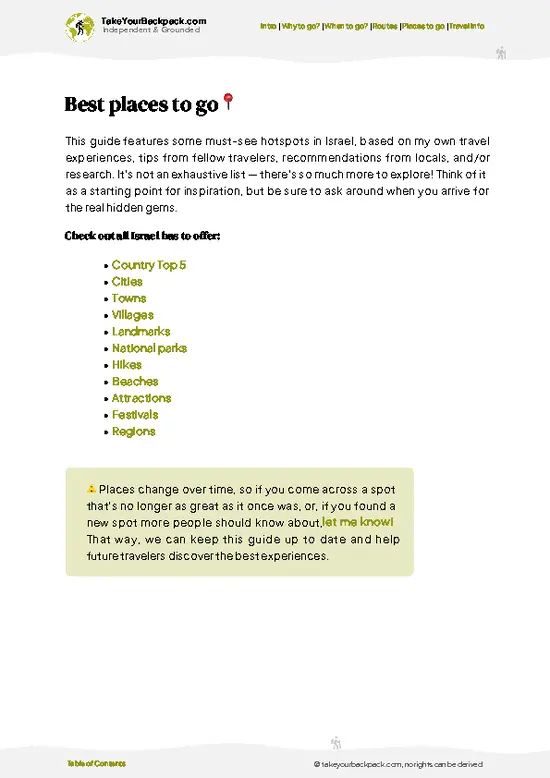
 Best Backpacking

 Hi, I’m Johan (Netherlands 🇳🇱), the creator of TakeYourBackpack. Over the past 3 decades, I’ve backpacked through 90+ countries across six continents, gaining extensive experience with independent travel, long-term trips, and overland routes.