×

Israel🇮🇱 | landmarksShuni FortressRoman amphitheater, spring-fed pools, rural ruins | things to do and best time to go

Explore Rosh HanikraExplore Ein Hod

Backpacking in Shuni Fortress
👀 For curious travelersunique site ranked #5
By Johan Kruseman 🇳🇱 | Updated October 15, 2026

Most write-ups skip this, but Shuni Fortress is less “castle on a cliff” and more “Roman party complex turned Crusader hangout turned Israeli heritage site” where you can literally sit in an ancient theater and hear modern concerts. It’s tucked in the Carmel foothills near Binyamina-Giv’at Ada in northern Israel, a short hop inland from the coast.

For backpackers, Shuni is low-glamour, high-atmosphere. The wow-factor is subtle: ruined arches, a small amphitheater, springs and greenery instead of some towering, hyper-restored fortress. Crowds are usually light, which feels like cheating in a country where tour buses swarm everything with a plaque. Entry is reasonably priced, but you’ll probably need a bus-plus-walk or a hitch to get there, so it’s not the easiest tick on a tight schedule. Photos come out moody rather than epic, and that’s exactly its charm.

Discover everything you want to know in the 📖 Israel Travel Guide.
Safety warning

The current risk level for Israel is high. Check the advice before going.


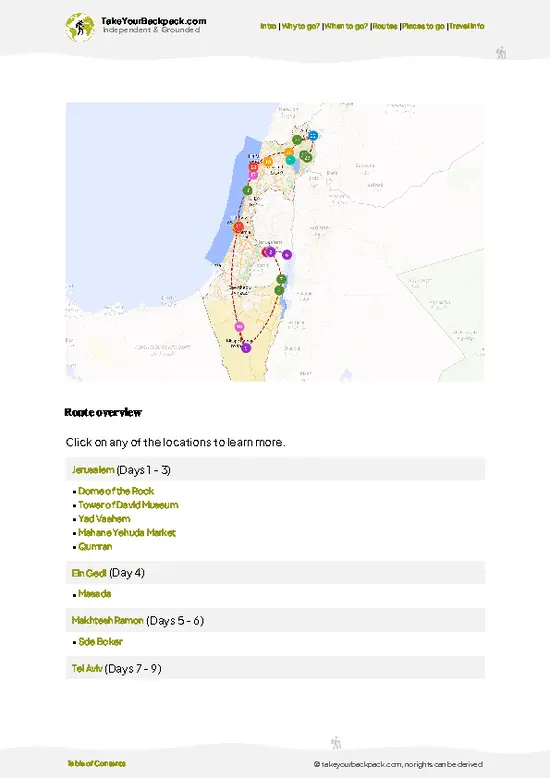
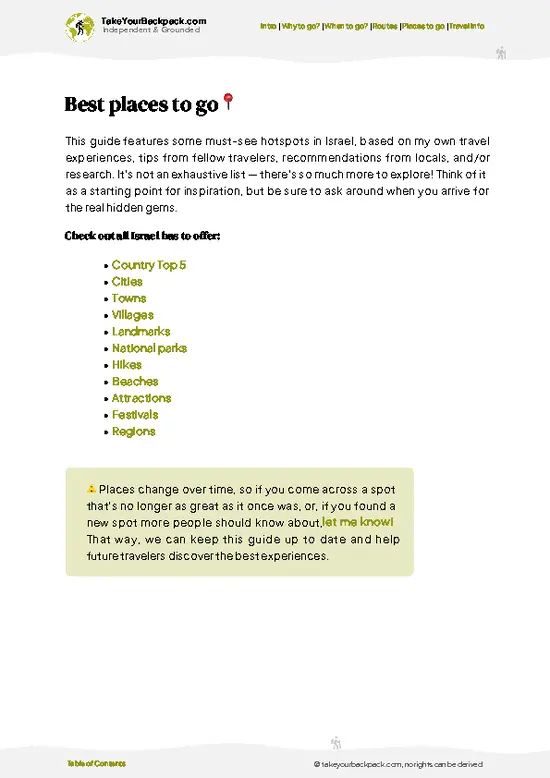
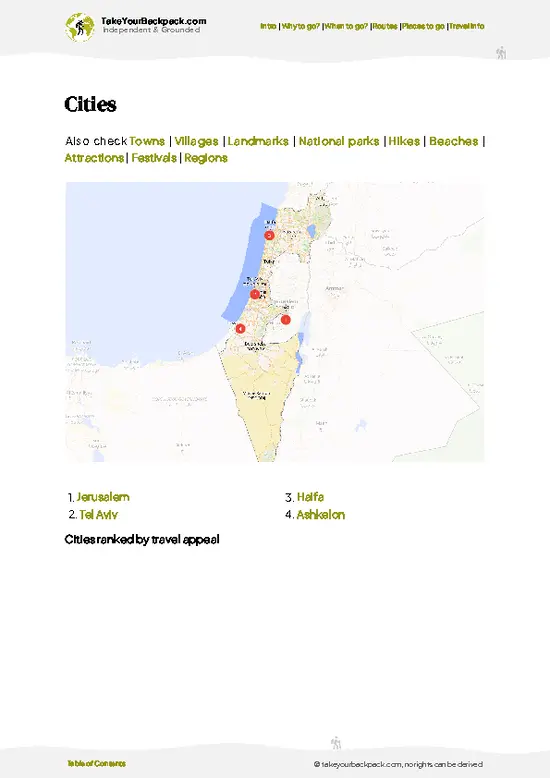
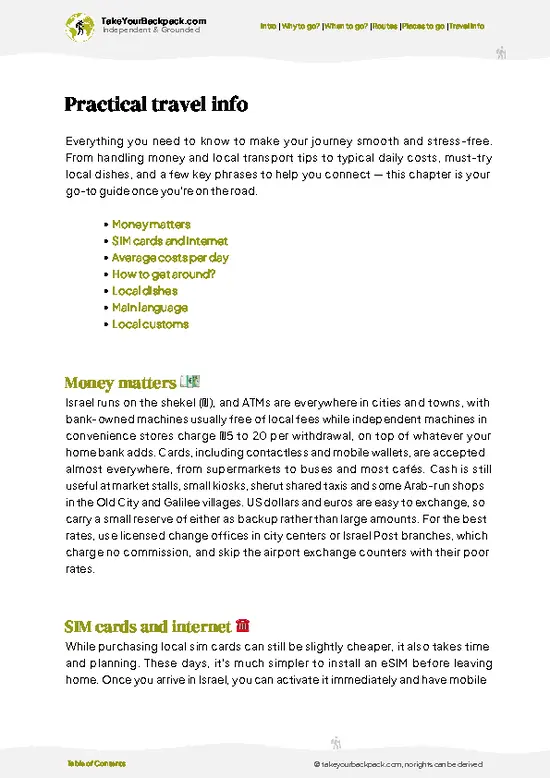
example page 0 from our offline Travel Guide for Israel
example page 1 from our offline Travel Guide for Israel
example page 2 from our offline Travel Guide for Israel
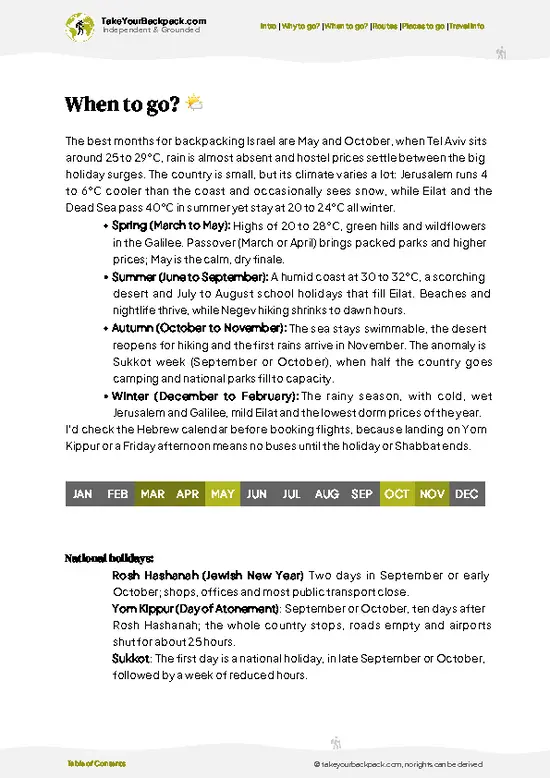
example page 3 from our offline Travel Guide for Israel
example page 4 from our offline Travel Guide for Israel
example page 5 from our offline Travel Guide for Israel
example page 6 from our offline Travel Guide for Israel
example page 7 from our offline Travel Guide for Israel
Loading the map 🌍
CLICK TO FILTER
cities
towns
villages
landmarks
national parks
hikes
beaches
attractions
festivals
regions
SHOW COUNTRY’S BESTSHOW ALL

✨ Why go?
Ranked #5 unique site in Israel
What sets this place apart

Shuni Fortress isn’t just another stop on your Israel itinerary; it’s a raw slice of history that packs a punch without the tourist trap vibe. Yes, it can get crowded, especially during peak season, but the sheer scale of the ruins and the stories they tell make it worth your time.

You’ll find affordable entry fees and a chance to wander through ancient walls that have stood the test of time. The views from the ramparts are stunning, offering a perspective on the surrounding landscape that you won’t get from a guidebook.

What’s more, Shuni fits seamlessly into a broader route. Pair it with a hike through the nearby Mount Carmel or a visit to the coastal towns of Haifa or Caesarea. It’s not just a fortress; it’s a gateway to understanding the region’s rich tapestry of cultures and conflicts. … read more 👉
Shuni Fortress isn’t just another stop on your Israel itinerary; it’s a raw slice of history that packs a punch without the tourist trap vibe. Yes, it can get crowded, especially during peak season, but the sheer scale of the ruins and the stories they tell make it worth your time.

You’ll find affordable entry fees and a chance to wander through ancient walls that have stood the test of time. The views from the ramparts are stunning, offering a perspective on the surrounding landscape that you won’t get from a guidebook.

What’s more, Shuni fits seamlessly into a broader route. Pair it with a hike through the nearby Mount Carmel or a visit to the coastal towns of Haifa or Caesarea. It’s not just a fortress; it’s a gateway to understanding the region’s rich tapestry of cultures and conflicts.

So, if you’re looking for a spot that’s both accessible and deeply rewarding, make Shuni Fortress a non-negotiable part of your journey.

💡 HighlightsPlaces and moments you shouldn't skip

  • Massive stone ramparts and towers — The surviving walls and tower bases give a real feel for the fortress’s defensive layout, showing where attackers would have been stalled and defenders stood watch; great for imagining siegecraft and for close-up photography.
  • Multi-period archaeological layers — Excavations reveal construction and reuse across different eras (Roman/Byzantine/Crusader/Ottoman touches are commonly visible at sites like this), so you can see how the same walls were adapted over centuries.
  • Rock-cut cisterns and water systems — The carved cisterns that collected and stored rainwater are well-preserved examples of how fortified sites survived dry months and sieges; they’re interesting to inspect and tell a lot about everyday life inside the fortress.
  • Panoramic views of the
… read more 👉
  • Massive stone ramparts and towers — The surviving walls and tower bases give a real feel for the fortress’s defensive layout, showing where attackers would have been stalled and defenders stood watch; great for imagining siegecraft and for close-up photography.
  • Multi-period archaeological layers — Excavations reveal construction and reuse across different eras (Roman/Byzantine/Crusader/Ottoman touches are commonly visible at sites like this), so you can see how the same walls were adapted over centuries.
  • Rock-cut cisterns and water systems — The carved cisterns that collected and stored rainwater are well-preserved examples of how fortified sites survived dry months and sieges; they’re interesting to inspect and tell a lot about everyday life inside the fortress.
  • Panoramic views of the surrounding plain — From the higher points of the site you get sweeping views across the neighboring valley/plane, which explains the fortress’s strategic siting and makes for excellent sunset or wide-angle shots.
  • Visible building details and masonry techniques — Careful stonework, reused blocks, and differing masonry styles are on display, letting you read the site’s construction history with your eyes; it’s a compact lesson in regional stone-building traditions. (personal favorite)
Spotted a mistake or missing something? Contact us.

Things to do near Shuni Fortress

Ratings based on Tripadvisor reviews. When you book through this link, you support our work at no extra cost to you.

🌤️ When to go?Choosing the right time of year

  • Weather: Summers scorch with highs often hitting 35°C (95°F), making midday exploration brutal. Winters are mild but can be rainy, with temps around 10-15°C (50-59°F), which means mud and slippery trails.
  • Temperature: Spring and autumn offer the sweet spot—daytime temps hover between 20-25°C (68-77°F), perfect for hiking without overheating or freezing.
  • Daylight Hours: In spring and autumn, you get a comfortable 10-12 hours of daylight, enough to explore without rushing but not so much that you burn out.
  • Crowds: Peak tourist season is spring and early autumn, especially around Israeli holidays. Expect groups and guided tours. Winter sees fewer visitors, giving you more breathing room.
  • Seasonal Activities: Spring brings wildflowers and bird migrations, adding unexpected life to the fortress
… read more 👉
  • Weather: Summers scorch with highs often hitting 35°C (95°F), making midday exploration brutal. Winters are mild but can be rainy, with temps around 10-15°C (50-59°F), which means mud and slippery trails.
  • Temperature: Spring and autumn offer the sweet spot—daytime temps hover between 20-25°C (68-77°F), perfect for hiking without overheating or freezing.
  • Daylight Hours: In spring and autumn, you get a comfortable 10-12 hours of daylight, enough to explore without rushing but not so much that you burn out.
  • Crowds: Peak tourist season is spring and early autumn, especially around Israeli holidays. Expect groups and guided tours. Winter sees fewer visitors, giving you more breathing room.
  • Seasonal Activities: Spring brings wildflowers and bird migrations, adding unexpected life to the fortress ruins. Autumn offers cooler hikes and local harvest festivals nearby, which can enrich your visit.
  • Price Fluctuations: Accommodation and transport costs spike in spring and autumn due to demand. Winter is the budget traveler’s friend, with lower prices but fewer services open.
Pro-tip: Aim for late March or early November—cool temps, manageable crowds, and a chance to catch local culture without the tourist circus.


source: climatestotravel.comJANJanuary: good for travelingFEBFebruary: good for travelingMARMarch: highly recommended for travelingAPRApril: excellent for travelingMAYMay: excellent for travelingJUNJune: fair for travelingJULJuly: below average for travelingAUGAugust: below average for travelingSEPSeptember: good for travelingOCTOctober: highly recommended for travelingNOVNovember: highly recommended for travelingDECDecember: good for traveling
when-to-go

✈️ The backpacker research shortcutIsrael Travel Guide

An offline-friendly backpacking guide with optimized travel routes, ranked highlights, transport advice, and the best areas to stay.
example page 0 from our offline Travel Guide for Israel
example page 1 from our offline Travel Guide for Israel
example page 2 from our offline Travel Guide for Israel
example page 3 from our offline Travel Guide for Israel
example page 4 from our offline Travel Guide for Israel
example page 5 from our offline Travel Guide for Israel
example page 6 from our offline Travel Guide for Israel
example page 7 from our offline Travel Guide for Israel
The digital guide (287 pages) contains:
✅ 77 highlights, ranked by travel appeal
✅ Optimized 5, 10 & 15-day travel routes
✅ Cities, national parks, landmarks, beaches
✅ How to get around
✅ Offline-friendly for travel without Wi-Fi
👉 Click to see all 30+ guide features

📅 Plan smarter in minutes, not weeks
✅ Month by month travel advice
✅ Festivals & national holidays
✅ Budget expectations

🗺️ Go to the right places, skip the overrated ones
✅ Honest pros & cons of destinations
✅ Top hikes, parks & viewpoints
✅ Lesser-known places most travelers miss
✅ Clear “worth it vs skip it” guidance

🛏️ Travel smoothly without rookie mistakes
✅ Best areas to stay
✅ Transport systems explained simply
✅ Common scams & safety advice
✅ SIM cards, money & practical tips

🌍 Understand the country, not just visit it
✅ Culture & traditions
✅ 52 Essential phrases & customs
✅ Festivals worth planning around
✅ Traveler-friendly historical context
✅ Insights that make places more meaningful

📱 Built for real travel conditions
✅ Fully downloadable PDF
✅ Works completely offline
✅ Optimized for phone use
✅ Useful in remote areas & buses
✅ Everything in one place
Stop searching, start planning
Get instant access to your full guide. 30‑day money-back guarantee.
+ Add another guide for just

By proceeding you agree to our terms.
Sent to your inbox immediately after payment • 100% Secure Checkout
Best Backpacking Travel Advisor 2025 tourism awardBest Backpacking
Travel Advisor
2025
What others say about Take Your Backpack Guides:
⭐⭐⭐⭐⭐
Fantastic, amazing amount of information!
⭐⭐⭐⭐⭐
My goodness this is amazing, it's what I've been looking for hats off too you!
⭐⭐⭐⭐⭐
I think this is absolutely BRILLIANT
⭐⭐⭐⭐
Very complete and informative. It's still missing places, but I gotta to commend you
⭐⭐⭐⭐⭐
This is truly amazing, thank you, can't wait to explore it with my kids!
⭐⭐⭐⭐⭐
Awesome resource, thank you!
⭐⭐⭐⭐⭐
This is amazing! Can't wait to explore the ones I haven't seen
⭐⭐⭐⭐
I love this! Well done, great idea.
⭐⭐⭐⭐⭐
Thanks for taking the time to make this gem!
⭐⭐⭐⭐⭐
This might be the best website I've ever seen.
⭐⭐⭐⭐⭐
Congratulations, and thank you so much for your work; it's incredibly valuable.
⭐⭐⭐⭐
In all seriousness I think you did a great job pointing out the important spots
⭐⭐⭐⭐⭐
10/10 very good
⭐⭐⭐⭐⭐
As someone who's only just starting to visit regularly this is awesome, thank you.
⭐⭐⭐⭐
Thank you very much! I'm going to visit my dad, it's going to be very useful!
⭐⭐⭐⭐⭐
This is really cool! We'll be travelling for the first time and this definitely come in handy.
⭐⭐⭐⭐⭐
You are now our minister of culture, congratulations 👨‍💼
⭐⭐⭐⭐⭐
Just wanted to tell you that this is a pearl! Going to follow your recommendations.
⭐⭐⭐⭐⭐
This is so cool. I'll definitely be using the resource for my travels soon.
⭐⭐⭐⭐⭐
This is very impressive! Good work.
⭐⭐⭐⭐⭐
This is an amazing and informative site. Very well done!

🛏️ Where to stay?Best areas to stay in Israel

When you’re near Shuni Fortress, the charm lies in the surrounding areas rather than the fortress itself. Head to the nearby town of Binyamina. It’s got a laid-back vibe, perfect for solo travelers and budget backpackers. You’ll find cozy guesthouses and communal spaces where you can swap stories over coffee.

Another solid option is Zichron Yaakov. This place has a rich history and a lively arts scene. The streets are lined with cafes and galleries, making it easy to meet fellow travelers. Plus, the local wineries offer tastings that won’t break the bank.

If you’re feeling adventurous, consider … read more 👉
When you’re near Shuni Fortress, the charm lies in the surrounding areas rather than the fortress itself. Head to the nearby town of Binyamina. It’s got a laid-back vibe, perfect for solo travelers and budget backpackers. You’ll find cozy guesthouses and communal spaces where you can swap stories over coffee.

Another solid option is Zichron Yaakov. This place has a rich history and a lively arts scene. The streets are lined with cafes and galleries, making it easy to meet fellow travelers. Plus, the local wineries offer tastings that won’t break the bank.

If you’re feeling adventurous, consider staying in the nearby Carmel Mountains. There are campgrounds and eco-lodges that let you immerse yourself in nature. Just imagine waking up to the sound of birds instead of traffic.

Safety is generally good in these areas, but always trust your instincts. The real magic happens when you connect with locals and other travelers. Explore the markets, try street food, and soak in the culture. That’s where the journey becomes truly rewarding.

👛 Costs (as of 15 October 2026)Typical daily expenses

Visiting Shuni Fortress in Israel offers a blend of history and stunning views, but it comes with its own set of costs. Here’s a breakdown to help you plan your visit without breaking the bank.
  • Entrance Fee: Expect to pay around €5 to €10 (approximately $6 to $12). This fee grants you access to the fortress and its surroundings. It’s a small price for a slice of history, but be prepared for potential price changes during peak tourist seasons.
  • Transportation: If you’re traveling from Tel Aviv or Jerusalem, budget around €10 to €20 ($12 to $24) for public transport. Buses are the most economical option, but if you prefer a taxi or rideshare, costs can soar to €50 ($60) or more, especially if you’re going round-trip.
  • Food and Drink: There are limited options near the fortress. A meal at a nearby
… read more 👉
Visiting Shuni Fortress in Israel offers a blend of history and stunning views, but it comes with its own set of costs. Here’s a breakdown to help you plan your visit without breaking the bank.
  • Entrance Fee: Expect to pay around €5 to €10 (approximately $6 to $12). This fee grants you access to the fortress and its surroundings. It’s a small price for a slice of history, but be prepared for potential price changes during peak tourist seasons.
  • Transportation: If you’re traveling from Tel Aviv or Jerusalem, budget around €10 to €20 ($12 to $24) for public transport. Buses are the most economical option, but if you prefer a taxi or rideshare, costs can soar to €50 ($60) or more, especially if you’re going round-trip.
  • Food and Drink: There are limited options near the fortress. A meal at a nearby café will set you back about €10 to €15 ($12 to $18). Bring snacks and water to save money and enjoy a picnic with a view.
  • Guided Tours: If you want an in-depth experience, consider a guided tour. Prices range from €30 to €50 ($36 to $60) per person. This can be worth it for the insights and stories that bring the ruins to life.
  • Souvenirs: Don’t forget to budget for a memento. Local crafts and trinkets can range from €5 to €20 ($6 to $24). It’s a nice way to support local artisans while taking home a piece of your adventure.

Plan accordingly, and you’ll find that the real magic of Shuni Fortress lies not just in its history, but in the experience of being there.


source: israel.travel
⚠️ Prices can change and everyone travels differently, so take this as a rough guide. Hope it helps you plan your adventure!

FAQCommon questions from travelers

Shuni Fortress is an ancient archaeological site in Israel, dating back to the Hellenistic and Roman periods. It served as a military and administrative center and features well-preserved walls and gates. The site offers insight into regional history and architecture from around 2,000 years ago.
Visiting Shuni Fortress typically requires about 1 to 2 hours to explore the ruins thoroughly. This allows time to walk around the site, read informational signs, and take photos. Longer visits may be needed if combined with nearby trails or other historical sites.
To get to Shuni Fortress, travel to the town of Petah Tikva, located about 10 kilometers east of Tel Aviv. From there, the fortress is accessible by local bus or taxi, with a short walk from the nearest stop. Driving is also convenient, with parking available near the site.
⚠️ Things can change over time, so always validate details locally before you go.

Other Israeli landmarks near Shuni Fortress

Explore more nearby:

  • Rosh Hanikra—limestone grottoes, sea cliffs, border viewpoint| 63 km away
  • Dome of the Rock—golden dome, sacred platform, Islamic artistry| 88 km away
  • Qumran—desert caves, ancient manuscripts, archaeological site| 101 km away

💡 Not sure where to go next?
Create a personalized itinerary for Israel including Shuni Fortress and the places that fit your trip.

Generate my itinerary

👉 Discover all landmarks

Or checkout all Israel has to offer (think cities, towns, villages, national parks, hikes, beaches, festivals)
Country photo of Israel

We 💚 feedbackKey takeaways before you go

Shuni Fortress is a slice of history that feels untouched, with its ancient stones whispering tales of old. The real magic? Exploring the ruins without the tourist throngs. But let’s be real: it’s not the easiest place to get to, and the lack of amenities can be a drag. If you’re up for a little adventure and some solitude, though, it’s absolutely worth the trek.

✈️ When did I visit Israel?
In October 2013 I visited Israel and the West Bank.

✍️ Help improve this page!
The information on this page is based on my own backpacking experience in Israel, supplemented with up-to-date research and feedback from other travelers. Travel details can change, so if you notice anything outdated or incomplete, feel free to let me know.


🙋‍♂️ Give feedback

👋 Meet the founderWho’s Behind Take Your Backpack?

Johan, backpacker and founder of TakeYourBackpackHi, I’m Johan (Netherlands 🇳🇱), the creator of TakeYourBackpack. Over the past 3 decades, I’ve backpacked through 90+ countries across six continents, gaining extensive experience with independent travel, long-term trips, and overland routes.

This site is built on a combination of firsthand travel experience and carefully curated insights from other backpackers. Many guides are based on places I’ve personally visited, while others bring together tips, observations, and practical advice shared by trusted travelers I’ve met along the way.

The goal is to provide realistic, experience-driven guidance — not generic itineraries — so you can explore destinations with better context, clearer expectations, and more confidence.