×

Italy🇮🇹 | national parksAlta Murgia National Parkkarst plateaus, dry stone walls, archaeological sites | things to do and best time to go

Explore Majella National ParkExplore Arcipelago Toscano National Park

Backpacking in Alta Murgia
👍 Recommendednational park ranked #17
By Johan Kruseman 🇳🇱 | Updated May 27, 2026

Most summaries sell Alta Murgia as “empty steppe,” but the surprise is how lived-in it feels: active farms, military ruins, even secret-feeling cave churches cut into the rock. You’re in northern Puglia, inland from Bari, on a high, dry plateau that’s more about big skies than postcard cliffs. Trails are real but often unsigned, wildlife is subtle (raptors, foxes, orchids in spring), and access relies on buses or hitching plus long walks. No entrance fee, low crowds, scattered agriturismi instead of classic campgrounds, and a quiet, slightly austere vibe. Compared with Gargano’s forests or Pollino’s drama, Alta Murgia is cheaper, barer, and better for slow walkers who like space and silence more than “wow” views.

Discover everything you want to know in the 📖 Italy Travel Guide.


Get your Italy guide
148 ranked highlights, routes & tips, works offline (542 pages)
Loading the map 🌍
CLICK TO FILTER
cities
towns
villages
landmarks
national parks
hikes
beaches
attractions
festivals
regions
SHOW COUNTRY’S BESTSHOW ALL

✨ Why go?
Ranked #17 national park in Italy
What makes this national park worth exploring

Backpackers flock to Alta Murgia National Park for its blend of independent exploration and budget-friendly options. With camping and hostels nearby, you can stretch your euros while soaking in the rugged landscapes. The park offers a variety of trails, from easy strolls to challenging hikes, catering to all skill levels. This isn’t a place for guided tours; it thrives on self-guided adventures. You’ll find the freedom to roam, discover hidden spots, and connect with nature on your own terms. Just be prepared for some rocky paths and a few surprises along the way.
Want to include Alta Murgia National Park in your Italy route?
Create a personalized Italy itinerary that includes Alta Murgia National Park and the places that fit your trip — based on your travel style, budget, and available time. Get your route in seconds.

Generate my trip

💡 HighlightsTop highlights of Alta Murgia

  • Pulo di Altamura — A huge karst sinkhole with steep limestone walls that feels like a natural amphitheater. It’s dramatic, quiet, and a great place to appreciate how water carved this plateau; easy trails around the rim make it a perfect short hike and (confession) my personal favorite for sunrise light on the rocks.
  • Castel del Monte — The iconic 13th-century octagonal castle of Frederick II sits right on the Murge and gives the landscape a storybook silhouette. It’s UNESCO listed, offers short walks on the surrounding plateau, and is a must for architecture lovers even if you’re mainly here for nature.
  • Pulicchio di Gravina and other dolines — Smaller but equally fascinating sinkholes scattered across the park; each one has its own microclimate and plant community. They’re the best way
read more 👉
  • Pulo di Altamura — A huge karst sinkhole with steep limestone walls that feels like a natural amphitheater. It’s dramatic, quiet, and a great place to appreciate how water carved this plateau; easy trails around the rim make it a perfect short hike and (confession) my personal favorite for sunrise light on the rocks.
  • Castel del Monte — The iconic 13th-century octagonal castle of Frederick II sits right on the Murge and gives the landscape a storybook silhouette. It’s UNESCO listed, offers short walks on the surrounding plateau, and is a must for architecture lovers even if you’re mainly here for nature.
  • Pulicchio di Gravina and other dolines — Smaller but equally fascinating sinkholes scattered across the park; each one has its own microclimate and plant community. They’re the best way to see karst geology up close and make for quiet, otherworldly photo stops between longer hikes.
  • Grotta di Lamalunga (Altamura Man site) — A karst cave where the remarkable Altamura fossil was found; the site links natural history and archaeology. You can’t wander freely inside, but the area and nearby interpretive points make for a thoughtful detour if you’re into deep-time stories.
  • Murge steppe and wildflowers — Wide, open limestone plains that burst with orchids and rare steppe plants in spring. Walk here for big skies, carpets of flowers, and surprisingly delicate biodiversity—bring sun protection, the flat views mean no shade for miles.
  • Ravines and rupestrian churches around Gravina — Deep gorges cut into the plateau with cliffside settlements and ancient rock-hewn churches. Hike the rim or descend (where allowed) to find frescoed chapels and a very different, rugged side of Puglia’s history.
  • Pastoral heritage: jazzi, dry-stone walls and sheepfolds — The park’s human landscape is part of its charm: low stone walls, circular “jazzi” sheepfolds and abandoned farmsteads dot the plateau. They’re great to spot on walks and give context to the grazing traditions that shaped the steppe ecosystem.
Spotted a mistake or missing something? Contact us.

🌤️ When to go?Best time to explore Alta Murgia


  • Weather: Spring and early autumn offer mild, dry conditions ideal for hiking. Summers can scorch with highs around 30°C (86°F), making midday treks exhausting.

  • Temperature: Expect 10-20°C (50-68°F) in spring and fall, comfortable for long days on the trail. Winter dips below 5°C (41°F), often too cold and wet for casual backpacking.

  • Daylight Hours: Late spring to early autumn provides 12-15 hours of daylight, maximizing your exploration window without rushing.

  • Crowds: Peak summer draws local tourists, especially weekends. Visiting shoulder seasons means quieter trails and more solitude.

  • Seasonal Activities: Spring blooms and autumn harvests add unique flavors to the experience, from wildflowers to local food festivals.

  • Price Fluctuations: Accommodation and transport costs spike
read more 👉

  • Weather: Spring and early autumn offer mild, dry conditions ideal for hiking. Summers can scorch with highs around 30°C (86°F), making midday treks exhausting.

  • Temperature: Expect 10-20°C (50-68°F) in spring and fall, comfortable for long days on the trail. Winter dips below 5°C (41°F), often too cold and wet for casual backpacking.

  • Daylight Hours: Late spring to early autumn provides 12-15 hours of daylight, maximizing your exploration window without rushing.

  • Crowds: Peak summer draws local tourists, especially weekends. Visiting shoulder seasons means quieter trails and more solitude.

  • Seasonal Activities: Spring blooms and autumn harvests add unique flavors to the experience, from wildflowers to local food festivals.

  • Price Fluctuations: Accommodation and transport costs spike in summer. Booking in shoulder seasons can save money and avoid sold-out options.


Pro-tip: Aim for April-May or September-October to dodge heat, crowds, and inflated prices—your energy and wallet will thank you.


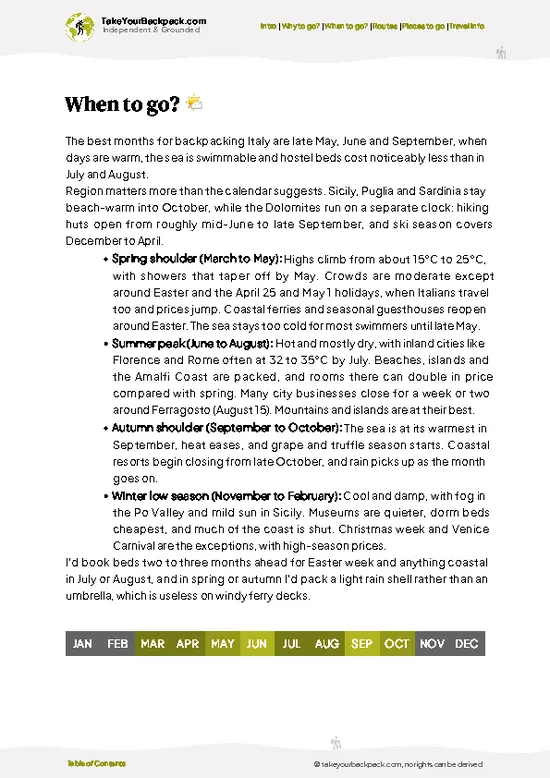
source: climatestotravel.comJANJanuary: below average for travelingFEBFebruary: below average for travelingMARMarch: good for travelingAPRApril: excellent for travelingMAYMay: excellent for travelingJUNJune: good for travelingJULJuly: fair for travelingAUGAugust: fair for travelingSEPSeptember: excellent for travelingOCTOctober: excellent for travelingNOVNovember: fair for travelingDECDecember: below average for traveling
when-to-go

✈️ The backpacker research shortcutItaly Travel Guide

An offline-friendly backpacking guide with optimized travel routes, ranked highlights, transport advice, and the best areas to stay.
example page 0 from our offline Travel Guide for Italy
example page 1 from our offline Travel Guide for Italy
example page 2 from our offline Travel Guide for Italy
example page 3 from our offline Travel Guide for Italy
example page 4 from our offline Travel Guide for Italy
example page 5 from our offline Travel Guide for Italy
example page 6 from our offline Travel Guide for Italy
example page 7 from our offline Travel Guide for Italy
The digital guide (542 pages) contains:
148 highlights, ranked by travel appeal
Optimized 7, 14 & 21-day travel routes
Cities, national parks, landmarks, beaches
How to get around
Offline-friendly for travel without Wi-Fi
👉 Click to see all 30+ guide features

📅 Plan smarter in minutes, not weeks
Month by month travel advice
Festivals & national holidays
Budget expectations

🗺️ Go to the right places, skip the overrated ones
Honest pros & cons of destinations
Top hikes, parks & viewpoints
Lesser-known places most travelers miss
Clear “worth it vs skip it” guidance

🛏️ Travel smoothly without rookie mistakes
Best areas to stay
Transport systems explained simply
Common scams & safety advice
SIM cards, money & practical tips

🌍 Understand the country, not just visit it
Culture & traditions
52 Essential phrases & customs
Festivals worth planning around
Traveler-friendly historical context
Insights that make places more meaningful

📱 Built for real travel conditions
Fully downloadable PDF
Works completely offline
Optimized for phone use
Useful in remote areas & buses
Everything in one place
Save weeks of stressful planning
Get instant access to your full guide. 30‑day money-back guarantee.


By proceeding you agree to our terms.
Sent to your inbox immediately after payment • 100% Secure Checkout
Best Backpacking Travel Advisor 2025 tourism awardBest Backpacking
Travel Advisor
2025
What others say about Take Your Backpack Guides:
⭐⭐⭐⭐⭐
Fantastic, amazing amount of information!
⭐⭐⭐⭐⭐
My goodness this is amazing, it's what I've been looking for hats off too you!
⭐⭐⭐⭐⭐
I think this is absolutely BRILLIANT
⭐⭐⭐⭐
Very complete and informative. It's still missing places, but I gotta to commend you
⭐⭐⭐⭐⭐
This is truly amazing, thank you, can't wait to explore it with my kids!
⭐⭐⭐⭐⭐
Awesome resource, thank you!
⭐⭐⭐⭐⭐
This is amazing! Can't wait to explore the ones I haven't seen
⭐⭐⭐⭐
I love this! Well done, great idea.
⭐⭐⭐⭐⭐
Thanks for taking the time to make this gem!
⭐⭐⭐⭐⭐
This might be the best website I've ever seen.
⭐⭐⭐⭐⭐
Congratulations, and thank you so much for your work; it's incredibly valuable.
⭐⭐⭐⭐
In all seriousness I think you did a great job pointing out the important spots
⭐⭐⭐⭐⭐
10/10 very good
⭐⭐⭐⭐⭐
As someone who's only just starting to visit regularly this is awesome, thank you.
⭐⭐⭐⭐
Thank you very much! I'm going to visit my dad, it's going to be very useful!
⭐⭐⭐⭐⭐
This is really cool! We'll be travelling for the first time and this definitely come in handy.
⭐⭐⭐⭐⭐
You are now our minister of culture, congratulations 👨‍💼
⭐⭐⭐⭐⭐
Just wanted to tell you that this is a pearl! Going to follow your recommendations.
⭐⭐⭐⭐⭐
This is so cool. I'll definitely be using the resource for my travels soon.
⭐⭐⭐⭐⭐
This is very impressive! Good work.
⭐⭐⭐⭐⭐
This is an amazing and informative site. Very well done!

🛏️ Where to stay?Best areas and accommodation options

For backpackers heading to Alta Murgia National Park, options are limited within the park itself. Consider staying in nearby towns like Gravina in Puglia or Altamura. Both offer budget-friendly hostels and guesthouses, plus a taste of local culture.

Gravina has a few charming B&Bs that won’t break the bank. Altamura is known for its bread and has several affordable accommodations.

Be aware of seasonal price hikes, especially in summer. Booking in advance can save you from inflated rates. Keep your eyes peeled for hidden fees, like tourist taxes, which can add up. Prioritize comfort and proximity … read more 👉
For backpackers heading to Alta Murgia National Park, options are limited within the park itself. Consider staying in nearby towns like Gravina in Puglia or Altamura. Both offer budget-friendly hostels and guesthouses, plus a taste of local culture.

Gravina has a few charming B&Bs that won’t break the bank. Altamura is known for its bread and has several affordable accommodations.

Be aware of seasonal price hikes, especially in summer. Booking in advance can save you from inflated rates. Keep your eyes peeled for hidden fees, like tourist taxes, which can add up. Prioritize comfort and proximity to the park’s entrances for easy access to trails.

👛 Costs (as of 7 December 2025)What things cost and how to budget

Visiting Alta Murgia National Park in Italy can be a rewarding experience, but it’s essential to be aware of the costs involved to avoid surprises.

Entrance to the park is free, which is a significant plus. However, if you plan to join guided tours or activities, expect to pay between €15 to €50 per person. These tours often provide valuable insights and access to areas that might be challenging to explore on your own.

Parking fees can vary. If you drive, budget around €5 to €10 for a day. Some areas may have free parking, but it’s wise to check local signs to avoid fines.

If you’re considering accommodations, options range widely. Camping is available for about €10 to €20 per night, while nearby hotels or agriturismos can cost anywhere from €60 to €150 per night, depending on the season … read more 👉
Visiting Alta Murgia National Park in Italy can be a rewarding experience, but it’s essential to be aware of the costs involved to avoid surprises.

Entrance to the park is free, which is a significant plus. However, if you plan to join guided tours or activities, expect to pay between €15 to €50 per person. These tours often provide valuable insights and access to areas that might be challenging to explore on your own.

Parking fees can vary. If you drive, budget around €5 to €10 for a day. Some areas may have free parking, but it’s wise to check local signs to avoid fines.

If you’re considering accommodations, options range widely. Camping is available for about €10 to €20 per night, while nearby hotels or agriturismos can cost anywhere from €60 to €150 per night, depending on the season and amenities.

Food costs can also add up. A meal at a local trattoria typically runs between €15 to €30 per person. If you’re looking to save, consider packing snacks or a picnic, especially since the park has beautiful spots to enjoy your meal.

Lastly, always keep a little extra in your budget for unexpected expenses, like souvenirs or local experiences that catch your eye. Being prepared will help you focus on enjoying the stunning landscapes and rich history of Alta Murgia without financial stress.
⚠️ Prices can change and everyone travels differently, so take this as a rough guide. Hope it helps you plan your adventure!

🥾 TrailsExploring Alta Murgia: trails, terrain, and views

The hiking opportunities in Alta Murgia National Park are pretty fantastic, especially if you dig unique landscapes and a bit of wildlife. Picture vast plateaus dotted with ancient rock formations and the occasional olive tree. The terrain varies from gentle slopes to more rugged areas, so you can find something for every kind of hiker. You might spot some wild boars or a few rare birds if you keep your eyes peeled, which adds a nice touch to the experience.

One of the standout trails is the Sentiero dell’Acqua, which is a lovely way to soak in the scenery. Here are the details:
  • Length: 8 km
  • Estimated
read more 👉
The hiking opportunities in Alta Murgia National Park are pretty fantastic, especially if you dig unique landscapes and a bit of wildlife. Picture vast plateaus dotted with ancient rock formations and the occasional olive tree. The terrain varies from gentle slopes to more rugged areas, so you can find something for every kind of hiker. You might spot some wild boars or a few rare birds if you keep your eyes peeled, which adds a nice touch to the experience.

One of the standout trails is the Sentiero dell’Acqua, which is a lovely way to soak in the scenery. Here are the details:
  • Length: 8 km
  • Estimated Duration: 3 hours
  • Difficulty Level: Moderate
  • Key Features: Scenic views of the Murgia plateau, ancient aqueducts, and diverse flora.
  • Terrain: Mix of dirt paths and rocky stretches, with some elevation changes.

Getting to the park can be a breeze if you’re using public transport. Buses run from nearby towns like Gravina and Altamura, but they might not be super frequent, so check the schedule ahead of time. It can get a bit crowded on weekends, especially in peak season, so if you want a more peaceful hike, consider going early in the morning or during the week. As for entrance fees, there’s no charge to enter the park, which is a nice bonus for budget travelers. Just pack some snacks and enjoy the hike!
⚠️ Hiking info can sometimes be outdated or inaccurate. Before you hit the trail, check the latest conditions with locals. If you do spot anything that's off, I'd love to hear from you, so I can update it for fellow travelers.

🛡️ SafetyStaying Safe: What Travelers Should Know

Alta Murgia National Park offers a generally accessible experience, but a few practical considerations can enhance your adventure. Weather can shift quickly, so pack layers and check forecasts. The terrain is mostly manageable, though some trails can be steep and rocky; sturdy footwear is essential. Wildlife is present, including wild boar, so keep a respectful distance and avoid feeding them. Stay on marked paths to protect both yourself and the environment. With thoughtful preparation, you’ll navigate the park’s beauty smoothly and safely.

Other Italian national parks near Alta Murgia

Explore more nearby:


💡 Not sure where to go next?
Create a personalized itinerary for Italy including Alta Murgia and the places that fit your trip.

Generate my itinerary

👉 Discover all national parks

Or checkout all Italy has to offer (think cities, towns, villages, national parks, hikes, beaches, festivals)
Country photo of Italy

We 💚 feedbackFinal thoughts on exploring Alta Murgia

Alta Murgia National Park is a treasure trove of ancient landscapes and unique wildlife. You’ll feel the history in every step. Just be aware: the trails can be rugged and poorly marked. Bring a good map and your sense of adventure to navigate the wild.

✈️ When did I visit Italy?
Italy I have vistited a couple of times: Rome already when I was still in high school, and I did a 7 day hike in the Dolomites in 2021.

✍️ Help improve this page!
The information on this page is based on my own backpacking experience in Italy, supplemented with up-to-date research and feedback from other travelers. Travel details can change, so if you notice anything outdated or incomplete, feel free to let me know.


🙋‍♂️ Give feedback

👋 Meet the founderWho’s Behind Take Your Backpack?

Johan, backpacker and founder of TakeYourBackpackHi, I’m Johan (Netherlands 🇳🇱), the creator of TakeYourBackpack. Over the past decade, I’ve backpacked through 80+ countries across six continents, gaining extensive experience with independent travel, long-term trips, and overland routes.

This site is built on a combination of firsthand travel experience and carefully curated insights from other backpackers. Many guides are based on places I’ve personally visited, while others bring together tips, observations, and practical advice shared by trusted travelers I’ve met along the way.

The goal is to provide realistic, experience-driven guidance — not generic itineraries — so you can explore destinations with better context, clearer expectations, and more confidence.

Get full Italy guide •
Instant download • 148 highlights • Full Offline guide