×

Italy🇮🇹 | best national parksWhere to Find the 10 Best national parks in Italy

Italy has 25 national parks, and they are not one product. The Alps and Dolomites (north) mean huts, cable cars and prices that match the scenery. The Apennines of Abruzzo, Lazio and Molise are the real backpacker country: empty beech forest, wolves and bears, village rooms for €40 to 70 a night, and almost no English spoken. The Calabrian and Sicilian parks (south) have volcanic or mountain terrain, thin buses and a lot of improvisation. The coastal and island parks, such as Cinque Terre and the Tuscan Archipelago, are the most crowded and the most expensive, and they suit a day, not a week.

Italy has no tradition of wild camping, and fees are small or absent, so cost depends on where you sleep. For independent travel, pick the Apennines for solitude and the Alps for infrastructure. Skip the famous coastal trails in summer, since queues and timed tickets spoil them.

By Johan Kruseman 🇳🇱 | Updated October 18, 2026
Explore the best hikes in Italy

Why go?Why These national park Stand Out

Italy is a poor match for the American idea of a national park and a strong match for another one. Almost every landscape here has been farmed, grazed, logged or fought over for thousands of years, so Italian parks protect living cultural landscapes rather than empty wilderness. Terraced hillsides, shepherd tracks, stone hamlets and mule paths sit inside park boundaries, and that is the appeal. Anyone who wants untouched backcountry with no villages should look to Scandinavia or North America instead.

The country is long and mountainous, running from Alpine glaciers to Sicilian volcanoes, so biodiversity is high for its size. The Apennine spine shelters species that vanished elsewhere in Western Europe, including the Marsican brown bear and the Apennine wolf. Climate varies just as much, … read more 👉
Italy is a poor match for the American idea of a national park and a strong match for another one. Almost every landscape here has been farmed, grazed, logged or fought over for thousands of years, so Italian parks protect living cultural landscapes rather than empty wilderness. Terraced hillsides, shepherd tracks, stone hamlets and mule paths sit inside park boundaries, and that is the appeal. Anyone who wants untouched backcountry with no villages should look to Scandinavia or North America instead.

The country is long and mountainous, running from Alpine glaciers to Sicilian volcanoes, so biodiversity is high for its size. The Apennine spine shelters species that vanished elsewhere in Western Europe, including the Marsican brown bear and the Apennine wolf. Climate varies just as much, from snowbound northern passes to dry, hot southern ridges.

Infrastructure is uneven. The Alps and Dolomites have marked trails, staffed huts (rifugi) and lifts. The central and southern parks depend on regional buses that thin out on Sundays and in winter, and a rental car makes life far easier. Park entry is mostly free, and charges appear for specific things such as trail passes, boats, parking or timed access, so the real cost sits in lodging and transport.

Before choosing Italy, know that rules are set locally. Camping is restricted in most parks, and fires are banned. Trail marking follows the CAI system of red-and-white paint, which is reliable. Do not expect English signs outside the north, and carry offline maps. The parks reward people who want hiking tied to food, villages and history, and they disappoint those chasing pure solitude on the busiest routes.
Our Approach to Ranking
The list of best national parks in Italy is created based on landscapes, wildlife, adventure opportunities, facilities, and overall experience. If you feel a national park is missing in this list, please let us know.

When to go?Best Time to Visit Italy for national parks

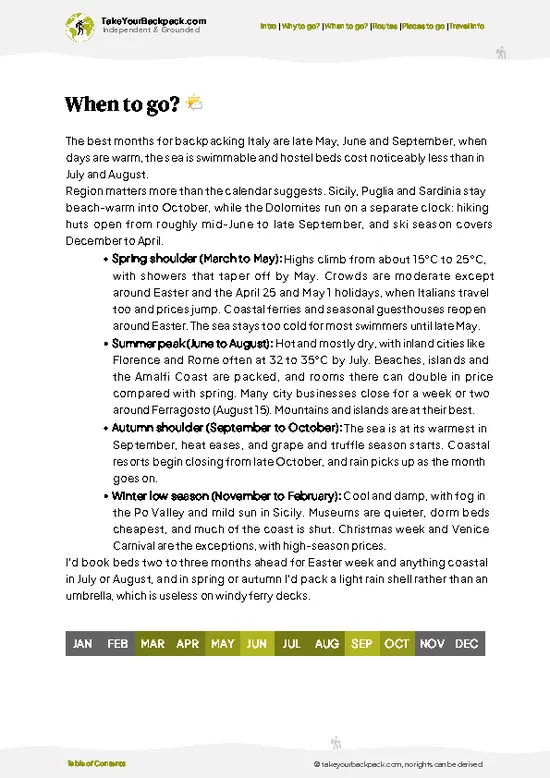
Best months: The best months for national parks in Italy are June to September for the mountains and April to early June plus September to October for everywhere else, because high trails clear of snow by late June while lower parks avoid peak heat. Alpine and Dolomite passes typically stay snowy until mid-June, and huts mostly open from late June to mid-September, with few exceptions. Daytime temperatures at 2,000 meters run about 10 to 20°C in July, and afternoon thunderstorms are common, so start early.

Shoulder seasons: In the central Apennines, May to June and September to October are ideal, with daytime highs of 15 to 25°C. Beech forests turn gold in mid to late October, and the deer rut makes this a standout time for wildlife. Autumn is the wettest season across much of the peninsula, … read more 👉
Best months: The best months for national parks in Italy are June to September for the mountains and April to early June plus September to October for everywhere else, because high trails clear of snow by late June while lower parks avoid peak heat. Alpine and Dolomite passes typically stay snowy until mid-June, and huts mostly open from late June to mid-September, with few exceptions. Daytime temperatures at 2,000 meters run about 10 to 20°C in July, and afternoon thunderstorms are common, so start early.

Shoulder seasons: In the central Apennines, May to June and September to October are ideal, with daytime highs of 15 to 25°C. Beech forests turn gold in mid to late October, and the deer rut makes this a standout time for wildlife. Autumn is the wettest season across much of the peninsula, with October and November often the rainiest months, so plan for a few lost days. In the south and in Sicily and Sardinia, spring (April to May) and October are best. July and August bring 30 to 40°C and make midday hiking unpleasant and sometimes dangerous. Skip the southern parks in mid-summer.

Peak periods and prices: The crunch is mid-July to late August, especially around Ferragosto on August 15, when Italians take their holidays. Rifugi and coastal parks fill, and lodging in popular areas can cost 30 to 60 percent more than in shoulder months. Reserve huts weeks ahead. Coastal trails with timed or paid access are worst at this time.

Winter: Winter closes most high trails and many huts. Snowshoeing and ski touring work in the Alps and Apennines from December to March, but services are limited and avalanche risk is real. Lower coastal parks stay walkable, though ferries and some businesses shrink from November to March.

national park hoppingPlanning Your Route Efficiently

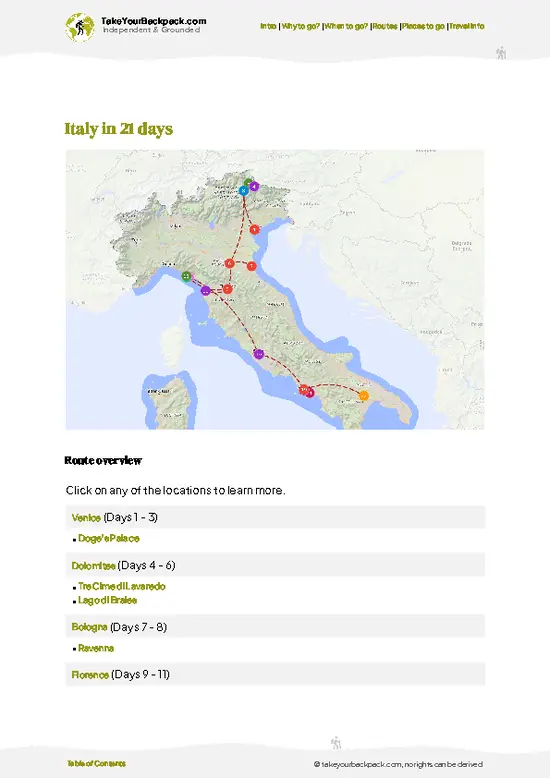
How many days: A trip combining several national parks in Italy needs 10 to 16 days, because each region demands its own transfer and a margin for weather. Fewer than ten days turns the trip into a series of buses and trains with a short hike between them.

Which regions cluster: Group parks by region, not by name. The north (Dolomites, Alpine parks) links well through Milan, Verona or Venice, and transfers between valleys take 2 to 4 hours by train and regional bus. The central Apennines (Abruzzo, Lazio, Molise, Gran Sasso, Majella) cluster around Rome and Pescara, and driving between them takes 1.5 to 3 hours. The south and islands work as separate trips, since Rome to Calabria takes 5 to 7 hours by train and Sicily adds a ferry or flight.

A sensible direction is north to south in spring … read more 👉
How many days: A trip combining several national parks in Italy needs 10 to 16 days, because each region demands its own transfer and a margin for weather. Fewer than ten days turns the trip into a series of buses and trains with a short hike between them.

Which regions cluster: Group parks by region, not by name. The north (Dolomites, Alpine parks) links well through Milan, Verona or Venice, and transfers between valleys take 2 to 4 hours by train and regional bus. The central Apennines (Abruzzo, Lazio, Molise, Gran Sasso, Majella) cluster around Rome and Pescara, and driving between them takes 1.5 to 3 hours. The south and islands work as separate trips, since Rome to Calabria takes 5 to 7 hours by train and Sicily adds a ferry or flight.

A sensible direction is north to south in spring and summer, ending in the cooler Apennines or finishing at altitude when heat builds in the south. In autumn, reverse that and start in the south while it is still warm.

Time per stop: Give mountain parks 2 to 4 days each, enough for one hut stay or two good day hikes plus a weather buffer. Give coastal parks 1 to 2 days. Plan a full day for each transfer between regions.

Common planning mistakes: The first mistake is trying to cover north and south in one week. Pick one macro-region and go deep, or fly between them. The second is trusting a map for public transport. Rural buses may run once or twice daily and not on Sundays, so check timetables locally or rent a car for the Apennines. The third is arriving at a trailhead late, since afternoon storms in the Alps and heat in the south make early starts a necessity. The fourth is stacking famous coastal stops in August. Move them to shoulder months and fill summer with high mountains.

The ListMust-Visit national parks in Italy

1 Cinque Terre

terraced hillsides, cliffside villages, coastal paths

Walk narrow trails linking five historic settlements, where steep vineyards and sea views define the Ligurian coastline.

italy-national-park-cinque-terre
© Google | Al Felicio

2 Gran Paradiso

glacial valleys, alpine wildlife, high summits

Ascend into Italy’s oldest national park, where ibex and marmots roam beneath snow-capped peaks and wildflower meadows.

italy-national-park-gran-paradiso
© Google | Michela Bugni

3 Stelvio National Park

glacier fields, switchback roads, alpine passes

Cross high mountain passes and glacial valleys, encountering challenging terrain and panoramic views in the heart of the Alps.

italy-national-park-stelvio-national-park
© Google | Tom Van Huet

4 Arcipelago Toscano National Park

island chain, marine reserves, Mediterranean scrub

Sail or hike between seven distinct islands, each offering unique coastlines, underwater life, and traces of ancient civilizations.

italy-national-park-arcipelago-toscano-national-park
© Google |

5 Dolomiti Bellunesi National Park

limestone peaks, alpine meadows, remote valleys

Hike through rugged mountain terrain where wildflowers, waterfalls, and isolated hamlets reveal the quieter side of the Dolomites.

italy-national-park-dolomiti-bellunesi-national-park
© Google |

6 Cilento and Vallo di Diano National Park

coastal hills, ancient ruins, olive groves

Move from wooded mountains to the Tyrrhenian Sea, exploring archaeological sites and rural landscapes shaped by centuries of agriculture.

italy-national-park-cilento-and-vallo-di-diano-national-park
© Google | Monica Russiani

7 Majella National Park

deep canyons, hermit caves, high pastures

Ascend rocky slopes dotted with ancient refuges, where shepherd trails and wild landscapes dominate the heart of Abruzzo.

8 Gargano National Park

karst cliffs, coastal forests, sea caves

Follow trails from ancient woodlands to dramatic coastlines, exploring a promontory shaped by wind, sea, and centuries of isolation.

italy-national-park-gargano-national-park
© Google |

9 Alta Murgia National Park

karst plateaus, dry stone walls, archaeological sites

Walk across open steppe landscapes, encountering prehistoric relics and the stark beauty of southern Italy’s interior.

10 Asinara National Park

island wilderness, white donkeys, turquoise coves

Roam a former prison island where rare animals graze and quiet beaches meet the clear waters of the Mediterranean.

11 La Maddalena Archipelago National Park

granite islands, hidden beaches, clear waters

Island-hop through a protected marine area, where sculpted rocks and shallow bays invite exploration above and below the surface.

12 Val Grande National Park

wilderness, deep gorges, abandoned settlements

Venture into Italy’s largest roadless area, where dense forests and steep ravines offer solitude and a sense of true remoteness.

13 Gran Sasso National Park

rocky plateaus, wild horses, high-altitude plains

Traverse open grasslands and rugged peaks, where herds of horses graze and weathered villages cling to the mountainsides.

italy-national-park-gran-sasso-national-park
© Google | Maurizio Zampa

14 Appennino Tosco-Emiliano National Park

ridge trails, glacial lakes, wildflower slopes

Cross the Apennine divide on foot, moving between Tuscany and Emilia-Romagna through landscapes marked by seasonal color and open vistas.

15 Monti Sibillini National Park

rolling mountains, wildflower plains, medieval villages

Experience the shifting moods of central Italy’s highlands, where ancient legends linger and spring brings carpets of color to the valleys.

16 Sila National Park

ancient forests, mountain lakes, rural villages

Wander among centuries-old pines and tranquil lakes, discovering Calabria’s high plateau landscapes and traditional mountain communities.

17 Gennargentu National Park

Sardinian highlands, wild horses, rugged plateaus

Traverse wind-swept uplands and limestone ridges, encountering endemic wildlife and the distinctive landscapes of central Sardinia.

18 Foreste Casentinesi National Park

old-growth woods, waterfalls, monastic retreats

Lose yourself in dense forests and hidden valleys, where centuries-old trees shelter wildlife and spiritual sites.

italy-national-park-foreste-casentinesi-national-park
© Google |

19 Madonie Regional Natural Park

limestone massifs, rare flora, Sicilian hamlets

Climb through diverse elevations, passing through chestnut woods and stone villages that preserve Sicily’s rural traditions.

20 Nebrodi Regional Park

broadleaf forests, Sicilian uplands, wild boar

Traverse the largest forested area in Sicily, where rolling hills and ancient woodlands support diverse wildlife and traditional farming.

21 Monti Simbruini Regional Park

limestone ridges, beech woods, mountain springs

Trek along high ridgelines and through cool forests, discovering natural springs and quiet upland villages east of Rome.

22 Monti Picentini Regional Park

karst peaks, chestnut groves, mountain streams

Follow winding paths through southern Apennine landscapes, where water shapes valleys and rural life endures.

23 Abruzzo, Lazio and Molise National Park

wolf habitat, high meadows, medieval villages

Spot elusive wildlife and walk through flower-filled grasslands, passing through stone towns that preserve mountain culture.

italy-national-park-abruzzo-lazio-and-molise-national-park
© Google | Gabriele Giuliani

24 Pollino National Park

Bosnian pines, deep gorges, remote villages

Hike through southern Italy’s largest park, where rare trees and dramatic canyons shape a landscape of isolation and resilience.

italy-national-park-pollino-national-park
© Google | Carmine Anastasia

Think you know Italy?

Prove you’re a true local — uncover 14 lesser-known national parks in Italy that locals tend to keep to themselves.
Loading the map 🌍

Expert viewTips and Advice from Travelers

How many to visit: Visit three or four parks on one trip, at most. Italy rewards depth, since each park takes two to four days to understand, and transfers eat hours. Seeing seven means seeing mostly buses. Two parks in one region plus one contrasting stop is the best formula.

Which kind for which traveler: First-timers who want clear trails, huts and easy logistics should start in the Alps and Dolomites. The marking is excellent and lifts shorten approaches, but this is the priciest option. Solitude seekers and wildlife fans should choose the central Apennines, which are cheaper, quieter and more rustic, though they need a car or patience with buses. Anyone chasing volcanic landscapes or southern wildness should accept thinner infrastructure in exchange for emptiness. The coastal parks are … read more 👉
How many to visit: Visit three or four parks on one trip, at most. Italy rewards depth, since each park takes two to four days to understand, and transfers eat hours. Seeing seven means seeing mostly buses. Two parks in one region plus one contrasting stop is the best formula.

Which kind for which traveler: First-timers who want clear trails, huts and easy logistics should start in the Alps and Dolomites. The marking is excellent and lifts shorten approaches, but this is the priciest option. Solitude seekers and wildlife fans should choose the central Apennines, which are cheaper, quieter and more rustic, though they need a car or patience with buses. Anyone chasing volcanic landscapes or southern wildness should accept thinner infrastructure in exchange for emptiness. The coastal parks are the least worthwhile for backpackers who want trekking. They are beautiful, but they are crowded, regulated and expensive, so give them a day and go outside August.

Skip any park mainly because it is famous. Fame in Italy tracks Instagram, not trail quality, and some of the best hiking sits in parks most foreigners never name.

What it costs: Entry to most parks is free. Paid items are specific: trail passes on a few coastal routes (roughly €5 to 10), parking (€5 to 15 a day), cable cars (€15 to 40 return) and boats. Expect US$60 to 90 a day (€55 to 85) in the Apennines when you eat in village trattorias and sleep in simple rooms or small guesthouses. The Alps and Dolomites run US$100 to 160 a day (€90 to 150) in season, with rifugio half-board at about €60 to 100. Camping is legal only at designated sites in most parks, usually €10 to 25 a night. A local guide for a day costs roughly €150 to 300 for a group and is worth it only for glacier or via ferrata terrain or for wildlife tracking in the Apennines. A car rental adds €30 to 60 a day and is justified in central and southern parks, not in the Alps.

Per park visit, budget about US$150 to 400 for three days, including lodging, food and local transport.

Safety: Weather turns fast above 2,000 meters. Summer thunderstorms arrive in the afternoon, so be off ridges by 2 or 3 p.m. Carry a rain shell even in July. The emergency number is 112, and mountain rescue is run through it. Via ferrata routes need a harness, lanyard and helmet, and these are not casual walks. In the south, summer heat and scarce water cause the real problems, so carry 2 to 3 liters. Wolves and bears in the Apennines avoid people, but keep distance, never feed animals and store food properly. Sheepdogs guarding flocks can be aggressive, so walk around the flock calmly and do not approach.

Cultural rules that matter: Wild camping and open fires are banned in most parks, and fines can reach hundreds of euros. Greet people on the trail with a “buongiorno”, since it is expected. Rifugi serve a set evening meal at a fixed time, and arriving late is rude. Book huts ahead in summer, and cancel if plans change. Many village restaurants close between 3 and 7 p.m., so eat a proper lunch. Carry cash for huts and small villages, since card machines are not universal. Learn a few Italian phrases, since English is common in the north but rare in the Apennines. Pack out all trash, as bins on trails are scarce.

✈️ The backpacker research shortcutItaly Travel Guide

An offline-friendly backpacking guide with optimized travel routes, ranked highlights, transport advice, and the best areas to stay.
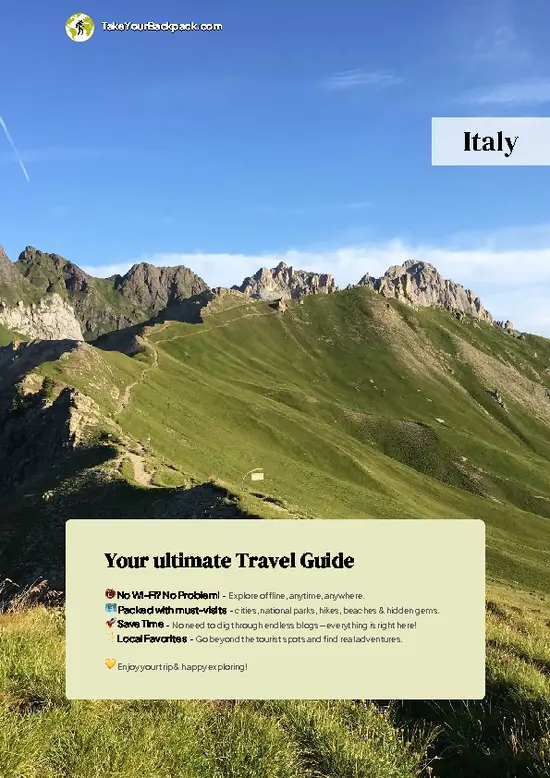
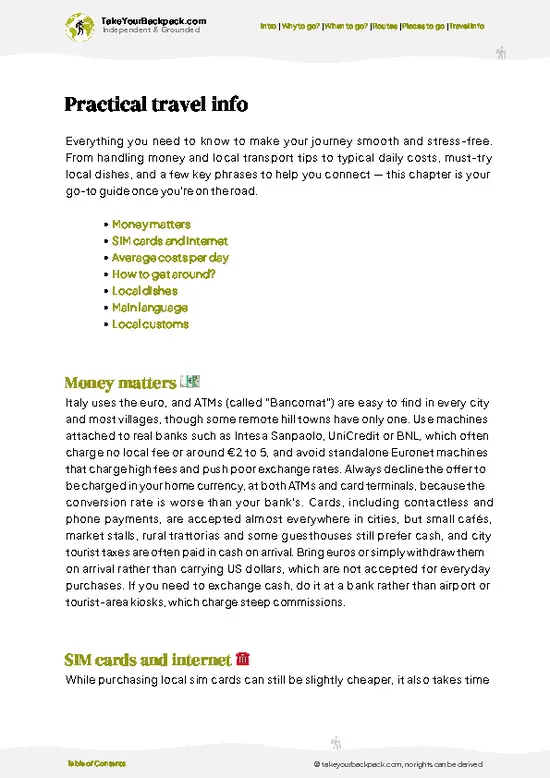
example page 0 from our offline Travel Guide for Italy
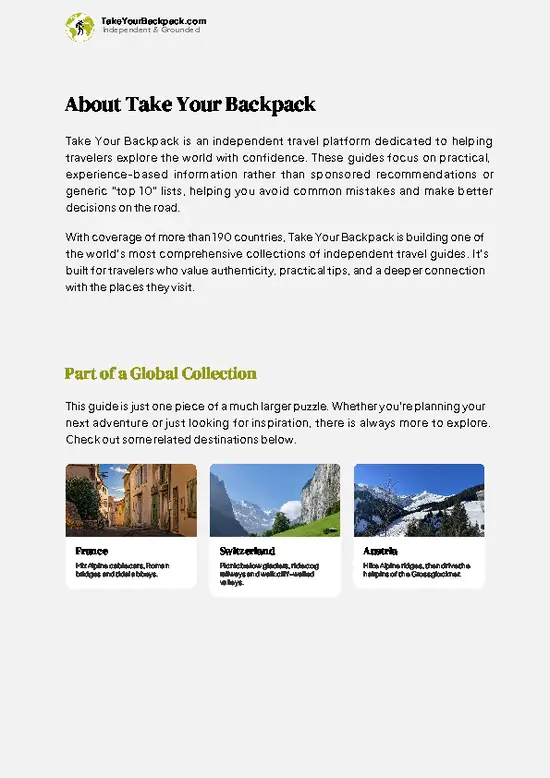
example page 1 from our offline Travel Guide for Italy
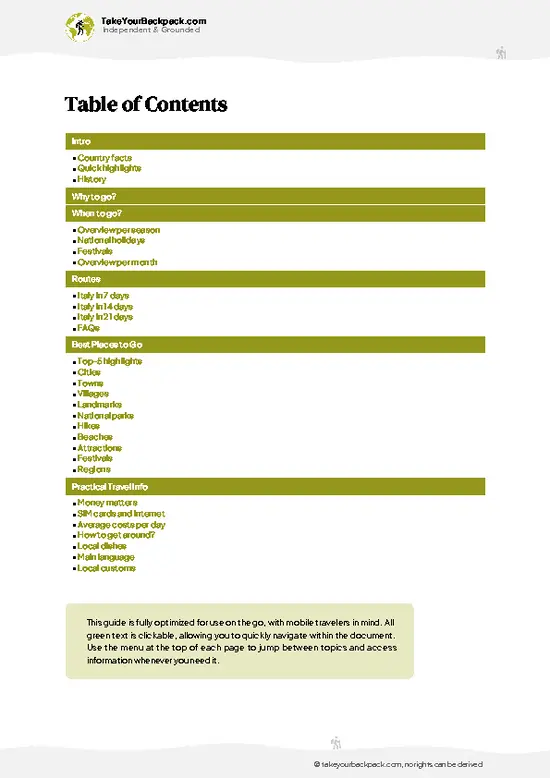
example page 2 from our offline Travel Guide for Italy
example page 3 from our offline Travel Guide for Italy
example page 4 from our offline Travel Guide for Italy
example page 5 from our offline Travel Guide for Italy
example page 6 from our offline Travel Guide for Italy
example page 7 from our offline Travel Guide for Italy
The digital guide (523 pages) contains:
✅ 142 highlights, ranked by travel appeal
✅ Optimized 7, 14 & 21-day travel routes
✅ Cities, national parks, landmarks, beaches
✅ How to get around
✅ Offline-friendly for travel without Wi-Fi
👉 Click to see all 30+ guide features

📅 Plan smarter in minutes, not weeks
✅ Month by month travel advice
✅ Festivals & national holidays
✅ Budget expectations

🗺️ Go to the right places, skip the overrated ones
✅ Honest pros & cons of destinations
✅ Top hikes, parks & viewpoints
✅ Lesser-known places most travelers miss
✅ Clear “worth it vs skip it” guidance

🛏️ Travel smoothly without rookie mistakes
✅ Best areas to stay
✅ Transport systems explained simply
✅ Common scams & safety advice
✅ SIM cards, money & practical tips

🌍 Understand the country, not just visit it
✅ Culture & traditions
✅ 52 Essential phrases & customs
✅ Festivals worth planning around
✅ Traveler-friendly historical context
✅ Insights that make places more meaningful

📱 Built for real travel conditions
✅ Fully downloadable PDF
✅ Works completely offline
✅ Optimized for phone use
✅ Useful in remote areas & buses
✅ Everything in one place
Stop searching, start planning
Get instant access to your full guide. 30‑day money-back guarantee.
+ Add another guide for just

By proceeding you agree to our terms.
Sent to your inbox immediately after payment • 100% Secure Checkout
Best Backpacking Travel Advisor 2025 tourism awardBest Backpacking
Travel Advisor
2025
What others say about Take Your Backpack Guides:
⭐⭐⭐⭐⭐
Fantastic, amazing amount of information!
⭐⭐⭐⭐⭐
My goodness this is amazing, it's what I've been looking for hats off too you!
⭐⭐⭐⭐⭐
I think this is absolutely BRILLIANT
⭐⭐⭐⭐
Very complete and informative. It's still missing places, but I gotta to commend you
⭐⭐⭐⭐⭐
This is truly amazing, thank you, can't wait to explore it with my kids!
⭐⭐⭐⭐⭐
Awesome resource, thank you!
⭐⭐⭐⭐⭐
This is amazing! Can't wait to explore the ones I haven't seen
⭐⭐⭐⭐
I love this! Well done, great idea.
⭐⭐⭐⭐⭐
Thanks for taking the time to make this gem!
⭐⭐⭐⭐⭐
This might be the best website I've ever seen.
⭐⭐⭐⭐⭐
Congratulations, and thank you so much for your work; it's incredibly valuable.
⭐⭐⭐⭐
In all seriousness I think you did a great job pointing out the important spots
⭐⭐⭐⭐⭐
10/10 very good
⭐⭐⭐⭐⭐
As someone who's only just starting to visit regularly this is awesome, thank you.
⭐⭐⭐⭐
Thank you very much! I'm going to visit my dad, it's going to be very useful!
⭐⭐⭐⭐⭐
This is really cool! We'll be travelling for the first time and this definitely come in handy.
⭐⭐⭐⭐⭐
You are now our minister of culture, congratulations 👨‍💼
⭐⭐⭐⭐⭐
Just wanted to tell you that this is a pearl! Going to follow your recommendations.
⭐⭐⭐⭐⭐
This is so cool. I'll definitely be using the resource for my travels soon.
⭐⭐⭐⭐⭐
This is very impressive! Good work.
⭐⭐⭐⭐⭐
This is an amazing and informative site. Very well done!

🛏️ Where to stay?Where to Base Yourself

Italy has hostels and budget guesthouses in every major city, with dorm beds running roughly €25 to €50 a night and spiking in summer and around big events. In Rome, Esquilino near Termini station has the most cheap beds and the best transport links but feels scruffy after dark, while Trastevere puts you among the best nightlife at higher prices and with late-night noise. In Florence, San Lorenzo and Santa Maria Novella keep you within a 15-minute walk of the Duomo, and in Venice, staying on the mainland in Mestre roughly halves the price but means a 10 to 15 minute train or bus ride into the historic center.

If you enjoy meeting fellow travelers, consider choosing hostels with high ratings for … read more 👉
Italy has hostels and budget guesthouses in every major city, with dorm beds running roughly €25 to €50 a night and spiking in summer and around big events. In Rome, Esquilino near Termini station has the most cheap beds and the best transport links but feels scruffy after dark, while Trastevere puts you among the best nightlife at higher prices and with late-night noise. In Florence, San Lorenzo and Santa Maria Novella keep you within a 15-minute walk of the Duomo, and in Venice, staying on the mainland in Mestre roughly halves the price but means a 10 to 15 minute train or bus ride into the historic center.

If you enjoy meeting fellow travelers, consider choosing hostels with high ratings for atmosphere. On the other hand, if you prefer having your own space, a hotel might be a better option.

ItalyExpand Your Journey

👋 Meet the founderWho’s Behind Take Your Backpack?

Johan, backpacker and founder of TakeYourBackpackHi, I’m Johan (Netherlands 🇳🇱), the creator of TakeYourBackpack. Over the past 3 decades, I’ve backpacked through 90+ countries across six continents, gaining extensive experience with independent travel, long-term trips, and overland routes.

This site is built on a combination of firsthand travel experience and carefully curated insights from other backpackers. Many guides are based on places I’ve personally visited, while others bring together tips, observations, and practical advice shared by trusted travelers I’ve met along the way.

The goal is to provide realistic, experience-driven guidance — not generic itineraries — so you can explore destinations with better context, clearer expectations, and more confidence.