×

Italy🇮🇹 | national parksCilento and Vallo di Diano National Parkcoastal hills, ancient ruins, olive groves | things to do and best time to go

Explore AbruzzoExplore Cinque Terre

Backpacking in Cilento and Vallo di Diano
UNESCO World Heritage site
🏆 Top picknational park ranked #5
By Johan Kruseman 🇳🇱 | Updated May 15, 2026

Most people either confuse Cilento and Vallo di Diano National Park with the Amalfi Coast or assume it’s just a quieter version of it; it’s not. This park sits in southern Campania, south of Salerno, stretching inland from the Tyrrhenian coast into the Apennines. For backpackers, it’s a trade: less spectacle-on-a-plate, more slow-burn payoff. Trails range from coastal paths above rocky coves to long, hot slogs into oak and beech forest, with real chances of seeing boar, raptors, and actual dark skies at night. Access by public transport is workable but slower than Gran Sasso or Vesuvio, and you’ll walk more between villages. No real entrance fee, but caves and archaeological sites add small costs. Camping is limited to official sites and agriturismi; cheap rooms exist but are scattered. Compared with Amalfi or Vesuvio, crowds thin fast, and the vibe is rural, conservative, and very real.

Discover everything you want to know in the 📖 Italy Travel Guide.


Get your Italy guide
149 ranked highlights, routes & tips, works offline (545 pages)
Loading the map 🌍
CLICK TO FILTER
cities
towns
villages
landmarks
national parks
hikes
beaches
attractions
festivals
regions
SHOW COUNTRY’S BESTSHOW ALL

✨ Why go?
Ranked #5 national park in Italy
Why visitors keep coming back

Cilento and Vallo di Diano National Park attracts backpackers for several compelling reasons. First, the independent exploration is a major draw. You can wander through ancient villages and lush landscapes without the constraints of guided tours. This park is a haven for self-guided travelers, offering well-marked trails that cater to various skill levels.

Budget-conscious adventurers appreciate the affordable camping options and hostels nearby. You can pitch your tent under the stars or find a cozy bed without breaking the bank. This flexibility allows you to stretch your budget for experiences that truly matter.

The trail variety is another highlight. From coastal paths with stunning views to rugged mountain hikes, there’s something for everyone. Each trail reveals a different facet of … read more 👉
Cilento and Vallo di Diano National Park attracts backpackers for several compelling reasons. First, the independent exploration is a major draw. You can wander through ancient villages and lush landscapes without the constraints of guided tours. This park is a haven for self-guided travelers, offering well-marked trails that cater to various skill levels.

Budget-conscious adventurers appreciate the affordable camping options and hostels nearby. You can pitch your tent under the stars or find a cozy bed without breaking the bank. This flexibility allows you to stretch your budget for experiences that truly matter.

The trail variety is another highlight. From coastal paths with stunning views to rugged mountain hikes, there’s something for everyone. Each trail reveals a different facet of the park’s beauty, making it easy to spend days exploring without feeling repetitive.

In short, Cilento and Vallo di Diano National Park is a smart choice for those seeking authentic experiences while keeping costs in check.
Want to include Cilento and Vallo di Diano National Park in your Italy route?
Create a personalized Italy itinerary that includes Cilento and Vallo di Diano National Park and the places that fit your trip — based on your travel style, budget, and available time. Get your route in seconds.

Generate my trip

💡 HighlightsThe experiences that define the visit

  • Paestum — Three remarkably well-preserved Greek temples set on a flat plain near the sea; it’s special because you can walk right up to classical architecture that still feels monumental, then slip into a nearby trattoria for buffalo mozzarella made the same way it’s been made for centuries.
  • Velia (Elea) — Ancient Greek city perched on cliffs with sweeping Tyrrhenian Sea views; combines ruined walls and philosophical history (think Parmenides and Zeno) with a rugged coastal landscape that’s great for short cliff walks and sunsets.
  • Porto Infreschi and Cala Bianca — A marine-protected stretch of coast with impossibly clear water, hidden coves and white-pebble beaches; unique for snorkeling, short boat trips and quiet swims—my personal favorite for a day of hiking-a-bit/boat-a-bit relaxation
read more 👉
  • Paestum — Three remarkably well-preserved Greek temples set on a flat plain near the sea; it’s special because you can walk right up to classical architecture that still feels monumental, then slip into a nearby trattoria for buffalo mozzarella made the same way it’s been made for centuries.
  • Velia (Elea) — Ancient Greek city perched on cliffs with sweeping Tyrrhenian Sea views; combines ruined walls and philosophical history (think Parmenides and Zeno) with a rugged coastal landscape that’s great for short cliff walks and sunsets.
  • Porto Infreschi and Cala Bianca — A marine-protected stretch of coast with impossibly clear water, hidden coves and white-pebble beaches; unique for snorkeling, short boat trips and quiet swims—my personal favorite for a day of hiking-a-bit/boat-a-bit relaxation away from crowds.
  • Grotte di Pertosa-Auletta — One of Italy’s few show caves you explore partly by boat on an underground river; the karst chambers and stalactite formations are dramatic and perfect for a rainy-day detour or to cool off after a hot hike.
  • Certosa di Padula (Padula Charterhouse) — A massive baroque monastery and UNESCO site tucked into the Vallo di Diano; its long cloisters and gardens feel unexpectedly vast and peaceful—nice contrast to the wild parts of the park and easy to combine with a cultural stop.
  • Alta Via del Parco (Alta Via del Cilento) — The high ridge trail that threads the park from saddle to saddle; it’s special for varied terrain (forests, karst, open ridges), wildflowers in spring, and real backcountry solitude if you hike multi-day sections. Bring water and be ready for exposed segments.
  • Monte Cervati — One of the park’s tallest peaks with beech forests, karst outcrops and wide panoramas from the summit; a proper mountain hike where you can feel like you’ve left the coast behind and might spot raptors or wild boar in the valleys below.
  • Monte Gelbison and the Sanctuary — A sacred summit crowned by an old sanctuary; the climb rewards you with huge views across Cilento, chestnut and oak woods on the way up, and an interesting mix of pilgrimage culture plus nature on one route.
Spotted a mistake or missing something? Contact us.

Things to do near Cilento and Vallo di Diano National Park

Ratings based on Tripadvisor reviews. When you book through this link, you support our work at no extra cost to you.

🌤️ When to go?When to go for the best experience


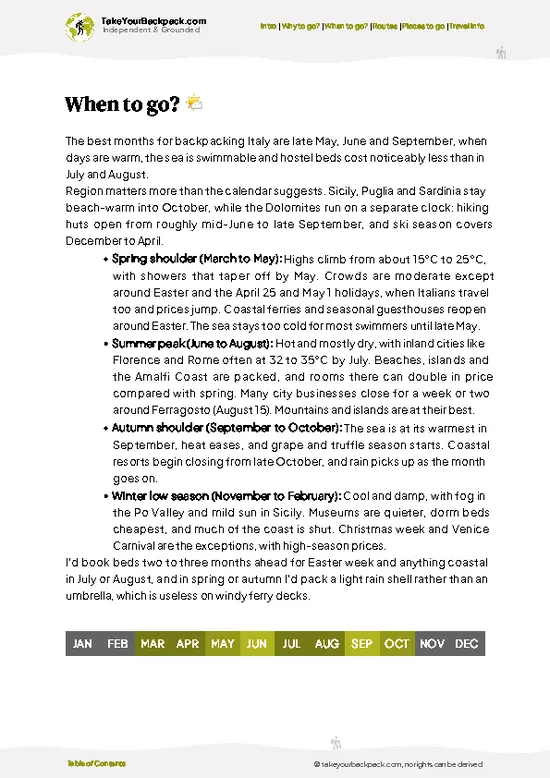
  • Weather: Spring (April to June) and early autumn (September to October) offer mild, stable weather. Expect daytime highs around 20-25°C (68-77°F). Summer can be scorchingly hot, often exceeding 30°C (86°F), which drains energy fast on long hikes.

  • Temperature: Winters are cold and wet, with lows dipping to 0-5°C (32-41°F), not ideal for backpacking. Spring and autumn provide comfortable temperatures for long days on the trail without overheating or freezing.

  • Daylight Hours: Peak daylight stretches from late spring to early autumn, giving you 10-14 hours to explore. Winter days shrink to 8-9 hours, limiting your hiking window and increasing reliance on artificial light.

  • Crowds: Summer draws local tourists and Italians escaping cities, especially in coastal areas. Spring and autumn see
read more 👉

  • Weather: Spring (April to June) and early autumn (September to October) offer mild, stable weather. Expect daytime highs around 20-25°C (68-77°F). Summer can be scorchingly hot, often exceeding 30°C (86°F), which drains energy fast on long hikes.

  • Temperature: Winters are cold and wet, with lows dipping to 0-5°C (32-41°F), not ideal for backpacking. Spring and autumn provide comfortable temperatures for long days on the trail without overheating or freezing.

  • Daylight Hours: Peak daylight stretches from late spring to early autumn, giving you 10-14 hours to explore. Winter days shrink to 8-9 hours, limiting your hiking window and increasing reliance on artificial light.

  • Crowds: Summer draws local tourists and Italians escaping cities, especially in coastal areas. Spring and autumn see fewer visitors, letting you enjoy trails and villages without the shoulder-to-shoulder shuffle.

  • Seasonal Activities: Spring brings wildflowers and bird migrations; autumn offers truffle and chestnut hunts, plus local festivals. Summer is mostly about beach access and mountain shade, but the heat can sap your enthusiasm.

  • Price Fluctuations: Accommodation and transport costs spike in July and August. Booking outside these months often means better rates and more availability, especially in smaller towns within the park.


Pro-tip: Aim for late May or early October to dodge the heat and crowds while catching local seasonal events that add real flavor to your trek.


source: climatestotravel.comJANJanuary: fair for travelingFEBFebruary: fair for travelingMARMarch: good for travelingAPRApril: excellent for travelingMAYMay: excellent for travelingJUNJune: highly recommended for travelingJULJuly: fair for travelingAUGAugust: fair for travelingSEPSeptember: excellent for travelingOCTOctober: excellent for travelingNOVNovember: good for travelingDECDecember: fair for traveling
italy-national-park-cilento-and-vallo-di-diano-national-park
© Google | Monica Russiani

✈️ The backpacker research shortcutItaly Travel Guide

An offline-friendly backpacking guide with optimized travel routes, ranked highlights, transport advice, and the best areas to stay.
example page 0 from our offline Travel Guide for Italy
example page 1 from our offline Travel Guide for Italy
example page 2 from our offline Travel Guide for Italy
example page 3 from our offline Travel Guide for Italy
example page 4 from our offline Travel Guide for Italy
example page 5 from our offline Travel Guide for Italy
example page 6 from our offline Travel Guide for Italy
example page 7 from our offline Travel Guide for Italy
The digital guide (545 pages) contains:
149 highlights, ranked by travel appeal
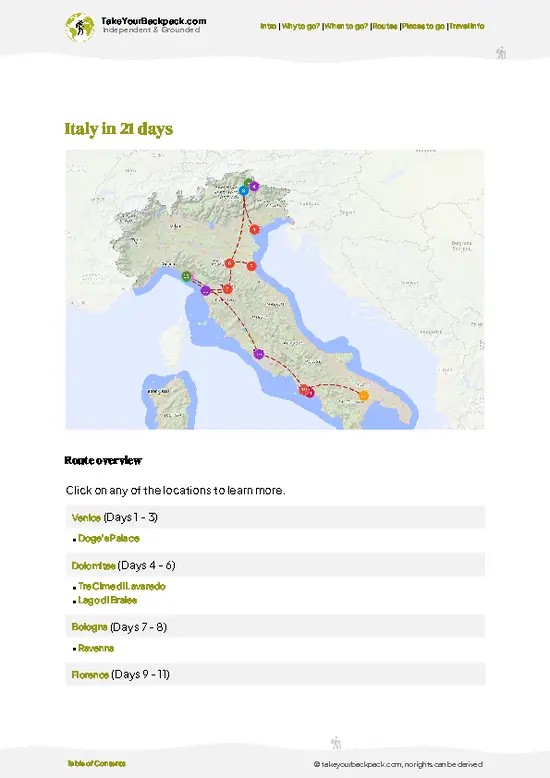
Optimized 7, 14 & 21-day travel routes
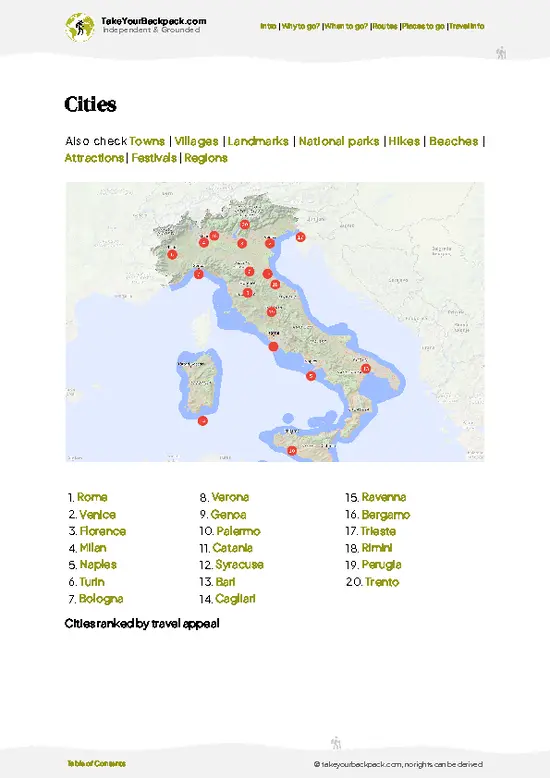
Cities, national parks, landmarks, beaches
How to get around
Offline-friendly for travel without Wi-Fi
👉 Click to see all 30+ guide features

📅 Plan smarter in minutes, not weeks
Month by month travel advice
Festivals & national holidays
Budget expectations

🗺️ Go to the right places, skip the overrated ones
Honest pros & cons of destinations
Top hikes, parks & viewpoints
Lesser-known places most travelers miss
Clear “worth it vs skip it” guidance

🛏️ Travel smoothly without rookie mistakes
Best areas to stay
Transport systems explained simply
Common scams & safety advice
SIM cards, money & practical tips

🌍 Understand the country, not just visit it
Culture & traditions
52 Essential phrases & customs
Festivals worth planning around
Traveler-friendly historical context
Insights that make places more meaningful

📱 Built for real travel conditions
Fully downloadable PDF
Works completely offline
Optimized for phone use
Useful in remote areas & buses
Everything in one place
Save weeks of stressful planning
Get instant access to your full guide. 30‑day money-back guarantee.


By proceeding you agree to our terms.
Sent to your inbox immediately after payment • 100% Secure Checkout
Best Backpacking Travel Advisor 2025 tourism awardBest Backpacking
Travel Advisor
2025
What others say about Take Your Backpack Guides:
⭐⭐⭐⭐⭐
Fantastic, amazing amount of information!
⭐⭐⭐⭐⭐
My goodness this is amazing, it's what I've been looking for hats off too you!
⭐⭐⭐⭐⭐
I think this is absolutely BRILLIANT
⭐⭐⭐⭐
Very complete and informative. It's still missing places, but I gotta to commend you
⭐⭐⭐⭐⭐
This is truly amazing, thank you, can't wait to explore it with my kids!
⭐⭐⭐⭐⭐
Awesome resource, thank you!
⭐⭐⭐⭐⭐
This is amazing! Can't wait to explore the ones I haven't seen
⭐⭐⭐⭐
I love this! Well done, great idea.
⭐⭐⭐⭐⭐
Thanks for taking the time to make this gem!
⭐⭐⭐⭐⭐
This might be the best website I've ever seen.
⭐⭐⭐⭐⭐
Congratulations, and thank you so much for your work; it's incredibly valuable.
⭐⭐⭐⭐
In all seriousness I think you did a great job pointing out the important spots
⭐⭐⭐⭐⭐
10/10 very good
⭐⭐⭐⭐⭐
As someone who's only just starting to visit regularly this is awesome, thank you.
⭐⭐⭐⭐
Thank you very much! I'm going to visit my dad, it's going to be very useful!
⭐⭐⭐⭐⭐
This is really cool! We'll be travelling for the first time and this definitely come in handy.
⭐⭐⭐⭐⭐
You are now our minister of culture, congratulations 👨‍💼
⭐⭐⭐⭐⭐
Just wanted to tell you that this is a pearl! Going to follow your recommendations.
⭐⭐⭐⭐⭐
This is so cool. I'll definitely be using the resource for my travels soon.
⭐⭐⭐⭐⭐
This is very impressive! Good work.
⭐⭐⭐⭐⭐
This is an amazing and informative site. Very well done!

🛏️ Where to stay?Choosing the right base

Cilento and Vallo di Diano National Park offers a mix of rustic charm and practical options for backpackers. Staying inside the park can be tricky, as accommodations are limited. However, the nearby towns of Castellabate and Palinuro provide solid bases.

In Castellabate, look for family-run guesthouses. They often offer a cozy atmosphere and local insights. Plus, the town itself is a UNESCO World Heritage site, so you can soak in some history after a day of hiking.

Palinuro is another great option, especially if you’re into coastal views. Here, you’ll find hostels and budget hotels that cater … read more 👉
Cilento and Vallo di Diano National Park offers a mix of rustic charm and practical options for backpackers. Staying inside the park can be tricky, as accommodations are limited. However, the nearby towns of Castellabate and Palinuro provide solid bases.

In Castellabate, look for family-run guesthouses. They often offer a cozy atmosphere and local insights. Plus, the town itself is a UNESCO World Heritage site, so you can soak in some history after a day of hiking.

Palinuro is another great option, especially if you’re into coastal views. Here, you’ll find hostels and budget hotels that cater to backpackers. The beaches are stunning, and you can easily access trails leading into the park.

Be mindful of peak season; prices can skyrocket and availability plummet. Booking ahead is wise, especially if you want to avoid the tourist traps. Keep an eye out for hidden fees, like extra charges for linens or breakfast. These small costs can add up, so factor them into your budget.

👛 Costs (as of 22 November 2025)Money, prices, and spending tips

Visiting Cilento and Vallo di Diano National Park can be a rewarding experience, but it’s essential to be aware of the costs involved to avoid surprises.

Entry to the park is generally free, but some specific sites or attractions may charge fees. Expect to pay around €5 to €10 for access to certain areas or facilities. Guided tours can range from €20 to €50 per person, depending on the length and inclusivity of the experience.

Accommodation varies widely. Budget options like hostels or campsites can start at about €15 to €30 per night. Mid-range hotels typically cost between €70 and €120. If you’re looking for something more upscale, expect to pay €150 and up.

Food is another area where costs can add up. A meal at a local trattoria might set you back €15 to €25. If you opt for a more tourist-oriented … read more 👉
Visiting Cilento and Vallo di Diano National Park can be a rewarding experience, but it’s essential to be aware of the costs involved to avoid surprises.

Entry to the park is generally free, but some specific sites or attractions may charge fees. Expect to pay around €5 to €10 for access to certain areas or facilities. Guided tours can range from €20 to €50 per person, depending on the length and inclusivity of the experience.

Accommodation varies widely. Budget options like hostels or campsites can start at about €15 to €30 per night. Mid-range hotels typically cost between €70 and €120. If you’re looking for something more upscale, expect to pay €150 and up.

Food is another area where costs can add up. A meal at a local trattoria might set you back €15 to €25. If you opt for a more tourist-oriented restaurant, prices can easily climb to €30 or more per person.

Transportation is crucial for exploring the park. Renting a car can cost around €30 to €60 per day, plus fuel. Public transport is available but may be less convenient, with bus fares typically around €2 to €5 for local routes.

Plan for additional costs like parking fees, which can be €2 to €5 per day, and any gear rentals if you’re planning on hiking or biking.

Being aware of these costs will help you budget effectively and preserve your energy for the experiences that truly matter in this beautiful park.


source: parks.it
⚠️ Prices can change and everyone travels differently, so take this as a rough guide. Hope it helps you plan your adventure!

🥾 TrailsTrail guide for Cilento and Vallo di Diano national park

Cilento and Vallo di Diano National Park is a gem for hikers, offering a mix of stunning coastal views, rugged mountains, and lush valleys. The terrain varies from gentle hills to steep ascents, so there’s something for everyone. Wildlife enthusiasts will be thrilled to spot everything from deer to eagles soaring overhead.

One of the standout trails is Sentiero degli Infreschi, which takes you along the coast with breathtaking views of the Tyrrhenian Sea. Here are the details:
  • Length: 7 km
  • Estimated Duration: 3-4 hours
  • Difficulty Level: Moderate
  • Key Features: Coastal views, secluded beaches, and
read more 👉
Cilento and Vallo di Diano National Park is a gem for hikers, offering a mix of stunning coastal views, rugged mountains, and lush valleys. The terrain varies from gentle hills to steep ascents, so there’s something for everyone. Wildlife enthusiasts will be thrilled to spot everything from deer to eagles soaring overhead.

One of the standout trails is Sentiero degli Infreschi, which takes you along the coast with breathtaking views of the Tyrrhenian Sea. Here are the details:
  • Length: 7 km
  • Estimated Duration: 3-4 hours
  • Difficulty Level: Moderate
  • Key Features: Coastal views, secluded beaches, and crystal-clear waters
  • Terrain: A mix of rocky paths and well-maintained trails

Another great option is Sentiero del Monte Cervati, which leads you up the highest peak in the park. Check this out:
  • Length: 10 km
  • Estimated Duration: 5-6 hours
  • Difficulty Level: Challenging
  • Key Features: Panoramic views, diverse flora, and a chance to see rare wildlife
  • Terrain: Steep and rocky, with some sections requiring careful footing

Getting to the park is fairly straightforward. Public transport options are available, with buses connecting from Salerno and Naples. Just be prepared for some waiting time. As for crowds, it can get busy during peak summer months, especially near the popular trails, but you can usually find some solitude if you venture off the beaten path. Entrance to the park is free, which is a nice bonus for budget travelers.
⚠️ Hiking info can sometimes be outdated or inaccurate. Before you hit the trail, check the latest conditions with locals. If you do spot anything that's off, I'd love to hear from you, so I can update it for fellow travelers.

🛡️ SafetyStaying Safe: What Travelers Should Know

Cilento and Vallo di Diano National Park is generally welcoming for backpackers, but a few practical realities can make your experience smoother. Weather can shift quickly, especially in spring and fall, so pack layers and a reliable rain jacket. The terrain varies; some trails are steep and rocky, requiring good footwear and a steady pace. Navigation can be tricky in less-trafficked areas, so download maps ahead of time and consider a compass.

Wildlife encounters are rare but possible. If you spot a wild boar, keep your distance and don’t feed them. They’re more scared of you than you are of them.

Lastly, be mindful of your timing. Start early to avoid the heat and crowds, especially in summer. With these tips, you’ll preserve your energy and budget for the moments that truly matter.

Other Italian national parks near Cilento and Vallo di Diano

Explore more nearby:


💡 Not sure where to go next?
Create a personalized itinerary for Italy including Cilento and Vallo di Diano and the places that fit your trip.

Generate my itinerary

👉 Discover all national parks

Or checkout all Italy has to offer (think cities, towns, villages, national parks, hikes, beaches, festivals)
Country photo of Italy

We 💚 feedbackParting advice and final tips

Cilento and Vallo di Diano National Park is a treasure trove of rugged beauty and rich history, perfect for those who crave authentic Italian landscapes. But be prepared: the trails can be steep and less marked than you might expect. This isn’t a stroll in the park; it’s a workout. Embrace the challenge, and you’ll find the real Italy waiting for you, far from the tourist crowds.

✈️ When did I visit Italy?
Italy I have vistited a couple of times: Rome already when I was still in high school, and I did a 7 day hike in the Dolomites in 2021.

✍️ Help improve this page!
The information on this page is based on my own backpacking experience in Italy, supplemented with up-to-date research and feedback from other travelers. Travel details can change, so if you notice anything outdated or incomplete, feel free to let me know.


🙋‍♂️ Give feedback

👋 Meet the founderWho’s Behind Take Your Backpack?

Johan, backpacker and founder of TakeYourBackpackHi, I’m Johan (Netherlands 🇳🇱), the creator of TakeYourBackpack. Over the past decade, I’ve backpacked through 80+ countries across six continents, gaining extensive experience with independent travel, long-term trips, and overland routes.

This site is built on a combination of firsthand travel experience and carefully curated insights from other backpackers. Many guides are based on places I’ve personally visited, while others bring together tips, observations, and practical advice shared by trusted travelers I’ve met along the way.

The goal is to provide realistic, experience-driven guidance — not generic itineraries — so you can explore destinations with better context, clearer expectations, and more confidence.

Get full Italy guide •
Instant download • 149 highlights • Full Offline guide