×

Italy🇮🇹 | attractionsCapitoline MuseumsAncient statuary, Roman artifacts, hilltop piazza | things to do and best time to go

Explore Accademia Gallery (Galleria dell’AccademiaExplore National Archaeological Museum of Naples

Backpacking in Capitoline Museums
👍 Recommendedattraction ranked #10
By Johan Kruseman 🇳🇱 | Updated September 4, 2026

Here’s the curveball: the Capitoline Museums are not just a parade of marble statues—they’re the only major museum in Rome where you can wander through ancient city government buildings and, if you time it right, have entire Renaissance halls to yourself on a weekday morning. Smack in the heart of Rome, perched atop the Capitoline Hill, this place is older than most countries and feels it—in the best way. For backpackers, the sticker shock is real (entry isn’t cheap, and there’s no “youth” loophole), and the crowds can be thick with tour groups, especially midday. But unlike the Vatican Museums’ conveyor-belt chaos, here you get a front-row seat to the birth of Western art and politics—plus a rooftop café with a view that’s pure Roman swagger. If you’re chasing the Instagram version, you’ll miss the real magic: the echo of your footsteps in the Hall of the Horatii and Curiatii, and the sense that you’re trespassing in the city’s ancient nerve center. Worth it? Absolutely—if you want Rome’s soul, not just its selfie spots.

Discover everything you want to know in the 📖 Italy Travel Guide.


Get your Italy guide
143 ranked highlights, routes & tips, works offline (526 pages)
Loading the map 🌍
CLICK TO FILTER
cities
towns
villages
landmarks
national parks
hikes
beaches
attractions
festivals
regions
SHOW COUNTRY’S BESTSHOW ALL

✨ Why go?
Ranked #10 attraction in Italy
Reasons people choose to visit here

The Capitoline Museums don’t just sit pretty on the tourist checklist—they’re a heavyweight in Rome’s cultural arena. Yes, they draw crowds, especially in peak season, and the entry fee isn’t pocket change for a backpacker. But here’s the kicker: this place is a vault of ancient power and artistry that you can’t swipe past on Instagram and call it a day. You’re stepping into the heart of Rome’s political and religious history, where every statue and fresco has a story that shaped Western civilization. The iconic bronze statue of Marcus Aurelius alone is worth the hustle—seeing it in person hits different than any textbook or photo.

This museum isn’t just about looking; it’s about feeling the pulse of a city that’s been a global pivot for millennia. For backpackers threading through Italy, … read more 👉
The Capitoline Museums don’t just sit pretty on the tourist checklist—they’re a heavyweight in Rome’s cultural arena. Yes, they draw crowds, especially in peak season, and the entry fee isn’t pocket change for a backpacker. But here’s the kicker: this place is a vault of ancient power and artistry that you can’t swipe past on Instagram and call it a day. You’re stepping into the heart of Rome’s political and religious history, where every statue and fresco has a story that shaped Western civilization. The iconic bronze statue of Marcus Aurelius alone is worth the hustle—seeing it in person hits different than any textbook or photo.

This museum isn’t just about looking; it’s about feeling the pulse of a city that’s been a global pivot for millennia. For backpackers threading through Italy, it’s a major milestone—a place where history’s weight meets the thrill of discovery. The effort to navigate the crowds and the ticket price pay off when you realize you’re not just visiting a museum; you’re walking through the chapters of a civilization that still influences the world today. Skip it, and you miss a piece of Rome’s soul.
Want to include Capitoline Museums in your Italy route?
Create a personalized Italy itinerary that includes Capitoline Museums and the places that fit your trip — based on your travel style, budget, and available time. Get your route in seconds.

Generate my trip

💡 HighlightsPlaces and moments you shouldn't skip

The Equestrian Statue of Marcus Aurelius
Forget the Instagrammed marble torsos for a second—this bronze colossus is the real power move. It’s the only ancient Roman equestrian statue to survive, and not because the emperors loved Marcus Aurelius more than the others. Medieval Romans thought it was Constantine, the emperor who legalized Christianity, so they let it stand. The result? You get a 2,000-year-old lesson in mistaken identity, plus a front-row seat to the sheer scale of imperial ego. The original is inside for preservation, but even the replica outside commands the piazza like a boss.


The Capitoline Wolf
You’ve seen the wolf with Romulus and Remus in every Rome souvenir shop, but here’s the original (well, mostly—the twins were added in the Renaissance). This snarling, slightly haunted … read more 👉
The Equestrian Statue of Marcus Aurelius
Forget the Instagrammed marble torsos for a second—this bronze colossus is the real power move. It’s the only ancient Roman equestrian statue to survive, and not because the emperors loved Marcus Aurelius more than the others. Medieval Romans thought it was Constantine, the emperor who legalized Christianity, so they let it stand. The result? You get a 2,000-year-old lesson in mistaken identity, plus a front-row seat to the sheer scale of imperial ego. The original is inside for preservation, but even the replica outside commands the piazza like a boss.


The Capitoline Wolf
You’ve seen the wolf with Romulus and Remus in every Rome souvenir shop, but here’s the original (well, mostly—the twins were added in the Renaissance). This snarling, slightly haunted bronze is the city’s mascot, and it’s got more attitude than half the tourists in the building. Stand in front of it and you’re face-to-face with the myth that built Rome. It’s smaller than you expect, but the energy is all teeth and legend.


The Hall of the Dying Gaul
If you want to see ancient art that actually feels human, skip the endless parade of idealized gods and come here. The Dying Gaul isn’t just another statue—it’s a gut punch. The detail in the face, the tension in the muscles, the sense of defeat and dignity. This is the anti-hero of the ancient world, and it’s impossible not to feel something standing in front of him. No filter needed.


The View from the Tabularium
Here’s the move: ignore the crowds shuffling through the galleries and head for the Tabularium corridor. You’ll get a panoramic view over the Roman Forum that makes every postcard look like a cheap knockoff. This is the spot where ancient Rome feels alive—columns, ruins, the city’s bones laid out below you. It’s the kind of view that makes you want to whisper, even if you’re not the whispering type. (Personal favorite—this is where the city’s layers really hit you.)


The Pinacoteca Capitolina
If you’re only here for statues, you’re missing out. The painting gallery is criminally underrated. Caravaggio’s “The Fortune Teller” is here, and it’s got all the drama and shadow you’d expect from the bad boy of Baroque. There’s also Titian, Rubens, and a parade of Renaissance heavyweights. The crowds thin out, the air gets quieter, and suddenly you’re face-to-face with masterpieces you didn’t have to elbow anyone to see.


The Capitoline Venus
She’s not the most famous Venus in Italy, but she’s got her own brand of charisma. This ancient statue was dug up near San Vitale in the 17th century and has been turning heads ever since. There’s a vulnerability here that’s rare in Roman copies of Greek originals—she’s caught mid-bath, surprised, almost shy. It’s a reminder that even icons can have an off day, and sometimes that’s when they’re most interesting.
Spotted a mistake or missing something? Contact us.

Things to do around Capitoline Museums

Ratings based on Tripadvisor reviews. When you book through this link, you support our work at no extra cost to you.

🌤️ When to go?Best time to visit Capitoline Museums


  • Weather: Rome’s weather is a mixed bag. Summers (June to August) hit highs around 30-35°C (86-95°F), which means sweating through your museum visit. Winters (December to February) are mild but can be damp, hovering around 8-15°C (46-59°F). Spring and fall offer the most comfortable temps, usually between 15-25°C (59-77°F).

  • Daylight Hours: In summer, you get up to 15 hours of daylight, giving you more time to explore after the museum closes. Winter days shrink to about 9-10 hours, so plan accordingly if you want to soak in the city’s vibe beyond the galleries.

  • Crowds: Peak tourist season (April to October) means long lines and packed rooms, especially July and August when locals are on vacation but tourists flood in. January and February are quieter, letting you enjoy the art without
read more 👉

  • Weather: Rome’s weather is a mixed bag. Summers (June to August) hit highs around 30-35°C (86-95°F), which means sweating through your museum visit. Winters (December to February) are mild but can be damp, hovering around 8-15°C (46-59°F). Spring and fall offer the most comfortable temps, usually between 15-25°C (59-77°F).

  • Daylight Hours: In summer, you get up to 15 hours of daylight, giving you more time to explore after the museum closes. Winter days shrink to about 9-10 hours, so plan accordingly if you want to soak in the city’s vibe beyond the galleries.

  • Crowds: Peak tourist season (April to October) means long lines and packed rooms, especially July and August when locals are on vacation but tourists flood in. January and February are quieter, letting you enjoy the art without elbowing your way through.

  • Seasonal Activities: The museums sometimes host special exhibitions or evening openings in spring and fall, adding a layer of exclusivity to your visit. Summer evenings can be hot but lively with outdoor events nearby.

  • Price Fluctuations: Ticket prices stay fairly stable year-round, but expect higher costs for special exhibits or guided tours during peak months. Booking ahead in spring or fall can snag you better deals and skip-the-line perks.


Pro-tip: Aim for late October or early November—cooler weather, thinner crowds, and a chance to catch unique exhibits without the summer stampede.


source: climatestotravel.comJANJanuary: highly recommended for travelingFEBFebruary: highly recommended for travelingMARMarch: good for travelingAPRApril: good for travelingMAYMay: good for travelingJUNJune: fair for travelingJULJuly: below average for travelingAUGAugust: below average for travelingSEPSeptember: good for travelingOCTOctober: highly recommended for travelingNOVNovember: highly recommended for travelingDECDecember: good for traveling
italy-attraction-capitoline-museums
© Google |

✈️ The backpacker research shortcutItaly Travel Guide

An offline-friendly backpacking guide with optimized travel routes, ranked highlights, transport advice, and the best areas to stay.
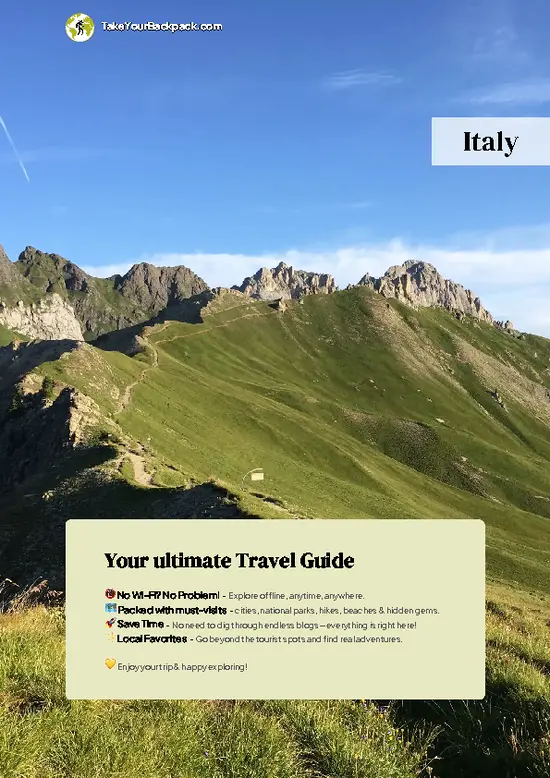
example page 0 from our offline Travel Guide for Italy
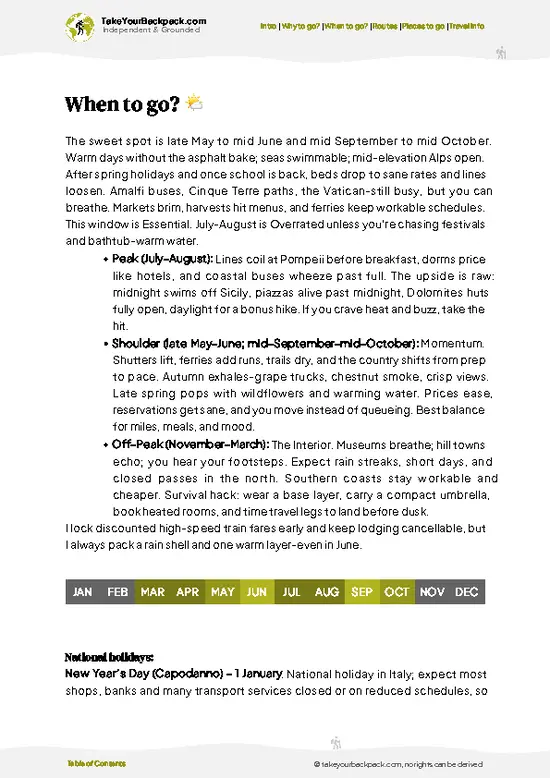
example page 1 from our offline Travel Guide for Italy
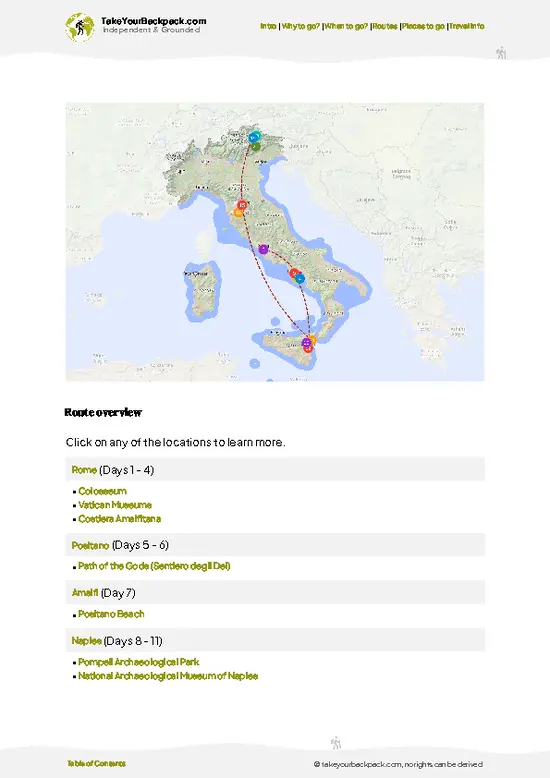
example page 2 from our offline Travel Guide for Italy
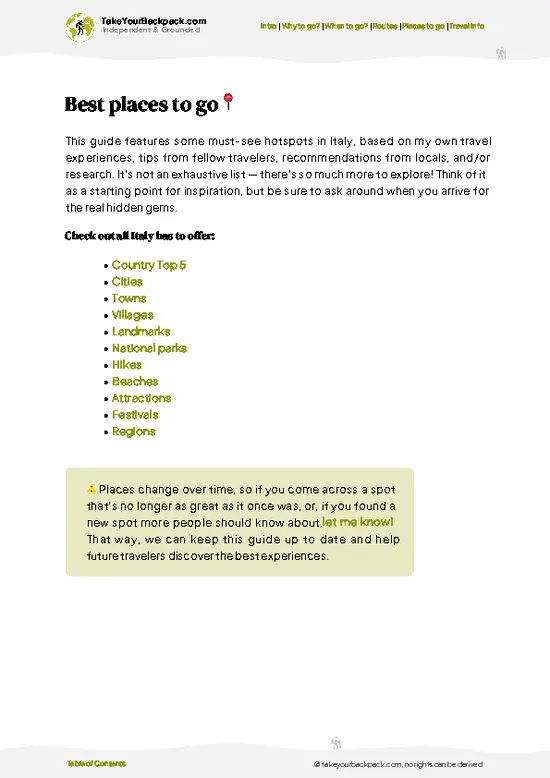
example page 3 from our offline Travel Guide for Italy
example page 4 from our offline Travel Guide for Italy
example page 5 from our offline Travel Guide for Italy
example page 6 from our offline Travel Guide for Italy
example page 7 from our offline Travel Guide for Italy
The digital guide (526 pages) contains:
143 highlights, ranked by travel appeal
Optimized 7, 14 & 21-day travel routes
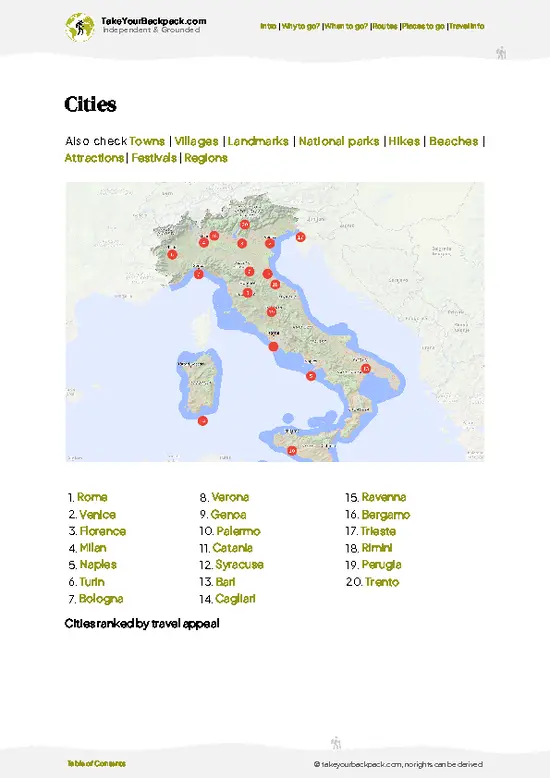
Cities, national parks, landmarks, beaches
How to get around
Offline-friendly for travel without Wi-Fi
👉 Click to see all 30+ guide features

📅 Plan smarter in minutes, not weeks
Month by month travel advice
Festivals & national holidays
Budget expectations

🗺️ Go to the right places, skip the overrated ones
Honest pros & cons of destinations
Top hikes, parks & viewpoints
Lesser-known places most travelers miss
Clear “worth it vs skip it” guidance

🛏️ Travel smoothly without rookie mistakes
Best areas to stay
Transport systems explained simply
Common scams & safety advice
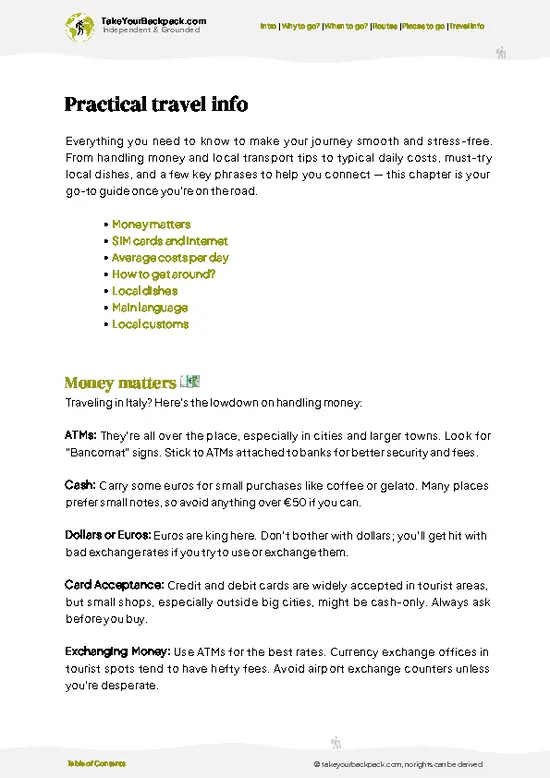
SIM cards, money & practical tips

🌍 Understand the country, not just visit it
Culture & traditions
52 Essential phrases & customs
Festivals worth planning around
Traveler-friendly historical context
Insights that make places more meaningful

📱 Built for real travel conditions
Fully downloadable PDF
Works completely offline
Optimized for phone use
Useful in remote areas & buses
Everything in one place
Save weeks of stressful planning
Get instant access to your full guide. 30‑day money-back guarantee.
+ Add another guide for just R$44.25

By proceeding you agree to our terms.
Sent to your inbox immediately after payment • 100% Secure Checkout
Best Backpacking Travel Advisor 2025 tourism awardBest Backpacking
Travel Advisor
2025
What others say about Take Your Backpack Guides:
⭐⭐⭐⭐⭐
Fantastic, amazing amount of information!
⭐⭐⭐⭐⭐
My goodness this is amazing, it's what I've been looking for hats off too you!
⭐⭐⭐⭐⭐
I think this is absolutely BRILLIANT
⭐⭐⭐⭐
Very complete and informative. It's still missing places, but I gotta to commend you
⭐⭐⭐⭐⭐
This is truly amazing, thank you, can't wait to explore it with my kids!
⭐⭐⭐⭐⭐
Awesome resource, thank you!
⭐⭐⭐⭐⭐
This is amazing! Can't wait to explore the ones I haven't seen
⭐⭐⭐⭐
I love this! Well done, great idea.
⭐⭐⭐⭐⭐
Thanks for taking the time to make this gem!
⭐⭐⭐⭐⭐
This might be the best website I've ever seen.
⭐⭐⭐⭐⭐
Congratulations, and thank you so much for your work; it's incredibly valuable.
⭐⭐⭐⭐
In all seriousness I think you did a great job pointing out the important spots
⭐⭐⭐⭐⭐
10/10 very good
⭐⭐⭐⭐⭐
As someone who's only just starting to visit regularly this is awesome, thank you.
⭐⭐⭐⭐
Thank you very much! I'm going to visit my dad, it's going to be very useful!
⭐⭐⭐⭐⭐
This is really cool! We'll be travelling for the first time and this definitely come in handy.
⭐⭐⭐⭐⭐
You are now our minister of culture, congratulations 👨‍💼
⭐⭐⭐⭐⭐
Just wanted to tell you that this is a pearl! Going to follow your recommendations.
⭐⭐⭐⭐⭐
This is so cool. I'll definitely be using the resource for my travels soon.
⭐⭐⭐⭐⭐
This is very impressive! Good work.
⭐⭐⭐⭐⭐
This is an amazing and informative site. Very well done!

🛏️ Where to stay?Best areas to stay in Italy

Staying near the Capitoline Museums means diving headfirst into Rome’s beating historical heart, but let’s cut through the tourist fog. The immediate area around Capitoline Hill is packed with day-trippers and pricey spots that don’t exactly scream “budget-friendly” or “social vibe.” If you want to avoid the sterile, overpriced bubble, look just a little beyond the obvious.

The Monti neighborhood, a short walk away, is where you want to be. It’s safe, buzzing with a mix of locals and travelers, and full of affordable spots where you can actually meet people instead of just passing through. Monti’s … read more 👉
Staying near the Capitoline Museums means diving headfirst into Rome’s beating historical heart, but let’s cut through the tourist fog. The immediate area around Capitoline Hill is packed with day-trippers and pricey spots that don’t exactly scream “budget-friendly” or “social vibe.” If you want to avoid the sterile, overpriced bubble, look just a little beyond the obvious.

The Monti neighborhood, a short walk away, is where you want to be. It’s safe, buzzing with a mix of locals and travelers, and full of affordable spots where you can actually meet people instead of just passing through. Monti’s narrow cobblestone streets hide lively piazzas, quirky bars, and cheap eats that won’t make your wallet cry. Plus, it’s close enough to stumble back to the museums after a long day without feeling like you’re trekking across the city.

Alternatively, the area around Piazza Venezia offers solid safety and easy access, but it’s more of a transit hub than a hangout. For real social energy and budget-friendly charm, Monti wins hands down. It’s where the real Rome breathes beyond the postcard.

👛 Costs (as of 4 September 2026)How expensive it really is

The standard ticket price for the Capitoline Museums is around €15. Reduced tickets for EU citizens aged 18-25 cost about €3. Additional costs may include guided tours or audio guides, typically ranging from €5 to €10. Entry is free on the first Sunday of each month.

source: museicapitolini.org
⚠️ Prices can change and everyone travels differently, so take this as a rough guide. Hope it helps you plan your adventure!

FAQFrequently asked questions about Capitoline Museums

2 to 3 hours is sufficient to visit the Capitoline Museums thoroughly. This allows time to see the main collections, including ancient Roman statues, Renaissance art, and the famous Capitoline Wolf. Allocate more time if you want to explore every exhibit in detail.
Yes, the Capitoline Museums are worth the entrance fee, which is around 15 euros for adults. The museums house some of the most important artifacts and artworks from ancient Rome, offering a unique historical and cultural experience. The value is high for those interested in Roman history and art.
The Capitoline Museums are located on Capitoline Hill in Rome, near Piazza del Campidoglio. You can reach them by taking Metro Line B to Colosseo station, then walking about 10 minutes uphill. Several bus lines also stop nearby, including lines 30, 75, and 81.
⚠️ Things can change over time, so always validate details locally before you go.

Other Italian attractions near Capitoline Museums

Explore more nearby:


💡 Not sure where to go next?
Create a personalized itinerary for Italy including Capitoline Museums and the places that fit your trip.

Generate my itinerary

👉 Discover all attractions

Or checkout all Italy has to offer (think cities, towns, villages, national parks, hikes, beaches, festivals)
Country photo of Italy

We 💚 feedbackIs it worth it?

The Capitoline Museums aren’t just another art stop—they’re a deep dive into Rome’s raw, gritty history, packed with sculptures and artifacts that shaped Western civilization. But brace yourself: it can get crowded, especially midday, and the entry fee isn’t pocket change. Still, if you want to feel the pulse of ancient Rome beyond the usual tourist spots, this place delivers a punch that’s worth the hustle and the price.

✈️ When did I visit Italy?
Italy I have vistited a couple of times: Rome already when I was still in high school, and I did a 7 day hike in the Dolomites in 2021.

✍️ Help improve this page!
The information on this page is based on my own backpacking experience in Italy, supplemented with up-to-date research and feedback from other travelers. Travel details can change, so if you notice anything outdated or incomplete, feel free to let me know.


🙋‍♂️ Give feedback

👋 Meet the founderWho’s Behind Take Your Backpack?

Johan, backpacker and founder of TakeYourBackpackHi, I’m Johan (Netherlands 🇳🇱), the creator of TakeYourBackpack. Over the past decade, I’ve backpacked through 80+ countries across six continents, gaining extensive experience with independent travel, long-term trips, and overland routes.

This site is built on a combination of firsthand travel experience and carefully curated insights from other backpackers. Many guides are based on places I’ve personally visited, while others bring together tips, observations, and practical advice shared by trusted travelers I’ve met along the way.

The goal is to provide realistic, experience-driven guidance — not generic itineraries — so you can explore destinations with better context, clearer expectations, and more confidence.

Get full Italy guide •
Instant download • 143 highlights • Full Offline guide