
×

Japan🇯🇵 | attractionsKiyomizu-derawooden stage, hillside temple, city panoramas | things to do and best time to go

Explore Senso-jiExplore Kinkaku-ji

Backpacking in Kiyomizu-dera
🏆 Top pickattraction ranked #3
By Johan Kruseman 🇳🇱 | Updated September 4, 2026

Here’s what nobody tells you until you’re sweating on the hillside: Kiyomizu-dera opens at 6 a.m., and those first quiet minutes are the only time you’ll feel the temple’s real gravity before the tour groups swarm in. Kiyomizu-dera sits on the eastern edge of Kyoto, Japan’s old imperial capital—a city that’s basically a living museum, but with vending machines and the occasional deer. The temple itself is a wooden marvel, cantilevered over a forested ravine, and yes, the view from the veranda is as jaw-dropping as the photos suggest. But the crowds? Relentless after 8 a.m., especially during cherry blossom or autumn leaf seasons. Entry isn’t free, but it’s not bank-breaking either—think more “splurge on a good bowl of ramen after” than “skip lunch for a week.” Compared to Japan’s other headline acts, Kiyomizu-dera is less serene than a Zen garden, but the energy—part spiritual, part festival—is pure Kyoto. I’ve seen monks, selfie sticks, and schoolkids all in the same frame, and somehow, it works.

Discover everything you want to know in the 📖 Japan Travel Guide.


Get your Japan guide
140 ranked highlights, routes & tips, works offline (482 pages)
Loading the map 🌍
CLICK TO FILTER
cities
towns
villages
landmarks
national parks
hikes
beaches
attractions
festivals
regions
SHOW COUNTRY’S BESTSHOW ALL

✨ Why go?
Ranked #3 attraction in Japan
What sets this place apart

Kiyomizu-dera is not just another temple on the Kyoto checklist—it’s a heavyweight in Japan’s cultural ring. Yes, it’s crowded. Yes, the entrance fee isn’t pocket change. But here’s the kicker: this place delivers a punch of history and atmosphere that no Instagram filter can fake. The temple’s wooden stage, jutting out over a steep hillside, offers a view that’s both breathtaking and humbling—a reminder of Japan’s architectural genius dating back to 1633. It’s a rare spot where you can feel the pulse of centuries-old rituals still alive today, from the clatter of wooden prayer plaques to the murmur of pilgrims seeking blessings. Backpackers make the trek because Kiyomizu-dera is a milestone, a cultural checkpoint that anchors the Kyoto experience. It’s a place where effort meets reward in … read more 👉
Kiyomizu-dera is not just another temple on the Kyoto checklist—it’s a heavyweight in Japan’s cultural ring. Yes, it’s crowded. Yes, the entrance fee isn’t pocket change. But here’s the kicker: this place delivers a punch of history and atmosphere that no Instagram filter can fake. The temple’s wooden stage, jutting out over a steep hillside, offers a view that’s both breathtaking and humbling—a reminder of Japan’s architectural genius dating back to 1633. It’s a rare spot where you can feel the pulse of centuries-old rituals still alive today, from the clatter of wooden prayer plaques to the murmur of pilgrims seeking blessings. Backpackers make the trek because Kiyomizu-dera is a milestone, a cultural checkpoint that anchors the Kyoto experience. It’s a place where effort meets reward in a way that’s visceral, not just visual. If you’re tracing Japan’s spiritual and historical veins, skipping Kiyomizu-dera is like leaving a chapter unread. The crowds and cost are the price of admission to something genuinely profound—no sugarcoating, just real magic.
Want to include Kiyomizu-dera in your Japan route?
Create a personalized Japan itinerary that includes Kiyomizu-dera and the places that fit your trip — based on your travel style, budget, and available time. Get your route in seconds.

Generate my trip

💡 HighlightsMust-see experiences and standout moments

The Stage: The Main Hall and Its Legendary Veranda
Let’s get real: you’ve seen this wooden stage in a thousand photos, but no filter can capture the vertigo you feel standing on that 13-meter-high platform, peering out over a sea of Kyoto’s tiled rooftops and forested hills. Yes, you’ll be elbow-to-elbow with selfie sticks, but the drama of the architecture—built without a single nail—still hits hard. The view is a living scroll painting, especially in cherry blossom or autumn leaf season, but even on a drizzly Tuesday, the sheer audacity of the structure is worth the ticket.


Otowa Waterfall: The Three Streams Ritual
Here’s where the Instagrammers line up for their “purity shot,” but the real fun is in the ritual itself. Locals and pilgrims have been catching water from these three streams … read more 👉
The Stage: The Main Hall and Its Legendary Veranda
Let’s get real: you’ve seen this wooden stage in a thousand photos, but no filter can capture the vertigo you feel standing on that 13-meter-high platform, peering out over a sea of Kyoto’s tiled rooftops and forested hills. Yes, you’ll be elbow-to-elbow with selfie sticks, but the drama of the architecture—built without a single nail—still hits hard. The view is a living scroll painting, especially in cherry blossom or autumn leaf season, but even on a drizzly Tuesday, the sheer audacity of the structure is worth the ticket.


Otowa Waterfall: The Three Streams Ritual
Here’s where the Instagrammers line up for their “purity shot,” but the real fun is in the ritual itself. Locals and pilgrims have been catching water from these three streams for centuries, each promising a different blessing: longevity, success at school, or luck in love. The catch? You’re not supposed to drink from all three—pick your priority, or risk tempting fate. It’s a rare moment where superstition and spectacle collide, and you get to play along.


Jishu Shrine: Love, Luck, and Blindfolded Romance
Tucked just behind the main hall, this shrine is dedicated to the matchmaking gods. The real entertainment? Watching hopefuls (and the occasional daredevil tourist) try to walk, eyes closed, between two “love stones” set 18 meters apart. Make it in a straight line, and legend says you’ll find true love. Miss, and, well, maybe swipe left on fate. It’s goofy, it’s earnest, and it’s pure people-watching gold.


Shopping Street Gauntlet: Sannenzaka & Ninenzaka
Before or after the temple, you’ll run the gauntlet of these sloped, stone-paved streets. Yes, they’re crowded, and yes, some shops are pure tourist bait, but the energy is infectious. You’ll find everything from hand-painted fans to yatsuhashi sweets (cinnamon mochi triangles that are dangerously addictive). The real magic is in the mix: kimono-clad locals, schoolkids, and travelers all jostling for the best snack or souvenir. My personal favorite—grab a matcha ice cream and just watch the world go by.


Night Illuminations: The Temple After Dark
If you want to dodge the worst of the crowds and see Kiyomizu-dera at its most surreal, time your visit for one of the seasonal night illuminations. The temple glows, the city lights flicker below, and the whole place feels like a stage set for a ghost story. It’s theatrical, a little eerie, and absolutely worth the late-night trek.
Spotted a mistake or missing something? Contact us.

Things to do near Kiyomizu-dera

Ratings based on Tripadvisor reviews. When you book through this link, you support our work at no extra cost to you.

🌤️ When to go?Choosing the right time of year


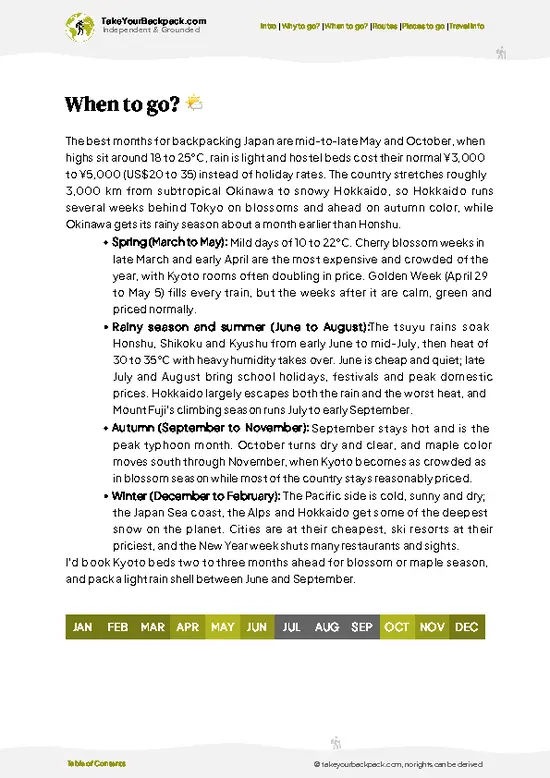
  • Weather: Spring (March to May) and autumn (October to November) offer the most comfortable weather for exploring Kiyomizu-dera. Expect mild temperatures around 15-22°C (59-72°F), avoiding the oppressive summer heat and humidity that can hit 30°C (86°F) or more in July and August.

  • Temperature: Winters (December to February) are chilly, often dropping to 0-5°C (32-41°F), which can make the climb less pleasant. Summers are hot and sticky, so unless you thrive in sauna-like conditions, skip July and August.

  • Daylight Hours: Longer days from April to September mean more time to soak in views and wander without rushing. In winter, daylight shrinks to about 9-10 hours, limiting your window for exploration.

  • Crowds: Cherry blossom season in April and autumn foliage in November pack the temple
read more 👉

  • Weather: Spring (March to May) and autumn (October to November) offer the most comfortable weather for exploring Kiyomizu-dera. Expect mild temperatures around 15-22°C (59-72°F), avoiding the oppressive summer heat and humidity that can hit 30°C (86°F) or more in July and August.

  • Temperature: Winters (December to February) are chilly, often dropping to 0-5°C (32-41°F), which can make the climb less pleasant. Summers are hot and sticky, so unless you thrive in sauna-like conditions, skip July and August.

  • Daylight Hours: Longer days from April to September mean more time to soak in views and wander without rushing. In winter, daylight shrinks to about 9-10 hours, limiting your window for exploration.

  • Crowds: Cherry blossom season in April and autumn foliage in November pack the temple with tourists and locals alike. If you want fewer people, aim for early March or late November, but be prepared for cooler weather.

  • Seasonal Activities: Night illuminations during spring and autumn add a magical vibe but also draw massive crowds and higher entry fees. Winter’s quieter atmosphere offers a more intimate experience, though fewer special events.

  • Price Fluctuations: Entrance fees stay steady year-round, but accommodation and transport costs spike during peak seasons like cherry blossom and autumn leaves. Booking early can save you a bundle.


Pro-tip: Visit just before dawn in shoulder seasons to dodge crowds and catch Kiyomizu-dera in a serene, almost sacred light that Instagram can’t capture.


source: climatestotravel.comJANJanuary: fair for travelingFEBFebruary: fair for travelingMARMarch: highly recommended for travelingAPRApril: excellent for travelingMAYMay: highly recommended for travelingJUNJune: good for travelingJULJuly: below average for travelingAUGAugust: below average for travelingSEPSeptember: good for travelingOCTOctober: highly recommended for travelingNOVNovember: excellent for travelingDECDecember: fair for traveling
when-to-go

✈️ The backpacker research shortcutJapan Travel Guide

An offline-friendly backpacking guide with optimized travel routes, ranked highlights, transport advice, and the best areas to stay.
example page 0 from our offline Travel Guide for Japan
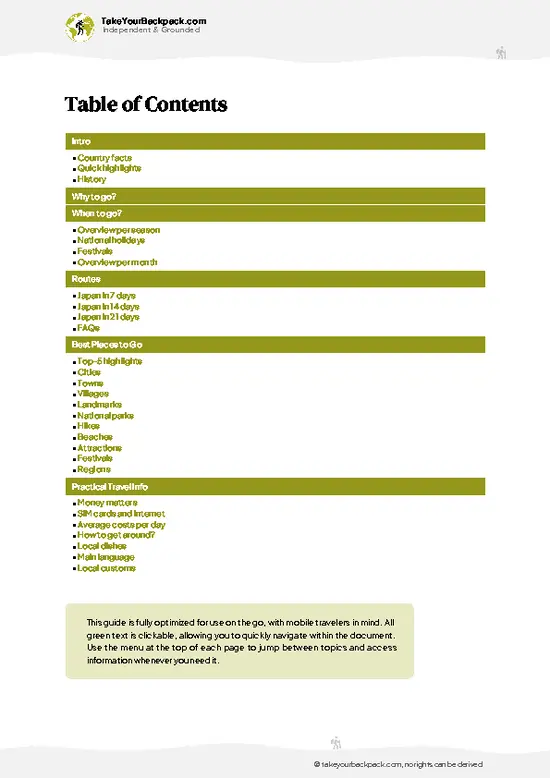
example page 1 from our offline Travel Guide for Japan
example page 2 from our offline Travel Guide for Japan
example page 3 from our offline Travel Guide for Japan
example page 4 from our offline Travel Guide for Japan
example page 5 from our offline Travel Guide for Japan
example page 6 from our offline Travel Guide for Japan
example page 7 from our offline Travel Guide for Japan
The digital guide (482 pages) contains:
140 highlights, ranked by travel appeal
Optimized 7, 14 & 21-day travel routes
Cities, national parks, landmarks, beaches
How to get around
Offline-friendly for travel without Wi-Fi
👉 Click to see all 30+ guide features

📅 Plan smarter in minutes, not weeks
Month by month travel advice
Festivals & national holidays
Budget expectations

🗺️ Go to the right places, skip the overrated ones
Honest pros & cons of destinations
Top hikes, parks & viewpoints
Lesser-known places most travelers miss
Clear “worth it vs skip it” guidance

🛏️ Travel smoothly without rookie mistakes
Best areas to stay
Transport systems explained simply
Common scams & safety advice
SIM cards, money & practical tips

🌍 Understand the country, not just visit it
Culture & traditions
52 Essential phrases & customs
Festivals worth planning around
Traveler-friendly historical context
Insights that make places more meaningful

📱 Built for real travel conditions
Fully downloadable PDF
Works completely offline
Optimized for phone use
Useful in remote areas & buses
Everything in one place
Save weeks of stressful planning
Get instant access to your full guide. 30‑day money-back guarantee.
+ Add another guide for just US$7.80

By proceeding you agree to our terms.
Sent to your inbox immediately after payment • 100% Secure Checkout
Best Backpacking Travel Advisor 2025 tourism awardBest Backpacking
Travel Advisor
2025
What others say about Take Your Backpack Guides:
⭐⭐⭐⭐⭐
Fantastic, amazing amount of information!
⭐⭐⭐⭐⭐
My goodness this is amazing, it's what I've been looking for hats off too you!
⭐⭐⭐⭐⭐
I think this is absolutely BRILLIANT
⭐⭐⭐⭐
Very complete and informative. It's still missing places, but I gotta to commend you
⭐⭐⭐⭐⭐
This is truly amazing, thank you, can't wait to explore it with my kids!
⭐⭐⭐⭐⭐
Awesome resource, thank you!
⭐⭐⭐⭐⭐
This is amazing! Can't wait to explore the ones I haven't seen
⭐⭐⭐⭐
I love this! Well done, great idea.
⭐⭐⭐⭐⭐
Thanks for taking the time to make this gem!
⭐⭐⭐⭐⭐
This might be the best website I've ever seen.
⭐⭐⭐⭐⭐
Congratulations, and thank you so much for your work; it's incredibly valuable.
⭐⭐⭐⭐
In all seriousness I think you did a great job pointing out the important spots
⭐⭐⭐⭐⭐
10/10 very good
⭐⭐⭐⭐⭐
As someone who's only just starting to visit regularly this is awesome, thank you.
⭐⭐⭐⭐
Thank you very much! I'm going to visit my dad, it's going to be very useful!
⭐⭐⭐⭐⭐
This is really cool! We'll be travelling for the first time and this definitely come in handy.
⭐⭐⭐⭐⭐
You are now our minister of culture, congratulations 👨‍💼
⭐⭐⭐⭐⭐
Just wanted to tell you that this is a pearl! Going to follow your recommendations.
⭐⭐⭐⭐⭐
This is so cool. I'll definitely be using the resource for my travels soon.
⭐⭐⭐⭐⭐
This is very impressive! Good work.
⭐⭐⭐⭐⭐
This is an amazing and informative site. Very well done!

🛏️ Where to stay?Best areas to stay in Japan

Kiyomizu-dera is one of Kyoto’s crown jewels, but let’s cut through the postcard-perfect hype: it’s crowded, especially mid-morning to afternoon, and the entrance fee isn’t exactly pocket change for a backpacker. You’ll be elbow-to-elbow with tourists snapping the same shots. That’s the Instagram version. The real magic? It’s in the vibe of the neighborhoods nearby, where you can soak in Kyoto’s rhythm without selling your soul to a pricey ryokan.

Look just downhill toward the Higashiyama district. This area is a sweet spot for budget travelers who want to be close enough to Kiyomizu-dera to … read more 👉
Kiyomizu-dera is one of Kyoto’s crown jewels, but let’s cut through the postcard-perfect hype: it’s crowded, especially mid-morning to afternoon, and the entrance fee isn’t exactly pocket change for a backpacker. You’ll be elbow-to-elbow with tourists snapping the same shots. That’s the Instagram version. The real magic? It’s in the vibe of the neighborhoods nearby, where you can soak in Kyoto’s rhythm without selling your soul to a pricey ryokan.

Look just downhill toward the Higashiyama district. This area is a sweet spot for budget travelers who want to be close enough to Kiyomizu-dera to hit it early or late, avoiding the worst crowds. It’s safe, walkable, and packed with guesthouses and hostels that attract solo backpackers and small groups. The streets here pulse with local life—think cozy izakayas, tiny tea shops, and narrow lanes that feel like a secret handshake with Kyoto’s past.

If you want social, this is where you’ll find it. Backpacker hostels here often have communal spaces that make it easy to swap stories or plan your next move. Plus, the proximity means you can catch Kiyomizu-dera’s evening illuminations without the daytime crush. Skip the tourist traps and stay where the city breathes—this is where Kyoto’s soul sticks around after the crowds fade.

👛 Costs (as of 4 September 2026)Typical daily expenses

The standard admission fee for Kiyomizu-dera Temple is 400 yen for adults and 200 yen for children. During special events, such as the Thousand-day Pilgrimage, the fee increases to 500 yen for adults and 200 yen for children. ([kiyomizudera.or.jp](https://www.kiyomizudera.or.jp/en/news/2024/autumn2024.php?utm_source=openai)) Additional costs may include transportation to the temple, such as bus fares or taxi rides.

source: kiyomizudera.or.jp
⚠️ Prices can change and everyone travels differently, so take this as a rough guide. Hope it helps you plan your adventure!

FAQCommon questions from travelers

Plan for about 1 to 2 hours to visit Kiyomizu-dera, enough time to explore the main hall, the wooden stage, and the surrounding gardens. Peak visiting times can be crowded, so allocate extra time if visiting during weekends or holidays.
Yes, Kiyomizu-dera is worth the entrance fee of 400 yen. The temple offers unique architecture, panoramic views of Kyoto, and cultural significance that justify the cost.
To get to Kiyomizu-dera, take the Kyoto City Bus number 100 or 206 to Gojo-zaka or Kiyomizu-michi bus stops, then walk about 10 minutes uphill. Alternatively, it's a 20-minute walk from Kiyomizu-Gojo Station on the Keihan Line.
⚠️ Things can change over time, so always validate details locally before you go.

Other Japanese attractions near Kiyomizu-dera

Explore more nearby:

  • Fushimi Inari Taisha—thousands of torii gates, hillside trails, fox statues| 107 km away
  • Nijo Castle—nightingale floors, painted screens, shogun residence| 110 km away
  • Kinkaku-ji—golden pavilion, reflective pond, landscaped gardens| 111 km away

💡 Not sure where to go next?
Create a personalized itinerary for Japan including Kiyomizu-dera and the places that fit your trip.

Generate my itinerary

👉 Discover all attractions

Or checkout all Japan has to offer (think cities, towns, villages, national parks, hikes, beaches, festivals)
Country photo of Japan

We 💚 feedbackIs it worth it?

Kiyomizu-dera is a sensory overload in the best way—wooden terraces jutting out over Kyoto’s cityscape, the scent of incense thick in the air, and the hum of pilgrims and tourists alike. But brace yourself: it’s packed. Shoulder-to-shoulder crowds can drain the magic if you’re chasing quiet reflection. Still, that raw, bustling energy is part of its charm—this isn’t a polished postcard; it’s a living, breathing slice of Japan’s spiritual heart.

✈️ When did I visit Japan?
As part of my 1.5 year travel around the world trip, I visited Japan in August 2015.

✍️ Help improve this page!
The information on this page is based on my own backpacking experience in Japan, supplemented with up-to-date research and feedback from other travelers. Travel details can change, so if you notice anything outdated or incomplete, feel free to let me know.


🙋‍♂️ Give feedback

👋 Meet the founderWho’s Behind Take Your Backpack?

Johan, backpacker and founder of TakeYourBackpackHi, I’m Johan (Netherlands 🇳🇱), the creator of TakeYourBackpack. Over the past decade, I’ve backpacked through 80+ countries across six continents, gaining extensive experience with independent travel, long-term trips, and overland routes.

This site is built on a combination of firsthand travel experience and carefully curated insights from other backpackers. Many guides are based on places I’ve personally visited, while others bring together tips, observations, and practical advice shared by trusted travelers I’ve met along the way.

The goal is to provide realistic, experience-driven guidance — not generic itineraries — so you can explore destinations with better context, clearer expectations, and more confidence.

Get full Japan guide •
Instant download • 140 highlights • Full Offline guide